
Things to Do in Arusha National Park
Activities in Arusha National Park are the most popular among passengers on safari trips in Tanzania and those visiting the park. Arusha National Park is among the premier safari areas in Tanzania, notable for its accessibility, allowing for enjoyable day trips. Arusha National Park is an excellent place for a safari in Tanzania, suitable for either the commencement or conclusion of your ideal northern Tanzania safari package.
Arusha National Park offers a variety of attractions, featuring landscapes that encompass expansive savannahs, rainforests, acacia woodlands, and alpine vegetation as one ascends up Mount Meru. Arusha National Park spans over 200 square miles and is home to a diverse array of species, including a substantial population of giraffes. Arusha National Park offers numerous sights and diverse activities. The following are the five premier activities available to guests in Arusha National Park during a safari tour in Tanzania:
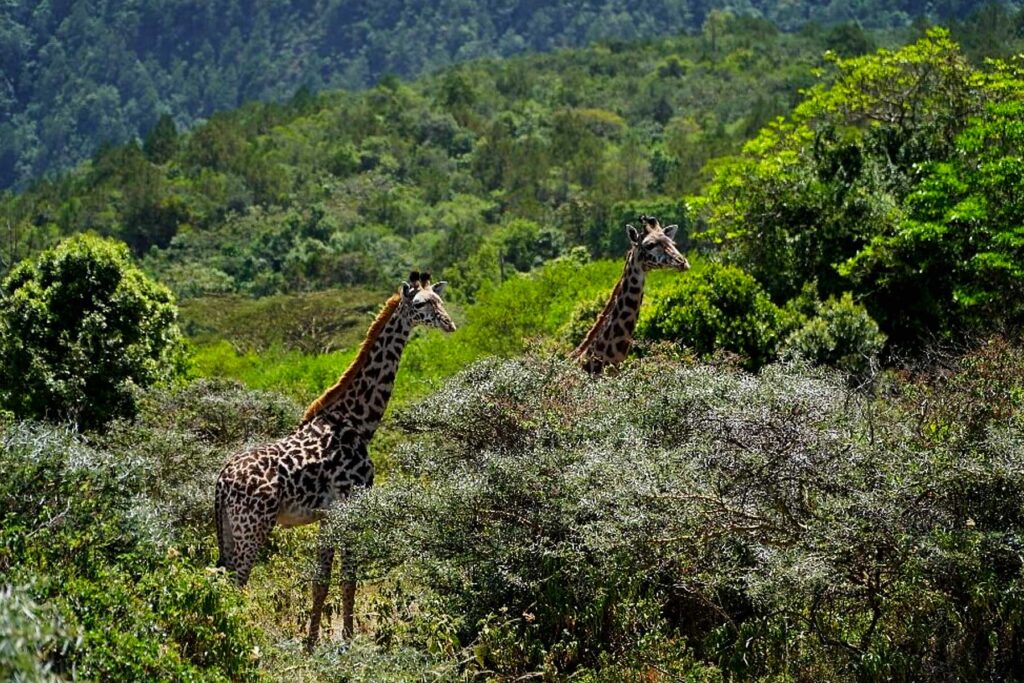
Game drive in Arusha National Park
Arusha National Park, characterized by its many ecosystems that are natural and compact size, is an excellent location for game drives to observe the park’s diverse species. The majority of game drives in Arusha National Park occur in the Ngurdoto Crater and its adjacent forest, which host significant populations of elephants, hippos, and buffalo, among several other species. A morning game drive is highly gratifying, and embarking on a full-day game drive with a packed lunch is one of the most effective methods to thoroughly explore the park.
Waking Safaris in Arusha National Park
Arusha National Park is among the premier safari destinations in Tanzania for experiencing a guided walking safari. A walking safari in Arusha National Park involves passengers being escorted by ranger escorts as they journey through the diverse forest and savannah ecosystems, watching the wildlife within the park. A primary incentive for undertaking a walking safari in Arusha National Park is the reward of reaching the summit of Tululusia Hill, a former lookout during Tanzania’s tribal conflicts, which offers guests breathtaking panoramic vistas.
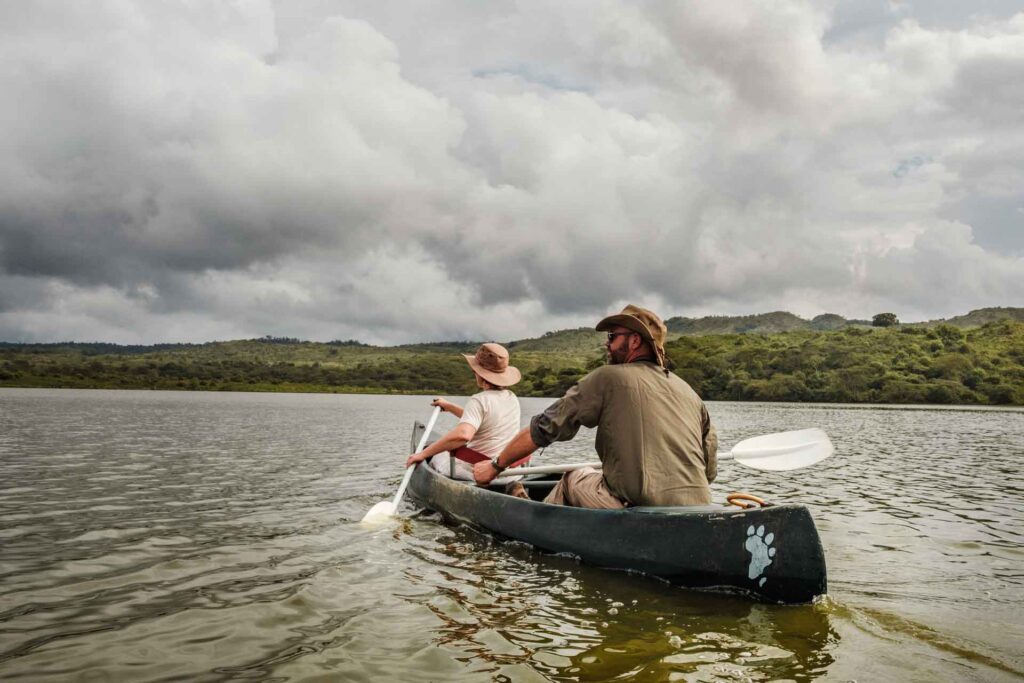
Canoeing in Arusha National Park
Canoeing is one of the five distinctive sports available at Arusha National Park for guests on a Tanzania safari tour. Canoeing at Arusha National Park allows guests to glide around the shallow waters of Momella Lake, appreciating the picturesque scenery and fauna, particularly at the shoreline where they may drink or bathe. Canoeing in Arusha National Park often endures for 2-3 hours and serves as an excellent alternative to conventional safari activities.
Mountain Climbing
Mount Meru, at an elevation of 4,566 meters above sea level, provides an exceptional mountain climbing experience in Tanzania. Mount Meru is the second tallest mountain in Tanzania, and trekking it offers opportunities to observe wildlife such as colobus monkeys and red-tailed monkeys, in addition to scenic vistas.
Bird Watching in Arusha National Park
Arusha National Park is an exceptional avian observation locale. Arusha National Park is home to approximately 400 bird species, including pelicans, tiny grebes, ducks, waders, flamingos, and hornbills, among others, making it an excellent location for birdwatching.
When is the best time to visit Arusha National Park
Arusha National Park is accessible year-round. Arusha National Park is approximately a 45-minute drive from Arusha town. Arusha National Park is accessible year-round, with optimal visitation occurring from June to September and December to March, which are regarded as the dry months ideal for wildlife observation. The remaining months are characterized by rainfall, although they present an excellent opportunity for travelers seeking economical safaris in Arusha National Park, as well as for birdwatching expeditions during the migration season of avian species in the park.
Arusha National Park is a stunning safari destination in Tanzania that visitors can explore year-round, engaging in the aforementioned five activities available within the park. Contact a reputable tour operator to assist you in organizing an exceptional safari tour in Tanzania, including visits to Arusha National Park and other notable parks such as Serengeti National Park, Lake Manyara National Park, Ngorongoro Crater, and Tarangire National Park, among others.
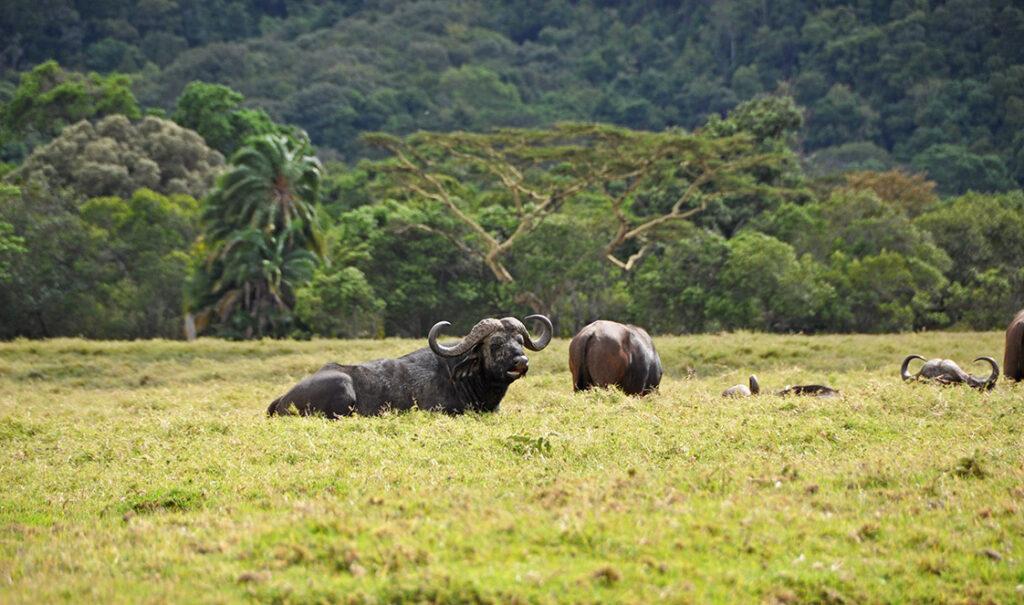
The primary attractions of Arusha National Park
wildlife and vegetation
This is the initial attraction encountered on a visit to Arusha National Park. While not comparable to the Serengeti, Arusha National Park hosts a rich array of unique mammal species, with a giraffe population surpassing that of other animals.
The park is home to various wild creatures, including the African elephant, Cape buffalo, hippopotamus, zebra, waterbuck, blue monkey, black-and-white colobus monkey, turaco, trogon, and wildebeest. Lions and leopards are among the predators observable in the park, albeit less frequently than other species such as giraffes.
In addition to terrestrial mammals, the park hosts a diverse array of bird species. For ornithologists, this signifies that Arusha National Park hosts a diverse array of avian species, securing its status as one of Africa’s premier birding destinations.
The African fish eagle, African olive pigeon, augur buzzard, bar-tailed trogon, bearded vulture, black saw-wing, cinnamon-chested bee-eater, Egyptian goose, great crested grebe, Hartlaub’s turaco, little grebe, Narina trogon, peregrine falcon, red-fronted parrot, scaly francolin, and silvery-cheeked hornbill are among the avian species present in this national park, which is a notable attraction in Arusha National Park.
The park provides guided canoe excursions, game drives, and walking safari packages in Tanzania for wildlife and bird aficionados seeking intimate encounters with these magnificent creatures. Moreover, Arusha’s unparalleled variety of captivating landscapes features a vast open grassland that shifts to a region of acacia scrubland, culminating in a stunning rainforest. The alpine conditions on the elevated slopes of Mt. Meru enhance the national park’s scenic backdrop.
Mount Meru,
In addition to the fauna, Mount Meru is a significant and notable attraction within Arusha National Park. Mount Meru, situated within the park, is Tanzania’s second highest peak following Mount Kilimanjaro and ranks as Africa’s fifth greatest mountain. Mount Meru is a dormant stratovolcano located on the African continent. On a clear day, it may be observed from Mount Kilimanjaro, which stands at an elevation of 4,562.13 meters.
Ascending Mount Meru, Tanzania’s second tallest peak, is exceptional due to the absence of congestion and the opportunity to observe abundant wildlife during the ascent. The ascent of Mount Meru requires more than four days to reach the summit, referred to as the “social peak,” although an experienced hiker can complete the climb and descent in three days.
This mountain is visible year-round, with minimal ice and mist at its summit, in contrast to Mount Kilimanjaro, which frequently obscures itself under ice-laden clouds, attractions in Arusha National Park.
Climbing is exhilarating and arduous, yet it is worthwhile to withstand the discomfort and witness what others cannot. The expedition offers a stunning view of Kilimanjaro from the top and functions as a gratifying walking safari, traversing diverse habitats inhabited by giraffes, elephants, antelopes, and other species.

Little/Mini Serengeti
Another feature of Arusha National Park is the Serengeti Ndogo, also referred to as the “Little Serengeti.” The tiny Serengeti was established to assist grazing species such as zebras, which are unable to browse, and to facilitate animal observation.
The habitats of Arusha National Park, primarily consisting of forests and bushes, are unable to sustain grazing animals, resulting in suboptimal game watching opportunities. The mini Serengeti was intentionally established to resolve the issue.
Little Serengeti in Arusha National Park is currently an expansive grassland where elephants, giraffes, buffaloes, zebras, warthogs, waterbucks, and several other Tanzanian animals feed. The initial view you will experience in the park when entering via the Ngongongare gate, particularly if you approach along the route to Momella.
Nevertheless, the animals exclusively assemble at this location during the mornings and diminish in number as the day advances. It is one of the limited open grasslands within the park, and its expanse and abundance of wildlife enough evoke the Serengeti plains.
Lake Longil
This is an additional feature within Arusha National Park, and it constitutes the park’s only freshwater lake. This location is ideal for seeing buffaloes and waterbucks, and it also attracts water-dependent species such as the Egyptian geese, as it serves as their watering spot. The Momella Lakes are salty lakes.
Ngurdoto Crater
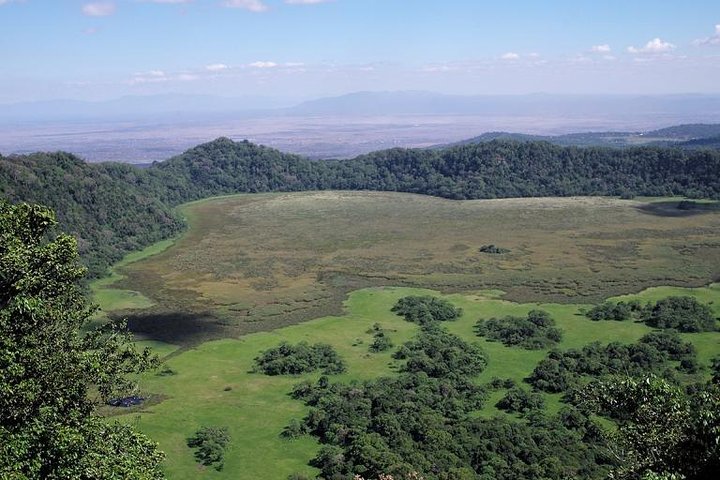
This pear-shaped Ngurdoto resembles a microcosm of the Ngorongoro Crater. This vantage point offers a view of the snowy summit of Mt. Kilimanjaro, the Momella lakes, and the lower slopes inhabited by human settlements.
The Ngurudoto crater, along with the Ngorongoro crater, Empakai crater, and Olmoti crater inside the Ngorongoro Conservation Area, constitutes one of four remarkable volcanic calderas in northern Tanzania during Tanzania Safaris. The crater measures 300 meters in depth and 3.2 kilometers in diameter. Points of interest in Arusha National Park.
In contrast to the Ngorongoro crater, the Ngurdoto crater’s walls are too soft for automobiles to pass through, making game drives unfeasible and leaving only foot safaris. A verdant jungle brimming with life surrounds the crater. This makes up part of the crater floor; the rest is an evergreen swamp where the local buffalo herd grazes. Elephants, birds, dik diks, and several kinds of monkeys.
Ngurudoto Museum
The Ngurudoto museum is dedicated to showcasing the different kinds of animals that could be discovered inside the Ngurudoto crater. It is a good place to learn about these animals before visiting the crater because it contains taxidermy, bones, and remains along with other information.
The museum also offers a souvenir store, contemporary restrooms, a modest parking lot, and a ranger post with quarters. Animals that can be seen there include baboons, colobus monkeys, and several bird species.
Momella Lake
They are alkaline lakes with shallow waters that come from subterranean sources, and many aquatic birds that live along the coast consume the algae that grows on their bottoms. This is a somewhat unusual aspect of this national park.
These lakes provide as breeding grounds for a variety of migratory and permanent water birds, including African fish eagles, African jacanas, pelicans, Egyptian geese, larger and lesser pink flamingos, and guinea fowls.
Attractions in Arusha National Park include zebras, giraffes, waterbucks, dik-dik, and duikers, even though the alkalinity of these lakes prevents animals from drinking from their waters. The fig tree arch, Tululusia waterfall, cave waterfalls, rhino viewpoint, and other attractions may be found at Arusha National Park.