
Tarangire National Park
Tarangire National Park is situated in northern Tanzania. It is one among the most coveted destinations for a safari in Tanzania. The park is included in the Tanzania Northern Safari circuit, which comprises the Serengeti, Ngorongoro, and Lake Manyara National Parks, among others.
Tarangire National Park encompasses an area of 2,850 square kilometers, rendering it the sixth largest park in Tanzania. The park is partitioned into two game-regulated areas, while wildlife is permitted to traverse freely. Tarangire derives its name from the Tarangire River. In the annual dry season, the Tarangire River serves as the primary source of freshwater for wildlife in the Tarangire Ecosystem. Tarangire features exceptional topography comprising granitic mountains, river basins, marshes, acacia forests, Combretum woodlands, seasonally inundated grasslands, and baobab trees.
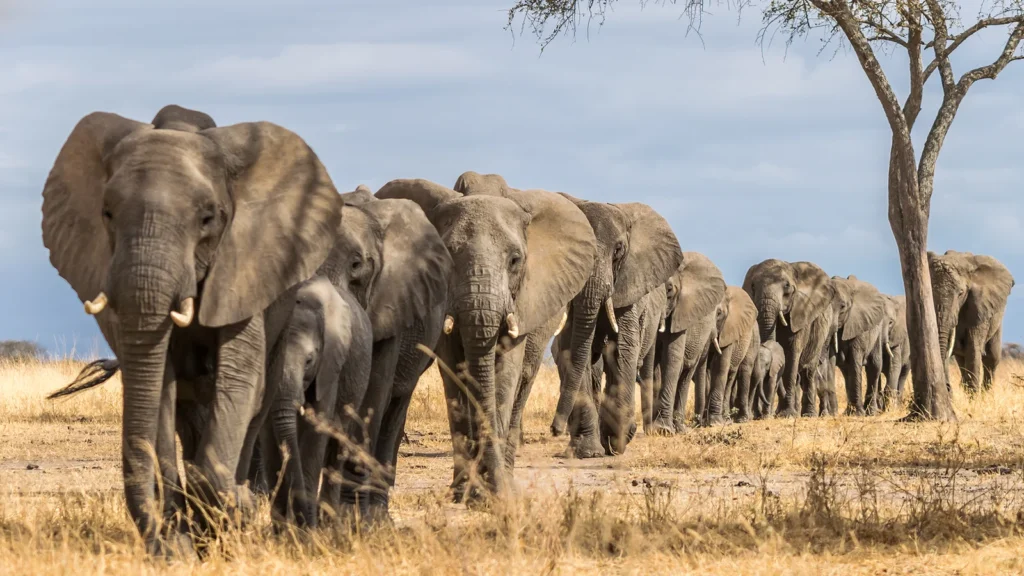
Tarangire National Park boasts some of Tanzania’s most significant wildlife densities and stunning landscapes. Numerous animals assemble at Tarangire National Park during the dry season, migrating from nearby wet-season dispersal and calving locations. Tarangire National Park hosts one of Africa’s largest elephant populations, and its sparse vegetation, interspersed with baobab and acacia trees, creates a beautiful and distinctive environment to investigate.
In addition to its captivating elephant herds, Tarangire is renowned for the wildlife migrations occurring during the dry season. Although not as extensive as the Great Migration of Serengeti Park, the animal migration at Tarangire is a remarkable phenomenon.
Attractions in Tarangire National Park
Wildlife
Tarangire offers habitat for diverse fauna, including zebras seeking hidden streams in arid riverbeds, herds of elephants, numerous migratory wildebeest, gazelles, impalas, elands, hartebeests, kudus, rhinos, buffalo, and various smaller species that gather around the diminishing lagoons. Moreover, other dry country antelopes, like the long-necked gerenuk and fringe-eared oryx, are commonly observed in Tarangire National Park. Numerous mongoose colonies inhabit abandoned anthills, while the park’s principal predators remain hidden in the deep forest, though they are occasionally observed.
The Wildlife Migration in Tarangire
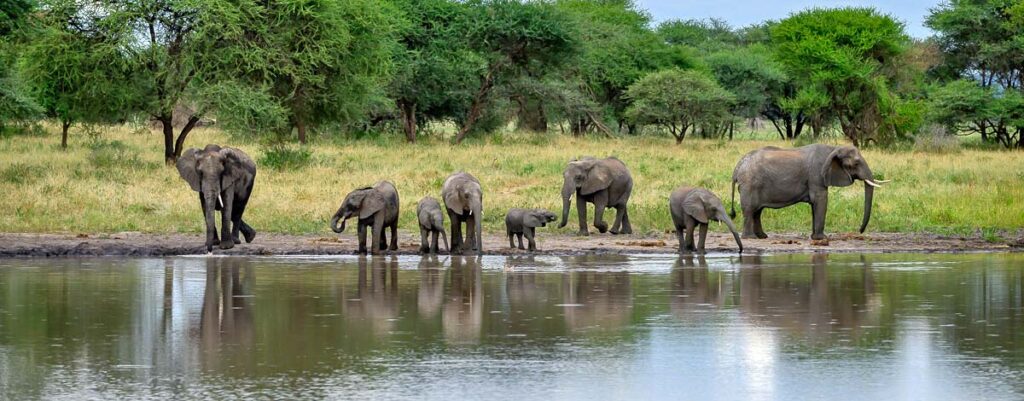
In the dry season, the majority of the Tarangire region is completely arid, with just a limited number of water sources, the River Tarangire being the principal one. Consequently, numerous herds of diverse species migrate into the park, attracted by the waters of the Tarangire River. This significant animal migration, while not as extensive as the renowned Great Annual Wildebeest Migration, involves a substantial number of elephants, wildebeests, hartebeests, gazelles, and zebras, along with numerous predators such as lions and leopards, entering the park. Tarangire National Park, characterized by its scant and arid flora, offers exceptional wildlife observation. This park ought to be included on your list of must-visit Tanzania safari sites.
Birds
Tarangire National Park is an excellent destination for ornithologists. The park is home to over 550 documented bird species, including plovers, bustards, ostriches, bee-eaters, babblers, starlings, eagles, go-away birds, mousebirds, Hamerkops, and other migratory species. Commence a bird-watching excursion in this magnificent park.
The wetlands
The wetlands in Tarangire National Park consist of an extensive network of marshes primarily situated in the southern and eastern areas of the park. The wetlands host a diverse array of avian and terrestrial fauna, including arboreal pythons, silale-swamp lions, Cape buffaloes, elephants, and African wild dogs, among others. Tarangire’s wetlands are the premier location for observing avian species including the Donaldson nightjar, Great white pelican, Smith’s Vulturine Guinea fowl, Yellow-collared lovebird, White-faced Whistling-Duck, Mouse-colored penduline tit, Rufous-tailed weaver, and Fulvous Whistling-Duck, among others.
The Kolo Rock Art
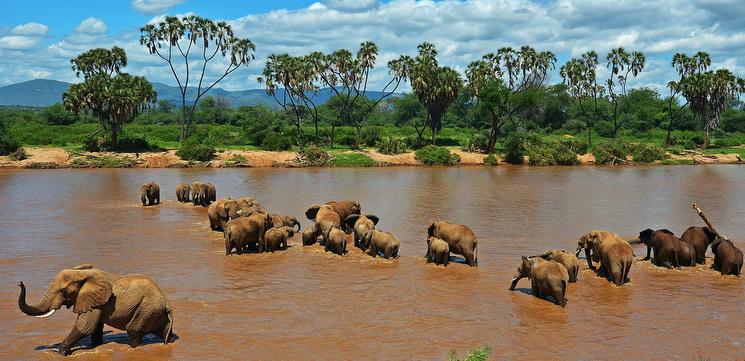
The Kolo rock crafts site merits exploration during a visit to Tarangire National Park. The site is situated at the periphery of the park and is designated as a world heritage site due to its remarkable exhibits of ancient rocks and artifacts left by the region’s former occupants. Tourists frequent Tarangire National Park for its numerous attractions, and while at Kolo Rock Art, visitors can appreciate the magnificence of this distinctive rock art.
The Ancient Baobab Tree
Tarangire National Park is renowned for its ancient baobab trees that dominate the savannah meadows. Numerous visitors to the park are frequently enchanted by the Baobab trees, which offer substantial shade and sustenance for the diverse wildlife. A specific ancient baobab tree, referred to as the Tree of Life, serves as a notable characteristic of Tarangire National Park. The ‘huge’ tree can contain between 300 and 1000 liters of water within its trunk and has been in the park for over a century. This tree serves as a substantial food source for several animals that consume its edible seeds. These extraordinary baobab trees can survive for up to 600 years. Tarangire’s elephants primarily rely on these trees for nourishment and for honing their huge tusks against the bark. Mythology suggests that these trees could effortlessly traverse the African continent; however, their indiscriminate movement displeased God, who subsequently positioned them upside down to halt their migration. They are often referred to as the “Upside Down Trees.”
The Lemiyon Triangle
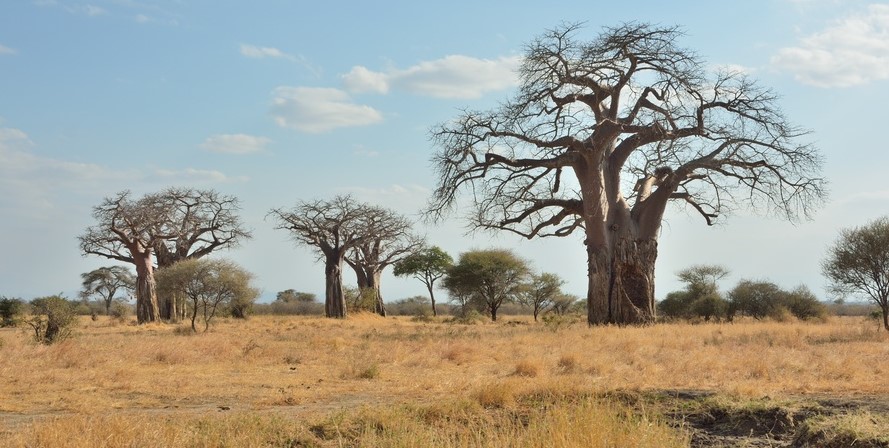
The Lemiyon Triangle in Tarangire National Park is an unspoiled region situated at the northernmost extremity of the park, delineating a triangular area. The triangle features remarkable vegetation, especially the imposing Baobab trees that tower beside the road with their massive silver trunks and intricate twisted branches. The Lemiyon Triangle is an exceptional avian observation location in Tarangire, featuring substantial congregations of red-bellied quelea and raptors.
The Poacher’s Shelter
This is situated southwest of Tarangire Hill, roughly 100 meters west of the park’s primary north-south route. The Poacher’s Hide is an impressive ancient baobab featuring a somewhat obscured entrance and an inside cavern that formerly served as a refuge for poachers. This baobab tree has a diameter of approximately 10 meters and is estimated to be over 300 years old; it is among the largest baobab trees in the park. A small aperture in the baobab tree facilitates passage through it; the expansive interior is reported to have served as shelter for up to 20 hunter-gatherers historically.
Things to do in Tarangire National Park
Game Drives
Game drives in Tarangire National Park are highly esteemed and should not be overlooked on your Tanzanian safari. Game drives occur in the early morning or evening, when animals exhibit heightened activity, or at night to observe nocturnal species. The game drives occur in comfortable 4WD open-roof safari vehicles, accompanied by an experienced driver-guide who will aid in identifying various animal species. You will traverse areas such Lemiyon, Kitibong Hill, Lamarku, Western Lake Barungi, and Gursi, which offer exceptional vistas of animal species such as elephants, giraffes, wildebeests, zebras, buffaloes, elands, impalas, greater and lesser kudus, and warthogs, among others. Anticipated predators during your safari game drives comprise lions, leopards, hyenas, wild dogs, and cheetahs, among others. You will also observe a diverse array of avian species, including ostriches, yellow-collared lovebirds, and Kori bustards, among others.
Bird watching
Tarangire National Park boasts an extensive avian diversity, with over 550 recorded bird species, establishing it as one of Tanzania’s premier safari sites for bird-watching. Among the avian species observable are Kori bustards, hornbills, ostriches, rufous-tailed weavers, and harsh starlings, to name a few. Migratory birds from across the globe can also be observed in Tarangire National Park, particularly while traversing the marsh floodplains. Bird-watching in Tarangire National Park can be conducted on a game drive or a nature walk with a knowledgeable bird guide who will aid in identifying various bird species.
Safari Walks
Tarangire National Park, characterized by its stunning terrain, provides remarkable safari hikes, with the Tarangire River serving as a prominent feature teeming with wildlife. The park’s lush flora comprises acacia shrubs and diverse woodlands, even during arid conditions. Moreover, the colossal baobab trees dispersed throughout render your safari experience indelible. Despite the park’s seclusion and obscurity, there are numerous possibilities to explore the area through walking safaris.
Safari Walks in Tarangire offer a comprehensive educational experience regarding the wilderness and an enhanced opportunity for near animal observation without causing disturbance. Additionally, explore an alternative realm by visiting a Maasai or Barabaig village featuring numerous ancient murals near Kolo along the Dodoma road.
Explore the Maasai Village
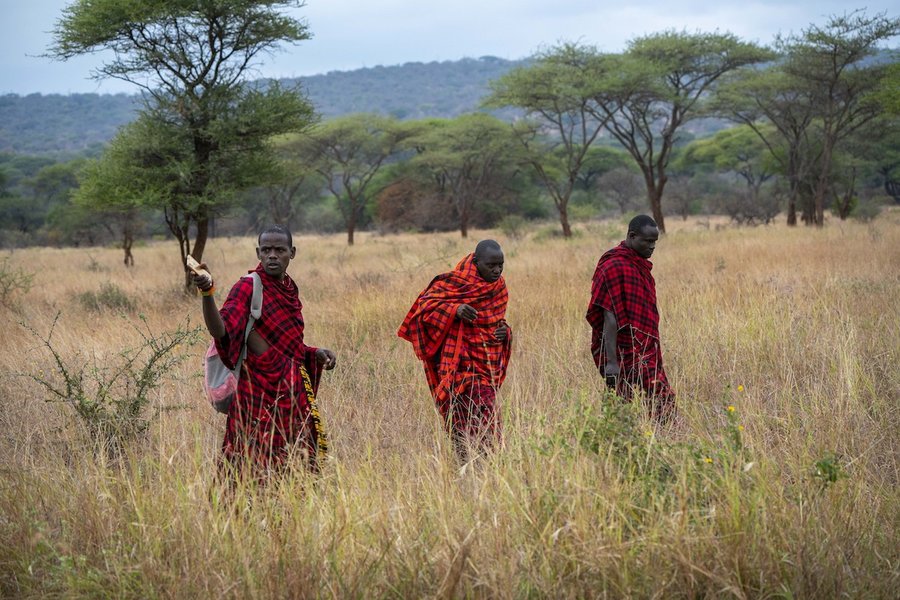
This is an intriguing cultural experience where people visit the Maasai hamlet and interact with the indigenous Maasai, Africa’s most prominent cultural tribe. On the cultural tour, you will engage with the Maasai people, explore their homesteads, and get knowledge about their history, culture, cuisine, taboos, and lifestyle. You will also engage in the creation of various African crafts, including baskets, mats, and beads. Furthermore, partake in traditional performances and tour the local Maasai schools and health facilities.
Best Time to Visit Tarangire National Park
Tarangire National Park is accessible year-round; however, the optimal period for visitation is during and after the conclusion of the dry season, spanning from June to October. This is the optimal period for game viewing, as many animals are gathered around the Tarangire River and several waterholes. The minimal precipitation during this season makes it the ideal time for observing wildlife.
The low season transpires in March, April, and May, coinciding with the park’s rainy season. This season, particularly in May, is optimal for birdwatching as birds exhibit their breeding plumage. Furthermore, migratory birds are observed from November to April.
Accessing Tarangire National Park
Tarangire National Park is included in the renowned northern safari circuit, which encompasses the Serengeti and the Ngorongoro Crater, with most safaris to this area originating from Arusha. The journey to Tarangire by car is a delightful two-hour drive from Arusha to the entrance gate, with the final 7 kilometers on gravel roads. The distance to Lake Manyara is approximately 100 km, requiring a short trip of about 2 hours, while the Ngorongoro Crater is roughly 180 km away, necessitating a drive of nearly 4 hours.
The most efficient method to reach Tarangire National Park is to fly from Kilimanjaro International Airport (KLI) or Arusha Airport. Traveling from Julius Nyerere International Airport (DAR) in Dar es Salaam is also viable.
Where to Stay in Tarangire National Park
- Tarangire Treetops by Elewana
- Tarangire Sopa Lodge
- Mbali Mbali Tarangire River Camp
- Balloon Camp Tarangire
- Kirurumu Tarangire Lodge
- Maramboi Tented Lodge
- Baobab Tented Lodge