
Serengeti National Park
Serengeti National Park is the largest and most remarkable national park in Tanzania, renowned for the great wildebeest migration. The park, situated in Northern Tanzania, is a component of the Tanzania Northern Safari Circuit, which encompasses the Ngorongoro Conservation Area, Tarangire, and Lake Manyara National Park. It was established initially as a game reserve and subsequently as a national park. The Serengeti spans an area of 30,000 square kilometers, with several supplementary wildlife reserves. The national park encompasses 14,750 square kilometers and parallels Kenya’s Masai Mara National Reserve, forming the Mara-Serengeti Ecosystem.
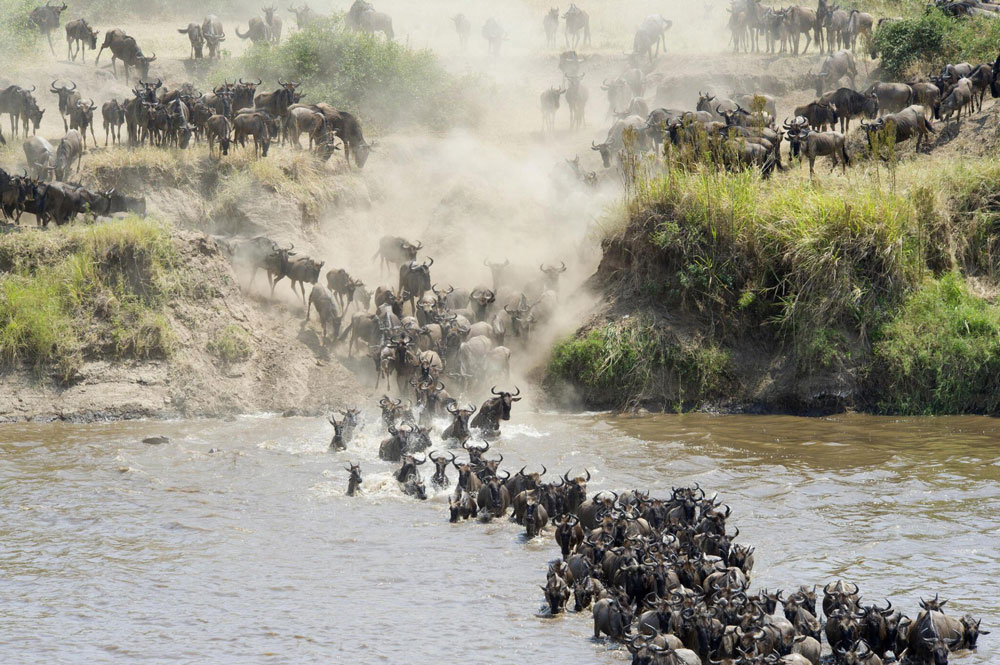
“Serengeti” is a local Masai term signifying “the area where land stretches indefinitely,” so the park is also referred to as the site of “endless plains.” The park’s vast expanses include grassland, savanna, riverine forest, and woodlands, and while predominantly characterized by broad plains, it is situated at an elevation ranging from 914m to 1,828m above sea level. The extraordinary rock formations evoke imagery reminiscent of the film “Lion King.”
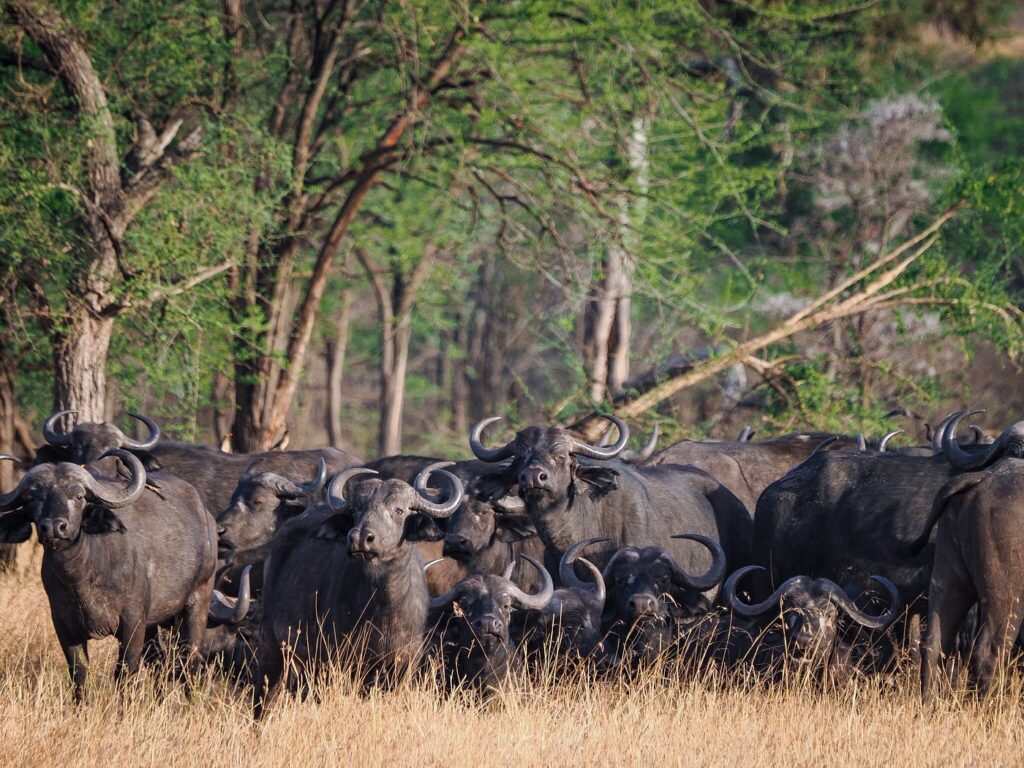
Renowned for its affluence and extensive biodiversity, Serengeti National Park hosts a multitude of wildlife species. The park houses all members of the African Big Five (lion, rhinoceros, buffalo, elephant, and leopard), featuring the most substantial lion population in Africa. In addition to the big five, the Serengeti is home to a diverse array of predators, including the cheetah, jackals, hyena, African golden wolf, honey badger, and serval. The vastness of the ecosystem makes Serengeti the premier location for observing predators on any African trip. Additional fauna in the Serengeti including wildebeest, Grant’s gazelles, zebras, antelopes, hippopotamuses, crocodiles, impalas, kongonis, elands, topis, hartebeests, and giraffes, among others.
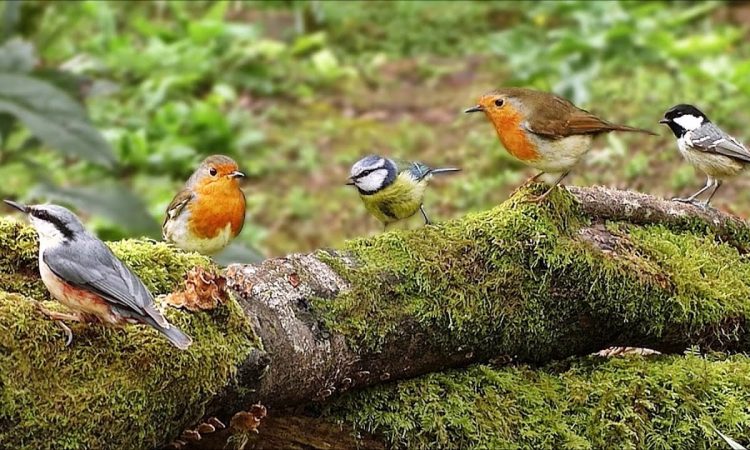
Additionally, Serengeti National Park serves as a sanctuary for avian enthusiasts, hosting more than 500 documented bird species. Birdwatchers on safaris in the park will eagerly explore the area’s distinctive species, including the Kori Bustard, Africa’s heaviest bird, and the vividly colored Fischer’s Lovebirds, among others. The Serengeti-Mara environment is recognized as one of Africa’s Endemic Bird Areas, housing five distinct bird species, with half endemic to Tanzania.
Attractions in Serengeti National Park
The Great Migration of Wildebeests
The Great Wildebeest movement is the principal tourist draw of the Serengeti and the world’s most significant uninterrupted animal movement, representing the pinnacle of wildlife displays in Africa. This migration ranks as the second-largest terrestrial animal migration globally, categorizing it among Africa’s seven natural wonders and one of the world’s ten natural travel marvels.
The migration encompasses more than 1.5 million wildebeest, 250,000 zebras, 500,000 gazelles, and numerous topi, hartebeest, and impalas on the quest for water and more fertile grazing grounds. Annually, from late January to October, millions of these ungulates migrate through the Serengeti, traversing the Grumeti and Mara rivers before arriving in Kenya’s Masai Mara National Reserve. The ungulates traverse the landscape in a seasonal pattern dictated by precipitation and the nutritional quality of grass during their extensive cyclical migration. During a visit to the Serengeti, the extensive herds of migrating animals are most effectively observed along the Grumeti River. Additionally, several of the most renowned photos of the wildebeest migration have been taken along the Grumeti and Mara rivers.
Observing the Great Wildebeest Migration resembles viewing a cinematic spectacle; it encompasses more than merely the ungulates. During this period, the animals face peril not only from the tumultuous rivers but also from predators, including submerged crocodiles and terrestrial lions and leopards, who await their passage with anticipation. The journey is perilous, yet it represents one of nature’s most remarkable migratory patterns.
Wildlife
The remarkable concentration of wildlife in Serengeti National Park attracts numerous visitors worldwide to partake in Serengeti safaris. The presence of large mammals such as elephants, buffaloes, and hippos, along with a significant population of big cats like cheetahs, leopards, lions, and serval cats, renders a safari in the Serengeti unforgettable. Serengeti National Park possesses the highest density of large mammals globally, offering a significant likelihood of observing diverse species, including herds of elephants, giraffes, zebras, wildebeests, hippos, lions, buffalo, leopards, and the seldom-seen rhinos, particularly in the northern region of the park. Additionally, Serengeti National Park is home to more than 3,000 lions.
Birds
Commonly referred to as the “Little Birding Paradise,” Serengeti National Park hosts more than 500 bird species distributed throughout its expansive, unbounded grasslands. Due to the park’s extensive size, birdwatchers require ample time on Serengeti birding tours to get optimal outcomes. Birds constitute a prominent attraction in Serengeti National Park. In addition to iconic species such as the Kori bustard, African Fish Eagle, and Ostrich, ornithologists may observe the Grey-throated spurfowl, Rufous-tailed weaver, Schalow’s wheatear, Grey-crested helmet shrike, Red-throated tit, Schalow’s turaco, Secretary bird, and Fischer’s Lovebird, among others.
Birdwatching excursions in the Serengeti are particularly pleasurable during the verdant season when avian species are nesting. The park accommodates migrating birds from many regions worldwide from April to November throughout this season.
The Retina Hippopotamus Pool
This location serves as a water catchment area within the park, predominantly inhabited by hippos. The Retina hippo pool is a prominent tourist site in the Serengeti and is essential for visitors to the park. The pool, teeming with numerous hippos, provides remarkable and intimate views of the animals with their complete bodies visible. They are abundant in the small pool of water, where they may be observed reclining while rhythmically swaying their tails to splash water onto their backs. The Serengeti features numerous hippo ponds, with the Retina Hippo Pool being the most renowned for its diversity.
Moru Kopjes
Kopjes are striking rock formations located in the center section of Serengeti National Park, at the origin of the River Mbalageti valley. The kopjes provide stunning vistas and consist of ancient granite that has fractured and degraded due to exposure to solar radiation, precipitation, and wind. The Moru kopjes are remarkable and aesthetically pleasing due to their size, offering shade and little water puddles for wildlife. Furthermore, they draw a diverse array of fauna, including zebras, elephants, wildebeest, lions, leopards, cheetahs, servals, and caracals, rendering them the optimal location for game viewing while your safari in Serengeti National Park. Additional prominent clusters of kopjes in the Park comprise Gol, Barafu, Wogakurya, Maasai, Loliondo, and Simba.
The Maasai Community
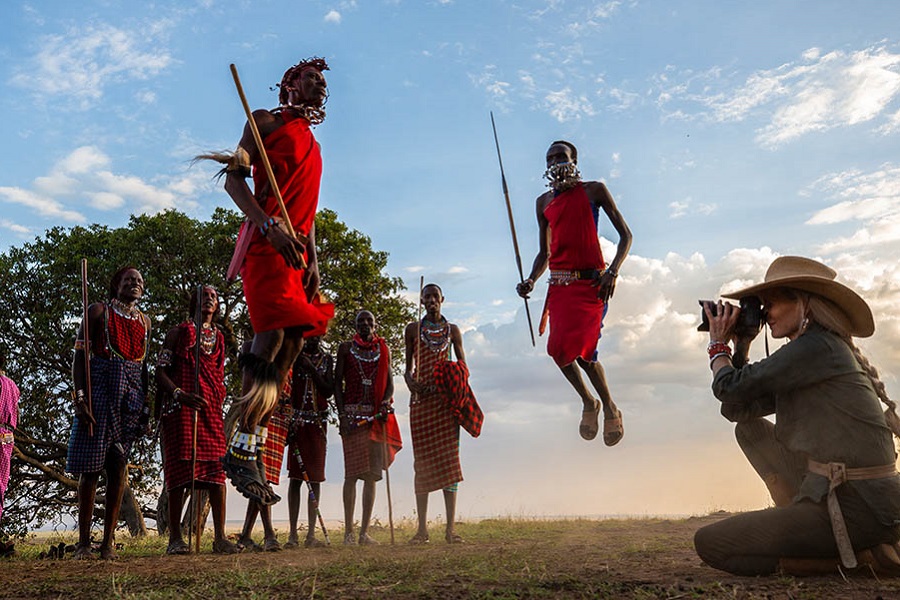
The Maasai are one of the few terrestrial groups that have preserved their culture despite the encroachment of global civilization. These were the indigenous people of the region. Subsequent to the declaration, the Maasai were relocated to the Ngorongoro Conservation Area; yet, after an extended period, they reasserted control over portions of Serengeti land. The Maasai provide guests with one of the most genuine cultural experiences during African safaris to the Park. Their historical traditions are intriguing, making a visit worthwhile. Several resorts have employed indigenous Maasai individuals to perform security and watchman responsibilities, among other tasks.
Seronera River Valley
The river valley is among the premier locations in Serengeti National Park for observing wildlife. The river valley, located in the park’s middle region, supports a diverse array of fauna, including buffalo, topi, impala, giraffes, hartebeest, warthogs, waterbucks, bushbucks, hippos, reedbucks, dik-dik, Nile crocodiles, and predators like as lions, spotted hyenas, leopards, and cheetahs. Moreover, the Seronera River is an exceptional locale for avian observation, where one may encounter herons, fish eagles, rollers, kingfishers, egrets, hoopoes, grey crowned cranes, and Egyptian geese, among others.
Grumeti River
The Grumeti River is a captivating location along the remote western corridor of Serengeti National Park. The river is renowned for hosting several crocodiles and serves as the initial crossing site for the great wildebeest migration. This is the location where nearly one million wildebeest, thousands of gazelles, zebras, and other antelopes confront their initial struggle for survival. Between May and July, animals will traverse the Grumeti River, providing guests with a remarkable spectacle throughout their safari.
Premier Activities in Serengeti National Park
Game Drives
Game drives have consistently been the optimal method for observing wildlife during any safari in Africa; considering the extensive area of the Serengeti and its abundant species, game drives in this extraordinary park are unparalleled. Serengeti National Park provides wildlife drives during morning and afternoon/evening sessions. Morning game drives commence as early as 06:00 a.m. and are particularly gratifying, as the majority of Serengeti’s species exhibit heightened activity throughout the cooler morning and evening hours. A morning game drive in a 4×4 safari vehicle is optimal for observing predators, including leopards, lions, cheetahs, and hyenas. This is the optimal time to observe angulates, buffaloes, elephants, and other herbivores foraging in the broad savannah plains. Typically, morning game drives in the Serengeti take approximately 4 hours and frequently conclude with a bush breakfast, although tourists may opt to return to the resort instead. A morning game drive is an invigorating method to commence your day, requiring little more than binoculars and a coat.
While morning game drives are optimal for observing active wildlife, afternoon drives offer stunning views of animals resting in the shade and drinking at water sources. Conversely, night game drives in the Serengeti are prohibited, as they are in all other national parks in Tanzania. Nonetheless, these are attainable in the adjacent conservancies.
Hot Air Balloon Adventures
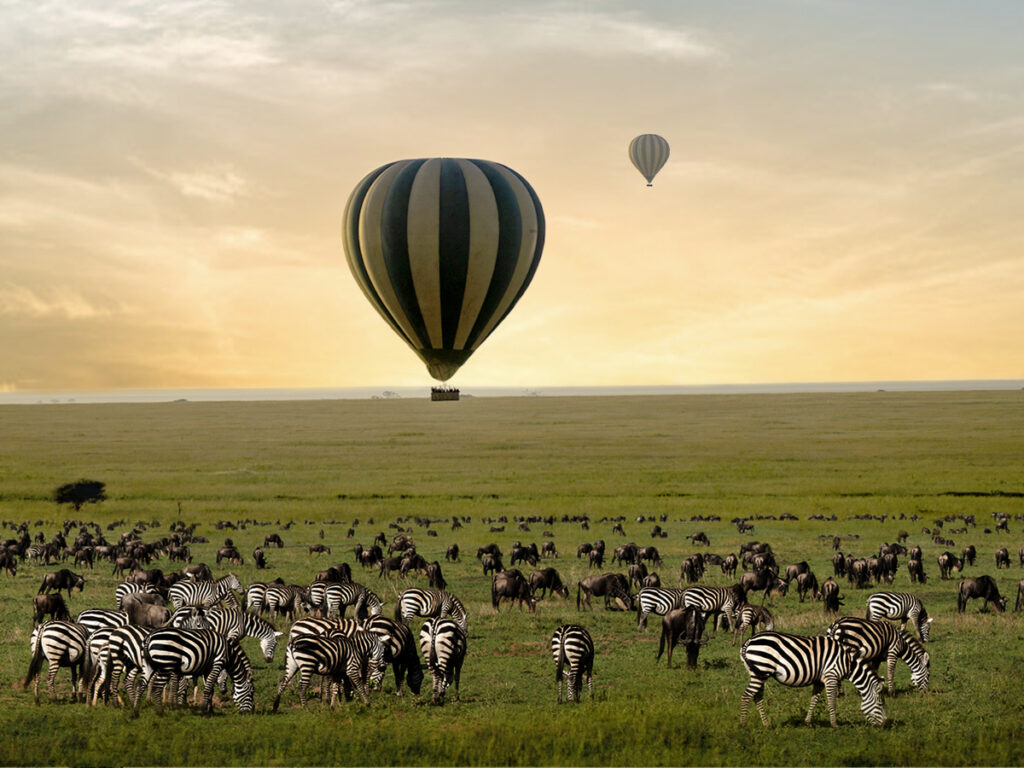
To experience the magnificent Serengeti landscape and grasslands, consider a hot air balloon adventure. A sunrise hot-air balloon excursion over the Serengeti plains is a premier feature of a luxury safari, offering an aerial view of the entire park. The balloon flights commence in Northern Tanzania and last approximately one hour, subsequently followed by a Champagne bush brunch. Hot-air balloon safaris in the park commence as early as 5:00 a.m., accompanied by a small cup of coffee at your lodge. During the balloon safari, you may observe diverse wildlife, especially nocturnal species; around sunrise, hippos and other animals may be spotted along the Seronera and Grumeti rivers.
Nature Walks
This represents an alternative perspective on wildlife in Serengeti National Park. Safari excursions are exhilarating as they provide unparalleled intimate interactions with wildlife. During the guided walking safari in the reserve, guests should fully engage with the exquisite natural beauty of the Serengeti plains. Explore the breathtaking landscapes of Serengeti National Park as your guide identifies wildlife, fascinating insects, and advantageous flora for the community. Anticipate witnessing the magnificent fauna of the Serengeti in motion, including cheetahs, elephants, buffaloes, lions, and giraffes, among others. Safari excursions in the Serengeti are led by indigenous Masai guides and park officials, lasting up to ninety minutes.
Camping
Camping in Serengeti National Park is one of the most authentic and exciting ways to experience Tanzania’s wildlife. Sleeping in the heart of the African wilderness, surrounded by lions, elephants, and the sounds of nature, offers an unforgettable safari experience. Whether you choose budget camping or a luxury tented camp, Serengeti camping brings you closer to the wild.
Best time to visit Serengeti National Park
Africa safaris to Serengeti National Park are favorable year-round; however, the optimal months for visitation are from June to October during the dry season, when wildlife observation is at its peak. Wildlife observation is exceptional year-round, however specific locations are more advantageous during particular seasons. However, the wildebeest migration is all year round as they are in different locations depending on the months. The wildebeest calving season occurs from late January to February in the Ndutu region of the Serengeti and Ngorongoro Conservation Area.
Directions to Serengeti National Park
Most Serengeti safaris originate from Arusha, and Serengeti National Park is accessible by both road and air. The most efficient method of arrival is to fly into Kilimanjaro International Airport (JRO), located around 46 km from Arusha. From Julius Nyerere International Airport (DAR), situated outside Dar es Salaam, one can either fly to Arusha Airport (ARK) or Kilimanjaro International Airport (KLI) (JRO). Arusha offers daily charter flights to various airstrips throughout the park.
The road journey to Serengeti from Arusha spans around 382 kilometers and requires about 7 hours. The expedition is lengthy and arduous, although it is rewarding with magnificent vistas throughout, and you will see many wildlife throughout the road. The voyage via the Ngorongoro Conservation Area allows for the option to fly one way and drive the other, or to spend a night in the Ngorongoro Crater. The distance from the crater to the Seronera region in the Serengeti is around 140 km, equating to a trip of about three hours.
Lodging in Serengeti National Park
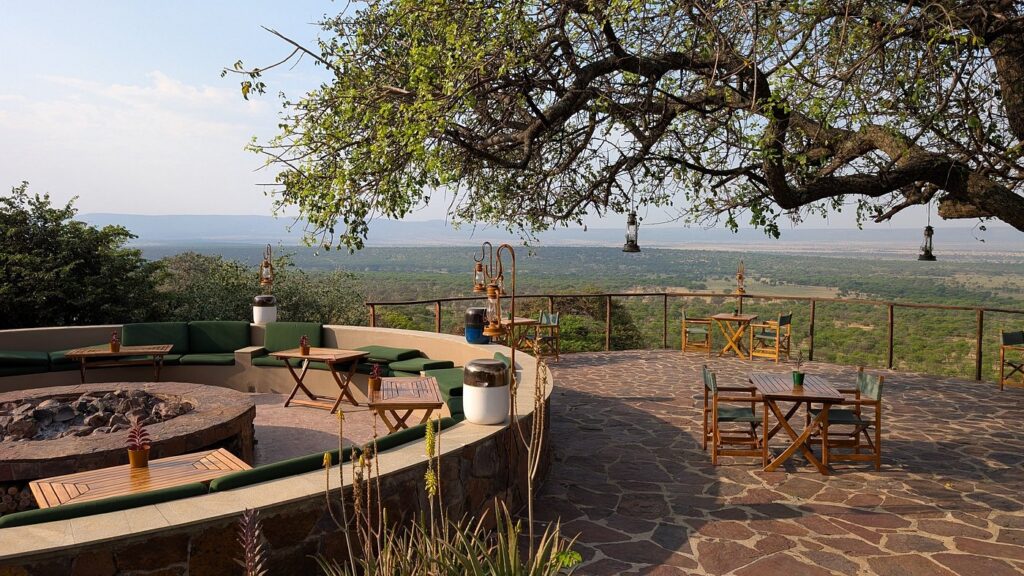
Serengeti National Park in Tanzania is one of the world’s premier safari destinations, known for its vast plains, abundant wildlife, and the incredible Great Wildebeest Migration. Staying in a lodge inside or near the park adds comfort, convenience, and access to exceptional game viewing right at your doorstep.
Luxury Lodges in Serengeti National Park
Four Seasons Safari Lodge Serengeti – Ultra-luxury lodge with world-class service and spectacular wildlife views.
Serengeti Serena Safari Lodge – Iconic safari lodge with elegant design and excellent access to wildlife drives.
Serengeti Luxury Retreat – High-end boutique property with panoramic views and refined amenities.
Mbali Mbali Soroi Serengeti Lodge – Spacious, beautifully designed lodge with stunning Serengeti vistas.
Meliá Serengeti Lodge – Part of the Melia Collection with contemporary comfort and excellent location.
Ole Serai Luxury Camps – Turner Springs – Luxury tented camps with exceptional service and safari experiences.
Comfort & Mid-Range Stays
Into Wild Africa Luxury Tented Safari Camp Serengeti – Highly rated tented camp offering an immersive bush experience.
Serengeti Kifaru Tented Lodge – Stylish tented lodge with excellent safari access.
Osero Serengeti Tented Camp – Comfortable camp with great views and safari lineup.
Serengeti Wild Camp – Well-reviewed camp with authentic safari vibe.
SAFARI VIEW LUXURY CAMP – Luxury camp option for close-to-nature stays.
Nyikani Camp – Central Serengeti – Central Serengeti camp with quality service.
Classic & Authentic Safari Lodges
Serengeti Safari Lodge – Classic lodge near game zones great for all safari types.
Seronera Wildlife Lodge – Traditional lodge in Seronera, close to central park wildlife.
Kubu Kubu Tented Lodge – Popular safari lodge blending comfort and wilderness.
Osinon Camps & Lodges – Cozy lodge with migration access.
Signature Serengeti Luxury Tented Safari Camp – Stylish luxury tented safari camp.
Heritage Luxury Tented Camp – Comfortable tented stay with authentic safari atmosphere.
Safari Lodges Across the Park
Serengeti accommodations are spread across key areas (Central, Northern, Southern, Western Serengeti), ensuring you can plan stays based on wildlife movements and the Great Migration route