Best Time to Visit Mana Pools National Park
A month-by-month guide to seasons, wildlife, walking safaris, canoeing and self-drive access in Zimbabwe’s Zambezi Valley
| The best time to visit Mana Pools National Park is the dry season, from June to October. Wildlife concentrates on the Zambezi floodplain, roads are passable, walking and canoe safaris run at their best, and the famous albida (winter thorn) woodland draws elephants rising onto their hind legs to feed.
Peak game viewing: September and October – but expect daytime heat of 35–40°C+. Best value: April–May and November, when camps open or close the season with lower rates and fewer vehicles. Avoid for most trips: December to March, when heavy rains close access roads and most camps. |
Why Timing Matters at Mana Pools
Mana Pools National Park is one of Africa’s most celebrated wilderness areas – a sweep of Zambezi River floodplain, oxbow lagoons and cathedral-like albida forest in northern Zimbabwe. Together with the neighbouring Sapi and Chewore Safari Areas, it is a UNESCO World Heritage Site, and it sits directly across the river from Zambia’s Lower Zambezi National Park.
Few safari destinations are shaped as strongly by the seasons. The name “Mana” means “four” in the local Shona language, a reference to the four main pools – Main (Long) Pool, Chine, Chisasiko and Green Pool – left behind by the Zambezi’s ancient changes of course. As the dry season tightens its grip, these pools and the river become the only reliable water for miles, pulling elephants, buffalo, lions, wild dogs and antelope onto the open floodplain. In the rains, the same landscape turns green, muddy and largely inaccessible.
Choosing when to go therefore decides almost everything: what you will see, which activities you can do, whether you can drive in yourself, how hot it will be and how much you will pay. This guide breaks it all down so you can match your travel dates to the experience you want.
Mana Pools Seasons at a Glance
Mana Pools has two main seasons – dry and wet – but the dry season changes so much from start to finish that it is best understood in three phases.
| Season | Months | Weather | Wildlife | Verdict |
| Early dry | Apr – Jun | Warm days, cool nights, green bush drying out | Good; animals still dispersed inland | Great value, lush scenery |
| Mid dry | Jul – Aug | Mild, sunny, cool mornings (8–12°C) | Very good; floodplain filling up | Most comfortable weather |
| Late dry | Sep – Oct | Hot to very hot (35–42°C) | Excellent; peak concentrations | Best game viewing |
| Transition | Nov | Very hot, first storms | Good early month; calving begins | Bargain, but variable |
| Wet / green | Dec – Mar | Heavy rain, humid, 30–35°C | Dispersed; superb birding | Most camps closed |
The Dry Season (May to October): Prime Safari Time
The dry season is when Mana Pools earns its reputation. Very little rain falls between May and October, the vegetation thins, and the Zambezi floodplain becomes a natural stage for wildlife. This is also the period when the vast majority of camps operate and the park’s roads are reliably passable.
Early Dry Season: April to June
Camps begin opening from April, as the last of the rains clear and road crews repair the access tracks. The bush is still green and thick, and inland pans hold water, so animals are more spread out than they will be later. That said, the floodplain is already busy, the light is soft and photogenic, and the scenery is at its most beautiful.
- Temperatures: daytime highs around 28–32°C, nights 12–18°C.
- Why go: lower mid-season or shoulder rates, fewer visitors, lush landscapes and comfortable walking conditions.
- Trade-off: denser vegetation makes predators harder to find; some remote roads may still be rough in April.
Mid Dry Season: July and August
July and August combine excellent wildlife with the most pleasant weather of the year. Mornings and evenings are crisp – bring a warm fleece for early game drives and canoe launches – while days are sunny and mild. Water inland has largely dried up, so herds of elephant, buffalo, eland, kudu, waterbuck and impala move steadily toward the river.
- Temperatures: daytime 25–30°C, early mornings can dip to 8–12°C.
- Why go: ideal walking safari conditions, reliable game viewing, comfortable canoeing and great family travel weather.
- Trade-off: high-season pricing and the park’s busiest period, coinciding with European and North American summer holidays.
Late Dry Season: September and October
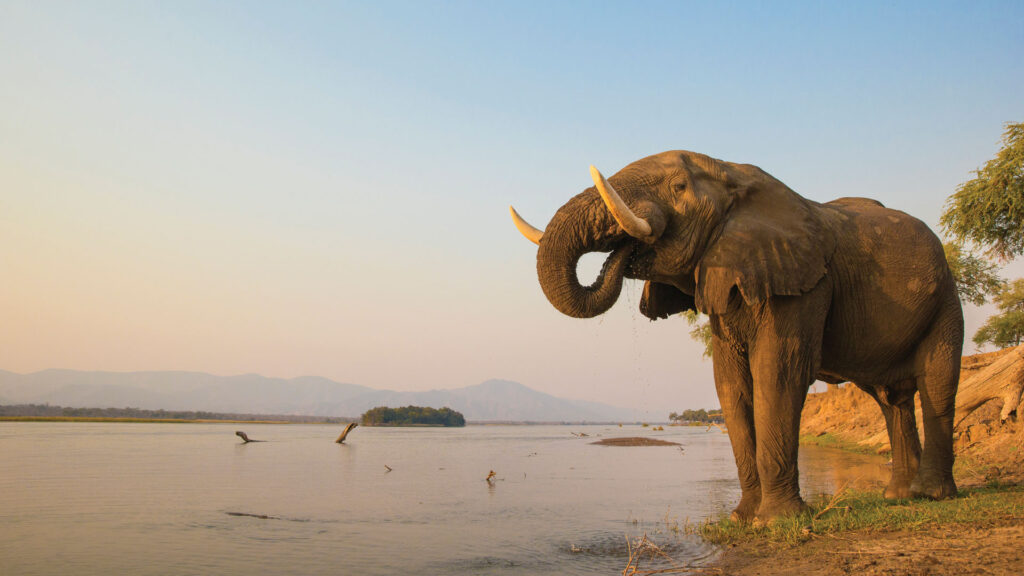
For serious wildlife enthusiasts and photographers, September and October are the pinnacle. The landscape is stripped to its bones, the floodplain is thronged with animals, and predator action intensifies as prey gathers near water. This is also when the albida trees (Faidherbia albida) drop their protein-rich seed pods – and when you have the best chance of seeing Mana Pools’ signature sight: large bull elephants standing on their hind legs to reach the branches.
- Temperatures: daytime highs of 35–40°C, occasionally higher in October; warm nights.
- Why go: peak concentrations of wildlife, frequent lion and wild dog sightings, dramatic dust-and-light photography, carmine bee-eater colonies nesting in the riverbanks.
- Trade-off: intense heat by midday – activities shift to early morning and late afternoon – and the highest rates of the year.
| Photographer’s Tip
The low sun and dust of late September and October create the golden, misty backlighting that has made Mana Pools famous among wildlife photographers. Shoot in the first and last hour of light along the albida woodland near Long Pool and the Mana Mouth area, and plan midday downtime around a waterhole hide if your camp has one. |
The Wet Season (November to March): Green, Quiet and Largely Closed
The first storms usually roll in during November, bringing relief from the heat and a flush of new growth. By December, the rains are established, and between January and March the black cotton soils of the Zambezi Valley become waterlogged and the access roads turn treacherous. Most lodges and mobile operators close for the season, and the park is effectively inaccessible to ordinary vehicles.
November: The Transition Month
November can be an excellent and affordable time to visit, particularly in the first half of the month. Wildlife remains close to the river until the rains are properly established, impala and other antelope begin dropping their young, and migratory birds arrive. Expect very hot, humid days broken by dramatic afternoon thunderstorms. Many camps close in mid- to late November, so check opening dates carefully.
December to March: For Specialists Only
If you are a dedicated birder or an experienced traveler with a specialist operator, the green season offers solitude, lush scenery and outstanding birdlife, with summer migrants and many species in breeding plumage. For the majority of travelers, however, the combination of closed camps, flooded roads, dispersed wildlife, heat, humidity and higher malaria risk makes this the season to avoid.
| Important
Do not plan a self-drive trip into Mana Pools during the rains. Black cotton soil becomes almost impassable when wet, river crossings can rise quickly, and help may be many hours away. Always confirm road status with Zimbabwe Parks and Wildlife Management Authority (ZimParks) before travelling in November or April. |
Month-by-Month Guide to Mana Pools
Use this table to compare each month at a glance. Temperatures are typical averages and can vary year to year.
| Month | Avg High / Low | Rain | Game Viewing | Notes |
| January | 32°C / 22°C | Very high | Poor | Most camps closed; roads flooded |
| February | 32°C / 22°C | Very high | Poor | Peak rains; birding excellent |
| March | 32°C / 21°C | High | Poor | Rains easing; access still difficult |
| April | 31°C / 18°C | Low | Fair | Camps start opening; lush scenery |
| May | 29°C / 14°C | Very low | Good | Excellent value; comfortable |
| June | 27°C / 11°C | None | Good – very good | High season begins; cool nights |
| July | 27°C / 10°C | None | Very good | Ideal walking weather; busy |
| August | 30°C / 13°C | None | Very good – excellent | Wildlife massing on floodplain |
| September | 34°C / 18°C | None | Excellent | Albida pods; elephants on hind legs |
| October | 37°C / 22°C | Very low | Excellent | Hottest month; peak predator action |
| November | 35°C / 22°C | Moderate | Good (early) | First storms; camps closing; calving |
| December | 33°C / 22°C | High | Fair – poor | Rainy season; most camps closed |
Best Time to Visit Mana Pools by Activity
Mana Pools is unusual among African parks in the range of activities it offers – including guided and, in designated circumstances, unguided walking. Here is when each experience shines.
| Activity | Best Months | Why |
| Walking safaris | June – September | Open bush, cooler mornings, animals easy to track on foot |
| Canoe safaris on the Zambezi | May – October | Stable river levels, wildlife along the banks; multi-day trips run in season |
| Game drives | August – October | Peak concentrations on the floodplain |
| Wild dog and lion sightings | July – October | Dog denning (mid-year) and predators near water |
| Elephants on hind legs | September – November | Albida trees drop pods; bulls stretch for branches |
| Photography | September – October | Dust, golden light, dense wildlife |
| Birdwatching | November – March | Migrants present; carmine bee-eaters nest Sept – Nov |
| Tigerfish fishing (catch & release) | September – November | Warm water and aggressive feeding; confirm current regulations |
| Self-drive and camping | June – October | Dry, firm roads; reliable access to Nyamepi and exclusive campsites |
| Budget travel | April – May, November | Shoulder rates and better availability |
Wildlife Calendar: What You Will See and When
Elephants
Mana Pools is renowned for its relaxed elephant population, particularly the bulls that wander through camps and along the floodplain. Numbers on the riverfront build from July and peak from September to November, when the albida pods ripen.
Predators
Lion prides are frequently seen around the floodplain and in the mopane and jesse bush inland. Leopard are present throughout, and the park is one of Zimbabwe’s best places to see African wild dogs, which often den during the mid-year months. Spotted hyena are common, and cheetah are rare.
Herbivores
Large buffalo herds, eland, waterbuck, kudu, zebra, impala and the beautiful nyala (in the more thickly wooded areas) all congregate along the river in the dry season. Hippo and Nile crocodile are abundant in the Zambezi and the pools year-round.
Birds
More than 380 bird species have been recorded in the area. Highlights include the African skimmer and carmine bee-eater colonies on sandbanks and riverbanks, Lilian’s lovebird, African fish eagle, Meyer’s parrot, and a wealth of herons, storks and kingfishers. Summer migrants arrive from around October/November.
Weather and Climate in Mana Pools
Mana Pools lies on the floor of the Zambezi Valley at roughly 350–500 metres above sea level, which makes it considerably hotter than Zimbabwe’s highveld cities such as Harare. Understanding the climate will help you pack and plan your daily rhythm.
- Winter (June – August): dry, sunny and mild during the day; surprisingly chilly in an open vehicle or canoe at dawn.
- Hot season (September – November): temperatures climb sharply; October is regularly the hottest month, often above 40°C. Hydration and shade become essential.
- Rainy season (December – March): the bulk of the annual rainfall arrives as heavy downpours and thunderstorms, with high humidity.
Best Time for a Self-Drive Trip to Mana Pools
Mana Pools is one of the classic self-drive and camping destinations in Southern Africa, popular with overlanders driving from Harare, Kariba or across the Chirundu border from Zambia. Timing is critical for a safe and enjoyable self-drive trip.
When to Drive Yourself
June to October is the recommended window for self-drivers. Roads are dry and firm, the campsites are open and fully operational, and you can explore the floodplain loops with confidence. May and early November are possible for experienced drivers, but conditions vary.
Self-Drive Essentials
- Vehicle: a high-clearance 4×4 is strongly recommended; the final stretch into the park is a corrugated gravel road, and floodplain tracks can be sandy.
- Permits: entry permits are obtained at the Marongora office on the main Harare–Chirundu road before you turn off toward the park. Arrive in daylight, as the gates have set opening hours.
- Accommodation: book ZimParks campsites (Nyamepi main camp and exclusive sites) and lodges well ahead – dry-season dates sell out many months in advance.
- Self-sufficiency: carry enough fuel, water, food and recovery gear. There is no fuel inside the park and supplies are limited.
- Rooftop or ground tent: both work well in the dry season; never leave food in tents and always keep the vehicle closed at night – hyenas, honey badgers and elephants are frequent camp visitors.
| Cross-Border Self-Drive
Travellers driving a rental from Zambia or further afield should carry the vehicle registration papers, a letter of authority from the rental company, COMESA Yellow Card or third-party insurance valid in Zimbabwe, and a Temporary Import Permit issued at the border. Check visa requirements for your nationality and whether the KAZA Univisa suits your route. |
Costs and Park Fees by Season
Prices in Mana Pools vary significantly by season and travel style. Lodge and mobile-camp rates are highest from June to October, while April, May and November usually attract shoulder or mid-season rates.
| Cost Item | Indicative Price (USD) | Notes |
| ZimParks daily conservation fee – international | ≈ $20 per person per day | Based on the published ZimParks schedule; confirm current rates before travel |
| ZimParks daily conservation fee – SADC residents | ≈ $15 per person per day | Lower rates apply to Zimbabwean citizens |
| Vehicle entry fee | Varies by vehicle type | Payable at Marongora / park entry |
| ZimParks campsite (self-drive) | Budget | Nyamepi and exclusive campsites; book early |
| Mid-range tented camp | ≈ $400 – $600 pp/night | Usually full board with activities |
| Premium and luxury camps | ≈ $600 – $1,500+ pp/night | High season rates; includes guided walks, drives and canoeing |
| Light aircraft transfer from Harare | Varies | Flights to Mana Main or Dandawa airstrips |
Note: All prices are indicative and subject to change. Park fees and camp rates are reviewed regularly – always confirm current figures with ZimParks or your booking operator.
Getting to Mana Pools by Season
By Road
From Harare, the drive to Mana Pools takes roughly five to six hours via Makuti and Marongora. The tar road is generally good, but the turn-off into the park leads onto around 70 km of gravel to Nyamepi, which deteriorates quickly once the rains arrive. From Kariba or the Chirundu border with Zambia, the journey is shorter.
By Air
Scheduled and charter light-aircraft flights connect Harare, Kariba and Victoria Falls with airstrips in and near the park, including Mana Main and Dandawa. Flying in is the most comfortable option, especially in the late dry season when road travel is hot and dusty, and it is the only realistic access route at the start and end of the season when roads may be compromised.
What to Pack for Each Season
| Season | Clothing | Extras |
| June – August | Warm fleece or jacket, beanie, layers in neutral colours | Gloves for dawn canoeing, lip balm, binoculars |
| September – October | Light, breathable long sleeves, wide-brimmed hat | High-SPF sunscreen, cooling towel, refillable water bottle, dust cover for camera |
| November – April | Lightweight rain jacket, quick-dry clothing | Strong insect repellent, waterproof bags, sturdy waterproof shoes |
| All year | Neutral khaki, olive or brown tones (avoid bright white and dark blue) | Malaria prophylaxis, headlamp, power bank, basic first-aid kit |
Health and Safety Tips by Season
- Malaria: Mana Pools is a malaria area all year, with the highest risk during and just after the rains. Consult a travel health professional about prophylaxis, and use repellent and long sleeves at dusk.
- Tsetse flies: present in parts of the Zambezi Valley; wear neutral colours and avoid dark blue and black.
- Heat: in September and October, drink plenty of water, rest through the midday heat and watch for signs of heat exhaustion.
- Walking: Mana Pools is famous for allowing walking, but wildlife is wild. First-time visitors should always walk with a qualified professional guide, keep a safe distance from elephants, buffalo and hippos, and never walk at night.
- Campsites: there are no fences. Keep food sealed, stay close to camp after dark and use a torch whenever you move around.
Sample Itineraries for the Best Season
3-Day Mana Pools Highlights (June – October)
| Day | Activities |
| Day 1 | Fly from Harare to Mana Main airstrip or drive via Marongora; afternoon game drive along the floodplain; sundowner overlooking the Zambezi. |
| Day 2 | Early guided walking safari through the albida woodland; midday rest; afternoon canoe trip along the river channels. |
| Day 3 | Sunrise game drive to Long Pool or Chine Pool; brunch; transfer out by air or road. |
5-Day Mana Pools Self-Drive and Camping Safari (July – October)
| Day | Activities |
| Day 1 | Drive Harare to Marongora for permits, then on to Nyamepi or an exclusive campsite; set up camp and enjoy an evening on the riverbank. |
| Day 2 | Morning loop drive to Long Pool and the Mana Mouth area; afternoon at Chine and Green Pools. |
| Day 3 | Guided walk with a licensed professional guide to track elephants and wild dogs; relaxed afternoon in camp. |
| Day 4 | Half-day canoe excursion with an operator; evening photography in the albida woodland. |
| Day 5 | Final sunrise drive; pack up and head to Kariba, Chirundu or back to Harare. |
Planning and Booking Tips
- Book early for June to October. Lodges, mobile camps and ZimParks campsites in prime locations can sell out 9–12 months ahead.
- Combine destinations. Mana Pools pairs naturally with Lake Kariba, Hwange National Park and Victoria Falls, or with Zambia’s Lower Zambezi across the river.
- Stay at least three nights. Remote access and the variety of activities make shorter visits feel rushed.
- Mix activities. A combination of game drives, walking and canoeing shows the park from every angle.
- Confirm opening dates. Camp seasons differ slightly each year, especially around April and November.
Frequently Asked Questions
What is the best month to visit Mana Pools?
September is often considered the single best month, combining peak wildlife concentrations, albida pod season and slightly less extreme heat than October. July and August are ideal if you prefer cooler, more comfortable weather.
Is Mana Pools open all year?
The park itself is not formally closed year-round, but most camps operate only from around April to November. During the rains, access roads become impassable and the vast majority of accommodation shuts.
When can I see elephants standing on their hind legs?
This behaviour is most common from September to November, when the albida (winter thorn) trees drop their seed pods and bull elephants stretch up to reach the branches.
Is October too hot for a Mana Pools safari?
October is very hot, with highs often above 40°C, but it offers some of the best game viewing of the year. Activities run early and late in the day, and many camps offer midday hides or shaded rest areas.
Can I self-drive in Mana Pools?
Yes. Mana Pools is a well-known self-drive destination in the dry season (June to October). A high-clearance 4×4 is strongly recommended, and permits must be collected at Marongora before entering the park.
When is the best time for canoeing on the Zambezi at Mana Pools?
Canoe safaris run best from May to October when river levels are stable and wildlife gathers along the banks.
Is Mana Pools good for birdwatching?
Yes. Birding is rewarding year-round, but November to March brings migrant species and breeding plumage, while September to November is best for carmine bee-eater nesting colonies.
How many days do I need in Mana Pools?
Three to five nights is ideal. This gives time for game drives, at least one walking safari and a canoe outing without feeling rushed.
Conclusion: When Should You Go?
For the classic Mana Pools experience – elephants under the albida trees, wild dogs on the floodplain, guided walks and canoe trips along the Zambezi – plan your visit between June and October. Choose July or August for comfortable temperatures, September or October for the most spectacular wildlife viewing, and April, May or early November if value and solitude matter most. Outside these months, the rains make access difficult and most camps close.
| Plan Your Mana Pools Safari with Marriott Safaris Africa
Whether you want a guided lodge safari, a canoe adventure on the Zambezi or a fully equipped 4×4 self-drive with camping gear, our team can help you choose the right dates, secure campsite and lodge bookings, and design a route that combines Mana Pools with Victoria Falls, Hwange or Lake Kariba. Marriott Safaris Africa – Perfection Anytime. |