What Is Hwange National Park Famous For?
A Complete Guide to Zimbabwe’s Largest Wildlife Sanctuary – Elephants, Predators, Waterholes, History & How to Visit
Hwange National Park is Zimbabwe’s largest and most celebrated wildlife sanctuary, a vast wilderness of Kalahari sands, teak woodland and shimmering pans in the country’s far west. Covering roughly 14,600 square kilometres – an area larger than many small countries – it sits just a few hours’ drive from Victoria Falls and has long been the beating heart of Zimbabwe’s safari industry.
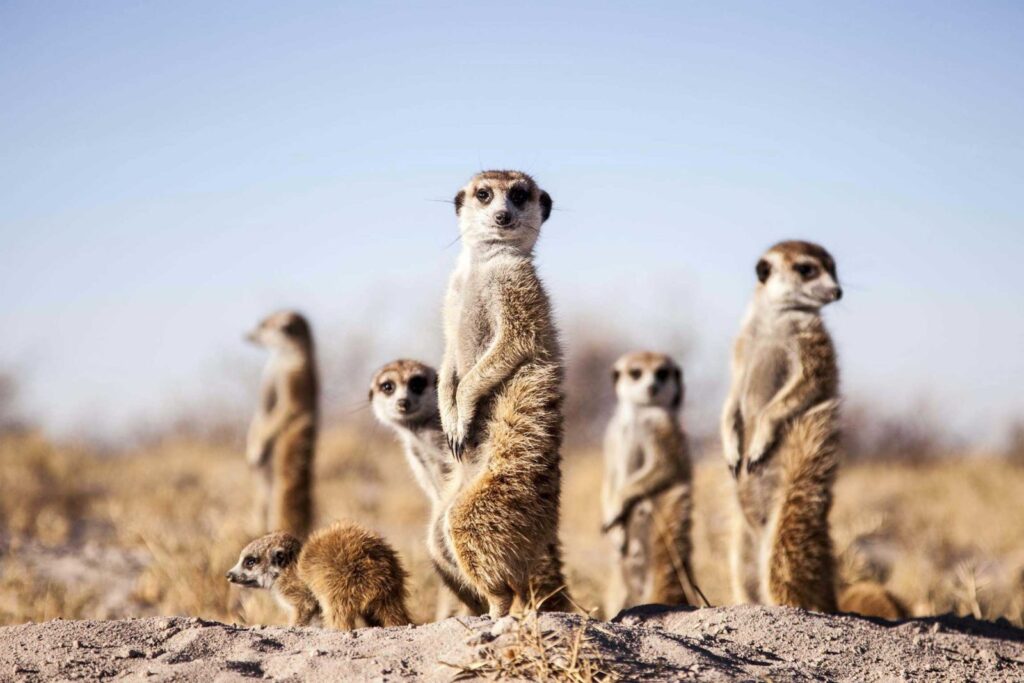
So, what is Hwange National Park famous for? Above all, it is famous for elephants: tens of thousands of them, gathering in spectacular numbers at waterholes during the dry season. But Hwange is far more than an elephant park. It is one of Africa’s most important strongholds for the endangered African wild dog, home to all of the big cats, a birding destination with more than 400 recorded species, and the setting for one of the most famous wildlife stories of the 21st century – Cecil the lion.
In this guide, we explore everything that makes Hwange special, then walk you through the practical details: the best time to visit, how to get there, where to stay, and a sample itinerary to help you plan your own Hwange safari.
| Hwange at a Glance
Location: Matabeleland North Province, western Zimbabwe, bordering Botswana Size: Approximately 14,600 km² – Zimbabwe’s largest national park Famous for: One of Africa’s largest elephant populations, wild dogs, big cats and pumped waterholes Established: Game reserve in 1928; national park status in 1961 Best time to visit: July to October (dry season) for peak game viewing Nearest gateway: Victoria Falls (roughly 2.5–3 hours’ drive to Main Camp) |
Quick Facts About Hwange National Park
| Feature | Details |
| Former name | Wankie Game Reserve / Wankie National Park (renamed Hwange in the early 1980s) |
| First warden | Ted Davison, appointed in 1928, who led the park for over three decades |
| Landscape | Kalahari sandveld, teak and mopane woodland, open grassland vleis, rocky hills in the north |
| Mammal species | Over 100, including all of Africa’s big cats and the endangered African wild dog |
| Bird species | Over 400 recorded species |
| Elephant population | Estimates commonly range from about 45,000 to over 50,000, with more moving through in the dry season |
| Main rest camps | Main Camp, Sinamatella, Robins Camp (plus Nantwich lodges) |
| Conservation network | Part of the Kavango–Zambezi Transfrontier Conservation Area (KAZA TFCA) |
| Managing authority | Zimbabwe Parks and Wildlife Management Authority (ZimParks) |
12 Things Hwange National Park Is Famous For
From record-breaking elephant gatherings to moonlit wildlife counts, these are the features that have earned Hwange its reputation as one of Southern Africa’s great safari destinations.
1. One of the Largest Elephant Populations in Africa
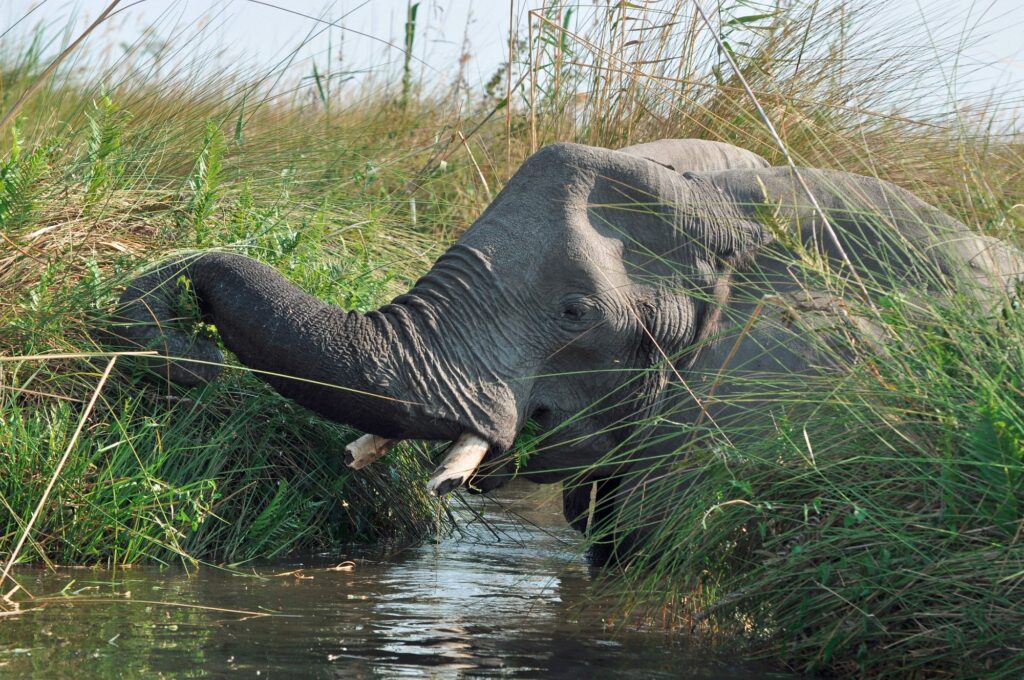
If there is one thing Hwange is world-famous for, it is elephants. The park supports one of the largest elephant populations on the continent. The International Fund for Animal Welfare (IFAW) puts the number freely roaming the park at around 45,000, while ZimParks has cited figures above 50,000 – and recent reporting suggests that as many as 60,000 elephants move through Hwange at the height of the dry season.
Because elephants do not need to drink every day and roam freely across the unfenced boundary into Botswana, exact numbers are hard to pin down. What is certain is the spectacle. In the late dry season (September and October), it is common to watch breeding herds of 50, 100 or even more elephants arrive at a single waterhole, the youngsters jostling and splashing while matriarchs keep watch.
The Presidential Elephants. Hwange is also known for the “Presidential Elephants of Zimbabwe,” a clan of habituated elephants near Main Camp that was granted special presidential protection in 1990. The late conservationist Lady Lisa Jane Hunt spent years documenting and protecting these elephants, and her work brought the herd international attention.
| Why Elephants Love Hwange
Hwange has no permanent rivers running through its heart. Instead, a network of boreholes pumps groundwater into pans throughout the dry season, creating reliable water in a semi-arid landscape. Elephants concentrate around these water points in huge numbers, which is what makes elephant viewing here so dependable and so dramatic. |
2. Lions, Leopards, Cheetahs – and the Story of Cecil
Hwange is home to all three of Africa’s big cats. Lions are seen regularly, especially in the south-east around the Linkwasha and Makalolo concessions and near Main Camp. Leopards are present throughout but are elusive, while cheetahs favour the open grassland vleis, particularly in the eastern and southern parts of the park.
The park’s lions became globally famous in July 2015 when Cecil, a black-maned male who was part of a long-running Oxford University lion research project, was killed by a trophy hunter just outside the park boundary. The incident sparked worldwide outrage, renewed debate about trophy hunting, and put Hwange on front pages across the globe. Many visitors still ask guides about Cecil and his descendants today.
Spotted hyenas, side-striped and black-backed jackals, servals, caracals and African wildcats round out a strong predator line-up, and the south of the park also supports the shy brown hyena.
3. A Stronghold for the African Wild Dog
The African wild dog, also called the painted wolf or painted dog, is one of Africa’s most endangered carnivores, and Hwange holds one of the most important populations in Southern Africa. Watching a pack on the hunt – or lounging together in the shade with their mottled coats glowing – is a highlight for many Hwange visitors.
Just outside the park near the village of Dete, the Painted Dog Conservation centre runs rehabilitation, anti-poaching and education programmes. Its visitor centre and interpretive displays are well worth a stop on your way in or out of Main Camp.
4. Pumped Waterholes and Wildlife Viewing Platforms
Hwange’s famous waterholes are central to its identity. Historically powered by diesel pumps and increasingly by solar, these boreholes keep pans full through the dry months. Organisations such as the Friends of Hwange Trust have worked for decades to maintain and upgrade them. The result is front-row wildlife viewing: sit quietly at a pan and the animals come to you.
Several waterholes have raised viewing platforms where visitors can step out of the vehicle and watch in safety, and some can even be booked for overnight stays.
Famous Waterholes and Pans in Hwange
| Waterhole / Pan | Area | Why It’s Special |
| Nyamandhlovu Pan | Near Main Camp | Raised viewing platform; huge elephant gatherings; name means “meat of the elephant” |
| Ngweshla Pan | South-east | Open grassland setting; excellent for lions and big herds |
| Kennedy 1 & 2 | South-east (Linkwasha area) | Classic Hwange plains game, sable antelope, predators |
| Guvalala Pan | Near Main Camp | Bookable viewing platform; popular for night-time sounds |
| Makwa Pan | Near Main Camp | Overnight platform; quieter alternative to Nyamandhlovu |
| Mandavu Dam | North (Sinamatella) | Large dam with hippos, crocodiles, water birds and elephants |
| Masuma Dam | North (Sinamatella) | Picnic site and hide; elephants, buffalo and lion activity |
5. Over 100 Mammal Species and Rare Antelope
Beyond elephants and cats, Hwange is renowned for the sheer variety of its mammals. Large herds of buffalo, Burchell’s zebra, giraffe, blue wildebeest, greater kudu, impala and waterbuck are widespread. The park is especially prized for its antelope diversity:
- Sable antelope: Hwange is one of the best places in Africa to see this striking black antelope with sweeping, scimitar-shaped horns.
- Roan antelope: Rarer and harder to find, but present in the park’s grasslands.
- Kalahari specialists: Gemsbok (oryx) and springbok occasionally appear in the south, reflecting the park’s link to the Kalahari ecosystem.
- Small and nocturnal species: Bat-eared fox, aardvark, aardwolf, honey badger, porcupine and pangolin may be seen on night drives in private concessions.
Rhino are not reliably seen in Hwange today, so visitors seeking the full Big Five usually pair Hwange with Matobo National Park, where rhino tracking on foot is possible.
| Wildlife Group | Key Species | Sighting Likelihood |
| Elephant | African savanna elephant | Very high, especially July–October |
| Big cats | Lion, leopard, cheetah | Lion good; leopard and cheetah moderate |
| Wild dog | African wild dog | Moderate; best when packs are denning (June–August) |
| Herbivores | Buffalo, zebra, giraffe, wildebeest, kudu | High |
| Rare antelope | Sable, roan, gemsbok | Sable good; roan and gemsbok occasional |
| Nocturnal | Aardvark, pangolin, brown hyena | Low; requires night drives in concessions |
6. Exceptional Birdwatching
With more than 400 recorded bird species, Hwange is a rewarding destination for birders. The pans attract water birds, while the woodlands and grasslands host a wide range of raptors and dry-country specialists.
- Raptors: bateleur, martial eagle, tawny eagle, secretarybird, white-backed and lappet-faced vultures
- Ground birds: kori bustard (one of the heaviest flying birds), southern ground hornbill, ostrich
- Colourful residents: lilac-breasted roller, crimson-breasted shrike, Bradfield’s hornbill, yellow-billed and red-billed hornbills
- Summer migrants: carmine bee-eaters, European rollers, Abdim’s storks and a host of Palearctic visitors from November to April
7. Kalahari Sands and Diverse Landscapes
Hwange lies on the north-eastern edge of the Kalahari basin, and much of the park is covered in deep, pale Kalahari sand. This gives the south and centre a very different feel from Zimbabwe’s river parks such as Mana Pools. Expect open grassland vleis dotted with palm islands, stands of Zimbabwean teak, camelthorn acacias and silver terminalia.
In the north, around Sinamatella and Robins Camp, the landscape changes to mopane woodland, rocky ridges and basalt hills with sweeping views. This variety means you can experience several distinct habitats in one park.
8. Rich History and Heritage
Hwange was first proclaimed the Wankie Game Reserve in 1928, partly because the land was considered poor for agriculture. A young ranger named Ted Davison was appointed as its first warden and spent over 30 years developing the reserve, including drilling the first boreholes that created today’s waterhole system. The area became a national park in 1961 and was renamed Hwange after the local Nambya chief Hwange Rosumbani.
The park also protects cultural heritage. The Bumbusi National Monument near Sinamatella contains stone ruins associated with the wider Zimbabwe stone-walling tradition, and the region has a long history connected to the San and Nambya peoples.
9. The Annual Full-Moon Game Count
Every year around the full moon in the late dry season, Hwange hosts one of Africa’s most unusual wildlife surveys: a 24-hour game count. Organized by the conservation group Wildlife and Environment Zimbabwe (WEZ) with ZimParks, volunteers spend a day and night stationed at waterholes across the park, recording every animal that comes to drink. The data helps track long-term population trends, and participating is a memorable way to experience the park.
10. Unique Safari Experiences
Hwange offers a wider range of safari styles than many parks of its size:
- Game drives: Morning and afternoon drives in open 4×4 vehicles, plus night drives in private concessions.
- Walking safaris: Guided bush walks with Zimbabwe’s highly trained professional guides, regarded among the best in Africa.
- Ground-level hides: Several camps have sunken or log-pile hides where elephants drink just metres away.
- Platform sleep-outs: Spend a night under the stars on a raised platform overlooking a waterhole.
- Self-drive safaris: The Main Camp area has good roads for self-drivers, with ZimParks camps offering affordable accommodation.
- Elephant Express: A rail-car excursion along the railway line on the park’s eastern boundary, offered by some camps as a scenic transfer.
11. Easy Access from Victoria Falls
Hwange’s location is one of its greatest assets. Main Camp is roughly 2.5 to 3 hours by road from Victoria Falls, making it the natural safari partner to a falls visit. Many travellers combine Victoria Falls, Hwange and Chobe National Park in Botswana into a single, seamless itinerary – all within the KAZA transfrontier conservation area.
12. A Conservation Success Story – and Ongoing Challenges
Hwange represents both the successes and the challenges of African conservation. Its elephant numbers have grown dramatically over the decades, and long-term partnerships – including IFAW’s extended 25-year agreement with ZimParks announced in 2023 – support anti-poaching, infrastructure, community livelihoods and tourism development.
At the same time, the park faces real pressures: elephants outnumbering what authorities consider the landscape’s carrying capacity, competition for water in drought years, poaching (including a notorious cyanide poisoning incident in 2013), and human–wildlife conflict in surrounding communities. Zimbabwe’s Elephant Management Plan for 2026–2036 focuses on population monitoring, habitat connectivity, conflict reduction and community benefit-sharing. Visiting responsibly – and choosing operators who support conservation levies – helps fund this work.
Planning Your Visit to Hwange National Park
Best Time to Visit Hwange
Hwange is a year-round destination, but the experience changes dramatically with the seasons.
| Season / Months | Conditions | What to Expect |
| Early dry (May–June) | Cool, clear days; cold nights | Vegetation thins, game viewing improves, fewer crowds |
| Peak dry (July–October) | Dry, increasingly hot; very hot by October | Best game viewing; huge elephant herds at waterholes; peak season pricing |
| Green season (November–March) | Hot with afternoon storms | Lush scenery, newborn animals, migrant birds; game more dispersed; lower rates |
| April | Rains ending, green landscape | Good value, beautiful light, wildlife still widespread |
| Our Recommendation
For first-time visitors focused on elephants and predators, aim for August to October. For birders, photographers who love green landscapes, and travelers on a budget, the green season from December to March offers excellent value and dramatic skies. |
How to Get to Hwange National Park
| Route | Distance / Time | Notes |
| Victoria Falls → Main Camp (road) | Approx. 2.5–3 hours | Most popular route via the A8 tarred highway; road transfers widely available |
| Bulawayo → Main Camp (road) | Approx. 3.5–4 hours | Good option when combining with Matobo National Park |
| Victoria Falls → Hwange (light aircraft) | Approx. 30–45 minutes | Charter flights serve private concession airstrips in the south-east |
| Hwange town → Sinamatella (road) | Approx. 1–1.5 hours | Gravel access road; best for the northern section |
International visitors usually fly into Victoria Falls Airport (VFA), which has regional connections from Johannesburg, Nairobi, Addis Ababa and other hubs. Travelers arriving from East Africa can connect via Nairobi or Johannesburg. Self-drivers should note that a high-clearance 4×4 is strongly recommended for the park’s sandy interior roads.
Where to Stay in Hwange
Accommodation ranges from simple ZimParks chalets to some of Zimbabwe’s finest safari camps.
| Tier | Examples | Best For |
| Luxury | Linkwasha Camp, Somalisa Camp, The Hide, Little Makalolo, Camp Hwange | Exclusive concessions, night drives, walking, expert guiding |
| Mid-range | Hwange Safari Lodge, Ivory Lodge, Bomani Tented Lodge, Nehimba | Comfort and good value, often on the park boundary |
| Budget | ZimParks Main Camp, Sinamatella and Robins Camp chalets, lodges and campsites | Self-drivers, campers and independent travellers |
Private concessions in the south-east are where most of the top-tier camps operate. They limit vehicle numbers and allow activities not permitted in the public areas, such as off-road driving to sightings, night drives and walks.
Park Fees and Costs
ZimParks charges conservation (entry) fees per person, which differ for international visitors, SADC residents and Zimbabwean citizens. Separate vehicle entry fees apply, along with accommodation fees for ZimParks camps and, in some private concessions, an additional conservation levy per person per night. Fees are reviewed periodically, so always confirm current rates with ZimParks or your safari operator before travelling. Most park gates accept US dollars, and carrying small denominations is advisable.
Sample 3-Day Hwange Safari Itinerary
Day 1: Victoria Falls to Hwange
Transfer from Victoria Falls in the morning. Stop at Painted Dog Conservation near Dete to learn about wild dog protection. Check into your camp, enjoy lunch, then head out for an afternoon game drive ending at Nyamandhlovu Pan as elephants arrive to drink at sunset.
Day 2: Full Day in the Park
Start with an early morning drive when predators are most active, exploring the open vleis around Ngweshla and Kennedy pans for lions, cheetahs and sable antelope. Spend the midday hours at a ground-level hide watching elephants up close. After an afternoon drive, join a night drive (in a private concession) to search for nocturnal species.
Day 3: Walking Safari and Departure
Enjoy a guided morning bush walk to experience the smaller details of the Kalahari sandveld – tracks, dung beetles, birds and medicinal plants. Return for brunch before transferring back to Victoria Falls or continuing to Matobo, Chobe or Lake Kariba.
| Extend Your Trip
Hwange pairs perfectly with Victoria Falls (2 nights), Chobe National Park in Botswana (2 nights) and Matobo National Park for rhino tracking (2 nights). A 7–10 day combination gives you waterfalls, river cruises, elephants and rhino in one memorable Southern Africa safari. |
Practical Tips for Visiting Hwange
- Pack for temperature swings: Winter mornings (June–August) can be near freezing on open vehicles, while October afternoons can exceed 35°C.
- Bring binoculars and a zoom lens: Wildlife at pans can be distant, and birding rewards good optics.
- Respect park hours: Gates open around sunrise and close around sunset; self-drivers must be in camp before dark.
- Stay in your vehicle: Outside designated platforms and picnic sites, never leave your car in the public areas.
- Protect yourself from malaria: Hwange is in a malaria area; consult a travel doctor about prophylaxis and use repellent.
- Check visa requirements: The KAZA Univisa can cover Zimbabwe and Zambia (and day trips to Botswana via Kazungula), which is useful for multi-country trips.
- Carry cash in US dollars: Card facilities can be unreliable at remote gates and camps.
Frequently Asked Questions
What is Hwange National Park most famous for?
Hwange is most famous for its enormous elephant population – one of the largest in Africa – and the dramatic dry-season gatherings of elephants at its pumped waterholes. It is also known for wild dogs, big cats, Cecil the lion and its 400+ bird species.
How many elephants are in Hwange National Park?
Estimates vary because elephants move freely across the border with Botswana. Figures commonly cited range from about 45,000 to over 50,000, with as many as 60,000 passing through in the dry season.
Can you see the Big Five in Hwange?
You can see elephant, buffalo, lion and leopard, but rhino are not reliably seen in Hwange today. Combine Hwange with Matobo National Park to complete the Big Five.
How far is Hwange from Victoria Falls?
Main Camp is roughly 2.5 to 3 hours by road from Victoria Falls, or about 30–45 minutes by light aircraft to private airstrips in the south-east.
When is the best time to visit Hwange?
July to October offers the best game viewing as animals gather at waterholes. The green season (November to March) is best for birding, lush scenery and lower prices.
Can I do a self-drive safari in Hwange?
Yes. The Main Camp area and roads to key pans are suitable for self-drivers, ideally in a high-clearance 4×4. ZimParks camps offer affordable chalets and campsites.
Who was Cecil the lion?
Cecil was a well-known male lion studied by Oxford University researchers in Hwange. He was killed by a trophy hunter just outside the park in 2015, sparking a global debate about trophy hunting.
How many days should I spend in Hwange?
Two to three nights is the minimum to experience the park properly. Three to four nights lets you explore different areas and try activities such as walking safaris and hides.
Conclusion: Why Hwange Belongs on Your Safari List
Hwange National Park is famous for elephants, and rightly so – few places on earth offer such reliable, intimate encounters with Africa’s largest land mammal. But the deeper you look, the more Hwange reveals: endangered wild dogs, big cats with global stories, rare sable antelope, a birdwatcher’s paradise, and a landscape shaped by Kalahari sands and nearly a century of conservation history.
Whether you are planning a luxury concession safari, a budget self-drive adventure or a multi-country journey through Victoria Falls and Botswana, Hwange deserves a central place on your itinerary.
| Plan Your Hwange Safari with Marriott Safaris Africa
Our team can design a tailor-made Zimbabwe safari combining Hwange, Victoria Falls, Matobo and Chobe – with expert guides, handpicked lodges and seamless transfers. Contact us today to start planning your adventure. Perfection Anytime. |