
How to Get to Chobe National Park, Botswana
How to Get to Chobe National Park, Chobe National Park is one of the easiest big-game destinations in southern Africa to reach, and that is a big part of its appeal. Its main gateway, the riverside town of Kasane, sits in Botswana’s far north-east, where four countries almost touch: Botswana, Namibia, Zambia and Zimbabwe. That location means you can arrive by scheduled flight from Johannesburg, Gaborone or Maun, by a short road transfer from Victoria Falls or Livingstone, by a long self-drive across Botswana, or by light aircraft straight into the remote Savuti and Linyanti regions.
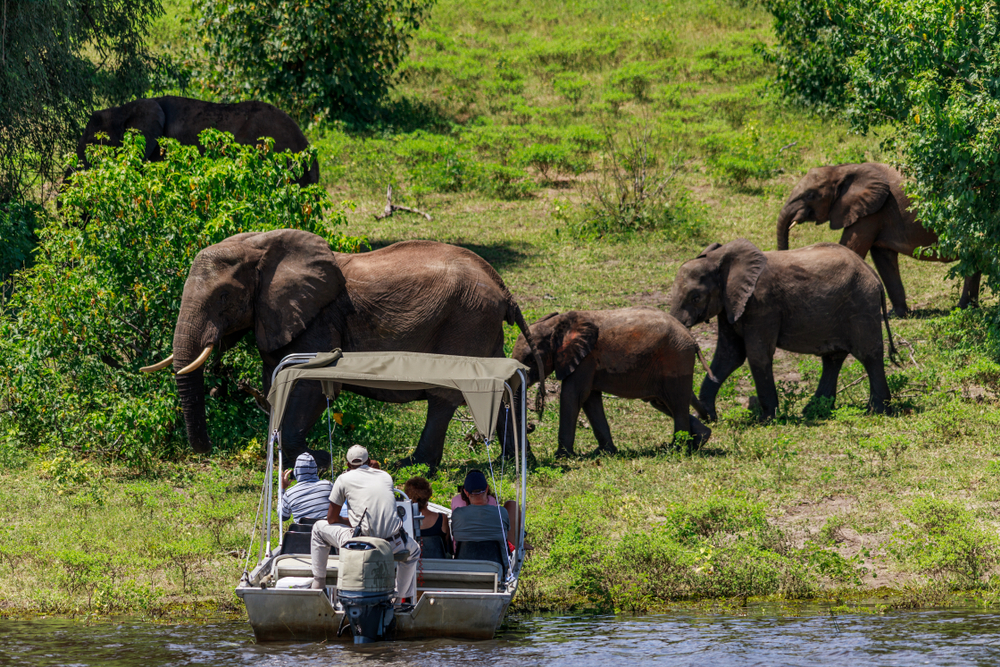
This guide breaks down every practical way to get to Chobe National Park, how long each route takes, what it typically costs, which border posts and park gates you will use, and how to choose the right option for your budget, time and travel style.
| Quick Answer: How Do You Get to Chobe National Park?
Fastest: Fly into Kasane Airport (BBK), which has direct flights from Johannesburg, Gaborone and Maun. The Sedudu Gate of the park is only a few minutes’ drive from the airport. Most popular combo: Fly into Victoria Falls (VFA) or Livingstone (LVI) and take a 1 to 1.5-hour road transfer to Kasane via the Kazungula border. Most adventurous: Self-drive a 4×4 from Maun, either on the tarred road via Nata or on the sand tracks through Moremi and Savuti. Remote camps: Take a light-aircraft charter from Maun or Kasane to airstrips in Savuti or Linyanti. |
Where Is Chobe National Park?
Chobe National Park covers roughly 11,700 square kilometres in northern Botswana and was established in 1967 as the country’s first national park. It is best understood as four distinct regions, and how you get to Chobe depends heavily on which part you plan to visit:
- Chobe Riverfront (Serondela): The north-eastern strip along the Chobe River, right next to Kasane. This is the most visited area, famous for huge elephant herds, buffalo and boat cruises. It is the easiest to reach.
- Savuti: A dry, predator-rich area in the west-central part of the park, roughly midway between Kasane and Maun. Reached by 4×4 or light aircraft.
- Linyanti: Remote wetlands on the north-western boundary bordering Namibia. Mostly accessed by charter flight to private concession camps.
- Nogatsaa / Ngwezumba: Dry woodland and pans in the park’s interior, visited mainly by experienced self-drivers.
For most first-time visitors, “getting to Chobe” really means getting to Kasane, because the Riverfront is where the majority of lodges, boat cruises and game drives are based.
Overview of All Routes to Chobe
| Starting point | Method | Approx. distance | Approx. time | Best for |
| Johannesburg (JNB) | Direct flight to Kasane | ~975 km | ~1 hr 45 min | International visitors connecting via South Africa |
| Gaborone (GBE) | Direct flight to Kasane | ~750 km | ~1 hr 30 min | Visitors already in Botswana |
| Maun (MUB) | Scheduled flight or charter | ~300 km by air | ~1 hr | Combining Chobe with the Okavango Delta |
| Victoria Falls, Zimbabwe | Road transfer via Kazungula | ~80 km | 1–1.5 hrs + border | Victoria Falls and Chobe combinations |
| Livingstone, Zambia | Road transfer via Kazungula Bridge | ~70 km | 1–1.5 hrs + border | Zambia-side Victoria Falls visitors |
| Maun | Self-drive via Nata (tar) | ~610 km | 7–8 hrs | Self-drivers wanting tarred roads |
| Maun | Self-drive via Moremi & Savuti (sand) | ~400 km | 2–3 days with stops | Experienced 4×4 overlanders |
| Windhoek, Namibia | Self-drive via Ngoma Bridge | ~1,200 km | 2 days | Namibia–Botswana road trips |
| Johannesburg | Self-drive via Francistown & Nata | ~1,150 km | 2 days | South African overlanders |
Distances and times are approximate and do not include border formalities, wildlife delays or rest stops.
Option 1: Flying to Kasane Airport (BBK)
Kasane International Airport is the main air gateway to Chobe National Park. It is small, relaxed and located just outside town, so most lodges along the Chobe Riverfront are between five and twenty minutes away by road transfer. The park’s Sedudu Gate is a short drive from the terminal, which means you can land in the late morning and be on an afternoon game drive or sunset river cruise the same day.
Direct Flights into Kasane
| Route | Airlines | Frequency (2026) | Notes |
| Johannesburg – Kasane | Airlink; CemAir | Daily with Airlink, plus additional CemAir services on some days | The main international connection; links easily with long-haul arrivals at O.R. Tambo |
| Gaborone – Kasane | Air Botswana | Several flights per week | Useful for domestic connections and travellers already in Botswana |
| Maun – Kasane | Air Botswana; charter operators | Scheduled several times a week; charters on demand | Ideal for Okavango Delta and Chobe combinations |
Schedules change seasonally, so always confirm current frequencies directly with the airline or your safari operator before booking.
Connecting from Overseas
There are no direct long-haul flights from Europe, North America or Asia into Kasane. Most international travellers fly into O.R. Tambo International Airport in Johannesburg and connect to Kasane on the same day. Morning arrivals from Europe and the Gulf generally connect well with the midday Airlink departure to Kasane. If your long-haul flight lands late, plan an overnight in Johannesburg near the airport.
Travellers coming from East Africa (Entebbe, Kigali, Nairobi or Dar es Salaam) usually route through Johannesburg as well, or fly to Victoria Falls or Livingstone and transfer by road. Kenya Airways and other regional carriers serve Victoria Falls and Livingstone at various times, so compare both options.
Pros and Cons of Flying to Kasane
| Pros | Cons |
| Fastest and most convenient way into the park | Flights can be more expensive than flying to Victoria Falls |
| Lodge transfers are very short | Limited daily frequencies; little flexibility if you miss a connection |
| No land border crossing needed if arriving from Johannesburg | Strict luggage limits on smaller aircraft on some routes |
Option 2: Road Transfer from Victoria Falls or Livingstone
Combining Victoria Falls with Chobe is one of the most popular safari pairings in Africa, and the two are remarkably close. Many travellers actually find it cheaper and more convenient to fly into Victoria Falls Airport (Zimbabwe) or Harry Mwanga Nkumbula International Airport in Livingstone (Zambia) and then cross into Botswana by road.
From Victoria Falls, Zimbabwe
The drive from Victoria Falls town to Kasane is about 80 kilometers on a tarred road through teak and mopane woodland, with a good chance of seeing elephants along the verge. You exit Zimbabwe and enter Botswana at the Kazungula border post, which is a separate crossing from the Kazungula Bridge used by travellers from Zambia. Allow around 1 to 1.5 hours of driving plus 30 minutes to over an hour at the border, depending on queues.
From Livingstone, Zambia
From Livingstone, the route runs about 70 kilometres west to the Kazungula Bridge, which opened in 2021 and replaced the old pontoon ferry across the Zambezi. The bridge has a one-stop border post that handles both Zambian exit and Botswana entry formalities in one facility, making the crossing faster than in the ferry days. From the bridge, Kasane is only around 10 kilometers away.
| Insider Tip: Shared vs. Private Transfers
Shared shuttle transfers between Victoria Falls or Livingstone and Kasane are the cheapest option and run daily, often timed around morning and early-afternoon departures. Private transfers cost more but leave when you want and allow photo stops. Most Chobe lodges and safari operators, including Marriott Safaris Africa, can arrange either type. |
Chobe Day Trips from Victoria Falls
If you are short on time, a popular option is a full-day Chobe excursion from Victoria Falls or Livingstone. These typically include a morning boat cruise on the Chobe River, lunch, and an afternoon game drive on the Riverfront, returning by early evening. It is a long day with two border crossings, so check that you have the right visas (including a multiple-entry visa or KAZA Univisa for Zimbabwe or Zambia so you can re-enter).
Option 3: Self-Drive to Chobe National Park
Botswana is one of Africa’s great self-drive destinations, and Chobe is a highlight of any northern Botswana road trip. Your route depends on where you start and how much sand driving you are comfortable with.
Maun to Kasane via Nata (Tarred Route)
This is the straightforward option and can be done in a sedan, although a 4×4 is still recommended if you plan to drive inside the park. The route runs east from Maun to Nata (about 300 km), then north from Nata to Kasane (about 310 km). The total is roughly 610 kilometres and takes 7 to 8 hours.
- Road conditions: The road is tarred all the way, but sections between Nata and Kasane have historically suffered from potholes and repair works. Drive with care and keep speeds moderate.
- Wildlife on the road: Elephants, kudu and donkeys regularly cross the Nata–Kasane road, which runs through the Kazuma and Sibuyu forest reserves. Never drive this stretch at night.
- Veterinary fences: You will pass foot-and-mouth disease control checkpoints where fresh meat and dairy may be confiscated and vehicles and shoes disinfected.
- Fuel: Fill up in Maun, Nata and Kasane. Pandamatenga has fuel at times, but do not rely on it.
Maun to Kasane via Moremi and Savuti (Sand Route)
For many self-drivers this is the dream route: a classic overland crossing through Moremi Game Reserve and into Chobe via the Savuti region. It is about 400 kilometres in total but is almost entirely on deep sand and rough tracks, so it should be broken into at least two or three days with overnight stops at campsites such as Third Bridge, Xakanaxa, Khwai or Savuti.
| Section | Approx. distance | Driving time | Notes |
| Maun – Shorobe – Mababe Gate | ~140 km | 3–4 hrs | Tar then gravel and sand; last reliable fuel in Maun |
| Mababe Gate – Savuti | ~55 km | 2–3 hrs | Deep sand on the “sand ridge” route; marsh route may flood in the wet season |
| Savuti – Ghoha Gate | ~40 km | 1.5–2 hrs | Heavy sand over the Ghoha Hills |
| Ghoha Gate – Kachikau – Kasane | ~170 km | 3–4 hrs | Sand to Kachikau, then tar to Ngoma and Kasane |
| Important: Who Should Attempt the Savuti Route?
This route is only suitable for a properly equipped high-clearance 4×4 with low-range gearing, recovery gear, extra fuel and water, and a driver experienced in deep sand. Campsites in Moremi and Savuti must be booked in advance and are often fully booked in peak season (July to October). Many tracks become impassable after heavy rains between December and March. |
From Johannesburg or Gaborone
South African overlanders typically cross at Martin’s Drift (Groblersbrug) or Parr’s Halt, then drive via Palapye and Francistown to Nata and on to Kasane. It is about 1,150 kilometres from Johannesburg and best split over two days with an overnight in Francistown, Nata or near the Makgadikgadi Pans. From Gaborone, follow the A1 north to Francistown and Nata, a distance of about 950 kilometres.
From Namibia via the Zambezi Region
Travellers coming from Windhoek or the Namibian Caprivi (Zambezi Region) can drive east through Katima Mulilo and cross into Botswana at the Ngoma Bridge border post. From Ngoma, a tarred transit road runs through the Chobe Forest Reserve and along the edge of the national park to Kasane, about 60 kilometres away. Using this public transit road does not require park entry fees, but leaving it to drive the Riverfront game tracks does.
Renting a 4×4 for Chobe
You can rent fully equipped 4×4 vehicles with rooftop tents in Maun, Kasane, Gaborone, Windhoek, Johannesburg and Victoria Falls. When booking, confirm:
- Cross-border permission and paperwork if you plan to enter Botswana from another country
- Whether the vehicle includes recovery equipment, a second spare tyre, a long-range fuel tank and a fridge
- Insurance coverage for gravel and sand roads, and the excess you would pay after an incident
- One-way drop-off fees if you are collecting in Maun and returning in Kasane or Victoria Falls
Option 4: Light-Aircraft Charter to Savuti and Linyanti
If you are staying at a lodge in Savuti or in the private Linyanti concessions, the most practical way in is by light aircraft. Charter companies based in Maun and Kasane fly small Cessna aircraft into bush airstrips, and most upmarket camps include these flights in their packages. Flight times are typically 40 minutes to an hour from Maun, and similar from Kasane.
- Luggage limits: Usually around 20 kg per person, including hand luggage, packed in soft-sided bags with no wheels or frames.
- Scenic bonus: Flying over the Okavango Delta, Savuti Marsh and Linyanti swamps is a highlight in itself.
- Fly-in circuits: Many itineraries link the Okavango Delta, Savuti and Linyanti by air before ending in Kasane or Victoria Falls.
Arriving by Boat on the Chobe River
Some lodges on the Namibian side of the river, particularly on Impalila Island and in the Kasika conservancy, transfer guests by boat from Kasane. Travelers heading to these properties clear Botswana and Namibian immigration at small river border posts, and the lodge handles the logistics. Houseboats moored on the Chobe River are reached in a similar way, with guests collected by tender boat from Kasane.
Entering the Park: Gates and Hours
| Gate | Location | Best for |
| Sedudu Gate | Just west of Kasane | Chobe Riverfront game drives and day visitors from Kasane |
| Ngoma Gate | Western end of the Riverfront, near the Namibian border | Self-drivers coming from Namibia or exiting towards Kachikau |
| Ghoha Gate | North of Savuti | Self-drivers travelling between Kasane/Kachikau and Savuti |
| Mababe Gate | South of Savuti | Self-drivers arriving from Maun or Moremi/Khwai |
Gate hours vary by season but generally run from around sunrise to sunset, roughly 6:00 to 18:30 in winter (April to September) and 5:30 to 19:00 in summer (October to March). Self-drivers must be out of the park or at their booked campsite before the gates close. Confirm current hours on arrival, as the Department of Wildlife and National Parks (DWNP) occasionally adjusts them and has at times introduced time-slot rules for self-drive vehicles on the busy Riverfront.
Park Entry Fees (2026)
Park fees are paid to the DWNP and are separate from lodge, cruise or package prices. Botswana announced fee increases for its major parks, including Chobe, effective from April 2026. The figures below are a guide only.
| Category | Approximate daily fee (2026) |
| International (non-resident) adult | About BWP 270 per person per day |
| Foreign-registered light vehicle (e.g., 4×4 under 3,500 kg) | About BWP 115 per vehicle per day |
| Larger vehicles and commercial safari trucks | Higher rates, scaling with vehicle size |
| Public campsites (e.g., Ihaha, Savuti) | Charged separately per person per night by the campsite operator |
| Good to Know
Some published sources still list older, lower fees, so always confirm current rates with the DWNP or your operator before you travel. Fees for self-drivers are usually paid at Sedudu Gate (Kasane) or the DWNP office in Maun, and day fees count both arrival and departure days. If you book a guided safari or boat cruise, park fees are often already included, but check your quote. |
Visas and Entry Requirements
Many nationalities, including citizens of most EU countries, the UK, the USA and most Commonwealth and SADC countries, can enter Botswana visa-free for short tourist stays. Others need to apply in advance, and Botswana has introduced an online e-visa system. Always check the latest requirements for your passport before travel.
- Passport validity: At least six months beyond your departure date, with at least two blank pages.
- KAZA Univisa: This covers Zambia and Zimbabwe (and day trips into Botswana through Kazungula), but it does not replace Botswana entry requirements for visitors who need a Botswana visa. If you are crossing between Victoria Falls and Chobe, check the current rules carefully.
- Yellow fever: A certificate is required if you are arriving from, or have transited through, a country with a risk of yellow fever transmission. This applies to many travelers coming from East Africa, including Uganda, Kenya, Tanzania and Rwanda.
- Travelling with children: Carry full birth certificates for minors, and consent letters if a child is travelling with only one parent.
Best Time to Travel to Chobe
| Season | Months | Access and conditions | Wildlife |
| Dry season (peak) | May – October | All routes open; roads and sand tracks at their best; busiest time on the Riverfront | Outstanding; huge elephant and buffalo herds gather at the river |
| Shoulder | November & April | Mostly good access; occasional storms | Very good; fewer crowds, greener landscapes |
| Wet / green season | December – March | Savuti and interior tracks can become impassable; Riverfront and Kasane flights unaffected | Good birding, newborn animals, dramatic skies; game more dispersed |
If you plan to self-drive the Savuti sand route, aim for May to October. If you are flying into Kasane and staying on the Riverfront, Chobe is accessible year-round.
Sample Travel Plans
Plan A: Fly-In Riverfront Safari (3 Nights)
- Day 1: Fly Johannesburg to Kasane; transfer to your lodge; afternoon sunset cruise on the Chobe River.
- Day 2: Early morning game drive through Sedudu Gate; afternoon boat or photographic cruise.
- Day 3: Full day on the Riverfront, or a day trip to Victoria Falls.
- Day 4: Morning activity, then fly out of Kasane.
Plan B: Victoria Falls and Chobe Combo (5 Nights)
- Days 1–2: Fly into Victoria Falls; guided tour of the Falls, sunset Zambezi cruise.
- Day 3: Road transfer to Kasane via Kazungula; afternoon Chobe River cruise.
- Days 4–5: Game drives and boat safaris on the Riverfront.
- Day 6: Transfer back to Victoria Falls or fly out of Kasane.
Plan C: Self-Drive Maun to Kasane via Savuti (6 Nights)
- Day 1: Collect your 4×4 in Maun; drive to Khwai or Moremi.
- Days 2–3: Game drives in Moremi and Khwai.
- Days 4–5: Drive via Mababe Gate to Savuti; explore the Savuti Marsh and Leopard Rock.
- Day 6: Continue via Ghoha Gate and Kachikau to Kasane; Riverfront drive in the afternoon.
- Day 7: Morning cruise, then return the vehicle in Kasane or continue to Victoria Falls.
Practical Travel Tips
- Book early for July to October. Flights into Kasane, Savuti campsites and Riverfront lodges sell out months ahead.
- Leave buffer time. If you are connecting from a long-haul flight in Johannesburg, avoid tight connections, especially with checked luggage.
- Carry cash. Botswana pula and US dollars are useful for border fees, tips and small purchases; card payments are widely accepted in Kasane but not in remote areas.
- Malaria precautions. Chobe is in a malaria-risk area. Speak to a travel health clinic about prophylaxis and pack insect repellent.
- Never drive at night. Elephants and other wildlife on unlit roads around Kasane, Nata and Kazungula are a serious hazard.
- Respect the river border. The Chobe River forms the boundary with Namibia; follow your guide’s instructions on boat cruises and do not land on the far bank unless officially cleared.
- Use an experienced operator. A reputable operator can bundle flights, transfers, park fees and activities, and handle border paperwork on your behalf.
Frequently Asked Questions
What is the nearest airport to Chobe National Park?
Kasane International Airport (BBK) is the closest, located just outside Kasane and a short drive from the park’s Sedudu Gate.
Can I fly directly to Chobe from Europe or the USA?
No. There are no direct long-haul flights. Most visitors connect through Johannesburg to Kasane, or fly into Victoria Falls or Livingstone and transfer by road.
How far is Chobe from Victoria Falls?
Kasane is about 80 km from Victoria Falls town in Zimbabwe, roughly 1 to 1.5 hours by road plus time at the Kazungula border.
Do I need a 4×4 to visit Chobe?
You can reach Kasane on tarred roads in a normal car, but driving inside the park, especially the Riverfront tracks and Savuti, requires a high-clearance 4×4.
How long does it take to drive from Maun to Chobe?
About 7 to 8 hours via the tarred Nata road, or two to three days on the sand route through Moremi and Savuti with overnight stops.
Is it possible to visit Chobe as a day trip?
Yes. Day trips from Victoria Falls and Livingstone are popular and usually include a boat cruise and a game drive, though staying at least two nights is far more rewarding.
Which part of Chobe is easiest to reach?
The Chobe Riverfront, next to Kasane. Savuti and Linyanti are remote and best reached by 4×4 or light aircraft.
Are park fees included in safari packages?
Usually, but not always. Ask your operator to confirm whether DWNP park and vehicle fees are included in your quote.
Plan Your Chobe Journey with Marriott Safaris Africa
Whether you want a seamless fly-in Riverfront safari, a Victoria Falls and Chobe combination, or a fully equipped 4×4 for an overland adventure through Moremi and Savuti, Marriott Safaris Africa can arrange your flights, transfers, park fees, accommodation and activities so you can focus on the elephants, not the logistics.
| Ready to Go?
Contact the Marriott Safaris Africa team today for a tailor-made Chobe itinerary and a transparent, all-inclusive quote. Perfection Anytime. |