
Chobe National Park Boat Cruise 2027 | Prices, Tips & Best Time
Picture this: the afternoon heat has softened, the Chobe River is glowing copper, and a breeding herd of elephants is wading into the water just metres from your boat. A calf disappears beneath the surface, trunk raised like a snorkel, while its mother rumbles reassurance. Hippos grunt from the shallows, a fish eagle throws back its head and calls, and behind it all the sun sinks into the Caprivi floodplains on the Namibian side. This is the Chobe National Park boat cruise, and it is one of the most reliably spectacular wildlife experiences anywhere in Africa.
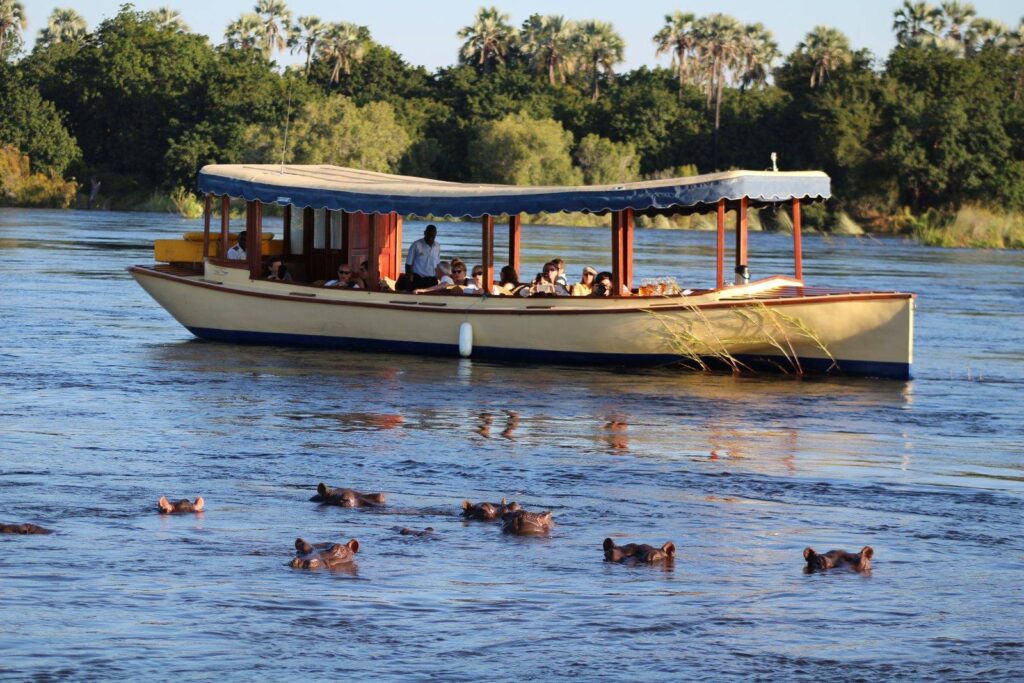
Chobe National Park, proclaimed in 1967 as Botswana’s first national park, covers roughly 11,700 square kilometres of northern Botswana. Its wildlife-rich northern edge is defined by the Chobe River, which separates Botswana from Namibia’s Zambezi Region before joining the Zambezi River near Kasane. The park holds one of the largest concentrations of elephants on earth, and during the dry season a huge share of them come to the river to drink, bathe and cross. Seeing that spectacle from water level, with the engine idling and nothing between you and the animals, is something a game drive simply cannot replicate.
This guide covers everything you need to plan the perfect Chobe River cruise: the different cruise types and how they compare, what wildlife and birds you can expect, the best months to go, how to get to Kasane, realistic 2026–2027 prices, where to stay, photography tips, what to pack and how to book with Marriott Safaris Africa.
Chobe Boat Cruise at a Glance
| Detail | Information |
| Location | Chobe Riverfront, northern Chobe National Park, Botswana |
| Gateway town | Kasane (Kasane International Airport, code BBK) |
| Main river | Chobe River (border between Botswana and Namibia) |
| Signature sightings | Elephants swimming and drinking, hippo pods, Nile crocodiles, buffalo, puku, red lechwe, African fish eagle |
| Standard cruise length | About 3 hours (morning or afternoon/sunset) |
| Best season | May to October (peak: August to October) |
| Typical shared cruise price | Approx. US$45–90 per person, plus park fees |
| Distance from Victoria Falls | About 80 km (roughly 1–1.5 hours by road plus border formalities) |
| Suitable for | First-time safari-goers, families, photographers, honeymooners, older and less mobile travellers |
What Makes the Chobe River Cruise So Special?
1. The elephant spectacle
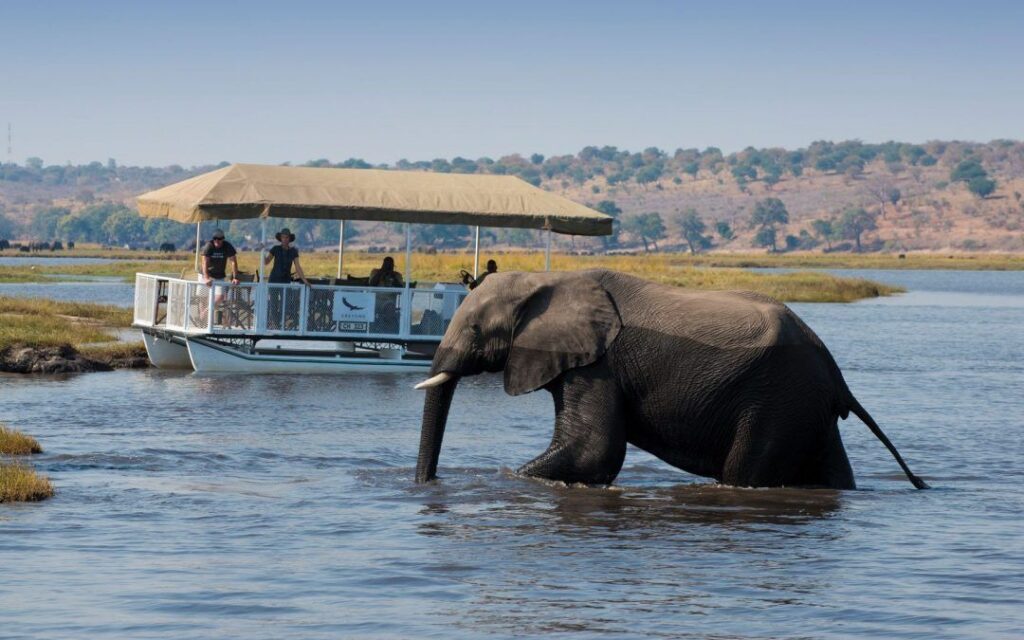
Northern Botswana supports the largest elephant population in Africa, and Chobe is its beating heart. In the late dry season, when the inland pans have evaporated, herds of dozens or even hundreds of elephants converge on the riverfront every afternoon. Watching them swim across channels to graze on Sedudu Island, or play-fight in the shallows, is the defining image of a Chobe holiday.
2. Water-level perspective
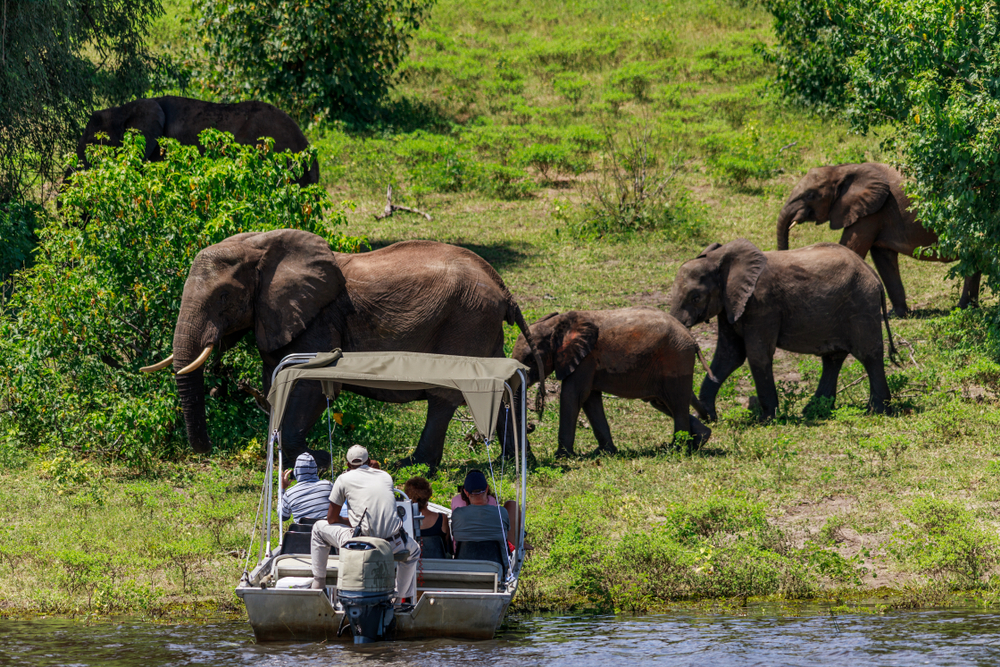
From a boat you are often lower than the animals, which creates powerful, eye-level photographs and a very different emotional connection. Many animals that are skittish around vehicles are remarkably relaxed around slow-moving boats.
3. Accessibility
A boat cruise requires no bumpy roads, no early-morning dust and very little physical effort. Boats board directly from jetties in Kasane, making the experience ideal for families with young children, older travellers and anyone with limited mobility.
4. Easy add-on from Victoria Falls
Because Kasane sits close to the Kazungula border where Botswana, Zambia, Zimbabwe and Namibia meet, a Chobe cruise is one of the easiest safari experiences to combine with a Victoria Falls holiday, even as a single-day excursion.
5. Exceptional birding
More than 450 bird species have been recorded in Chobe, and the river corridor is the richest birding zone in the park. Even travellers who arrive indifferent to birds tend to leave with a favourite, usually the jewel-like malachite kingfisher or the comical African skimmer.
Where Does the Cruise Take Place? Understanding the Chobe Riverfront
All standard Chobe boat cruises operate on the stretch of river between Kasane and the Ngoma area, known as the Chobe Riverfront. Boats depart from lodge jetties and public launch points along Kasane’s waterfront and travel upstream (west) into the national park section of the river.
Sedudu Island
The low, grassy Sedudu Island (called Kasikili by Namibia) is the centrepiece of most cruises. Its sovereignty was disputed between Botswana and Namibia until the International Court of Justice ruled in Botswana’s favour in 1999; today the Botswana flag flies over it. The island’s floodplain grasses attract elephants, buffalo, hippos and grazing antelope, and the surrounding channels are where the famous elephant river crossings happen.
The Namibian bank
The northern bank belongs to Namibia’s Zambezi Region (formerly the Caprivi Strip). Some cruises depart from the Namibian side, typically from lodges near Kasika and Impalila Island, and offer a slightly quieter experience. Cruises from Kasane, however, have direct access to the Botswana national park section and the busiest wildlife areas.
| Good to Know
Boat numbers on the Chobe River are regulated, and park rules require operators to stay within designated zones and keep a respectful distance from animals. Even so, the afternoon cruise window can be busy in peak season. A morning cruise, a private boat or a smaller photographic vessel are the best ways to enjoy a quieter river. |
Types of Chobe National Park Boat Cruises
Not all Chobe cruises are the same. Choosing the right type for your budget, travel style and interests makes a real difference to your experience.
1. Shared Sunset (Afternoon) Cruise
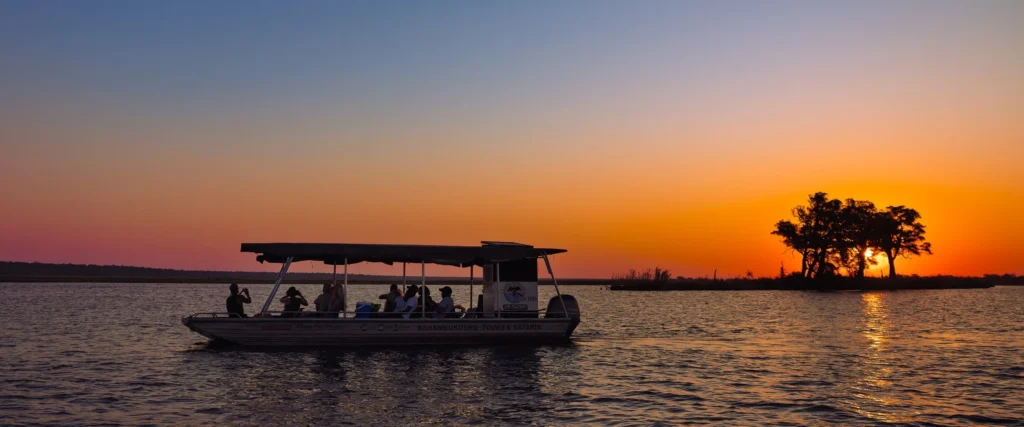
The classic and most popular option. Cruises usually depart between 14:30 and 15:30 and return around sunset, lasting roughly three hours. Boats range from intimate 10-seat craft to large double-decker vessels carrying 40 or more passengers, often with a cash bar or complimentary drinks. The afternoon is when animal activity at the water’s edge peaks, especially in the dry season, and the golden light over the floodplains is magnificent.
Best for: first-time visitors, social travellers, sundowner lovers and budget-conscious travellers.
2. Morning Cruise
Morning cruises typically leave between 06:30 and 09:00. The river is calmer, there are fewer boats, the air is cool and birdlife is at its most active. You may also catch predators returning to cover or hippos still grazing on the banks after their night feeding.
Best for: birdwatchers, photographers who prefer soft side-lighting, and travellers who want to avoid the afternoon rush.
3. Private Boat Cruise
Hiring a private boat with your own guide gives you full control over pace, stops and timing. Spend forty minutes with a single elephant herd, return to a kingfisher’s perch or linger for the last light. Private boats are popular with honeymooners, families and serious photographers.
Best for: couples, families, small groups and anyone celebrating a special occasion.
4. Photographic Boat Safari
Specialist photographic boats are low-slung vessels fitted with swivel chairs and camera mounts or gimbal heads, limiting passengers to a small number so everyone gets a clear, unobstructed shooting position. They are usually led by guides who are experienced photographers and who position the boat for the best light and background.
Best for: wildlife photographers with long lenses and anyone who wants exceptional eye-level images.
5. Full-Day Combination Trip (Cruise + Game Drive)
A hugely popular day excursion, especially from Victoria Falls and Livingstone. A typical day includes a morning boat cruise, lunch at a Kasane lodge and an afternoon open-vehicle game drive along the riverfront (or the reverse order). It is a superb way to sample Chobe if you only have one day.
Best for: travellers based in Victoria Falls or Livingstone with limited time.
6. Houseboat Cruise (Overnight and Multi-Night)
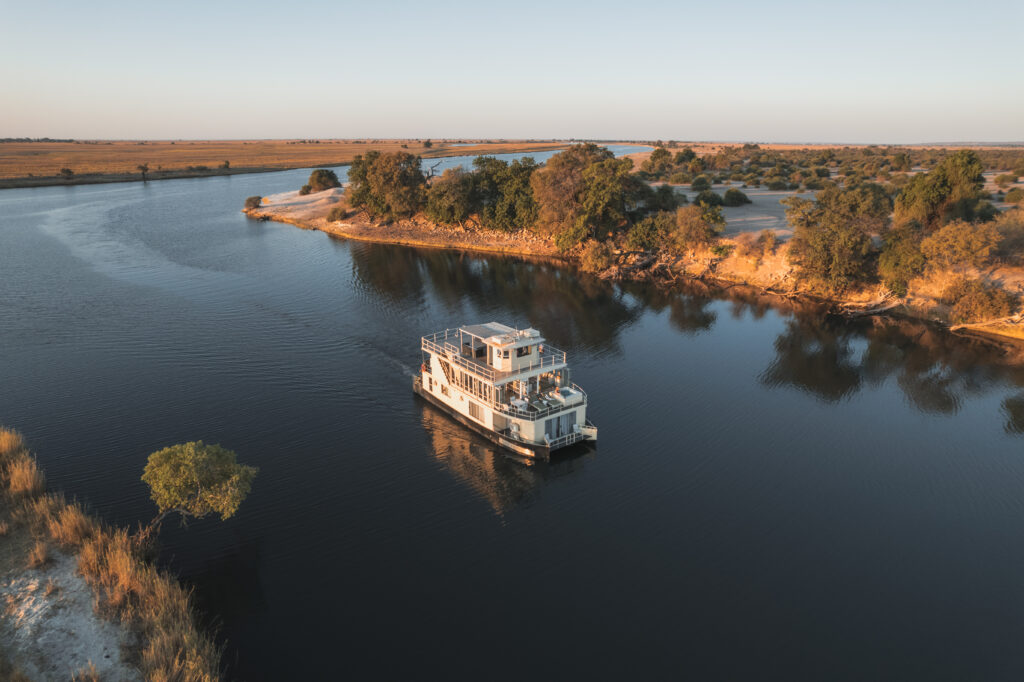
For a truly immersive experience, a houseboat lets you sleep on the river itself. Options range from the luxury Zambezi Queen, a refined floating boutique hotel operating on the Namibian side of the river, to smaller, more intimate houseboats such as the Chobe Princess fleet. Guests typically spend two to three nights on board, heading out in small tender boats for wildlife viewing, fishing and village visits while the mother vessel stays moored in a peaceful channel.
Best for: honeymooners, slow travellers and anyone who wants to wake up and fall asleep to the sounds of the river.
| Border Note for Houseboats
Most Chobe houseboats are moored on the Namibian side of the river. Transfers usually include a short boat ride across to Kasika, where Namibian immigration formalities are handled. Make sure your passport has enough blank pages and check Namibian entry requirements for your nationality before booking. |
7. Fishing Cruises
Outside the national park section, the Chobe and Zambezi rivers are famous for tigerfish, one of Africa’s great freshwater game fish, as well as bream. Fishing trips can be arranged from Kasane and on houseboats, generally on a catch-and-release basis. Note that fishing is prohibited within national park waters and a seasonal closed fishing period applies (generally December to February); confirm current rules with your operator.
Cruise Types Compared
| Cruise Type | Duration | Group Size | Approx. Price (pp) | Highlight |
| Shared sunset cruise | ~3 hours | 10–40+ | US$45–90 | Elephant activity and sunset |
| Morning cruise | ~3 hours | 10–20 | US$45–85 | Birds, calm water, fewer boats |
| Private boat | 2–3 hours | 1–8 | US$250–500 per boat | Total flexibility |
| Photographic boat | ~3 hours | 4–8 | US$120–250 | Swivel seats, eye-level angles |
| Full-day combo | 8–10 hours | Varies | US$170–300 | Cruise, lunch and game drive |
| Houseboat | 2–3 nights | 8–28 guests | US$400–1,000+ per night | Sleeping on the river |
Prices are indicative 2026–2027 estimates for planning purposes only and vary by operator, season, exchange rates and inclusions. Park fees are often charged separately.
Wildlife You Can See on a Chobe Boat Cruise
The riverfront supports a remarkable variety of species, and a single three-hour cruise in the dry season can produce dozens of mammal and bird sightings.
| Animal | Likelihood | Where and When |
| African elephant | Very high (dry season) | Drinking, bathing and swimming, especially in the afternoon |
| Hippopotamus | Very high | Pods in channels and shallows; grazing on banks early and late |
| Nile crocodile | Very high | Basking on sandbanks and banks, particularly mid-morning |
| Cape buffalo | High | Large herds on Sedudu Island and the floodplains |
| Puku | High | Chobe Riverfront is one of the only places in Botswana to see them |
| Red lechwe | High | Wet grasslands and island margins |
| Waterbuck, impala, kudu | High | Along the riverbank and woodland edges |
| Giraffe and zebra | Moderate | Coming down to drink on the Botswana bank |
| Lion | Occasional | Sometimes seen drinking or resting near the water |
| Leopard | Rare | Occasionally spotted along the wooded bank |
| Water monitor lizard | Moderate | Sunning on rocks and logs |
| Chobe bushbuck | Occasional | Shy resident of the riverine thickets |
Birdwatching on the Chobe River
The Chobe River is one of southern Africa’s finest birding waterways. Look out for these highlights:
- African fish eagle: the iconic call of the river; frequently seen hunting
- African skimmer: a summer visitor that nests on exposed sandbanks and skims the water with its lower bill
- Kingfishers: pied, malachite, giant and woodland kingfishers
- Herons and egrets: goliath heron, grey heron, squacco heron and great egret
- African openbill and saddle-billed stork along the floodplains
- Carmine bee-eaters: spectacular nesting colonies in the riverbanks in spring (around September to November)
- African jacana, spur-winged goose and white-crowned lapwing on the island margins
| Guide Tip: The Elephant Crossing
In the late dry season, ask your guide to position the boat near a known crossing point in the hour before sunset. Herds often swim from the Botswana bank to Sedudu Island in single file, adults pushing calves along. Turn off the engine, stay quiet and simply watch; it is one of the great wildlife moments on the continent. |
What to Expect: A Typical Sunset Cruise Step by Step
| Time | What Happens |
| 14:30 | Pick-up from your Kasane lodge or meet at the jetty; brief check-in and park fee formalities |
| 15:00 | Safety briefing and departure; the boat heads upstream past Kasane towards the park boundary |
| 15:20 | Entry into national park waters; first sightings of hippos, crocodiles and waterbirds |
| 15:45–17:30 | Slow cruising around Sedudu Island and along the Botswana bank; elephants, buffalo and antelope come to drink |
| 17:30–18:00 | Golden hour: the guide positions the boat for sunset photographs; drinks served on many boats |
| 18:00–18:30 | Return to the jetty as the light fades (exact times shift with the season and park closing hours) |
Best Time to Take a Chobe National Park Boat Cruise
Cruises operate all year, but the experience changes dramatically with the seasons. Chobe’s dry season runs from about May to October and the wet (green) season from roughly November to April.
| Period | Season | What to Expect on the River | Rating |
| January–March | Wet / green season | Lush scenery, migrant birds, fewer elephants at the river as they disperse inland; lower prices and few crowds | Good for birding |
| April | Transition | Rains easing, landscape still green; wildlife gradually returning to the river | Good |
| May–July | Early to mid dry season | Cool, pleasant days; elephant numbers building steadily; excellent all-round viewing | Very good |
| August–October | Peak dry season | Enormous elephant and buffalo concentrations, river crossings, dramatic sunsets; hot by October; busiest time | Excellent |
| November–December | Early rains | First storms, carmine bee-eaters, newborn impala; herds begin dispersing | Good |
| Which Month Should I Choose?
For the ultimate elephant experience, aim for August to October. For a balance of good wildlife, pleasant temperatures and lower demand, May to July is ideal. Keen birders and budget travellers will love November to March, when the scenery is green and rates are often reduced. |
How to Get to Chobe for a Boat Cruise
Kasane is the gateway to the Chobe Riverfront, and almost all cruises depart from here or from lodges a short drive away.
By air
Kasane International Airport (BBK) receives scheduled flights from Johannesburg and Gaborone, plus light-aircraft charters from Maun and the Okavango Delta camps. Most lodges are 5 to 15 minutes from the airport.
From Victoria Falls, Zimbabwe
Kasane is about 80 km from Victoria Falls town. The road transfer takes roughly 1 to 1.5 hours plus time at the Kazungula border post. Many day-trip packages include return transfers and border assistance.
From Livingstone, Zambia
Travel to Kazungula and cross the Kazungula Bridge, opened in 2021, which links Zambia and Botswana directly over the Zambezi and replaced the old ferry crossing. Allow roughly 1.5 to 2 hours in total, depending on border queues.
From Maun and the Okavango Delta
A short scheduled or charter flight is the most efficient option. Self-drivers can cover the Maun–Nata–Kasane tar route in about 7 to 8 hours, or take the adventurous 4×4 route through Moremi and Savuti (sand tracks, high-clearance 4×4 essential, best in the dry season).
Self-drive and car rental
Kasane is a comfortable self-drive destination and the riverfront is accessible by 4×4. If you are renting a vehicle to cross borders, ensure you carry the vehicle registration papers, a letter of authority from the rental company, cross-border insurance and any permits required by each country.
| Visa and Entry Tips
Many nationalities can enter Botswana visa-free for short stays, and Botswana operates an online e-visa system for those who need one. The KAZA Univisa, available to eligible nationalities, covers Zambia and Zimbabwe and allows day trips into Botswana through the Kazungula border. Requirements change, so always confirm current rules for your passport before travelling. |
Chobe Boat Cruise Prices and Fees (2026–2027 Guide)
Your total cost depends on the cruise type, the operator, the season and whether park fees, drinks and transfers are included. Use the table below as a planning guide.
| Cost Item | Approximate Price | Notes |
| Shared 3-hour cruise | US$45–90 per person | Lodge cruises at the higher end; drinks often extra |
| Chobe National Park entry fee | Roughly US$10–20 per person per day | Charged by the Department of Wildlife and National Parks; confirm the current rate |
| Private boat (2–3 hours) | US$250–500 per boat | Price depends on boat size and guide |
| Photographic boat | US$120–250 per person | Small groups, camera mounts |
| Day trip from Victoria Falls | US$170–300 per person | Usually includes transfers, cruise, lunch, game drive and park fees |
| Houseboat (all-inclusive) | US$400–1,000+ per person per night | Includes meals, activities and most drinks |
| Botswana visa (if required) | Varies by nationality | Many visitors are exempt |
| KAZA Univisa | About US$50 | For eligible nationalities visiting Zambia, Zimbabwe and Botswana day trips |
| Gratuities | US$5–10 per guest per cruise | Customary for guides and boat crew |
| Park Fee Alert
Published Chobe park fees for international visitors vary between sources, and Botswana periodically reviews its conservation fees. Always ask whether your quote includes park entry and boat landing fees, and confirm the latest figures with Marriott Safaris Africa before you travel. |
Where to Stay for a Chobe River Cruise
Most visitors base themselves in Kasane, where a wide range of riverside lodges operate their own boats and jetties. Staying at a lodge with its own cruise operation makes logistics effortless.
Luxury
- Chobe Game Lodge: the only permanent lodge inside Chobe National Park, right on the riverfront. Renowned for its pioneering fleet of electric, near-silent safari boats and its all-female guiding team.
- Chobe Chilwero: an elegant hilltop retreat with sweeping views over the river and floodplains, plus a spa.
- Zambezi Queen: a stylish luxury houseboat with river-view suites and private balconies.
Mid-Range
- Chobe Safari Lodge and Chobe Bush Lodge: popular riverfront properties with extensive boat fleets and good-value packages.
- Cresta Mowana Safari Resort & Spa: a large resort built around an ancient baobab tree on the riverbank.
- Chobe Marina Lodge: a riverside lodge with its own jetty and a range of cruise options.
Budget and Camping
- Thebe River Safaris: riverside chalets and a well-run campsite with cruises bookable on site.
- Lodge campsites in Kasane: several riverfront lodges offer campsites with access to the lodge’s boats, restaurant and pool, ideal for self-drivers with rooftop or ground tents.
Photography Tips for Your Chobe Boat Cruise
- Lens choice: a 100–400 mm or similar zoom covers most situations; a wider lens (24–70 mm) is useful for elephants close to the boat and for sunset landscapes.
- Shoot low: sit as low as you can and shoot at eye level with the animals for the most intimate images.
- Fast shutter speed: boats move slightly even when idling; use at least 1/1000 sec for birds in flight and splashing elephants.
- Stabilise sensibly: a beanbag or the boat’s camera mount is far more practical than a tripod.
- Use the light: morning and late afternoon give warm, directional light; position yourself so the sun is behind or beside you, and shoot silhouettes into the sunset.
- Protect your gear: bring a dry bag or rain cover; spray and sudden splashes happen.
- Choose your seat: on shared boats, a seat at the front or on an outside edge gives the clearest view. Ask about photographic boats if images are a priority.
What to Pack for a Chobe River Cruise
| Item | Why You Need It |
| Wide-brimmed hat and sunglasses | Glare off the water is intense |
| High-SPF sunscreen and lip balm | Shade on boats is often limited |
| Light, neutral-coloured clothing | Comfortable, cool and wildlife-friendly |
| Warm fleece or windbreaker | Mornings and evenings on the water can be cold, especially May to August |
| Insect repellent | Mosquitoes emerge around sunset; Chobe is a malaria area |
| Binoculars | Essential for birds and distant wildlife |
| Camera, spare batteries and memory cards | You will take far more photos than you expect |
| Dry bag or waterproof pouch | Protects phones, passports and electronics |
| Reusable water bottle | Stay hydrated, especially September to November |
| Passport | Required for border crossings and sometimes for park entry records |
Safety and Etiquette on the River
- Stay seated while the boat is moving and keep hands, feet and equipment inside the boat at all times.
- Follow your guide’s instructions. Guides read animal behaviour constantly and will reposition the boat if an animal shows signs of stress.
- Keep noise to a minimum. Quiet voices mean more relaxed animals and better sightings for everyone.
- Never feed or call to animals, and never throw anything into the river.
- Respect hippos and crocodiles. Hippos are among Africa’s most dangerous animals; operators keep safe distances for good reason.
- Wear the life jacket when asked, and note where safety equipment is stored during the briefing.
- Take malaria precautions. Consult a travel health professional about antimalarial medication, particularly for travel between November and April.
Sample Chobe Boat Cruise Itineraries
Option A: One-Day Chobe Trip from Victoria Falls
| Time | Activity |
| 06:30 | Hotel pick-up in Victoria Falls; drive to the Kazungula border |
| 08:00 | Border formalities; transfer to a Kasane lodge |
| 09:00–11:30 | Morning boat cruise on the Chobe River |
| 12:00 | Lunch at a riverside lodge |
| 13:30–16:30 | Open-vehicle game drive along the Chobe Riverfront |
| 17:00 | Return to the border and transfer back to Victoria Falls (arrive around 18:30) |
Option B: 3 Days in Kasane (Cruise-Focused)
Day 1: Arrive in Kasane by air or road. Check into a riverside lodge, relax at lunch, then enjoy your first sunset cruise around Sedudu Island.
Day 2: Early-morning game drive along the riverfront looking for lions and leopards. After a leisurely brunch, join a small-group photographic boat in the afternoon for close-up, eye-level images of elephants and birds.
Day 3: Gentle morning birding cruise, then depart for Victoria Falls, Maun or your onward destination, or extend with two nights on a houseboat.
Option C: Chobe Houseboat Escape (2 Nights)
Transfer from Kasane across the river to the houseboat. Spend your days exploring side channels by tender boat, fishing for tigerfish outside park waters, visiting a riverside village and watching elephants from the upper deck, with sunsets and star-filled skies as the backdrop to dinner on the water.
Combining Your Chobe Cruise with Other Experiences
- Victoria Falls: pair a cruise with a guided tour of the Falls, a Zambezi sunset cruise or a helicopter flight.
- Okavango Delta: fly from Kasane to Maun or a Delta airstrip for mokoro trips and island camps.
- Savuti and Linyanti: continue deeper into Chobe National Park for predator-rich game drives in more remote wilderness.
- Makgadikgadi and Nxai Pan: add salt pans, meerkats and seasonal zebra migrations.
- Hwange National Park, Zimbabwe: combine with one of Zimbabwe’s largest elephant parks.
How to Book Your Chobe Boat Cruise with Marriott Safaris Africa
Booking through an experienced operator ensures the right cruise for your interests, reliable border transfers and transparent pricing. Here is how it works:
- Step 1 – Share your plans: tell us your travel dates, group size, base (Kasane, Victoria Falls or Livingstone) and the type of cruise you prefer.
- Step 2 – Receive a tailored quote: we recommend the best cruise options and accommodation, with park fees, transfers and inclusions clearly itemised.
- Step 3 – Confirm and secure your booking: a deposit secures cruise seats and accommodation, which is important for peak months (August to October) and private or photographic boats.
- Step 4 – Pre-departure support: receive visa guidance, packing tips, border documents and a detailed itinerary.
- Step 5 – Enjoy the river: our team and partners remain on call throughout your trip.
| Booking Tip
Sunset cruises on smaller boats and photographic vessels sell out quickly in the dry season. Book at least two to three months ahead for July to October, and six months or more for houseboats. |
Frequently Asked Questions
How long is a Chobe National Park boat cruise?
Standard shared cruises last about three hours. Private and photographic cruises are typically two to three hours, while houseboat stays usually run for two or three nights.
Is the morning or sunset cruise better?
The sunset cruise usually delivers the most elephant activity and the famous golden-hour scenery. The morning cruise is quieter, cooler and better for birds. If you have time, do both.
Are park fees included in the cruise price?
It depends on the operator. Many quotes exclude Chobe National Park entry fees, so always check. Day-trip packages from Victoria Falls usually include them.
Can I see the Big Five on a Chobe boat cruise?
Elephants and buffalo are seen on almost every dry-season cruise. Lions are seen occasionally and leopards rarely. Rhinos are not part of the river experience, so combine your cruise with game drives for the best predator chances.
Is the cruise suitable for children?
Yes. Boat cruises are one of the most child-friendly safari activities in Africa. Some operators set minimum ages on photographic or private boats, and life jackets for children should be confirmed in advance.
Can I do a Chobe cruise as a day trip from Victoria Falls?
Absolutely. Kasane is about 80 km from Victoria Falls, and full-day trips including a cruise, lunch and game drive are very popular. Bring your passport for the Kazungula border.
Will I get seasick?
Very unlikely. The Chobe River is calm and boats move slowly, so motion sickness is rarely an issue.
Are there toilets on the boats?
Larger cruise boats and houseboats have toilets; small boats generally do not. Use the facilities before departure.
What is the best month for a Chobe boat cruise?
September and October offer the most spectacular elephant concentrations, while May to July combines very good wildlife with cooler weather.
Is Chobe a malaria area?
Yes. Chobe lies in a malaria area, with the highest risk during the wet season. Speak to a travel health professional about prevention and use repellent, especially around sunset.
Final Thoughts
A Chobe National Park boat cruise is one of those rare safari experiences that lives up to every expectation. Whether you choose a lively sunset cruise, a peaceful morning on the water, a dedicated photographic boat or a few nights aboard a houseboat, the sight of elephants swimming the Chobe River at sunset will stay with you long after you return home.
| Plan Your Chobe River Adventure Today
Ready to cruise the Chobe? Contact Marriott Safaris Africa for a tailor-made quote covering boat cruises, Kasane lodges, Victoria Falls transfers and wider Botswana safari itineraries. Marriott Safaris Africa – Perfection Anytime. |