Chobe National Park Safari 2026 | Botswana Elephant & Boat Cruise Tours
Chobe National Park is the crown jewel of northern Botswana and one of the most rewarding safari destinations on the African continent. Proclaimed in 1967 as Botswana’s very first national park, Chobe spans roughly 11,700 square kilometres of riverfront floodplains, mopane woodland, and the seasonal marshes of the Savuti and Linyanti regions. It sits at the heart of the Kavango–Zambezi Transfrontier Conservation Area, the largest cross-border conservation zone on Earth, and shares its northern boundary with the Chobe River — a lifeline that draws wildlife in numbers rarely matched anywhere else.
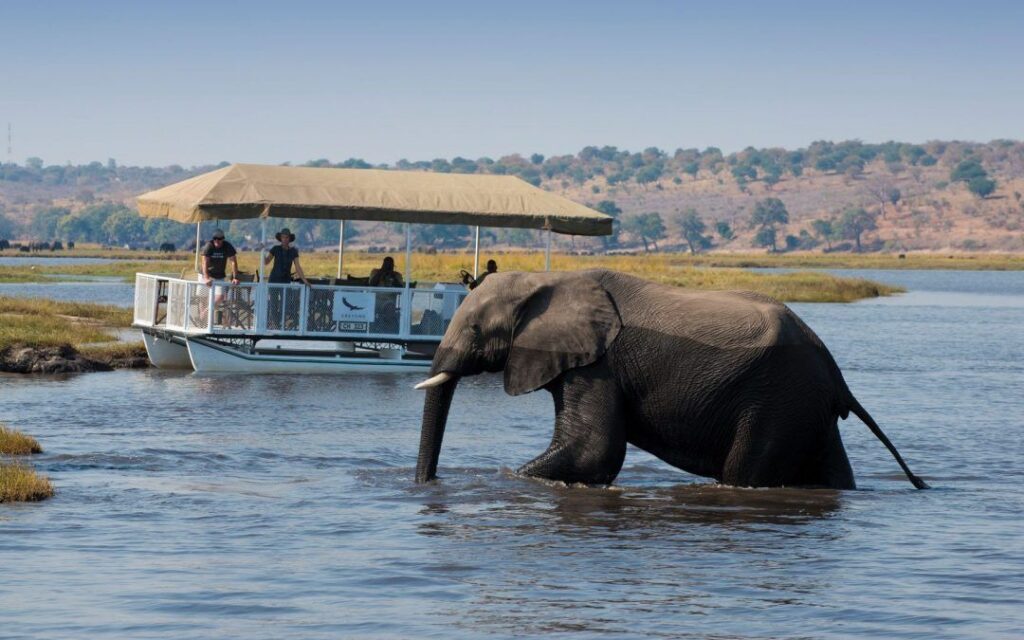
Chobe is best known for one extraordinary statistic: it holds the largest concentration of elephants in Africa, with population estimates commonly cited between 50,000 and 120,000 individuals moving through the greater ecosystem across the seasons. But the park is far more than elephants. Lion, leopard, cheetah, African wild dog, spotted hyena, Cape buffalo, hippo, crocodile, and more than 450 recorded bird species all call Chobe home, making it a genuine year-round wildlife destination whether you arrive by open safari vehicle or by boat.
This guide walks through everything a first-time or returning visitor needs to plan a Chobe safari: the best things to do, the legendary Chobe River boat cruise, how to get to the park, the wildlife and attractions you can expect to see, where to stay, the best time of year to travel, and how to book your trip with Marriott Safaris Africa.
| At a Glance
Location: Northern Botswana, at the meeting point of Botswana, Namibia, Zambia and Zimbabwe Gateway town: Kasane, served by Kasane International Airport (BBK) Size: Approximately 11,700 km² (4,500 sq mi) — Botswana’s third-largest national park Established: 1967, Botswana’s first proclaimed national park Famous for: The largest concentration of elephants in Africa, spectacular river safaris, and the Chobe Riverfront Best paired with: Victoria Falls (90 minutes by road) and the Okavango Delta |
Things to Do in Chobe National Park
Chobe rewards visitors who mix up their days between land and water. The Chobe Riverfront near Kasane is the most accessible and popular area, while Savuti and Linyanti — reached by 4×4 or light aircraft — offer a wilder, more remote experience. Here are the top activities to build into an itinerary.
1. Open-Vehicle Game Drives
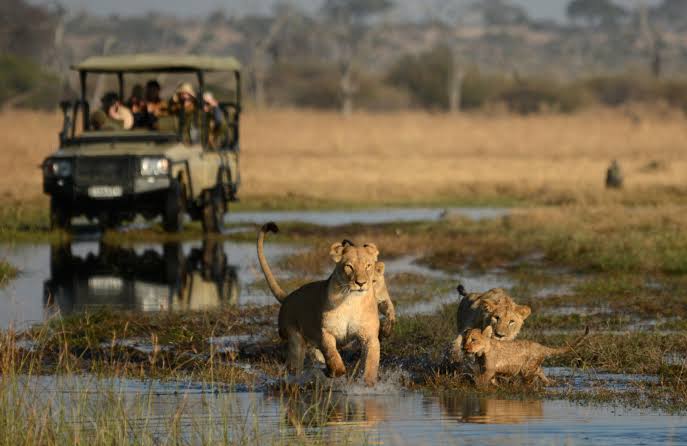
Morning and afternoon game drives along the Chobe Riverfront are the classic way to explore the park. Game drive routes follow the floodplain where herds of elephant and buffalo gather, and where predators — lion, leopard, and the endangered African wild dog — are regularly sighted, particularly during the dry-season months. Early-morning drives catch the coolest temperatures and the most active wildlife, while late-afternoon drives often end with a Chobe sunset over the river.
2. The Chobe River Boat Cruise
No visit to Chobe is complete without a river cruise — widely considered the single best wildlife activity in the park. Covered in full detail in the next section, boat safaris put visitors at eye level with elephants swimming and drinking, pods of hippo, basking crocodiles, and prolific birdlife, all without the need to follow a fixed road.
3. Savuti and the Marsh
The Savuti region, roughly a day’s 4×4 drive or a short charter flight from Kasane, is famous for dramatic predator action, including some of Botswana’s most consistent lion and wild dog sightings, plus its own remarkable history: the Savuti Channel has historically dried up and flowed again over multi-decade cycles, reshaping the landscape each time.
4. Linyanti and Selinda
West of Chobe, the Linyanti Marsh and Selinda Spillway offer a quieter, more exclusive safari experience with excellent elephant density along the Linyanti River, plus strong predator sightings away from the busier Kasane riverfront circuit.
5. Fishing on the Chobe River
Anglers travel to Chobe specifically for tigerfish, with the dry winter months of May through October offering the best conditions as water levels drop and fish activity increases. Guided fishing outings can be arranged from Kasane on request.
6. Birdwatching
With more than 450 species recorded, Chobe is a serious birding destination. The Chobe Riverfront is particularly strong for African fish eagle, carmine bee-eater, pel’s fishing owl, and a wide range of migratory species that arrive from September onward.
7. Village and Cultural Visits
Kasane and the surrounding villages offer a window into local Batswana life, craft markets, and the cultural history of the Bushmen, Hambukushu, Bayei, and Basubiya peoples who have lived in the region for generations.
8. Day Trips to Victoria Falls
Chobe pairs naturally with Victoria Falls, roughly 90 minutes away by road via the Kazungula border crossing. Many itineraries combine two or three nights at Chobe with a day trip — or overnight stay — at the Falls on either the Zimbabwean or Zambian side.
Boat Cruises in Chobe National Park
The Chobe River boat cruise is the single most iconic activity in the park, and for good reason. Traveling by water gives access to sections of riverbank that vehicles cannot reach, and it places guests remarkably close to elephants, hippos, crocodiles, and waterbirds without disturbing their natural behaviour.
Types of Cruises
- Sunset river cruise (1.5–2 hours): The most popular option, timed for late afternoon when elephant herds come down to drink and the light turns gold over the water. Usually includes a snack and drinks.
- Morning cruise (1.5–2 hours): Quieter and cooler, with excellent birding and fewer boats on the river.
- Full-day combination safari: Pairs a morning or afternoon game drive with a cruise on the same day, often including a riverside lunch — a good option for guests with limited time.
- Multi-day houseboat safari: Vessels such as the Zambezi Queen and the smaller Chobe Princess offer two- to four-night floating safaris along the Chobe River, combining accommodation, dining, and twice-daily game-viewing excursions by tender boat.
- Private charter cruises: Smaller boats booked exclusively for a couple or family, offering flexibility on timing and route.
What You Will See
| Species | Typical Cruise Sighting |
| African elephant | Herds swimming, drinking, and crossing between riverbank and Chobe’s Sedudu/Puga islands |
| Hippopotamus | Large pods resting in the shallows, most active at dusk and dawn |
| Nile crocodile | Basking on sandbanks along the riverbank, especially in the dry season |
| Cape buffalo | Large herds coming to drink, particularly July through October |
| African fish eagle | Perched along the banks; listen for its distinctive call |
| Carmine bee-eater | Colonies nesting in riverbank cliffs, September to November |
| Waterbuck, lechwe, puku | Grazing along the floodplain margins |
| Booking Tip
Sunset cruises sell out quickly in peak season (July–October). Book at least 2–3 days ahead, or reserve as part of your accommodation package. Bring a light jacket for evening cruises — the river breeze cools quickly after sunset even in the dry season. A multi-day houseboat safari is the best option for guests who want to combine a Chobe experience with total relaxation and minimal logistics. |
How to Get to Chobe National Park
Chobe sits in Botswana’s extreme north, at the point where Botswana, Namibia, Zambia, and Zimbabwe meet. The gateway town of Kasane, just 6 km from the park’s Sedudu Gate, is the starting point for almost every visit.
By Air
- Kasane International Airport (BBK) receives daily scheduled flights from Johannesburg (OR Tambo), and regular connections from Maun, Cape Town, and Victoria Falls.
- Charter flights link Kasane with Victoria Falls Airport (20–30 minutes) and Livingstone, Zambia — useful for combining a Chobe safari with the Falls.
- Most lodges offer a road transfer from Kasane Airport; remote camps in Savuti or Linyanti are typically reached by light-aircraft lodge hop.
By Road
- From Victoria Falls (Zimbabwe): Approximately 80–90 km via the A33 and the Kazungula border post — about 90 minutes’ drive, or a scheduled shuttle bus.
- From Livingstone (Zambia): A short crossing via the Kazungula Bridge, which opened in 2021 and links Zambia and Zimbabwe directly to Botswana at this four-country junction.
- From Maun: Roughly a two-day 4×4 journey via Moremi Game Reserve and/or the Khwai Concession for those continuing on to Savuti — high-clearance 4×4 and off-road experience are essential.
- From Johannesburg: A long overland route (around 1,000–1,650 km depending on the road chosen) via either Zimbabwe or entirely through Botswana on sealed roads; most self-drive travellers instead fly to Kasane and rent a vehicle there.
Border Crossings
The Kazungula border area is the operational hub for anyone combining Chobe with Victoria Falls. Botswana–Zimbabwe border hours generally run 06:00–20:00, and Botswana–Zambia hours run roughly 06:30–18:00, though these can vary — always confirm current hours and required documents (passport, visa where applicable, and any vehicle paperwork) before travel.
| Getting There — Quick Reference
Nearest airport: Kasane International Airport (BBK), 6 km from Sedudu Gate From Victoria Falls: ~90 minutes by road via Kazungula From Johannesburg: 1.5–2 hour flight to Kasane, or a multi-day overland drive Visa: Most US, UK, and EU passport holders do not require a visa for short tourist stays in Botswana — always verify current requirements before travel |
Animals in Chobe National Park
Chobe’s wildlife density, particularly along the riverfront in the dry season, is among the highest of any safari destination in Africa. The park is anchored by its enormous elephant population and supported by a full complement of predators, plains game, and aquatic species.
Big Five and Headline Species
| Species | Notes |
| African elephant | Largest concentration in Africa; herds of 100+ gather on the riverfront in the dry season |
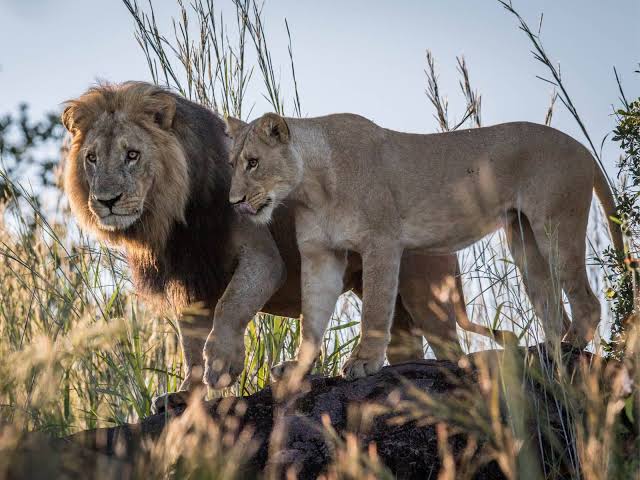
| Lion | Present throughout the park; Savuti is particularly known for large, well-studied prides |
| Leopard | Elusive but regularly seen along the riverfront and in riparian woodland |
| Cape buffalo | Large herds, especially near permanent water in the dry season |
| African wild dog (painted wolf) | One of Chobe’s specialities; an endangered species with a strong resident population |
Other Notable Wildlife
- Hippopotamus — large river pods, especially visible on boat cruises
- Nile crocodile — commonly seen basking on riverbanks and sandbars
- Spotted hyena and cheetah — present, though less frequently seen than lion
- Giraffe, zebra, kudu, impala, waterbuck, sable and roan antelope, and puku (a Chobe/Linyanti speciality found in few other parks)
- Over 450 recorded bird species, including African fish eagle, carmine bee-eater, pel’s fishing owl, and a wide range of migratory birds from September
Wildlife Viewing by Season
Wildlife concentrations shift dramatically with the seasons. In the dry months (roughly May through October), surface water disappears elsewhere in the park and animals — especially elephant and buffalo — funnel onto the Chobe riverfront in extraordinary numbers, producing some of the most reliable big-game viewing anywhere in Africa. In the wet season (November through April), wildlife disperses widely across the park as seasonal pans fill, which means more effort to find animals but rewards visitors with newborn antelope, lush scenery, and outstanding birdlife.
Attractions in Chobe National Park
The Chobe Riverfront
The most visited and accessible section of the park, running along the Chobe River just west of Kasane. This is the heart of the elephant and buffalo action, and the base for the majority of game drives and boat cruises.
Savuti Marsh
A remote, drama-filled region in the centre of the park, famed for lion and wild dog activity and the unpredictable, historically cyclical flow of the Savuti Channel.
Linyanti Marsh and Selinda Spillway
A quieter alternative to the riverfront, bordering the Linyanti River in the park’s northwest, known for excellent elephant density and a more exclusive, low-traffic safari feel.
Kasane Town and the Four Corners
Kasane sits almost exactly at the point where Botswana, Zambia, Zimbabwe, and Namibia meet — one of the few places in the world where four countries converge. The town itself is a relaxed base with a large baobab tree near the police station, craft markets, and easy access to both the park and the Kazungula border.
Victoria Falls
Though technically outside Chobe, Victoria Falls is close enough — around 90 minutes by road — that it is almost always packaged together with a Chobe safari, whether as a day trip or a multi-night extension.
Kavango–Zambezi Transfrontier Conservation Area (KAZA)
Chobe forms part of KAZA, the world’s largest transfrontier conservation area, spanning parts of Botswana, Namibia, Zambia, Zimbabwe, and Angola — a fact that underpins the scale of wildlife movement (particularly elephant) seen in and around the park.
Accommodation in Chobe National Park
Chobe offers lodging across every budget, from luxury riverfront lodges to self-drive campsites, plus the unique option of a multi-night houseboat safari.
Accommodation by Tier
| Tier | What to Expect | Typical Price Range (per person/night) |
| Luxury lodges & camps | Riverfront suites or tented rooms, private guiding, gourmet dining, spa and pool facilities. Examples include established riverfront properties near Kasane and exclusive camps in Linyanti/Savuti. | US$500–US$1,000+ |
| Mid-range lodges | Comfortable en-suite rooms or safari tents, shared game drives and cruises, full board | US$250–US$500 |
| Houseboats | Multi-night floating accommodation on the Chobe River with twice-daily game-viewing excursions by tender boat | US$400–US$800 (multi-night packages) |
| Budget guesthouses & hotels (Kasane) | Simple, comfortable rooms in town, ideal base for self-organised day trips into the park | US$60–US$150 |
| Self-drive campsites | Designated, unfenced campsites inside the park with ablution blocks and braai facilities; advance booking required, no wild camping permitted | US$20–US$50 |
| Accommodation Tips
Campsites inside the park must be booked well in advance, particularly for the July–October peak season. Riverfront lodges near Kasane put you within a short drive of Sedudu Gate and typically include cruises and game drives in the nightly rate. For a totally different pace, a 2–4 night houseboat safari on the Zambezi Queen or Chobe Princess combines accommodation and wildlife viewing in one seamless package. |
Best Time to Visit Chobe National Park
Chobe is a genuine year-round destination, but the dry and wet seasons offer very different experiences, and the right time for you depends on what you most want to see.
Dry Season — May to October
This is Chobe’s headline safari season. As surface water disappears elsewhere in the park, elephant and buffalo concentrate on the Chobe riverfront in some of the most spectacular game-viewing conditions in Africa. Thinner vegetation improves visibility, and roads are firm and easy to navigate.
- May–June: Mild, dry, and green from the tail end of the rains — a favourite window for photography and comfortable temperatures.
- July–September: Peak wildlife concentration and peak tourist season; expect the coolest mornings of the year alongside warm, sunny days.
- October: The hottest month, but also when animals cluster most tightly around remaining water sources for dramatic sightings.
Wet (Green) Season — November to April
The wet season transforms Chobe into a lush, green landscape with newborn antelope, dramatic skies, and excellent birdwatching as migratory species arrive from September onward. Wildlife disperses more widely, requiring a bit more patience, but lodge and cruise prices are noticeably lower and the park feels far less crowded.
Month-by-Month Snapshot
| Period | Highlights |
| May–June | Cooler days, green scenery fading to gold, strong all-round game viewing |
| July–August | Coldest mornings, huge elephant herds on the river, wild dog sightings likely |
| September | First migrant birds arrive; excellent riverfront game viewing continues |
| October–November | Hottest, driest peak game viewing; short rains typically begin by late November |
| December–March | Lush green season, newborn antelope, best photographic light, lower rates |
| April | Rains taper off; a good transition month with fewer crowds and improving access |
Note: Botswana national park entry fees change periodically — non-resident adult fees have generally ranged from roughly US$20–US$40 per person per day in recent years, plus a separate daily vehicle fee. Always confirm current park fees, campsite rates, and cruise pricing directly with Marriott Safaris Africa at the time of booking.
Book Your Chobe Safari with Marriott Safaris Africa
Planning a Chobe safari involves coordinating flights, border logistics, park permits, boat cruises, and accommodation across multiple properties and, often, multiple countries. Marriott Safaris Africa — “Perfection Anytime” — takes care of every detail so you can focus on the experience itself.
Why Book With Us
- Local expertise: In-depth, first-hand knowledge of the Chobe Riverfront, Savuti, and Linyanti, plus the Victoria Falls extension route.
- Tailored itineraries: Whether you want a classic 3-night riverfront stay, a multi-day houseboat safari, or a combined Chobe–Victoria Falls–Okavango journey, itineraries are built around your travel style and budget.
- Transparent pricing: Clear, all-inclusive quotes covering accommodation, activities, park fees, and transfers — no hidden costs.
- End-to-end logistics: Flights, road transfers, and border crossings at Kazungula are arranged and confirmed in advance.
- 24/7 support: A dedicated contact throughout your trip, from initial planning to your return flight home.
How to Book
- Step 1 — Enquire: Share your travel dates, group size, and the experience you’re after (riverfront lodge, houseboat, self-drive, or a multi-country combination).
- Step 2 — Receive your tailored itinerary: A detailed day-by-day proposal with accommodation options across your preferred budget tier.
- Step 3 — Confirm and pay your deposit: Secures your lodge, cruise, and any charter flights — essential in the busy July–October season.
- Step 4 — Final planning: Visa guidance, packing advice, and confirmed transfer times are shared ahead of departure.
- Step 5 — Travel: Arrive in Kasane and let your Marriott Safaris Africa itinerary — and guides — take it from there.
| Ready to Experience Chobe?
Contact Marriott Safaris Africa to start planning your Chobe National Park safari — riverfront lodge stays, multi-day houseboat cruises, and combined itineraries with Victoria Falls and the Okavango Delta are all available. Book early for the July–October peak season, when lodges, campsites, and river cruises fill up quickly. |
Marriott Safaris Africa — Perfection Anytime