Okavango Delta Safari 2026 | Best Botswana Delta Tours & Lodges
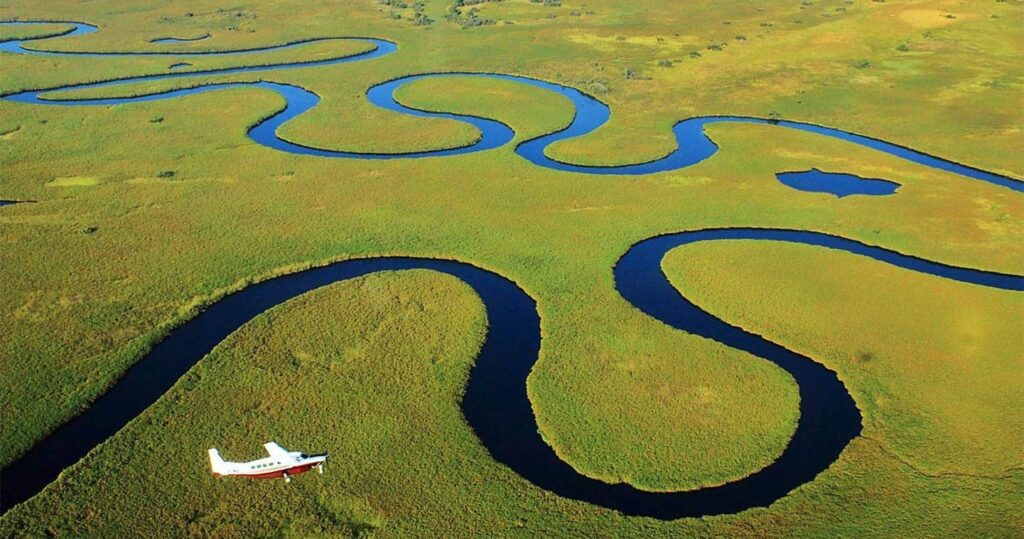
The Okavango Delta is one of the last truly wild places left on Earth — a vast inland river delta in northern Botswana where the Okavango River, instead of reaching the sea, spills into the sands of the Kalahari Desert and fans out into a labyrinth of lagoons, palm-fringed islands, and papyrus-lined channels. A UNESCO World Heritage Site since 2014, it is the only major delta in the world that never reaches an ocean, and its seasonal flood pulse creates one of the richest wildlife habitats on the continent.
For travelers planning a safari, the Delta offers something few other destinations can match: the chance to combine classic 4×4 game drives with mokoro (dugout canoe) excursions, motorboat cruises, guided bush walks, and light-aircraft transfers that reveal the wetland’s scale from above. This guide brings together everything you need to plan your trip — the best time to visit, how to get there, what to do once you arrive, where to stay by budget, a detailed day-by-day sample itinerary, and how to book your safari with Marriott Safaris Africa.
| At a Glance
Location: Northwestern Botswana, Southern Africa Size: Expands from roughly 6,000 km² to 15,000–22,000 km² at peak flood UNESCO World Heritage Site: Inscribed in 2014 Gateway town: Maun (Okavango Delta “tourist capital”) Signature experiences: Mokoro excursions, game drives, walking safaris, boat cruises, scenic flights Ideal trip length: 4–7 nights, often combined with Chobe, Moremi, or Victoria Falls |
Best Time to Visit the Okavango Delta
The Okavango Delta runs on a flood calendar rather than a conventional rainy/dry season calendar, which is what makes timing a visit slightly more nuanced than in many other safari destinations. Floodwaters originate in the Angolan highlands roughly 1,200 km away and take months to travel south, arriving in the Delta just as Botswana’s own dry season sets in.
Flood Season and Peak Game Viewing: June to August
June through August is the single best window for most travellers. This is when the floodwaters are at their highest, the surrounding bush has thinned out after the dry winter, and wildlife concentrates densely around the permanent channels and lagoons. Days are dry, sunny, and mild, though early mornings and night drives can be genuinely cold, with temperatures dropping close to freezing in June and July, so warm layers are essential.
Late Dry Season: September and October
September and October bring the hottest, driest conditions of the year. Vegetation is at its sparsest and animals cluster tightly around dwindling water sources, which often produces the most dramatic predator sightings of the year. Water levels in some outer channels may recede, so this period suits camps on permanent waterways best.
Green Season: November to March
The emerald or “green” season coincides with Botswana’s actual rains. Afternoon thunderstorms clear the air and transform the Delta into a lush, photogenic landscape. This is calving season for many antelope species, migratory birds arrive in large numbers, and lodge rates drop significantly. The trade-off is thicker bush that makes game spotting harder, and some water-based routes may be shallower until the flood arrives.
Early Flood Arrival: April and May
Water begins spreading through the northern channels in April and May as the flood pulse arrives, offering a quieter, good-value window with fewer visitors, mild weather, and improving water levels heading into the peak season.

| Season | Months | Highlights | Considerations | |
| Peak flood / dry | June – August | Highest water levels, best game concentration, mokoro & boat access widest | Cold mornings and nights, highest rates, book 6–12 months ahead | |
| Late dry season | September – October | Dramatic predator action around shrinking water | Very hot by October, some channels shallower | |
| Green season | November – March | Newborn wildlife, birdlife, lush scenery, lower rates | Thicker bush, afternoon storms, variable water levels | |
| Early flood | April – May | Rising water, fewer crowds, good value | Some outlying camps still building up water access | |
| Marriott Safaris Africa Tip
For a first Okavango safari focused on classic game viewing and water activities together, July and August deliver the most reliable combination of high water and dry, comfortable weather. Travelling on a budget or chasing birdlife and newborn animals? Target December through February for lower rates and exceptional green-season photography. |
||||
How to Get to the Okavango Delta
Because the Delta is a remote wetland wilderness with very few roads, almost every safari begins in the same place: Maun, Botswana’s northern safari hub. From there, the final leg into camp is completed by light aircraft, and occasionally by road or boat.
Step 1: Fly into Maun International Airport (MUB)
Maun is served by regular scheduled flights from Johannesburg O.R. Tambo International Airport and Cape Town International Airport (mainly on Airlink and Air Botswana), with additional connections from Gaborone. Ethiopian Airlines operates the only long-haul international service directly into Maun, connecting via Addis Ababa to a wide network of cities in Europe, the Middle East, Asia, and the Americas. Most other international travellers connect through Johannesburg or Cape Town.
Step 2: Charter Flight from Maun to Your Camp
From Maun, a light aircraft operated by a local charter company transfers guests directly to an airstrip near their lodge. These flights typically last between 15 and 75 minutes depending on how deep into the Delta the camp is located, and double as a scenic introduction to the wetland — elephants, buffalo, giraffe, and hippo are frequently visible from the air. Luggage on these flights is restricted to soft-sided bags with a strict weight limit (usually around 20 kg per person), so packing light is essential.
Alternative Gateway: Kasane International Airport (BBK)
Travellers combining the Delta with Chobe National Park or Victoria Falls often fly into Kasane instead, with an onward charter or road transfer into the northern and eastern Delta regions. Kasane connects conveniently with Victoria Falls Airport in Zimbabwe and Livingstone in Zambia.
Self-Drive and Road Access
The eastern and southern fringes of the Delta, including parts of Moremi Game Reserve, can be reached from Maun by 4×4 in roughly 2 to 4 hours, and overland travellers exploring Chobe, Savuti, and Khwai can continue into the Delta via the Sand Ridge or Marsh roads, a drive of at least 7 hours. Deep-water lodges and camps on the Delta’s islands, however, remain accessible only by air or boat.
| Route | Mode | Approx. Duration | |
| Johannesburg (JNB) → Maun (MUB) | Scheduled flight | 2 hours | |
| Cape Town (CPT) → Maun (MUB) | Scheduled flight | 2.5 hours | |
| Maun (MUB) → Moremi camps | Light aircraft charter | 25–35 minutes | |
| Maun (MUB) → Eastern Delta camps | Light aircraft charter | 30–40 minutes | |
| Maun (MUB) → Western Delta / Panhandle | Light aircraft charter | 50–75 minutes | |
| Kasane (BBK) → Northern Delta / Linyanti | Light aircraft charter | 40–60 minutes | |
| Maun → Eastern/Southern Delta by road | 4×4 self-drive | 2–4 hours | |
| Entry Requirements
A passport valid for at least six months beyond your travel dates is required, along with at least two blank visa pages. Many nationalities, including the US, UK, EU, and most Commonwealth countries, can enter Botswana visa-free for short tourist stays — always verify current requirements for your nationality before travelling. A Yellow Fever certificate may be requested if arriving from a country with risk of transmission. |
|||
Attractions and Things to Do Around the Okavango Delta
The Delta’s appeal lies in the sheer variety of ways to experience it — few destinations let you track a leopard on foot in the morning and glide silently through a lily-covered lagoon in a dugout canoe the same afternoon.
1. Mokoro Excursions
The mokoro, a traditional dugout canoe poled through shallow water by an experienced local poler, is the Delta’s signature experience. Gliding quietly through reed channels puts you at eye level with frogs, kingfishers, lilies, and grazing elephants on the islands, offering a completely different rhythm from a vehicle-based safari.
2. Game Drives
Open 4×4 vehicles explore the drier islands and floodplain fringes in search of the Delta’s resident wildlife — elephant, buffalo, giraffe, zebra, red lechwe, and predators including lion, leopard, and the endangered African wild dog, for which the Delta is a global stronghold. Morning and afternoon/night drives allow guides to track nocturnal predators as well as daytime grazers.
3. Motorboat Safaris and River Cruises
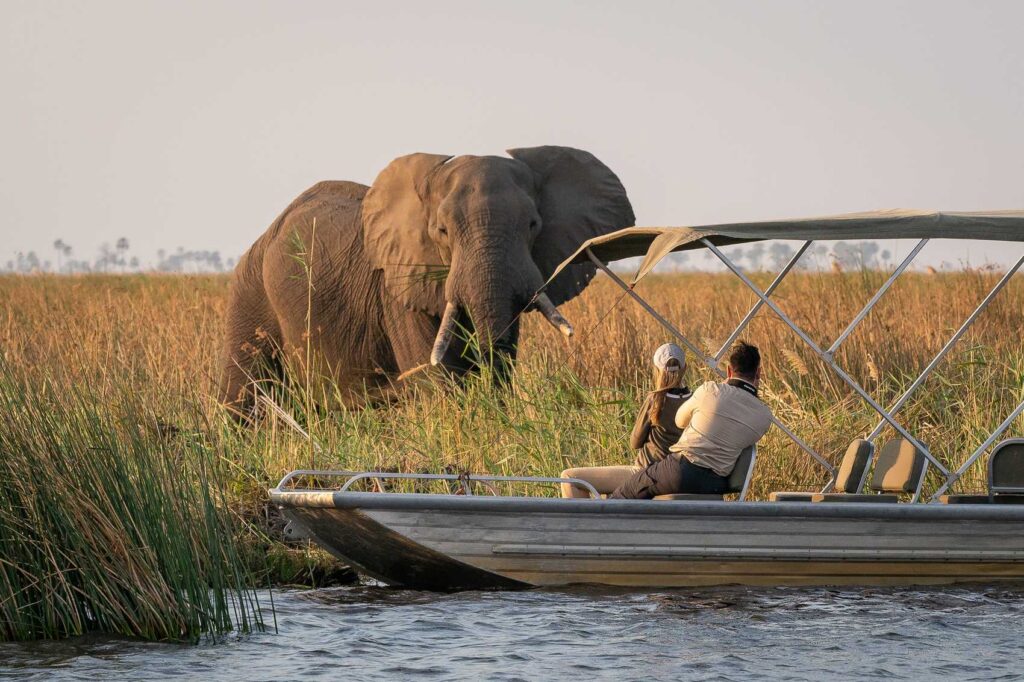
In camps with access to deeper permanent channels, motorboat cruises cover greater distances than a mokoro and are especially rewarding for hippo and crocodile sightings, as well as birdwatching along the reed beds.
4. Guided Walking Safaris
Walking safaris, led by an armed professional guide, offer an intimate way to learn how to read tracks, identify smaller creatures, and understand the Delta’s ecology at ground level — a pace and perspective a vehicle can’t replicate.
5. Scenic Flights
Because so many camps are reached by light aircraft, most visitors already experience the Delta’s famous aerial view: a mosaic of channels, lagoons, and palm islands that has become one of the most photographed landscapes in Africa. Dedicated scenic flights and helicopter transfers can extend this experience.
6. Birdwatching
With more than 400 recorded species, the Delta is a premier birding destination, particularly during the green season (November–March) when migrants arrive. Highlights include the African fish eagle, Pel’s fishing owl, saddle-billed stork, and dense colonies of herons and egrets.
7. Fishing
Catch-and-release fishing for tigerfish and bream is offered at many camps along the permanent channels, typically combined with a boat excursion.
8. Cultural Visits
Village visits around the Delta’s fringes, particularly in the Panhandle region near Seronga and Etsha, offer insight into the Hambukushu and BaYei communities, including traditional basket weaving and mokoro-poling heritage.
9. Stargazing
With virtually no light pollution across the wilderness, clear Delta nights reveal exceptional views of the southern sky; many camps offer telescope sessions or simply a fire and open deck for unaided stargazing.
Nearby Excursions
- Moremi Game Reserve — the Delta’s core protected area, combining permanent water with dense game populations
- Chobe National Park and the Chobe riverfront, famed for its elephant herds, a manageable add-on via Kasane
- Khwai Community Concession — unfenced wildlife corridor between Moremi and Chobe, well known for predator sightings
- Victoria Falls — commonly combined with an Okavango safari via a connecting flight through Kasane or Cape Town
Where to Stay in the Okavango Delta
Accommodation in the Delta divides broadly into permanent water camps (accessible year-round with reliable mokoro and boating access) and seasonal camps in drier concessions that specialise in game drives and walking safaris. Nearly all camps are small, intimate, and unfenced, placing guests directly in the wilderness.
Ultra-Luxury (from roughly USD 1,000–2,500+ per person, per night)
Exclusive-use private islands and architect-designed lodges in prime concessions such as Chief’s Island, Duba Plains, and Mombo, offering personalised guiding, gourmet dining, spa facilities, and the Delta’s most sought-after wildlife territory.
Luxury (roughly USD 700–1,000 per person, per night)
Well-appointed tented suites with en-suite bathrooms, private decks, and plunge pools in prime private concessions, typically all-inclusive of activities, drinks, and light-aircraft transfers.
Mid-Range (roughly USD 400–700 per person, per night)
Comfortable tented or chalet-style camps offering the full range of Delta activities with a more moderate price point, often located in community concessions bordering Moremi Game Reserve.
Budget and Self-Drive Options (from roughly USD 150–350 per person, per night)
Simpler campsites and lodges around Maun and the Delta fringes, popular with self-drive travelers and overlanders, with day trips or shorter mokoro excursions arranged locally.
| Category | Typical Price (pppn) | Best For | |
| Ultra-luxury private concessions | USD 1,000 – 2,500+ | Honeymooners, exclusive-use retreats, top predator territory | |
| Luxury tented camps | USD 700 – 1,000 | First-time visitors wanting full-service comfort | |
| Mid-range camps | USD 400 – 700 | Families and travellers balancing comfort and value | |
| Budget lodges / campsites | USD 150 – 350 | Self-drive and overland travellers | |
| Booking Note
Most Delta camps sell on an all-inclusive basis: accommodation, meals, laundry, twice-daily guided activities, and local drinks are typically bundled together, with light-aircraft transfers, park fees, and premium drinks sometimes billed separately. Because camps are small (often 6–12 rooms), availability during the June–August peak fills up 6–12 months in advance. |
|||
Detailed 7-Day Okavango Delta Safari Itinerary
The following sample itinerary is designed as a complete Okavango Delta experience, moving between a permanent water camp and a drier game-viewing concession to combine mokoro excursions, boating, game drives, and walking safaris. It can be shortened to 4–5 nights or extended with Chobe National Park or Victoria Falls.
Day 1: Arrival in Maun and Transfer to Camp
Arrive at Maun International Airport, where a Marriott Safaris Africa representative will meet you and assist with your onward light-aircraft transfer. Enjoy a scenic 30–45 minute flight over the Delta’s channels and islands before landing at your first camp’s private airstrip.
Settle into your suite, enjoy lunch, and take an afternoon orientation walk around camp before your first sundowner game drive.
Day 2: Mokoro Excursion and Island Walk
Rise early for coffee before a morning mokoro excursion through the reed channels, poled by an experienced local guide. Disembark on a nearby island for a guided walk focused on tracks, smaller wildlife, and plant life.
After lunch and rest during the heat of the day, head out on an afternoon game drive into the evening, tracking nocturnal species with a spotlight on the return to camp.
Day 3: Full-Day Game Viewing
A full day dedicated to game drives, with a bush breakfast or picnic lunch stop in a scenic spot. Focus areas include predator territory and lechwe- and buffalo-rich floodplains.
Return to camp for a relaxed dinner under the stars, often accompanied by traditional storytelling or music from camp staff.
Day 4: Transfer to a Second Camp — Boating and Fishing
Transfer by light aircraft to a second camp on a permanent water channel. Spend the afternoon on a motorboat cruise exploring wider lagoons, with an option for catch-and-release tigerfish or bream fishing.
Enjoy sundowners on the water as the light turns gold over the reed beds.
Day 5: Walking Safari and Birdwatching
A guided walking safari in the cool of the morning, tracking game on foot with an armed professional guide.
Spend the afternoon birdwatching along the channels — look out for African fish eagles, herons, and, with good fortune, the elusive Pel’s fishing owl — before an evening game drive.
Day 6: Community Visit and Leisure Day
Visit a nearby village to learn about Hambukushu or BaYei culture, mokoro-building traditions, and basket weaving, where available near your camp.
Spend the rest of the day at leisure — relax at the pool or deck, enjoy a spa treatment if offered, or take an optional scenic helicopter flight over the Delta.
Day 7: Final Game Drive and Departure
One last early-morning game drive before breakfast, followed by your light-aircraft transfer back to Maun in time to connect with your onward international flight.
| Extend Your Trip
Add 2–3 nights in Chobe National Park via Kasane for exceptional elephant viewing along the Chobe riverfront. Combine with Victoria Falls (Zambia or Zimbabwe side) for a classic Okavango-to-Falls itinerary. Add Moremi Game Reserve as a dedicated stop for travellers prioritising predator sightings. |

What to Expect on Your Okavango Delta Safari
Wildlife
The Delta supports one of Africa’s densest concentrations of wildlife, including the Big Five (though rhino sightings are limited to specific reintroduction areas), African wild dog, red lechwe, sitatunga, and significant populations of hippo and crocodile in its permanent channels. The mix of land and water habitats supports species rarely seen together elsewhere on the continent.
Guiding Standards
Botswana maintains some of the highest professional guiding standards in Africa, with guides trained and licensed to a rigorous national standard. Most camps operate on a low guide-to-guest ratio, allowing for a personalised, flexible daily schedule built around your interests.
Camp Life and Daily Rhythm
A typical day follows the classic safari rhythm: an early wake-up call, a dawn activity, brunch back at camp, a rest period during the heat of the day, afternoon tea, a second activity into sunset, and dinner — often shared communally with other guests and your guide.
Packing Essentials
- Neutral-coloured (khaki, olive, tan) lightweight clothing; avoid bright colours and all-black or all-white
- A warm jacket, fleece, gloves, and a beanie for early mornings and night drives, especially June to August
- Soft-sided duffel bags only — hard-shell suitcases are not permitted on light aircraft
- Comfortable closed walking shoes, sun hat, sunglasses, and high-SPF sunscreen
- Binoculars, a camera with a zoom lens, and spare batteries or a power bank
- Any personal medication, malaria prophylaxis (after consulting a travel doctor), and a basic first-aid kit
Health and Safety
The Okavango Delta lies in a malaria risk area, so travellers should consult a travel medicine specialist about prophylaxis well ahead of departure. Camps are unfenced, and wildlife may move freely through the property, so guests are always escorted after dark by camp staff — a straightforward and well-practised routine at every reputable lodge.
How to Book Your Okavango Delta Safari with Marriott Safaris Africa
Marriott Safaris Africa specialises in tailor-made safaris across East and Southern Africa, including bespoke Okavango Delta itineraries built around your travel dates, budget, and interests. Our promise is simple: Perfection Anytime.
Step 1: Share Your Travel Wishlist
Contact our safari consultants with your preferred travel dates, group size, budget range, and priorities — whether that’s predator sightings, mokoro excursions, a honeymoon retreat, or a family-friendly camp.
Step 2: Receive a Tailor-Made Proposal
Within 24–48 hours, our team will send a detailed itinerary proposal matching camps, activities, and internal flights to your preferences, along with a transparent, all-inclusive cost breakdown.
Step 3: Refine and Confirm
We’ll adjust the proposal until it’s right, then secure your booking with a deposit. Because prime Delta camps run at limited capacity, we recommend confirming 6–12 months ahead for the June–August peak season, and 3–6 months ahead for the green season.
Step 4: Pre-Departure Planning
Once confirmed, we handle detailed trip logistics — flight coordination, visa guidance, packing advice, and travel insurance recommendations — so all you need to do is arrive in Maun ready for the adventure.
Step 5: Travel with 24/7 Support
Throughout your trip, Marriott Safaris Africa provides round-the-clock support, so help is always a phone call away, from the moment you depart home to the moment you return.
| Ready to Book?
Get in touch with the Marriott Safaris Africa team today with your preferred travel dates, and let us design your perfect Okavango Delta safari — from a classic 7-night mokoro-and-game-drive itinerary to a multi-country journey combining the Delta with Chobe and Victoria Falls. Perfection Anytime — that’s the Marriott Safaris Africa promise. |
Frequently Asked Questions
Q: What is the single best month to visit the Okavango Delta?
A: July and August are generally considered the best months, combining peak floodwaters, concentrated wildlife, and dry, comfortable weather — though the trade-off is cold mornings and the highest camp rates.
Q: How many days do I need in the Okavango Delta?
A: A minimum of 3–4 nights is recommended to properly experience both land and water activities; 6–7 nights across two camps allows for a fuller mix of mokoro excursions, boating, walking safaris, and game drives.
Q: Do I need a visa to visit Botswana?
A: Many nationalities, including the US, UK, EU, and most Commonwealth countries, can enter visa-free for short tourist visits, but requirements vary by nationality and can change, so always confirm current rules before you travel.
Q: Is the Okavango Delta malaria risk area?
A: Yes. Consult a travel medicine specialist about appropriate malaria prophylaxis well before departure, and pack insect repellent and long sleeves for evenings.
Q: Can I combine the Okavango Delta with Victoria Falls or Chobe National Park?
A: Yes — both are popular add-ons. Chobe is easily combined via Kasane, and Victoria Falls (Zambia or Zimbabwe side) connects well via Kasane or a Cape Town/Johannesburg transfer.
Q: Is the Okavango Delta suitable for families with children?
A: Many camps welcome children, though some exclusive-use or walking-safari-focused camps set minimum age requirements (commonly 6 or 12 years). Marriott Safaris Africa can recommend family-friendly camps and itineraries.
Q: How much does an Okavango Delta safari cost?
A: Budget realistically from around USD 400–700 per person per night for a comfortable mid-range camp, rising to USD 1,000–2,500+ per person per night for exclusive-use luxury concessions, generally all-inclusive of meals, activities, and internal transfers.
Q: What is a mokoro, and is it safe?
A: A mokoro is a traditional dugout (now often fibreglass) canoe poled through shallow water by an experienced local guide. It is a calm, low-impact, and very safe way to explore the Delta’s narrower channels.