
Self-Drive Safari in Hwange National Park
Self-Drive Safari in Hwange National Park, Few places in Africa reward an independent safari traveller quite like Hwange National Park. Covering roughly 14,651 square kilometres in north-western Zimbabwe, it is the country’s largest protected area and one of the biggest national parks on the continent. It is home to one of the largest elephant populations on earth, along with lion, leopard, cheetah, buffalo, giraffe, sable, roan and the endangered African wild dog (painted wolf). Bird lovers can tick off well over 400 species.
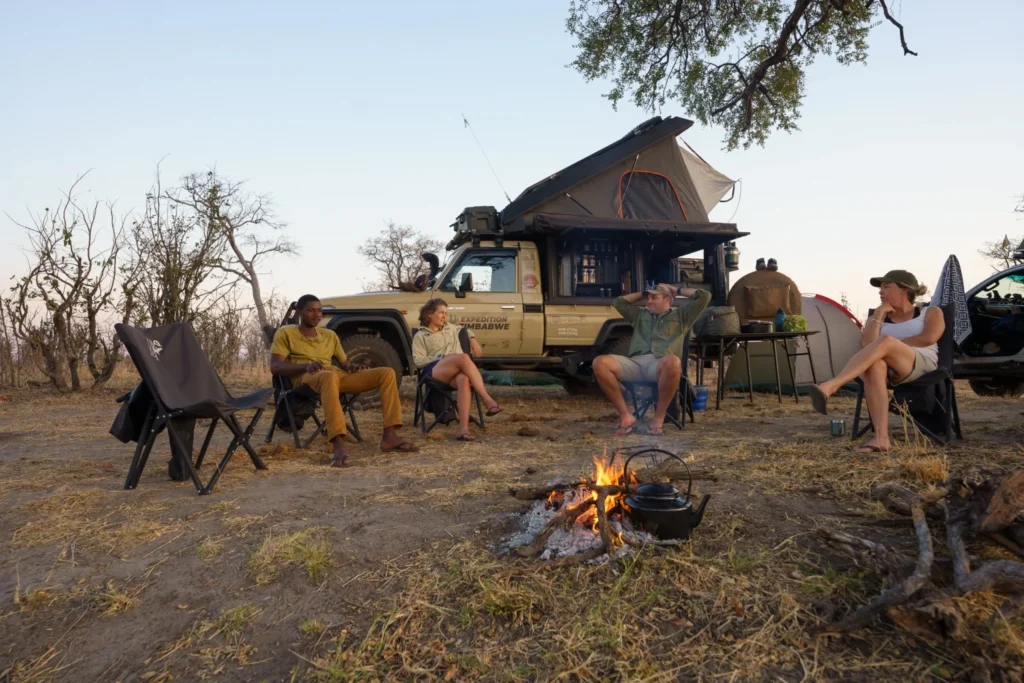
What makes Hwange special for self-drivers is the combination of good access, a network of game-viewing loops, public picnic sites and raised viewing platforms where you can sit beside a waterhole for hours, and remarkably light traffic. Unlike busier parks in the region, it is common to have a sighting entirely to yourself. Hwange also sits just 172 km from Victoria Falls, making it the natural partner to a Falls visit and an easy link toward Chobe in Botswana.
This guide covers everything you need to plan a safe, rewarding self-drive safari in Hwange: how to get there, which vehicle to rent, the park’s three main sections, 2026 entry fees, the best self-drive routes, where to camp or stay, a sample itinerary, costs, documents, driving rules and frequently asked questions.
| Hwange at a Glance
Location: North-western Zimbabwe, Matabeleland North, bordering Botswana Size: About 14,651 km² — Zimbabwe’s largest national park Distance from Victoria Falls: Approx. 172 km to Main Camp (about 2.5–3 hours) Distance from Bulawayo: Approx. 283 km to Main Camp (about 4 hours) Main sections: Main Camp, Sinamatella and Robins Best time for self-drive: July to October (peak dry season); May–June for cooler days Vehicle: 4×4 strongly recommended; essential in the rains and around Robins Managed by: Zimbabwe Parks and Wildlife Management Authority (ZimParks) |
Is Hwange Good for a Self-Drive Safari?
Yes — Hwange is one of the most rewarding self-drive parks in Southern Africa, but it suits travellers who are comfortable with a little adventure. Roads inside the park are a mix of tar and gravel, some sections are sandy (the southern edge borders the Kalahari), signage can be sparse, and mobile signal is patchy. In return you get freedom, value for money and genuinely wild game viewing.
Self-driving Hwange suits you if you:
- Have some experience driving on gravel or sand, or are willing to take it slowly
- Enjoy planning your own day and spending long stretches at waterholes
- Are happy to self-cater or camp, or to combine self-drive with a lodge stay
- Want a more affordable alternative to an all-inclusive guided safari
Consider a guided safari (or a mix) if you:
- Are visiting in the peak wet season (December–February) with no off-road experience
- Want night drives or walking safaris — these are only possible with private operators and licensed guides
- Prefer someone else to handle tracking, navigation and logistics
How to Get to Hwange National Park by Road
Hwange lies along the A8 highway that links Bulawayo and Victoria Falls. Most self-drivers pick up their rental vehicle in Victoria Falls, Bulawayo or Harare and drive to Main Camp, the park’s busiest and best-equipped section.
| Starting point | Approx. distance | Driving time | Route notes |
| Victoria Falls | 172 km | 2.5–3 hrs | A8 south; turn off at Cross Mabale, then 23 km of tar to Main Camp |
| Bulawayo | 283 km | 4–4.5 hrs | A8 north to Cross Mabale turn-off; watch for potholes and livestock |
| Harare | Approx. 720 km | 9–10 hrs | Via Bulawayo; best split with an overnight stop in Bulawayo |
| Kasane, Botswana | Approx. 250 km | 4–5 hrs + border | Via Kazungula border to Victoria Falls, then A8 south |
| Hwange Town → Sinamatella | Approx. 45 km | 1–1.5 hrs | Gravel/laterite road from Hwange Town turn-off |
| A8 → Robins | Long gravel road | 2+ hrs | Pandamatenga turn-off; 4×4 required |
| Do not confuse Hwange Town with the park
Hwange Town is a coal-mining town on the A8. It is the turn-off for Sinamatella, not for Main Camp. For Main Camp, continue to the Cross Mabale turn-off. Fill your tank in Victoria Falls, Bulawayo or Hwange Town before entering — fuel inside the park is not reliable. |
Choosing the Right Vehicle for Hwange
A high-clearance 4×4 is the right choice for almost every Hwange self-drive. While the tar road to Main Camp and some nearby loops can be managed in a 2WD in the dry season, the gravel tracks, sandy Kalahari sections, Robins area and wet-season mud quickly expose low-slung vehicles. A 4×4 also gives you a better viewing height at waterholes.
| Vehicle | Best for | Strengths | Watch-outs |
| Toyota Hilux double cab (with rooftop tent) | Couples and small groups camping | Reliable, fully kitted camping setup, good clearance | Limited interior luggage space |
| Toyota Land Cruiser 79 / 76 (rooftop tent) | Remote routes, Robins, wet season | Toughest option, long-range fuel tanks | Higher daily rate and fuel use |
| Toyota Land Cruiser Prado | Families, lodge-based self-drive | Comfortable, capable off-road | Less camping gear included as standard |
| Toyota Fortuner or similar SUV | Dry-season Main Camp trips | Comfortable on the A8, good value | Not ideal for deep sand or mud |
| 2WD sedan | Not recommended | Cheapest | Restricts you to tar roads only |
What a good Hwange 4×4 rental should include
- Two spare wheels, a high-lift or bottle jack, tyre repair kit and compressor
- Rooftop or ground tent, bedding, camp table and chairs (for camping packages)
- Fridge/freezer with dual-battery system, water tank or jerry cans
- Gas cooker, cookware, cutlery, cooler box and lighting
- GPS with Tracks4Africa maps, recovery straps and a first-aid kit
- Comprehensive insurance and written permission for any cross-border travel
Understanding Hwange’s Three Main Sections
The park is managed through three administrative areas, each with its own ZimParks office where you can pay fees and check in. Most visitors (about four in five) base themselves at Main Camp, but combining two sections gives a much richer trip.
Main Camp
The hub of the park and the easiest to reach, with the greatest concentration of pumped waterholes and the best road network. Main Camp has a reception, a basic restaurant, self-catering chalets and a campsite. The loops toward Nyamandhlovu Pan, Dom Pan, Kennedy Pans, Guvalala and Ngweshla are classic self-drive territory, particularly in the dry season when elephants gather in huge numbers.
Sinamatella
Perched on a ridge in the north of the park, Sinamatella offers sweeping valley views and a wilder feel. Mandavu Dam and Masuma Dam are excellent for hippo, crocodile, buffalo and elephant, and the area is known for lion. The Bumbusi National Monument, with dry-stone walls and rock engravings, is nearby. Facilities are more basic than at Main Camp.
Robins
The remote north-west corner, close to the Botswana border. Robins is the least-visited section and the most rugged — a 4×4 is required. It rewards the effort with good predator sightings, Deteema Dam, Big Toms and Little Toms pans, and genuine solitude. Allow plenty of time: the drive from Main Camp is long and slow.
| Inter-camp driving cut-off times
ZimParks controls travel between sections so that self-drivers are not caught on the road after dark. As a guide, self-drive vehicles leaving Main Camp for Sinamatella may not depart after 2:00 pm, and travel from Main Camp to Robins is not allowed after 12:00 noon. Confirm current cut-offs at reception before setting off, and always arrive at your camp before the gates close. |
Hwange National Park Fees for Self-Drivers (2026)
ZimParks charges in US dollars and splits fees by visitor category (Zimbabwe resident, SADC resident or international), by whether you are a day visitor or staying overnight inside the park, and by vehicle. Conservation (entry) fees are charged per person per day, and vehicle entry fees are charged separately.
| Fee type | Category | Indicative 2026 rate (US$) |
| Conservation fee | International visitor, accommodated in the park | $12 per person per day |
| Conservation fee | International day visitor (staying outside) | Higher than accommodated rate — confirm with ZimParks |
| Conservation fee | SADC and Zimbabwe residents | Discounted tiers — confirm with ZimParks |
| Vehicle entry | Foreign-registered vehicle, day visitor | $10 per vehicle |
| Vehicle entry | Foreign-registered vehicle, accommodated | $3 per vehicle |
| Vehicle entry | Zimbabwe-registered rental vehicle | Local vehicle rate — confirm at the gate |
| Camping / platforms | Picnic sites, Guvalala & Makwa platforms | Per site per night (max. 6 people) — confirm |
| Chalets / cottages | Main Camp & Sinamatella | Per unit per night — confirm |
| Fee tips
Rates shown are indicative, based on the published 2026 ZimParks tariff, and can change without notice. Carry clean, small-denomination US dollar notes, as card machines at gates are not always working. Staying inside the park is usually cheaper per day than entering as a day visitor. If you stay at a private lodge, ask whether park fees are included or paid through the lodge. |
The Best Self-Drive Routes in Hwange
Hwange’s wildlife revolves around water. Around 60 pumped waterholes, many solar-powered, keep animals in the park through the dry months, so the smartest self-drive strategy is to move between pans in the early morning and late afternoon, and park up at a viewing platform or picnic site during the heat of the day.
Route 1: Main Camp to Nyamandhlovu Pan (Short Loop)
Ideal for your first afternoon. Nyamandhlovu Pan, a short drive from Main Camp, has a raised viewing platform overlooking one of the park’s most reliable waterholes. Expect elephant, buffalo, zebra, giraffe and plenty of antelope, plus a good chance of lion at dawn. Combine it with Dom Pan for a relaxed two- to three-hour loop.
Route 2: Kennedy Pans and Ngweshla (Full-Day Southern Loop)
Head south from Main Camp through the Kennedy pans to Ngweshla, one of Hwange’s best picnic sites for big herds and predators. This open, grassy country is excellent for sable, roan, wildebeest and cheetah. Take lunch, sit out the midday heat at Ngweshla, and return in the late afternoon — keeping a close eye on the time.
Route 3: Guvalala and Makwa Platforms
These raised platforms can be booked for overnight stays and are among the most memorable experiences in the park. During the day they are superb places to watch elephants arrive in waves to drink. Pack snacks, binoculars and patience.
Route 4: Sinamatella — Mandavu and Masuma Dams
From Sinamatella camp, drive to Mandavu Dam for hippo, crocodile and fish eagles, and on to Masuma Dam with its hide overlooking the water. The surrounding hills and riverine bush give a very different feel to the open plains of Main Camp. Shumba picnic site, between Main Camp and Sinamatella, is another rewarding stop.
Route 5: Robins — Deteema Dam, Big Toms and Croc Pool
For experienced 4×4 drivers. Deteema Dam is a prime spot for game watching, while Big Toms and Little Toms pans and the nearby Croc Pool are known for lion, hippo and crocodile. Few vehicles venture here, so carry extra water, fuel and recovery gear.
| Navigation tip
Download Tracks4Africa or offline maps before you arrive and buy a paper map at Main Camp reception. Some tracks close seasonally and directions at junctions are not always obvious. Ask rangers each morning which roads are open and where recent sightings have been. |
Wildlife You Can See on a Hwange Self-Drive
| Species | Where and when to look |
| Elephant | Everywhere in the dry season; huge herds at Nyamandhlovu, Guvalala, Ngweshla and Mandavu |
| Lion | Around Main Camp pans, Ngweshla, Sinamatella and Robins, especially at dawn |
| Leopard | Rocky and wooded areas near Sinamatella and Robins; mostly early and late |
| Cheetah | Open grasslands in the south around Kennedy and Ngweshla |
| African wild dog | Wide-ranging; often reported around Main Camp and Sinamatella |
| Buffalo | Large herds at waterholes, particularly in the dry season |
| Sable & roan antelope | Open vleis and grasslands around Main Camp — a Hwange highlight |
| Giraffe, zebra, wildebeest, kudu | Common throughout the Main Camp area |
| Hippo & crocodile | Mandavu and Masuma dams, Deteema Dam, Croc Pool |
| Birds (400+ species) | Best in the green season (Nov–Apr) with migrants present |
Best Time for a Self-Drive Safari in Hwange
| Months | Season | Self-drive conditions | Game viewing |
| May – June | Early dry, cool | Good roads; cold nights (bring warm layers) | Good and improving |
| July – October | Peak dry | Best roads; dusty; October can exceed 40°C | Excellent — animals concentrate at waterholes |
| November | Early rains | Storms begin; some tracks become slippery | Good; first births and migrant birds |
| December – February | Wet / green | Muddy, some roads closed; 4×4 essential | Animals disperse; superb birding |
| March – April | Late wet / shoulder | Drying out; mild temperatures | Fair to good; lush scenery |
For most self-drivers, July to October is the sweet spot: tracks are firm, the bush is thin and game gathers around the pans. April to October also carries a much lower malaria risk, while the rainy months reward birders and photographers who are confident off-road.
Where to Stay on a Hwange Self-Drive
ZimParks Camps and Campsites (Budget)
ZimParks offers the best-value options for self-drivers and puts you right inside the park for early-morning starts.
- Main Camp: Self-catering chalets and cottages (one or two bedrooms), plus a campsite with ablutions. The most convenient base for first-time visitors.
- Sinamatella: A small number of chalets and a campsite on the ridge with excellent views. Facilities are basic; check current condition when booking.
- Exclusive picnic sites: Shumba, Ngweshla, Masuma, Deteema, Kennedy 1, Mandavu and Jambile can be booked for overnight camping (maximum six people). Unfenced and unforgettable.
- Viewing platforms: Guvalala and Makwa platforms can be booked for a night above a waterhole.
| Booking ZimParks accommodation
Book ahead by email through ZimParks reservations, especially for July–October and for exclusive picnic sites and platforms. Check in by about 5:30 pm on your arrival day, or your booking may be reallocated. |
Lodges Near the Park (Mid-Range)
Several properties just outside the park boundary welcome self-drive guests and make an easy base for daily game drives into Main Camp. Options include Hwange Safari Lodge (whose restaurant and waterhole deck are open to passing self-drivers), Ivory Lodge, Gwango Heritage Resort, Miombo Safari Lodge and Sable Sands. Many also offer optional guided drives.
Luxury Camps Inside the Park
Hwange’s private concessions host some of Zimbabwe’s finest camps, including Linkwasha, Somalisa, Davison’s, Little Makalolo, Camp Hwange, Nehimba and The Hide. Most are designed for guided, fly-in or transfer-in guests rather than self-drivers, though some allow you to drive to a meeting point and leave your vehicle. A popular approach is to self-drive for most of the trip and treat yourself to two nights at a luxury camp with professional guiding.
Sample 4-Day Hwange Self-Drive Itinerary from Victoria Falls
| Day | Plan | Overnight |
| Day 1 | Collect your 4×4 in Victoria Falls, shop for supplies and fuel. Drive the A8 to Main Camp (approx. 3 hrs). Pay fees, check in, afternoon drive to Nyamandhlovu Pan and Dom Pan. | Main Camp chalet or campsite |
| Day 2 | Dawn departure on the southern loop via the Kennedy pans to Ngweshla. Picnic lunch and midday waterhole watching. Return via Guvalala Platform before the gates close. | Main Camp, or booked Guvalala Platform |
| Day 3 | Morning game drive, then transfer to Sinamatella (leave Main Camp well before 2 pm), stopping at Shumba picnic site. Sunset over the valley. | Sinamatella |
| Day 4 | Early drive to Mandavu and Masuma dams. Optional visit to Bumbusi Monument. Exit via Hwange Town and return to Victoria Falls, or continue to Kazungula and Chobe. | Victoria Falls |
Extend it: Add a night at Robins for remote predator viewing, a visit to the Painted Dog Conservation Centre near Main Camp, or two nights at a private camp for guided walks and night drives. Hwange combines beautifully with Victoria Falls, Chobe National Park in Botswana and Matobo National Park near Bulawayo.
How Much Does a Hwange Self-Drive Cost?
Costs vary with season, vehicle and accommodation style. The figures below are indicative for two people on a 4-day trip using a camping-equipped 4×4 and ZimParks accommodation.
| Item | Indicative cost (US$) | Notes |
| 4×4 with rooftop tent & camping gear | $120 – $220 per day | Depends on vehicle, season and insurance level |
| Fuel (Vic Falls – Hwange – return + game drives) | $150 – $250 | Diesel; varies with distance driven inside the park |
| Conservation fees (2 people, 4 days) | Approx. $96 | At $12 per person per day (accommodated international) |
| Vehicle entry fee | $3 – $10 | Depends on registration and visitor category |
| ZimParks camping / chalets (3 nights) | $60 – $250 | Campsite at the lower end, chalet at the upper end |
| Food & supplies | $80 – $150 | Buy in Victoria Falls or Bulawayo |
| Road tolls & extras | $10 – $40 | ZINARA tolls on the A8, tips, firewood |
| Estimated total (2 people, 4 days) | Approx. $900 – $1,800 | Excludes flights, visas and travel insurance |
Documents and Requirements for Self-Driving in Zimbabwe
- Passport and visa: Valid for at least six months. Many nationalities can get a visa on arrival or e-visa; the KAZA Univisa covers Zimbabwe and Zambia (plus day trips into Botswana via Kazungula). Check requirements for your nationality before you travel.
- Driving licence: A valid licence in English; carry an International Driving Permit if your licence is not in English or lacks a photo.
- Rental agreement and authorisation letter: Keep these in the vehicle at all times for police checkpoints.
- Vehicle documents: Registration papers and insurance; foreign-registered vehicles also need a Temporary Import Permit, carbon tax receipt and third-party insurance.
- Cross-border permission: Written consent from the rental company and COMESA Yellow Card insurance if continuing to Botswana or Zambia.
- Safety equipment: Zimbabwe police check for two warning triangles, reflective strips, a fire extinguisher and a reflective vest.
Park Rules and Self-Drive Etiquette
- Drive only during daylight hours and be inside your camp before the gates close.
- Stay on designated roads — off-road driving is prohibited and damages the habitat.
- Remain inside your vehicle except at designated picnic sites, platforms and camps.
- Keep to the posted speed limits inside the park, which are low for wildlife safety.
- Never feed animals or birds, and keep noise to a minimum at sightings.
- Camp only at designated sites and carry out all your litter.
- Pets, motorbikes, firearms and drones (without a permit) are not allowed.
- Give other vehicles a fair turn at popular sightings and never block a road.
Safety Tips for Driving in Hwange
- Respect elephants: Hwange’s elephants can be protective, especially breeding herds with calves. Keep a generous distance, never get between a mother and calf, and keep your engine running so you can reverse calmly if one shows signs of agitation (ears spread, head shaking, trumpeting).
- Never drive at night: Outside the park, livestock, wildlife and unlit vehicles make the A8 hazardous after dark. Inside, night driving is not permitted for self-drivers.
- Plan fuel carefully: Fill up in Victoria Falls, Bulawayo or Hwange Town and carry a jerry can for longer routes, especially to Robins.
- Carry plenty of water: Bring your own drinking water — at least 5 litres per person per day in hot months.
- Watch the road surface: Potholes on the A8 and soft sand inside the park are common causes of breakdowns. Lower tyre pressure in deep sand and reinflate afterwards.
- Tell someone your plan: Let reception or your lodge know your route and expected return time. Signal is patchy, so do not rely on your phone.
- Health: Take malaria precautions, especially from November to April, and use insect repellent at dusk.
- Police checkpoints: Roadblocks are common on Zimbabwe’s highways. Stay polite, keep documents handy and ask for an official receipt for any fine.
Hwange Self-Drive Packing Checklist
| Category | Essentials |
| Navigation | Tracks4Africa GPS or offline maps, paper park map, power bank, car charger |
| Wildlife viewing | Binoculars, camera with zoom lens, bean bag for steady shots, field guide |
| Clothing | Neutral colours, wide-brimmed hat, fleece for cold mornings, light rain jacket in season |
| Health | Sunscreen, insect repellent, malaria prophylaxis, first-aid kit, personal medication |
| Food & water | Drinking water (5 L per person per day), non-perishables, cool box, braai supplies |
| Vehicle | Spare tyres, compressor, tyre gauge, jerry can, recovery straps, torch |
| Money & documents | Small US dollar notes, passport, licence, IDP, rental papers, insurance |
Frequently Asked Questions
Can you self-drive in Hwange National Park?
Yes. Self-drive visitors can explore Hwange in their own or a rented vehicle during daylight hours, using the park’s network of tar and gravel roads, picnic sites and viewing platforms.
Do I need a 4×4 for Hwange?
A 4×4 is strongly recommended and essential in the rainy season and around Robins. A 2WD can manage the tar road to Main Camp and some nearby loops in the dry season, but it will limit where you can go.
How many days do I need in Hwange?
Plan at least three nights to explore Main Camp properly. Four to six nights lets you add Sinamatella or Robins and enjoy a slower pace with more time at waterholes.
How much are Hwange park fees in 2026?
The published 2026 rate for an international visitor staying overnight inside the park is about US$12 per person per day, plus a vehicle entry fee. Day-visitor and resident rates differ, so confirm with ZimParks before travel.
Can I drive from Victoria Falls to Hwange in one day?
Easily. Main Camp is around 172 km from Victoria Falls — about three hours — so you can arrive in time for an afternoon game drive.
Is it safe to self-drive in Hwange?
Yes, provided you follow park rules, keep a respectful distance from wildlife (especially elephants), avoid driving after dark and plan your fuel and water.
Can I see the Big Five in Hwange?
Elephant, lion, leopard and buffalo are found across the park. Rhino were reintroduced in 2022 into a specially protected sanctuary, which requires a separate booking.
Can I combine Hwange with Botswana or Zambia?
Yes. Hwange pairs naturally with Victoria Falls, Chobe National Park via the Kazungula border, and Livingstone in Zambia. Make sure your rental company authorises cross-border travel and provides the required documents.
Plan Your Hwange Self-Drive Safari
A self-drive safari in Hwange National Park puts you in control of one of Africa’s great wildlife wildernesses — from the rumble of elephant herds at Nyamandhlovu to quiet afternoons beside a remote Robins waterhole. With the right 4×4, a sensible route plan and a little preparation, it is one of the most rewarding and affordable safaris in Southern Africa.
| Ready to explore Hwange?
Marriott Safaris Africa can arrange fully equipped 4×4 rentals with rooftop tents, help you plan routes and bookings, and combine Hwange with Victoria Falls, Chobe and beyond. Contact our team to start planning your self-drive adventure — Perfection Anytime. |
Note: Fees, cut-off times, road conditions and entry requirements in this guide are indicative as of October 2026 and may change. Always confirm with ZimParks, your rental company and official immigration sources before travelling.