Matobo National Park
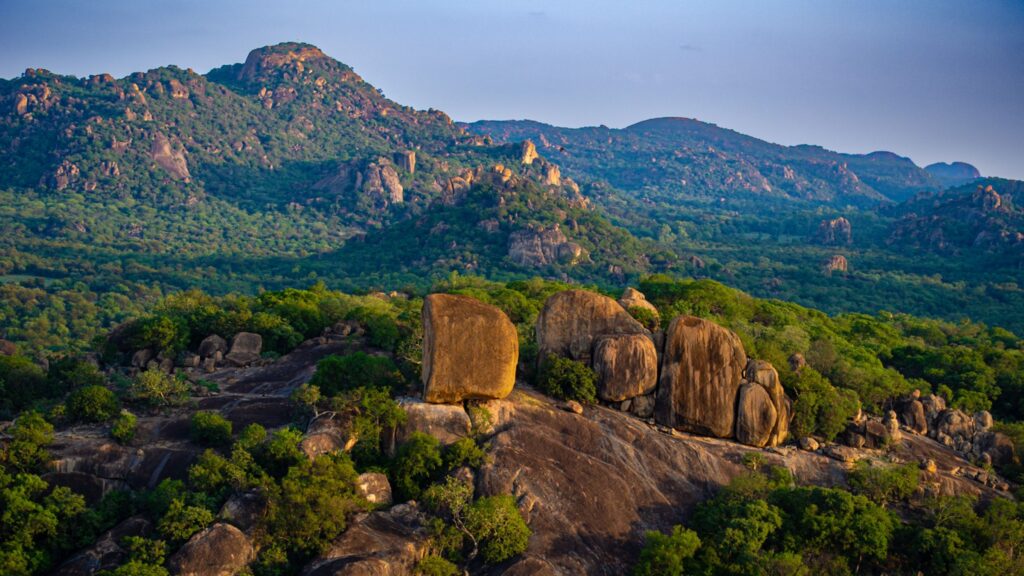
Rising out of the bushveld about 35 km south of Bulawayo, Matobo National Park (often called the Matopos) is one of the most striking landscapes in Southern Africa. Here, two billion years of weathering have sculpted granite into whaleback domes, balancing rock towers and boulder-strewn kopjes that look as though a giant had scattered them across the land. Between them lie wooded valleys, clear dams and sheltered caves painted by San hunter-gatherers thousands of years ago.
Established in 1926, Matobo is Zimbabwe’s oldest national park, and in 2003 the wider Matobo Hills were inscribed as a UNESCO World Heritage Site for their outstanding rock art and their deep spiritual significance to the local Ndebele and Kalanga people. The park covers roughly 424 km² and sits within a much larger cultural landscape of communal lands, sacred shrines and private farms.
Matobo is not a “Big Five” park, and that is exactly its appeal. It is the best place in Zimbabwe to track white and black rhinos on foot, it supports one of the densest leopard populations recorded anywhere, and it is home to the world’s greatest concentration of nesting Verreaux’s (black) eagles. Add ancient rock art, superb hiking and a historic hilltop viewpoint, and you have a destination that rewards two or three unhurried days.
| Matobo National Park at a Glance
Country / Province: Zimbabwe, Matabeleland South Nearest city: Bulawayo (approx. 35 km / 40–50 minutes to the park) Size: approx. 424 km² (national park); Matobo Hills cultural landscape much larger Status: Zimbabwe’s oldest national park (1926); UNESCO World Heritage Site (2003) Managed by: Zimbabwe Parks & Wildlife Management Authority (ZimParks) Signature experiences: Rhino tracking on foot, San rock art, World’s View, Whovi Game Park Best time to visit: May to October (dry season); April and November are good shoulder months |
Why Visit Matobo National Park?
- Walk with rhinos: Matobo’s Intensive Protection Zone holds healthy populations of both white and black rhino, and guided tracking on foot is the park’s headline experience.
- Open-air art gallery: The hills contain one of the highest concentrations of rock art in Southern Africa, with thousands of painted sites, some believed to be over 10,000 years old.
- Otherworldly scenery: Balancing rocks, domed “dwalas” and sunset panoramas make it a photographer’s dream.
- Living culture: The Matobo Hills remain sacred; the Njelele rain shrine and the Mwali (Mwari) tradition are still active in the surrounding communities.
- Easy access: Close to Bulawayo, reachable on sealed roads and simple to combine with Hwange and Victoria Falls.
- Great value: Park fees are modest compared with Zimbabwe’s flagship parks, and there is accommodation for every budget.
How to Get to Matobo National Park
Nearly every journey to Matobo passes through Bulawayo, Zimbabwe’s second-largest city. From there it is a short, scenic drive south on the sealed Matopos Road.
By Air
The closest airport is Joshua Mqabuko Nkomo International Airport (BUQ) in Bulawayo. Scheduled services typically link Bulawayo with Johannesburg (O.R. Tambo) and Harare, and some routings connect via Victoria Falls. From the airport, allow roughly 1 hour by road to the park. Most lodges arrange airport transfers, and car rental desks operate in Bulawayo.
By Road from Bulawayo
Leave the city heading south on the Matopos Road. After about 30–35 km you reach the park area; the main entrance near Maleme and the turn-offs to World’s View and the Whovi Wild Game Park are clearly signposted. The road is tarred to the main park area, while internal roads are gravel.
Driving Distances to Matobo
| Starting Point | Approx. Distance | Approx. Drive Time | Route Notes |
| Bulawayo | 35–50 km | 40–60 min | Matopos Road, tarred to the park |
| Hwange National Park (Main Camp) | 300 km | 4–4.5 hrs | A8 via Bulawayo; ideal safari combination |
| Victoria Falls | 470 km | 6–7 hrs | A8 via Hwange and Bulawayo |
| Harare | 480 km | 6–7 hrs | A5 via Kwekwe and Gweru |
| Great Zimbabwe (Masvingo) | 320 km | 4.5–5 hrs | Via Bulawayo or the Mbalabala route |
| Beitbridge (South Africa border) | 320 km | 4.5–5 hrs | A6 via Gwanda |
| Plumtree (Botswana border) | 140 km | 2–2.5 hrs | A7 via Bulawayo |
Self-Drive vs. Guided Tours
Self-drive works well: a sedan can reach World’s View, Maleme and the main picnic and art sites in the dry season, but a high-clearance vehicle or 4×4 is strongly recommended for the Whovi game circuit, Inanke area tracks and any travel in the rains. Guided tours from Bulawayo or your lodge are the better choice if you want rhino tracking, expert interpretation of the rock art and access to less-visited caves, since many sites are unsigned and easy to miss.
Public Transport
Local buses and kombis run from Bulawayo toward the Matopos communal areas, but services are irregular and do not take you around the park. For most visitors, a rental car, lodge transfer or guided day tour is far more practical.
| Driving Tips for Matobo
Fill up with fuel and draw cash in Bulawayo; there are no reliable fuel stations inside the park. Carry your driving licence, vehicle papers and (for foreign vehicles) cross-border documents and Zimbabwe third-party insurance. Expect police roadblocks between Bulawayo and the park; keep documents, a reflective triangle and a fire extinguisher handy. Drive during daylight only, watch for livestock on the approach roads and keep to posted speed limits inside the park. |
Top Attractions in Matobo National Park
1. World’s View (Malindidzimu)
The park’s most famous landmark is a smooth granite dome known in isiNdebele as Malindidzimu, “the dwelling place of benevolent spirits.” Cecil John Rhodes named it World’s View and asked to be buried on its summit; his grave lies here alongside those of Leander Starr Jameson and Charles Coghlan. Near the top stands the Shangani Patrol memorial. Whatever your view of the colonial history, the 360-degree panorama over rolling granite hills, especially at sunset, is unforgettable. Look out for the colourful lichen and the tame, brightly coloured rock lizards on the summit. The site is managed by National Museums and Monuments of Zimbabwe and carries a separate entry charge.
2. Nswatugi Cave
Arguably the finest easily accessible rock art site in the park, Nswatugi shelters beautifully detailed paintings of giraffe, zebra, kudu and running human figures. Its elegant, naturalistic giraffes are among the best-known images of San art in Zimbabwe. A short, steep walk leads up from the parking area.
3. Pomongwe Cave
A large shelter with a long record of human occupation, Pomongwe has yielded archaeological material spanning tens of thousands of years and has a small interpretive site museum. Its paintings were unfortunately damaged by a misguided preservation attempt in the 1920s, which makes the site an interesting lesson in conservation as well as prehistory.
4. Inanke Cave
For many visitors, Inanke is the highlight of Matobo. Reached by a walk of roughly 7 km each way over granite slabs and through wooded valleys, the cave contains an extraordinary panel of polychrome paintings: elephants, giraffe, antelope, human figures and mysterious oval shapes interpreted as symbols of spiritual power. Go with a guide, start early and carry plenty of water.
5. Bambata and Silozwane Caves
Bambata Cave, on the western side, is an important archaeological site that gave its name to “Bambata ware” pottery and contains fine paintings. Silozwane Cave, in the communal lands just south of the park, holds a large and vivid painted frieze. Both are best visited with a guide who knows the access routes.
6. The White Rhino Shelter
Not to be confused with the living rhinos, this small shelter near the Whovi area contains rare, finely drawn outline paintings of white rhino, a species that had disappeared from the region before being reintroduced. It is a short and easy walk.
7. Whovi Wild Game Park
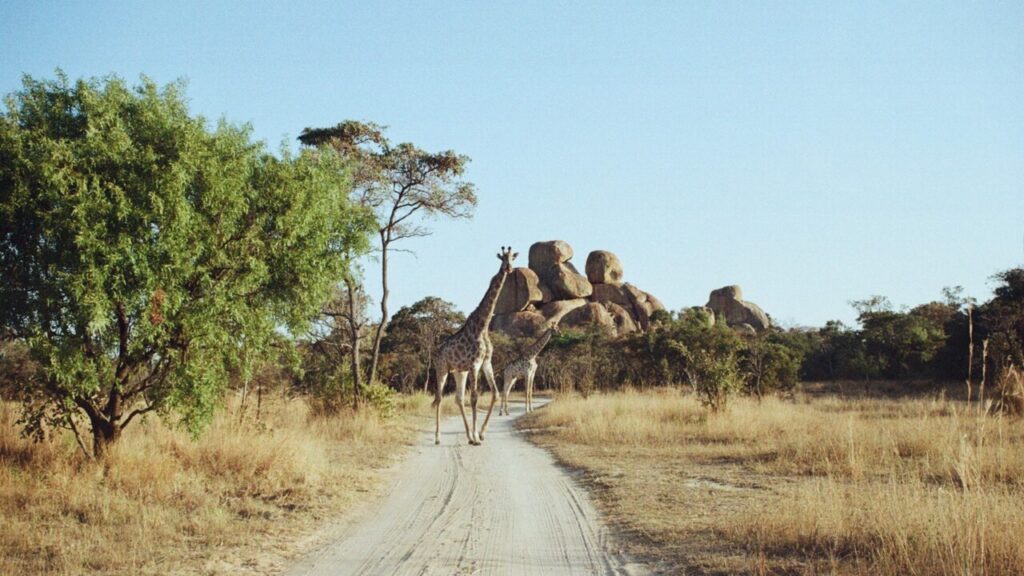
The fenced game section of the national park and the core of the Intensive Protection Zone. Whovi is where you go for game drives and rhino tracking, with giraffe, zebra, sable, kudu, wildebeest and impala grazing between the kopjes. (See the Game Drive section below.)
8. Maleme Dam and Rest Camp
The recreational heart of the park, Maleme Dam is framed by huge granite whalebacks. It is a peaceful spot for fishing, a picnic or a walk up the domes for sunset, and it is the location of the ZimParks lodges and chalets.
9. Mother and Child Kopje and Balancing Rocks
Matobo is full of seemingly impossible balancing rock formations. The Mother and Child formation is one of the best known, and there are dozens of unnamed stacks you will pass on any drive. Early morning and late afternoon light bring out their colours best.
10. Toghwana, Mpopoma and Mezilume Dams
These quieter dams and their surrounding campsites offer solitude, good birding and wonderful scenery away from the busier Maleme area. Toghwana, in the remote northeast, is also a starting point for the Inanke walk.
11. Nearby Cultural and Historical Sites
- Njelele Shrine: A sacred rain shrine of the Mwali tradition, still used for ceremonies. Visits should only be made with permission and a knowledgeable local guide, and with full respect for customs.
- King Mzilikazi’s Grave (Entumbane): The burial place of the founder of the Ndebele nation lies in the hills north of the park.
- Rhodes Nursery & Matopos Research Station: Historic estate areas on the way into the park.
- Bulawayo sites: The Natural History Museum, Railway Museum and the UNESCO-listed Khami Ruins combine well with a Matobo visit.
Wildlife and Birdlife in Matobo
The broken granite landscape shapes Matobo’s wildlife. There are no elephants, lions or buffalo here, which is part of what makes walking safaris feasible, but there is a rich and fascinating mix of species.
| Group | Key Species | Where / Notes |
| Rhinos | White rhino, black rhino | Intensive Protection Zone in Whovi; best seen on guided tracking walks |
| Predators | Leopard, spotted hyena, brown hyena, caracal, serval, jackal | Leopards are abundant but secretive; evening and early morning give the best chance |
| Plains game | Giraffe, zebra, blue wildebeest, impala, tsessebe | Whovi grasslands and open valleys |
| Antelope | Sable, kudu, eland, waterbuck, klipspringer, bushbuck, duiker | Klipspringer on the kopjes; sable in Whovi |
| Other mammals | Rock hyrax (dassie), baboon, vervet monkey, porcupine, hippo in some dams | Hyrax are the main prey of the eagles |
| Birds | Verreaux’s eagle, African hawk-eagle, Cape eagle-owl, boulder chat, mocking cliff-chat | Over 300 species recorded; densest Verreaux’s eagle population in the world |
Things to Do in Matobo National Park
Rhino Tracking on Foot
This is the experience most visitors come for. Accompanied by an armed ZimParks ranger and usually a professional guide, you follow tracks through the hills until you find rhinos, often approaching quietly to a respectful distance on foot. Walks generally last 2–5 hours depending on how quickly the animals are found. Book through your lodge or a Bulawayo-based operator, as they coordinate rangers and permits.
Rock Art Tours
With thousands of painted sites, Matobo is one of Africa’s great rock art destinations. A specialist guide will explain the symbolism of San paintings, which are now understood to relate largely to trance, rain-making and spiritual power rather than simple records of hunting. Combine Nswatugi, Pomongwe and the White Rhino Shelter for a half day, or add Inanke for a full-day adventure.
Hiking and Scrambling
Walking is permitted in much of the recreational area outside Whovi. Climb the domes around Maleme for sunset, hike to Inanke Cave, or explore trails around Toghwana and Mezilume. Wear shoes with good grip for the smooth granite, carry water and sun protection, and hire a guide for longer routes.
Game Drives
Explore the Whovi Wild Game Park by self-drive or on a guided morning or afternoon drive. Details are covered in the next section.
Birdwatching
Raptor enthusiasts come for the Verreaux’s eagles circling the cliffs, but the mix of woodland, rock and water habitats makes Matobo rewarding for all birders. Dam edges, miombo woodland and kopje bases each hold different species.
Horseback Safaris
Some lodges and operators offer horse riding through the hills and, in certain areas, among plains game. It is a quiet and memorable way to take in the landscape.
Mountain Biking
Selected lodges on private land adjoining the park offer guided mountain bike rides along farm tracks and granite trails.
Fishing and Boating
Maleme and other dams offer fishing for bream and bass (a ZimParks fishing permit is required), and canoeing may be available through lodges. Be cautious near water, as hippo and crocodiles can be present in some dams.
Cultural and Village Visits
Visit local communities in the surrounding lands to learn about Ndebele traditions, crafts, farming and the spiritual role of the hills. Several lodges support community and school projects that guests can visit.
Photography and Sundowners
From World’s View at dusk to balancing rocks glowing at dawn, Matobo is endlessly photogenic. Many lodges set up sundowners on granite domes with sweeping views.
Game Drive in Matobo National Park
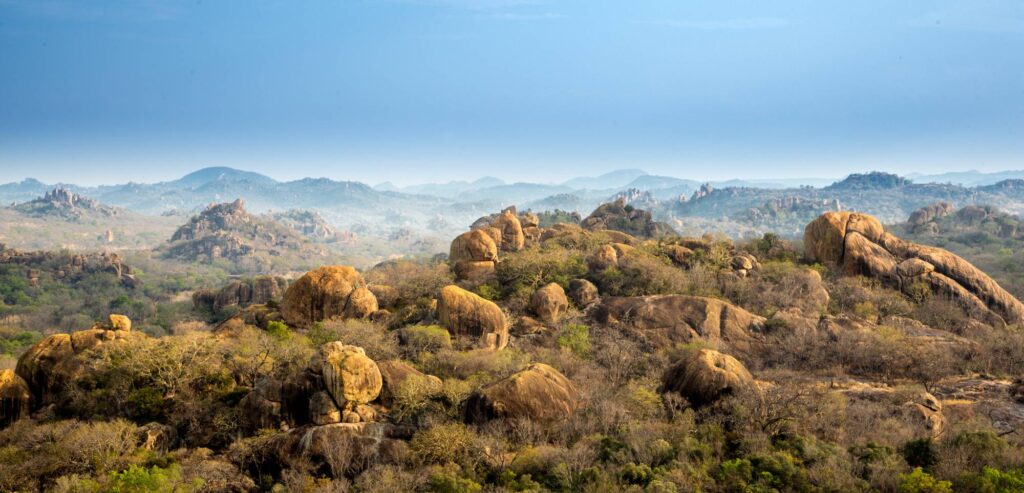
Game drives in Matobo take place mainly in the Whovi Wild Game Park, the fenced wildlife section in the west of the national park. It is a compact area where a network of gravel roads winds between kopjes, grassy vleis and wooded valleys. Game viewing here is gentler and more intimate than in Hwange or Mana Pools, with the scenery as much a part of the experience as the animals.
What You Can Expect to See
Typical sightings include giraffe, zebra, blue wildebeest, sable, kudu, impala, klipspringer, warthog and baboon. You have a real chance of white rhino grazing in the open, while black rhino, leopard and hyena are rarer rewards. Verreaux’s eagles, raptors and colourful rollers add constant interest.
Self-Drive Game Drives
- Enter via the Whovi gate and pay conservation and vehicle fees at the park office or gate.
- A high-clearance vehicle or 4×4 is recommended; some tracks become impassable after rain.
- Stay inside your vehicle except at designated points, and keep a safe distance from rhinos.
- Carry water, snacks and a physical map; mobile signal is patchy and signage is limited.
- Observe gate times (generally around sunrise to sunset) and allow time to exit before closing.
Guided Game Drives
Guided drives in open safari vehicles are offered by lodges and Bulawayo operators and are often combined with rhino tracking on foot. The guide’s knowledge of where rhinos have been moving, and of the park’s unmarked rock art sites, makes a big difference to your day.
Best Time for Game Drives
| Period | Game Viewing | Conditions |
| May – August (cool dry) | Very good; thinning vegetation | Mild, sunny days; cold nights and early mornings |
| September – October (hot dry) | Excellent; animals gather near water | Hot afternoons; hazy skies late in the season |
| November – March (wet/green) | Fair; dense cover, newborn animals | Lush scenery, dramatic storms, some tracks impassable |
| April (shoulder) | Good | Green landscape, fewer visitors, drying roads |
| Rhino Safety Rules
Always follow your ranger’s instructions and stay together in single file. Keep quiet, move slowly and stay downwind of the animals. Never approach a mother with a calf, and never position yourself between rhinos. Wear neutral colours and avoid strong scents; no flash photography. |
Where to Stay in Matobo National Park
Accommodation ranges from ZimParks lodges and campsites inside the park to characterful private lodges on the surrounding land. Many visitors also stay in Bulawayo and visit on day trips.
Luxury Lodges
- Amalinda Lodge: A celebrated lodge with rooms built into the granite, rock art on site and a pool set among the boulders. Offers rhino tracking, rock art tours and cultural visits.
- Camp Amalinda: A related, intimate property with a relaxed atmosphere and the same superb location among the kopjes.
- Big Cave Camp: Stone-and-thatch chalets perched on a granite outcrop with sweeping views, known for its sunsets and guided activities.
Mid-Range Lodges
- Matobo Hills Lodge: Comfortable thatched lodges near the park, well placed for the main attractions.
- Shumba Shaba Lodge: A smaller, good-value lodge set in a quiet valley close to the park.
- Farm and guest lodges: A range of private farm stays and self-catering cottages around the Matopos offer good value.
ZimParks Accommodation (Budget to Mid-Range)
The Maleme Rest Camp offers lodges and chalets overlooking Maleme Dam. Units are self-catering, so bring your own food and drinks from Bulawayo. The table below shows the official 2026 nightly rates.
| Maleme Accommodation Type (per unit / night) | Local (US$) | International (US$) |
| Imbila & Black Eagle Executive Lodges (2 bedrooms) | 175 | 235 |
| Fish Eagle Lodge (2 bedrooms, 4 beds) | 140 | 160 |
| Lodge, 2 bedrooms (renovated) | 130 | 150 |
| Lodge, 2 bedrooms, 4 beds (non-renovated) | 95 | 115 |
| Lodge, 1 bedroom (renovated) | 95 | 115 |
| Lodge, 1 bedroom (2 beds) | 70 | 90 |
| Chalet, 2 bedrooms (4 beds) | 60 | 70 |
| Chalet, 1 bedroom (2 beds) | 35 | 55 |
| Camping / caravan (per person) | 8 | 12 |
Source: ZimParks 2026 tariff schedule. Rates include VAT and exclude conservation and vehicle entry fees.
Camping
ZimParks campsites at Maleme, Mezilume, Toghwana and Mtshelele/Mpopoma dams offer basic facilities in beautiful settings. Facilities vary, so confirm water and ablution status when booking, and be self-sufficient with food, fuel and firewood.
Staying in Bulawayo
Bulawayo has hotels, guesthouses and B&Bs for all budgets and is a practical base for a day trip, particularly for large groups or travellers on a tight schedule. The trade-off is missing Matobo’s magical early mornings and evenings.
| Booking Tip
Book ZimParks lodges directly through ZimParks or via an operator, and reserve private lodges well ahead for July–October and public holidays. Ask whether rhino tracking is included in your package or charged separately. |
Matobo National Park Entrance Fees (2026)
Matobo charges a daily conservation (entry) fee per person, plus a daily vehicle entry fee. Rates depend on residency and on whether you are a day visitor or staying overnight in park accommodation, where the daily conservation fee is lower. The figures below come from the official ZimParks 2026 tariff.
Daily Conservation Fees (per person, per day)
| Visitor Category | Day Visitor (US$) | Accommodated in Park (US$) |
| Zimbabwe citizens / residents | 4 | 2 |
| SADC nationals | 14 | 7 |
| International visitors | 18 | 10 |
Vehicle Entry Fees (per vehicle, per day)
| Vehicle Type | Local Reg. Day | Local Reg. Accom. | Foreign Reg. Day | Foreign Reg. Accom. |
| Saloon, pickup or 4×4 | $5 | $2 | $10 | $3 |
| Minibus (up to 25 seats) | $15 | $5 | $30 | $10 |
| Trailer / caravan | $5 | $2 | $10 | $3 |
| Overland truck (defined routes only) | $50 | $30 | $100 | $60 |
Other Costs to Budget For
| Item | Indicative Cost | Notes |
| World’s View / heritage sites | Separate charge per person | Managed by National Museums and Monuments; paid on site |
| Rhino tracking on foot | Varies by operator | Often packaged with a guided day tour; confirm what is included |
| Full-day guided tour from Bulawayo | Varies by group size | Usually includes transport, guide, rhino tracking and rock art; fees may be extra |
| Fishing permit | Per person, per day | Obtain from ZimParks |
| Firewood (ZimParks) | US$5 per bundle | Official ZimParks tariff |
Worked Example: Two International Visitors on a Day Trip
Two international travellers driving a Zimbabwe-registered rental 4×4 on a day visit would pay US$36 in conservation fees (2 × US$18) plus US$5 for the vehicle, a total of US$41 in ZimParks fees, before any heritage site charges, guiding or rhino tracking.
| Paying Your Fees
Fees are pegged in US dollars; foreign visitors should pay in USD cash (clean, recent notes) or by card where card machines are working. Residents can pay in local currency at the prevailing rate. Keep your receipt: it may be checked at other gates and sites within the park. Tariffs are revised periodically. Confirm current rates with ZimParks (zimparks.org.zw) or your operator before travelling. |
Best Time to Visit Matobo National Park
Matobo can be visited year-round. The dry season from May to October is best for rhino tracking, game viewing and hiking, with clear skies and comfortable daytime temperatures. June and July nights can be surprisingly cold, so pack warm layers. The green season from November to March brings dramatic thunderstorms, lush landscapes, flowing waterfalls over the granite, newborn animals and excellent birding, though some tracks become difficult and afternoon rain is common.
Sample 3-Day Matobo Itinerary
| Day | Morning | Afternoon / Evening |
| Day 1 | Arrive in Bulawayo; drive south to Matobo and check in | Visit Maleme Dam and climb a granite dome; sunset at World’s View |
| Day 2 | Early rhino tracking on foot in the Whovi area | Game drive in Whovi; visit the White Rhino Shelter; sundowners |
| Day 3 | Rock art tour: Nswatugi and Pomongwe caves (or full-day Inanke hike) | Community visit, then return to Bulawayo or continue to Hwange |
Practical Tips for Visiting Matobo
- Visas: Many nationalities can obtain a Zimbabwe visa on arrival or an e-visa; check current requirements before you travel. The KAZA UNIVISA covers Zimbabwe and Zambia and is useful if you are also visiting Victoria Falls.
- Health: Matobo is a lower-risk malaria area than the Zambezi Valley, but seek medical advice on prophylaxis, especially in the rainy season, and use insect repellent.
- What to pack: Sturdy walking shoes with grip, a hat, sunscreen, binoculars, a refillable water bottle, warm layers for winter mornings and neutral-coloured clothing for rhino walks.
- Respect sacred sites: Do not touch or wet rock paintings, remove shoes or follow other customs where asked, and never climb on shrines.
- Supplies: Stock up on food, drinks, fuel and cash in Bulawayo; shops near the park are very limited.
- Connectivity: Mobile coverage is patchy among the hills; download offline maps before you go.
Frequently Asked Questions
How far is Matobo National Park from Bulawayo?
About 35 km to the park area, or roughly 40–60 minutes by road, depending on which section you are heading to.
How much is the entrance fee for Matobo National Park?
Under the 2026 ZimParks tariff, international day visitors pay US$18 per person per day, SADC nationals US$14 and Zimbabwean residents US$4. A saloon or 4×4 costs US$5 (local registration) or US$10 (foreign registration) per day for day visitors.
Can I see the Big Five in Matobo?
No. Matobo has rhino and leopard, but no elephant, lion or buffalo. Its strengths are rhino tracking on foot, rock art and scenery.
Can I do a self-drive game drive in Matobo?
Yes. You can self-drive in the Whovi Wild Game Park; a high-clearance vehicle or 4×4 is recommended, especially after rain.
Is rhino tracking safe?
When done with an armed ZimParks ranger and a qualified guide, and by following their instructions, rhino tracking has an excellent safety record.
How many days do I need in Matobo?
Two to three days is ideal to combine rhino tracking, a game drive, rock art and a sunset at World’s View. A long day trip from Bulawayo covers the highlights at a faster pace.
Is Matobo worth visiting if I am already going to Hwange?
Absolutely. Matobo complements Hwange perfectly: Hwange delivers big herds and predators, while Matobo offers rhinos on foot, culture and spectacular landscapes.
Plan Your Matobo Safari with Marriott Safaris Africa
Matobo National Park is a place where wildlife, ancient art and living culture meet in one of Africa’s most beautiful landscapes. Whether you are tracking rhinos on foot, standing before a 10,000-year-old painted giraffe or watching the sun set from World’s View, the Matopos leaves a lasting impression.
Marriott Safaris Africa can arrange your Matobo experience as a stand-alone trip or as part of a wider Zimbabwe journey with Hwange, Victoria Falls and Great Zimbabwe, including 4×4 vehicle hire, guided tours, rhino tracking and accommodation to suit every budget. Contact our team to start planning your Matobo adventure.
Marriott Safaris Africa — Perfection Anytime