Mana Pools National Park
Mana Pools National Park, Few safari destinations in Africa feel as wild, as quiet and as genuinely untamed as Mana Pools National Park. Tucked into the Lower Zambezi Valley in northern Zimbabwe, the park stretches along the southern bank of the mighty Zambezi River, facing Zambia’s Lower Zambezi National Park across the water. Towering winterthorn trees, open floodplain “parklands”, shimmering oxbow lakes and the blue wall of the Zambezi Escarpment create one of the most photogenic safari landscapes on the continent.
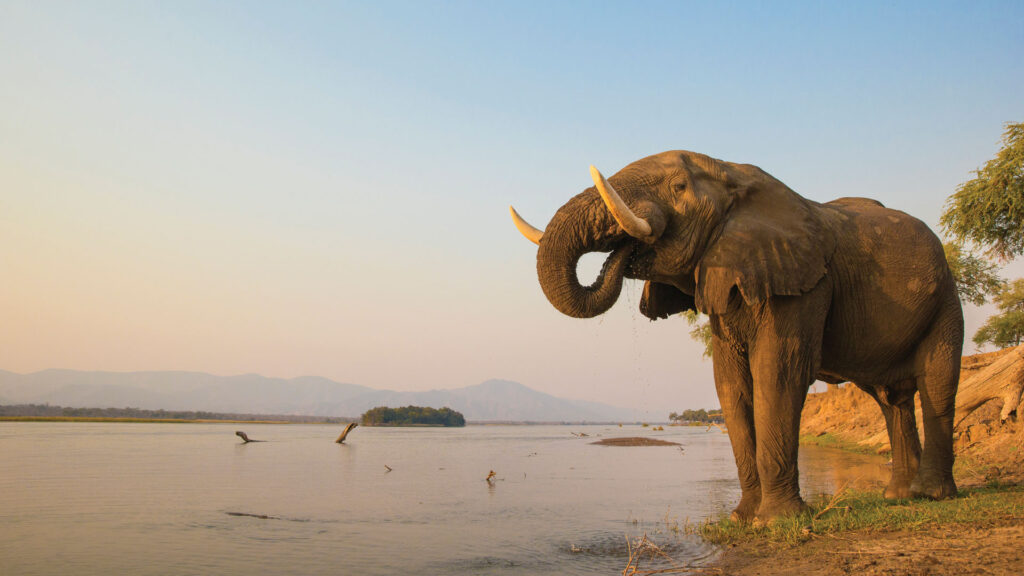
The name “Mana” means “four” in the Shona language, a reference to the four large permanent pools – Long Pool, Chine Pool, Green Pool and Chisasiko Pool – left behind by the Zambezi as it has changed course over thousands of years. These pools hold water deep into the dry season and pull in elephants, buffalo, lions, wild dogs, hippos and crocodiles in remarkable numbers.
Mana Pools is also one of the very few parks in Africa where visitors are allowed to walk unguided among big game, which gives it a cult following among experienced safari-goers, wildlife photographers and self-drive campers. Together with the neighbouring Sapi and Chewore Safari Areas, it was inscribed as a UNESCO World Heritage Site in 1984, and it was designated a Ramsar Wetland of International Importance in 2013.
Mana Pools at a Glance
| Feature | Details |
| Country / Province | Zimbabwe, Mashonaland West Province |
| Size | About 2,196 km² (part of a 6,766 km² World Heritage property with Sapi and Chewore) |
| Status | UNESCO World Heritage Site (1984); Ramsar Wetland (2013) |
| Managed by | Zimbabwe Parks and Wildlife Management Authority (ZimParks) |
| Distance from Harare | About 384 km (6–7 hours by road) |
| Park headquarters | Nyamepi, on the Zambezi River |
| Main season | Roughly April to mid-November (roads largely impassable in the rains) |
| Signature experiences | Walking safaris, canoe safaris, elephants on hind legs, wild dogs, Chitake Springs |
| Daily conservation fee (2026) | US$24 international | US$18 SADC | US$8 Zimbabwe residents |
Why Visit Mana Pools?
- True wilderness: Mana Pools has no tarred roads, no fences around most camps, and relatively low visitor numbers. It feels remote because it is remote.
- Walking with big game: The park’s famous open-woodland terrain and progressive ZimParks rules make it one of the best walking safari destinations in Africa.
- The Zambezi River: Canoeing past hippos and elephants on one of Africa’s great rivers is an unforgettable experience.
- Iconic elephant behaviour: Mana’s bull elephants are known for standing on their hind legs to reach the seed pods of the albida (winterthorn) trees – a scene photographers travel across the world to capture.
- Predators: Lion, leopard, spotted hyena and one of Zimbabwe’s most important populations of African wild dog.
- Photography: Soft, dusty light filtering through the albida forest makes Mana Pools a favourite location for professional and amateur wildlife photographers.
How to Get to Mana Pools National Park
Mana Pools lies in the far north of Zimbabwe, close to the Zambian border. There are two main ways to get there: by road (usually self-drive or a guided road transfer from Harare) or by light aircraft charter to one of the park’s airstrips. The route you choose will depend on your budget, your accommodation and how much adventure you want on the way.
Option 1: By Road from Harare
The drive from Harare is about 384 km and takes six to seven hours. The route follows the A1 (Harare–Chirundu road) north through Chinhoyi and Karoi to the top of the Zambezi Escarpment, then descends to a signposted turn-off onto gravel for the final stretch into the park.
| Distance (km) | Waypoint | What to do there |
| 0 | Harare | Head north on the A1 towards Chirundu |
| 115 | Chinhoyi | Optional stop; Chinhoyi Caves are nearby |
| 207 | Karoi | LAST fuel and supplies – fill every tank and jerry can |
| 292 | Makuti | Top of the Zambezi Escarpment |
| ±300 | Marongora (ZimParks HQ) | Compulsory check-in; pay conservation and vehicle fees; collect entry permit |
| 310 | Mana Pools turn-off | Turn right onto gravel at the foot of the escarpment |
| 341 | Nyakasikana Gate | Present your Marongora permit; also check-in for Chitake Springs |
| 384 | Nyamepi Camp | Park headquarters and main campsite on the Zambezi |
| Important: Do Not Skip Marongora
You must stop at the ZimParks office at Marongora, on top of the escarpment, before driving down into the valley. This is where you pay your conservation and vehicle fees and receive your entry permit. Arrive at Nyakasikana Gate without it and you will be sent back up the hill – a round trip of around 80 km on corrugated gravel. |
Option 2: By Road from Kariba, Victoria Falls or Hwange
Many travellers combine Mana Pools with Lake Kariba, Hwange National Park and Victoria Falls. From Kariba town, you drive back up to the main A1 at Makuti and continue north to Marongora – a relatively short transfer that makes Kariba a natural stop before or after Mana. Coming from Victoria Falls or Hwange is a long journey, and most self-drivers split it with an overnight stop (often in Kariba or at a lodge on the way). If time is limited, a charter flight is the more practical option.
Option 3: From Zambia via Chirundu
Travellers coming from Lusaka or the Zambian side of the Lower Zambezi can cross into Zimbabwe at the Chirundu One-Stop Border Post. From Chirundu, drive south-east on the A1 back up to Marongora to check in, then continue to the Mana Pools turn-off. Remember that you will need Zimbabwe entry documents, cross-border vehicle paperwork (including third-party insurance and, where applicable, a COMESA Yellow Card) and a letter of authority from your rental company if you are driving a hired vehicle.
Option 4: Fly-In Safari by Charter Flight
Most guests staying at private lodges and tented camps fly in by light aircraft. Charter flights connect Mana Pools with Harare, Victoria Falls, Kariba, Hwange and Matusadona. Flying saves a full day of driving and gives you a spectacular aerial view of the Zambezi Valley.
| Airstrip | Serves |
| Mana Main | Central floodplain camps, including Nyamatusi and Zambezi Expeditions |
| Mana West | The Ruckomechi private concession (western boundary) |
| Dandawa | Kanga Expeditions (inland, near Kanga Pan) |
| Chikwenya strip | Wilderness Chikwenya (eastern boundary, Sapi confluence) |
| Kavinga strip | Kavinga Safari Camp (southern edge) |
All airstrips are dirt and become unusable during the rainy season, which is one reason most camps close between December and March.
What Vehicle Do You Need?
- A high-clearance 4×4 is essential. A Toyota Land Cruiser, Land Cruiser Prado or Toyota Hilux double-cab with a rooftop tent, fridge and recovery gear is ideal.
- The Chitake Springs campsites are strictly 4WD only.
- Motorbikes, overland trucks longer than 5 m and buses with more than 25 seats are not allowed into the park.
- Off-road driving is prohibited. You may only pull off within 10 m of a designated road, and riverbeds may be crossed only at official crossing points.
- A maximum of two vehicles is permitted per campsite.
| Self-Drive Tip
There is no fuel, shop or supply point anywhere inside Mana Pools. Stock up on fuel, drinking water, food, ice and cash (US dollars) at Karoi. Carry at least one full spare tyre (two is better), a tyre repair kit and a compressor – the valley roads are heavily corrugated. |
Top Attractions in Mana Pools National Park
1. The Four Pools
The pools that give the park its name are its beating heart. Each holds water long after the surrounding bush has dried out, turning them into natural wildlife magnets in the dry season.
- Long Pool: The largest and most famous of the four, about 5 km long. It is home to large pods of hippos and big Nile crocodiles, and is a reliable spot for elephants, buffalo and waterbirds. Sunset at Long Pool is a Mana classic.
- Chine Pool: A quieter pool fringed by vegetation, excellent for birdwatching and for predators coming to drink.
- Green Pool: Known for its striking green colour from floating vegetation and for regular elephant and buffalo visits.
- Chisasiko Pool: Surrounded by open ground, it attracts plains game such as impala, waterbuck and zebra, and the predators that follow them.
2. The Zambezi River and Its Floodplain
The park’s northern boundary is the Zambezi River itself – wide, braided with sandbanks and islands, and full of hippos and crocodiles. Elephants regularly wade between islands to feed, while buffalo herds and waterbuck graze the riverbanks. With the Zambian escarpment glowing on the horizon, the riverfront is where most camps and campsites are located.
3. The Albida Forest and the “Standing” Elephants
The alluvial terraces behind the river are covered with a cathedral-like woodland of winterthorn trees (Faidherbia albida). Unusually, these trees drop their protein-rich seed pods in the dry season, exactly when food is scarcest. Mana’s elephants have learned to rear up on their hind legs to reach the highest pods – a behaviour rarely seen elsewhere and the image most associated with the park. The open, grassy understorey also makes this woodland perfect for walking and photography.
4. Chitake Springs
Located about 65 km inland at the foot of the Zambezi Escarpment, Chitake Springs is one of the most intense wildlife experiences in Zimbabwe. In the late dry season, the springs are one of the few water sources for kilometres around, so buffalo, elephants and antelope must run a gauntlet of lions and other predators to drink. Chitake has no facilities of any kind, is 4WD only, and is best visited with a professional guide.
5. Nyamepi and the Riverfront
Nyamepi is the park headquarters and the main public campsite. The stretch of riverfront around Nyamepi offers some of the easiest wildlife viewing in the park – elephants often walk right through camp, and bushbuck, baboons and hippos are constant companions.
6. The Zambezi Escarpment
The dramatic escarpment forms the southern backdrop to the park. Its mopane and miombo-covered slopes contrast sharply with the flat valley floor and create a beautiful setting for sunrise and sunset photography.
7. Mupata Gorge and the Lower Zambezi
Downstream of Mana Pools, the Zambezi funnels into the narrow Mupata Gorge. Multi-day canoe trails often end here or continue through the gorge towards Kanyemba, making it one of the most scenic sections of the entire river.
8. Sapi and Chewore Safari Areas
Bordering Mana Pools to the east are the Sapi and Chewore Safari Areas, which form part of the same World Heritage property. These wild, rugged areas host a handful of exclusive private camps and offer an even more remote experience.
Wildlife in Mana Pools
| Category | Key species | Where / when to look |
| Big game | Elephant, buffalo, hippo, eland, zebra | Riverfront, albida woodland and pools; peak Aug–Oct |
| Predators | Lion, leopard, spotted hyena, African wild dog, cheetah (rare) | Floodplain, Chitake Springs; wild dogs often den mid-year |
| Antelope | Impala, waterbuck, kudu, bushbuck, eland, nyala, common duiker | Floodplain and woodland edges |
| Reptiles | Nile crocodile, monitor lizards | Long Pool and the Zambezi |
| Primates | Chacma baboon, vervet monkey | Riverbank and campsites |
| Birds | 450+ recorded species, incl. carmine bee-eater, African skimmer, fish eagle, Lilian’s lovebird | River and sandbanks; best Nov–Apr for migrants |
Note: black rhinos once lived in Mana Pools but were lost to poaching, and the last few were relocated in the 1990s. Rhinos are not currently found in the park.
Things to Do in Mana Pools National Park
1. Walking Safaris
Walking is the signature activity in Mana Pools. Guided walks with a professional guide or ZimParks ranger let you approach elephants, buffalo and even predators on foot, learn to read tracks and experience the bush with all your senses. Mana is also famous for allowing experienced visitors to walk unguided (with a permit), but first-time visitors should always go with a qualified guide.
| Walking Safely in Mana Pools
Stay together in single file and never run from an animal. Keep a respectful distance – at least 50 m from elephants and buffalo, and more for lions. Walk into the wind where possible and avoid thick vegetation and riverbanks where visibility is poor. Wear neutral colours and carry water. Guided walks with a ZimParks ranger cost about US$12 per person per hour (2026). |
2. Canoe Safaris on the Zambezi
Paddling silently along the Zambezi is one of Africa’s great adventures. Options range from a few hours on the river with a lodge to multi-day canoe trails from Kariba or Chirundu through Mana and on to Mupata Gorge, camping on islands along the way. Canoe safaris are run by licensed operators and camps; there is no ZimParks canoe tariff.
3. Game Drives
Morning and afternoon game drives explore the floodplain, pools and woodland in search of elephants, lions, wild dogs and leopards. Self-drivers can explore on their own, while lodge guests go out in open safari vehicles with expert guides (see the full Game Drive section below).
4. Photography
Low-angle golden light, dust, silhouettes of elephants among the albidas and the escarpment backdrop make Mana Pools one of the top photographic destinations in Africa. Many specialist photographic safaris are timed for August to October.
5. Birdwatching
With more than 450 recorded bird species, Mana is excellent for birders. Look for carmine bee-eater colonies on the riverbanks, African skimmers on sandbars, fish eagles, Pel’s fishing owl, and a variety of storks, herons and kingfishers. The green season (November to April) brings Palearctic and intra-African migrants.
6. Fishing
The Zambezi is renowned for tigerfish, bream and vundu (a giant catfish). Fishing is allowed on the Zambezi with a ZimParks licence (about US$15 per day in 2026), with a limit of five fish per angler per day.
7. Visit Chitake Springs
For experienced visitors, a few nights at Chitake Springs during the late dry season can deliver dramatic predator-prey interactions. Go with a guide or on a mobile camp safari unless you are highly experienced and fully self-sufficient.
8. Boat Trips and Night Drives (Private Concessions)
Motorboats and night drives are not permitted inside the national park itself. However, some camps on private concessions just outside the park boundary – such as Ruckomechi, Kavinga and Tembo Plains – are able to offer boat outings and/or night drives. If these activities matter to you, choose your accommodation accordingly.
9. Sundowners and Bush Picnics
Enjoying a cold drink as the sun sets behind the Zambian escarpment, with elephants feeding on the floodplain below, is one of the simplest and best Mana experiences.
Game Drive in Mana Pools National Park
Although Mana Pools is best known for walking and canoeing, game drives remain the most efficient way to cover ground, find predators and reach the park’s pools and inland areas. Because the park is unfenced and wildlife is relaxed, drives here often feel more intimate than in busier parks.
Guided Game Drives vs. Self-Drive Game Drives
| Guided (Lodge / Camp) | Self-Drive | |
| Vehicle | Open safari 4×4 with elevated seating | Your own or rented high-clearance 4×4 |
| Expertise | Professional guide who knows animal movements and tracks | You rely on your own spotting and navigation |
| Flexibility | Fixed morning and afternoon schedule | Go where you like, when you like (within park hours) |
| Combined walks | Guide can stop and lead you on foot | Unguided walking requires a permit and experience |
| Cost | Included in lodge rates | Fuel plus park and vehicle fees |
| Best for | First-time visitors, photographers, families | Experienced self-drivers and campers |
Typical Game Drive Schedule
| Time | Activity |
| 05:30 – 06:00 | Wake-up call, tea or coffee and a light breakfast |
| 06:00 – 10:30 | Morning game drive (often combined with a guided walk); best for predators |
| 11:00 – 15:00 | Brunch, rest and siesta during the heat of the day |
| 15:30 – 18:00 | Afternoon game drive around the pools and floodplain |
| 18:00 – 18:30 | Sundowners and return to camp before the park curfew |
Best Game Drive Routes
- The River Road: Follows the Zambezi frontage east and west of Nyamepi. Excellent for elephants, buffalo, waterbuck and riverside birds.
- Long Pool Loop: Hippos, crocodiles and a steady stream of animals coming to drink. A classic afternoon and sunset route.
- Chine, Green and Chisasiko Pools: Quieter circuits through albida woodland and open ground – good for lion, wild dog and plains game.
- Mucheni Road (west): Leads to the exclusive Mucheni campsites along a scenic stretch of river.
- Chitake Springs (south): A long 4WD drive inland to the springs at the foot of the escarpment – best July to November.
Game Drive Rules in Mana Pools
- Visitors must be in camp from 18:00 (May–July) or 18:30 (August–October) until 06:00.
- Night driving and spotlighting are prohibited inside the national park.
- Stay on designated roads; off-road driving is not allowed.
- Keep a safe distance from animals, never block their path, and switch off your engine at sightings.
- Do not feed animals and keep all food secured – baboons, hyenas and elephants raid unattended food.
| Pro Tip for Better Game Drives
Drive slowly (under 30 km/h), stop often and listen. Alarm calls from baboons, impala and francolins frequently reveal lions and leopards. In the late dry season, simply parking near Long Pool or a drying pan for an hour can be more productive than driving around. |
Best Time for Game Drives
| Months | Season | Game viewing |
| April – May | Early dry season | Lush and green; park reopens; fewer visitors; wildlife more dispersed |
| June – July | Mid dry season | Cool, pleasant days; improving game concentrations; wild dogs often denning |
| August – October | Peak dry season | Best game viewing; animals cluster at the river and pools; albida pods drop |
| November | Build-up / early rains | Very hot; dramatic predator action; camps begin closing mid-month |
| December – March | Rainy season | Most of the park and camps closed; roads and airstrips often impassable |
Where to Stay in Mana Pools National Park
Accommodation in Mana Pools ranges from simple ZimParks campsites and self-catering lodges to exclusive owner-run bush camps and ultra-luxury tented suites. There are around 21 places to stay in and around the park, 16 of them inside the park boundary. Because Mana is small and popular, the best options book out many months – sometimes a year – in advance.
Luxury Lodges and Camps
- Nyamatusi Camp & Nyamatusi Mahogany: Contemporary luxury tented suites on the Zambezi in a private wilderness area of the park. Mahogany is designed for families.
- Wilderness Ruckomechi & Little Ruckomechi: Luxury tented camps on a private concession on the western boundary, under a canopy of albida trees. As they lie outside the park proper, they can offer night drives and boat trips. Rates from roughly US$1,040 per person per night.
- Wilderness Chikwenya: Luxury tented suites at the confluence of the Sapi and Zambezi rivers on the eastern boundary, accessible by light aircraft. Rates from roughly US$1,140 per person per night.
- Tembo Plains Camp: Ultra-luxury tented suites in the Sapi Private Reserve next to the park, with activities such as boating that are not allowed inside the park.
Mid-Range and Owner-Run Camps
- Vundu Camp & Little Vundu: Owner-run bush camps (Bushlife Safaris) celebrated for outstanding walking guides and knowledge of Mana’s wild dogs. The camp also supports anti-poaching work.
- Zambezi Expeditions: A classic semi-permanent tented camp set up on a fresh riverside site each season.
- John’s Camp: A seasonal classic tented camp on the quieter eastern floodplain with a strong focus on walking.
- Kanga Expeditions: An inland tented camp at Kanga Pan, often combined with a riverside camp to experience both sides of Mana.
- Camp Mana & Mana River Camp: Simple, seasonal tented camps on the Zambezi bank – authentic bush experiences at a more attainable price.
- Kavinga Safari Camp: Clifftop tented camp on a private concession on the southern edge, with a photographic hide and night drives.
- Chitake Mobile Camp: A guided mobile camp at Chitake Springs for those who want the predator action without the logistics.
Budget: ZimParks Lodges and Campsites
For self-drive travellers, ZimParks accommodation offers exceptional value. All sites are sold whole (not per person), must be prepaid, and are booked through ZimParks Central Reservations by email or phone – there is no online booking system and no walk-in availability at the gate.
| ZimParks Accommodation | Capacity | 2026 rate (international) |
| Nyamepi Campsite – standard | Up to 6 people, 2 vehicles | US$120 per site per night |
| Nyamepi Campsite – riverfront | Up to 6 people, 2 vehicles | US$155 per site per night |
| Hippo, Nyati & Muvee Lodges | 2 bedrooms, 4 beds | US$155 per lodge per night |
| Musangu & Muchichiri Lodges | 2 bedrooms, 8 beds | US$235 per lodge per night |
| Exclusive campsites (Mucheni, Ndungu, Gwaya, BBC, Nkupe) | Up to 6 people | US$235 per site (extra persons US$60 each) |
| New Ndungu 1 & 2 | Maximum 3 people | US$90 per site per night |
| Chitake Springs 1 & 3B | Exclusive, 4WD only | US$355 per site per night |
| Chitake 2 & Baobab | Exclusive, 4WD only | US$235 per site per night |
Which Accommodation Is Right for You?
| Traveller type | Recommended option |
| Luxury / honeymoon | Nyamatusi, Ruckomechi, Chikwenya or Tembo Plains |
| Serious walkers and wildlife enthusiasts | Vundu, Little Vundu, John’s Camp or Zambezi Expeditions |
| Families with children | Nyamatusi Mahogany (many camps have minimum age limits for walking) |
| Self-drive campers | Nyamepi riverfront sites or an exclusive ZimParks campsite |
| Groups of friends on a budget | Musangu or Muchichiri self-catering lodges |
| Adventure seekers | Chitake Springs campsites or Chitake Mobile Camp |
Mana Pools National Park Entrance Fees (2027)
Park fees in Mana Pools are set by ZimParks and were revised in the 2026 tariff published in February 2026. The rates below include 15% VAT and the 2% tourism levy, are quoted in US dollars, and cover Mana Pools together with the adjoining Sapi and Chewore Safari Areas.
Conservation (Park Entry) Fees – Per Person, Per Day
| Visitor category | Fee (US$) | Notes |
| International visitors | $24 | Same rate whether day-visiting or staying overnight |
| SADC visitors | $18 | Flat rate |
| Zimbabwe residents / citizens | $8 | Flat rate |
| Children aged 6–12 | 50% of adult rate | Children under 6 enter free |
| Resident pensioners | 50% of adult rate | Proof of age required |
Important: Fees are charged per day rather than per night, so a three-night stay is charged as four days.
Vehicle Entry Fees – Per Day
| Vehicle | Staying inside park | Day visit |
| Car / pickup / 4×4 (foreign-registered) | US$3 | US$10 |
| Car / pickup / 4×4 (Zimbabwe-registered) | US$2 | US$5 |
| Minibus up to 25 seats (foreign-registered) | US$10 | US$30 |
| Trailer or caravan (foreign-registered) | US$3 | Charged separately |
| Motorbikes, overland trucks over 5 m, buses over 25 seats | Not permitted | Not permitted |
Activity and Extra Fees
| Item | Fee (US$) | Notes |
| Guided walk with a ZimParks ranger | $12 per person per hour | Paid at Nyamepi reception |
| Unguided walking permit | Mandatory | Confirm the current fee with ZimParks |
| Fishing licence | $15 per day | Maximum 5 fish per angler per day (Zambezi only) |
| Firewood | $5 per bundle | Collecting your own firewood is prohibited |
| Canoe safaris | Via operators | No ZimParks canoe tariff; book with a licensed operator |
Sample Park Fee Calculation
Two international visitors self-driving a foreign-registered 4×4 and camping for 3 nights at a Nyamepi riverfront site:
| Item | Calculation | Total (US$) |
| Conservation fees | 2 people × $24 × 4 days | $192 |
| Vehicle fee | 1 vehicle × $3 × 4 days | $12 |
| Riverfront campsite | $155 × 3 nights | $465 |
| Firewood | 3 bundles × $5 | $15 |
| Estimated total | $684 (about $228 per person per night) |
How and Where to Pay
- Accommodation: prepaid to ZimParks Central Reservations when you book.
- Conservation and vehicle fees: paid at the Marongora office on your way in.
- Extras (firewood, fishing, walks): paid at Nyamepi reception inside the park.
| Fee Tips
Bring US dollars in cash, including small notes – card and mobile-money facilities at Marongora and Nyamepi are unreliable. Keep every receipt. You will need proof of payment to exit the park. If you stay at a private lodge, check whether park fees are included in your rate. ZimParks fees can change at short notice – always confirm the latest tariff at zimparks.org.zw before you travel. |
Sample 4-Day Mana Pools Self-Drive Itinerary
| Day | Plan |
| Day 1 | Depart Harare early. Refuel and shop in Karoi, check in and pay fees at Marongora, descend to Nyamepi. Set up camp and enjoy a sunset at the riverfront. |
| Day 2 | Morning game drive along the River Road and through the albida woodland. Afternoon drive to Long Pool for hippos, crocodiles and sundowners. |
| Day 3 | Guided walk with a ZimParks ranger or professional guide at dawn. Afternoon exploring Chine, Green and Chisasiko pools, or a half-day canoe trip with an operator. |
| Day 4 | Final early-morning drive, pack up, check out at Nyamepi and drive back to Harare, or continue to Lake Kariba. |
Want more time? Add two nights at Chitake Springs (July to November) or combine Mana Pools with Lake Kariba, Hwange National Park and Victoria Falls for a complete Zimbabwe safari.
Packing List and Safety Tips
What to Pack
- Neutral-coloured clothing (khaki, olive, brown) and a warm fleece for cool winter mornings (June–July)
- Sturdy, comfortable walking shoes for walking safaris
- Wide-brimmed hat, sunglasses, high-SPF sunscreen and lip balm
- Binoculars and a camera with a telephoto lens (100–400 mm or longer)
- Insect repellent and prescribed malaria prophylaxis
- Headlamp or torch, power bank and car charger
- For self-drivers: ample drinking water, food, fuel reserves, fridge/cooler, full camping kit, recovery gear and a first-aid kit
- US dollars in cash for park fees and extras
Health and Safety
- Mana Pools is a malaria area. Consult a travel doctor about antimalarial medication before you travel.
- The park is unfenced – wild animals, including elephants, lions and hyenas, walk through camps. Never walk around camp at night without a torch and stay alert.
- Never swim in the Zambezi or the pools – crocodiles and hippos are extremely dangerous.
- Tsetse flies occur in parts of the valley; wear light-coloured clothing and use repellent.
- Tell someone your route and expected return time if exploring remote areas such as Chitake Springs.
Book Your Mana Pools Safari with Marriott Safaris Africa
Whether you are planning a self-drive camping adventure in a fully equipped 4×4 with a rooftop tent, a guided walking safari, a canoe expedition down the Zambezi or a luxury fly-in stay, Marriott Safaris Africa can put together a Mana Pools trip that fits your style and budget.
- Share your travel dates, group size and preferred safari style.
- Receive a tailor-made itinerary with vehicle, accommodation and park fee costs clearly itemised.
- Confirm your booking with a deposit; we secure your campsites, lodges and permits.
- Receive your travel documents, cross-border paperwork (if needed) and pre-departure briefing.
- Enjoy Mana Pools with 24/7 support throughout your trip.
Frequently Asked Questions About Mana Pools National Park
Where is Mana Pools National Park?
Mana Pools is in northern Zimbabwe, in the Lower Zambezi Valley along the southern bank of the Zambezi River. It faces Zambia’s Lower Zambezi National Park across the river and is about 384 km north of Harare.
What does “Mana Pools” mean?
“Mana” means “four” in Shona, referring to the four main permanent pools in the park: Long Pool, Chine Pool, Green Pool and Chisasiko Pool.
How much is the entrance fee for Mana Pools in 2026?
The daily conservation fee is US$24 per person for international visitors, US$18 for SADC visitors and US$8 for Zimbabwe residents. A foreign-registered 4×4 staying in the park adds US$3 per day. Accommodation and activities are charged separately.
Can I drive to Mana Pools in a normal car?
No. A high-clearance 4×4 is required. The final stretch into the park is about 74 km of corrugated gravel and dirt, and some areas such as Chitake Springs are strictly 4WD only.
When is the best time to visit Mana Pools?
The best time for wildlife is the dry season from August to October, when animals concentrate along the river and at the pools. June and July offer cooler weather and good sightings. Most of the park and camps close from about December to March because of the rains.
Can you really walk unguided in Mana Pools?
Yes. Mana Pools is one of the few parks in Africa that allow unguided walking with a permit. However, it is strongly recommended that first-time visitors walk with a professional guide or a ZimParks ranger.
Are there night drives in Mana Pools?
Night drives and spotlighting are not allowed inside the national park. Some camps on private concessions just outside the park, such as Ruckomechi and Kavinga, can offer night drives.
Are there Big Five animals in Mana Pools?
Mana Pools has elephant, buffalo, lion and leopard, but no rhinos. The park is better known for its elephants, wild dogs and walking safaris than for ticking off the Big Five.
How many days do I need in Mana Pools?
Plan at least three nights, and ideally four to five. The long drive in and the park’s relaxed pace reward slower travel, and a longer stay lets you combine drives, walks and a canoe trip.
Is Mana Pools good for families?
Mana is best suited to older children and adults because many camps set minimum ages for walking activities and the park is unfenced. Nyamatusi Mahogany is one of the few camps specifically set up for families.
Can I combine Mana Pools with Victoria Falls?
Yes. Mana Pools pairs well with Lake Kariba, Hwange National Park and Victoria Falls. Charter flights make this combination easy; by road, plan for overnight stops along the way.