Hwange National Park, Zimbabwe
The Complete Safari Guide: Getting There, Attractions, Things to Do, Game Drives, Where to Stay and Entrance Fees
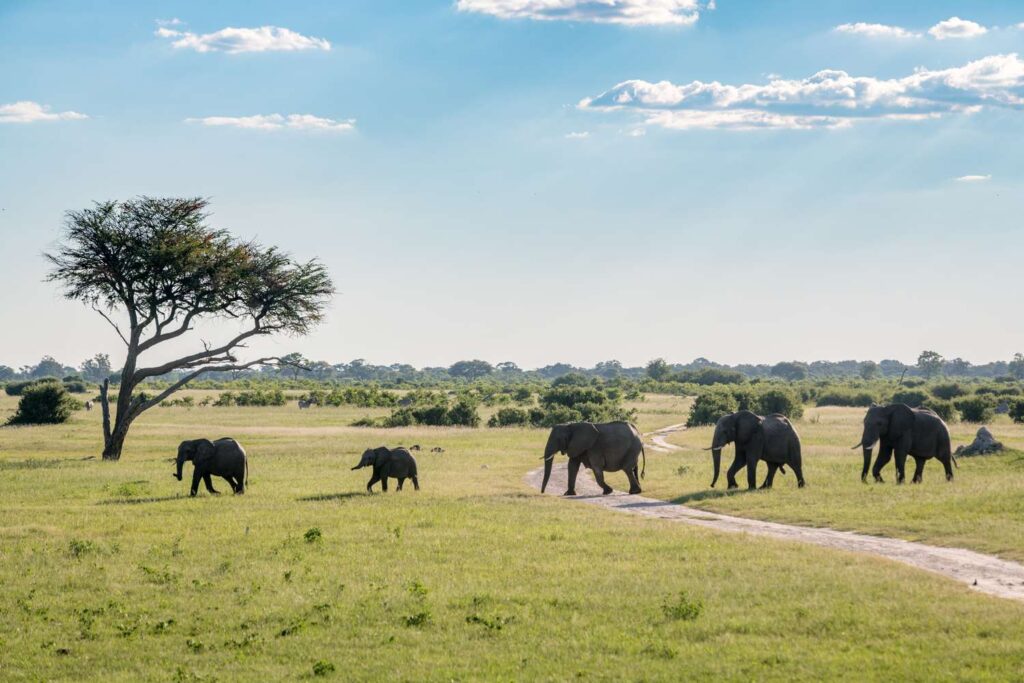
Hwange is Zimbabwe’s largest national park and one of the finest elephant safari destinations on earth. Sitting on the edge of the Kalahari sands just a couple of hours from Victoria Falls, it combines huge herds, a strong predator population and remarkably uncrowded game viewing at a fraction of the park-fee cost of many other big-name African reserves. This guide covers everything you need to plan a Hwange safari in 2027.
| Hwange at a Glance
Location: Matabeleland North, western Zimbabwe, bordering Botswana Size: About 14,651 km² – Zimbabwe’s largest national park Famous for: Some of Africa’s largest elephant herds, lions, African wild dogs, and pumped waterholes that concentrate game in the dry season Nearest gateway: Victoria Falls International Airport (VFA), roughly 2–2.5 hours by road to the Main Camp area Best time to visit: July to October (peak dry season) 2026 international daily conservation fee: US$24 (day visitor) or US$12 per day when staying in park accommodation Managed by: Zimbabwe Parks and Wildlife Management Authority (ZimParks) |
About Hwange National Park
Hwange National Park (pronounced roughly “Wan-gee”) covers around 14,651 square kilometers of northwestern Zimbabwe – an area similar in size to Northern Ireland. It began life as the Wankie Game Reserve in 1928 and was declared a national park in 1961. Its first warden, Ted Davison, spent decades building roads and, crucially, sinking boreholes to create artificial waterholes. That legacy defines the park today.
Much of Hwange lies on deep Kalahari sand with no permanent rivers. In the dry season natural pans evaporate, and wildlife depends on dozens of waterholes kept full by solar and diesel pumps. The result is some of the most dependable dry-season game viewing in Africa: stand at a busy pan in September and you can watch hundreds of elephants arrive in a single afternoon.
The park is part of the Kavango-Zambezi Transfrontier Conservation Area (KAZA), the vast cross-border wildlife landscape shared with Botswana, Zambia, Namibia and Angola. Much of Hwange’s western boundary is unfenced, so animals move freely into Botswana.
Wildlife You Can Expect
Hwange hosts more than 100 mammal species and over 400 bird species. Its elephant population is usually estimated at more than 40,000 in the wider Hwange ecosystem, making it one of the densest elephant ranges on the continent.
| Group | Key Species | Where to Look |
| Elephants | Large breeding herds and big bulls | Every pan in the dry season; Nyamandhlovu, Ngweshla, Kennedy, Mandavu |
| Big cats | Lion, leopard, cheetah | Lions across Main Camp, Linkwasha and Robins; cheetah on open vleis and the Ngamo Plains |
| Wild dogs | African wild dog (painted wolf) | Roaming packs; best odds in denning season (roughly June–August) |
| Antelope | Sable, roan, kudu, eland, gemsbok, impala, waterbuck, tsessebe | Sable and roan are Hwange specialities; gemsbok in the Kalahari south |
| Other large game | Buffalo, giraffe, zebra, blue wildebeest, hippo | Buffalo herds on the southern plains; hippo at Mandavu and Masuma dams |
| Rhino | Black and white rhino (very small numbers) | Sightings are rare and locations are not publicised |
| Birds | 400+ species incl. kori bustard, secretary bird, raptors, summer migrants | Everywhere; best in the green season (November–April) |
Hwange’s Main Regions
Understanding the park’s regions makes planning far easier, because each has a different feel, road network and style of accommodation.
- Main Camp (northeast): The park headquarters and the most accessible area, near the tar road from Victoria Falls to Bulawayo. It has the densest network of pans, ZimParks lodges and chalets, and many lodges just outside the boundary.
- Linkwasha, Makalolo and Somalisa (southeast): Private concessions of open grassland and pans, home to many of the park’s luxury camps. Excellent lion, cheetah and elephant viewing, with far fewer vehicles.
- Sinamatella (northwest): Rugged basalt hills, mopane woodland and dams. The camp sits on a cliff with sweeping views over the Lukosi River valley. Wilder and quieter than Main Camp.
- Robins and Nantwich (far west): Remote, lightly visited country close to the Botswana border, known for strong lion prides. Access is usually closed or difficult in the rains.
- The Kalahari south: Deep sand, few roads and almost no visitors – mostly the domain of specialist mobile safaris.
How to Get to Hwange National Park
Hwange is easy to reach from Victoria Falls, which is where most international visitors start. You can arrive by road transfer, self-drive, charter flight or even by train.
Option 1: Fly into Victoria Falls, then Transfer by Road
The most common route is to fly into Victoria Falls International Airport (VFA), which has regional connections from Johannesburg, Cape Town, Nairobi, Addis Ababa and Harare. From there, a road transfer to the Main Camp area takes about 2 to 2.5 hours on the A8 tar highway towards Bulawayo, turning off near Dete. Lodges in the southeastern concessions are further in, with the final stretch on sand roads.
Most camps and tour operators, including Marriott Safaris Africa, arrange shared or private transfers. Road transfers are the best-value option and often include a first game drive on the way into camp.
Option 2: Charter Flight
If time matters more than budget, light-aircraft charters fly from Victoria Falls (and other Zimbabwean hubs) into Hwange National Park Airport near Main Camp or directly to private airstrips serving camps such as Linkwasha, Somalisa and Davison’s. The flight takes roughly 30 to 45 minutes and gives a superb aerial view of the pans.
| Good to Know
Hwange National Park Airport (IATA: HWN) currently has no regular scheduled airline service – it is used for charter and safari shuttle flights. Plan to fly into Victoria Falls and connect from there. Light aircraft have strict luggage limits (commonly around 20 kg per person in soft-sided bags). Check with your camp before packing. |
Option 3: Self-Drive
Hwange is one of Southern Africa’s most rewarding self-drive parks. The main tar approach roads are in reasonable condition, and the Main Camp area can be explored in a high-clearance vehicle in the dry season. A 4×4 is strongly recommended for Sinamatella, Robins and anywhere with deep Kalahari sand, and it is essential during the rains.
| Starting Point | Approx. Distance to Main Camp | Approx. Driving Time | Notes |
| Victoria Falls | ~190 km | 2–2.5 hrs | Easiest route; tar all the way to the park turn-off |
| Bulawayo | ~270 km | 3.5–4 hrs | Good A8 highway; watch for trucks and livestock |
| Harare | ~700 km (via Bulawayo) | 9–10 hrs | Best split over two days with a stop in Bulawayo or Matobo |
| Kasane, Botswana | ~260 km (via Kazungula & Victoria Falls) | 4–5 hrs + border time | Popular for Chobe–Hwange combinations |
Distances and times are indicative and depend on road conditions, border queues and which gate you use.
| Self-Drive Tips for Hwange
Fill up in Victoria Falls, Hwange town or Bulawayo – fuel inside the park is not reliable. Avoid driving the A8 after dark; livestock, wildlife and broken-down trucks are real hazards. Carry cash in US dollars for fees and small purchases; card machines at gates can go offline. Cross-border rentals from Botswana, Zambia or South Africa need a letter of authority from the rental company, the vehicle registration papers and third-party (COMESA or local) insurance. |
Option 4: By Train
The overnight National Railways of Zimbabwe service between Bulawayo and Victoria Falls stops at Dete, the small railway town on the edge of the park near Main Camp. It is a slow, nostalgic and very budget-friendly way to travel, but schedules are irregular and comfort is basic, so it suits adventurous travellers who have a lodge transfer pre-arranged at Dete.
Top Attractions in Hwange National Park
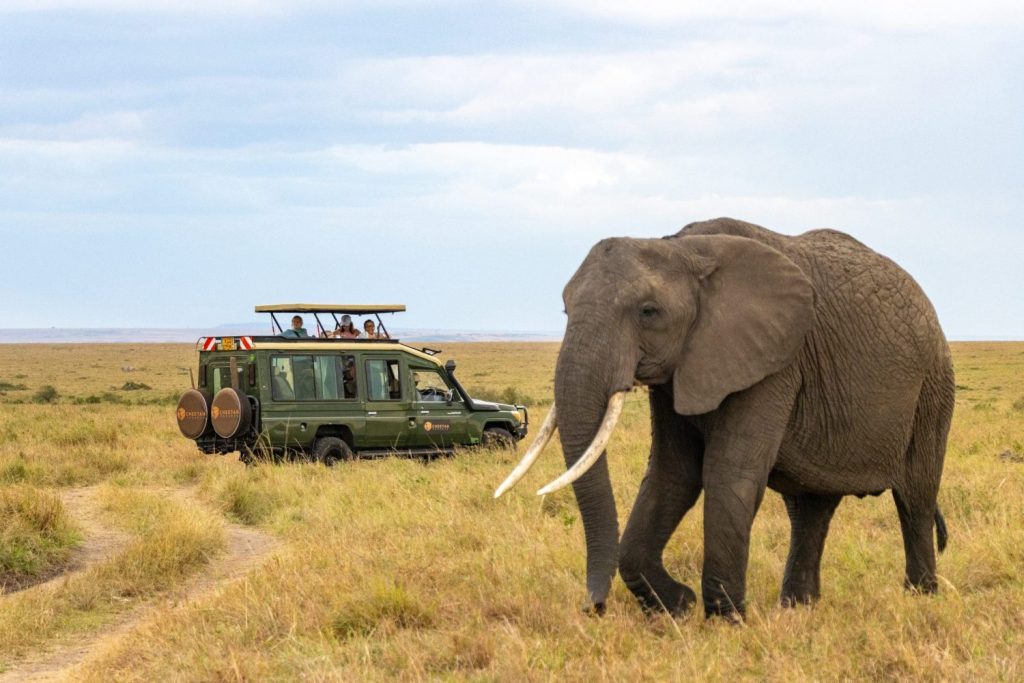
Hwange’s attractions are less about monuments and more about places where the wildlife gathers. These are the highlights worth building your trip around.
Nyamandhlovu Pan and Viewing Platform
Just a short drive from Main Camp, “Nyamandhlovu” means “meat of the elephant” in Ndebele, and the name fits. A raised wooden platform overlooks the pan, letting you step out of the vehicle and watch elephants, buffalo, giraffe and lions come to drink. It is one of the best-known wildlife vantage points in Zimbabwe.
Ngweshla Pan
A large, open pan south of Main Camp with a ZimParks picnic site. It is a reliable spot for lions and big herds of elephant and buffalo, and the drive there from Main Camp passes a string of smaller pans.
Kennedy Pans
A chain of pans along the Main Camp to Ngweshla road, named after an early hunter. Open grassland here makes it one of the better areas for cheetah, sable and large herds of plains game.
Guvalala Platform
A raised hide overlooking a busy pan, with overnight bookings available through ZimParks. Spending a night on the platform, listening to elephants and lions below, is one of Hwange’s great budget adventures.
Sinamatella Camp and the Lukosi Valley
Perched on a cliff edge, Sinamatella offers panoramic views across the valley below – you can often spot elephants and buffalo from the camp itself. The surrounding hills have a completely different character from the flat Kalahari south.
Mandavu Dam
The largest body of water in Hwange, near Sinamatella, with hippos, crocodiles and excellent birdlife. The picnic site above the dam is a classic stop for a midday break.
Masuma Dam
A scenic dam with a hide and an exclusive overnight picnic site. Great for hippo, elephant and waterbirds, and lions are regular visitors.
Deteema Dam
A quieter dam in the Sinamatella area with its own picnic site, good for elephants and a peaceful afternoon away from other vehicles.
Robins Camp and Nantwich
In the remote west, near the Botswana border. Big lion prides, open vleis and very few visitors make this area rewarding for travellers who want Hwange at its wildest.
Ngamo Plains and the Linkwasha Concession
Wide, open grasslands in the southeast, famed for cheetah, lion, sable, roan and large herds of wildebeest and zebra in the green season.
Painted Dog Conservation Centre
Just outside the park near Dete, this centre works to protect the endangered African wild dog. Visitors can tour the interpretive centre, learn about anti-poaching and rehabilitation work, and sometimes see dogs in the rehabilitation enclosure.
Things to Do in Hwange National Park
Hwange offers far more than a standard game drive. Here are the best activities to include in your itinerary.
- Game drives: The core Hwange experience – guided or self-drive, morning, afternoon or (in private concessions) at night. See the dedicated game drive section below.
- Guided walking safaris: Walking with a qualified, armed professional guide is one of Zimbabwe’s signature safari strengths. Zimbabwean guides go through a notoriously demanding licensing process, and a walk lets you read tracks, learn about plants and approach wildlife on foot.
- Waterhole and hide sessions: Several camps have ground-level or sunken hides beside their waterholes, putting you at eye level with drinking elephants. Waterhole sitting is especially productive in the heat of the day between September and November.
- Overnight on a viewing platform: Budget travellers can book a night at ZimParks platforms such as Guvalala or exclusive picnic sites like Masuma, Ngweshla or Shumba. Bring your own food, bedding and water.
- Birdwatching: With over 400 species, Hwange is superb for birders, particularly from November to April when migrants arrive and many species are in breeding plumage.
- Night drives: Permitted in private concessions and on some lodge properties bordering the park. Look for leopard, hyena, genet, civet, porcupine, aardvark and bushbabies.
- Painted Dog Conservation Centre visit: A worthwhile half-day outing near Dete to learn about wild dog conservation and community outreach.
- Cultural and community visits: Several lodges arrange visits to nearby villages and community projects, supporting local schools and livelihoods around the park.
- The annual game count: Each year volunteers help count wildlife at Hwange’s waterholes over a 24-hour period around the dry-season full moon. Joining is a unique way to contribute to conservation – enquire well in advance.
- Photography safaris: Low light, dusty pans and huge elephant herds make Hwange a favorite for photographers. Camps with sunken hides are particularly popular.
Game Drives in Hwange National Park
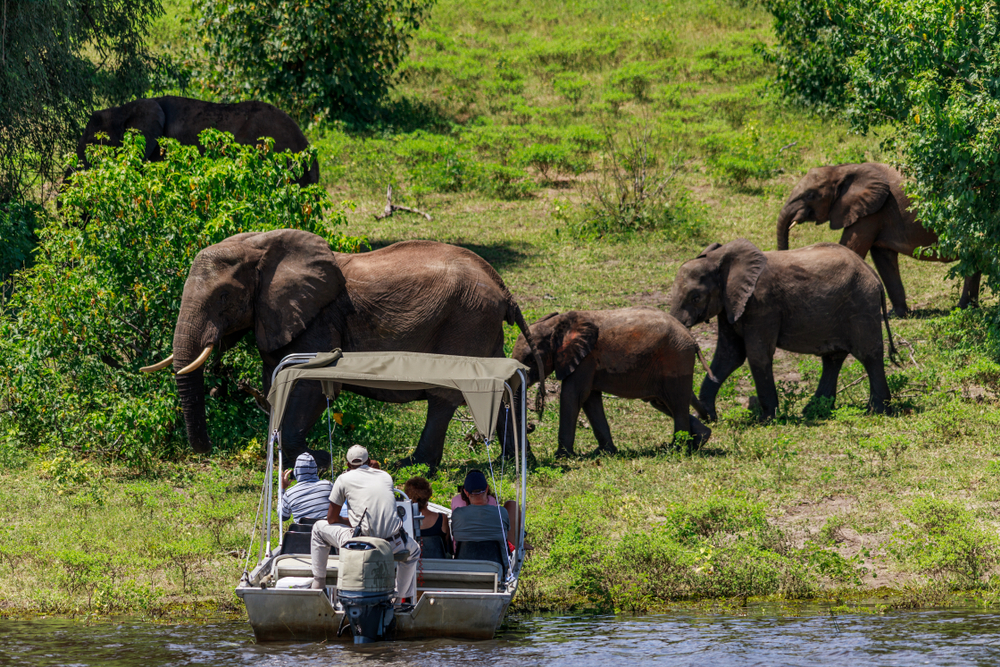
A game drive is the heart of any Hwange safari. How you do it – guided or self-drive, inside the national park or in a private concession – shapes your whole experience.
Types of Game Drive
| Game Drive Type | How It Works | Best For |
| Morning drive | Leaves at first light (around 6:00 am), returning late morning. Predators are most active and the light is soft. | Lions, cheetah, wild dogs, photography |
| Afternoon / sunset drive | Departs mid-afternoon and returns around dusk. Often includes a sundowner stop. | Elephants at the pans, relaxed game viewing |
| Full-day drive | Packed breakfast and lunch at a picnic site, reaching distant pans and areas. | Covering Ngweshla, Kennedy, Sinamatella or Robins |
| Night drive | Spotlight drive after dark; only allowed in private concessions and some bordering properties. | Leopard, hyena and nocturnal species |
| Self-drive | Explore in your own or rented vehicle within gate hours. | Independent travellers on a budget |
Guided vs Self-Drive Game Drives
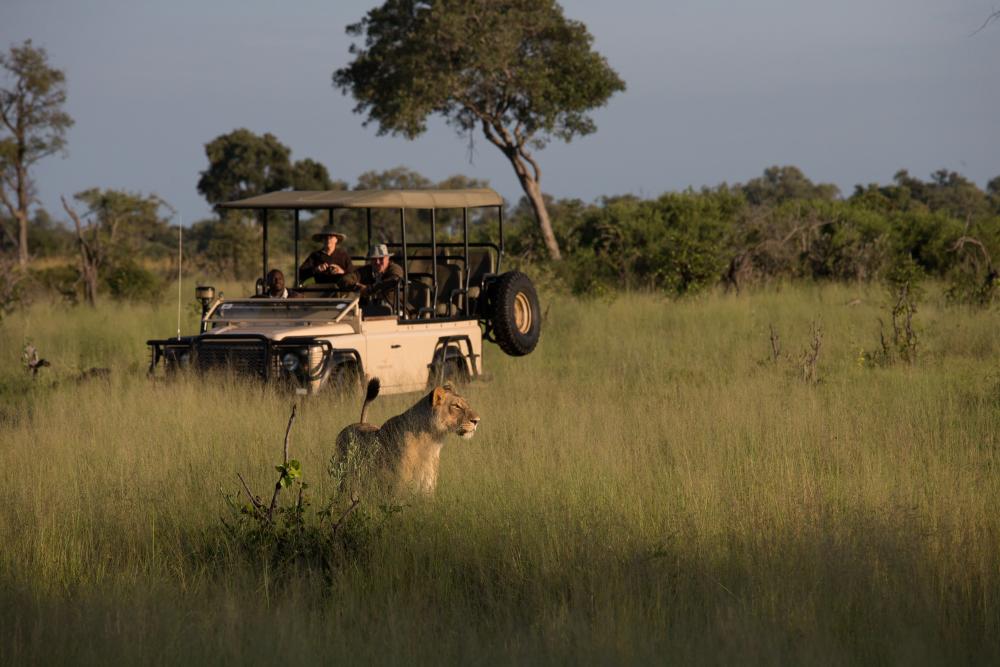
Guided drives from a lodge or with a professional guide in an open 4×4 give you higher, unobstructed viewing, expert tracking, and access to areas and times (such as night drives) that self-drivers cannot use. In the private concessions, only the resident camps’ vehicles operate, so sightings are rarely crowded.
Self-drive game drives are cheaper and very rewarding around Main Camp and Sinamatella, where loops connect a series of pans. You set your own pace and can wait at a waterhole as long as you like. The trade-off is a lower viewing position, no spotting help and the need to know the rules.
Classic Game Drive Routes
- Main Camp – Nyamandhlovu – Dom Pan loop: A short, productive circuit ideal for a first afternoon.
- Main Camp – Kennedy Pans – Ngweshla: The park’s best-known full-day route, with a picnic stop at Ngweshla.
- Sinamatella – Mandavu – Masuma: Dams, hills and hippo pools in the northwest.
- Robins – Nantwich pans: Remote lion territory for experienced 4×4 self-drivers in the dry season.
Park Rules for Game Drives
- Drive only between the official gate opening and closing times (roughly sunrise to sunset); be back in camp or out of the park before the gates close.
- Keep to the designated roads – off-road driving is not allowed in the national park.
- Observe the speed limit (usually 40 km/h on park roads) and give animals, especially elephants, plenty of space.
- Stay inside your vehicle except at designated picnic sites, platforms and hides.
- Do not feed animals, litter, or play loud music.
| Game Drive Pro Tip
In the late dry season, the smartest strategy is often to park at a busy pan and wait. Elephants, buffalo and antelope arrive in waves, and predators follow. An hour at the right waterhole can beat three hours of driving. |
Best Time for Game Drives
| Period | Season | Game Viewing | What to Expect |
| July – October | Peak dry season | Excellent | Animals concentrate at pumped pans; thin vegetation; hot by October; busiest months |
| May – June | Early dry season | Very good | Cool, pleasant days and cold nights; bush starting to thin |
| November | Transition | Good to very good | Intense heat until the first rains; dramatic storms; baby animals appear |
| December – March | Green / rainy season | Fair to good | Lush scenery, superb birding, lower rates; game disperses and some roads close |
| April | End of rains | Good | Green landscapes, fewer visitors, good-value lodge rates |
Where to Stay in Hwange National Park
Hwange has accommodation for every budget, from exclusive tented camps in private concessions to affordable ZimParks chalets and campsites. Here is how the options break down.
Luxury Safari Camps
- Linkwasha Camp: A stylish Wilderness camp in the southeastern Linkwasha concession, overlooking a busy pan on the edge of the Ngamo Plains. Top-tier guiding and excellent predator sightings.
- Somalisa Camp: An intimate tented camp famous for its small splash pool, where elephants drink just metres from the lounge.
- Davison’s Camp: Named after the park’s first warden, this Wilderness camp sits in the private Linkwasha concession with views across a waterhole.
- Little Makalolo: A small, classic safari camp in a remote part of the park, known for strong guiding and quiet game viewing.
- The Hide: A long-established, family-run camp on its own concession near the Main Camp area, with a famous underground hide at the waterhole.
- Camp Hwange: An owner-run, eco-minded camp in the Kennedy area with a strong focus on walking safaris and photographic hides.
Mid-Range Lodges
- Hwange Safari Lodge: A large, long-running hotel-style lodge just outside Main Camp, with a waterhole view and easy park access.
- Ivory Lodge: Treehouse-style rooms on a private concession bordering the park, with its own busy waterhole.
- Miombo Safari Camp: Comfortable, good-value chalets and tents close to Main Camp gate.
- Gwango Heritage Resort: A good option near Dete for families and self-drivers who want lodge comfort at a lower price.
Budget and Self-Catering: ZimParks Camps
ZimParks runs accommodation at Main Camp, Sinamatella and Robins, plus campsites, platforms and exclusive picnic sites. Facilities are simple but clean enough, and these sites put you inside the park at the gate opening. Book early for the dry season; ZimParks opens reservations about a year in advance, on a first-come, first-served basis with payment upfront.
| ZimParks Accommodation (Hwange) | Zimbabwe Residents (US$) | International (US$) |
| Main Camp – Chalet, 1 bedroom (per unit/night) | 35 | 60 |
| Main Camp – Chalet, 2 bedrooms | 60 | 70 |
| Main Camp – Cottage, 1 bedroom | 60 | 70 |
| Main Camp – Lodge, 1 bedroom | 70 | 90 |
| Main Camp – Lodge, 2 bedrooms | 110 | 135 |
| Main Camp – Impala Executive Lodge, 2 bedrooms | 175 | 235 |
| Sinamatella – Lodge, 1 bedroom (2 beds) | 70 | 90 |
| Sinamatella – Lodge, 2 bedrooms (renovated) | 165 | 190 |
| Camping / caravan, per site per night (max 3 people) | 12 | 23 |
| Bush camp, per person per night | 24 | 35 |
| Guvalala & Makwa platforms, per person per night | 35 | 60 |
| Exclusive picnic sites overnight (Shumba, Ngweshla, Masuma, Deteema, Kennedy 1, Mandavu), per site, max 6 | 165 | 235 |
Source: ZimParks 2026 tariff schedule. All ZimParks charges are stated as VAT-inclusive. Rates can change without notice – confirm when booking.
Accommodation Comparison
| Style | Typical Cost per Person per Night | What’s Included | Best For |
| Luxury concession camps | US$800 – 2,000+ | All meals, drinks, guided drives and walks, often park fees | Honeymooners, first-time safari luxury, photographers |
| Mid-range lodges | US$150 – 500 | Usually breakfast or full board; activities often extra | Families, value-conscious travellers |
| ZimParks chalets & lodges | US$20 – 120 (per unit, shared) | Room only, self-catering | Self-drivers, budget safaris |
| Camping & platforms | US$8 – 60 | Pitch or platform only | Adventurous and overland travellers |
Private-camp rates are indicative 2026 ranges and vary by season, room type and booking channel.
Hwange National Park Entrance Fees (2026)
Hwange’s park fees are among the most affordable of any major safari park in Africa. ZimParks charges a daily conservation fee per person, plus a daily vehicle entry fee if you drive yourself. Following Zimbabwe’s introduction of VAT on tourism services, ZimParks published a revised 2026 tariff, and fees are now quoted inclusive of VAT.
Daily Conservation Fees (per person, per day)
| Visitor Category | Day Visitor (US$) | Staying in Park Accommodation (US$) |
| Zimbabwe residents / citizens | 5 | 3 |
| SADC residents | 18 | 10 |
| International visitors (non-residents) | 24 | 12 |
Applies at Hwange Main Camp, Sinamatella and Robins. Source: ZimParks 2026 tariff schedule (VAT inclusive).
Vehicle Entry Fees (per vehicle, per day)
| Vehicle Type | Zimbabwe-Registered: Day / Accommodated (US$) | Foreign-Registered: Day / Accommodated (US$) |
| Saloon car, pickup or 4×4 | 5 / 2 | 10 / 3 |
| Minibus (up to 25 seats) | 15 / 5 | 30 / 10 |
| Trailer or caravan | 5 / 2 | 10 / 3 |
| Buses / lorries (other) | 20 / 10 | 30 / 30 |
Large buses and overland trucks may be restricted to specific areas such as Main Camp and are not permitted for touring inside the park.
Sample Fee Calculation
Two international visitors self-driving a foreign-registered 4×4 for a day trip into Hwange from outside the park would pay:
- Conservation fees: 2 × US$24 = US$48
- Vehicle entry: US$10
- Total: US$58 for the day
If the same couple stays in Zim Parks accommodation inside the park, their daily conservation fee falls to US$12 each and the vehicle fee to US$3 per day.
| Important Fee Notes
Fees are paid at the gate or park office, usually in US dollars; carry cash as a backup in case card machines are offline. Children typically pay reduced rates – confirm the current child policy with ZimParks or your operator. Private concessions (such as Linkwasha and Somalisa) charge their own concession or community levies, which are usually built into the camp rate. Fees can change at short notice. Always check the latest ZimParks tariff before travelling. |
Visa and Entry Requirements
Many nationalities can obtain a Zimbabwe visa on arrival or via the official e-visa portal. Travellers combining Hwange with Victoria Falls, Zambia or Chobe day trips should consider the KAZA Univisa, which covers Zimbabwe and Zambia (and day trips into Botswana via Kazungula) for eligible passport holders. Check current requirements for your nationality before travel, and carry a yellow fever certificate if arriving from a yellow fever risk country.
Sample 3-Day Hwange Safari from Victoria Falls
| Day | Plan |
| Day 1 | Morning road transfer from Victoria Falls to Hwange (about 2.5 hours). Check in, lunch, then an afternoon game drive to Nyamandhlovu Pan and the viewing platform. Sundowners and dinner at the lodge. |
| Day 2 | Full-day game drive via the Kennedy Pans to Ngweshla with a picnic lunch. Afternoon waterhole session at the lodge hide. Optional night drive if staying in a private concession. |
| Day 3 | Early guided walking safari, then brunch. Visit the Painted Dog Conservation Centre near Dete before transferring back to Victoria Falls or onward to Chobe. |
Packing, Health and Safety Tips
- Clothing: Neutral colours, layers and a warm jacket for early drives – winter mornings (June–August) can drop close to freezing.
- Sun protection: Wide-brimmed hat, sunglasses and high-SPF sunscreen, especially from September to November.
- Binoculars and camera: A zoom lens (at least 300 mm) and spare batteries; dust protection is useful in the dry season.
- Health: Hwange is a malaria area. Speak to a travel clinic about antimalarials and routine vaccinations, and use repellent at dawn and dusk.
- Safety: Never walk outside camp without a licensed guide, and never approach elephants on foot or by vehicle. At unfenced camps, always follow staff instructions after dark.
- Travel insurance: Make sure your policy includes medical evacuation.
How to Book Your Hwange Safari with Marriott Safaris Africa
- Tell us your dates and style: Share your travel window, budget and whether you prefer a guided lodge safari or self-drive.
- Receive a tailored itinerary: We match you with the right Hwange region and camps, and combine it with Victoria Falls, Chobe or Mana Pools if you wish.
- Confirm and secure space: Dry-season camps book up 6–12 months ahead, so we recommend confirming early.
- Pre-departure support: Receive transfer details, packing guidance and visa advice before you travel.
- On-trip assistance: Our team is on hand 24/7 while you are on safari.
Frequently Asked Questions
How much is the entrance fee for Hwange National Park?
Under the ZimParks 2026 tariff, international visitors pay US$24 per day as day visitors or US$12 per day when staying in park accommodation. SADC residents pay US$18 / US$10 and Zimbabwe residents pay US$5 / US$3. A foreign-registered car adds US$10 per day (US$3 if accommodated).
How far is Hwange National Park from Victoria Falls?
The Main Camp area is roughly 190 km from Victoria Falls, about 2 to 2.5 hours by road. A charter flight takes around 30 to 45 minutes.
Can you do a day trip to Hwange from Victoria Falls?
Yes. Day trips are possible and popular, but they involve about 5 hours of driving. Staying at least two nights gives a far better experience.
Can I self-drive in Hwange National Park?
Yes. The Main Camp and Sinamatella areas are well suited to self-drive safaris. A 4×4 is recommended, and essential in the rains and for the more remote western areas.
Does Hwange have the Big Five?
Hwange has elephant, buffalo, lion and leopard in good numbers. Rhino are present only in very small numbers and are rarely seen, so plan on the “Big Four” with a rhino sighting as a rare bonus.
What is the best time to visit Hwange?
July to October is best for game viewing, when wildlife concentrates at the waterholes. November to April is ideal for birding, green scenery and lower rates.
Is Hwange National Park safe?
Yes. Hwange is a well-established safari destination. Follow your guide’s instructions, respect wildlife and take normal travel precautions.
How many days do I need in Hwange?
Three to four nights is ideal, ideally split between two areas – for example Main Camp and a southeastern concession – to see the park’s range of habitats.
| Plan Your Hwange Safari
Ready to see Hwange’s great elephant herds for yourself? Contact Marriott Safaris Africa for a tailor-made Zimbabwe itinerary combining Hwange, Victoria Falls and beyond. Marriott Safaris Africa – Perfection Anytime |