
Lake Manyara National Park
Lake Manyara National Park is situated in northern Tanzania, adjacent to the Rift Valley, beneath the cliffs of the Manyara Escarpment. This park ranks among the premier sites for safaris in Tanzania. Named after its namesake alkaline lake, Manyara. The Park is an essential habitat for several bird species, offering varied environments for wildlife and breathtaking views. The groundwater forests, bush plains, baobab-laden cliffs, and algae-covered hot springs create exceptional biological habitats for many fauna and avian species. Lake Manyara National Park is situated around 126 kilometers southwest of Arusha and serves as a premier safari waypoint for travelers en route to Serengeti National Park and Ngorongoro Crater. The park encompasses around 325 square kilometers, with a lake area of 230 square kilometers.
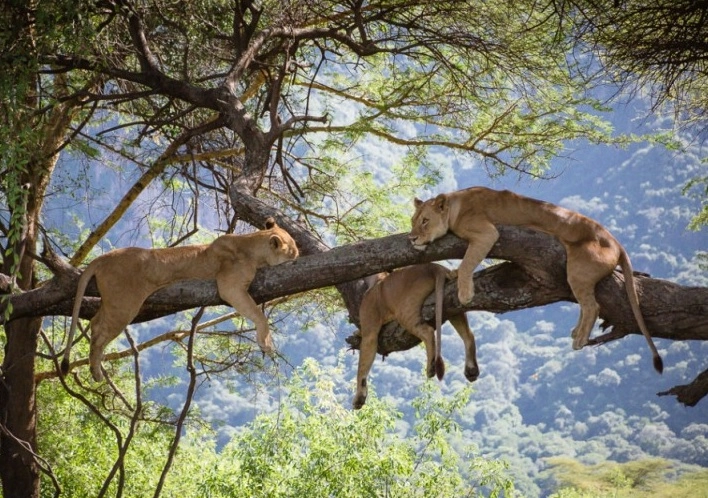
Lake Manyara National Park hosts a varied array of species, including a notable colony of tree-climbing lions, a behavior observed in only one other location in Africa—Queen Elizabeth National Park in Uganda. Moreover, Lake Manyara hosts thousands of larger and lesser pink flamingos along its shores, in addition to pink-backed pelicans, yellow-billed storks, grey herons, and hippos that gather on its beaches. The lake is encircled by marshlands, grassy plains, and acacia woods, inhabited by long-tusked elephants and giraffes, which can be observed frolicking and grazing with herds of buffalo, gazelle, zebra, and wildebeest.
In addition to game drives and walking safaris, visitors to Lake Manyara National Park can partake in sundowners, unwind in the warm, clear waters of the Maji Moto hot springs under the shade of verdant trees, and engage in canoeing, among other things.
Attractions in Lake Manyara National Park:
Wildlife
Lake Manyara National Park boasts a diverse array of fauna, and its substantial wildlife population renders it one of the premier destinations for wildlife safaris in Tanzania. Lake Manyara National Park boasts a remarkable diversity of vegetation zones, including acacia forests, woodlands, floodplains, and groundwater forests, which serve as natural habitats for species such as elephants, leopards, lions, giraffes, wildebeests, zebras, impalas, banded mongooses, Kirk’s dik-dik, and bohor reedbucks. These are predominantly observed among the acacia trees and forests south of the Msasa River and the floodplains of the coastline park. The groundwater forest, situated just meters from Lake Manyara, hosts the largest troop of baboons observed in Africa. It also accommodates other primates, including blue monkeys and vervet monkeys, which guests may readily encounter during their Lake Manyara wildlife viewing safari. A significant population of hippos and klipspringers flourishes at Lake Manyara’s Hippo Pool. Additional wildlife species anticipated on a game viewing safari in Lake Manyara National Park include bushbucks, bat-eared foxes, honey badgers, warthogs, servals, the African golden cat, spotted hyenas, black-backed jackals, mongooses, cheetahs, and the African wildcat, among others.
Birds
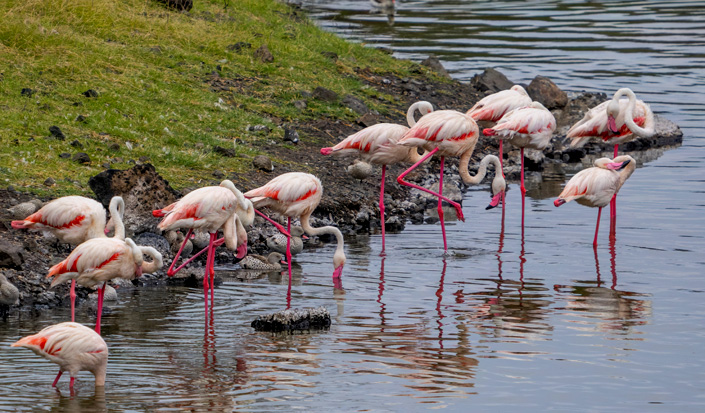
Lake Manyara National Park ranks as one of Tanzania’s premier avian safari locales. It hosts a multitude of avian species – over 400 recorded species, including 40 kinds of raptors. Included among these are flocks of thousands of flamingos that gather to feed along the shoreline of Lake Manyara, as well as the great white pelican, which may also be observed in significant numbers. Additionally, the groundwater forest north of the lake serves as a renowned breeding area for numerous pink-backed pelicans, storks, herons, and Marabou storks, among others. Lake Manyara National Park is home to various birds of prey, including the palm-nut vulture, crowned eagle, and Ayre’s hawk-eagle, among others. Lake Manyara National Park provides exceptional bird-watching year-round; yet, a range of flamingos and other aquatic species are typically observed in limited quantities during the dry season. Furthermore, migratory birds are present from November to April, while the breeding plumage in the park typically occurs in June during the dry season.
Underground Forest
The subterranean forest in Lake Manyara National Park is a dense woodland located near the northern extremity of Lake Manyara. The enigmatic forest sources its water from subterranean rivers, springs, and streams, unlike conventional rainforests that depend on substantial precipitation. It is densely populated by evergreen mahogany trees and wild date palms sustained by a consistent supply of groundwater. The forest houses Tanzania’s inaugural tree-top canopy walkway and is inhabited by a diverse array of fauna, including monkeys and birds, as well as exquisite tree and plant species. The groundwater forest is an intriguing destination for delightful nature treks and activities.
Maji Moto Springs
Maji Moto Springs, translating to “hot water,” are geothermal springs located within Lake Manyara National Park. The spring is a picturesque concealed sanctuary featuring crystalline springs encircled by palm and fig trees. The springs are a favored location for picnic lunches and swimming in the park, accompanied by remarkable wildlife observations.
The Hippopotamus Pool
The hippo pool at Lake Manyara National Park is situated in the Simba River and attracts a significant number of animals, including hippos, klipspringers, and various others.
Things to do at Lake Manyara National Park
Game Drive
Lake Manyara National Park offers both diurnal and nocturnal game drives. Game drives at Lake Manyara occur throughout the lower slopes of the Great Rift Valley, with a diverse array of elephants, buffalo, lions, antelopes, and cheetahs, in addition to several bird species and the impressive woodland flora sustained by groundwater. The nighttime game drives are distinctive for observing wildlife such as genets, leopards, civets, hippos, and many birds.
Bird Watching
Lake Manyara, home to approximately 400 avian species, is undeniably a haven for birdwatchers, including various species over its savanna plains, forested areas including the groundwater forest, springs, and lakeshores. In addition to its captivating colonies of pink flamingoes, visitors to Lake Manyara can also anticipate encountering pelicans, woodpeckers, flycatchers, herons, hornbills, storks, eagles, and egrets, among others.
Canopy Walk
The tree-top canopy walk near Lake Manyara is Tanzania’s first and exclusive tree-top canopy walkway. Monkeys and birds can be observed traversing the subterranean forest at canopy level. You will also be able to observe the striking Maasai pastoralists inhabiting the region. Additionally, alternative mountain biking excursions and escarpment forest hikes can be undertaken beyond the park boundaries.
Canoeing
Lake Manyara National Park offers canoe excursions where participants can paddle quietly around the lake’s coastline with a knowledgeable guide. This remarkable journey will allow you to observe hippos wallowing in the water, along with elephants, buffaloes, gazelles, waterbucks, giraffes, and various other species along the riverbanks, as well as numerous aquatic birds like fish eagles, cormorants, bee-eaters, hornbills, and pink flamingos.
Explore Mto Wa Mbu Village
During a safari in Tanzania to Lake Manyara National Park, tourists can visit the Mto Wa Mbu traditional village at the park’s entry, where they can engage with the local populace and gain insights into their culture, traditions, and way of life. Tourists will get the opportunity to see indigenous smallholdings, banana plantations, healthcare facilities, and primary educational institutions. They can also savor local cuisine, discover the process of banana beer production, and experience traditional entertainment, including dances, music, theater, and tribal art.
Best time to Visit Lake Manyara National Park
Lake Manyara National Park is accessible year-round, however the optimal period for visitation is the dry season, spanning from June to October. In this season, the park’s flora diminishes, and fauna gather around water sources to hydrate, offering an opportunity to observe various species.
Lake Manyara National Park can also be visited during the wet season, particularly from November to April, when migratory birds from Europe and Northern Africa are there; hence, this period is optimal for birdwatching. Birdwatching in Lake Manyara is particularly favorable around the conclusion of the rainy season in June, coinciding with the nesting period of birds.
How to get to Lake Manyara National Park via Road
Lake Manyara National Park is situated 126 kilometers southwest of Arusha and is accessible by both road and air. The park may be accessed by road from Bahati, the capital of the Manyara region, which is the predominant means of transportation for visitors along the northern safari circuit. The Park is situated on the renowned Ngorongoro Crater and the road to Serengeti National Park, both of which are components of the Northern safari circuit.
How to get to Lake Manyara National Park Via Aerial Transport
The optimal method to reach Lake Manyara National Park is via flight, namely by traveling into Kilimanjaro International Airport (KIA). Charter flights from the Serengeti or Arusha connect to Lake Manyara Airstrip. From that point, you can proceed to the park entrance, approximately a 30-minute drive away.
Accommodations in Lake Manyara National Park
A Tanzania safari encompasses not only luxury but also immersion, comfort, and a profound connection to nature. For travelers pursuing an ideal equilibrium between cost-effectiveness and genuine excitement, the premier midrange lodgings in Lake Manyara National Park provide an optimal compromise. Situated between the Great Rift Valley escarpment and the glistening lake, these lodges harmoniously combine natural beauty, cultural depth, and gracious hospitality to provide an indelible experience.
Throughout your Tanzania Safari Holidays, you will find that Lake Manyara transcends mere destination status. It is a dynamic and vibrant terrain of exploration. The alkaline waters draw numerous pink flamingos, while the deep woodlands provide refuge for elephants, giraffes, and the park’s renowned tree-climbing lions. Residing at a midrange lodge or tented camp enables guests to experience comfort and closeness to nature without sacrificing quality.
Whether embarking on Tanzania Game Drives, undertaking Walking Safaris in Tanzania, or engaging in profound cultural interactions with the Maasai, these lodges provide as an ideal foundation. Every resort narrates its unique tale, providing guests with an authentic and intimate insight into Tanzania’s remarkable wildlife and culture.
Africa Safari Lake Manyara – An Ideal Combination of Comfort and Wilderness
Situated between the impressive Ngorongoro Crater and the shimmering Lake Manyara, Africa Safari Lake Manyara is distinguished as a premier intermediate lodging option for guests seeking both comfort and excitement. The lodge has a variety of bungalows and permanent safari tents, all crafted to immerse guests in the wild splendor of northern Tanzania.
The hotel includes a rejuvenating swimming pool, sun deck, and a comfortable lounge bar for guests to relax after a day of tours in Tanzania. The on-site restaurant offers freshly prepared local and foreign food, enabling visitors to savor each meal with a view of the lake and adjacent animal corridors. It is common to observe zebras or wildebeest grazing in proximity, enhancing the authenticity of the experience.
Africa Safari Lake Manyara offers an optimal environment for guests desiring a harmonious blend of nature and relaxation while experiencing Tanzania Wildlife Safaris in comfort. The picturesque setting and lively environment embody the authentic spirit of a Tanzania Safari Holiday.
Isoitok Camp Manyara – A Convergence of Culture and Wilderness
Located in the center of Esilalei village, Isoitok Camp Manyara beckons guests to immerse themselves in Tanzania’s sceneries and culture. This delightful tented camp is situated on a hill with a panoramic view of Lake Manyara and the expansive Rift Valley basin, providing stunning vistas and an authentic engagement with local culture.
The camp’s comfy tents offer an ideal blend of rustic allure and contemporary amenities, each crafted to guarantee a tranquil respite following an exhilarating day on Tanzania Walking Tours. Visitors may participate in guided walks, investigate Maasai homesteads, and acquire firsthand knowledge of traditional customs. Evenings frequently transpire around a blazing bonfire as Maasai warriors convey their songs and dances under the sky.
Isoitok Camp is distinguished by its cultural immersion and environmentally sustainable principles. It provides guests with more than mere accommodation; it presents a narrative, a pulse, and an opportunity for profound connection with the locale. Isoitok Camp offers an exceptional Tanzania Wildlife Safari experience that transcends the conventional.
Lake Manyara Tortilis Camp – The Genuine Wilderness Encounter
Few locations in Tanzania integrate untamed nature and luxury as effortlessly as Lake Manyara Tortilis Camp. This semi-permanent tented camp, situated near the main entrance gate of the park, offers guests an authentic encounter with nature.
Each expansive safari tent is tastefully appointed with en-suite bathrooms and comfortable mattresses adorned with soft linens. The center mess tent functions as a communal hub, where people exchange narratives of the day while enjoying freshly prepared meals and engaging in jovial conversations. Residing within the park allows one to awaken to the sounds of avian and wildlife just outside the door, rendering it an optimal selection for vacationers eager to commence Tanzania Game Drives before dawn or observe wildlife in their natural cadence.
The closeness to the park’s varied ecosystems enriches every Tanzania Safari Holiday. Visitors frequently observe elephants ambling by or vervet monkeys vocalizing in the foliage. Lake Manyara Tortilis Camp provides an indelible connection to nature—untamed yet comfortable, wild yet inviting.
Manyara Wildlife Safari Camp – A Scenic Retreat in Nature
Perched on a picturesque hill with views of Lake Manyara National Park, Manyara Wildlife Safari Camp merges classic safari allure with contemporary convenience. Guests may select from sophisticated cottages and permanent tents, both crafted to showcase the panoramic splendor of the surrounding surroundings.
Each unit is furnished with en-suite bathrooms, air conditioning, and private balconies that showcase the stunning view of the park. A shimmering swimming pool and an open-air lounge offer perfect locations for relaxation following an exhilarating day of Tanzania safaris. The restaurant provides a blend of African and continental cuisine crafted from fresh local products.
The camp’s proximity to the park’s northern entrance facilitates prompt access for early morning Tanzania Game Drives and cultural visits to adjacent settlements. Guests may engage in bicycling safaris or visit Mto wa Mbu village to discover its varied cultures and sample traditional Tanzanian cuisine. The combination of excitement and comfort renders Manyara Wildlife Safari Camp one of the most gratifying midrange accommodations for Tanzania Tours.
Kirurumu Manyara Lodge – Enduring Safari Elegance with Stunning Vistas
For guests desiring an authentic safari experience, Kirurumu Manyara Lodge embodies the essence of traditional Africa. This tented camp, situated at the periphery of the Great Rift Valley and about twenty minutes from the park entry, provides expansive vistas of Lake Manyara and the vast plains beyond.
Every tented accommodation includes a private bathroom and a deck that offers stunning morning views. Visitors may partake in guided nature excursions, cultural engagements, and exhilarating game drives facilitated by knowledgeable guides. The lodge’s serene atmosphere provides an ideal retreat for individuals desiring a profound connection with Tanzania’s natural landscape.
Kirurumu’s subtle allure and enduring design render it perfect for tourists who value authenticity above extravagance. It is a location where comfort converges with adventure, allowing guests to genuinely experience the essence of Africa on their Tanzania Safari holidays.
Cultural Experiences at Lake Manyara Lodges
A Tanzania Wildlife Safari in Lake Manyara is incomplete without cultural study. The adjacent Mto wa Mbu Village functions as a dynamic cultural center, inhabited by more than 120 tribes coexisting harmoniously. Travelers may engage in banana beer brewing, sample local cuisine, explore art markets, and partake in traditional dances.
These encounters enhance every Tanzania Tour, providing insight into the daily life of the Tanzanian populace. Patrons at midrange lodges can effortlessly arrange guided community walks or cycling excursions, enhancing their Tanzania Walking Safaris with cultural understanding.
Selecting Appropriate Midrange Lodging
When organizing your Tanzania Safari & Gorilla Trekking combination or independent Tanzania Safari Holiday, take into account elements such as location, amenities, and activities. Residing within the park guarantees prompt access to wildlife, although accommodations outside provide broad vistas and cultural closeness. Lake Manyara’s intermediate lodges accommodate both bush-style camping enthusiasts and those seeking resort-like amenities.
Every stay guarantees adventure, authenticity, and indelible memories—demonstrating that midrange signifies not mediocrity, but rather an ideal equilibrium between comfort and exploration in the wild essence of Tanzania.