Bologonja Gate
Tucked away in the far northern reaches of Serengeti National Park, Bologonja Gate stands as one of Tanzania’s most remote and least-visited wildlife entry points. Unlike the busy Naabi Hill Gate in the east or the Ndabaka Gate on the western corridor, Bologonja Gate is a world apart — a quiet checkpoint positioned almost at the meeting point of two nations, where Tanzania’s rolling savannah merges with the vast grassland ecosystem that extends north into Kenya’s Maasai Mara National Reserve.
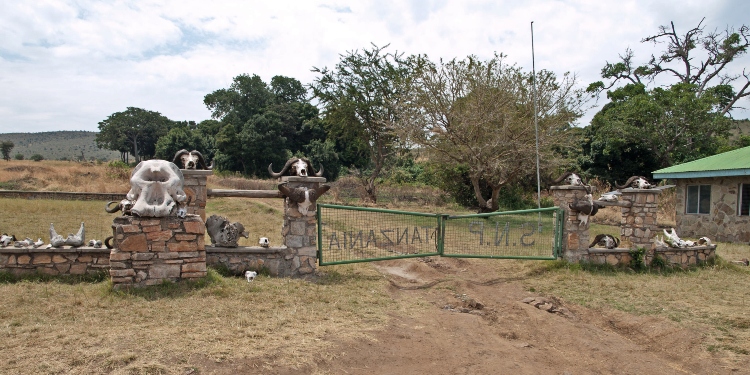
For the seasoned safari traveller who wants to experience Africa’s greatest wildlife spectacle far from the crowds, Bologonja Gate is the ultimate threshold. It opens into the northern Serengeti, the stage for the most dramatic chapter of the Great Wildebeest Migration — the river crossings of the Mara River, where hundreds of thousands of wildebeest plunge through crocodile-infested waters in scenes of raw, primal nature that have made this ecosystem world-famous.
Though rarely mentioned in mainstream safari brochures, Bologonja Gate is a destination in itself. The springs, woodlands, salt licks, and permanent water sources nearby concentrate wildlife throughout the year, making it a worthwhile stop regardless of the migration season. This guide covers everything a traveller needs to know about Bologonja Gate — its location, history, wildlife, access routes, facilities, and the best strategies for making the most of this extraordinary part of the Serengeti.
Location and Geography
Bologonja Gate sits on the northern boundary of Serengeti National Park, in the zone broadly referred to as the North Serengeti or the Kogatende region. The gate marks one of the northernmost access points into the park, positioned just south of the Kenya-Tanzania international border.
Geographically, this part of the Serengeti is characterised by a dramatic transition in landscape. The open, flat plains of the central Serengeti give way here to a more varied terrain of rolling hills, dense riverine woodland, scattered rock outcrops known as kopjes, and the green corridors carved by the network of springs and seasonal streams that feed into the Mara River. The result is a mosaic of habitats — grassland, forest, wetland, and highland — that is exceptionally rich in biodiversity.
The Mara River Corridor
Roughly 10 kilometres to the north of Bologonja Gate lies the Mara River, one of Africa’s most iconic waterways. The Mara originates in Kenya’s Mau Escarpment and flows southwest into Tanzania before looping back into Kenya and eventually emptying into Lake Victoria. In the Serengeti context, the Mara River is best known as the crossing point for the Great Migration, but it sustains an enormous resident population of Nile crocodiles, hippos, and aquatic birdlife year-round.
The riparian forest along the Mara River creates a dense, lush wildlife corridor distinct from the surrounding savannah. Giant fig trees, wild date palms, and acacia woodland shade the riverbanks, providing cover for leopards, olive baboons, vervet monkeys, and a wide variety of woodland birds.
Proximity to the Maasai Mara
Bologonja Gate’s position at the Tanzania-Kenya border is historically significant. Before the closure of the border crossing to tourists in 1977, the gate served as the primary transit point for travellers moving between the Serengeti and Kenya’s Maasai Mara National Reserve. That boundary crossing remains closed to general tourists today, meaning Bologonja Gate’s role has shifted from a transit crossing to a pure park entry and exit point for safari visitors arriving from within Tanzania.
The practical consequence of this closure is a significant one for the ecology of the area: the Serengeti’s northern zone receives a fraction of the visitor numbers that the Kenyan side attracts. While hundreds of safari vehicles congregate on the Mara side of the border during migration season, the Tanzanian northern Serengeti, accessed via Bologonja Gate, remains comparatively quiet and undisturbed.
History of Bologonja Gate
The history of Bologonja Gate is interwoven with the broader history of conservation in East Africa. The Serengeti ecosystem has been protected under various forms since the British colonial era, with the Serengeti Game Reserve established in the 1930s. Full national park status was granted in 1951, making the Serengeti one of Africa’s oldest protected areas.
In the early decades of the park’s existence, the boundary between the Serengeti and the Maasai Mara was relatively porous. Pastoralists, traders, and later tourists could move across the international boundary with relative ease. Bologonja Gate served as the administrative post managing this cross-border movement. Its position near the Maasai community areas of northern Tanzania also meant it had a role in managing the interface between wildlife and pastoral land use.
The year 1977 was a turning point. Following the collapse of the East African Community — the economic and political union of Kenya, Tanzania, and Uganda — the border between Kenya and Tanzania was officially closed. The closure ended the convenient overland safari circuit that had allowed travellers to combine a Serengeti visit with the Maasai Mara in a single uninterrupted journey. Overnight, Bologonja Gate transformed from a busy international crossing point to a quiet northern outpost of the Tanzanian park system.
The Kenya-Tanzania border reopened in 1983, but tourist access across the border at Bologonja has never fully resumed, leaving the gate in its current role as an entry point purely for travellers arriving from within Tanzania. Despite this, the gate’s ranger post has remained staffed and active, playing an ongoing role in anti-poaching patrols, wildlife monitoring, and park administration for the remote northern sector.
Wildlife Around Bologonja Gate
The area surrounding Bologonja Gate supports some of the most diverse and concentrated wildlife in the entire Serengeti ecosystem. The combination of permanent water sources, varied habitats, and low visitor numbers creates exceptional conditions for wildlife observation — particularly for visitors who value depth over breadth and prefer a quieter encounter with Africa’s megafauna.
The Great Wildebeest Migration
No wildlife event defines the northern Serengeti more than the Great Wildebeest Migration, arguably the largest overland animal movement on Earth. Each year, approximately 1.5 million wildebeest, 500,000 Thomson’s gazelles, and 200,000 Burchell’s zebras complete a continuous circular migration across the Serengeti-Mara ecosystem, following the rains and the fresh grass they produce.
From July through to October, the migration pushes northward through the area around Bologonja Gate on its way to the Mara River crossings. During this period, vast columns of wildebeest and zebra pass through the landscape in numbers that beggar description — the thunder of hooves audible long before the herds come into view, the horizon flickering with movement in every direction.
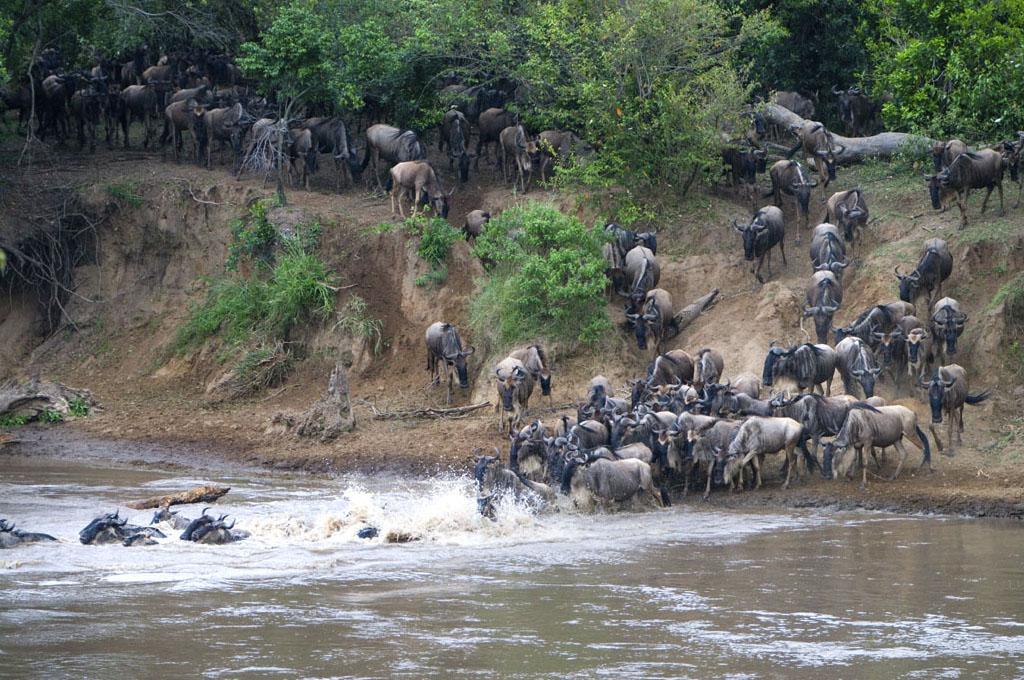
The Mara River crossings, which occur along the stretch of river north of Kogatende (accessible from Bologonja Gate), are considered the most dramatic wildlife spectacle in Africa. When a crossing begins, wildebeest massed on the riverbank surge forward in panic and determination, flinging themselves into the crocodile-patrolled waters. The chaos is extraordinary: crocodiles strike from the deep, lions wait on the far bank, and the survivors emerge dripping and disoriented before resuming their northward march.
Elephants
The northern Serengeti supports a healthy elephant population that is drawn to the permanent water sources near Bologonja Gate year-round. The Mara River, Bologonja Springs, and the Larelemangi Salt Lick are all important congregation points for elephant herds. Visitors to this area regularly encounter large breeding herds — family groups numbering thirty or more individuals — led by matriarchs with an intimate knowledge of the landscape’s resources.
Lone bulls, often older males whose large tusks made them prime targets for poaching in decades past, can be seen feeding in the woodland margins and moving between water sources. The relative quiet of this area means elephant behaviour here tends to be more relaxed and natural than in heavily trafficked parts of the park.
Buffalo
Cape buffalo are abundant in the northern Serengeti, and the Larelemangi Salt Lick — located approximately one kilometre from the gate — is famous for attracting one of the region’s most spectacular congregations. Herds of over 1,000 buffalo have been documented here, drawn by the mineral-rich earth that animals lick to supplement their diet. This is a site that wildlife photographers visit specifically for the scale and spectacle of these congregations.
Big Cats
Lions are resident in the northern Serengeti, with the prides of the Kogatende and Mara River areas among the best-studied in the park. The migration season brings a dramatic increase in predator activity, as prides capitalise on the river crossings and the exhausted, weakened individuals that make it across. Cheetahs, while less common in the wooded north than on the open plains, are also present.
Leopards are perhaps the most coveted sighting in this area. The dense riverine woodland along the Mara River and its tributaries provides ideal cover for these solitary cats. Vervet monkeys and olive baboons act as a natural alert system — their alarm calls, erupting suddenly in the forest canopy, often signal a leopard’s presence nearby.
Rare and Specialist Wildlife
The northern Serengeti around Bologonja Gate is home to several species less commonly encountered in the central and southern sections of the park. These include:
- Mountain Reedbuck: These elegant antelopes are drawn to the well-watered terrain near the springs. Their preference for hilly country with permanent water makes the Bologonja Springs area one of the better places in the Serengeti to look for them.
- Steenbok: One of Africa’s smallest antelopes, the steenbok is considered something of a North Serengeti specialty. Recognisable by a distinctive triangular black smudge on its nose, steenbok are commonly seen near the gate area.
- Eland: Africa’s largest antelope, the eland favours the open woodland habitats characteristic of the northern Serengeti. Their size, pale tawny colouring, and distinctive dewlap make them unmistakable.
- Topi: These alert, russet-coloured antelopes are common on the open areas north of the gate, often seen standing sentinel on termite mounds to scan for predators.
- Olive Baboons and Vervet Monkeys: Both species are abundant throughout the wooded areas near the gate, often encountered at close quarters along the access tracks.
Birdlife
The Serengeti National Park has recorded over 500 bird species, and the diverse habitats around Bologonja Gate contribute significantly to this count. The riparian forests along the Mara River tributaries attract an array of forest-dependent species, while the open grasslands support raptors and ground-dwelling birds.
Notable species regularly recorded in the area include the African fish eagle, the grey crowned crane (Uganda’s national bird and a Serengeti resident), saddle-billed stork, secretary bird, kori bustard (the world’s heaviest flying bird), and an assortment of kingfishers, rollers, and bee-eaters along the watercourses. Lilac-breasted rollers — widely considered one of Africa’s most beautiful birds — are frequently seen perched on acacia branches near the gate.
Bologonja Springs — A Hidden Oasis
Approximately seven kilometres from the gate, Bologonja Springs is one of the northern Serengeti’s best-kept secrets. The springs feed a clear, cool stream that flows northwest through shaded riverine forest before joining the Mara River system. The combination of permanent fresh water, dense tree cover, and mineral-rich substrate creates an oasis environment that supports a concentration of wildlife disproportionate to its modest size.
What makes Bologonja Springs particularly special is the contrast it presents. Within twenty paces, a visitor can step from open, sun-bleached savannah into the filtered light of a dense forest grove — the temperature drops, birdsong fills the air, and the trees press close on either side of the stream. It is an intimate environment that rewards patient observation.
The springs attract elephants, buffalo, waterbuck, and the rare mountain reedbuck throughout the year. Primates — including olive baboons and vervet monkeys — are always present in the canopy. The crystal-clear water draws kingfishers, herons, and other waterbirds, while the surrounding woodland supports sunbirds, warblers, flycatchers, and the vivid plumage of the African paradise flycatcher.
Larelemangi Salt Lick
Downstream from Bologonja Springs, roughly 1 kilometre from the gate, the Larelemangi Salt Lick is a roughly 1.5-acre patch of mineral-rich, waterlogged earth that animals visit compulsively to ingest the salts and trace minerals it provides. For wildlife watchers, it functions as a natural arena — a fixed point where animals will reliably congregate regardless of the season.
Buffalo herds numbering in the hundreds or even thousands have been documented here. Elephants visit the lick regularly, using their tusks and feet to excavate the mineral-rich earth. The lick is also a good spot for lesser-known antelope species and attracts lions, which know that prey animals will return predictably to the site.
How to Get to Bologonja Gate
Reaching Bologonja Gate requires planning and appropriate preparation. Its remote northern location means that it is not a gate visitors simply happen upon — it is a destination that rewards deliberate intent.
By Road from Arusha
The most common overland route to Bologonja Gate begins in Arusha, Tanzania’s safari capital. From Arusha, the route heads west toward Ngorongoro Crater and then descends into the Serengeti via Naabi Hill Gate in the southeast. From Naabi Hill, the drive northward through the central Serengeti to Seronera, then onwards through Lobo to Kogatende and finally Bologonja Gate, covers approximately 158 kilometres within the park. The total drive time from Arusha is typically seven to nine hours depending on road conditions and game-viewing stops.
An alternative route approaches from the northeast via Loliondo and Klein’s Gate, which is located approximately seven kilometres from Bologonja Gate. This route is used by visitors staying in the Loliondo Game Controlled Area and is a shorter option for those coming from northern Tanzania.
By Air
The most practical way to reach the northern Serengeti from Arusha or other Tanzanian safari hubs is by light aircraft. Several airstrips serve the northern Serengeti, with Kogatende Airstrip being the closest operational strip to Bologonja Gate. Flights operate from Arusha, Kilimanjaro International Airport, the Serengeti’s internal airstrips (Seronera), and Zanzibar. Flight durations are typically between 45 minutes and two hours depending on origin.
Upon landing at Kogatende, visitors are transferred to their lodges by vehicle and can visit Bologonja Gate as part of their game-drive itinerary. Flying into the northern Serengeti and driving out through Naabi Hill, or the reverse, is a popular circuit that allows travellers to experience multiple zones of the park.
Road Conditions and Vehicle Requirements
Roads in the northern Serengeti range from reasonably maintained murram (gravel) tracks to rough, corrugated, and seasonally flooded routes. A four-wheel-drive vehicle is strongly recommended for all visits, and essential during the green season (November to May) when roads can become impassable.
Fuel is not available at Bologonja Gate or anywhere within the park. Visitors approaching by road must carry sufficient fuel to complete their intended journey. A minimum of one full spare tyre and basic mechanical tools are strongly advised. Emergency communication devices (satellite phones or personal locator beacons) are recommended for self-drive travellers venturing into this remote area.
Facilities at Bologonja Gate
Bolivonja Gate is an administrative and security checkpoint, and facilities reflect its remote, functional character rather than tourist-facing amenity. Visitors should not arrive expecting the services available at larger gates such as Naabi Hill.
TANAPA Ranger Post
The gate is staffed by Tanzania National Parks (TANAPA) rangers around the clock. The ranger post is the only such facility at the park’s northern gates and plays a critical role in anti-poaching operations, wildlife monitoring, and park management in this sector. Rangers at Bologonja can provide information about current road conditions, recent wildlife sightings, and any operational updates relevant to travellers.
Permit Processing
Entry permits and vehicle passes can be checked and processed at Bologonja Gate. Travellers are strongly advised to arrange permits in advance through the TANAPA online system (tanzaniaparks.go.tz) or through their tour operator. Cash and electronic payment facilities may be limited, and the electronic payment systems that are available at some larger gates may not function reliably in this remote location.
Rest Area
A basic rest area is available for travellers to take a break. This includes toilet facilities and a shaded stopping point. The rest area functions as an information point for visitors transiting west to Kogatende or south toward Lobo.
Guide Hire
Guides and porters can be arranged at the gate, which is particularly useful for visitors undertaking walking safaris in the company of armed rangers. Walking safaris in the northern Serengeti offer an intimate ground-level experience of the ecosystem and can be arranged through the gate or through lodges in the area.
Best Time to Visit Bologonja Gate
Peak Season: July to October (Dry Season)
The dry season, from July through to October, is universally regarded as the best time to visit the northern Serengeti and Bologonja Gate. During these months, vegetation is drier and shorter, making wildlife easier to spot. Water sources are fewer and concentrated, drawing animals to permanent springs and rivers. And most importantly, the Great Wildebeest Migration is in full force in the north, with hundreds of thousands of animals congregating along the Mara River corridor within striking distance of the gate.
July and August are the peak months for Mara River crossings, when the drama is at its most intense. September sees the herds beginning to disperse, with some animals starting the return journey south, though crossings continue. October is an excellent shoulder month — visitor numbers begin to drop while wildlife activity remains high.
Green Season: November to May
The green or wet season brings a different but equally rewarding experience to the northern Serengeti. The landscape transforms dramatically — brown savannah becomes lush and vivid green, wildflowers bloom, and the air cools. The Serengeti in the green season is visually stunning and photographically extraordinary.
Many lodges in the northern Serengeti close between April and May (the peak rainy season), and some roads become impassable during heavy rains. However, the green season offers advantages: significantly lower visitor numbers mean an almost private experience; bird diversity peaks as migratory species arrive from Europe and Asia; and the resident wildlife — elephants, lions, leopards, cheetahs, and others — remains present throughout the year. For resident wildlife observation (as opposed to migration), the green season at Bologonja Gate can be excellent.
Migration Timing Summary
Understanding the migration calendar helps visitors plan effectively:
- January – March: Migration in the southern Serengeti and Ndutu area; calving season around February.
- April – May: Migration moves through the central Serengeti heading north; some road closures in northern zone.
- June – July: Migration arrives in the northern Serengeti; river crossings at the Mara begin.
- August – September: Peak river crossing season near Kogatende/Mara River; best time for northern Serengeti.
- October – November: Migration begins returning south; mixed herds still visible in the north early October.
- December: Migration completes return to southern Serengeti and Ndutu.
Safari Activities from Bologonja Gate
Game Drives
The classic Serengeti activity, game drives from Bologonja Gate explore the Kogatende sector, the Mara River frontage, Bologonja Springs, and the Larelemangi Salt Lick. Early morning drives (departing before 7:00 am) offer the best predator activity, with lions often returning from nocturnal hunts and cheetahs beginning their own morning hunts in the clearer morning light. Evening drives (returning before the 18:00 gate closure) are productive for leopard and hyena activity.
Full-day drives allow visitors to cover the broader northern Serengeti, including the Kuka Hills and the river crossing sites along the Mara. This region is best explored with a knowledgeable guide who understands migration movements and predator territories.
Walking Safaris
Armed-ranger walking safaris can be arranged from the gate, offering a completely different perspective on the ecosystem. On foot, the scale shifts — an elephant that looked large at a distance becomes truly enormous; the sounds, scents, and textures of the bush become immediate and vivid; and the attention shifts from large animals to the smaller details that a vehicle drives past without noticing: tracks, dung, insects, grasses, and the signs of life written in the soil.
Walking safaris in the northern Serengeti are not recommended during peak migration season when hippo and wildebeest in enormous numbers can make on-foot movement near water sources dangerous. The dry shoulder months (October-November, June) are ideal.
Hot Air Balloon Safaris
Hot air balloon safaris operate over the Serengeti, with launch sites in both the central and northern sectors of the park. A balloon flight over the northern Serengeti during migration season is a transformative experience — the epic scale of the wildebeest herds becomes fully comprehensible from altitude in a way that is impossible to grasp from ground level. Flights typically last approximately one hour and are followed by a champagne bush breakfast.
Cultural Visits
The Maasai community areas adjacent to the northern Serengeti offer opportunities for cultural exchange visits to Maasai bomas (homesteads). These visits provide insight into the pastoralist lifestyle that has coexisted with the Serengeti ecosystem for centuries, and the Maasai’s intimate knowledge of cattle, wildlife, and land. Such visits are typically arranged through lodges or tour operators and provide direct economic benefits to the host communities.
Photography
Photographically, the northern Serengeti around Bologonja Gate offers some of the continent’s most dramatic imagery opportunities. The river crossing spectacles during migration season are unparalleled, but the resident wildlife — particularly the northern Serengeti’s relaxed and habituated lions — also offers outstanding conditions for wildlife photography. The varied terrain of the Kuka Hills and the intimate scale of Bologonja Springs add landscape and habitat photography opportunities not available on the central plains.
Accommodation Near Bologonja Gate
The remote northern Serengeti is served by a relatively small number of camps and lodges, most of which combine high standards of service and comfort with an intimate, exclusive atmosphere that reflects the quietness of the region. Accommodation options range from permanent luxury tented camps to seasonal mobile camps that follow the migration.
Lodges and camps typically found near the northern Serengeti (Kogatende/Mara River area) include the following categories:
- Luxury Tented Camps: Permanent tented camps along the Mara River offering en-suite facilities, full board, guided game drives, and exclusive concession areas with no other vehicles permitted. These represent the pinnacle of the Serengeti safari experience.
- Mid-Range Camps: More accessible in price while maintaining the core experience of a remote, wildlife-rich bush environment. Full board, guided drives, and access to the same wildlife areas.
- Public Campsites: TANAPA-managed public campsites in the northern Serengeti provide basic facilities (ablutions, fire sites) for self-sufficient camping parties. These require all equipment and food to be carried in.
- Special Campsites: Exclusive, non-public campsites that can be booked for a single group, offering privacy in a designated wilderness area. These are basic in infrastructure but extraordinary in ambience.
Visitors are advised to book accommodation in the northern Serengeti well in advance of a planned July-to-September visit. The combination of limited supply and high demand during peak migration season means that the best camps often sell out six to twelve months ahead.
Practical Tips for Visitors
What to Bring
- Sufficient fuel for your planned journey — there are no fuel supplies within the park’s northern sector.
- At least 2–3 litres of drinking water per person per day; more in hot, dry conditions.
- Snacks and food for the day — the nearest shops are outside the park.
- Binoculars — essential for bird and wildlife observation.
- Sunscreen, hat, and lightweight sun-protective clothing for daytime.
- Warm layers — early morning game drives, particularly from July to September, can be very cold.
- Dust-proof bags for cameras and electronics — the roads in the dry season generate considerable dust.
- A first aid kit and any personal medications.
- A printed or offline copy of your park permits and accommodation confirmation.
Permit and Entry Information
Tanzania National Parks charges per-person, per-day entry fees for Serengeti National Park, with separate charges for vehicles. Non-resident fees (in USD) are significantly higher than resident fees (in Tanzanian Shillings). Children under five are typically admitted free of charge, with reduced fees for children aged five to sixteen.
Permits should ideally be purchased in advance through the TANAPA portal or through a licensed tour operator. Electronic payment systems (card and mobile money) are increasingly available, but it is advisable to carry USD cash as a backup in remote areas.
Safety Guidelines
- Never exit your vehicle in open wildlife areas unless accompanied by an armed ranger.
- Respect all wildlife — maintain safe distances and never attempt to feed or approach animals.
- Do not drive off-road; stay on designated tracks to protect vegetation and avoid getting stuck.
- Observe gate hours — entering or exiting outside the 06:00–18:00 window is not permitted.
- Share your itinerary with your accommodation and inform them of your expected return time.
- In the event of a vehicle breakdown, remain with your vehicle and contact the nearest ranger post or lodge for assistance.
Responsible Wildlife Viewing
The northern Serengeti around Bologonja Gate is a relatively undisturbed ecosystem whose wildlife has not been accustomed to heavy vehicle traffic. This is both what makes it special and what requires a correspondingly respectful approach from visitors. Keep noise levels low around wildlife; limit the time spent at any single sighting, particularly at predator kills or river crossings; follow your guide’s instructions at all times; and resist the temptation to position your vehicle to influence animal behaviour.
Conclusion
Bologonja Gate is not simply a point of entry into the Serengeti — it is a gateway into one of the most raw, extraordinary, and emotionally affecting wildlife experiences in Africa. The relative remoteness that has historically kept visitor numbers low is precisely what preserves the quality of the experience: space, silence, and the sense that the land ahead is genuinely wild.
From the first rumble of migrating wildebeest on the horizon to the intimate quiet of Bologonja Springs at dawn, from the primal spectacle of a Mara River crossing to the solitary silhouette of a leopard moving through riverside woodland, everything about this area exists at the outer edge of what most travellers encounter.
Planning a visit to Bologonja Gate requires more preparation than a standard Serengeti safari, but the rewards are proportional. For those who make the journey to Tanzania’s remote northern gateway, the Serengeti reveals itself not as a backdrop for wildlife photographs, but as a living, breathing ecosystem of unmatched power and beauty.