Serengeti National Park Gates
Why Your Choice of Serengeti Gate Matters
Serengeti National Park Gates, Serengeti National Park covers roughly 14,750 square kilometres of plains, kopjes, riverine forest and woodland in northern Tanzania. It is far too big to treat as a single destination. The gate you enter through, and the gate you leave by, decides which part of the park you see first, how many hours you spend on the road, whether you are positioned for the Great Migration, and how much you pay in park fees.
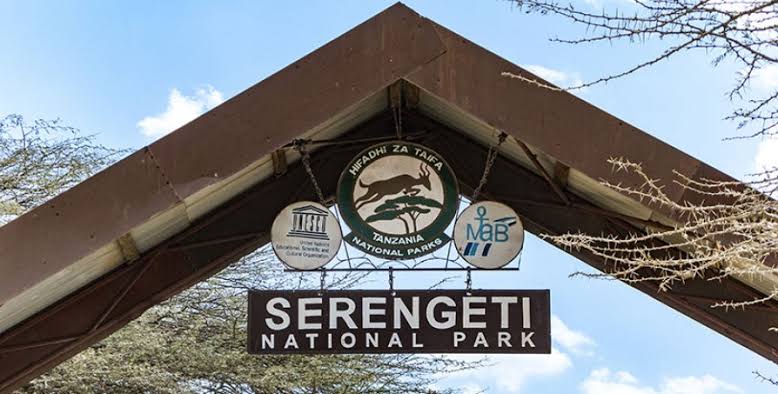
A traveller who enters at Naabi Hill in February lands right among the calving herds of the southern plains. The same traveller entering at Ndabaka in June arrives in the Western Corridor just as the herds gather at the Grumeti River. Someone driving in from Lake Natron in September uses Klein’s Gate and is within striking distance of the Mara River crossings. Picking the right gate is one of the simplest ways to get more out of a Serengeti safari.
This guide walks through every official road entry point, the ranger posts and airstrips used by fly-in visitors, opening hours, distances and 2026 fees. It then sets out detailed sample itineraries built around different gate combinations, including routes that suit self-drive travellers coming from Arusha, Mwanza and overland from Uganda.
| Quick Answer: The Main Serengeti Gates
Naabi Hill Gate – south-east; the main and busiest gate, reached from Arusha via Ngorongoro. Ndabaka Gate – west; main entrance to the Western Corridor from Mwanza and Lake Victoria. Fort Ikoma Gate – north-west; links the park to Musoma, Mugumu and the Grumeti/Ikoma areas. Handajega Gate – south-west; a quieter western-side entry near the Ndabaka/Kirawira area. Klein’s Gate – north-east; links the Lobo area with Loliondo and Lake Natron. Bologonja Gate – far north on the Kenya border; a ranger post only, not a tourist border crossing into the Maasai Mara. |
Serengeti Gates at a Glance
The table below summarises the gates most safari travellers use. Opening hours are those generally applied by TANAPA. Some gates stop admitting vehicles in the late afternoon even though they remain staffed until 18:00, so always plan to arrive early.
| Gate | Region of park | Main approach | Typical hours | Best for |
| Naabi Hill | South-east | Arusha / Karatu via Ngorongoro | 06:00–18:00 | Southern plains, Ndutu calving, Seronera |
| Ndabaka | West | Mwanza / Lamadi (Lake Victoria) | 06:00–18:00 (last entry ~16:00) | Western Corridor, Grumeti crossings |
| Fort Ikoma | North-west | Musoma / Mugumu / Bunda | 06:00–18:00 | Grumeti & Ikoma areas, central Serengeti |
| Handajega | South-west | Mwanza / Bariadi side | 06:00–18:00 | Quieter western access, Kirawira |
| Klein’s | North-east | Loliondo / Lake Natron | 06:00–18:00 (last entry ~16:00) | Lobo, northern Serengeti, Natron loop |
| Bologonja | Far north | Kenya border (no tourist crossing) | Ranger post | Internal checkpoint for the north |
| Important for 2026 Planning
Gate hours and last-entry times are occasionally adjusted by TANAPA. Confirm current times with your operator or the park before travel, especially on long transfer days. Night driving inside the park is not permitted. Vehicles must reach their lodge or campsite before dark. |
Gate-by-Gate Guide
1. Naabi Hill Gate (Main South-Eastern Gate)
Naabi Hill is the Serengeti’s main entrance and handles the majority of visitors. It sits on a granite hill on the boundary between the Ngorongoro Conservation Area and the national park. Almost every classic northern-circuit safari — Arusha, Tarangire or Lake Manyara, Ngorongoro, then Serengeti — passes through here.
Location and access
- Reached from Arusha via the paved road through Mto wa Mbu and Karatu, then through the Ngorongoro Conservation Area (entering at Lodoare Gate) and across the short-grass plains past the Olduvai Gorge turn-off.
- Arusha to Naabi Hill is roughly 250–270 km; allow 5.5–7 hours with stops, as the final stretch through the conservation area is gravel.
- Naabi Hill to Seronera, the heart of the central Serengeti, is about 45 km, or 1–1.5 hours of game driving.
What you will find at the gate
- TANAPA and Ngorongoro Conservation Area Authority (NCAA) offices, since you exit the NCA and enter the national park here.
- A short walking trail to the top of the hill with sweeping views of the plains — a good leg-stretch while your driver processes permits.
- Picnic area, toilets and a small shop for drinks, snacks and maps. Expect queues around midday in peak season.
Best time to use Naabi Hill
December to March is prime time, when the wildebeest herds calve on the short-grass plains of Ndutu and the southern Serengeti, which begin almost at the gate. It works year-round for Seronera, which has resident lions, leopards and cheetahs in all seasons.
| Tip: Remember the Ngorongoro Fees
Driving from Arusha to Naabi Hill means crossing the Ngorongoro Conservation Area. You pay NCAA conservation and vehicle fees for that transit in addition to Serengeti fees, even if you do not descend into the crater. Operators usually include this, but self-drivers must budget for it. |
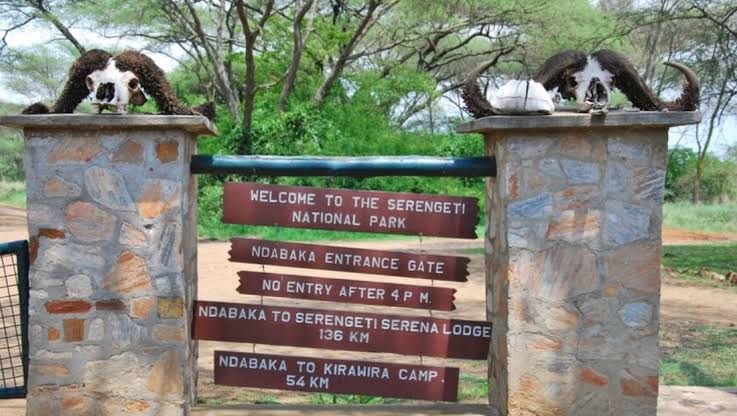
2. Ndabaka Gate (Western Corridor)
Ndabaka is the main gate on the western side of the park, a short distance from the eastern shore of Lake Victoria. It opens directly into the Western Corridor, a long finger of the Serengeti that stretches towards the lake and is crossed by the Grumeti River.
Location and access
- About 140 km (roughly 2 hours) from Mwanza along the paved Mwanza–Musoma highway, turning off near Lamadi.
- Roughly 145 km from Seronera, which takes 3–4 hours on park roads with game viewing.
- The natural entry for travellers flying into Mwanza, or driving overland from Uganda or Rwanda via the lake region.
Why use Ndabaka
- Western Corridor wildlife: the migration typically moves through between about late May and July, with Grumeti River crossings and very large Nile crocodiles.
- Far fewer vehicles than the central and northern Serengeti.
- Lodges close to the gate along the lake road, such as Speke Bay Lodge, make an easy first or last night.
| Watch the Last-Entry Time
Ndabaka is widely reported to stop admitting vehicles at around 16:00. Because Seronera lodges are three or more hours away, aim to clear the gate by early afternoon at the latest. |
3. Fort Ikoma Gate (North-West)
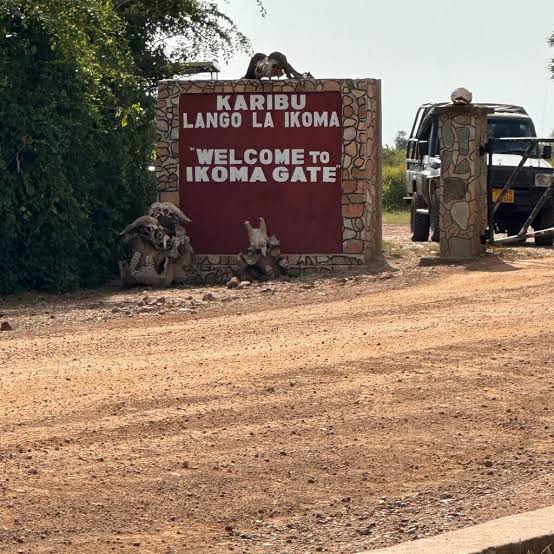
Fort Ikoma Gate sits on the north-western boundary close to the historic German-era Fort Ikoma, near the Ikoma Wildlife Management Area and the Grumeti Game Reserve. It is the shortest road link between the central Serengeti and the Mara Region towns of Mugumu, Bunda and Musoma.
- Roughly 35–40 km from Seronera, making it one of the quickest gates to the park’s centre from the western side.
- Well placed for camps in the Ikoma and Grumeti areas, including community-area camps where walking safaris and night drives may be allowed outside the national park.
- Useful for east-to-west traverses: enter at Naabi Hill from Arusha and exit at Fort Ikoma towards Musoma or Mwanza.
- Good during the Western Corridor migration season (around May to July) and for resident game year-round.
4. Handajega Gate (South-West)
Handajega is a lesser-used gate on the south-western side of the park, in the same broad area as Ndabaka and the Kirawira section of the Western Corridor. It sees light traffic and is mainly used by operators approaching from the Mwanza and Bariadi side or by visitors staying in the southern part of the Western Corridor.
- A good choice if you want a quiet entry and are heading for the southern Western Corridor rather than straight to Seronera.
- Facilities are basic. Have your permits arranged and paid in advance through the TANAPA online system or your operator.
- Approach roads can deteriorate in the long rains (roughly March to May); check conditions before committing to this route.
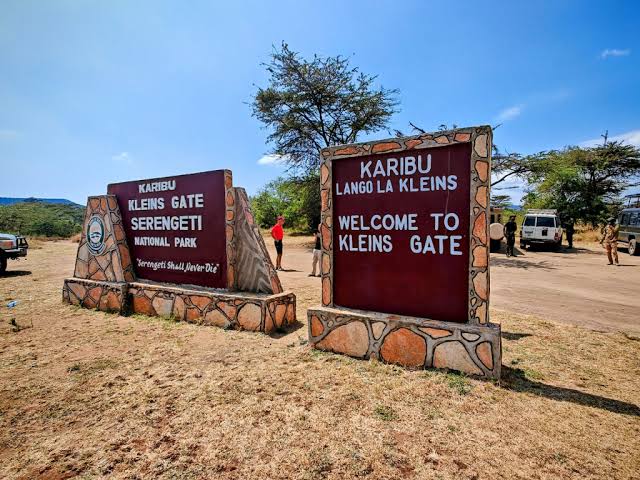
5. Klein’s Gate (North-East)
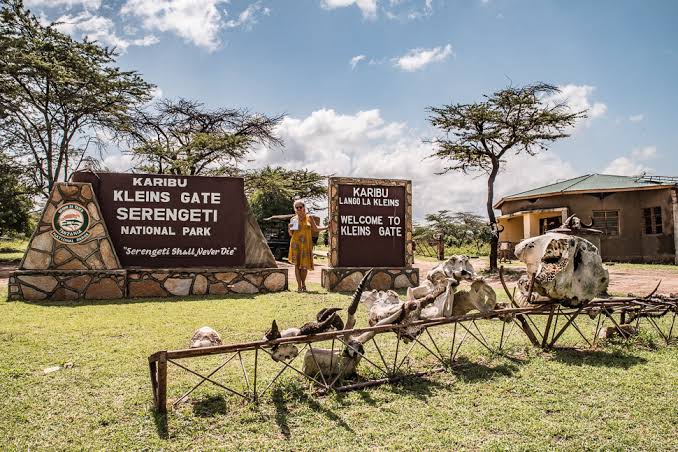
Klein’s Gate lies in the north-east of the park near the Lobo area, named after the American hunter Al Klein who operated in the region in the early twentieth century. It connects the Serengeti with Loliondo and onwards to Lake Natron, making it the gate of choice for the scenic Serengeti–Natron loop.
- Very close to the Lobo Valley and Lobo Wildlife Lodge, with rocky kopjes and good year-round game.
- Serves camps on the Klein’s and Loliondo concessions just outside the park boundary.
- From Lake Natron, allow roughly 4–5 hours on rough gravel through Loliondo to reach the gate.
- Prime months: July to October, when the migration is in the northern Serengeti and Lobo is a handy base between Seronera and Kogatende.
| Self-Drive Note
The Natron–Loliondo–Klein’s road is remote, with long stretches of corrugated gravel, sand and limited mobile signal. A high-clearance 4×4 such as a Land Cruiser or Hilux, two spare tyres and full fuel tanks are strongly recommended. Do not attempt it late in the day. |
6. Bologonja Gate (Far North, Kenya Border)
Bologonja sits on the Tanzania–Kenya border opposite the Maasai Mara National Reserve. Many older guides describe it as a crossing between the Serengeti and the Mara, but it is not open as a tourist border crossing. It functions as a ranger post and internal checkpoint for the far north of the Serengeti.
- Travellers combining the Serengeti and the Maasai Mara must use official border posts such as Namanga or Isebania/Sirari, or connect by air.
- Nearby highlights include the Bologonja Springs and the Lamai Wedge, an excellent area during the August–October Mara River crossings.
- Kogatende airstrip, a short drive away, is the main fly-in hub for the northern Serengeti.
7. Ranger Posts, Airstrips and Other Entry Points
Besides the main road gates, the Serengeti has several ranger posts and airstrips that serve as entry and exit points, especially for fly-in safaris. Park fees still apply for visitors arriving by air and are normally prepaid by your operator.
| Entry point | Type | Area served | Notes |
| Seronera | Airstrip & park HQ | Central Serengeti | Busiest airstrip; daily scheduled flights from Arusha and Kilimanjaro |
| Kogatende | Airstrip | Northern Serengeti / Mara River | Key for July–October river crossings |
| Lamai / Tabora B | Ranger posts | Far north | Remote northern checkpoints near the Mara River |
| Lobo | Airstrip | North-east | Serves Lobo and Klein’s area camps |
| Ndutu / Kusini | Airstrips | Southern plains | Ideal for December–March calving season |
| Kirawira | Airstrip | Western Corridor | Serves Grumeti and Western Corridor camps |
| Machochwe | Ranger post | North-west | Minor entry point on the north-western boundary |
Distances and Driving Times to Each Gate
Times below are realistic estimates for a safari vehicle, including short stops. Inside the park the speed limit is 50 km/h and you will stop often for wildlife, so park-road times are always longer than the distance suggests.
| Route | Approx. distance | Approx. time | Road type |
| Arusha → Naabi Hill Gate | 250–270 km | 5.5–7 hrs | Paved to Karatu, gravel through NCA |
| Karatu → Naabi Hill Gate | ~120 km | 3–3.5 hrs | Gravel via Ngorongoro rim |
| Naabi Hill → Seronera | ~45 km | 1–1.5 hrs | Gravel park road |
| Mwanza → Ndabaka Gate | ~140 km | ~2 hrs | Paved highway |
| Ndabaka → Seronera | ~145 km | 3–4 hrs | Gravel park road |
| Musoma → Fort Ikoma Gate | ~140 km | 2.5–3 hrs | Paved then gravel via Bunda/Mugumu |
| Fort Ikoma → Seronera | 35–40 km | ~1 hr | Gravel park road |
| Lake Natron → Klein’s Gate | ~150 km | 4–5 hrs | Rough gravel via Loliondo |
| Seronera → Lobo / Klein’s area | ~75 km | 2–2.5 hrs | Gravel park road |
| Seronera → Kogatende (north) | ~150 km | 4–5 hrs | Gravel park road |
| Driving In from Uganda?
Self-drive travellers coming from Uganda via the Mutukula border usually head through Bukoba and around Lake Victoria towards Mwanza, making Ndabaka Gate the most practical entry. Allow at least two days from Mutukula to Ndabaka and carry your cross-border documents: logbook, COMESA Yellow Card insurance, rental authorisation letter and Temporary Import Permit. |
Serengeti Park Fees for 2026
TANAPA charges the same fees whichever gate you use. Fees are charged per person per 24-hour period, not per calendar day: if you enter at 10:00, your permit expires at 10:00 the next day. Figures below are the commonly published non-resident rates including 18% VAT; always confirm current rates with TANAPA or your operator before booking.
| Fee type | Non-resident adult (16+) | Non-resident child (5–15) | Notes |
| Conservation (entry) fee – peak | US$82.60 | US$23.60 | Peak season, generally 16 May – 14 March |
| Conservation (entry) fee – low | US$70.80 | ~US$23.60 | Low season, generally 15 March – 15 May |
| Concession fee (lodges/camps inside park) | ~US$59–71 per night | ~US$12 per night | Usually paid via your lodge or operator |
| Public campsite | ~US$35.40 per night | ~US$5.90 per night | Seronera, Lobo and other public sites |
| Special campsite | ~US$59–71 per night | ~US$12 per night | Exclusive sites; book in advance |
| Transit fee | ~US$71 per crossing | ~US$24 | Only when crossing the park without staying |
Children under five enter free. Vehicle entry fees are charged separately and differ for Tanzanian-registered and foreign-registered vehicles, so self-drivers bringing a Ugandan or Kenyan-registered rental should budget for the foreign vehicle rate.
| How to Pay at the Gates
Cash is not accepted at Serengeti gates. Fees are paid by Visa or Mastercard, via the TANAPA e-payment system using a control number, or through your operator’s park fee card. Card terminals can go offline at remote gates, so self-drivers should generate and pay control numbers in advance where possible and carry printed receipts. |
Which Gate to Use, Month by Month
The Great Migration follows the rains in a broadly clockwise loop. Matching your entry gate to where the herds are likely to be saves hours of driving. Timing varies each year with rainfall, so treat this as a guide rather than a guarantee.
| Months | Where the herds usually are | Best entry gate | Best exit gate |
| Dec – Mar | Southern plains, Ndutu (calving season) | Naabi Hill | Naabi Hill |
| Apr – May | Moving from south to central/west (long rains) | Naabi Hill | Naabi Hill or Fort Ikoma |
| Jun – Jul | Western Corridor, Grumeti River | Ndabaka or Fort Ikoma | Naabi Hill or Ndabaka |
| Jul – Oct | Northern Serengeti, Mara River crossings | Naabi Hill (or fly to Kogatende) | Klein’s or fly out |
| Nov | Heading south through Lobo and Seronera | Klein’s or Naabi Hill | Naabi Hill |
Detailed Gate-to-Gate Itineraries
The following sample itineraries show how to combine different gates. Each can be done as a guided safari or as a self-drive in a well-equipped 4×4. Drive times are approximate and assume game viewing along the way.
| Itinerary | Duration | Entry gate | Exit gate | Best season |
| 1. Classic Naabi Hill round trip | 4 days | Naabi Hill | Naabi Hill | Dec – Mar (all year for Seronera) |
| 2. East-to-west traverse | 6 days | Naabi Hill | Ndabaka | May – Jul |
| 3. Northern migration & Natron loop | 7 days | Naabi Hill | Klein’s | Jul – Oct |
| 4. Western entry from Mwanza | 5 days | Ndabaka | Fort Ikoma | May – Jul (all year) |
Itinerary 1: 4 Days – Classic Naabi Hill Round Trip from Arusha
Best for: first-time visitors and the December–March calving season. Entry: Naabi Hill. Exit: Naabi Hill.
Day 1 Arusha → Ngorongoro → Naabi Hill → Seronera
- Depart Arusha by 06:30. Drive the paved road through Mto wa Mbu to Karatu, then enter the Ngorongoro Conservation Area at Lodoare Gate.
- Stop at the crater rim viewpoint, then descend the western side onto the short-grass plains. Optional short detour to the Olduvai Gorge museum.
- Arrive at Naabi Hill Gate around midday. Climb the hill for views while permits are processed; picnic lunch.
- Afternoon game drive to Seronera (about 45 km). Overnight in central Serengeti.
Day 2 Full day in the Seronera Valley
- Early-morning game drive along the Seronera River, known for leopards in the sausage trees and resident lion prides.
- Visit the Seronera Visitor Centre and its short interpretive trail.
- Afternoon drive to the Simba and Moru Kopjes, returning to camp before dark.
Day 3 Seronera → Southern Plains / Ndutu
- In calving season, head south to the Ndutu and Kusini areas to follow the herds and their predators – cheetah, lion and hyena.
- Outside calving season, spend the day on the Gol Kopjes and eastern plains.
- Overnight near Ndutu or at Seronera.
Day 4 Exit Naabi Hill → Arusha
- Morning game drive, timing your exit at Naabi Hill before your 24-hour permit expires.
- Drive back through the Ngorongoro Conservation Area to Karatu for lunch, arriving in Arusha in the evening.
Itinerary 2: 6 Days – East-to-West Traverse (Naabi Hill to Ndabaka)
Best for: travellers ending in Mwanza or continuing to Uganda or Rwanda, and the May–July Western Corridor migration. Entry: Naabi Hill. Exit: Ndabaka.
Day 1 Arusha → Karatu
- Drive from Arusha to Karatu, with an optional afternoon game drive in Lake Manyara National Park.
- Overnight in a Karatu lodge to break the journey.
Day 2 Ngorongoro Crater → Naabi Hill → Seronera
- Optional early crater descent (crater service fee applies per vehicle).
- Continue across the plains to Naabi Hill Gate, then game drive to Seronera.
Day 3 Central Serengeti
- Full day exploring Seronera, the Masai Kopjes and the Grumeti headwaters.
Day 4 Seronera → Western Corridor
- Drive west along the Western Corridor towards Kirawira (3–4 hours with game viewing).
- In June and July, look for the herds gathering along the Grumeti River and its giant crocodiles.
- Overnight at a Western Corridor camp.
Day 5 Western Corridor and Grumeti River
- Full day following the herds and exploring the riverine forest for colobus monkeys and birdlife.
- Overnight in the Western Corridor.
Day 6 Exit Ndabaka Gate → Mwanza
- Morning game drive to Ndabaka Gate, exiting before your permit expires.
- Drive about 2 hours to Mwanza, or overnight at a Lake Victoria lodge near Lamadi before continuing overland.
Itinerary 3: 7 Days – Northern Migration and Lake Natron Loop (Naabi Hill to Klein’s)
Best for: July–October river crossings and adventurous travellers. Entry: Naabi Hill. Exit: Klein’s Gate.
Day 1 Arusha → Naabi Hill → Seronera
- Long drive via Karatu and the Ngorongoro Conservation Area to Naabi Hill, then on to Seronera.
Day 2 Seronera
- Full day of game drives in the central Serengeti, rich in resident predators.
Day 3 Seronera → Northern Serengeti (Kogatende area)
- Drive north via the Lobo area (4–5 hours plus game viewing).
- Settle into a camp near the Mara River.
Days 4–5 Mara River crossings
- Spend two full days positioned along the Mara River. Crossings are unpredictable, and patience pays off.
- Explore the Lamai Wedge and Bologonja Springs areas when herds are present.
Day 6 Northern Serengeti → Lobo → Klein’s Gate → Loliondo
- Game drive south to Lobo, then exit at Klein’s Gate.
- Continue through Loliondo towards Lake Natron, or overnight at a camp near the gate to shorten the day.
Day 7 Lake Natron → Arusha
- Morning walk to the flamingo shoreline or the Ngare Sero waterfalls.
- Drive back to Arusha via Mto wa Mbu (around 5–6 hours).
Itinerary 4: 5 Days – Western Entry from Mwanza (Ndabaka to Fort Ikoma)
Best for: fly-in visitors to Mwanza, Lake Victoria travellers and overland arrivals from Uganda. Entry: Ndabaka. Exit: Fort Ikoma.
Day 1 Mwanza → Ndabaka Gate → Western Corridor
- Morning drive from Mwanza to Ndabaka (about 2 hours). Enter well before the 16:00 last-entry cut-off.
- Afternoon game drive and overnight in the Western Corridor.
Day 2 Western Corridor → Seronera
- Game drive east along the Grumeti River to Seronera.
Day 3 Seronera and the Kopjes
- Full day exploring Seronera, the Moru Kopjes and the Retima hippo pool.
Day 4 Seronera → Fort Ikoma area
- Short drive north-west towards Fort Ikoma.
- Stay at a camp in the Ikoma or Grumeti areas, where walks or night drives may be possible on community land.
Day 5 Exit Fort Ikoma Gate → Musoma or Mwanza
- Exit through Fort Ikoma and drive to Musoma (2.5–3 hours) or back to Mwanza (around 4 hours).
Practical Tips for Passing Through the Gates
Documents to carry
- Passports with a valid Tanzania visa or East Africa Tourist Visa where applicable.
- Printed TANAPA payment receipts or control numbers, plus Ngorongoro (NCAA) receipts if transiting the conservation area.
- Vehicle registration and insurance and, for foreign-registered vehicles, the COMESA Yellow Card and Temporary Import Permit.
- Driving licence, plus an International Driving Permit if your licence is not in English.
- Accommodation or campsite booking confirmations – rangers may ask where you are staying.
Timing and the 24-hour rule
- Fees run for 24 hours from the moment you enter. Overstaying even by an hour can trigger another full day’s fee.
- Arrive at least 2–3 hours before closing to allow for processing and the drive to your lodge.
- Midday is the busiest time at Naabi Hill; arriving early morning or mid-afternoon avoids most queues.
On the road
- The speed limit inside the park is 50 km/h; stay on designated tracks.
- Fuel is limited inside the park. Fill up in Karatu, Mwanza, Bunda or Mugumu, and carry jerry cans for long northern routes.
- Do not leave your vehicle except at designated sites such as gates, picnic areas and visitor centres.
- Carry water, snacks, a first-aid kit, a tyre repair kit and two spare tyres for remote routes such as Klein’s and the far north.
| Pro Tip from Our Guides
Plan the gate sequence before you book your lodges. Many travellers reserve camps in the north and then discover their route enters at Naabi Hill in the south, adding a full day of driving. Fix the gates first, then choose accommodation along that line. |
Frequently Asked Questions
How many gates does Serengeti National Park have?
There are six main road gates commonly used by visitors – Naabi Hill, Ndabaka, Fort Ikoma, Handajega, Klein’s and Bologonja – plus several ranger posts and airstrips such as Seronera, Kogatende, Lobo, Ndutu, Kusini and Kirawira. Bologonja functions as a ranger post rather than a tourist border crossing.
Which is the main gate of the Serengeti?
Naabi Hill Gate in the south-east is the main and busiest entrance, used by most safaris arriving from Arusha via the Ngorongoro Conservation Area.
What time do Serengeti gates open and close?
Most gates operate from 06:00 to 18:00. Some, including Ndabaka and Klein’s, are reported to stop admitting vehicles around 16:00. Confirm current hours before you travel.
Can I cross from the Serengeti into the Maasai Mara at Bologonja?
No. Bologonja is not open as a tourist border crossing. To combine the two parks, use an official border post such as Namanga or Isebania/Sirari, or connect by air.
Do I pay different fees at different gates?
No. TANAPA fees are the same whichever gate you use. If you enter via Naabi Hill from Arusha, however, you also pay Ngorongoro Conservation Area fees for crossing the NCA.
Can I pay park fees in cash at the gate?
No. Payments are made by Visa or Mastercard, through the TANAPA e-payment system, or via an operator’s park fee card.
Which gate is closest to the Great Migration?
It depends on the month: Naabi Hill for the December–March calving, Ndabaka or Fort Ikoma for the June–July Western Corridor, and Naabi Hill or a flight to Kogatende for the July–October Mara River crossings.
Which gate should I use if I am driving from Uganda?
Ndabaka Gate is the most practical. Cross at Mutukula, drive via Bukoba and around Lake Victoria towards Mwanza, then head to Ndabaka on the Mwanza–Musoma highway.
Can I enter at one gate and exit at another?
Yes. Gate-to-gate traverses are common and often the most efficient way to see different parts of the park. Just make sure your fees cover the full time you spend inside.
| Plan Your Serengeti Safari with Marriott Safaris Africa
Whether you want a guided safari or a self-drive 4×4 with a rooftop or ground tent, we help you plan the right gate sequence, pre-arrange park fees and match your route to the migration. Perfection Anytime – contact our team to start planning your Serengeti adventure. |
Fees, opening hours and road conditions are subject to change. Please confirm current details with TANAPA, NCAA or your safari operator Like Marriott Safaris Africa before travelling.