Seronera Area, Central Serengeti
Serenera Area; Seronera is the pulsating heart of the Serengeti — the most wildlife-rich zone in one of the world’s most celebrated national parks. Situated at the geographic center of Serengeti National Park in northern Tanzania, this region sits at an elevation of approximately 1,500 meters (4,921 feet) above sea level, covering a mosaic of open grasslands, acacia woodlands, and the life-giving Seronera River valley.
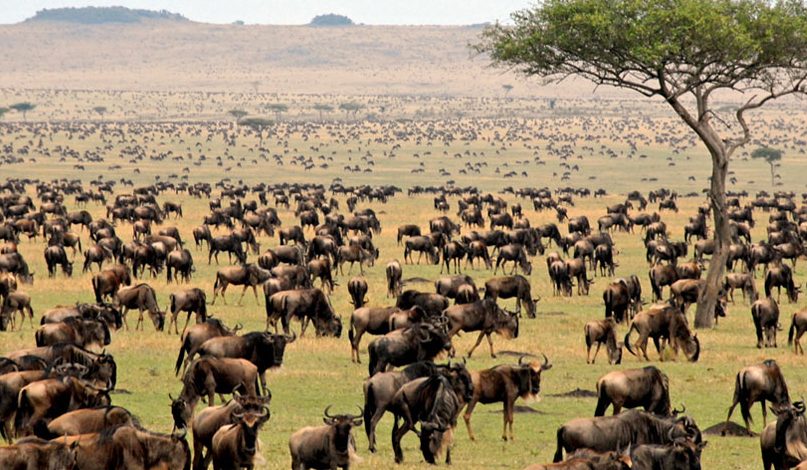
For decades, Seronera has been considered the premier big-cat territory in Africa. The valley’s permanent water sources, dense riverine forest, and year-round prey concentrations have made it a stronghold for lions, leopards, and cheetahs. It is the one area in the Serengeti where dramatic wildlife encounters are virtually guaranteed throughout every month of the year — independent of the Great Migration’s seasonal movements.
Whether you arrive during the dry season to witness spectacular predator activity around shrinking waterholes, or during the green season when newborn wildebeest and zebra flood the plains, Seronera delivers an authentic, immersive African safari experience unlike anywhere else on Earth.
Geography & Landscape
The Seronera River Valley
The defining geographical feature of Central Serengeti is the Seronera River and its tributaries. Unlike many seasonal streams in the Serengeti ecosystem, the Seronera River holds water throughout the year, creating a permanent ribbon of life that cuts through the otherwise dry savanna. This reliable water source is the primary reason Central Serengeti hosts such extraordinary concentrations of wildlife even when rains have not fallen for months.
The river valley is lined with sausage trees (Kigelia africana), wild date palms, and dense thickets of riverine vegetation. These trees are critically important for leopards, who use their overhanging branches as elevated vantage points and as larders for storing kills away from lion competition.
Terrain & Vegetation Zones
Central Serengeti encompasses several distinct habitat types within a relatively compact area, which is a major reason for its exceptional biodiversity:
- Open short-grass plains: Transitioning from the southern Serengeti, these grassy expanses are favored by cheetahs and Thomson’s gazelles.
- Acacia woodland: Umbrella and yellow-bark acacias dominate the central zones, providing shade, browse for giraffes, and nesting sites for dozens of bird species.
- Kopjes (rocky outcrops): Ancient granite formations erupting from the plains — these are fortress-like refuges used by lions, hyraxes, klipspringers, and nesting raptors.
- Riverine forest: Lush, green corridors tracing the Seronera and Orangi rivers, sheltering leopards, olive baboons, vervet monkeys, and waterbuck.
- Seasonal marshes: Low-lying areas that flood during rains, attracting waterbirds and providing drinking points for large herbivores.
The Famous Kopjes
No feature of Central Serengeti is more iconic than its kopjes — pronounced “koppies.” These inselbergs of ancient Precambrian granite are estimated to be over 500 million years old, making them among the oldest exposed rock formations on Earth. The Moru Kopjes to the south and the Simba Kopjes (Lion Kopjes) near Seronera camp are particularly famous.
Kopjes are ecological islands that harbor a surprising diversity of life. Their crevices and overhangs provide shade on scorching afternoons, and they retain moisture in their rock pools long after surrounding plains have dried. Lion prides frequently use kopjes as gathering points, and it is not uncommon to find 15–20 lions lounging on a single rocky outcrop in the morning hours.
Wildlife Guide — What to See
The Big Cats
Lions (Panthera leo)
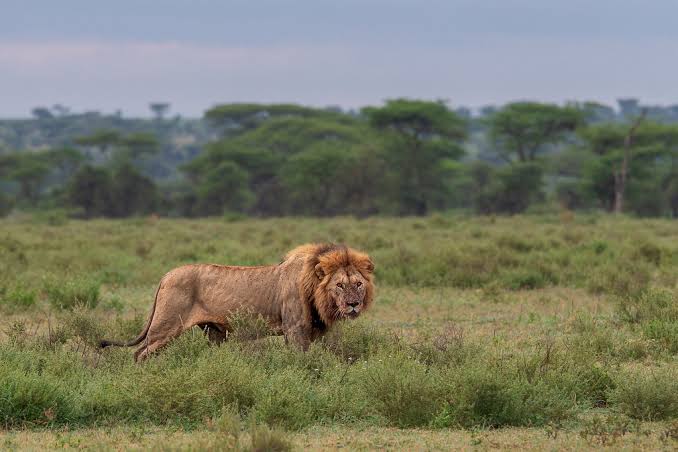
Central Serengeti supports one of the highest densities of lions anywhere in Africa. The region is divided among several well-known and habituated prides, many of which have been studied by researchers for decades. The Seronera pride, the Kibumbu pride, the Mukoma pride, and several others hold territories in the valley.
Lion densities here are exceptional because of the permanent prey availability along the river. Unlike lions in more seasonal areas, Seronera’s prides do not need to follow the Great Migration — resident zebra, wildebeest, buffalo, and warthog provide year-round sustenance. Lions here are exceptionally bold and accustomed to vehicles, making for unparalleled close-range photography.
Best sightings: Early morning (6:00–9:00 am) around kopjes, riverbanks, and open grassland edges. At midday, search kopje shadows and dense acacia shade.
Leopards (Panthera pardus)
The Seronera River valley is globally famous for leopard viewing. Few places in Africa offer as reliable leopard sightings as Central Serengeti. The riverine corridor provides ideal leopard habitat — dense vegetation for daytime concealment, tall sausage trees for caching kills, and abundant prey in the form of impala, Thomson’s gazelle, and baboon.
Multiple resident leopards hold overlapping territories along the river. These cats are habituated to safari vehicles and can often be found resting in tree branches in full view of multiple vehicles. Spotting a leopard draped over a sausage tree limb with a fresh impala kill hanging beside it is one of the defining safari images of East Africa.
Best sightings: Scan sausage trees and large acacias along the Seronera and Orangi rivers. Early morning is optimal. The area around Seronera Lodge’s kopje is reliably productive.
Cheetahs (Acinonyx jubatus)
The open grasslands fringing the central woodlands provide excellent cheetah habitat. Cheetahs are frequently spotted in the transition zones between woodland and open plains, where they can use termite mounds and kopje edges as elevated lookouts. The Seronera area holds a healthy cheetah population, including several well-known female cheetahs who have raised litters in the region.
Cheetah hunts are most likely to be witnessed in the early morning and late afternoon when temperatures are cooler. Their primary prey in this area includes Thomson’s gazelle, impala, and young wildebeest.
Best sightings: Open plains south and west of Seronera; termite mounds and low kopjes make excellent scan points. Early morning hours give the best hunting opportunities.
Elephants & Buffalo
Large herds of African elephants (Loxodonta africana) regularly move through Central Serengeti, particularly during and after the rains when vegetation is lush. The area around Seronera waterhole and the river system frequently hosts elephant family groups coming to drink, bathe, and feed on riverine vegetation.
African buffalo (Syncerus caffer) form massive bachelor herds and breeding herds in the Seronera area, often numbering several hundred individuals. Buffalo are a primary prey species for lions, and lion-buffalo confrontations are a common spectacle, particularly around water sources in the dry season.
Hippos & Crocodiles
The permanent pools of the Seronera River host sizeable pods of common hippopotamus (Hippopotamus amphibius). These are some of the most accessible hippo pools in Tanzania, located along the main road system and easily viewed from the roadside. The main Seronera River hippo pool near the visitor center is particularly productive, with 20–40 hippos common during dry months.
Nile crocodiles (Crocodylus niloticus) share these pools with the hippos, basking on sandy banks and ambushing animals that come to drink. While the dramatic wildebeest river crossings are associated with the Mara River in the north, crocodile activity is year-round in Central Serengeti.
Giraffes, Zebras & Wildebeest
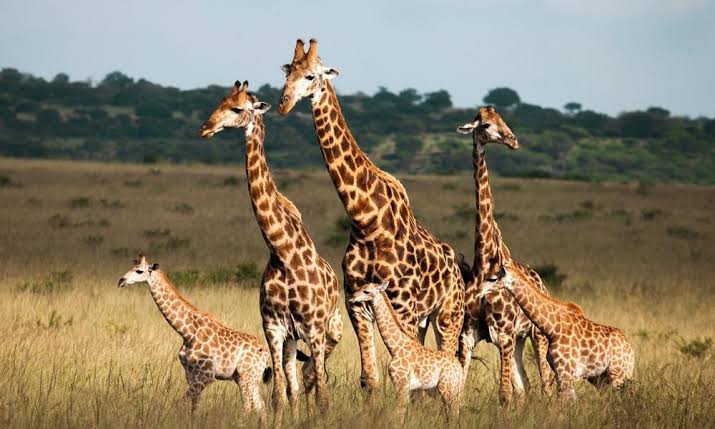
Reticulated and Masai giraffes move gracefully through the acacia woodlands, browsing on the highest foliage. They are a constant presence in Central Serengeti, often providing a living backdrop to predator sightings.
Plains zebra (Equus quagga) and blue wildebeest (Connochaetes taurinus) maintain permanent resident populations in Central Serengeti, supplemented by massive influxes during the Migration’s passage (typically October–November southward, and March–May northward).
Smaller Predators
Central Serengeti supports a rich guild of smaller carnivores often overlooked in pursuit of the big cats:
- African wild dog (Lycaon pictus): Occasional — usually transient packs passing through
- Spotted hyena (Crocuta crocuta): Abundant — large clans active dawn and dusk
- Side-striped and black-backed jackal: Common around kills and in open areas
- Honey badger (Mellivora capensis): Nocturnal; occasionally seen during early morning drives
- Serval (Leptailurus serval): Active in long-grass areas, especially after rains
- Bat-eared fox (Otocyon megalotis): Open plains and short-grass zones
- Egyptian mongoose: Riverine areas and around lodge buildings
- Banded mongoose: Noisy, sociable groups common throughout woodland”
Birdlife
Central Serengeti is a birding paradise with over 500 species recorded within the broader Serengeti ecosystem. The riverine forests of Seronera are particularly productive for forest-edge and canopy species.
- Raptors: Martial eagle, Bateleur, African fish eagle, Secretary bird, Augur buzzard
- Waterbirds: Yellow-billed stork, Saddle-billed stork, Goliath heron, various kingfishers
- Grassland specialists: Grey crowned crane, Kori bustard (world’s heaviest flying bird), ostrich
- Rollers & Bee-eaters: Lilac-breasted roller (Serengeti’s photogenic ambassador), carmine and little bee-eaters
- Vultures: White-backed, Rüppell’s griffon, Lappet-faced, White-headed — often 6 species at a single kill
- Oxpeckers: Red-billed and yellow-billed oxpeckers on buffalo and giraffe
The Great Migration & Central Serengeti
The Great Wildebeest Migration — the world’s largest overland animal movement involving over 1.5 million wildebeest plus hundreds of thousands of zebra and gazelle — passes through Central Serengeti twice annually. Understanding these movements helps visitors time their visit for maximum impact.
Migration Calendar for Central Serengeti
| 🗓️ Migration Timing Through Seronera |
| November – December: Herds arrive from north, moving south through central zone toward southern plains |
| January – March: Bulk of herds on southern plains (Ndutu/Ngorongoro); resident wildlife peaks in Seronera |
| April – May: Calving season ends; herds begin northward journey — central Serengeti fills with moving columns |
| June – July: Herds congregate in central and western Serengeti (Grumeti area) |
| July – October: Herds cross into northern Serengeti and Kenya — Mara River crossings peak |
| October – November: Return migration southward through central zone |
The key distinction of Central Serengeti is that even when the Great Migration has moved on, the resident wildlife remains exceptional. Seronera’s permanent prey base means its lion and leopard populations are not dependent on the Migration, ensuring remarkable predator sightings year-round.
Best Time to Visit Seronera
Dry Season: June to October (Peak Season)
The dry season is generally considered the best time for wildlife viewing in Seronera. Vegetation thins out, animals concentrate around permanent water sources, and the absence of mud makes roads more accessible for self-drive visitors. Predator activity around the Seronera River is at its most dramatic as prey has nowhere to hide.
- June–July: Excellent predator viewing; migration herds in central/western zones; pleasant temperatures
- August–September: Peak season; dry and clear; massive wildlife concentrations; busiest period with most vehicles
- October: Transition month; some early rains; excellent for all wildlife; slightly fewer visitors
Green Season: November to May (Quiet Season)
The green season is increasingly popular with experienced safari-goers. Vegetation is lush, birdlife is at its peak (migratory birds present), and the landscape transforms into a vivid emerald carpet. Predator-prey ratios can actually be more dramatic during calving season (January–March) when newborn wildebeest provide easy hunting opportunities.
- November–December: Short rains; excellent green scenery; migration passing through; fewer visitors
- January–March: Calving season on southern plains; long grass in Seronera; best for cheetah hunting
- April–May: Long rains; some roads become challenging; lowest visitor numbers; lush beauty
Our Recommendation: June to October for first-time visitors prioritizing big-cat sightings and reliable road conditions. January to March for experienced safari-goers who want dramatic predator action and far fewer crowds.
Getting to Seronera
By Air — Charter & Scheduled Flights
The most convenient way to reach Seronera is by air. Seronera Airstrip (IATA: SER) is located within the park center, just minutes from the main lodge cluster. Scheduled and charter flights connect to:
- Arusha (ARK) — most common gateway; ~1 hour flight
- Kilimanjaro International Airport (JRO) — international arrivals; ~1.5 hours
- Dar es Salaam (DAR) — via Arusha; ~2–3 hours total
- Other Serengeti airstrips (Ndutu, Grumeti, Kogatende) — connecting internal flights
Airlines serving Seronera include Coastal Aviation, Air Excel, Auric Air, and Regional Air. Flights operate daily during peak season and several times weekly in the green season. Always confirm schedules in advance as they vary.
By Road — Self-Drive Safari
Self-drive safari to Seronera is an excellent and rewarding option for independent travelers. The journey from Arusha takes approximately 7–9 hours depending on road conditions and gate entry times. The route typically follows:
- Arusha → Ngorongoro Conservation Area (exit at Naabi Hill Gate or via Olduvai Gorge)
- Naabi Hill Gate → Seronera: approximately 80 km; well-graded murram road; 1.5–2 hours
- Alternative: Ikoma Gate (western approach) from Mwanza/Musoma
Self-Drive Requirements & Tips
- Vehicle: 4WD essential — Landcruiser, Land Rover, or similar high-clearance vehicle
- Minimum clearance: 25 cm recommended; lower vehicles risk damage on eroded roads
- Navigation: Offline GPS maps (Maps.me or Avenza) plus paper park map
- Fuel: Fill up completely in Arusha — no fuel available inside the park
- Speed limit: 50 km/h on main roads; 25 km/h near wildlife
- Off-road driving: Strictly prohibited; stick to designated tracks at all times
- Night driving: Not permitted inside the park for self-drive visitors
- Breakdown plan: Carry spare tires (minimum 2), recovery gear, and emergency contacts
Where to Stay in Central Serengeti
The Seronera area offers the widest range of accommodation in Serengeti National Park, from basic public campsites to ultra-luxury lodges. All options place you in the heart of the action — the wildlife does not respect lodge boundaries and often wanders through camp.
Luxury & Ultra-Luxury
- Four Seasons Safari Lodge Serengeti: Only pool in the park; built around a natural waterhole with 24-hour wildlife viewing. Architecturally striking; exceptional service.
- Serengeti Serena Safari Lodge: Iconic lodge built into a hillside kopje; stunning views; excellent guiding; large pool; great value for the category.
- Singita Grumeti Lodges (Faru Faru, Sasakwa, Sabora): Ultra-premium; private concession; low vehicle density; exceptional exclusivity — slightly west of central zone.
- Melia Serengeti Lodge: Modern, stylish design; infinity pool; competitive pricing for the luxury category.
Mid-Range
- Seronera Wildlife Lodge: Park-run lodge built dramatically into a kopje; central location; reliable wildlife at the waterhole; good value.
- Kubu Kubu Tented Lodge: Elevated platform tents; authentic feel; good game drives; river views.
- Serengeti Sopa Lodge: Large lodge; comfortable rooms; reliable service; popular with group tours.
- Olakira Camp (mobile): Moves seasonally to follow the Migration; well-appointed tents; personal service.
Budget — Public Campsites
TANAPA (Tanzania National Parks Authority) operates several public campsites in and around Seronera. These are basic — pit latrines, running water not guaranteed — but provide an unmatched immersive experience:
- Seronera Public Campsite 1 & 2: Most popular; central location; communal ablution blocks
- Ndasiata Campsite: Quieter; riverside setting; good birding
- Campsite fees are payable at the gate along with park entry fees
Note: All camping equipment, food, and water must be brought from outside the park. Firewood collection is prohibited — carry a gas stove.
Special Campsites
TANAPA special campsites offer exclusive use of a site for a small group. These are set away from the public sites and provide a wilderness experience with no other campers. They must be booked well in advance through TANAPA headquarters in Arusha.
Safari Activities in Seronera
Game Drives
Game driving is the primary activity in Central Serengeti and the method by which the vast majority of wildlife encounters occur. The Seronera road network is extensive, well-maintained, and strategically placed along the river system to maximize wildlife encounters.
Morning Game Drive
The hours between 06:00 and 10:00 are the most productive for wildlife viewing. Predators are most active, returning from nocturnal hunts or making early morning kills. Lions and cheetahs are on the move, and the light is exquisite for photography — golden hour conditions can last for 90 minutes after sunrise.
Afternoon Game Drive
Departing at approximately 15:30, afternoon drives capture the second activity peak of the day. As temperatures drop, predators emerge from shade, and herbivores move toward water sources. Sundowner stops on a suitable kopje provide a memorable end to the day.
Full-Day Drive
Full-day game drives with a packed lunch allow visitors to stay out during the normally quiet midday hours — a strategy that sometimes pays off when unexpected action erupts. Big cats resting in shade are still visible, and midday offers the best crocodile and hippo viewing at the river pools.
Guided Walking Safaris
Walking safaris must be conducted with an armed TANAPA ranger and are available from designated sites near Seronera. Walks provide a completely different perspective on the ecosystem — tracking animal prints, examining dung, identifying insects and plants, and experiencing the sounds and smells of the bush at close range. Walking safaris are not recommended for first-time safari visitors who may struggle with proximity to dangerous game.
- Minimum age: Typically 12 years; check with operators
- Duration: 2–4 hours; not overnight
- Best time: Early morning (06:00–09:00)
- Booking: Arrange through your lodge or at the TANAPA visitor center
Hot Air Balloon Safari
One of Africa’s most iconic experiences, the Serengeti hot air balloon safari launches at dawn from a site near Seronera. Rising silently above the plains as the sun breaks the horizon, passengers drift over the Seronera valley watching wildlife below — often seeing lions, elephants, and wildebeest from an eagle’s perspective.
- Duration: Approximately 1 hour in the air
- Includes: Champagne bush breakfast after landing
- Cost: Approximately USD $600–750 per person (2024 rates)
- Booking: Essential to book in advance — seats are limited and demand is high
- Operator: Serengeti Balloon Safaris (the primary operator in the area)
Cultural & Educational Visits
The Seronera Visitor Centre near the main lodge area offers an informative introduction to the Serengeti ecosystem, the Great Migration, and ongoing conservation initiatives. Exhibits cover geology, ecology, wildlife research, and the Maasai cultural context of the broader ecosystem. The visitor center is particularly worthwhile for first-time visitors.
Photography Guide for Seronera
Equipment Recommendations
- Primary lens: 100–400mm or 150–600mm telephoto for wildlife; versatile zoom for all conditions
- Wide angle: 16–35mm for landscapes, environmental shots, and camp life
- Camera body: Full-frame or APS-C with fast autofocus tracking (Sony A9 series, Canon R5/R6, Nikon Z9)
- Bean bag: Essential for vehicle window support — do not rely on a tripod in a moving vehicle
- Memory & batteries: Carry triple what you think you’ll need — no charging in the bush
- Dust protection: Sealed bags or dry bags for equipment; dust is relentless in dry season
Golden Light Windows
Seronera’s best photographic light occurs in two windows daily:
- Morning: 06:00–08:30 — warm orange-gold light at low angle; ideal for predator activity shots
- Evening: 17:00–18:45 — soft warm light; backlit dust clouds; silhouette opportunities against sunset
Composition Tips
- Use the kopjes: Position rocky outcrops in backgrounds or foregrounds for environmental context
- River reflections: Dawn reflections in Seronera River pools create mirror-image compositions
- Include the vehicle: Pull back for wider shots including the safari vehicle — adds scale and narrative
- Patience pays: Position on a sighting and wait — the action often comes to you
Practical Safari Information
Park Fees & Entry (2026/2025)
All fees are payable in USD or via the TANAPA Jamii payment system. Cards are accepted at main gates; always carry cash as a backup.
- Non-resident adults: USD $72 per person per day
- Non-resident children (5–15 years): USD $20 per day
- Vehicle fee: USD $40 per vehicle (non-East African registered)
- Camping — public sites: USD $30 per person per night
- Camping — special sites: USD $50 per person per night
- Fees valid at time of publication — verify with TANAPA before travel
Health & Safety
- Malaria: Risk present year-round in Serengeti; prophylaxis essential; consult a travel health clinic
- Yellow Fever: Certificate required if arriving from endemic country; recommended for all visitors
- Vaccinations: Routine vaccinations up to date; Hepatitis A, Typhoid recommended
- Water: Do not drink tap water or river water — carry sufficient bottled/filtered water (minimum 3L per person per day in dry season)
- Sun protection: Equatorial UV is intense; SPF 50+, wide-brim hat, and UV-protective clothing essential
- Animal safety: Never exit vehicle except at designated areas; never feed animals; maintain minimum 25-meter distance from lions
- Emergency contacts: Seronera has a small clinic; nearest full hospital is in Arusha (~340 km)
- Insurance: Comprehensive travel insurance with emergency evacuation cover is non-negotiable
What to Pack
- Clothing: Neutral-colored clothing (khaki, olive, tan) — avoid blue and black which attract tsetse flies
- Layers: Cold mornings (can drop to 12°C/54°F) and hot afternoons (up to 35°C/95°F)
- Footwear: Comfortable closed-toe shoes; sandals for camp
- Binoculars: 8×42 or 10×42 — essential for distant wildlife identification
- Torch/headlamp: Essential for navigating camp after dark
- Power bank: Electricity supply unreliable at budget camps; solar chargers useful
- Cash: USD small denominations for tips (guides: USD $10–20/day; camp staff: USD $5–10/day)
Conservation & Responsible Safari
The Serengeti ecosystem is fragile and faces mounting pressures from climate change, poaching, and human-wildlife conflict at park boundaries. As a visitor, your choices directly impact conservation outcomes:
- Stay on designated tracks at all times — off-road driving destroys grass, disturbs nesting birds, and erodes soil
- Observe the 25-vehicle limit at sightings — if a sighting is already crowded, give the animals space and return later
- Never encourage guides to drive off-road for a better shot — it is illegal and ecologically damaging
- Support conservation-focused operators — look for TATO (Tanzania Association of Tour Operators) and Responsible Tourism Tanzania certification
- Carry reusable water bottles — single-use plastic waste is a growing crisis in East African parks
- Report illegal activity (poaching, off-road driving) to TANAPA rangers
Combining Seronera with Other Areas
Southern Serengeti & Ndutu
The southern Serengeti (Ndutu area, bordering the Ngorongoro Conservation Area) is the stage for the Great Migration calving season from January to March. A circuit combining Ndutu for calving with Seronera for predators provides one of the most complete Serengeti experiences possible. Drive time between Ndutu and Seronera is approximately 2–3 hours on the main road.
Ngorongoro Crater
The Ngorongoro Crater is typically visited as a day trip from Ndutu or as an overnight excursion. It is not practical as a day trip from Seronera (5+ hours each way). However, many Serengeti itineraries include 1–2 nights at Ngorongoro on arrival or departure.
Northern Serengeti (Kogatende/Lamai)
The northern Serengeti hosts the famous Mara River crossing spectacles from July to October, when hundreds of thousands of wildebeest plunge into crocodile-filled waters in one of nature’s greatest dramas. This is a 3–4 hour drive from Seronera on good roads, making it possible as a long day trip but more rewarding as a 2–3 night separate stay.
Western Serengeti (Grumeti)
The Western Corridor is known for its Grumeti River crossings (June–July), massive crocodiles, and tsetse fly corridors that limit visitor numbers and preserve a wilderness atmosphere. It is approximately 2–3 hours from Seronera.
Sample Seronera Safari Itineraries
3-Night Seronera Focus
- Day 1: Arrive Seronera by afternoon flight; afternoon game drive along Seronera River; sundowner at kopje
- Day 2: Full-day game drive; packed lunch; focus on big-cat territories; evening return via hippo pools
- Day 3: Dawn balloon safari over Seronera valley; champagne breakfast; morning game drive; afternoon optional walking safari
- Day 4: Morning game drive; midday departure by air to Arusha or connecting flight
7-Night Central & Northern Circuit
- Days 1–3: Seronera — big cats, resident wildlife, balloon safari
- Days 4–5: Grumeti (Western Corridor) — river crossings, private concession
- Days 6–7: Kogatende (Northern Serengeti) — Mara River crossings (July–October) or Lion Kingdom landscapes
10-Night Complete Serengeti
- Days 1–2: Ndutu (calving season, Jan–Mar) or southern plains approach
- Days 3–5: Seronera — big cats and central zone
- Day 6: Transit through Western Corridor
- Days 7–10: Northern Serengeti — Mara River area
Final Notes — Why Seronera Remains Unmissable
In a world of exceptional safari destinations, Seronera occupies a unique position. It is not merely one of Africa’s best wildlife areas — it is arguably the most reliable year-round big-cat viewing destination on the continent. While the broader Serengeti ecosystem rewards visitors who travel to follow the Migration, Seronera rewards those who understand that the most extraordinary wildlife theatre sometimes needs no calendar — only patience, good guiding, and time spent in the field.
The Seronera River at dawn, with mist curling off still pools and a leopard silhouetted in a sausage tree canopy while lions call from the kopjes across the valley — this is the essence of the African safari experience. It is an experience that has drawn naturalists, photographers, researchers, and dreamers to this central Serengeti valley for generations, and one that continues to exceed every expectation.