
Kogatende Safari Itinerary: 5 Days in the Northern Serengeti
5 Days in the Northern Serengeti: Mara River Crossings, the Lamai Wedge and the Wild North
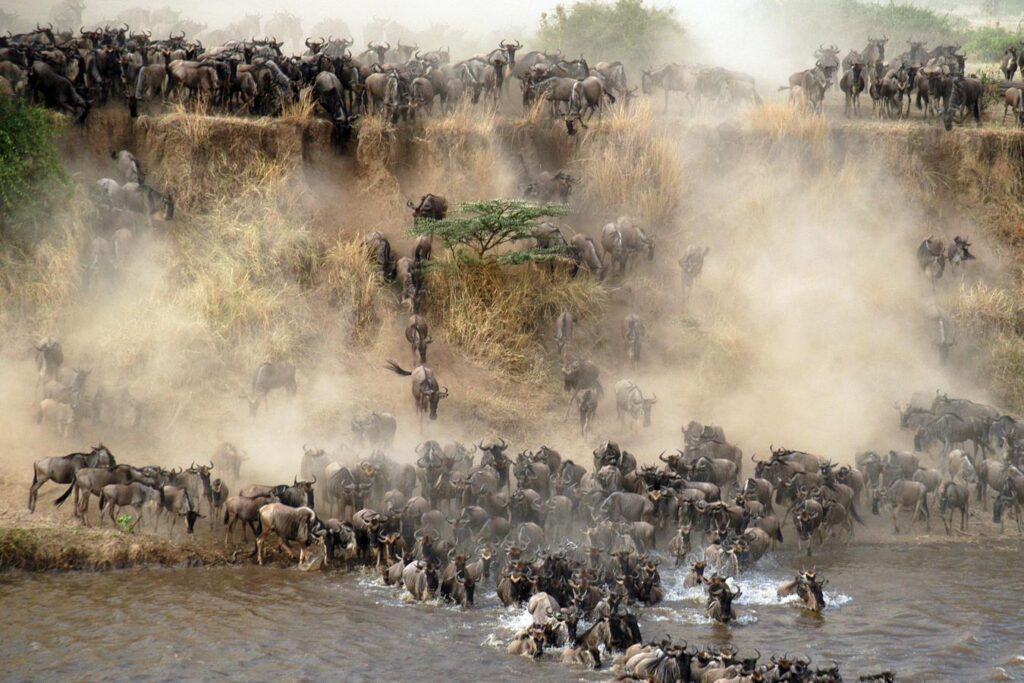
Kogatende is the gateway to the northern Serengeti, a remote stretch of rolling grassland, granite kopjes and riverine forest where the Mara River runs along the Tanzania–Kenya border. Between July and October, this is where the Great Migration delivers its most dramatic moment: hundreds of thousands of wildebeest and zebra plunging down steep banks into crocodile-filled water. Outside migration season, the area stays quiet, beautiful and full of resident wildlife, with only a fraction of the vehicles you would meet on the Kenyan side.
This guide sets out a detailed 5-day Kogatende itinerary built around the river, with the logistics you need to plan it properly: how to get there, when to go, where to stay, what it costs, and how to give yourself the best chance of seeing a crossing. A shorter 3-day option and a 7-day drive-in version are included at the end for travellers with different time frames.
| Itinerary at a Glance
Duration: 5 days / 4 nights (fly-in from Arusha) Base: Kogatende area, northern Serengeti National Park, Tanzania Highlights: Mara River crossings, Lamai Wedge, Wogakuria kopjes, resident big cats, possible black rhino Best time: July to October for crossings; November and June for quieter, lower-cost visits Style: Guided 4×4 safari or experienced self-drive in the dry season |
About the Kogatende Area
Kogatende sits in the far north of Serengeti National Park, roughly 20 km south of the Kenyan border. The name refers to the park’s northern ranger post and the airstrip beside it, but safari operators use it as shorthand for the whole surrounding sector: the southern banks of the Mara River, the hills and kopjes to the south and east, and the Lamai Wedge on the far side of the river.
The landscape is noticeably different from the flat short-grass plains of the southern Serengeti. Here you drive through long-grass savannah broken by rocky outcrops, acacia woodland and sand rivers, with the Mara River cutting a green line through it all. The terrain gives guides more cover to position vehicles and gives photographers more varied backdrops.
Key zones within the Kogatende sector
| Zone | What it is | Why visit |
| Mara River (Kogatende stretch) | The main river corridor near the ranger post and airstrip, with several well-known crossing points | The highest concentration of migration crossings on the Tanzanian side |
| Lamai Wedge (Lamai Triangle) | The wedge of land north of the Mara River, between the river and the Kenyan border | Crossings from the northern bank, fewer vehicles, open plains that link to the Masai Mara |
| Wogakuria kopjes | Granite outcrops south-east of Kogatende | Lion and leopard territory, scenic sundowners, good off-season game |
| Bologonja and the Lobo hills | Springs and hilly woodland further south-east, toward Lobo | Elephant, buffalo, quieter drives, transition zone as herds move south |
Wildlife you can expect
- The Great Migration: wildebeest, zebra and Thomson’s gazelle in vast numbers from roughly July to October.
- Predators: resident lion prides, leopard in the kopjes and riverine trees, cheetah on the open plains, spotted hyena and black-backed jackal.
- River life: Nile crocodiles (some of the largest in the ecosystem) and pods of hippo along every bend of the Mara.
- Plains game: elephant, buffalo, giraffe, topi, eland, impala, Coke’s hartebeest and waterbuck.
- Black rhino: a small population moves through the north; sightings are rare and never guaranteed, so treat one as a bonus.
- Birds: over 300 species recorded across the Serengeti, with raptors, vultures and storks following the herds.
Best Time to Visit Kogatende
The migration is driven by rain, so dates shift from year to year. The table below reflects typical patterns. If seeing a crossing is your main goal, aim for August or September and stay at least three nights.
| Period | Migration status | Conditions | Verdict |
| Jan – Mar | Herds in the southern Serengeti and Ndutu (calving) | Green, some short rains, very few visitors in the north | Quiet; resident game only |
| Apr – May | Herds in the central/western Serengeti | Long rains, muddy tracks, some camps closed | Not recommended |
| June | Herds move through the Western Corridor and start north | Dry season begins, mobile camps set up | Early-season gamble, good value |
| July | Leading herds reach the Mara River; first crossings | Dry, cool mornings, rising demand | Very good |
| August | Peak herds in the north; frequent crossings | Dry, busiest month, highest rates | Peak – best odds |
| September | Crossings continue in both directions | Dry, slightly fewer vehicles than August | Excellent – value sweet spot |
| October | Herds start drifting south; late crossings possible | Short rains may begin late in the month | Good early in the month |
| Nov – Dec | Herds return south toward Ndutu | Short rains, green landscapes, low season | Quiet, resident game, low rates |
| Crossings Are Never Guaranteed
Herds can mass on the bank for hours and then turn back. Some days bring several crossings, others none. Giving yourself three or four full days on the river is the single most effective way to improve your odds. |
Getting to Kogatende
By scheduled light aircraft (recommended)
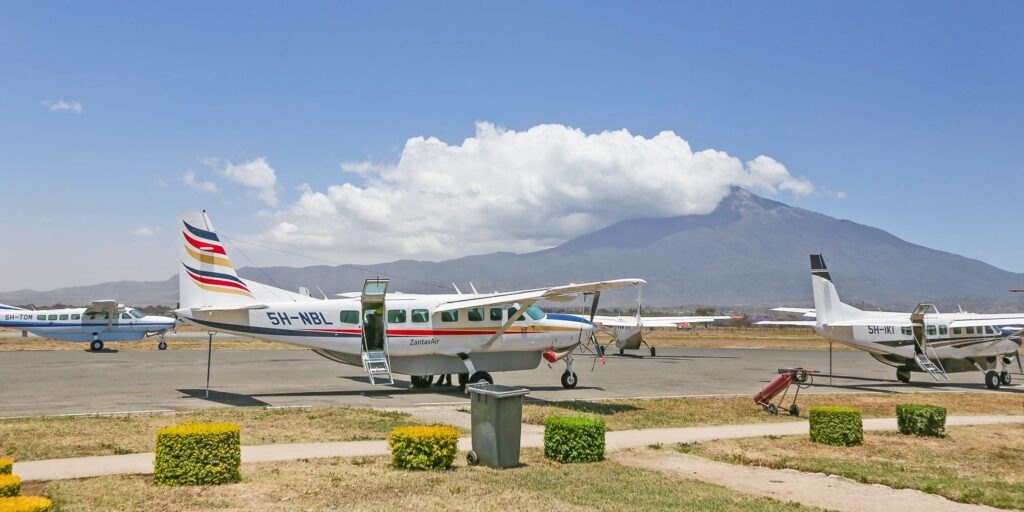
Most travellers fly. Scheduled bush flights leave Arusha Airport (ARK) each morning and reach Kogatende Airstrip in around two hours, usually with one or two stops at other Serengeti airstrips along the way. Flights also connect Kogatende with Seronera in the central Serengeti, which makes it easy to combine the north with other sectors. Expect to pay roughly USD 200–400 per person per sector depending on route and season.
- Baggage limit: usually 15 kg per person including hand luggage, in a soft-sided bag. Hard suitcases are generally refused.
- Timing: morning departures from Arusha typically land at Kogatende around midday, in time for lunch and an afternoon game drive.
- Other airstrips: Lobo serves camps further south-east, and Lamai serves camps in the Lamai Wedge.
By road
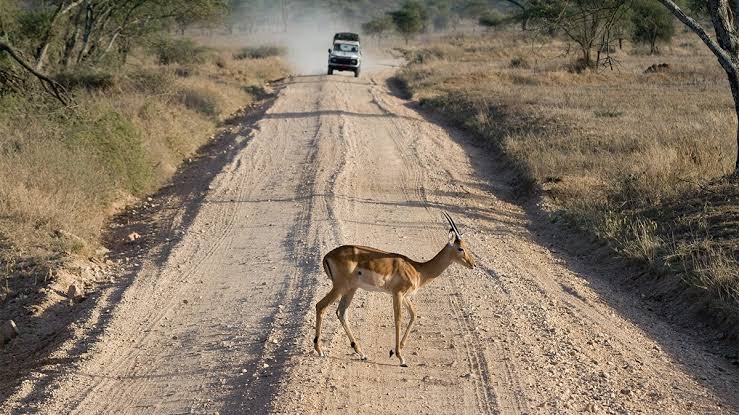
Driving in is possible and far cheaper, but the north is a long way from everywhere. From Seronera in the central Serengeti, allow 4–6 hours of game-driving on rough tracks. From Arusha, the drive takes two full days via Ngorongoro and Seronera. A drive-in safari makes most sense on a longer trip (see the 7-day option below).
| Self-Drive Note
The northern Serengeti is suitable for experienced self-drivers in a well-equipped 4×4 during the dry season (June to October). Carry spare fuel, two spare tyres, offline maps and a satellite or local SIM backup, as fuel stops and mobile coverage are limited. Avoid the long rains of April and May, when black-cotton soil becomes impassable. The Bologonja border crossing into Kenya’s Masai Mara is not open to tourist vehicles, so you cannot drive straight across from Kogatende into Kenya. |
The 5-Day Kogatende Itinerary
This itinerary assumes a fly-in safari with a private guide and 4×4 safari vehicle, based at a single camp in the Kogatende area for four nights. Staying in one place means no time lost moving camps and lets your guide react quickly when herds gather at the river.
| Day | Route / focus | Overnight |
| 1 | Arusha → fly to Kogatende; afternoon game drive along the Mara River | Kogatende camp |
| 2 | Full day on the Mara River: crossing vigil with picnic lunch | Kogatende camp |
| 3 | Lamai Wedge: north-bank crossings and open plains | Kogatende camp |
| 4 | Wogakuria kopjes and eastern hills; optional walking safari | Kogatende camp |
| 5 | Final morning at the river; fly back to Arusha or onward | — |
Day 1 Arrival in Kogatende and First Look at the Mara
Flight: Arusha (ARK) → Kogatende Airstrip, approx. 2 hrs · Game drive: approx. 3 hrs · Meals: lunch, dinner
Morning
Transfer from your Arusha hotel to Arusha Airport for the morning scheduled flight north. The route usually touches down at one or two Serengeti airstrips on the way, so watch from the window as the landscape shifts from the open southern plains to the hilly, wooded north.
Midday
Your guide meets you on the airstrip at Kogatende with the safari vehicle. Park entry is settled by card (Visa or Mastercard only; cash is not accepted at TANAPA gates). The drive to camp is itself a game drive, and on a migration-season day you may pass herds within minutes of landing. Settle in, have lunch and rest through the heat of the early afternoon.
Afternoon
Head out around 15:30 for your first drive along the Mara River. This first outing is about orientation: your guide will show you the main crossing points near the ranger post, check where the herds are massing, and look for the crocodiles and hippos that patrol each bend. Late afternoon light on the river is superb for photography.
Evening
Return to camp around sunset (vehicles must be back before the park’s night curfew). Dinner, then a briefing with your guide on the plan for tomorrow based on what the herds were doing today.
| Day 1 Tip
Ask your guide which crossing points saw action in the past few days. Guides share sightings on the radio constantly, and that intelligence shapes where you will wait tomorrow. |
Day 2 Full Day on the Mara River
Game drive: full day, approx. 06:30–18:00 · Meals: breakfast, picnic lunch, dinner
Early morning
Leave camp at first light with a packed breakfast. Early mornings are excellent for predators: lions and hyenas are often still active after the night, and big cats regularly hunt the edges of the herds near the river.
Mid-morning to afternoon: the crossing vigil
By mid-morning your guide will have chosen a position overlooking a crossing point where the herds are building up. This is where patience pays. Wildebeest can gather on the bank for hours, with lead animals edging down to the water and turning back several times. When one finally commits, the rest follow in a surge of dust, noise and spray that can last from a few minutes to more than an hour.
Stay with the vehicle, keep noise down and let the herds settle. Vehicles that crowd the bank can push animals away from the crossing, so experienced guides keep a respectful distance and only move into a viewing position once the crossing is under way.
Picnic lunch
Eat your picnic lunch in the vehicle or at a designated spot near the river so you do not lose your position if the herd starts to move.
Late afternoon
If the crossing happens early, use the rest of the afternoon to follow the herds on the far bank or look for predators taking advantage of exhausted animals. Return to camp around sunset.
| Photography Tip
Bring a zoom lens in the 100–400 mm range and a second body or a wide lens for the scale of the herds. Set a fast shutter speed (1/1600 s or faster) for the action, and keep a bean bag in the vehicle to steady long lenses. |
Day 3 The Lamai Wedge
Game drive: full day · Meals: breakfast, picnic lunch, dinner
Today you cross the Mara River by the bridge near Kogatende to explore the Lamai Wedge, the triangle of Tanzanian territory between the river and the Kenyan border. In migration season, herds often cross back and forth between Lamai and the southern bank, so watching from the northern side gives you a different angle on the same spectacle and often fewer vehicles.
Morning
Explore the open grasslands of Lamai, which roll north toward Kenya’s Masai Mara. Large herds of wildebeest and zebra graze here between crossings, and cheetah often hunt the open plains.
Midday
Picnic lunch on the northern bank, then position yourself at a crossing point on the Lamai side if the herds are building up.
Afternoon
Look for lion prides that follow the herds through the wedge, and scan the riverine trees for leopard. Return to camp across the bridge in time for sundowners.
| Out of Season?
From November to June, Lamai is extremely quiet. Your guide may adjust this day toward the kopjes and resident game to the south, where predator sightings stay reliable year-round. |
Day 4 Wogakuria Kopjes and the Eastern Hills
Morning walk (optional): approx. 2–3 hrs · Afternoon game drive: approx. 3 hrs · Meals: all meals
Morning: optional walking safari
Where your camp offers it, start with a guided walking safari led by an armed TANAPA ranger. Walking changes the way you experience the bush: you notice tracks, dung, insects and plants that are invisible from a vehicle, and the sound of the herds feels very different on foot. A separate walking fee is payable to the park.
Late morning
Return for brunch and a rest in camp, or continue on a drive toward the Wogakuria kopjes, a cluster of granite outcrops that make ideal lookout points for lions and a classic leopard habitat.
Afternoon
Explore the hills and sand rivers toward Bologonja and Lobo. Elephant and buffalo are common in this wooded country, and the views across the valleys are some of the finest in the Serengeti. If the herds are still on the river, you can always return there instead: your guide will balance the day around whatever is happening.
Evening
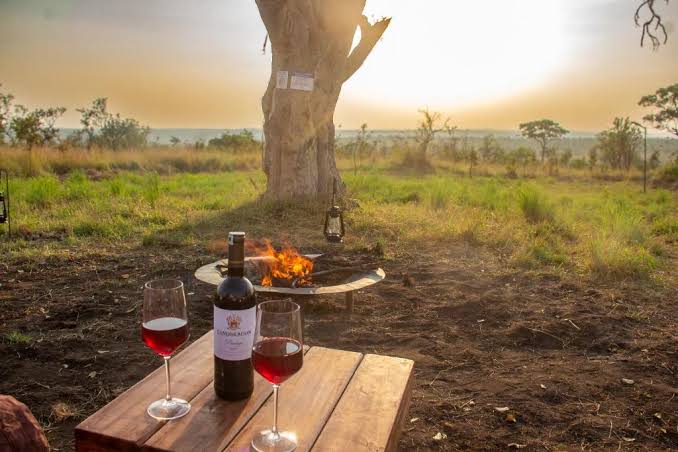
A sundowner on a kopje is the classic way to end your last full day. Ask your camp to arrange drinks and snacks at a scenic spot before returning for a final dinner.
Day 5 Final Morning and Departure
Game drive: approx. 3 hrs · Flight: Kogatende → Arusha or onward · Meals: breakfast
Take an early game drive back to the river for one last chance at a crossing, or a final search for anything you have missed: cheetah, rhino or a leopard in daylight. Return to camp for brunch, pack, and transfer to Kogatende Airstrip for your late-morning or midday flight.
Fly back to Arusha to connect with an evening international flight from Kilimanjaro International Airport (JRO), or continue to Seronera, the Ngorongoro Crater area or Zanzibar to extend your trip.
| Departure Tip
Bush flight schedules can change at short notice. Leave at least three hours between your Arusha arrival and any international departure from Kilimanjaro, or plan an overnight in Arusha. |
Alternative Kogatende Itineraries
Short option: 3 days / 2 nights
- Day 1: Fly Arusha → Kogatende; afternoon game drive along the Mara River.
- Day 2: Full-day crossing vigil with picnic lunch, choosing the southern bank or Lamai depending on where the herds are.
- Day 3: Early game drive, then fly out.
Best for travellers adding Kogatende to a longer Tanzania trip. Two nights gives you only one full day on the river, so your chances of a crossing are lower.
Extended option: 7 days / 6 nights (drive-in)
| Day | Route | Overnight |
| 1 | Arusha → Ngorongoro highlands (approx. 3–4 hrs drive) | Karatu or crater rim |
| 2 | Ngorongoro Crater game drive → central Serengeti | Seronera area |
| 3 | Central Serengeti game drive → north to Kogatende via Lobo (approx. 4–6 hrs) | Kogatende camp |
| 4 | Full day on the Mara River | Kogatende camp |
| 5 | Lamai Wedge | Kogatende camp |
| 6 | Wogakuria kopjes and river; optional walk | Kogatende camp |
| 7 | Fly Kogatende → Arusha (saves the two-day drive back) | — |
Driving in and flying out is the most popular combination: you see the full sweep of the Serengeti on the way north, and avoid repeating the long road back.
Where to Stay in Kogatende
Accommodation in the northern Serengeti falls into two groups. Seasonal mobile camps move to the north for the migration months (roughly June to October) and then relocate south; they are usually the best placed for crossings. Permanent camps and lodges stay open year-round and offer more facilities, sometimes including a swimming pool. Rates below are typical per person per night on a full-board basis in peak season and vary widely by camp.
| Tier | Examples in the Kogatende area | Typical rate (pppn, peak) | What to expect |
| Luxury | Sayari Camp, Lemala Mara Camp, other premium tented camps near the river | USD 900–1,500+ | Large tents, private decks, top guiding, often all-inclusive |
| Mid-range | Mara River Camp (Tanzania Bush Camps), Mara Mara Tented Lodge, Serengeti North Wilderness Camp, Heritage Mara Kogatende | USD 400–800 | Comfortable en-suite tents, good food, shared or private guides |
| Budget | Simpler tented camps and TANAPA public or special campsites in the north | USD 150–350 | Basic tents, fewer facilities; camping requires your own gear and booking with TANAPA |
| Book Early
Camps close to the Mara River sell out 6–12 months ahead for August and September. If your dates are fixed, secure accommodation and flights before anything else. |
Park Fees and Cost Breakdown
Serengeti fees are set by the Tanzania National Parks Authority (TANAPA), charged per person per 24-hour period, and paid by card only. The figures below are VAT-inclusive rates for adult foreign non-residents as published for 2026. TANAPA usually reviews fees each July, so always confirm current rates before you travel.
| Fee | Amount (adult non-resident) | Notes |
| Serengeti park entry (conservation) fee | USD 82.60 per 24 hrs | Payable for every 24-hour period in the park |
| Concession fee | USD 70.80 per night | Charged on top of entry for any night at a lodge or camp inside the park; often included in camp invoices |
| Walking safari fee | Charged separately | Payable per walk; confirm the current rate with your camp |
| Vehicle entry fee | Varies by vehicle registration | Relevant for drive-in and self-drive safaris |
Sample cost for the 5-day fly-in itinerary (per person, peak season)
| Item | Calculation | Estimate (USD) |
| Park entry fees | 5 × 24-hr periods × $82.60 | 413 |
| Concession fees | 4 nights × $70.80 | 283 |
| Return flights Arusha – Kogatende | 2 sectors × $200–400 | 400 – 800 |
| Mid-range camp, full board | 4 nights × $400–800 | 1,600 – 3,200 |
| Private guide and 4×4 vehicle (sharing between 2) | 5 days × $125–175 per person | 625 – 875 |
| Tips, drinks, extras | Allowance | 150 – 300 |
| Approximate total | 3,470 – 5,470 |
Luxury camps can push the total well above USD 7,000 per person. Travelling in November, December or June can cut accommodation costs substantially, although you trade away the best chance of a crossing.
How to Maximise Your Chances of a Crossing
- Stay longer: three or four full days on the river is far better than one. Herds can wait at the bank for days before committing.
- Choose the right month: August and September give the highest probability; July and October are good but less predictable.
- Base yourself close to the river: camps within 30–45 minutes of the main crossing points let you react quickly.
- Take full-day drives: crossings happen at any hour, often around midday. Returning to camp for lunch can mean missing the moment.
- Trust your guide: experienced guides read the herds’ behaviour and share radio updates with other vehicles.
- Be patient and quiet: keep vehicles back from the bank until the crossing begins, so the herd is not spooked.
| Responsible Viewing
Park rules require vehicles to stay on designated tracks and keep a respectful distance from crossing points. Pressure from crowding vehicles can block crossings or cause injuries in the herds. Choose an operator that follows the rules and does not compete for position. |
Packing List for Kogatende
- Neutral-coloured clothing in layers (khaki, olive, tan); mornings and evenings can be cool in the dry season
- A warm fleece or light down jacket for early-morning drives
- Wide-brimmed hat, sunglasses and high-SPF sunscreen
- Binoculars (8×42 or 10×42) for every traveller
- Camera with zoom lens, spare batteries, memory cards and a bean bag
- Dust cover or buff — the dry season is dusty on the tracks
- Insect repellent containing DEET or picaridin, plus long sleeves for the evenings
- Soft-sided duffel bag within the 15 kg light-aircraft limit
- Personal medication, a small first-aid kit and a universal power adaptor
- Credit card (Visa or Mastercard) for park fees and some camp payments
Health, Safety and Entry Requirements
- Malaria: the Serengeti is a malaria area. Consult a travel clinic about prophylaxis and use repellent and nets.
- Yellow fever: a vaccination certificate is required if you arrive from, or have transited through, a country with risk of yellow fever transmission.
- Visas: most visitors need a Tanzanian visa, best obtained in advance through the official e-Visa portal.
- Tsetse flies: present in some wooded areas. Avoid dark blue and black clothing, which attracts them.
- In camp: most northern camps are unfenced. Always follow staff instructions and use an escort after dark.
- Travel insurance: choose a policy that includes emergency medical evacuation from remote areas.
Extending Your Trip
| Extension | How it connects | Ideal length |
| Central Serengeti (Seronera) | Short scheduled flight or 4–6 hr game drive | 2–3 nights |
| Ngorongoro Crater | Drive via Seronera, or fly to Lake Manyara airstrip | 1–2 nights |
| Tarangire National Park | Fly to Kuro airstrip or drive from Arusha | 2 nights |
| Zanzibar beach stay | Flight from Kogatende via Arusha | 3–5 nights |
| Gorilla trekking in Uganda or Rwanda | Fly Kilimanjaro → Entebbe or Kigali | 3–4 nights |
Frequently Asked Questions
Where exactly is Kogatende?
Kogatende is in the far north of Serengeti National Park, Tanzania, close to the Mara River and roughly 20 km from the Kenyan border. It is home to a ranger post and the main airstrip for the northern Serengeti.
When is the best time to see river crossings at Kogatende?
Crossings usually run from July to October, with August and September offering the best odds. Exact timing depends on the rains and varies every year.
How many days should I spend in Kogatende?
Plan at least three nights, ideally four. This gives you two or three full days on the river, which greatly improves your chance of seeing a crossing.
Can I visit Kogatende outside migration season?
Yes. From November to June the north is very quiet, with resident lions, leopards, elephants and plains game, and lower accommodation rates. Some seasonal camps close during this period.
Is Kogatende better than the Masai Mara for crossings?
Both sides of the river see crossings. The Tanzanian side around Kogatende is generally quieter, with fewer camps and vehicles, while the Masai Mara is easier to reach by road and has more accommodation.
Can I drive from Kogatende into Kenya?
No. The nearby Bologonja border is not open to tourist vehicles. To combine Kogatende with the Masai Mara, you need to fly or take a long road route via an official border post such as Isebania/Sirari or Namanga.
Can I self-drive to Kogatende?
Yes, in the dry season with a properly equipped 4×4 and solid off-road experience. Distances are long, fuel is scarce and tracks can be rough, so many self-drivers choose a guided option for the north.
How much does a Kogatende safari cost?
A 5-day mid-range fly-in safari in peak season typically costs around USD 3,500–5,500 per person, including park fees, flights, camp and guiding. Luxury trips cost considerably more.
| Plan Your Kogatende Safari with Marriott Safaris Africa
Whether you want a fly-in migration safari, a drive-in journey through the whole Serengeti, or a fully equipped 4×4 for a dry-season self-drive, our team can tailor a Kogatende itinerary to your dates, budget and travel style. Contact us early for July to October departures. |