Ndutu Area: Tanzanias Hidden Safari Jewel
Ndutu area is one of East Africas most extraordinary and often underestimated safari destinations. Tucked in the southwestern corner of the Serengeti ecosystem, straddling the boundary between the Ngorongoro Conservation Area and Serengeti National Park, the Ndutu area is famous above all for one spectacular annual event: the Great Wildebeest Calving Season. Every year between December and March, more than 1.5 million wildebeest converge on these short-grass plains to give birth, drawing with them lions, cheetahs, leopards, hyenas, and an astonishing diversity of birdlife.
Yet Ndutu rewards visitors year-round. Its mosaic of open savannah, acacia woodland, alkaline lakes, and seasonal pools creates a biodiversity hotspot unlike anywhere else in Tanzania. This guide covers everything you need to plan a perfect Ndutu safari – from the best time to visit and what wildlife to expect, to accommodation options, getting there, and insider tips for making the most of every game drive.
| 📍 Quick Facts: Ndutu Area
Location: Southwest Serengeti / Ngorongoro Conservation Area boundary | Coordinates: Approx. 2 degrees 58 S, 35 degrees 07 E | Nearest town: Karatu (~80 km) | Nearest airport: Lake Manyara Airport (~120 km) | Key season: December-March (Calving Season) | Park status: Ngorongoro Conservation Area (NCA) |
Geography & Ecosystem
Ndutu sits at an altitude of approximately 1,000-1,100 metres above sea level on the Serengeti-Ngorongoro boundary. The landscape is defined by a wide, gently undulating plain of short volcanic grass – mineral-rich soils deposited over millennia from the Ngorongoro Crater and Olmoti volcanoes. This short-grass ecology is precisely why the wildebeest come here to calve: the high calcium and phosphorus content in the grass supports lactating females and newborn calves.
Key Landscape Features
- Ndutu and Masek Lakes – Two shallow, alkaline soda lakes that attract flamingos, pelicans, and wading birds year-round. Lake Ndutu is roughly 14 km2 and seasonally hosts hippos.
- Acacia Woodlands – Pockets of Acacia tortilis and Acacia xanthophloea (fever tree) woodland fringe the lake shores, providing essential cover for lions, leopards, and nesting birds.
- Ndutu Short-Grass Plains – Extending westward into the Serengeti ecosystem, these open plains offer superb visibility for predator-prey interactions.
- Seasonal Floodplains – After the short rains (November-December), shallow water pools form across the plains, drawing zebra, gazelle, and large concentrations of waterfowl.
- Ndutu Kopjes – Clusters of ancient granite outcrops provide sheltered den sites for leopards and lions, as well as excellent vantage points for cheetahs.
Ndutu within the Greater Serengeti Ecosystem
Ndutus position on the NCA-Serengeti boundary is ecologically critical. The wildebeest and zebra herds that arrive here during the calving season are following a 1,800-km annual migration circuit through the Serengeti-Mara ecosystem. Ndutu is the southernmost pivot point of this migration – the calving grounds. After calving concludes (March-April), the herds shift northward through the Serengeti central corridor toward the Grumeti River, then continue to Kenyas Maasai Mara, before returning south in October-November.
Wildlife at Ndutu
Ndutus wildlife spectacle is anchored in its three overlapping seasons of abundance: the Calving Season, the Green Season transition, and the Resident Dry Season. Few places in Africa offer as concentrated and dramatic predator activity as Ndutu during peak calving.
The Big Five & Key Predators
Lion (Panthera leo)
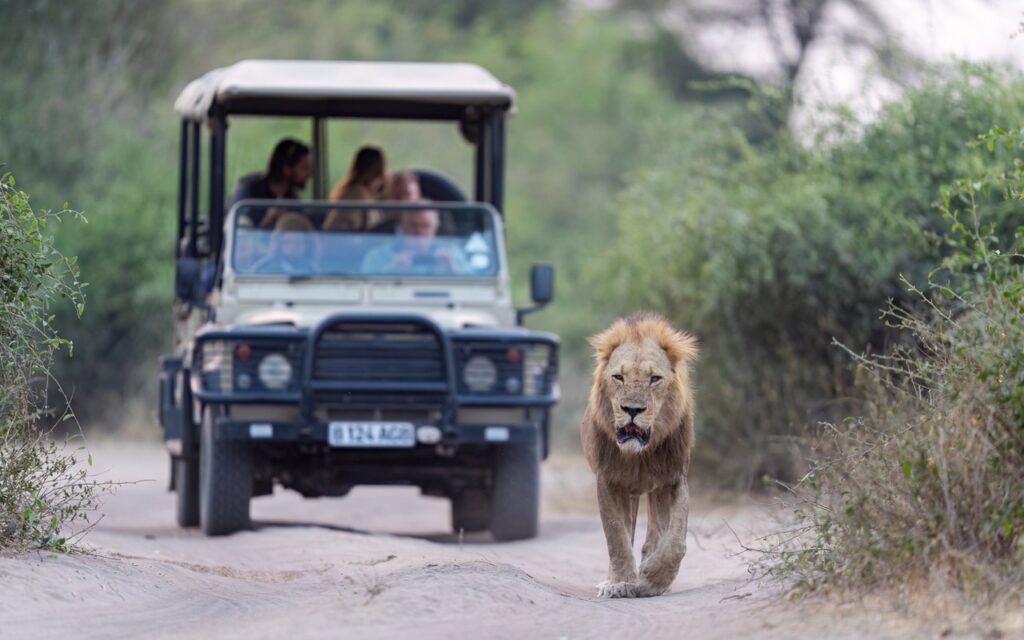
Ndutus resident lion prides are among the best-studied and most reliably sighted in Tanzania. During calving season, prides often number 20-30 individuals, hunting cooperatively on the abundant wildebeest calves. The Namiri Plains to the northeast of Ndutu are particularly celebrated for large coalitions of male lions. Year-round sightings are excellent.
Cheetah (Acinonyx jubatus)
Ndutu is widely regarded as one of the best places on earth to observe cheetahs. The open short-grass plains give cheetahs an ideal hunting environment. During calving season, single females and coalitions of males can often be seen hunting multiple times per day. The Ndutu-Naabi Hill corridor is especially productive.
Leopard (Panthera pardus)
Less frequently seen than lions or cheetahs due to their secretive nature, leopards are nonetheless resident in Ndutus acacia woodland fringes around the lakes and kopjes. Early morning and late afternoon drives along woodland edges offer the best opportunities.
African Wild Dog (Lycaon pictus)
Packs of African wild dogs are occasionally recorded in the Ndutu area, particularly during the dry season. Though not guaranteed, their presence makes Ndutu a compelling destination for endangered-carnivore enthusiasts.
Spotted Hyena (Crocuta crocuta)
Hyena clans are exceptionally active at Ndutu during calving season, often trailing wildebeest herds and scavenging kills from lions and cheetahs. Night drives (permitted in NCA concession areas) can be extraordinary for hyena activity.
Plains Game
Ndutus plains support remarkable concentrations of herbivores outside of the main migration. Year-round residents include:
- Wildebeest (Connochaetes taurinus) – 1.5 million+ during calving (Dec-Mar); resident small herds at other times
- Plains Zebra (Equus quagga) – Large herds accompany wildebeest throughout migration cycles
- Thomsons Gazelle (Eudorcas thomsonii) – Year-round; major prey species for cheetah
- Grants Gazelle (Nanger granti) – Resident year-round on the short-grass plains
- Eland (Taurotragus oryx) – Africas largest antelope; resident herds in Ndutu woodland edges
- African Buffalo (Syncerus caffer) – Resident herds near permanent water sources
- Hippo (Hippopotamus amphibius) – Seasonally present in Lake Ndutu and surrounding pools
- Warthog (Phacochoerus africanus) – Abundant, year-round
- Bat-eared Fox (Otocyon megalotis) – Common on open plains; often seen in family groups
- Serval (Leptailurus serval) – Regularly seen in tall-grass margins
Birdlife
Ndutu is a birdwatchers paradise. Over 400 species have been recorded in the broader Ndutu-Ngorongoro area. Key highlights include:
- Greater and Lesser Flamingo – Lake Ndutu and Lake Masek attract thousands, particularly December-April
- Great White Pelican – Large breeding colonies on lake shores
- Secretary Bird (Sagittarius serpentarius) – Often seen striding across open plains
- Kori Bustard (Ardeotis kori) – Africas heaviest flying bird; common on the plains
- Lilac-breasted Roller – Brilliant colours visible year-round in acacia woodland
- Lappet-faced Vulture, White-backed Vulture – Gather in enormous numbers at kills during calving season
- Martial Eagle, Bateleur Eagle – Large raptors hunting over open plains
- Saddle-billed Stork – Found near permanent water and seasonal pools
- Grey-crowned Crane – Tanzanias national bird; resident in grassland areas
The Great Wildebeest Calving Season
The Calving Season is undoubtedly Ndutus signature event and one of the greatest wildlife spectacles on the planet. Between late December and March, an estimated 500,000 wildebeest calves are born on the Ndutu and Serengeti short-grass plains – roughly 8,000 calves per day at peak calving. The sheer scale of this birthing event draws every major predator in the ecosystem.
Why Ndutu for Calving?
Wildebeest cows are remarkably synchronised in their calving, with up to 80% of births occurring within a 3-week window. This “predator swamping” strategy ensures individual calf survival despite enormous losses to predators. Ndutus nutritious volcanic soils produce the short, protein-rich grass that lactating cows require, and the flat, open terrain allows cows to monitor threats and calves to run shortly after birth (most calves can stand within 7 minutes of birth).
Month-by-Month Calving Calendar
| Period | Activity | Game Viewing Quality |
| November-December | Herds arriving from northern Serengeti; first calves born in late December | Very good – herds building |
| January | Peak arrival; calving in full swing across Ndutu plains | Excellent – peak predator action |
| February | Maximum calving density; predator concentration at its height | Outstanding – best of the year |
| March | Late calving; herds beginning to shift northward | Excellent – calves maturing |
| April | Herds moving north through central Serengeti | Good – transitional period |
| 💡 Pro Tip: The Golden Hours of Calving Season
The most dramatic predator activity at Ndutu typically occurs in the first two hours after dawn and the final hour before dusk. During peak calving (late January-February), it is not unusual to witness multiple cheetah, lion, or hyena hunts in a single morning drive. Book full-day game drives to maximise your time on the plains. |
Best Time to Visit Ndutu
While Ndutu rewards visitors throughout the year, different seasons offer distinctly different experiences. The table below outlines what to expect each month.
| Month | Season | Wildlife Highlight | Overall Rating |
| Jan | Wet / Calving | Peak calving; maximum predator density | ⭐⭐⭐⭐⭐ Outstanding |
| Feb | Wet / Calving | Peak calving; best cheetah and lion action | ⭐⭐⭐⭐⭐ Outstanding |
| Mar | Wet / Late Calving | Late calves; herds beginning to shift north | ⭐⭐⭐⭐ Excellent |
| Apr | Long Rains | Herds moving north; green season birdwatching | ⭐⭐⭐ Good |
| May | Long Rains | Low visitors; lush scenery; resident predators | ⭐⭐⭐ Good |
| Jun | Dry Season | Resident wildlife; plains recovering; few visitors | ⭐⭐⭐ Good |
| Jul | Dry Season | Resident predators; migration in northern Serengeti | ⭐⭐⭐ Good |
| Aug | Dry Season | Migration in Maasai Mara; resident wildlife | ⭐⭐⭐ Good |
| Sep | Dry Season | Resident wildlife; migration returning south | ⭐⭐⭐ Good |
| Oct | Short Rains Begin | Herds drifting south; plains refreshed | ⭐⭐⭐⭐ Excellent |
| Nov | Short Rains | Herds arriving; first calves late in month | ⭐⭐⭐⭐ Excellent |
| Dec | Wet / Calving Begins | First major calving; herds congregating | ⭐⭐⭐⭐⭐ Outstanding |
How to Get to Ndutu
By Air
The most time-efficient way to reach Ndutu is by light aircraft. Several airstrips serve the area:
- Ndutu Airstrip – Located directly in the Ndutu area, within walking distance of Ndutu Safari Lodge. Used by small charter aircraft (Cessna Caravan, 206 series). Runway condition varies seasonally.
- Lake Manyara Airport – Approximately 120 km from Ndutu. Scheduled service from Arusha (Auric Air, Coastal Aviation, Air Excel). Road transfer ~2.5 hours.
- Kilimanjaro International Airport (JRO) – 160 km; best international gateway. Daily flights from Nairobi, Dar es Salaam, and Zanzibar.
- Seronera Airstrip (Serengeti) – 80 km northeast of Ndutu; scheduled and charter flights from Arusha, Dar es Salaam, Zanzibar. Road transfer ~1.5 hours through park.
| ✈️ Flying Safari Tip
During calving season (December-March), charter flights from Arusha to Ndutu Airstrip take approximately 45 minutes and are operated by Coastal Aviation, Auric Air, and Air Excel. Book well in advance as seats sell out during peak calving. Expect to pay USD 200-350 per person one-way on a scheduled safari flight. |
By Road – Self-Drive
Ndutu is reachable by road via several routes. A 4×4 vehicle is essential; standard saloon cars are not suitable on the ungraded access tracks.
| Origin | Route | Distance / Time |
| Arusha to Ndutu | Via Lake Manyara, Karatu, Ngorongoro Gate | ~250 km / 4-5 hrs (dry) / 5-7 hrs (wet) |
| Karatu to Ndutu | Via Ngorongoro Conservation Area | ~115 km / 2.5-3 hrs |
| Seronera (Serengeti) to Ndutu | Via Naabi Hill Gate westward | ~80 km / 1.5-2 hrs |
| Dar es Salaam to Ndutu | Via Dodoma-Singida-Karatu (long route) | ~870 km / 14-16 hrs (2 days recommended) |
| Nairobi to Ndutu | Via Namanga-Arusha-Karatu | ~430 km / 7-9 hrs |
| 🚗 Self-Drive Note
Access to the Ndutu area requires a valid NCA (Ngorongoro Conservation Area) permit in addition to a Serengeti National Park permit if crossing into Serengeti during your drive. The road from Karatu through the NCA to Ndutu passes the Ngorongoro Crater rim and descends through Olduvai Gorge – allow extra time to visit the Olduvai Museum en route. |
Accommodation at Ndutu
Ndutus accommodation options range from the iconic and historic to contemporary luxury mobile camps. Because Ndutu sits in the NCA (not inside Serengeti National Park), camps here are permitted to conduct off-road game drives – a critical advantage for calving season wildlife encounters.
Luxury & High-End
Ndutu Safari Lodge
The original and most iconic camp at Ndutu, established in 1967. Ndutu Safari Lodge sits directly on the shore of Lake Ndutu and blends authentic East African safari character with comfortable facilities. The location next to the lake and surrounding acacia woodland ensures remarkable wildlife encounters even from the dining area. 50 bandas (stone cottages) with private verandas. Full board, guided game drives, and guided nature walks available.
Entamanu Ndutu
A seasonal luxury camp positioned in a remote corner of the Ndutu plains, famous for spectacular calving season predator activity. Entamanu operates only December-April, following the migration. Its all-inclusive model covers twice-daily game drives, meals, and local drinks. Renowned for its uncompromising off-road driving policy.
&Beyond Ndutu under Canvas
The &Beyond mobile luxury camp deploys to Ndutu from January through March, tracking the peak calving season. As with all &Beyond properties, the camp delivers a consistently high standard of guiding and service. Capacities are small (6-8 tents), ensuring an exclusive experience.
Mid-Range & Tented Camps
Lemala Ndutu Camp
A well-regarded mid-range tented camp with 12 luxury tents, deployed seasonally during calving season. Lemala is known for its experienced guides and competitive pricing relative to the ultra-luxury end of the market. Full board with twice-daily game drives.
Ndutu Wilderness Camp
A smaller, more intimate option offering a classic tented-camp experience at a moderate price point. Ndutu Wilderness provides excellent value for travellers on a mid-range budget who want to focus game-viewing time on the plains rather than the lodge.
Budget & Mobile Camping
Ndutu Public Campsite
A basic public campsite within the NCA near the lake, offering essential facilities (long-drop toilets, water access). No permanent structures. Suitable for self-sufficient overlanders with their own camping gear. Prior reservation through the NCAA (Ngorongoro Conservation Area Authority) is required.
Mobile & Private Camping
Several operators, including Marriott Safaris Africa, offer mobile camping setups at Ndutu using ground tents or rooftop tents fitted to 4×4 rental vehicles. Mobile camping provides maximum flexibility to follow the herds and position camp close to active calving areas.
| 💡 Accommodation Booking Advice
January and February at Ndutu are among the most sought-after safari dates in all of Tanzania. Top camps and lodges often sell out 6-12 months in advance for the peak calving period. Book your Ndutu accommodation early – especially for travel between January 15 and February 28. |
Entry Fees & Park Permits (2027-2028)
The Ndutu area falls within the Ngorongoro Conservation Area (NCA). Fees are set and collected by the Ngorongoro Conservation Area Authority (NCAA) and differ from Serengeti National Park fees. Visitors crossing into Serengeti during a Ndutu-based safari pay both sets of fees.
| Fee Category | Applies To | Amount (USD/TZS) |
| NCA Conservation Fee | Non-resident adult (per 24 hrs) | USD 70.00 |
| NCA Conservation Fee | Non-resident child (5-15 yrs) | USD 35.00 |
| NCA Conservation Fee | East African citizen (adult) | TZS 2,000 |
| NCA Vehicle Fee | Foreign-registered 4×4 (per 24 hrs) | USD 50.00 |
| NCA Vehicle Fee | Tanzania-registered vehicle | TZS 10,000 |
| Serengeti NP Entry | Non-resident adult (per 24 hrs) | USD 70.00 |
| Serengeti NP Entry | Non-resident child (5-15 yrs) | USD 35.00 |
| Serengeti Vehicle Fee | Foreign-registered (per 24 hrs) | USD 50.00 |
| Olduvai Gorge Entry | Non-resident adult (per visit) | USD 30.00 |
| Olduvai Gorge Entry | Non-resident child (per visit) | USD 15.00 |
| 💡 Fee Payment
All NCA and TANAPA fees must be paid in advance via the official online portals: NCAA e-permit system (www.ncaa.go.tz) or TANAPA e-park system (www.tanzaniaparks.go.tz). Cash payments at gates are no longer accepted at most entry points. Cards are not reliably accepted – pay online before departure. |
Safari Activities at Ndutu
Game Drives
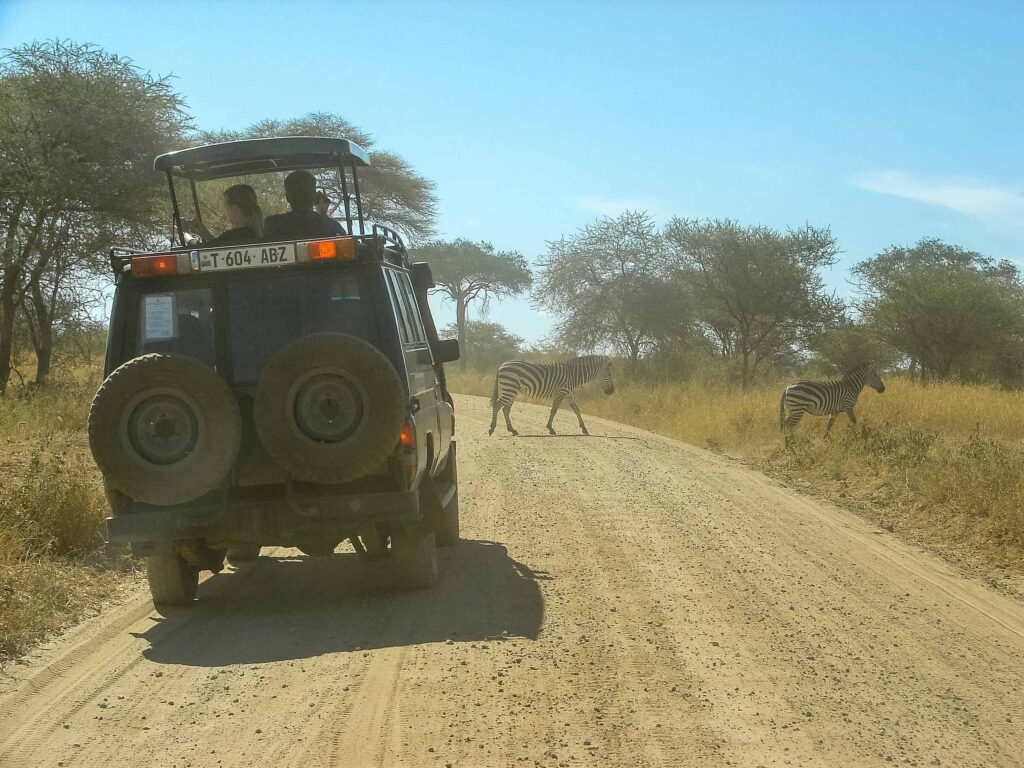
The core Ndutu activity. Full-day, half-day, morning, and sunset game drives are offered by all lodges and camps. The open-sided 4×4 Landcruiser or pop-up roof vehicle is standard. During calving season, experienced guides can track individual cheetah females, lion prides on hunt, and even follow a birth in real time – a visceral wildlife experience impossible to overstate.
- Morning Drive – Depart at 6:00-6:30 am; most productive hours for predator activity.
- Full-Day Drive – Bring a packed lunch and spend 7-8 hours on the plains following the action. Recommended during peak calving.
- Sundowner Drive – Evening drives ending with a bush sundowner as the light turns gold over the plains.
Off-Road Driving
Unlike Serengeti National Park, the NCA portions of the Ndutu area permit controlled off-road driving within designated zones. This allows guides to position vehicles for optimal photography angles at kills, births, and intimate predator encounters – a significant advantage over the strict road-only rules inside Serengeti.
Nature Walks & Guided Walks
Walking safaris are permitted in the Ndutu woodland and lake-shore areas with an armed guide. Walks provide an entirely different perspective on the ecosystem – tracking spoor, examining dung beetle activity, identifying footprints, and observing small mammals and reptiles that are easily overlooked from a vehicle.
Birdwatching
Dedicated birding drives and walks are available through most lodges, guided by ornithologically trained naturalists. Early morning visits to Lake Ndutu and Lake Masek shores are particularly rewarding for waterbirds, raptors, and migratory species.
Visit to Olduvai Gorge
Located approximately 50 km northeast of Ndutu on the road to Ngorongoro Crater, Olduvai Gorge is one of the most important paleoanthropological sites on Earth. Excavations here by Louis and Mary Leakey in the 1950s and 60s revealed fossil remains of early hominids dating back 1.9 million years, including Homo habilis and Paranthropus boisei. The on-site museum is small but informative, and guided gorge walks bring the geological stratigraphy to life.
Hot Air Balloon Safari
Hot air balloon safaris over the Ndutu-Serengeti ecosystem offer a unique aerial perspective on the landscape and migrating herds. Flights typically launch at dawn and last approximately one hour, landing in the Serengeti for a bush breakfast. Several operators offer balloon flights originating from Seronera or the central Serengeti, with transfers to/from Ndutu possible.
Sample 4-Day Ndutu Calving Safari Itinerary
Day 1 – Arrive Ndutu: Afternoon Game Drive
Fly from Arusha or Kilimanjaro International Airport to Ndutu Airstrip (charter) or Lake Manyara Airport, then road transfer. Arrive at your Ndutu camp or lodge in the early afternoon. After settling in and briefing, depart for a 3-hour afternoon game drive to orientate and begin searching for calving herds. Sundowner on the plains. Return to camp for dinner under the stars.
Day 2 – Full Day on the Ndutu Plains
Early morning breakfast in darkness; depart camp at 6:00 am. Spend the entire day on the plains, breaking only for a packed lunch under an acacia tree. The day agenda: follow active lion prides, locate cheetah on the hunt, and document wildebeest calving in real time. Return to camp at dusk.
Day 3 – Lakes, Woodland, and Afternoon Birding
Morning drive focusing on the Lake Ndutu shoreline and acacia woodland edges. Look for leopards, servals, and woodland birds. Midday: guided walk along the lake shore with your naturalist guide. Afternoon: dedicated birding drive through seasonal floodplain areas. Sundowner at a scenic kopje.
Day 4 – Morning Drive & Olduvai Gorge Excursion
Final morning drive at dawn for one last calving season encounter. Return to camp for late breakfast. Depart for Olduvai Gorge Museum (allow 1.5 hours for the site visit). Continue to Ngorongoro Crater rim for a possible overnight or onward transfer to Karatu, Lake Manyara, or Arusha for your departure flight.
| 📅 Itinerary Note
The sample itinerary above is designed for the peak calving period (January-February). For dry-season visits, the same itinerary structure works well but should emphasise resident predator tracking, birding, and a Ngorongoro Crater day trip as the principal highlights. |
Packing Guide for Ndutu
Clothing & Gear
- Neutral-coloured clothing (khaki, olive, beige, brown) – avoid white, red, or bright colours on game drives
- Warm fleece or light down jacket – mornings on the Ndutu plains can be cold (8-12 degrees C), even in summer
- Light long-sleeved shirts for sun and dust protection
- Wide-brimmed hat and high-SPF sunscreen – equatorial sun at altitude is intense
- Dust-proof sunglasses and a bandana or neck gaiter
- Comfortable, closed-toe shoes or lightweight boots for bush walks
- Light rain jacket (October-April, when afternoon showers are possible)
Photography Equipment
- Telephoto lens: minimum 400mm; 500-600mm ideal for calving season action
- Bean bag or window mount for vehicle shooting
- Extra batteries and large-capacity SD cards – a full day can yield thousands of images
- Dust-proof camera bag or dry bag for dusty conditions
Health & Safety Essentials
- Yellow Fever vaccination certificate (required for entry if arriving from endemic countries)
- Malaria prophylaxis (Ndutu is in a low-risk zone but preventive medication is recommended)
- Comprehensive travel insurance including medical evacuation coverage
- Personal first aid kit: plasters, antiseptic, oral rehydration salts, antihistamine
- SPF 50+ lip balm and hand cream for dry highland conditions
Health & Safety at Ndutu
Ndutu is considered a relatively safe and accessible safari destination. However, as with all wildlife areas, basic precautions apply.
- Malaria – Ndutu sits at an altitude that reduces (but does not eliminate) malaria risk. Consult your physician about prophylaxis (mefloquine, doxycycline, or atovaquone/proguanil). Use DEET-based insect repellent and sleep under a mosquito net.
- Wild Animals – Never exit your vehicle unsupervised in the bush. During guided walks, follow your armed guides instructions precisely. Keep a safe distance from all wildlife, especially lions, buffalo, and hippos near water.
- Sun Protection – The Ndutu plains sit at ~1,000m with strong equatorial sun. Apply SPF 50+ sunscreen every two hours during full-day game drives and drink at least 2 litres of water daily.
- Road Conditions – During the long rains (April-May), some access tracks become impassable without a high-clearance 4×4. Check conditions with your camp or lodge before departure.
- Nearest Medical Facility – Karatu District Hospital (~80 km); Arusha has private clinics and a flying doctor service. Ensure your travel insurance covers air evacuation.
| 🚑 Emergency Contact
Flying Doctors Society of Africa (AMREF): +255 22 211 6610 | AMREF Air Rescue: Covers East Africa and can be pre-subscribed. Most top-tier camps and lodges in Ndutu have emergency radio systems and direct AMREF contacts. |
Conservation at Ndutu
Ndutus ecology and the wildlife spectacle it supports are intrinsically tied to the health of the broader Serengeti-Ngorongoro ecosystem. Tourism revenue directly funds conservation through NCA fees, contributing to anti-poaching operations, Maasai community development programs, and wildlife research.
The Frankfurt Zoological Society (FZS) and Serengeti Lion Project maintain long-term research programs in the Ndutu area, studying lion population dynamics and predator-prey relationships. The Ndutu wildebeest calving data has contributed to decades of migration-pattern research.
Responsible tourism practices at Ndutu include respecting off-road drive zones, not disrupting calving or kills by crowding with multiple vehicles, and supporting accommodation providers with strong community benefit-sharing programs.
Frequently Asked Questions (FAQs)
Q: Is Ndutu worth visiting outside of calving season?
A: Absolutely. While the calving season (December-March) is the headline event, Ndutu offers excellent year-round game viewing. Resident lion prides, cheetah, and large buffalo herds are present throughout the year, and the birdlife is exceptional regardless of season.
Q: Do I need a 4×4 vehicle to visit Ndutu?
A: Yes, without exception. The access roads from Karatu and within the NCA to Ndutu require a high-clearance 4×4 vehicle at all times of year. During the wet season (November-April) many tracks become deeply rutted and muddy – only an experienced self-driver with a fully equipped 4×4 (with recovery gear) should attempt them without a guide.
Q: What is the difference between Ndutu and the Serengeti?
A: Ndutu sits within the Ngorongoro Conservation Area, not Serengeti National Park. The key practical difference is that off-road driving is permitted in parts of the NCA, while Serengeti enforces strict track-only rules. Both areas share the same wildlife and ecosystem. Separate entry permits are required for each.
Q: How far is Ndutu from Ngorongoro Crater?
A: Ndutu is approximately 70-80 km southwest of the Ngorongoro Crater rim. The drive via the main NCA road through Olduvai Gorge takes 1.5-2.5 hours depending on road conditions. Many visitors combine a Ndutu calving safari with a Ngorongoro Crater day trip.
Q: When is the best time to photograph calving at Ndutu?
A: Late January through February is peak calving season. For the best light and predator activity, game drives departing at first light (around 6:00-6:30 am) offer the optimal combination of golden-hour photography light and active predator behaviour.
Q: Can I combine Ndutu with a Serengeti safari?
A: Yes – this is one of the most popular Tanzania safari combinations. Many itineraries begin with 3-4 nights at Ndutu (December-March) and then move north through the Serengeti, following the herds. A seamless combination can cover calving season, Serengeti central circuit, and even a Ngorongoro Crater day trip in a single 7-10 day safari.
Q: What vehicles does Marriott Safaris Africa recommend for a self-drive to Ndutu?
A: We recommend a Toyota Land Cruiser 76/79 Series, Land Cruiser Prado, or Toyota Hilux Double Cab (4WD) with a high-lift jack, recovery boards, and dual spare tyres for the Ndutu access roads, particularly during calving season when rains can soften tracks significantly.