Olduvai Gorge
Olduvai Gorge is one of the most important palaeontological sites on Earth. Carved by ancient rivers through the volcanic sediments of the Serengeti Plain in northern Tanzania, this 48-kilometre ravine preserves nearly two million years of continuous human evolutionary history within its layered walls. Here, in the mid-20th century, Louis and Mary Leakey unearthed fossil remains and stone tools that fundamentally rewrote our understanding of human origins and confirmed Africa — not Asia or Europe — as the birthplace of the genus Homo. For visitors travelling to Tanzania on safari, Olduvai Gorge is a living, working archaeological site that sits just minutes off the road between Ngorongoro Crater and the Serengeti, making it one of the most accessible and rewarding detours on the entire northern circuit.
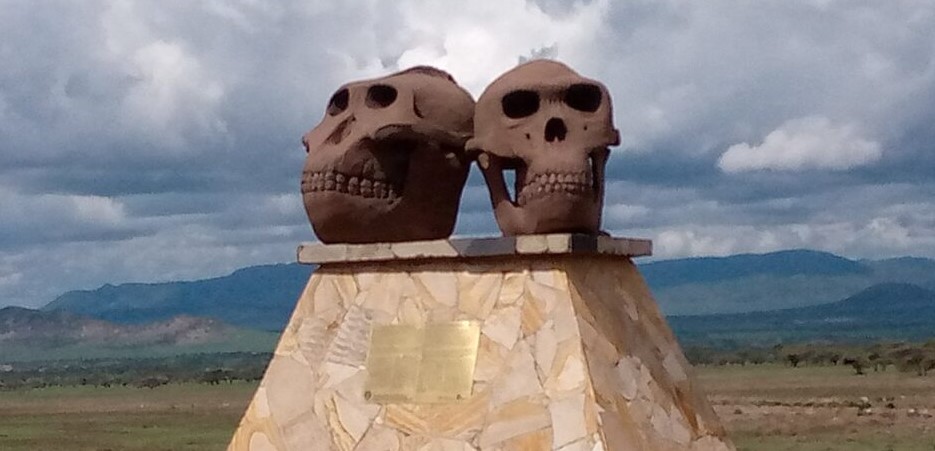
Whether you are a first-time safari-goer curious about the stones and bones that made headlines around the world, or a returning traveller who has always wanted to understand the deeper story beneath the Serengeti plains, Olduvai Gorge rewards the visit with a rare combination of dramatic landscape, mind-bending geological time, and human stories that pre-date any written record by an almost incomprehensible margin.
| 🌍 Quick Facts
Official Name: Oldupai Gorge (Maasai name, meaning ‘wild sisal’) Location: Ngorongoro Conservation Area, Arusha Region, Tanzania UNESCO World Heritage Site: Part of the Ngorongoro Conservation Area (1979) Length of gorge: Approximately 48 km Depth of gorge: Up to 90 metres Age of deposits: Approximately 1.9 million to 15,000 years old Nearest town: Karatu (~60 km east), Arusha (~180 km east) Entry: Included in Ngorongoro Conservation Area fees |
Geological Overview
Olduvai Gorge was formed by the interplay of volcanic and tectonic forces that have shaped East Africa’s Great Rift Valley over millions of years. The gorge cuts through a sequence of geological beds — numbered I through IV plus the Masek and Ndutu Beds — each representing a distinct period of time and preserving different assemblages of fossils, stone tools, and environmental evidence.
The lowest and oldest deposits, Bed I, were laid down approximately 1.9 million years ago in and around a shallow alkaline lake that once occupied what is now the flat Serengeti Plain. Volcanic eruptions from nearby volcanoes periodically buried landscapes in ash, creating the ideal conditions for fossilisation. As the lake shifted, rivers eroded the accumulated sediments, eventually carving the gorge we see today and exposing those ancient layers for researchers — and visitors — to read like pages in a book.
The result is a near-perfect stratigraphic record of East African environments during the Pleistocene epoch, capturing changes in climate, vegetation, fauna, and the hominins that walked through these landscapes. The vibrant yellows, reds, greens, and greys of the gorge walls are not merely scenic — each band of colour represents a specific period of geological time and human history.
| Geological Bed | Approximate Age | Key Characteristics |
| Bed I | 1.9 – 1.7 million years | Oldest deposits; lake sediments; Oldowan tools; Australopithecus boisei (Zinj) |
| Bed II | 1.7 – 1.2 million years | Lake receded; Acheulean tools appear; Homo habilis and H. erectus |
| Bed III | 1.2 – 0.8 million years | Drier conditions; more Acheulean tools; fewer hominin fossils |
| Bed IV | 0.8 – 0.6 million years | Advanced Acheulean tools; H. erectus continues |
| Masek Beds | 0.6 – 0.4 million years | Windblown sediments; transitional tool types |
| Ndutu Beds | 0.4 million – 15,000 years | Youngest deposits; archaic Homo sapiens; Levallois technique |
History of Discovery and Research
Early European Encounters
Although Maasai pastoralists had lived alongside the gorge for centuries — naming it Oldupai after the wild sisal plants that colonise its walls — the site was first brought to wider scientific attention in 1911 by German entomologist Wilhelm Kattwinkel, who stumbled upon fossil bones while butterfly hunting near the gorge and returned to Berlin with specimens that excited the palaeontological community. A German expedition under Hans Reck followed in 1913 and excavated a complete human skeleton from Bed II, sparking decades of debate about its age and significance.
The Leakeys Change Everything
The story of Olduvai Gorge is inseparable from Louis Seymour Bazett Leakey and his wife Mary Douglas Leakey. Louis, a Kenyan-born British palaeontologist, first visited the gorge in 1931 and immediately recognised its extraordinary potential. For the next three decades, the Leakeys conducted systematic surveys and excavations with extremely limited funding, working in searing heat and dust, sustained largely by conviction that the gorge would eventually yield its secrets.
Their persistence was vindicated spectacularly on the morning of 17 July 1959, when Mary Leakey, working while Louis recovered from a fever in camp, discovered fragments of a hominin skull eroding from Bed I. The find, announced to the world in October 1959, was initially named Zinjanthropus boisei — Zinj for short — after the Arabic word for East Africa and Charles Boise, an American businessman who had funded part of the expedition. The skull, characterised by a pronounced sagittal crest and massive cheek teeth, was dated to approximately 1.75 million years old using the newly developed potassium-argon dating technique, making it by far the oldest known hominin at the time. It was later reclassified as Australopithecus boisei (now Paranthropus boisei).
The discovery attracted international attention, funding, and a National Geographic Society partnership that transformed what had been a shoestring operation into a full-scale research programme. Within two years, the Leakeys had made another major find: smaller, more lightly built hominin remains in Bed I associated with simple stone tools. This new species, formally named Homo habilis (‘handy man’) in 1964, became the earliest known member of our own genus and provided the first evidence of a direct evolutionary line from ancient hominins to modern humans.
Post-Leakey Research
Research at Olduvai continued through subsequent decades under the direction of Mary Leakey after Louis’s death in 1972, and later by an international roster of palaeontologists, archaeologists, and geologists. Each generation of researchers has applied new analytical technologies — from radiometric dating to isotopic analysis of fossil teeth to digital photogrammetry of excavation sites — to extract ever more detailed information from the gorge’s deposits.
Today, the Olduvai Gorge Research Project and partners from American and Tanzanian universities continue active fieldwork, and new finds continue to emerge. The gorge has never stopped giving up its secrets, and what is now exposed represents only a fraction of what may yet be discovered.
| 📌 Key Dates in Olduvai’s History
1911 — Wilhelm Kattwinkel discovers fossils during a butterfly-collecting expedition 1913 — Hans Reck excavates a complete human skeleton from Bed II 1931 — Louis Leakey’s first visit; begins systematic survey work 1959 — Mary Leakey discovers Zinjanthropus boisei (Paranthropus boisei, ~1.75 Ma) 1960 — Homo habilis remains discovered; oldest member of genus Homo 1964 — Homo habilis formally described and named 1979 — Ngorongoro Conservation Area (including Olduvai) designated UNESCO World Heritage Site 1976 — Mary Leakey discovers the Laetoli footprints 45 km south (~3.7 Ma) 2000s–present — International research projects continue; ongoing discoveries |
Hominin Fossils Discovered at Olduvai
Olduvai Gorge has yielded fossils from at least five different hominin species, representing the longest and most detailed record of human evolution from a single site. The presence of multiple species within overlapping time periods has been central to debates about whether hominin evolution was a linear progression or a branching, bushy affair — and the evidence from Olduvai strongly supports the latter.
Australopithecus boisei (Paranthropus boisei)
The original ‘Zinj’ skull and subsequent specimens represent a highly specialised, robust australopithecine characterised by an enormous facial apparatus adapted for processing hard, gritty plant foods. Despite its striking morphology, Paranthropus boisei appears to have been an evolutionary side-branch rather than a direct ancestor of later Homo. It survived alongside early Homo for at least half a million years before going extinct around 1.2 million years ago.
Homo habilis
Smaller and more lightly built than contemporaneous robust australopithecines, Homo habilis had a significantly larger braincase (600–750 cc) and hand bones suggesting precision grip capabilities. It is associated with the Oldowan tool industry (see below) and represents the earliest unambiguous member of genus Homo. Some researchers argue that the material attributed to Homo habilis at Olduvai actually represents two distinct species — H. habilis and the larger-brained H. rudolfensis.
Homo erectus
By around 1.5 million years ago, Homo erectus had appeared at Olduvai. With a brain volume of 850–1,100 cc and a body size approaching that of modern humans, H. erectus was a substantially more capable hominin. It is associated with the more sophisticated Acheulean tool industry (characterised by symmetrical, bifacially worked handaxes) and was the first hominin to migrate out of Africa, eventually colonising much of Eurasia. Olduvai specimens include a nearly complete cranium (OH 9) and postcranial remains.
Archaic Homo sapiens
The Ndutu Beds have yielded cranial material that falls morphologically between Homo erectus and anatomically modern Homo sapiens, often referred to as ‘archaic’ or ‘transitional’ Homo sapiens. These specimens, dating to roughly 400,000–200,000 years ago, record the gradual evolution toward our own species.
| Species | Approx. Date | Brain Volume | Associated Tools |
| Paranthropus boisei | 1.9–1.2 Ma | ~530 cc | Oldowan (possibly) |
| Homo habilis | 1.9–1.5 Ma | 600–750 cc | Oldowan |
| Homo erectus | 1.5–0.6 Ma | 850–1,100 cc | Acheulean |
| Archaic Homo sapiens | 0.4–0.2 Ma | 1,100–1,300 cc | Levallois/Middle Stone Age |
| Anatomically modern H. sapiens | < 200,000 years | ~1,350 cc | Later Stone Age |
Stone Tool Industries
Olduvai Gorge is not only a treasury of hominin fossils — it is the type site for some of the most important stone tool industries in human prehistory. The gorge’s layered deposits preserve a continuous record of technological change spanning nearly two million years, allowing researchers to trace the gradual refinement of stone-working skills that is one of the defining characteristics of human evolution.
The Oldowan Industry
The world’s oldest widely recognised stone tool technology, the Oldowan is named after Olduvai Gorge (the ‘Oldowan’ being a linguistic derivation of ‘Olduvai’). Dated to approximately 2.6 million years ago at other sites in Ethiopia, the Oldowan appears at Olduvai from around 1.9 million years ago. Tools consist primarily of simple flakes knapped from river cobbles, and the cores from which those flakes were struck. Though apparently crude, Oldowan tools were sharp enough to butcher large animals and process plant foods, and their consistent production implies a level of cognitive planning previously attributed only to later, larger-brained hominins.
The Acheulean Industry
From around 1.7 million years ago in Bed II, a new and markedly more sophisticated tool technology appears: the Acheulean, characterised by large, symmetrically shaped handaxes and cleavers worked on both faces. The production of an Acheulean handaxe requires the knapper to hold a mental template of the desired end product and work towards it through a sequence of controlled flaking steps — evidence of substantially greater cognitive capacity than Oldowan tools imply. The Acheulean persisted at Olduvai for over a million years before being replaced by Middle Stone Age technologies.
Later Industries
The Masek and Ndutu Beds preserve a transition to more refined, prepared-core technologies including the Levallois technique (in which a core is shaped to allow a predetermined flake to be struck off) and eventually blade-based industries associated with anatomically modern humans.
What to See and Do at Olduvai Gorge
The Olduvai Gorge Museum
The on-site museum is the natural starting point for any visit and provides essential context before you descend into the gorge itself. The museum houses original fossil casts — including the famous Zinj skull and Homo habilis specimens — alongside reconstructed hominins, dioramas depicting life at the ancient lakeside, and displays of Oldowan and Acheulean tools in context. The exhibits are well-curated and accessible to non-specialists, explaining the significance of each major discovery in clear language.
The museum building itself sits at the gorge rim, and the viewing terrace offers a sweeping panorama across the main gorge and the surrounding Serengeti Plain — an orientation that helps visitors visualise the ancient landscape that once existed here.
Guided Gorge Walk
The highlight of any Olduvai visit is the guided descent into the gorge itself, led by one of the site’s knowledgeable Tanzanian guides. The walk takes you down through exposed geological beds to the main excavation floor, where active dig sites are often visible. Guides point out key stratigraphic boundaries, explain the conditions under which fossils were preserved, and show the actual locations where landmark discoveries were made — including the spot where Mary Leakey found the Zinj skull.
The gorge walk takes approximately 45–90 minutes depending on group interest and pace. Wear sturdy footwear as the path is uneven, and carry water — the gorge can be significantly hotter than the Ngorongoro highlands above it.
Active Excavation Sites
Olduvai is unusual among major palaeontological sites in that research is actively ongoing. Depending on when you visit, Tanzanian and international researchers may be working visible excavation trenches in Bed I or II. Guides explain current research questions and recent finds, giving the visit a genuinely live scientific flavour that is rare in heritage tourism.
Cultural Interaction
The site sits within Maasai territory, and the local Maasai community has a formal role in tourism at Olduvai. Visits often include the opportunity to meet Maasai community members, purchase handcrafted beadwork, jewellery, and artefacts, and learn about the pastoral culture that has coexisted with the gorge for centuries. These interactions are managed ethically and provide direct economic benefit to the local community.
Laetoli: The Footprints Site
No discussion of Olduvai Gorge is complete without mention of Laetoli, located approximately 45 kilometres south of Olduvai within the same Ngorongoro Conservation Area. In 1976, Mary Leakey’s team discovered a trail of hominin footprints preserved in a layer of volcanic ash dated to approximately 3.66 million years ago — by far the oldest known direct evidence of bipedal locomotion.
The Laetoli footprints were made by at least two (possibly three) individuals walking upright across freshly fallen ash from the nearby Sadiman volcano, which was then moistened by rain and baked hard by the sun before being buried and preserved. The gait pattern, stride length, and foot morphology are essentially indistinguishable from those of modern humans, confirming that our ancestors were walking bipedally long before the evolution of large brains or the invention of stone tools.
The footprints were reburied for preservation in the 1990s, but a specially constructed shelter and replica display at Olduvai Gorge Museum allows visitors to appreciate their significance. Some tour itineraries include a visit to the Laetoli site itself, where a surface replica has been installed, though access requires advance arrangement.
| 🦶 Laetoli Fast Facts
Age: ~3.66 million years old Species: Likely Australopithecus afarensis (same species as ‘Lucy’) Trail length: Approximately 27 metres preserved Number of individuals: At least two, possibly three Significance: Oldest known bipedal footprints; predates stone tools by over 1 million years Current status: Reburied; replica and display at Olduvai Museum |
Visiting Information
Location and Access
Olduvai Gorge lies within the Ngorongoro Conservation Area (NCA), administered by the Ngorongoro Conservation Area Authority (NCAA). The site is located on the main road connecting Ngorongoro Crater Lodge area to the Serengeti National Park — one of the most heavily travelled safari routes in East Africa — making it an almost mandatory stop for anyone driving the northern Tanzania circuit.
The turn-off to the museum and gorge is clearly signposted approximately 50 kilometres west of the Ngorongoro Crater rim and 50 kilometres east of the Naabi Hill Gate into the Serengeti. The access track is in good condition and passable by standard 4×4 safari vehicles.
Entry Fees
Entry to Olduvai Gorge is covered by the standard Ngorongoro Conservation Area fees, which are charged per person per 24 hours. Specific fees for the museum and gorge walk are charged separately at the site. All fees are payable at the NCAA gate or at the Olduvai site itself; payment is in US dollars cash or via the NCAA’s card payment system.
| Fee Category | Amount (USD) | Notes |
| NCA Entry (Non-resident adult) | $70.80 per 24 hours | Includes conservation levy |
| NCA Entry (Non-resident child 5–15) | $23.60 per 24 hours | |
| NCA Entry (Resident adult) | Significantly lower | TZS-equivalent; check with NCAA |
| Olduvai Museum Entry | ~$20 per person | Includes guided gorge walk; verify on-site |
| Vehicle Fee | $20–$70 per vehicle | Depending on vehicle class |
| Laetoli Site Visit | Additional fee | Requires advance arrangement |
Note: NCA fees are subject to revision. Always confirm current rates with your safari operator or directly with the Ngorongoro Conservation Area Authority before travel.
Best Time to Visit
Olduvai Gorge can be visited year-round, as the museum is open daily and the gorge itself is accessible in most weather conditions. However, the visit is best combined with the broader northern Tanzania safari circuit, so your overall trip timing will likely be driven by factors such as the Great Migration in the Serengeti and the preferred dry or green season experience.
| Season | Months | Conditions at Olduvai | Circuit Highlights |
| Peak Dry Season | July–October | Dust on access roads; gorge clearly visible; hot | Great Migration river crossings in Serengeti |
| Short Rains | November–December | Brief showers; roads manageable; fewer crowds | Wildebeest calving season begins |
| Green Season | January–March | Lush vegetation; some road softening; photography excellent | Calving season; Ndutu area highly active |
| Long Rains | April–June | Heavier rain possible; some roads challenging | Quieter; discounted rates; research season |
How Long to Spend
Most safari itineraries allocate between one and two hours at Olduvai Gorge, which is sufficient for the museum tour and a guided gorge walk. For visitors with a particular interest in human evolution or archaeology, a half-day visit allows time for deeper exploration of the museum, a longer gorge walk, interaction with any active research teams, and unhurried browsing of the Maasai cultural stalls. A full day is rare but possible for those who also wish to visit the Laetoli footprints site.
What to Bring
The gorge environment is exposed, dry, and can be significantly hotter than the Ngorongoro highlands. Pack accordingly:
- Sunscreen (high SPF), sunglasses, and a wide-brimmed hat
- At least one litre of water per person for the gorge walk
- Sturdy, closed-toe footwear — sandals are not appropriate for the gorge descent
- Camera with dust protection — the gorge is photogenic but dusty
- USD cash for museum fees and Maasai craft purchases
- Notebook or field guide if you have an interest in the geology or archaeology
Combining Olduvai Gorge with the Northern Circuit
Olduvai Gorge is almost always visited as part of a northern Tanzania safari circuit rather than as a standalone destination. Its position on the main road between Ngorongoro Crater and the Serengeti makes it a natural midday stop, allowing visitors to break a longer drive with one of the world’s most significant scientific sites.
Classic 2-Day Ngorongoro–Olduvai–Serengeti Route
| Day | Route | Highlights |
| Day 1 | Arusha → Karatu → Ngorongoro Crater | Afternoon descent into crater; game drive; overnight on crater rim |
| Day 2 AM | Ngorongoro Crater → Olduvai Gorge | Morning game drive in crater; depart by 10:00 for Olduvai (~1.5 hrs drive) |
| Day 2 Midday | Olduvai Gorge | Museum, guided gorge walk, Maasai stalls (~1.5–2 hrs) |
| Day 2 PM | Olduvai → Naabi Hill Gate → Serengeti | Afternoon entry into Serengeti; sundowner game drive; overnight in central Serengeti |
Olduvai also pairs naturally with:
- Lake Manyara National Park — 1–2 hours east of Karatu; famous for tree-climbing lions and flamingos
- Ndutu Area (south Serengeti) — especially in January to March when wildebeest calving transforms the short-grass plains
- Endulen Village — Maasai cultural experiences within the NCA
Accommodation Options Near Olduvai
There is no accommodation at Olduvai Gorge itself. The nearest lodges are clustered around the Ngorongoro Crater rim and in the Karatu area, with additional options within the NCA and at the edge of the Serengeti.
Budget to Mid-Range
- Karatu Simba Lodge — Comfortable lodge in Karatu with garden; suitable base for Olduvai visits en route to or from Ngorongoro
- Ngorongoro Safari Lodge — Mid-range option on the crater rim with accessible NCA access
- Public campsites within NCA — Regulated sites with basic facilities; self-sufficient campers only
Upscale
- Ngorongoro Serena Safari Lodge — Architecturally striking lodge on the crater rim; excellent service
- Ngorongoro Crater Lodge (andBeyond) — Iconic luxury lodge; intimate; butler service
- The Highlands (Elewana) — Contemporary eco-luxury camp on the crater rim
Within the Serengeti (Post-Olduvai)
- Kati Kati Tented Camp — Seasonal classic camp in central Serengeti; good value
- Serengeti Serena Safari Lodge — Mid-range; reliable standard; central Serengeti
- Singita Grumeti, Four Seasons Serengeti — High-end options for those wanting full-service luxury after the drive
Conservation and Management
Olduvai Gorge faces the dual challenges of protecting an irreplaceable scientific resource while making it accessible to the growing stream of tourists travelling the northern Tanzania circuit. The site is managed by the Ngorongoro Conservation Area Authority under a multiple-use philosophy that attempts to balance conservation, Maasai pastoralism, and wildlife management alongside tourism and research.
Active excavations are carefully managed by licensed research teams under NCAA oversight, with strict protocols governing the removal and export of fossil material. Visitors are confined to designated paths and viewing areas, and the main fossil-bearing deposits are protected from physical access. The on-site museum provides an outlet for the public to engage with the science without endangering the resource.
Climate change presents a growing concern for site preservation. Changes in rainfall patterns affect erosion rates within the gorge, potentially accelerating the exposure and destruction of fossiliferous deposits. Ongoing research includes not only palaeontological excavation but also systematic monitoring of the gorge’s physical condition.
Tourism revenue, channelled through NCA fees, supports both site conservation and the Maasai communities who have lived alongside the gorge for generations. Purchasing crafts and cultural products from the Maasai stalls at the site entrance provides direct, additional income to these communities.
Scientific Significance: Why Olduvai Matters
It is difficult to overstate the importance of Olduvai Gorge to our understanding of human origins. In a field where single fossil fragments can generate years of debate and reshape entire evolutionary trees, Olduvai has yielded an extraordinary quantity and quality of material spanning nearly the full range of known hominin prehistory. Several of its contributions to science are worth highlighting:
Proof of African Origins
At the time of Mary Leakey’s 1959 discovery, the prevailing scientific consensus still leaned toward Asia as the most likely cradle of humanity. The Olduvai fossils, combined with subsequent discoveries at other African sites, decisively shifted that consensus. Africa is now universally recognised as the evolutionary homeland of the genus Homo, and Olduvai is the site most closely associated with that paradigm shift.
Deep Human Antiquity
The potassium-argon dating of the Zinj skull to 1.75 million years old was, in 1959, a revelation. At a stroke, the known age of genus Homo was more than doubled, and the timescale of human evolution was extended far beyond what had previously been imagined. Subsequent discoveries have pushed the age of the first stone tools back to 3.3 million years, and the first members of genus Homo to close to 2.8 million years.
Coexistence of Multiple Hominins
The Olduvai deposits demonstrate that multiple hominin species coexisted on the same landscape at the same time — Paranthropus boisei and Homo habilis in Bed I, Homo habilis and Homo erectus in Bed II. This evidence of a ‘bushy’ rather than linear evolutionary tree has fundamentally influenced how palaeontologists interpret the entire hominin fossil record.
Technology and Cognition
The continuous stratigraphic record of stone tool industries at Olduvai — from the earliest Oldowan choppers to Acheulean handaxes to Levallois flakes — provides unparalleled evidence for the gradual development of technological skill and, by inference, cognitive complexity. The gorge is effectively a two-million-year archive of human intellectual evolution.
Practical Tips for Visiting Olduvai Gorge
| ✅ Visitor Tips
Arrive between 09:00 and 11:00 for the best combination of cool temperatures and good light for photography Pre-book your guide at the museum entrance; group sizes are limited for gorge walks Carry sufficient USD cash — the nearest ATM is in Karatu or Arusha Ask your guide specifically about the current research activity — ongoing digs are genuinely fascinating The museum gift shop sells publications and fossil casts; Mary Leakey’s autobiography ‘Disclosing the Past’ is particularly recommended Respect the Maasai vendors but do not feel obligated; prices are negotiable Photography is permitted throughout the gorge walk and museum exterior; check with staff about interior photography If travelling independently, combine the Olduvai stop with a packed lunch to avoid unnecessary backtracking to Karatu Vehicle fuel: fill up in Karatu before heading west — there is no fuel between Karatu and the Serengeti gate |
Frequently Asked Questions
Is Olduvai Gorge worth visiting on a Tanzania safari?
Absolutely. Even travellers with no particular interest in archaeology or palaeontology typically find the gorge deeply moving — standing on the actual spot where the story of our species took its most decisive turn is a rare and powerful experience. The guided walk is accessible and engaging, and the entire stop rarely takes more than 90 minutes. Given its position directly on the Ngorongoro–Serengeti road, there is no meaningful detour cost.
Can you visit Olduvai without a guided tour?
Independent visitors are welcome, but you must be accompanied by an NCAA-licensed guide for the gorge walk itself. Guides are available on-site at the museum for a standard fee. If you are travelling on a fully guided safari, your driver-guide may accompany you into the gorge or the site’s specialist guides will lead the walk.
How do I get to Olduvai Gorge?
The gorge is accessible by road from Arusha via Karatu and the Lodoare Gate into the Ngorongoro Conservation Area. It lies approximately 180 km from Arusha and 50 km from the Ngorongoro Crater rim. The access road is passable by standard 4×4 safari vehicles. Most visitors reach the site as part of a guided safari itinerary. For self-drive visitors, a 4×4 with high clearance is strongly recommended given the NCA road conditions.
What is the difference between Olduvai Gorge and Laetoli?
Both sites are within the Ngorongoro Conservation Area and both are associated with the Leakey family’s research. Olduvai Gorge is famous primarily for its hominin fossils and stone tools dating from 1.9 million years to recent times, with the Leakey discoveries of the 1950s–1980s being the most celebrated. Laetoli, 45 km to the south, is best known for the 3.66-million-year-old bipedal footprint trails discovered by Mary Leakey in 1976 — the oldest known direct evidence of upright walking. The Laetoli footprints are preserved in situ under a protective cover and cannot be visited by the general public, though a replica display is available at the Olduvai Museum.
Are there any age restrictions for the gorge walk?
There are no formal age restrictions, but the gorge descent involves uneven, rocky terrain with some steep sections. The walk is not appropriate for young children without adult assistance, or for visitors with significant mobility limitations. If in doubt, the museum and viewing terrace offer excellent perspectives on the gorge without the descent, and guides can often point out key features from the rim.
Can I see real fossils at Olduvai?
The museum displays high-quality fossil casts alongside some original specimens. The actual fossil-bearing deposits in the gorge itself are protected and may not be touched or collected, but your guide will often point out eroded fossil fragments visible in the gorge walls during the walk. Active research trenches may also be visible, with finds from recent excavations sometimes on display at the museum.
Is Olduvai Gorge safe to visit?
Yes. Olduvai Gorge is a managed heritage site within the Ngorongoro Conservation Area and is visited by thousands of tourists annually. The gorge walk is conducted with professional guides on well-established paths. Standard safari precautions apply: wear sun protection, carry water, and follow your guide’s instructions. Wildlife, including large mammals, is present throughout the NCA, but the museum and gorge area itself is not a primary habitat for dangerous animals.
What is the Oldowan tool industry named after?
The Oldowan stone tool industry is named after Olduvai Gorge — ‘Oldowan’ being a linguistic derivation of ‘Olduvai.’ It is the world’s oldest widely recognised stone tool technology, associated with early Homo and characterised by simple flake tools and choppers made from river cobbles. The name was established by Louis Leakey in the 1930s when he recognised the distinctive nature of the tools he was finding at the gorge.
Planning Your Visit with Marriott Safaris Africa
Marriott Safaris Africa designs northern Tanzania safari itineraries that seamlessly incorporate Olduvai Gorge as a meaningful stop rather than a hasty roadside detour. Whether you are spending five days on the classic Ngorongoro–Serengeti circuit or three weeks on a comprehensive East African safari, our team can build an itinerary that gives Olduvai the time it deserves alongside the wildlife experiences that make Tanzania one of the world’s greatest safari destinations.
Our safari vehicles are equipped and our driver-guides trained to provide the context that transforms a stop at a roadside museum into a genuinely profound encounter with the deep human story embedded in these ancient volcanic soils.