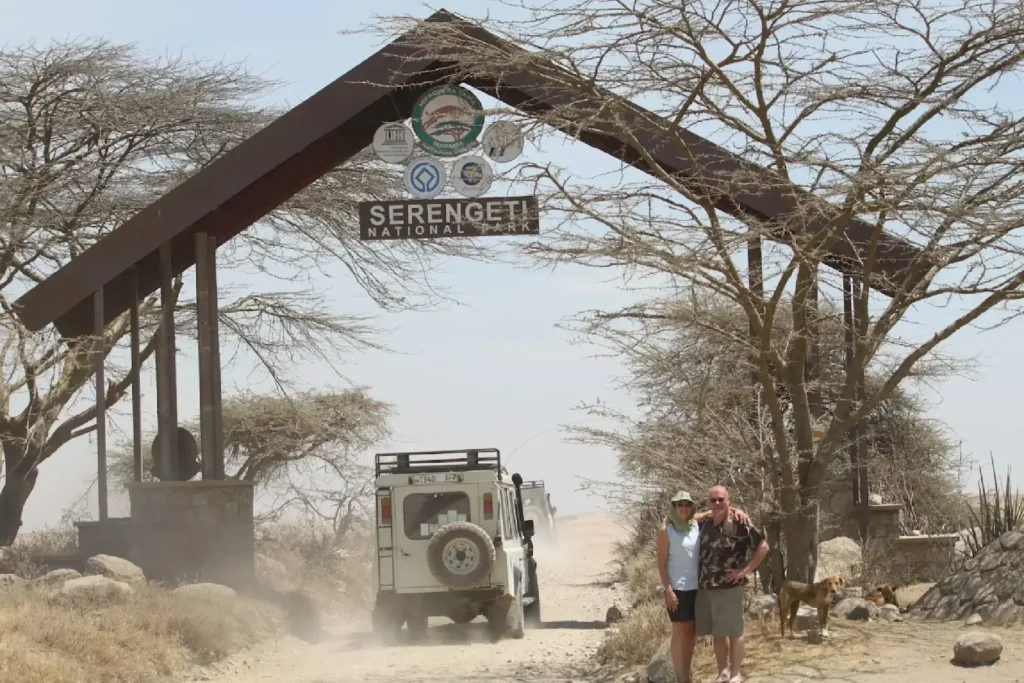
Naabi Hill Gate, Serengeti National Park
The Complete 2026 Guide to the Serengeti’s Main Southern Entrance – Location, Fees, Permits, Wildlife, Self-Drive Tips and Where to Stay
If you are driving into the Serengeti from Arusha, Karatu or the Ngorongoro Crater – which is how the great majority of northern-circuit safaris arrive – your first real stop inside Africa’s most famous park will be Naabi Hill Gate. It is the busiest entrance to Serengeti National Park, the administrative checkpoint where you sign out of the Ngorongoro Conservation Area and sign into the Serengeti, and, for anyone with a few spare minutes, one of the best viewpoints over the legendary short-grass plains.
This guide covers everything you need to know about Naabi Hill Gate: where it is, how to get there, what happens at the gate, the 2026 entry fees and the all-important 24-hour permit rule, the wildlife and Great Migration action around the hill, nearby attractions, accommodation, a sample itinerary and practical tips for both guided and self-drive travellers.
| Naabi Hill Gate at a Glance
Location: South-eastern boundary of Serengeti National Park, on the main road from the Ngorongoro Conservation Area Role: Main southern entry/exit gate – exit point for the NCA and check-in for the Serengeti Distance to Seronera (central Serengeti): about 60 km / roughly 1 hour Distance from Ngorongoro Crater rim: about 85 km / 2–3 hours Facilities: Permit office, washrooms, information centre, small shop, picnic area and a short trail to a hilltop viewpoint Payment: Digital only – Visa/Mastercard or GePG control number; no cash Best for wildlife: December to May, when the Great Migration herds gather on the southern plains |
Where Is Naabi Hill Gate?
Naabi Hill Gate sits on the south-eastern edge of Serengeti National Park, at the point where the gravel highway from the Ngorongoro Conservation Area (NCA) crosses into the national park. Administratively it falls within the Simiyu side of the Serengeti ecosystem, but practically speaking it is the threshold between the Ngorongoro highlands and the ‘endless plains’ that gave the Serengeti its Maasai name.
The gate is built on and around Naabi Hill, an acacia-covered kopje (rocky outcrop) rising sharply out of the flat short-grass plains. Because it is the only significant high ground for many kilometres, the hill is a navigation landmark visible from much of the southern Serengeti.
Key distances from Naabi Hill Gate
| Route | Approx. distance | Approx. drive time |
| Arusha → Naabi Hill Gate (via Karatu & NCA) | about 270 km | 5.5–7 hours |
| Karatu → Naabi Hill Gate | about 115 km | 3–4 hours |
| Ngorongoro Crater rim → Naabi Hill Gate | about 85 km | 2–3 hours |
| Naabi Hill Gate → Seronera (central Serengeti) | about 60 km | about 1 hour (longer with game viewing) |
| Naabi Hill Gate → Lake Ndutu area | about 30 km | about 1.5 hours |
| Naabi Hill Gate → Olduvai Gorge turn-off | about 45 km | about 1 hour |
Drive times are indicative only. The NCA and Serengeti roads are corrugated gravel, speed limits are low (typically 50 km/h), and you will almost certainly stop for wildlife.
Why Naabi Hill Gate Matters
There are several ways into the Serengeti – Ndabaka Gate in the Western Corridor near Lake Victoria, Klein’s Gate in the north-east, Fort Ikoma and Handajega on the western side, and fly-in airstrips such as Seronera, Kogatende and Kusini. But Naabi Hill Gate handles the lion’s share of road traffic because it links directly to the classic northern circuit: Arusha → Tarangire or Lake Manyara → Ngorongoro → Serengeti.
- It is a double checkpoint. Coming from the east, you exit the NCA and enter the Serengeti here; coming the other way, you do the reverse. Both permits are checked and stamped.
- It sets the clock on your Serengeti permit. Serengeti entry fees run in 24-hour blocks from the moment you check in, so the time you pass through Naabi shapes your whole stay.
- It is the gateway to the southern plains. Ndutu, the Gol Kopjes, Moru Kopjes and the migration calving grounds are all within easy reach of the gate.
- It is a genuine attraction in its own right. The short hike up Naabi Hill delivers one of the finest land-based panoramas in the whole park.
What Happens at the Gate
Most visitors spend 20–60 minutes at Naabi Hill Gate. If you are on a guided safari, your driver-guide handles all the paperwork while you use the facilities, stretch your legs and take in the view. Self-drivers handle the process themselves.
Step-by-step: arriving from Ngorongoro
- Check out of the Ngorongoro Conservation Area. There is a separate NCA counter where your NCA permit is stamped and your exit time recorded. Arriving after your NCA permit has expired can trigger another full 24-hour charge.
- Present your Serengeti permit or pay. Show passports, vehicle documents and your pre-paid permit or GePG control number. Payment at the gate is by card only.
- Register the vehicle and your itinerary. Rangers record the vehicle registration, number of passengers, nationality/residency category and the number of nights you will spend in the park.
- Receive your gate pass. Keep it safe – it is checked again at exit and sometimes at ranger posts inside the park.
- Take a break. Use the washrooms, visit the information centre and small shop, eat a picnic lunch and, if time allows, walk up to the viewpoint.
| Expect Queues in Peak Season
During the busiest months (July–September and December–January) it is common to wait around 30 minutes at the Ngorongoro gate and another 30 minutes at Naabi Hill Gate. Guided vehicles often arrive in a wave around midday, so arriving earlier or later can save time. |
Facilities at Naabi Hill Gate
| Facility | Details |
| Permit and payment office | Separate counters for NCA exit and Serengeti entry; card and control-number payments |
| Washrooms | Flush toilets – the last proper facilities for a while if heading to Ndutu or the plains |
| Information centre | Displays on the Serengeti ecosystem, the migration and conservation |
| Small shop | Basic snacks, cold drinks, souvenirs and maps (limited stock) |
| Picnic area | Shaded tables popular for packed lunches; watch your food – birds and monkeys are bold |
| Viewpoint trail | A short, marked walking path to the top of Naabi Hill |
Naabi Hill: The Viewpoint and Its Wildlife
Many travellers rush through Naabi Hill Gate eager to reach Seronera. That is a mistake. The short trail to the summit of Naabi Hill takes 10–20 minutes each way and rewards you with sweeping views in every direction. Apart from a hot-air balloon flight, there is arguably no better vantage point over the southern Serengeti plains.
What you may see on and around the hill
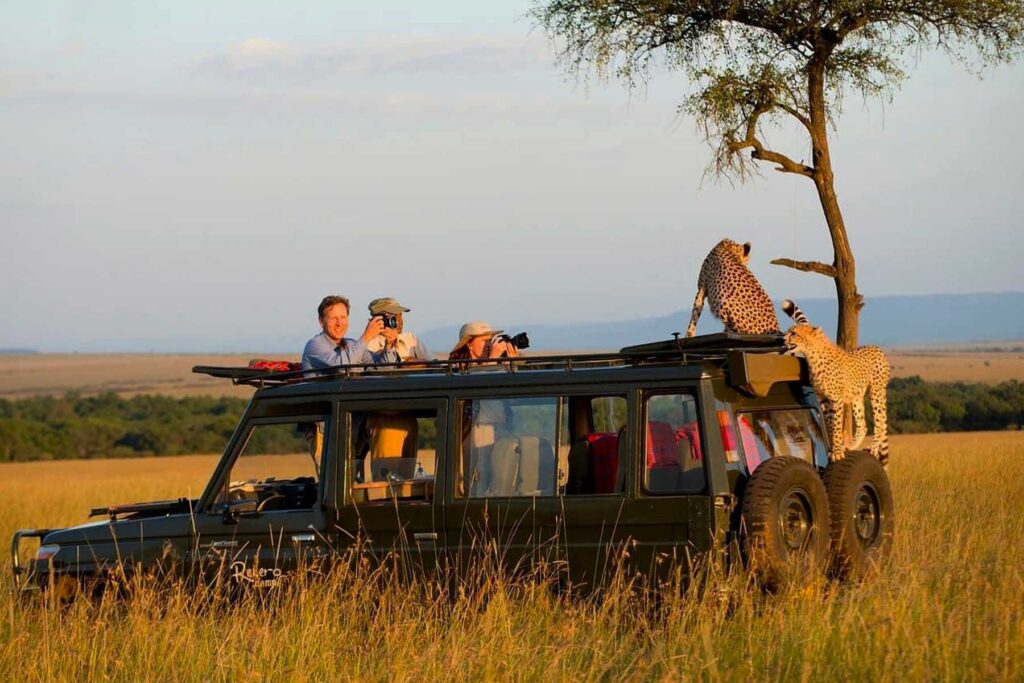
- The Naabi Hill lion pride: a resident pride uses the hill and its surrounding plains as its territory, and sightings close to the gate are not unusual.
- Cheetahs: the open short-grass plains near the hill are classic cheetah country, and the hill has been used as a den site.
- Giraffe, elephant and antelope: the acacia woodland on the hill shelters browsers such as giraffe and dik-dik, plus occasional elephants.
- Great Migration herds: in the green season, the plains below can be filled to the horizon with wildebeest and zebra.
- Birdlife: the Serengeti records over 540 bird species; around the gate look for superb starlings, grey-headed social weavers, rufous-tailed weavers, kori bustards and raptors riding thermals off the hill.
| Safety on the Walk
The viewpoint walk is permitted because it is a short, managed route near the gate, but you are still in a big-cat area. Stay on the marked path, keep children close, never wander off into the long grass and follow any instruction from rangers. Outside designated areas, never leave your vehicle in the Serengeti. |
The Great Migration Around Naabi Hill
Naabi Hill sits at the heart of the Great Migration’s wet-season range. When the short rains arrive around November and December, more than a million wildebeest, along with hundreds of thousands of zebra and gazelle, move south onto the nutrient-rich volcanic grasslands between Naabi, Ndutu and the Gol Kopjes. Calving peaks in February, when roughly half a million calves are born within a few weeks – attracting lions, cheetahs, hyenas and wild dogs.
| Months | Where the herds usually are | What to expect near Naabi |
| December – March | Southern plains: Naabi, Ndutu, Gol Kopjes, Kusini | Peak season. Huge herds, calving (Feb), intense predator action |
| April – May | Southern & central plains, starting to move north-west | Long rains; lush scenery, fewer vehicles, herds may still be close |
| June – July | Western Corridor (Grumeti River) | Herds gone from Naabi; resident lions, cheetahs, gazelles remain |
| August – October | Northern Serengeti & Maasai Mara (Mara River crossings) | Dry, quieter plains near Naabi; good for resident cats |
| November | Herds return south through the east and centre | Short rains; first herds reach the southern plains |
Migration timing depends on rainfall and shifts from year to year. Your guide or rental company will have the latest information on where the herds are.
Serengeti and Ngorongoro Entry Fees 2026
Serengeti National Park is managed by the Tanzania National Parks Authority (TANAPA), while the Ngorongoro Conservation Area is managed by its own authority (NCAA). Because Naabi Hill Gate is the meeting point of the two, you will deal with both fee systems. The figures below are the commonly published 2026 rates for non-resident adults, including 18% VAT.
| Fee | Amount (USD, incl. VAT) | Notes |
| Serengeti entry – high season (16 May – 14 Mar) | $82.60 per person / 24 hrs | TANAPA conservation fee |
| Serengeti entry – low season (15 Mar – 15 May) | $70.80 per person / 24 hrs | Confirm current seasonal rate before travel |
| Serengeti entry – child (5–15 yrs) | approx. $24 per child / 24 hrs | Under 5s enter free |
| Serengeti public campsite | $35.40 per person / night | Special campsites cost more |
| Concession fee (lodges/camps inside the park) | Varies by property & season | Usually included in lodge quotes – check |
| Ngorongoro Conservation Area entry / transit | $70.80 per person / 24 hrs | Payable even if you only drive through to the Serengeti |
| Ngorongoro Crater service fee | $295 per vehicle per descent | Only if you drive down into the crater |
| Vehicle entry fee | Varies by weight & registration | Foreign-registered vehicles pay more than Tanzanian ones |
East African citizens and Tanzanian residents pay considerably lower rates on presentation of a passport or residence permit. Fees are generally reviewed by TANAPA and NCAA each July and once paid are non-refundable, so always confirm the latest rates with your operator or the official authority before you travel.
How to pay
- No cash. All main park gates, including Naabi Hill, accept digital payment only.
- Visa or Mastercard at the gate, or a GePG (Government Electronic Payment Gateway) control number arranged in advance.
- Pre-payment through your operator is the norm on guided safaris and with most self-drive rental companies, who can generate control numbers for you.
- Carry a backup card. Network outages at remote gates do happen; a second card from a different bank can save hours.
Mastering the 24-Hour Permit Rule
The single most important thing to understand about Naabi Hill Gate is the 24-hour rule. Both TANAPA and NCAA permits are valid for 24 hours from the moment you enter, not per calendar day. If you exit even a few minutes late, you can be charged for another full 24-hour period – for every person in the vehicle.
How the rule plays out on a typical route
- You enter the NCA at Lodoare Gate at 10:00 on Day 1 and overnight on the crater rim. Your NCA permit expires at 10:00 on Day 2 – so you must check out at Naabi Hill Gate before 10:00, which means leaving the crater area by about 07:00–07:30.
- If you enter the Serengeti at Naabi at 09:30 on Day 2 and plan three nights, your Serengeti permits run until 09:30 on Day 5. Plan your final game drive so that you exit by then.
- Returning east via Naabi, you need a fresh NCA permit for the transit back towards Karatu.
| Timing Tips from Experienced Self-Drivers
Enter late morning when possible – this gives you the afternoon, evening and following morning inside the park on a single permit. Note your exact entry time on your phone and on paper; set an alarm for two hours before expiry. Build in a buffer for punctures, wildlife roadblocks and queues. Arriving with minutes to spare is common – and stressful. Know exactly where the gate building is. Construction and new buildings around the gate have confused drivers in the past; ask your rental company for current coordinates. |
Getting to Naabi Hill Gate
By road from Arusha (the classic route)
From Arusha, follow the tarmac west through Mto wa Mbu (gateway to Lake Manyara) and Karatu to Lodoare Gate, the entrance to the Ngorongoro Conservation Area. From there the road climbs to the crater rim, then descends onto the plains past the Olduvai Gorge turn-off and the Shifting Sands area before reaching Naabi Hill Gate. Most itineraries split the journey with a night in Karatu or on the crater rim.
By air
Travellers short on time often fly from Arusha or Kilimanjaro to Seronera, Ndutu or Kusini airstrips. Flying in avoids both the long drive and the NCA transit fee – but you will miss the Naabi Hill experience unless your camp includes a game drive there.
Self-drive
Naabi Hill Gate is very manageable on a self-drive safari in a well-prepared 4×4 such as a Toyota Land Cruiser, Land Cruiser Prado or Hilux double cab, ideally with a rooftop tent for campsite stays. Before you set off:
- Refuel in Karatu. Fuel is very limited beyond this point; Seronera fuel is sporadic and expensive. Carry jerrycans if your rental includes them.
- Carry vehicle documents: registration card/logbook, rental authorisation letter, insurance and – for foreign-registered vehicles – the COMESA Yellow Card and temporary import permit.
- Carry personal documents: passports with visas, driving licence and International Driving Permit.
- Pack a spare wheel (ideally two), tyre repair kit, compressor, water and snacks. Corrugations on the NCA–Naabi road are hard on tyres.
- Download offline maps (Tracks4Africa, Maps.me or Google Maps offline) – mobile signal is patchy on the plains.
- Observe park driving hours, generally from about 06:00 to 18:30, and stay on designated roads. Off-road driving is prohibited except in specific areas.
- Turn off for Ndutu before the gate if your plans include the Ndutu area – the junction is a short distance before Naabi Hill Gate on the left.
Things to Do Near Naabi Hill Gate
| Attraction | Distance from gate | Why go |
| Naabi Hill viewpoint | At the gate | Panoramic views over the southern plains; resident lions nearby |
| Gol Kopjes | approx. 20–30 km north-east | Granite outcrops famous for cheetahs and raptors; permit needed for some areas |
| Lake Ndutu & Lake Masek | approx. 30 km south | Migration calving grounds Dec–Mar; big cats, wetland birds |
| Simba Kopjes | On the road to Seronera | Lions lounging on rocks; good stop en route north |
| Moru Kopjes | approx. 60–70 km north-west | Maasai rock paintings, the Gong Rock, black rhino area |
| Seronera Valley | approx. 60 km north | Year-round leopards, lions and the Seronera River |
| Olduvai Gorge | approx. 45 km east (in NCA) | ‘Cradle of Mankind’ – fossil site and museum |
| Shifting Sands | Near Olduvai (in NCA) | A crescent-shaped dune that ‘walks’ across the plains |
Where to Stay Near Naabi Hill Gate
There is no accommodation at the gate itself, but you are within easy reach of the Ndutu area to the south and central Serengeti (Seronera) to the north. Remember that staying inside the national park or NCA adds concession fees, which are usually included in lodge rates.
| Tier | Area | Examples |
| Luxury | Ndutu / southern Serengeti | Malaika Ndutu Luxury Camp, Elewana Serengeti Pioneer Camp (central), Chaka Camp (mobile) |
| Mid-range | Seronera / central | Serengeti Serena Safari Lodge, Seronera Wildlife Lodge, Kisura Serengeti Tented Camp |
| Seasonal migration camps | Ndutu / Kusini (Dec–Mar) | Various mobile tented camps that relocate to follow the herds |
| Budget / camping | Seronera & designated sites | TANAPA public campsites at Seronera (~$35.40 pp/night); special campsites by booking |
Lodge names are given as examples of the type of property in each area; availability, seasonal operation and rates change, so always check before booking.
Best Time to Visit Naabi Hill Gate
| Season | Months | Pros | Cons |
| Green season / calving | Dec – Mar | Migration on the doorstep, calving, predator action, lush landscapes | Busy around Ndutu; higher lodge prices; short showers |
| Long rains | Apr – May | Low-season park fees, fewer vehicles, dramatic skies | Muddy roads; some camps close; tougher self-driving |
| Dry season | Jun – Oct | Good roads, clear skies, excellent resident cat sightings | Herds have moved north/west; plains look dry and dusty |
| Short rains | Nov | Herds returning south, green flush begins | Unpredictable showers |
For the classic Naabi Hill experience – the plains ‘choked black’ with wildebeest – aim for January to March. For easy self-driving and fewer crowds at the gate, consider June or October.
4-Day Itinerary via Naabi Hill Gate
| Day | Route | Highlights |
| Day 1 | Arusha → Karatu (approx. 2.5–3 hrs) | Optional Lake Manyara game drive; refuel and overnight in Karatu |
| Day 2 | Karatu → Ngorongoro Crater → Naabi Hill Gate → Ndutu or Seronera | Early crater descent, exit NCA within 24 hrs, check in at Naabi, hike the viewpoint, afternoon game drive |
| Day 3 | Full day in the Serengeti | Southern plains & kopjes in the green season, or Seronera Valley in the dry season |
| Day 4 | Serengeti → Naabi Hill Gate → Karatu / Arusha | Morning game drive, exit before your 24-hr permit expires, transit back through the NCA |
Common Mistakes to Avoid
- Missing the 24-hour deadline at the NCA or Serengeti exit and paying a second full day’s fees for everyone in the vehicle.
- Bringing only cash. Gates are cashless; a declined card without a backup can leave you stuck.
- Underestimating drive times from the crater to Naabi – corrugations, wildlife and queues add up.
- Skipping fuel in Karatu. There is no reliable fuel at the gate.
- Rushing past the viewpoint. Twenty minutes on Naabi Hill is one of the most memorable stops on the circuit.
- Leaving food out at the picnic area. Kites, starlings and vervet monkeys are expert thieves.
Frequently Asked Questions
What is Naabi Hill Gate?
Naabi Hill Gate is the main southern road entrance to Serengeti National Park in Tanzania, located where the road from the Ngorongoro Conservation Area enters the park. It is where visitors check out of Ngorongoro and check into the Serengeti.
How far is Naabi Hill Gate from Seronera?
About 60 km, or roughly one hour’s drive without stops. With game viewing along the way, allow two to three hours.
How much does it cost to enter the Serengeti at Naabi Hill Gate in 2026?
The commonly published non-resident adult rate is US$82.60 per person per 24 hours in high season (16 May – 14 March) and US$70.80 in low season, including VAT. Children aged 5–15 pay a reduced rate and under-5s enter free. Vehicle, campsite and concession fees are extra.
Do I have to pay Ngorongoro fees to reach Naabi Hill Gate by road?
Yes. Driving from Arusha or Karatu to Naabi passes through the Ngorongoro Conservation Area, so you pay the NCA entry/transit fee even if you do not stop. Flying into a Serengeti airstrip avoids this charge.
Can I pay cash at Naabi Hill Gate?
No. Payment is digital only – Visa, Mastercard or a GePG control number. Most operators pre-pay fees on your behalf.
What are the opening hours at Naabi Hill Gate?
Serengeti gates and game driving generally operate from about 06:00 to 18:30. Confirm current hours with TANAPA or your operator, and avoid planning to arrive close to closing time.
Can I walk at Naabi Hill?
Yes – a short marked trail leads to the hilltop viewpoint near the gate. Stay on the path, as lions and other predators frequent the area.
Is Naabi Hill Gate good for seeing the Great Migration?
Very. From roughly December to March the migration herds gather on the southern plains around Naabi and Ndutu, and the calving season peaks in February.
Can I self-drive through Naabi Hill Gate?
Yes. Self-drivers in a properly equipped 4×4 with the correct documents are welcome. You will need to manage your own permits, payments and timing, so plan carefully around the 24-hour rule.
Plan Your Serengeti Safari
Naabi Hill Gate is far more than a paperwork stop – it is the moment the Serengeti opens up before you. With your permits timed correctly, your fuel tank full and a few minutes set aside for the viewpoint, it can be one of the highlights of your Tanzania safari.
| Ready to Go?
Whether you want a fully guided northern-circuit safari or a self-drive adventure in a 4×4 with a rooftop tent, Marriott Safaris Africa can arrange your vehicle, permits and itinerary through Ngorongoro, Naabi Hill Gate and beyond. Contact our team today to start planning. Perfection Anytime. |
Fees, hours and road conditions change. Information in this guide was checked in November 2027; always confirm the latest details with TANAPA, the NCAA or your safari operator before travelling.