
Arusha National Park
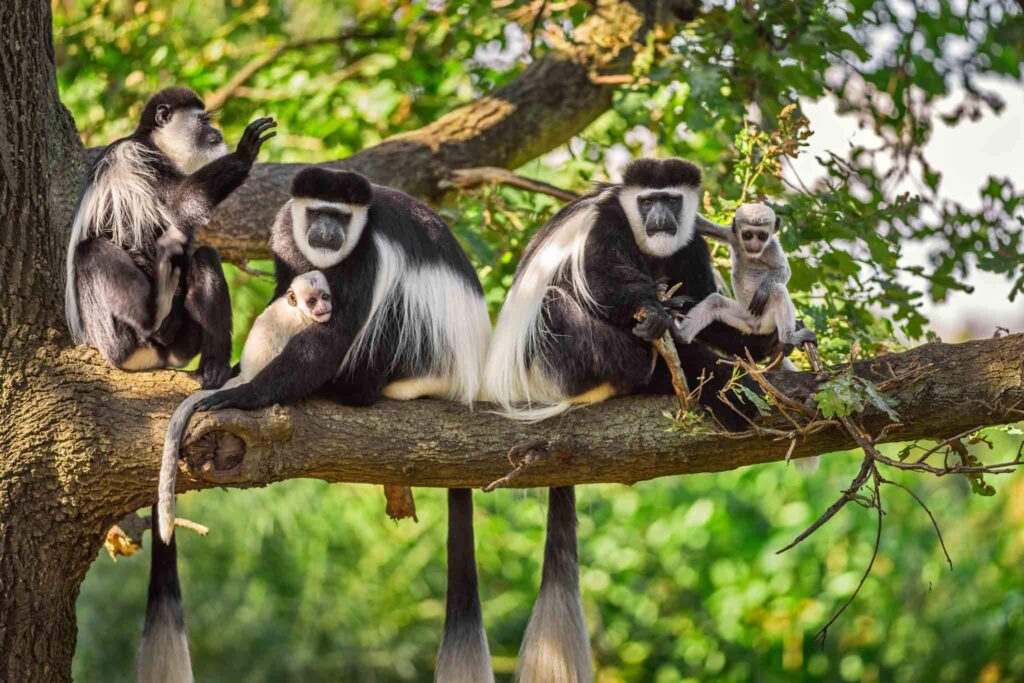
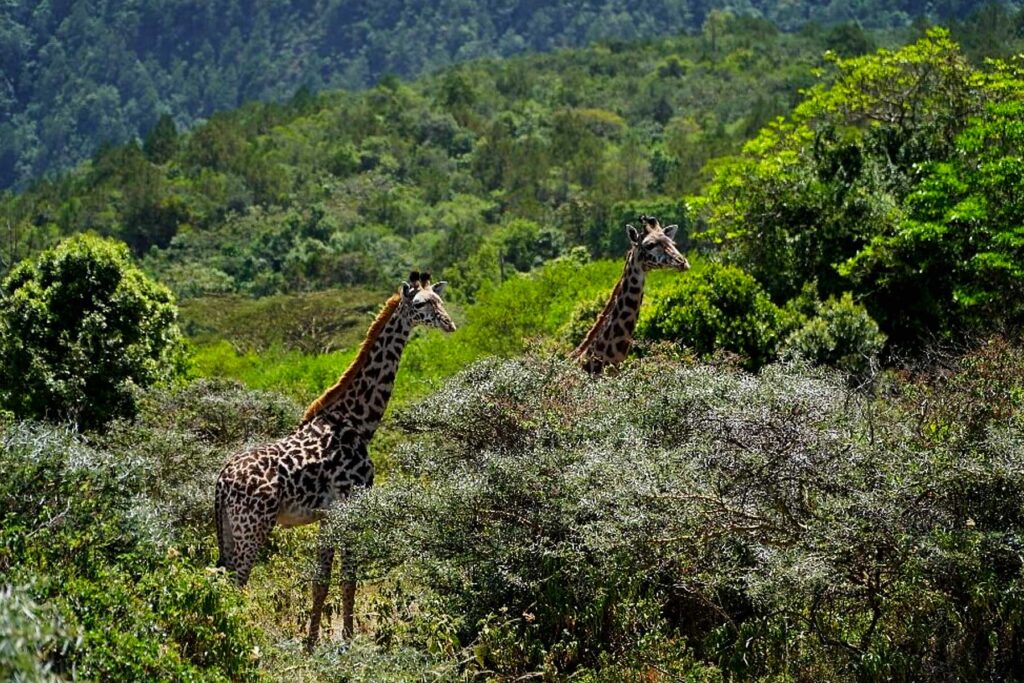
Arusha National Park is a captivating national park situated in Northern Tanzania, northeast of Arusha city. It is renowned for housing Tanzania’s second highest peak, Mount Meru, and the greatest population of giraffes globally. It encompasses 552 square kilometers. It is situated 25 kilometers east of Arusha, 58 kilometers from Moshi, and 35 kilometers from Kilimanjaro International Airport (KIA). It hosts remarkable wildlife species not found in other national parks within the northern circuit, encompassing diverse vegetation types such as lush rainforest, savannah, and alpine flora. The fauna includes buffaloes, bushbucks, warthogs, zebras, red duikers, elephants, giraffes, leopards, hippos, and primates such as black and white colobus monkeys, vervet monkeys, and blue monkeys. Additionally, notable bird species include the grey crowned crane, flamingos, African fish eagle, Hartlaub’s turaco, and secretary birds, among others. The travel from Kilimanjaro International Airport to Arusha National Park takes around 40 minutes. This park is favored for providing both single-day and multi-day visits to patrons from Arusha city. Arusha National Park features a picturesque environment with three separate regions: the Meru Crater, which channels the Jekukumia River in the west; the Ngurdoto Crater in the southeast; and the shallow, alkaline Momella Lakes, characterized by diverse algal hues in the northeast. The park’s limited size enables clients to engage in all activities and return to Arusha town for overnight accommodations.
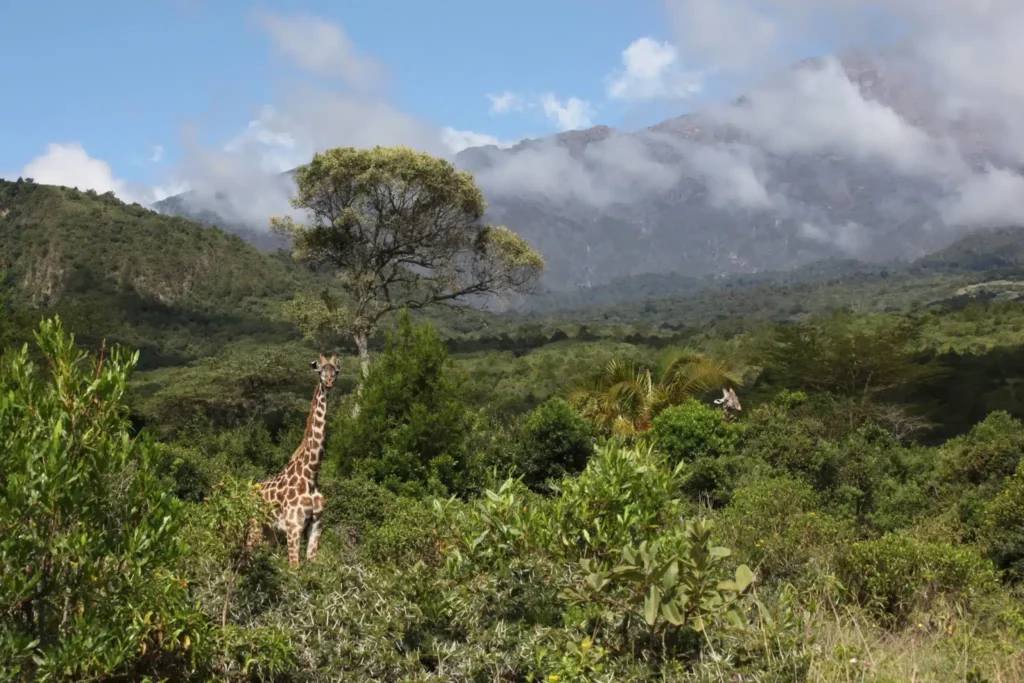
Tanzania excursions and safaris are integral components of the experience for tourists visiting Arusha National Park. The name of Arusha National Park is taken from the native Waarusha people who historically inhabited the region. The park boasts a remarkable natural system with several attractions, which are the primary reasons it is a prominent tourist destination in Tanzania. The park features three distinct and remarkable landscapes: the Meru Crater funnels, the Kekukumia River, the peak of Mount Meru on its western rim, the Ngurdoto Crater in the southeast, and the shallow alkaline Momelia Lakes in the northeast portion of the park. Arusha National Park is characterized by its abundant flora and animals, offering tourists a variety of activities to indulge in.
History of Arusha National Park
Arusha National Park, sometimes referred to as “the diamond among the shadows of the giants,” is a distinguished safari locale in Tanzania. It is a gem of many ecosystems, offering a stunning view of Mount Meru, Africa’s fifth highest peak, and Mount Kilimanjaro, the tallest free-standing mountain globally. Visitors will value the serene rivers and lakes at the lower elevations of Mount Meru within Arusha National Park, along with the opportunity to observe the renowned black-and-white colobus monkeys. Arusha National Park is an exceptional destination due to its distinctive ecosystem and wildlife. It is a small park encompassing an area of 137 square kilometers, situated in northern Tanzania, northeast of Arusha. The park is exceptionally beautiful, including wonderful landscapes and awe-inspiring vistas. Mount Meru, the fifth highest mountain in Africa, towers over Arusha National Park, its impressive slopes extending into extensive forested hills, making it an ideal location for a mountain climbing safari. This destination is exceptional for lifelong safaris in Tanzania, as it provides a wilderness experience unparalleled by other national parks on the northern circuit. Arusha National Park is situated in Tanzania. Due of its diminutive size, it is often incorporated into itineraries alongside other northern circuit national parks, including the Serengeti, Ngorongoro, Tarangire, and Lake Manyara.
The history of Arusha National Park commenced in 1876, when Count Teleki, a Hungarian, explored the Momella region, one of the park’s attractions in Tanzania. Following his visit, he remarked on various features of the park, including the high population of hippopotamuses and black rhinoceroses he had observed. The Trappe family relocated to the park in 1907, primarily to engage in agriculture in Momella, and utilized significant areas of the present park as a cattle ranch. Mrs. Trappe, the inaugural female professional hunter in East Africa, generously contributed a significant piece of the Momella estate to a wildlife reserve. The farm was integrated into the park upon its establishment in 1960. The park was established in 1960, comprising only a small section of the Arusha National Park, and was originally designated as Ngurdoto Crater National Park. It was created solely to protect and preserve select regions, including the Ngurdoto Crater and Mount Meru, which was once beyond the park’s boundaries. The park was renamed from Ngurdoto Crater National Park to Arusha National Park in 1967 following the incorporation of the Mt. Meru region. The name Arusha originates from the Waarusha people who inhabited the region historically. Subsequent to Tanzania’s independence, the park was formally established, incorporating Mont Meru. The Tanzanian government has committed resources and exerted effort to enhance the park, establishing it as a premier attraction in Arusha, especially for individuals organizing safari vacations to the Serengeti and Ngorongoro conservation regions. Arusha National Park today features essential tourist amenities, including well-constructed entrance gates, picnic areas, camping sites, adequate restrooms, lodges, and more, enhancing visitor comfort during their stay. Historically, the park was predominantly enveloped in bushes and forested areas, accommodating only a limited number of browsing animals, such as giraffes, hence rendering game observation more challenging compared to other parks. A small Serengeti was established within the park to support other grazing species and facilitate game observation in that area. The region was established and designated as Min Serengeti due to its expansive grassland resembling the habitats of Serengeti National Park. The tiny Serengeti in Arusha National Park is an expansive grassland frequented by diverse wildlife, including elephants, giraffes, buffaloes, zebras, warthogs, and waterbucks, making it a significant tourist attraction with excellent game viewing opportunities. The park features premier attractions, including Mount Meru, the second largest mountain in Tanzania after Mount Kilimanjaro, diverse habitat types comprising nearly four distinct ecosystems, and a variety of wildlife, encompassing both large mammals and smaller species, alongside an array of avian life, such as forest birds and aquatic species, notably the abundant flamingos frequently observed at Momella Lake within the park. Similar to other renowned national parks, including Lake Manyara, Mkomazi, Tarangire, Ngorongoro, and Serengeti, the optimal period for visiting Arusha National Park is during the dry season, which spans from May to nearly November. During this time, visitors can engage in various tourism activities, such as game drives and wildlife observation, which are most favorable. Additionally, for those interested in ascending Mount Meru, this period is also ideal for hiking. Birdwatching is possible year-round, throughout both the rainy and dry seasons, for enthusiasts.
Attractions for Tourists in Arusha National Park
Wildlife
Arusha National Park is esteemed as one of the premier destinations for wildlife safaris in Tanzania’s northern safari circuit. The park hosts a diverse array of wildlife species across its various regions, including the Ngurdoto Crater (Little Ngorongoro), the banks of Momella Lakes, the Little Serengeti (Serengeti Ndogo), and Ujambo Wa Mbogo, also known as “Buffalo’s Glade.” Arusha National Park is home to several animals, including giraffes, waterbucks, dik-diks, duikers, zebras, leopards, lions, spotted hyenas, elephants, bush pigs, red duikers, warthogs, hippos, and black and white colobus monkeys, as well as blue monkeys, among others.
Aves
Arusha National Park in Tanzania is a premier birding safari destination, boasting over 400 known bird species, including woodland species, raptors, waterfowl, and migratory birds. Avian species present in Arusha National Park encompass pink-hued flamingos, African fish eagles, African olive pigeons, Augur buzzards, Bar-tailed trogons, Bearded vultures, Black saw-wings, Cinnamon-chested bee-eaters, Egyptian geese, Great crested grebes, Hammerkops, bronzy sunbirds, pied avocets, red-billed oxpeckers, great-headed bush shrikes, pelicans, white-browed coucals, golden eagles, yellow-billed storks, Hartlaub’s turacos, Little grebes, Narina trogons, Peregrine falcons, red-fronted parrots, scaly francolins, silvery-cheeked hornbills, Southern Pochards, Tawny eagles, and Verreaux’s eagles, among others. Notable avian species in Arusha National Park include flamingos, which inhabit the shores of the Momela Lakes.
Mount Meru
Mount Meru is a remarkable geological formation and a prominent landmark situated in the center of Arusha National Park, east of the Great Rift Valley. This active volcano, resulting from volcanic activity, reaches an elevation of 4,566 meters above sea level, making it the second tallest mountain in Tanzania. Mount Meru has a base measuring 20 kilometers at an elevation of 2000 meters, with portions of its cliffs at 2500 meters having collapsed. It is reported to have been the tallest volcano in Tanzania; however, due to a volcanic explosion, its summit was severed, resulting in a caldera. The volcano last erupted in 1910. Mount Meru presents an exhilarating mountain climbing safari in Tanzania, where ascending the peak provides a visually stunning and gratifying experience, featuring a spectacular traverse along the knife-edge of the crater rim.
Momella Lakes
The Momella Lakes are a series of seven remarkable alkaline lakes located in the northeastern sector of Arusha National Park, serving as a prominent attraction for tours in the area. These lakes were formed from volcanic debris resulting from a significant eruption that removed the summit of Mount Meru approximately 250,000 years ago. The Momela Lakes are excellent locations for birding safaris in Tanzania, serving as habitats for several avian species, including the migratory greater pink flamingos. The lakes comprise Big Momela, Small Momela, El Kekhotoito, Kusare, Rishateni, Lekandiro, and Tulusia. The Momela lakes receive water from subterranean springs, and each lake exhibits a distinct coloration, varying from green to turquoise. The varying colors of the lakes result from their distinct mineral compositions, with each lake possessing a unique mineral profile and differing types of algae present. The Momela lakes draw a substantial avian population, including herons, shoebills, pink flamingos, Egyptian geese, guinea fowl, African fish eagles, and African jacanas, among others.
Ngurdoto Crater
The Ngurdoto crater is a remarkable feature within Arusha National Park and one of the five exquisite volcanic calderas located in the northern part of Tanzania, with Ngorongoro, Empakaai, Maasai, and Olmoti. Ngurdoto Crater is an extinct volcano, commonly known as “Little Ngorongoro” because to its notable similarity to the Ngorongoro Crater. It is 3.2 kilometers in circumference and has a depth of 300 meters. The crater is basin-shaped, characterized by steep walls and enveloped in dense rainforests. Its floor is primarily composed of marshy grasslands that host buffaloes, elephants, warthogs, antelopes, monkeys, baboons, leopards, spotted hyenas, elusive red duikers, kirk dik-diks, and numerous avian species, including herons, hammerkop, spur-winged geese, hornbills, bee-eaters, and turacos, among others. The Ngurdoto Crater is an exemplary destination for a Tanzania wildlife safari. In contrast to the Ngorongoro Crater, which it resembles, the bottom of Ngurdoto Crater is soft, rendering it difficult for vehicular access; thus, it is exclusively traversed on foot during walking safaris. Exploration of Ngurdoto Crater is conducted via a walking safari, with access to the caldera’s edge facilitated by a 4X4 safari vehicle, which is enveloped by dense rainforest. Traversing the Ngurdoto Crater presents an opportunity to observe a variety of fauna and avifauna.
The Mini Serengeti
The small Serengeti, sometimes referred to as ‘Serengeti Ndogo,’ a Swahili term meaning small Serengeti, is one of the grasslands located within Arusha National Park. It is located around 500 meters north of the Ngongongare gate, adjacent to the road leading to the Momella gate. It hosts a variety of animals that congregate for grazing. Herbivores include buffaloes, zebras, warthogs, elephants, and waterbucks. A morning excursion to this location will present a splendid view of a congregation of animals grazing in unison. These herbivores are seldom observed during midday. At Mini Serengeti, you will experience game viewing, walking safaris in proximity to the animals, and photography with the wildlife as a backdrop. It will evoke a sense of being in the magnificent Serengeti.
Ujambo Wa mbogo
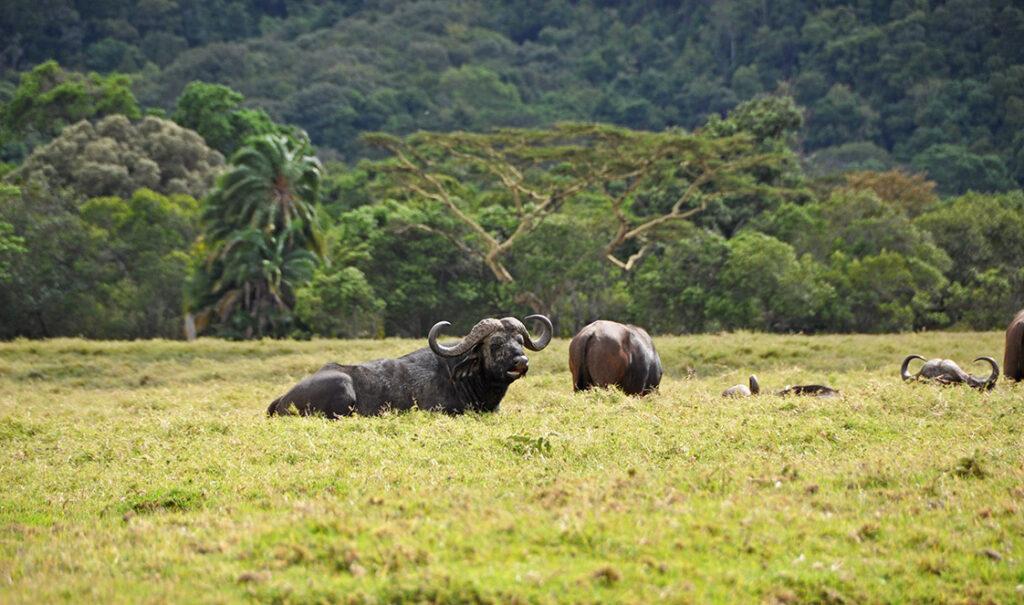
Ujambo Wa Mbogo, meaning “the buffalo’s glade,” is a notable tourist site in Tanzania’s Arusha National Park, situated in the northeastern section, just west of the Momela Gate and at the base of Mount Meru. Ujambo Wa Mbogo is an exemplary location for walking safaris in Tanzania, with a vast natural glade comprised of marshland, shrubs, and streams that provide a feeding ground for many animal species, including buffaloes, giraffes, and warthogs. The buffaloes are the prominent creatures observed at this place, grazing on the area’s tall grasses, which they shorten. Warthogs are also spotted foraging in the pasture fields while resting on their knees. Ujambo Wa Mbogo can be incorporated into your trekking excursions in Tanzania to the Tululusia waterfalls.
Fig Tree
Fig Tree Arch in Arusha National Park is a tree with an arch sufficiently large for a tree or an elephant to traverse. This fig tree serves as a remarkable photographic location, providing numerous perspectives for stunning images, such as standing beneath it or peering from the top of your safari vehicle while positioned under the tree. The Fig Tree originated from a parasite tree discarded by foraging birds and is encountered during a trekking safari in Tanzania to the Tululusia waterfalls.
Ngurudoto Museum
This museum exhibits various specimens of animals native to the Ngurudoto Crater and Arusha National Park at large. You will examine skeletons, remains, taxidermy specimens, and information regarding these species. The museum houses diverse plant species along with other pertinent information you may inquire about.
Tululusia Hill
Tululusia Hill is a notable feature of Arusha National Park. Tululusia Hill, renowned for its population of elephants, buffalo, colobus monkeys, and arboreal pythons, is adorned with lush vegetation that imparts a vibrant green hue. At this slope, you will encounter the Tululusia waterfalls. Descending from around 28 meters, this substantial waterfall provides an opportunity for a waterfall bath. The Tululusia waterfalls are likewise linked to descending pebbles. Consequently, you will get the opportunity to observe the Tululusia waterfalls from a distance.
Activities in Arusha National Park
Game Drives
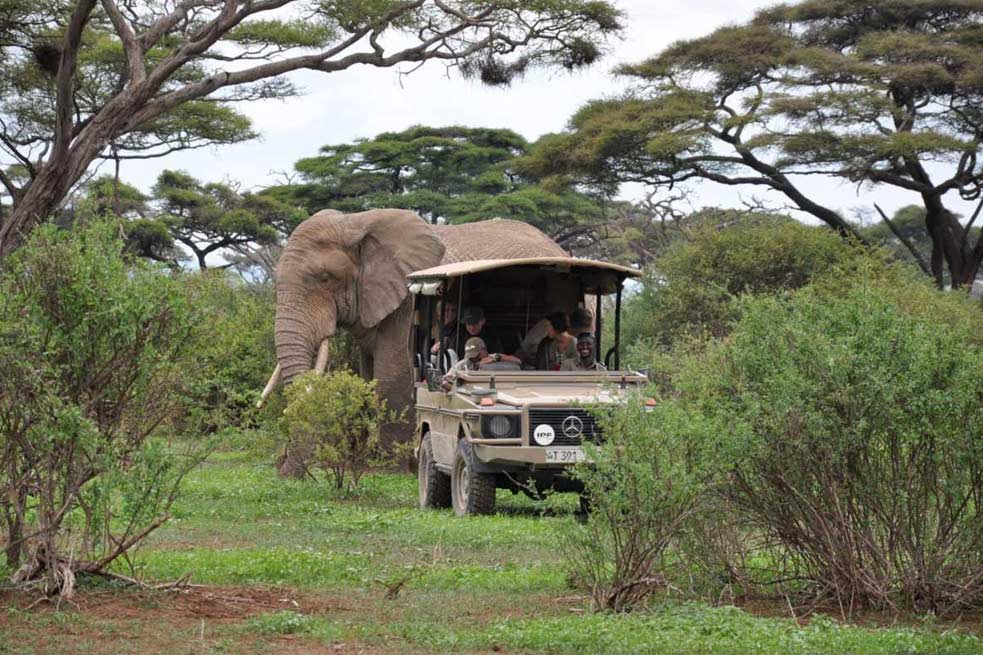
Game drives are among the most prevalent activities in Arusha National Park. During the game drive, you will traverse various trails in the expansive savannah grasslands, including the Serengeti Ndogo, where you may observe fauna such as dik-diks, zebras, reedbucks, giraffes, bush pigs, red duikers, waterbucks, and primates, including black and white colobus monkeys and blue monkeys, particularly near the Ngurdoto Museum. Additionally, with some fortune, you may encounter predators such as leopards, hyenas, and wildcats, among others. The park’s pathways will guide you to Momella Lakes and Ngurdoto Crater, offering breathtaking vistas of various creatures, including hippos in the water and others congregating along the shoreline to hydrate. The game drive lasts approximately 4 hours and is an essential activity not to be overlooked during your safari in the park.
Mountaineering
Mount Meru is the second highest mountain in Tanzania, following Kilimanjaro, and the fifth highest in Africa, with an elevation of 4,566 meters above sea level, rendering trekking the mountain an intriguing and adventurous endeavor within Arusha National Park. Mount Meru was significantly taller before a cataclysmic eruption over five hundred thousand years ago, resulting in a vast horseshoe-shaped crater with steep cliffs. Within this crater, minor volcanic eruptions have formed a subsidiary peak known as Ash Cone, which provides stunning vistas. Ascending the mountain requires approximately three to four days to attain the top, with some people asserting that it is more arduous and picturesque than Mount Kilimanjaro. While hiking, you will traverse lower slopes, the Ngarenanyuki River, and waterfalls, while enjoying breathtaking vistas of ancient fig tree forests, pristine mountain stream waters, and the Momella Lakes situated near the mountain’s base. You will encounter diverse animal habitats, including zebras, buffaloes, cheetahs, leopards, various bird species, and primates such as black and white colobus monkeys and short-furred Sykes monkeys. Additionally, you will observe farmlands and Maasai herdsmen tending to their cattle on the fertile lower slopes. During the ascent of the mountain, you will spend the night in Miriakamba hut, and when reaching the peak, you will be rewarded with breathtaking vistas of Mount Kilimanjaro, the ashtray, and the crater of Mount Meru.
Canoeing
Arusha National Park is a designated protected region in Tanzania that provides an exquisite canoeing experience. Canoeing in the park occurs on the little Momella Lake, assisted by a proficient guide who will paddle beside the lake. During the canoe excursion, you will experience a tranquil journey and have the opportunity to observe various animals such as hippos in the water, bushbucks, waterbucks, giraffes, buffaloes, and zebras along the lake’s shores, as well as aquatic birds including flamingos, pelicans, herons, and fish eagles, while capturing remarkable photographs.
Guided Nature Walks
This is an exhilarating endeavor that enables you to traverse the park on foot. Arusha National Park possesses a lower density of hazardous fauna, making it an optimal location for a guided nature walk. On the captivating nature walk, you will traverse trails that lead beneath Mount Meru, Ngurdoto Crater, Kitoto to Njeku viewpoint, Momella Gate to Ikikoni, Tululusia Waterfall, and the Ujambo wa Mbogo region. Nature walks in Arusha National Park are conducted with the assistance of a knowledgeable and armed park ranger, allowing participants to traverse marshy thickets and streams while observing stunning scenery and landscapes. Visitors may encounter wildlife such as giraffes, warthogs, buffaloes, and zebras, enjoy the melodious calls of various bird species, inhale fresh air, unwind mentally, and experience the refreshing breeze, among other delights.
Bird Watching
Arusha National Park is home to approximately 400 bird species, including endemic and near-endemic varieties, establishing it as one of Tanzania’s premier birding sites. Birdwatching in the park is optimally conducted at the alkaline Momella lakes and adjacent forests, where enthusiasts can observe a remarkable array of avian species, including the Verreaux’s eagle, augur buzzard, greater flamingos, little grebes, spur-winged goose, secretary birds, African fish eagle, bar-tailed trogon, black saw-wing, bearded vulture, Hartlaub’s turaco, red-fronted parrot, tawny eagle, Narina trogon, Egyptian goose, and African olive pigeon, among others. While birdwatching, you will also observe many birds soaring above Ngurdoto Crater.
Horse Back Riding
Horse riding is available at Arusha Park along various trails within the national park, and this activity must be arranged prior to the visit to the park. Tourists can also appreciate observing other wildlife species, such as giraffes and zebras, while horseback riding.
Accommodations within Arusha National Park
Tourists visiting Arusha National Park can choose from luxury, midrange, and economy accommodations. Various campsites are available for travelers to utilize during their trips to this national park. Arusha National Park is a distinguished tourist destination featuring numerous lodges and hotels that provide a home-like experience for visitors on safari. Notable establishments include Gran Melia Arusha, Le Jacaranda Hotel, Mrimba Palm Hotel, Boulevard Inn Mt Meru, Sinzia Villas, Venus Premier Hotel, Green Mountain Hotel, Tulia Boutique Hotel, Mvuli Hotels Arusha, Mount Meru Hotel, Rivertrees Country Inn, Kili Vila, Lemala Vila, Mount Meru Game Lodge, Arusha Serena, Arumeru River Lodge, Fun Retreat Resort Hotel, and Ayurveda Spa, among others.
Directions to Arusha National Park
By Air: Arusha National Park is accessible by road, requiring around one hour’s drive from Kilimanjaro International Airport in a safari vehicle, and about 40 minutes from Arusha town.
The national park is accessible by public road transport, with regular bus services operating from Arusha and Ngare Nanyuki settlement to Ngongongare gate. It is also possible to hire a taxi from Arusha to the park.
When to visit Arusha National Park
Arusha National Park provides an extraordinary safari experience, optimal during specific times of the year. Game viewing is most favorable in the dry season, which spans June, July, August, September, and October. During the dry season, the park’s vegetation is sparse, facilitating animal observation, and the game viewing routes are relatively brief, allowing for convenient navigation within the park. The optimal months for bird watching at the park are November, December, January, February, March, and April, during which migratory bird species from Europe and North Africa are present.