Walking Safaris in Serengeti National Park
The Serengeti. The very name evokes images of vast golden plains stretching to the horizon, punctuated by flat-topped acacia trees silhouetted against a fiery African sunset. For most visitors, experiencing this legendary ecosystem means peering through a vehicle window at lions lazing in the grass or herds of wildebeest thundering across the savanna. But there is another way — a more intimate, more visceral, and arguably more rewarding way — to encounter one of the world’s greatest natural wonders: on foot.
Walking safaris in Serengeti National Park offer an unparalleled opportunity to slow down, engage all your senses, and truly connect with the African wilderness. When you step out of the vehicle and place your feet on the ancient soil of the Serengeti, everything changes. The rustle of grass becomes significant. The distant rumble takes on new meaning. Every track, every dropping, every bent blade of grass becomes part of a story told by nature herself.
This comprehensive guide covers everything you need to know about walking safaris in the Serengeti — from understanding the regulations and choosing the right operator, to knowing what to expect on the trail and how to make the most of this extraordinary experience.
1. What Is a Walking Safari?
A walking safari — sometimes called a foot safari, bush walk, or guided walking safari — is exactly what it sounds like: an escorted excursion into the wilderness on foot, led by a qualified, armed guide. Unlike the conventional game drive, where guests are elevated above the bush in a 4×4, a walking safari places you at ground level, immersed in the same environment as the animals that call the Serengeti home.
Walking safaris typically last between two and four hours, though multi-day fly-camping expeditions are also available for the more adventurous traveler. They are conducted in the early morning or late afternoon when temperatures are cooler and wildlife activity is at its peak. Groups are kept deliberately small — usually no more than six to eight guests — to minimize disturbance and maximize safety.
1.1 Walking Safari vs. Game Drive: Key Differences
Understanding the difference helps set the right expectations:
| Feature | Walking Safari | Game Drive |
| Pace | Slow, deliberate, immersive | Covers large distances quickly |
| Sensory Experience | Full engagement — sounds, smells, touch | Primarily visual |
| Animal Distance | May be closer; depends on context | Often close, elevated vantage |
| Focus | Tracks, insects, plants, small life | Large mammals and birds |
| Physical Demand | Moderate — suitable for most fitness levels | Minimal |
| Group Size | 2–8 guests maximum | Up to 6–7 per vehicle |
| Duration | 2–4 hours typically | 2–4 hours or full day |
| Best For | Detail, intimacy, deeper connection | Big game sightings, photography |
2. Regulations Governing Walking Safaris in the Serengeti
Walking safaris in Serengeti National Park are strictly regulated by the Tanzania National Parks Authority (TANAPA). These regulations exist not only to protect visitors but to safeguard the park’s extraordinary biodiversity and ensure the long-term viability of this form of tourism.
2.1 Core TANAPA Requirements
- All walking safaris must be led by a TANAPA-licensed armed ranger, who accompanies the group at all times. This ranger carries a high-calibre rifle and has extensive training in wildlife behaviour and emergency response.
- Walking is only permitted in designated areas of the park. The regulations restrict foot traffic to specific zones to prevent disturbance to sensitive habitats and high-traffic wildlife corridors.
- Group sizes are capped at a maximum of eight guests per walk. Some operators prefer even smaller groups of four to six for a more personal and safer experience.
- All participants must sign an indemnity form before departing. This is standard practice across Tanzania’s walking safari operators and acknowledges the inherent risks of moving through big-game country on foot.
- Walking safaris must begin after sunrise and conclude before sunset. Night walks are not permitted within the national park boundaries.
- No food or strong-smelling items should be carried openly. These can attract wildlife or alter natural animal behavior patterns.
2.2 Special Walking Zones in the Serengeti
While game drives can access much of the park, walking safaris are concentrated in areas where the terrain and wildlife density are most suitable. The key walking zones include:
The Western Corridor
Known for its riverine forest, hippo pools along the Grumeti River, and excellent year-round walking. The landscape of rocky outcrops (kopjes), woodland, and open grassland makes for varied and rewarding walks.
The Northern Serengeti (Lamai Wedge)
A more remote area bordering the Masai Mara in Kenya, the northern Serengeti offers walking in areas of permanent resident wildlife — particularly large elephant herds, lions, and leopard.
The Central Seronera Region
The classic Serengeti landscape of open plains and acacia woodland. Walks here focus on the ecosystem’s smaller details — predator tracks, termite mounds, birdlife, and the intricate connections between species.
The Southern Serengeti (Ndutu Area)
Technically in the Ngorongoro Conservation Area but adjacent to the park, this region is renowned for its February–March calving season and offers exceptional walking during the wildebeest migration.
3. When to Go: Best Time for Walking Safaris
The Serengeti is a year-round destination, but the best time for walking safaris depends on what you hope to experience. Each season offers its own distinct character and wildlife spectacle.
3.1 The Dry Season: June to October (Prime Walking Season)
The dry season is widely considered the best time for walking safaris in the Serengeti. Here’s why:
- Vegetation is lower and less dense, making it far easier to spot wildlife and navigate the bush on foot.
- Animals congregate around permanent water sources, making encounters more predictable and rewarding.
- The Great Migration is typically in the northern and western Serengeti during June–September, offering extraordinary walking in areas of peak wildlife density.
- Lower humidity and cooler temperatures make physical activity far more comfortable.
- The absence of mud and flooded tracks makes logistics simpler for multi-day fly-camping trips.
- Reduced risk of insect-borne diseases such as malaria, as mosquito populations are lower.
3.2 The Green Season: November to May
The green (or wet) season is often overlooked by visitors, but it offers its own compelling reasons to consider a walking safari:
- The landscape transforms into a lush, verdant paradise — extraordinary for photography and experiencing the Serengeti in its most fertile state.
- February and March bring the calving season to the southern Serengeti and Ndutu area — arguably the most dramatic wildlife event on the planet, with up to 8,000 wildebeest calves born daily.
- Birdlife is at its most spectacular, with migratory species arriving from Europe and Asia to join resident populations.
- Fewer tourists mean more exclusive walking experiences and better rates from many operators.
- Some short rain periods in November–December allow for walking in between showers.
Note: Walking safaris may be limited or suspended during the peak rains (April–May) when heavy precipitation makes conditions unsafe and many private camps close for maintenance.
4. What to Expect on a Walking Safari
Many first-time walking safari guests arrive with a sense of nervous excitement — and rightly so. Understanding what to expect will help you relax and absorb everything this extraordinary experience has to offer.
4.1 The Briefing
Every walking safari begins with a comprehensive safety briefing conducted by your guide and the TANAPA ranger. This covers hand signals used in the bush (voice communication is kept to a minimum), how to respond if you encounter dangerous game at close range, the importance of staying in a single file, and what to do in a worst-case scenario. Listen carefully — this information could save your life.
The standard hand signals include: a raised closed fist to stop immediately, an open hand pointing down to crouch low, and a hand pointing in a direction to redirect attention. Your guide will walk you through these before departing.
4.2 On the Trail
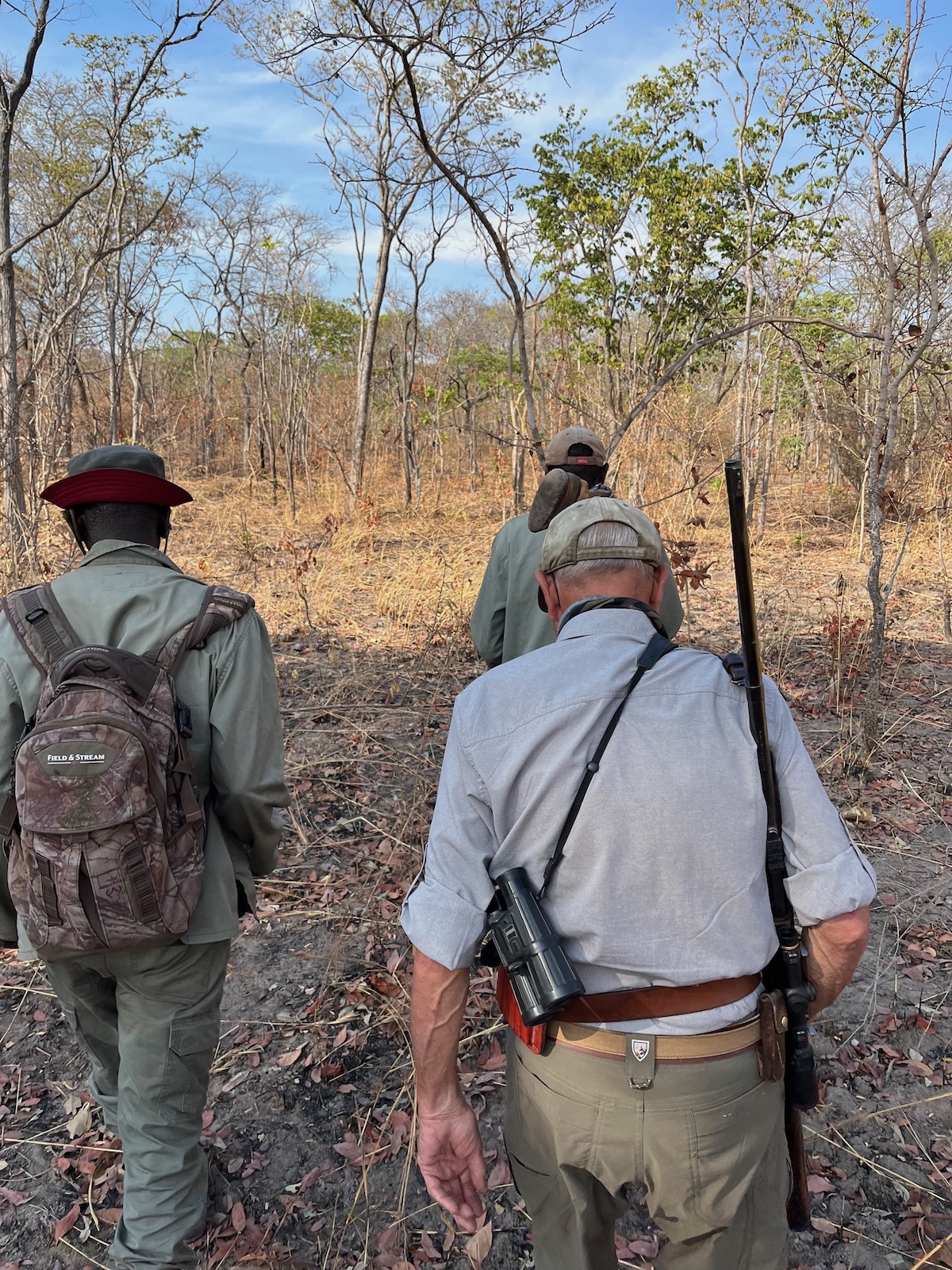
Once you set off, the guide leads the group in single file, with the armed ranger typically positioned at the front or rear. Movement is slow and deliberate — you are walking to observe, not to cover distance. Expect to cover between three and eight kilometres over a two-to-four-hour walk.
Your guide will stop frequently to point out tracks, explain ecological relationships, and interpret the landscape. You might crouch next to lion pugmarks pressed into the damp soil, examine a dung beetle rolling its improbable ball, observe a family of banded mongoose foraging through the grass, or watch a hammerkop constructing its massive nest. The experience is intimate, educational, and endlessly surprising.
4.3 Encountering Wildlife on Foot
This is the question everyone asks: what happens if you encounter a lion, elephant, or buffalo? The answer is that experienced guides and rangers manage these encounters with remarkable skill. The reality is that most wildlife is far more aware of you than you are of them, and they will typically move away long before you get close.
When dangerous animals are spotted, the guide assesses the situation and makes a decision: approach slowly for a better view, hold position and observe, or quietly retreat to a safer distance. The armed ranger is always positioned to intervene if necessary, though discharging a weapon is an absolute last resort. In decades of combined experience, most professional guides will tell you they have rarely — if ever — needed to fire.
The animals that require the most caution on foot are: Cape buffalo (unpredictable and aggressive when disturbed), elephants (particularly lone bulls and mothers with calves), hippopotamuses (when encountered away from water), and black rhinos (now rarely seen in the Serengeti but present in adjacent areas). Lions are generally more tolerant of humans on foot than many expect.
5. Types of Walking Safari Experiences
5.1 Half-Day and Full-Day Walks
The most common walking safari format is the half-day excursion — typically two to four hours in the morning or afternoon, departing from a fixed camp or lodge. Full-day walks are also offered by some operators, with a bush breakfast or picnic lunch taken in the field. These longer walks cover more ground and offer a deeper immersion in the landscape.
5.2 Multi-Day Fly-Camping Safaris
For the truly adventurous, multi-day walking safaris with fly-camping represent the ultimate Serengeti experience. Fly-camps are ultra-lightweight temporary camps — essentially a bedroll, a small mess tent, and a campfire — set up each evening in a new location deep in the wilderness. You walk from camp to camp, covering a different area of the Serengeti each day.
Sleeping under a canvas fly sheet with the sounds of hyenas calling and lions roaring in the distance is an experience that simply cannot be replicated in any other way. These expeditions typically last three to five days and are offered by a small number of specialist operators with the necessary permits and logistical expertise.
5.3 Cultural Walking Experiences
Some operators combine walking safaris with visits to Maasai communities bordering the Serengeti. These walks incorporate learning about traditional ecological knowledge, medicinal plants, and the cultural practices of the people who have coexisted with the Serengeti ecosystem for centuries. This adds a rich human dimension to the wildlife experience.
6. The Big Five and Beyond: Wildlife You May Encounter
The Serengeti supports one of the most diverse and abundant wildlife communities on Earth. While game drives optimise for Big Five sightings, walking safaris offer a more holistic appreciation of the full ecological tapestry.
6.1 Large Mammals
Lion (Panthera leo)
The Serengeti has one of the largest lion populations in Africa — an estimated 3,000 individuals. Encounters on foot with lions at rest are possible in areas of high density, particularly the Seronera Valley.
African Elephant (Loxodonta africana)
Large herds roam the northern and western Serengeti. Close encounters on foot with these giants require skill and experience from your guide.
Cape Buffalo (Syncerus caffer)
Common throughout the park, particularly in the western corridor. Considered by many guides to be the most dangerous animal to encounter on foot due to their unpredictable temperament.
Leopard (Panthera pardus)
Largely nocturnal and elusive, but the Serengeti has a healthy leopard population. Tracks and scratching posts on trees are commonly found during walks.
Cheetah (Acinonyx jubatus)
The Serengeti’s open plains support the highest density of cheetahs anywhere in Africa. These elegant cats are often encountered during morning walks on the open grassland.
Giraffe (Giraffa camelopardalis)
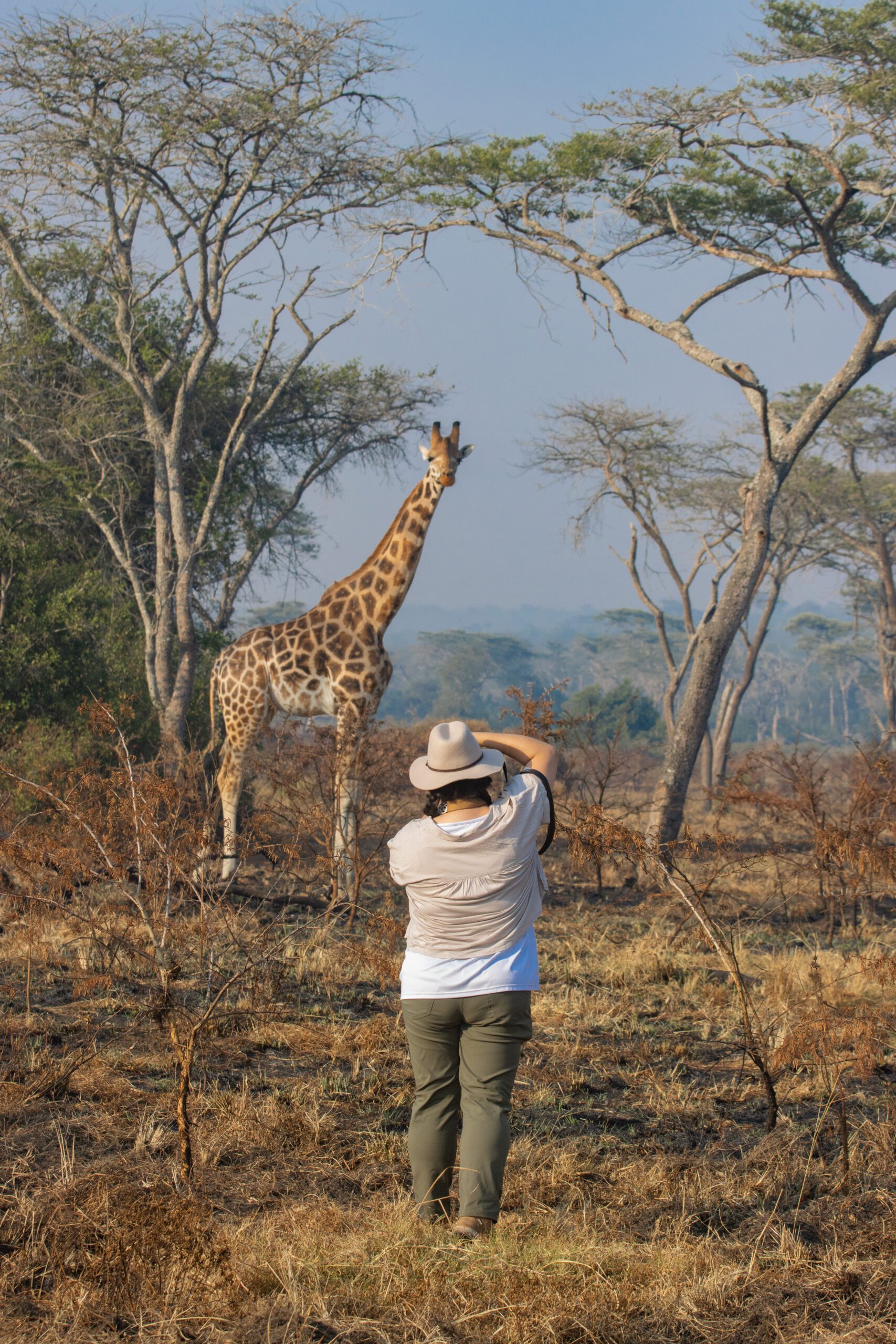
A common sight across the savanna. Encounters with giraffe on foot are particularly memorable — their size is fully apparent only when you’re standing at ground level.
Hippopotamus (Hippopotamus amphibius)
The rivers and lakes of the western corridor harbour large hippo pods. Walking near water requires particular caution and expert guidance.
African Wild Dog (Lycaon pictus)
Rare and endangered, but the Serengeti supports a viable population. A wild dog sighting on foot is considered among the most fortunate encounters in African wildlife watching.
6.2 Birdlife: A Walker’s Paradise
The Serengeti hosts over 500 bird species. On foot, without engine noise or the visual obstruction of a vehicle, birding reaches a completely different level. Watch for the martial eagle soaring overhead, the lilac-breasted roller perched on an acacia branch ablaze with colour, the kori bustard — the world’s heaviest flying bird — striding through the grass, or the secretary bird hunting snakes with its extraordinary stamping feet.
Ground-nesting birds such as ostriches, crowned plovers, and helmeted guineafowl are particularly rewarding on foot. Your guide will often know where nesting sites are located and can position the group for extraordinary close-up views without causing disturbance.
6.3 The ‘Small Five’ and Micro-World
One of walking safari’s greatest gifts is the revelation of the ‘small five’ and the incredible diversity of life at ground level that is entirely invisible from a vehicle. The buffalo weaver (small five equivalent of the buffalo), the elephant shrew, the leopard tortoise, the antlion, and the rhinoceros beetle each have their own extraordinary story. Add to these the towering termite mounds — engineering marvels sustaining entire micro-ecosystems — and the dung beetle’s improbable but vital role in nutrient recycling, and you begin to appreciate that the Serengeti’s magic lies as much in its smallest inhabitants as its largest.
7. Choosing the Right Operator
The quality of your walking safari experience is determined almost entirely by the quality of your guide. Choosing the right operator is therefore the most important decision you will make.
7.1 What to Look for in an Operator
- TANAPA Accreditation: Confirm that the operator holds a valid concession agreement with TANAPA specifically permitting walking safaris. This is non-negotiable from a legal and safety standpoint.
- Guide Qualifications: Ask about your guide’s training, experience, and certification. The best guides hold professional field guide qualifications (such as FGASA Level 2 or equivalent) alongside their TANAPA licensing.
- Safety Protocols: A reputable operator will have clear, documented emergency protocols. Ask what happens in case of a medical emergency — do they have satellite communication? What is the evacuation procedure?
- Environmental Credentials: Look for operators with demonstrable conservation commitments — revenue sharing with local communities, low-impact camp practices, and adherence to Leave No Trace principles.
- Group Size Policy: Smaller groups mean safer, more personalized experiences. Be cautious of operators who routinely run groups of eight or more.
- Guest Reviews and Reputation: Seek out first-hand testimonials from previous walking safari guests specifically (not just general tour reviews).
7.2 Top Walking Safari Camps in the Serengeti
Several outstanding camps offer walking safari programmers as an integral part of their offering. These include:
Singita Sasakwa Lodge and Camps (Western Corridor)
Consistently rated among Africa’s finest, Singita’s Serengeti properties offer exceptional guided walks in the Grumeti concession — a vast private area with minimal vehicle traffic and outstanding wildlife density.
&Beyond Klein’s Camp (Northern Serengeti)
Located in the Kuka Hills concession at the northern boundary of the park, Klein’s Camp offers walks through dramatic hill country with elephant, lion, and extraordinary views across the Mara River valley.
Nomad Tanzania’s Lamai Camp
Specialising in authentic wilderness experiences, Nomad’s camps are known for exceptional guiding standards and their commitment to fly-camping adventures.
Four Seasons Safari Lodge
For those who prefer a more permanent base, the Four Seasons near Seronera offers morning and afternoon walks guided by resident naturalists with deep knowledge of the central Serengeti.
Asilia Africa’s Namiri Plains
Located in the eastern Serengeti — an area reopened to tourism after years as a private cheetah research zone — Namiri Plains offers walks in some of the best cat country in Africa.
8. Essential Packing List for a Walking Safari
What you wear and carry on a walking safari is not merely a matter of comfort — it can directly affect your safety and the quality of wildlife encounters. Here is a comprehensive packing checklist:
Clothing
- Neutral-coloured clothing: khaki, olive, tan, or brown. Avoid white, black, and especially blue or bright colours, which attract tsetse flies and are conspicuous to wildlife.
- Long-sleeved shirts and long trousers, even in warm weather — protection against sun, insects, and thorny vegetation.
- A lightweight fleece or jacket for early morning starts when temperatures can be surprisingly cool.
- A wide-brimmed hat — sun protection is paramount when walking for hours in open savanna.
- Sturdy, comfortable, ankle-supporting walking shoes or boots — not new footwear worn for the first time on safari.
- Thin liner socks beneath walking socks to prevent blisters on longer walks.
- A lightweight rain jacket during the green season.
Equipment and Essentials
- High-quality insect repellent — DEET-based is most effective. Apply to exposed skin before every walk.
- High-SPF sunscreen — apply before departing and carry for reapplication.
- A refillable water bottle — your camp will fill this before you depart. Dehydration is a real risk in the African sun.
- Quality binoculars (8×42 is the recommended specification for bush walking) — these transform the experience.
- A small field notebook and pencil for sketching tracks or recording sightings.
- A camera with a zoom lens — but remember that the goal is experience, not documentation. Don’t spend the entire walk behind a lens.
- A small daypack to carry your water, jacket, and personal items — hands-free is essential.
- Any prescription medication you require, particularly antimalarials.
9. Safety on Walking Safaris: Everything You Need to Know
The word ‘dangerous’ is frequently associated with walking safaris, and while the risks are real, they are also thoroughly manageable when you are with experienced guides and follow instructions precisely. The vast majority of walking safari incidents occur not because of wildlife but because guests failed to follow instructions.
9.1 The Golden Rules of Walking Safari Safety
- Always follow your guide’s instructions immediately and without question. There is no time for discussion when a buffalo charges.
- Stay in single file and maintain your position. Do not drift to the side or fall behind.
- Keep noise to an absolute minimum. Whisper when you must communicate, use hand signals where possible.
- Never break from the group under any circumstances.
- Do not make sudden movements that might startle wildlife.
- If instructed to freeze — freeze. Completely still. Even if something is alarming you.
- Do not wear strong perfume, cologne, or heavily scented sunscreen. These can attract insects and potentially alert wildlife.
- Inform your guide of any medical conditions (asthma, heart conditions, mobility issues) before departing.
- Carry your emergency contact information and medical details in a small card in your pocket.
9.2 Medical Considerations
Walking in the Serengeti exposes you to several health considerations that require preparation. Malaria prophylaxis is strongly recommended for all visitors to northern Tanzania — consult your doctor at least six weeks before travel to determine the most appropriate medication. Tick-borne diseases are a risk in long grass; check yourself carefully after walks and use insect repellent on boots and lower trousers.
Ensure your travel insurance policy covers medical evacuation — in the event of a serious emergency, you may need to be flown to Nairobi or Dar es Salaam for treatment. Reputable operators have relationships with Flying Doctors services and can coordinate evacuation quickly.
10. The Walking Safari and Conservation: A Powerful Partnership
Walking safaris are not merely a leisure activity. At their best, they are a profound act of conservation. When visitors pay to walk in the Serengeti, those revenues flow back into park management, anti-poaching operations, and community benefit programmes. The sense of personal connection and responsibility that a walking safari inspires creates advocates for conservation — people who return home changed and determined to protect what they have experienced.
The best operators go further, investing in ranger training, supporting local guide development programmers, and working with Maasai communities to establish wildlife corridors that connect the Serengeti ecosystem with adjacent protected areas in Kenya. By choosing such operators, you become part of this conservation chain.
The Tanzania National Parks Authority has expanded walking safari permitting in recent years precisely because of the evidence that low-volume, high-value tourism of this type generates superior conservation outcomes compared to high-volume vehicle tourism. Every walker in the Serengeti is an argument for a wiser, more sustainable model of engaging with Africa’s wild places.
11. Practical Information and Trip Planning Tips
11.1 Cost and Budgeting
Walking safaris in the Serengeti are typically offered as part of a broader safari package rather than as stand-alone bookings. The cost varies significantly depending on the camp and operator. Budget approximately $700–$1,500 USD per person per night for mid-range camps that include walking safaris as part of their programme. High-end concession camps such as Singita and &Beyond properties range from $1,500–$3,000+ per person per night, inclusive of all activities, meals, and conservation fees.
Some camps charge an additional walking safari fee of $30–$80 per person per walk to cover the cost of the TANAPA ranger and permits. Confirm what is included in your rate before booking.
11.2 Getting to the Serengeti
The Serengeti is accessible by road from Arusha (approximately 8–9 hours) or by scheduled light aircraft flights from Kilimanjaro International Airport, Arusha Airport, or Zanzibar. Scheduled flights operate to multiple airstrips within the park — Seronera, Klein’s, Kogatende, and Grumeti — via operators such as Air Excel, Coastal Aviation, and Auric Air. Flying is strongly recommended for most safari itineraries as it saves time and allows you to position yourself in the right part of the park for the season.
11.3 Combining a Walking Safari with Other Experiences
A walking safari pairs beautifully with other Serengeti and Tanzania experiences. Consider combining it with:
- A hot air balloon safari over the Serengeti plains at dawn — one of the most iconic experiences in Africa.
- A game drive during the Great Migration river crossings (July–September) in the northern Serengeti.
- A visit to the Ngorongoro Crater — the world’s largest intact volcanic caldera, home to an extraordinary concentration of wildlife including the endangered black rhino.
- A cultural visit to a Maasai boma in the Ngorongoro Conservation Area.
- A beach extension to Zanzibar — just 90 minutes by plane from the Serengeti — to decompress on the spice island’s turquoise waters after the intensity of the bush.
12. Final Word: Why Walking Changes Everything
There is a moment that every walking safari guest experiences — a moment that cannot be manufactured or replicated by any other form of travel. It happens somewhere in the middle of the Serengeti, usually when you’re not looking for it. Perhaps it’s the realization, as you crouch beside a fresh set of lion tracks pressed into red soil, that the same lion made those prints perhaps an hour ago and may still be watching you from the grass. Perhaps it’s the way the wind carries the scent of elephants before they come into view.
In that moment, you are no longer a tourist. You are a participant — vulnerable, alert, and fully alive in a way that modern life rarely allows. The Serengeti has been teaching this lesson for a million years. A walking safari is the most direct way to become its student.
Walk the Serengeti once, and you will carry it with you forever.