
Gorilla Families in Rushaga Sector
Rushaga sector is widely regarded as the crown jewel of gorilla trekking in Bwindi Impenetrable National Park — and arguably the best gorilla trekking destination on the African continent. Tucked into the southern reaches of Bwindi in southwestern Uganda, Rushaga is home to the largest concentration of habituated mountain gorilla families of any single sector in the park. With six gorilla groups available for daily trekking permits and two additional groups accessible through the specialised gorilla habituation experience (GHEX), Rushaga offers an unmatched diversity of encounters for wildlife enthusiasts, researchers, photographers, and conservation travellers alike.
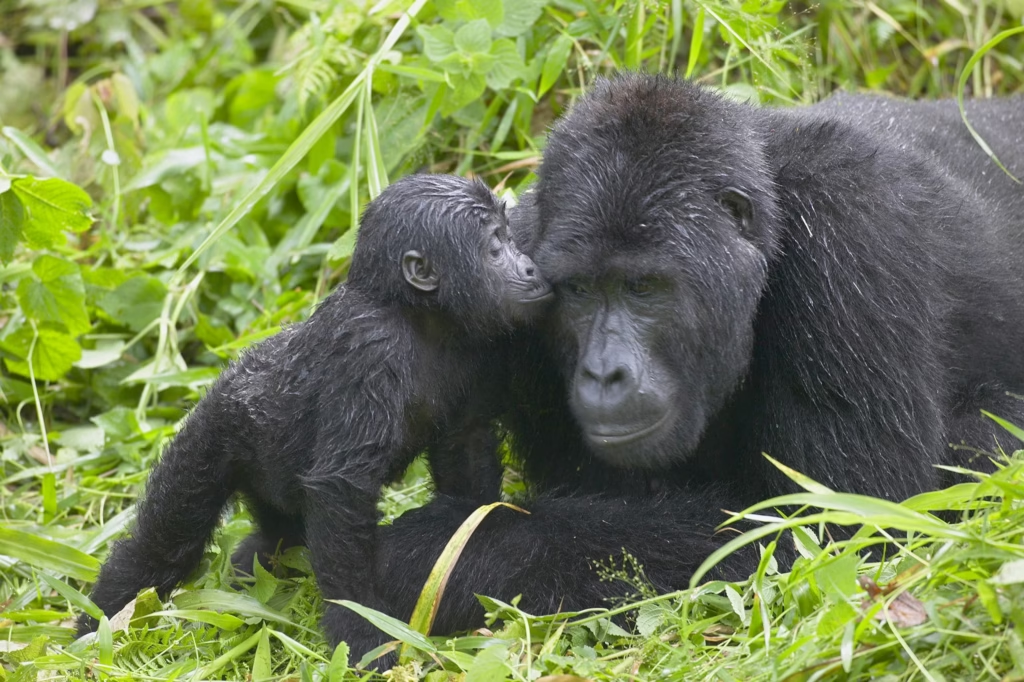
Mountain gorillas (Gorilla beringei beringei) are among the world’s most endangered great apes. With a total wild population of approximately 1,063 individuals — the majority of which live within the Bwindi–Sarambwe–Virunga transboundary ecosystem — every encounter is a rare and privileged window into the lives of our closest living relatives. Conservation efforts spearheaded by the Uganda Wildlife Authority (UWA), the International Gorilla Conservation Programme (IGCP), and community-based organisations have driven a remarkable population recovery over the past three decades, making mountain gorillas the only great ape whose numbers are increasing.
This guide provides a detailed portrait of every gorilla family in Rushaga — their history, key individuals, typical behaviour, home ranges, group dynamics, and what trekkers can realistically expect when visiting. Whether you are planning your first gorilla trek or returning to track a specific family, this resource will help you make the most informed and fulfilling choice possible.
About Rushaga Sector
Rushaga is located in Kisoro District, approximately 85 km from Kabale town and 530 km from Kampala. The sector falls on the southern edge of Bwindi Impenetrable National Park, a UNESCO World Heritage Site covering 331 km² of ancient montane rainforest. Rushaga’s trailheads branch from the village of Rushaga, a compact community that has grown around the tourism economy fostered by the nearby gorilla families.
Elevations in the trekking zones range from about 1,600 meters to over 2,300 meters above sea level. The terrain is characterized by steep, forested ridges, deep valleys, and dense undergrowth — the same challenging landscape that makes the forest so biologically rich and that gorillas call home. Trekking durations vary enormously by day: some groups are encountered within 30–45 minutes; others require four to seven hours of strenuous hiking. This variability is part of what makes gorilla trekking so genuinely wild.
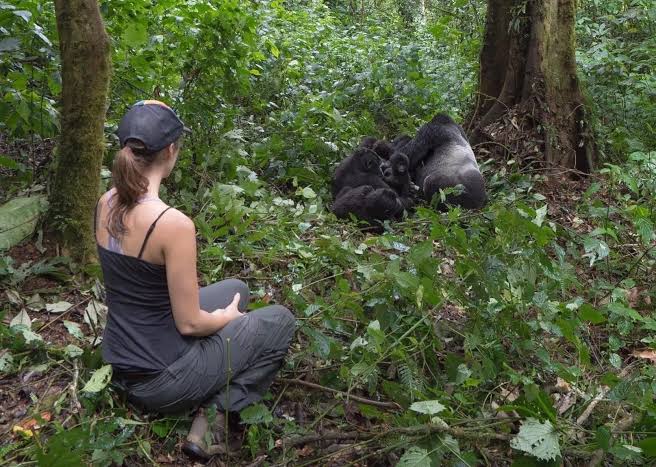
Rushaga’s permit system is administered by the Uganda Wildlife Authority. Each gorilla family receives a maximum of eight visitors per day, and trekkers spend one hour in the presence of the gorillas once located. The sector’s high permit allocation — a reflection of the number of habituated families — means that Rushaga has consistently better permit availability than the more famous Buhoma sector, making it the preferred destination for travellers booking on shorter notice.
Gorilla Trekking Families in Rushaga
Six mountain gorilla families are fully habituated and open to standard one-hour trekking visits in Rushaga sector. Each family has its own history, personality, and home range. The following profiles draw on field data, UWA records, and long-term observations by park rangers and researchers.
1. Nshongi Group
Overview
The Nshongi Group holds a distinguished place in Bwindi’s conservation history as one of the largest mountain gorilla families ever recorded. At its peak the group contained 36 individuals — an extraordinary size for a mountain gorilla family and a testament to the success of Bwindi’s long-term protection efforts. The group was named after the Nshongi River that flows through its core home range in the southern sector of Bwindi.
History and Habituation
Habituation of the Nshongi Group began in 2003 and was completed in 2008 when the group was formally opened to trekking visitors. The process took five years — longer than average — partly due to the group’s large size and wide-ranging movement patterns. During that period, UWA rangers and researchers made daily visits to gradually reduce the gorillas’ fear of human presence, ensuring that encounters would be safe and minimally disruptive to the animals’ natural behaviour.
Group Dynamics and Key Individuals
The Nshongi Group has undergone several significant splits over the years. When a gorilla group becomes very large, competition among silverbacks — the dominant adult males — intensifies, and the group eventually divides. The Mishaya and Bweza groups both spun off from Nshongi as maturing silverbacks departed with portions of the original family. Despite these separations, Nshongi remains a large and stable family. The current dominant silverback maintains firm control over the group’s movement and social structure. The group typically numbers between 18 and 25 individuals, including multiple silverbacks, blackbacks (sub-adult males), adult females, juveniles, and infants.
Trekking Experience
Nshongi’s size makes it one of the most rewarding families to visit. Trekkers are immersed in a complex, animated social group where multiple interactions occur simultaneously — infants tumbling and playing, juveniles climbing bamboo poles, females grooming one another, and the silverback moving purposefully through the undergrowth. Because the group occupies a relatively large home range, trekking durations can vary from two to five hours depending on the group’s location. The forest in Nshongi’s range is particularly dense and atmospheric, adding to the sense of wilderness.
2. Mishaya Group
Overview
The Mishaya Group is one of Rushaga’s most compelling families — not for its size, but for its remarkable origin story. This group was founded by a single silverback: Mishaya. In 2010, Mishaya — then a secondary silverback in the Nshongi Group — left his natal family, taking several females with him and establishing an independent group. His success in founding and maintaining a stable family despite the odds is considered one of the more dramatic events in Bwindi’s gorilla observation history.
History and Habituation
Because Mishaya himself had already been partially habituated within the Nshongi Group, the habituation of his new group proceeded relatively quickly once the decision was made to track it as a separate family. The Mishaya Group was opened to trekking in 2011. Tragically, the founding silverback Mishaya died in 2016, but not before siring a generation of offspring and leaving behind a stable family unit. The group has since been led by his successors.
Trekking Experience
Mishaya is a medium-sized group, typically comprising 10–15 individuals. The group tends to occupy lower-altitude sections of Rushaga’s range, which often translates to moderately challenging treks of two to four hours. Trekkers visiting Mishaya frequently comment on how calm and relaxed the individuals appear — a hallmark of a well-habituated group with consistent human exposure over many years. Close encounters with the dominant silverback, who demonstrates classic displays of authority, are common.
3. Bweza Group
Overview
Like Mishaya, the Bweza Group originated as a splinter from the Nshongi Group. The group was established when a silverback named Bweza departed the main Nshongi family along with a small number of females. The word “bweza” in the local Rukiga language is associated with the idea of returning or going back — a name that may reflect the silverback’s initial movements after the split. Bweza has grown into a stable and well-regarded trekking family.
Group Dynamics
Bweza currently numbers approximately 14–18 individuals. The group includes a dominant silverback, several adult females, juveniles, and usually two or three infants. The presence of infants and young juveniles makes Bweza a particularly popular choice among photographers and families, as infant gorilla behaviour — clambering over their mothers, mock-charging other juveniles, peering curiously at visitors — provides some of the most memorable and emotionally resonant wildlife moments in Africa.

Trekking Experience
The Bweza Group’s home range overlaps with parts of the central Rushaga zone. Treks typically take two to four hours. The group frequently feeds in open glades and bamboo zones at mid-altitude, which can allow for good visibility and excellent photographic opportunities. Rangers accompanying the Bweza Group are known for their deep knowledge of individual gorillas’ personalities and histories, enriching the interpretive experience for visitors.
4. Busingye Group
Overview
The Busingye Group stands out in Rushaga for being led by a lone silverback — a relatively rare and fascinating social configuration. The name “busingye” means “peace” in Rukiga, and this tranquil quality is said to characterise the group’s overall disposition. While lone silverback groups are smaller and may carry some inherent instability — there is no secondary silverback to assist in defence or leadership transitions — they offer trekkers an unusually intimate and focused encounter.
Group Dynamics
Busingye is typically a smaller group of 8–12 individuals. The lone silverback is the central figure around whom the entire social structure revolves — adult females maintain close proximity to him, and juveniles play under his watchful presence. The dynamics of a lone-silverback group are, in some ways, easier to observe and interpret than those of multi-silverback families: there is less competition, less internal conflict, and the authority structure is unambiguous. Visitors often describe their time with the Busingye Group as deeply serene.
Trekking Experience
Treks to Busingye can range from relatively short (1.5–2.5 hours) to longer journeys depending on the day. Because the group is small, encounters can feel strikingly personal — there are no large clusters of gorillas obscuring sightlines, and visitors are often within just a few metres of the silverback and his family for extended portions of the one-hour visit. This makes Busingye a preferred choice for travellers seeking a quieter, more contemplative gorilla experience.
5. Kahungye Group
Overview
The Kahungye Group is one of Rushaga’s larger trekking families and one of the most socially complex. The group has historically contained multiple silverbacks, which creates a rich and sometimes tense social environment that is fascinating to observe. Kahungye is named after a hill within the group’s regular home range — a landscape feature that also gives the group a convenient identifier for rangers tracking its movements.
History and Group Dynamics
Habituation of the Kahungye Group was completed in 2012. The group quickly became popular with visitors due to its size — often 20 or more individuals — and the visible complexity of its internal relationships. Multiple silverbacks within the same family engage in a constant low-level negotiation of rank and privilege, punctuated by occasional dramatic displays of dominance. This social theatre is one of the great spectacles of primate watching.
Trekking Experience
The Kahungye Group occupies terrain in the central and upper zones of Rushaga sector, where steep ridges and dense vegetation make for a physically demanding but highly rewarding trek. Visits typically last anywhere from two to five hours in total. Because the group is large, trekkers can observe a wide range of behaviours simultaneously — feeding, play, grooming, infant nursing, and inter-male posturing — within the same one-hour window. The Kahungye encounter is often described as one of the most cinematic gorilla experiences in Bwindi.
6. Bikingi Group
Overview
The Bikingi Group is among the more recently habituated families open to standard trekking in Rushaga sector. It represents the continuing expansion of Bwindi’s trekking programme and the growing capacity of the Uganda Wildlife Authority to bring new families into the visitor economy in a responsible manner. Bikingi occupies a distinct home range within the sector and has developed its own stable group identity.
Group Dynamics
Bikingi is a medium-sized family with a stable leadership structure. The dominant silverback has been with the group since its formation and is well-habituated to human presence, displaying relaxed, natural behaviour during visits. The group contains a typical complement of adult females, sub-adults, juveniles, and infants. Because it is not among the most famous or heavily marketed families, Bikingi often attracts visitors seeking a slightly less publicised experience — and those visitors are frequently rewarded with an encounter that feels more personal and unhurried.
Trekking Experience
Treks to the Bikingi Group typically cover varied terrain in a less-frequented zone of the sector. The trek duration averages two to four hours. Because this area receives somewhat fewer visitors than the trails leading to more famous families, the forest itself feels wilder and less worn. The return journey often yields excellent birdwatching opportunities — Rushaga is excellent territory for African green broadbill, Shelley’s crimsonwing, and various Albertine Rift endemics.
Gorilla Habituation Experience (GHEX) Groups
In addition to the six standard trekking families, Rushaga sector hosts two gorilla families that are still in the process of habituation. These families are accessible through the Gorilla Habituation Experience (GHEX) — an exclusive, four-hour visit that offers an entirely different quality of encounter. GHEX permits are sold at USD 1,500 per person (compared to USD 700 for standard permits) and are limited to four visitors per group per day. The experience begins at first light and involves following the gorillas from their overnight nesting site through their morning activities.
The GHEX is not simply a longer version of the standard trek. It is an immersive, participatory conservation experience: visitors accompany the same team of researchers and habituators who visit the gorillas every single day, observe behaviours that are rarely witnessed in an hour’s visit, and develop a nuanced understanding of how the habituation process works. For serious wildlife travellers and primatology enthusiasts, it is widely considered the most profound wildlife encounter available anywhere in Africa.
1. Bwindi Special Group (GHEX)
The Bwindi Special Group is one of two families undergoing active habituation in Rushaga sector and is now accessible via the GHEX programme. This group is of particular interest to researchers because its composition includes several individuals whose lineages can be traced through long-term population records. The habituation process has been ongoing for several years, and the gorillas are now sufficiently relaxed around human presence to allow four-hour visits, though they retain some of the wariness and wild behaviour that makes them so compelling to observe.
During a GHEX visit with Bwindi Special, visitors witness behaviours that are uncommon in fully habituated groups: the silverback may still perform distance-warding behaviours, youngsters are more likely to flee and then return out of curiosity, and the group’s response to new sounds or scents in the forest is unfiltered. These reactions are a window into the natural psychology of wild mountain gorillas — something that can be lost once a group reaches full habituation.
2. Rwigi Group (GHEX)
The Rwigi Group is the second GHEX family in Rushaga and is at an earlier stage of the habituation process than Bwindi Special. Visits to Rwigi are characterised by a greater degree of unpredictability — the group may move rapidly, the silverback may display more frequently, and the total time spent in close proximity to the gorillas within the four-hour window may vary. This unpredictability is not a drawback; for many visitors, it is precisely the point. Rwigi offers the rawest, most genuinely wild gorilla encounter currently available in Uganda.
The team accompanying Rwigi includes senior UWA researchers who have been involved in Bwindi’s gorilla programme for many years. Their knowledge of individual animals, group dynamics, and the history of the habituation process provides a level of interpretive depth that transforms the GHEX from a wildlife excursion into a genuine educational experience.
Understanding Mountain Gorilla Social Structure
To fully appreciate what you observe during a gorilla trek, a working knowledge of mountain gorilla social organisation is invaluable. Gorilla societies are built around the silverback — the dominant adult male, so named for the distinctive saddle of silver hair that develops on his back when he reaches full maturity at around 12–13 years of age.
The Silverback’s Role
The silverback makes all major decisions for the group: where to travel, where to feed, when to rest, and how to respond to threats. He is the primary protector of the family, and his willingness to place himself between the group and perceived danger is one of the most striking aspects of gorilla social behaviour. Adult females maintain close bonds with the silverback, and infants seek his proximity as a place of safety. In multi-silverback groups, the dominant male’s authority is constantly negotiated through posturing, vocalisations, and occasional physical confrontations.
Blackbacks
Males between the ages of 8 and 12 are known as blackbacks. They lack the silver saddle of the silverback and occupy a subordinate position in the group hierarchy. Blackbacks are often the most playful and energetic individuals in the group, frequently engaging in extended bouts of rough-and-tumble play with juveniles. As they mature and their silver saddles develop, they face a choice: remain in the natal group as subordinate silverbacks, leave to establish their own group, or become solitary individuals seeking to attract females.
Females and Maternal Bonds
Adult females typically give birth every four to five years — one of the slowest reproductive rates of any mammal. The bond between a mother and her infant is intense and enduring. Infants are carried, nursed, and in constant physical contact with their mothers for the first three to four years of life. As gorilla populations have grown in Bwindi, researchers have been able to track multi-generational family relationships, observing grandmothers, mothers, and infants within the same group.
Conservation and Community in Rushaga
The gorilla families of Rushaga exist within a conservation model that has become a global template for linking wildlife protection with community benefit. Gorilla trekking in Uganda generates significant revenue, a portion of which flows directly to local communities through UWA’s community revenue-sharing scheme — 20% of all park entry fees are distributed to communities adjacent to Bwindi and Mgahinga Gorilla National Parks. This revenue has funded schools, health centres, roads, and income-generating projects, creating a tangible and locally felt connection between gorilla conservation and human welfare.
The Rushaga community has also developed a range of supplementary tourism products that allow visitors to engage more deeply with local culture: village walks, Batwa cultural experiences, traditional dance performances, and community-guided nature walks. These products extend the economic footprint of gorilla tourism beyond the park itself and help distribute income more broadly across the local population.
Health monitoring of the gorilla families is conducted by the Gorilla Doctors programme, a veterinary intervention initiative that provides medical care to mountain gorillas when needed. Because gorillas share approximately 98.3% of their DNA with humans, they are highly susceptible to human respiratory diseases. Strict protocols govern all trekking visits: visitors must be free of respiratory illness, maintain a minimum distance of seven metres from the gorillas at all times, wear face masks, and follow the instructions of their ranger-guide without exception. These rules exist to protect the gorillas — and to protect the tourism industry that sustains them.
Practical Trekking Information for Rushaga
Permits and Booking
Standard gorilla trekking permits for Rushaga cost USD 700 per person (as of 2024). Gorilla Habituation Experience permits cost USD 1,500 per person. Permits should be booked well in advance — particularly for peak season (June–August and December–January) — through the Uganda Wildlife Authority, authorised tour operators, or accredited safari agencies. While Rushaga generally has better permit availability than Buhoma, peak-season permits for specific families such as Nshongi and Kahungye can sell out months ahead.
Best Time to Visit
Gorilla trekking is available year-round in Rushaga. The two dry seasons — June to August and December to January — are the most popular and are generally considered the most comfortable for trekking, with drier trails and reduced rainfall. However, the forest is lush and atmospheric during the rainy seasons (March–May and September–November), and gorillas are easier to track during wet periods because they tend to remain at lower altitudes and move more slowly. Serious wildlife photographers often prefer the green season for the richness of vegetation and the quality of diffused light.
Physical Preparation
Gorilla trekking in Bwindi is a moderate to strenuous physical activity. The terrain is steep, the undergrowth is dense, and the altitude can affect visitors who are not acclimatised. Trekkers should be in reasonable physical health and comfortable with multi-hour hikes on uneven ground. Sturdy waterproof hiking boots with ankle support, long trousers, long-sleeved shirts, rain gear, and a daypack with water and snacks are essential. Gardening gloves are recommended to protect hands when holding vegetation for balance. Hired porters — local community members trained by UWA — are available at the trailhead and are strongly recommended; they carry bags, provide physical support on steep sections, and represent an additional direct economic benefit to the local community.
Getting to Rushaga
Rushaga is accessible by road from Kampala (approximately 9–10 hours by private vehicle) via Kabale, or more conveniently via scheduled light aircraft services operated by Aerolink Uganda from Entebbe or Kajjansi to Kisoro Airstrip — a 50-minute flight followed by a 30-minute drive to the sector trailhead. Most visitors combine a Rushaga trek with visits to Lake Bunyonyi, Queen Elizabeth National Park, or the Virunga volcanoes across the border in Rwanda and the DRC, making Rushaga a natural anchor for a broader southwestern Uganda itinerary.

Which Gorilla Family Should You Choose?
The question of which family to request is one of the most common queries from first-time visitors to Rushaga. The honest answer is that any encounter with mountain gorillas is extraordinary, and the differences between families are, in the grand scheme, secondary to the experience itself. That said, certain considerations may genuinely guide your choice:
- For first-time visitors: Any family will be transformative. If availability allows, Nshongi or Kahungye offer the richness of large multi-silverback groups.
- For photographers: Bweza and Bikingi offer good visibility and reliable infant presence. The GHEX groups offer unscripted, intense behaviour.
- For physically moderate trekkers: Busingye and Mishaya tend to occupy lower terrain and involve somewhat shorter average treks.
- For serious wildlife enthusiasts: The Gorilla Habituation Experience with Bwindi Special or Rwigi is in a category of its own.
- For families with older children: Smaller, calmer groups like Busingye and Mishaya are often recommended by rangers for mixed-ability trekking parties.
- For repeat visitors: If you have trekked before, the GHEX or a family you have not previously visited offers the most compelling reason to return.
Conclusion
Rushaga sector offers the world’s most diverse gorilla trekking programme within a single geographic area. With six fully habituated trekking families and two habituation experience groups, it provides options that suit every type of traveller — from the casual wildlife enthusiast to the dedicated primatologist. The families profiled in this guide — Nshongi, Mishaya, Bweza, Busingye, Kahungye, Bikingi, Bwindi Special, and Rwigi — are not merely tourist attractions. They are wild animal societies with histories, relationships, and futures shaped by decades of conservation effort, community investment, and the quiet heroism of the rangers and researchers who protect them every day.
To sit in the forest within metres of a mountain gorilla family — to meet the gaze of a silverback, watch a mother nurse her infant, observe juveniles at play — is to experience something that defies easy description. It is one of the most profound encounters available to any traveller anywhere on earth. Rushaga makes it accessible, and the families of this remarkable sector make it unforgettable.
Marriott Safaris Africa | East Africa’s Premier Safari Company | www.marriottsafarisafrica.com