Rushaga Sector: The Complete Guide to Gorilla Trekking in Bwindi Impenetrable National Park
Uganda’s Premier Gorilla Trekking Destination | Southern Bwindi, Kisoro District
Deep in the mist-covered hills of southwestern Uganda, where ancient rainforest spills across volcanic ridges and the air carries the rich scent of damp earth and wild vegetation, lies one of the most extraordinary wildlife destinations on the African continent. The Rushaga Sector of Bwindi Impenetrable National Park is not merely a trekking trailhead — it is the heartland of mountain gorilla conservation in Uganda, home to more habituated gorilla families than any other single sector in Bwindi, and the only place on Earth where visitors can participate in the extraordinary Gorilla Habituation Experience.
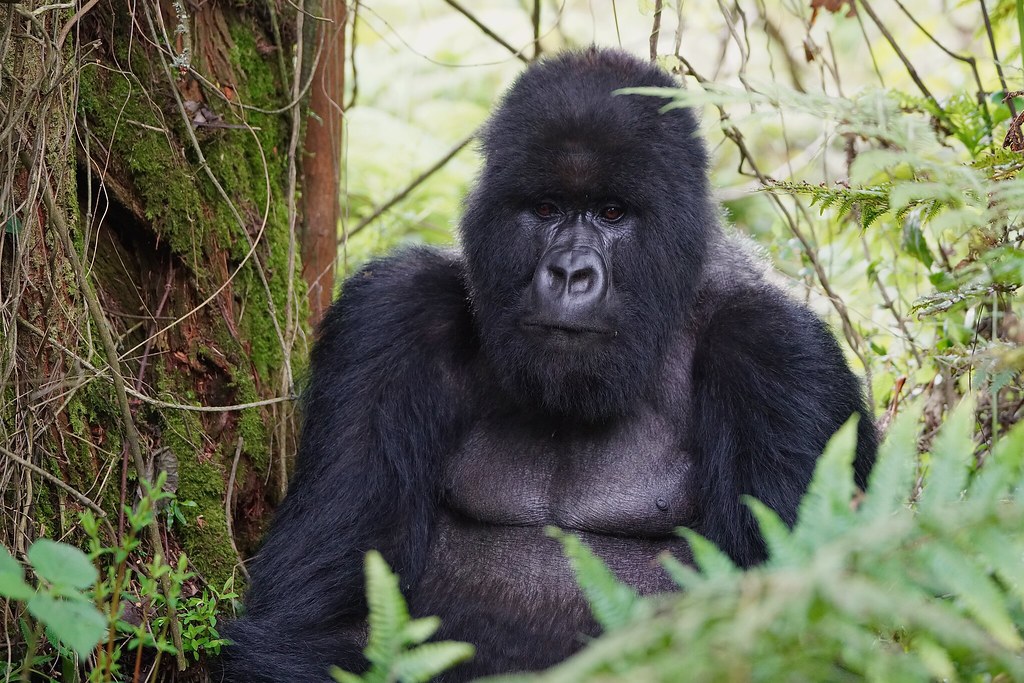
Situated in the southern part of Bwindi within Kisoro District, Rushaga occupies a privileged position close to the Uganda–Rwanda border, making it accessible from both Kampala and Kigali and placing it squarely on the itinerary of thousands of wildlife enthusiasts every year. Whether you are a first-time safari traveller or a seasoned naturalist returning for a second encounter with the mountain gorilla, Rushaga delivers an experience that is at once humbling, exhilarating, and deeply transformative.
This comprehensive guide covers everything you need to plan a successful gorilla trekking safari to Rushaga: its geography and ecology, the habituated gorilla families you may encounter, the unique Gorilla Habituation Experience, permit costs and booking logistics, accommodation options, the best time to visit, trekking difficulty, and the cultural and conservation context that makes this corner of Uganda so compelling.
1. Where Is Rushaga Sector?
Rushaga is one of four distinct gorilla trekking sectors within Bwindi Impenetrable National Park, Uganda’s most celebrated protected area. The park itself spans approximately 321 square kilometres of Afromontane rainforest in the Albertine Rift Valley, rising from an elevation of 1,160 metres to a peak of 2,607 metres above sea level. It was declared a UNESCO World Heritage Site in 1994, recognised as one of the most biologically diverse forests in Africa.
The four sectors — Buhoma (North), Ruhija (East), Rushaga (South), and Nkuringo (South-West) — are geographically separated by the forest itself, with no through-road connecting them. Each is an entirely independent access point to the gorillas, and each offers a different experience in terms of terrain, accommodation, and atmosphere.
Rushaga lies in Kisoro District, one of Uganda’s most scenic areas, characterized by terraced hillsides, volcanic peaks, and fertile valleys. The administrative centre of Kisoro Town is roughly 10–15 kilometres from Rushaga Gate. The Uganda–Rwanda border crossing at Cyanika is approximately 11 kilometres away, making Rushaga the natural choice for travellers flying into Kigali who wish to combine a Rwanda visit with Ugandan gorilla trekking.
Getting to Rushaga
From Kampala / Entebbe: The overland drive from Kampala covers approximately 530 kilometres and takes between 8 and 10 hours depending on road conditions and the route taken. The standard route passes through Mbarara, Kabale, and Kisoro. Travelers who prefer to fly can take a charter flight to Kisoro Airstrip, reducing transfer time to under 2 hours from the airstrip to Rushaga.
From Kigali, Rwanda: The drive from Kigali International Airport to Rushaga via the Cyanika border crossing takes approximately 2.5 to 3.5 hours, making Rushaga by far the most accessible Bwindi sector for travellers based in Rwanda or combining Uganda with a Volcanoes National Park gorilla trek.
2. Why Choose Rushaga for Gorilla Trekking?
Among Bwindi’s four sectors, Rushaga stands apart for a combination of factors that make it the leading choice for travelers seeking the most comprehensive and flexible gorilla trekking experience in Uganda.
Most Gorilla Families of Any Sector. Rushaga is home to between seven and ten habituated gorilla families depending on habituation status at any given time — more than any other single sector in Bwindi. This translates into more daily permits being available in Rushaga than elsewhere, which is enormously advantageous during peak seasons when other sectors sell out weeks or months in advance.
Exclusive Gorilla Habituation Experience. Rushaga is the only sector in Bwindi — and indeed in Uganda — where the Uganda Wildlife Authority (UWA) permits the Gorilla Habituation Experience (GHE). This allows a maximum of four visitors to spend up to four hours with a semi-habituated gorilla family alongside researchers and rangers, offering an entirely different and more intimate engagement with the gorillas than the standard one-hour trek.
Cross-Border Accessibility. Rushaga’s proximity to the Rwanda border makes it the first choice for fly-in visitors arriving via Kigali, as well as for travellers building cross-border itineraries that include Volcanoes National Park and the golden monkey habituation experience in Rwanda.
Varied Terrain and Trekking Diversity. The gorilla families in Rushaga occupy a range of altitudes and forest types, meaning that treks vary considerably in length and difficulty from one day to the next. Some families are encountered relatively quickly, within one to two hours; others may require a full day of trekking through dense forest. This variability adds an element of adventure and unpredictability that many visitors find deeply satisfying.
3. The Gorilla Families of Rushaga Sector
Rushaga’s gorilla families represent some of the most fascinating social units in the entire mountain gorilla population. Each has a distinct history, unique internal dynamics, and its own personality as a group. The families profiled below are those most commonly available for trekking. Membership sizes fluctuate as gorillas are born, die, migrate, or as splinter groups form — the numbers given reflect recent data but may change.
Nshongi Gorilla Family
The Nshongi family holds the distinction of being the largest gorilla group ever recorded in Bwindi. Named after the Nshongi River near which they were first documented, this family was opened to tourism in 2009 following a successful habituation process. At its peak the group numbered over 36 individuals — an extraordinary size for a mountain gorilla family. The sheer complexity of the group’s social structure, with multiple silverbacks, numerous adult females, and a constant stream of infants and juveniles, made it a subject of intense scientific interest.
Over time, the Nshongi group experienced the natural fissioning that occurs in very large gorilla families: dominant silverbacks broke away with subsets of the group to form independent families of their own. Today the Nshongi group is smaller but still one of the most compelling in the sector, with a cast of silverbacks, blackbacks, adult females, and young gorillas whose relationships provide endless behavioural interest.
Kahungye Gorilla Family
Named after the hill on which they were first observed, the Kahungye family began its habituation process in 2008 and was opened to tourism visitors in 2011. This family is notable for typically harbouring multiple silverbacks within its ranks — an arrangement that generates a constant undercurrent of social tension and negotiation that is fascinating to observe. The group originally numbered close to 29 members before the silverback Busingye departed with several individuals to form his own family in 2012. Even after this split, the Kahungye family remains one of Rushaga’s larger and more dynamic groups.
Mishaya Gorilla Family
The Mishaya family was born out of conflict within the Nshongi group. In July 2010, the dominant silverback Mishaya departed with approximately ten individuals to establish his own territory. What made Mishaya remarkable was his reputation as an exceptionally assertive and combative silverback who was known to engage rival males and even expand his family by attracting or acquiring females from other groups — a relatively unusual strategy in gorilla society. Following Mishaya’s death in 2014, the silverback Mwine assumed leadership. Today the group numbers around seven to twelve members and remains one of the smaller, more intimate families to track in Rushaga.
Busingye Gorilla Family
“Busingye” means “peace” in the Rukiga language of southwestern Uganda — a name that reflects the relatively tranquil nature of this group compared to some of its more turbulent neighbours. The family was established in 2012 when silverback Busingye broke away from the Kahungye group. It is one of the newer families in Rushaga but has grown steadily and now provides a popular option for trekkers. The group’s range overlaps with parts of Rushaga’s mid-altitude forest, and encounters with this family often take place in productive, bird-rich woodland that adds an extra dimension to the trekking experience.
Bweza Gorilla Family
The Bweza family is another splinter group that emerged from the sprawling Nshongi community. Though smaller in size — typically comprising around seven to nine members — Bweza offers an intimate tracking experience. The family is led by its own silverback and tends to range through terrain that provides trekkers with striking views of the surrounding hills and valleys. For visitors who prefer a quieter, more personal encounter with fewer gorillas, Bweza can be an excellent choice.
Mucunguzi, Bikingi, Kutu, Rwigi and Other Families
Beyond the five most prominently profiled families, Rushaga is home to several additional habituated and semi-habituated groups including the Mucunguzi, Bikingi, Kutu, Rwigi, and Tindatine families. Some of these are regularly available for standard trekking; others are part of the habituation pipeline and may be used for the Gorilla Habituation Experience. The total number of fully habituated families available for standard trekking at any given time is managed by the Uganda Wildlife Authority, and travellers are advised to confirm current availability with their tour operator.
4. The Standard Gorilla Trekking Experience in Rushaga
The Day Unfolds
A gorilla trekking day in Rushaga is a carefully choreographed sequence of anticipation, physical effort, and unforgettable reward. It begins long before sunrise. Most lodges around Rushaga serve breakfast from 05:30 to 06:30 AM, after which vehicles depart for Rushaga Gate — a journey of between five minutes and half an hour depending on where you are staying.
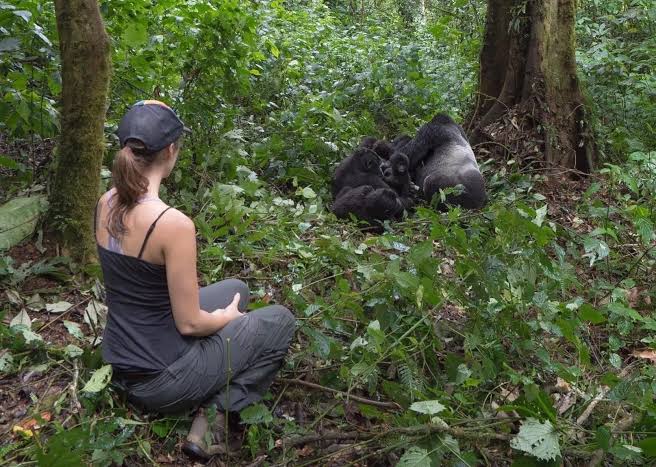
Registration and Briefing (07:00 AM). Trekkers gather at Rushaga Gate for registration, permit checking, and the pre-trek briefing delivered by experienced Uganda Wildlife Authority rangers. The briefing covers gorilla behaviour, safety protocols (what to do if a silverback charges), photography guidelines (no flash photography; remain at least 7 metres from the gorillas), and the golden rule: if you are unwell with a cold, flu, or any respiratory illness, you will be asked not to trek in order to protect the gorillas from human diseases to which they have no natural immunity.
Assignment to Gorilla Families. Rangers assess each trekker’s fitness level and assign groups of up to eight visitors to a specific gorilla family. Trackers — experienced locals who set out before dawn to find the gorillas at their overnight nesting sites — maintain radio contact with the rangers to relay the family’s precise location before the trekking groups depart.
The Trek Into the Forest. Trekking time ranges from under an hour for the most accessible families to a full six or seven hours for those whose range takes them deep into steep, dense forest. The Rushaga sector’s terrain is predominantly mountainous and forested, with altitude ranging from roughly 1,800 to over 2,200 metres in the areas most frequented by the gorilla families. Trails vary from relatively well-defined paths to open cross-country navigation through bamboo thickets, nettles, and tangled undergrowth.
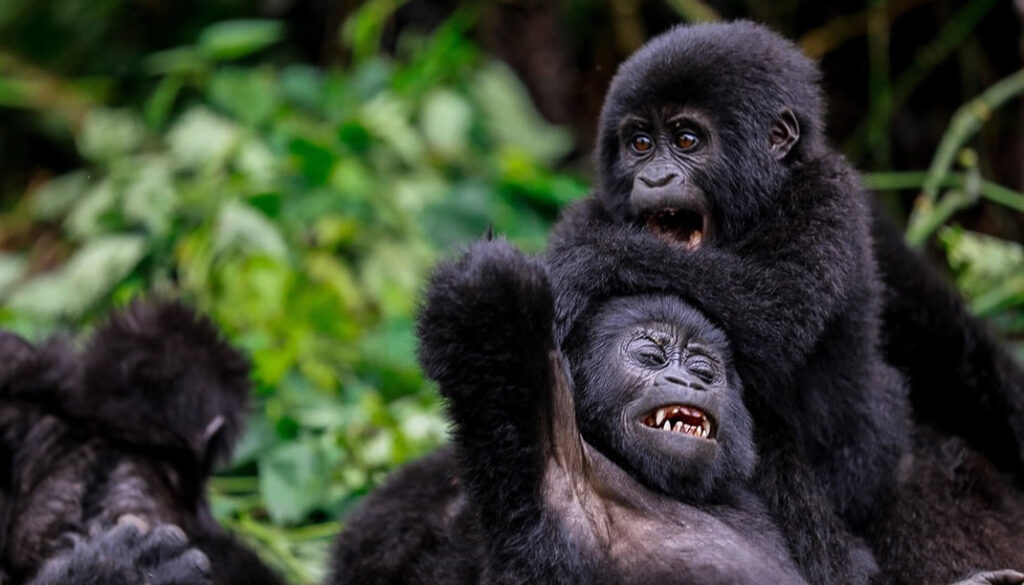
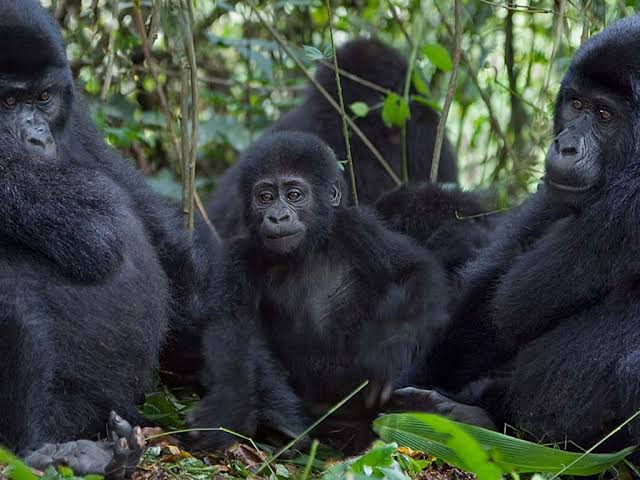
The Gorilla Encounter. When the trackers lead you to the gorillas, the world shrinks to a small clearing of bent vegetation, broken branches, and the impossibly powerful presence of one of our closest relatives in the animal kingdom. Visitors are permitted a maximum of one hour with the habituated family. The gorillas, long accustomed to the presence of human observers, typically carry on with their daily activities — feeding, grooming, playing, resting — with only occasional curious glances at their visitors. A dominant silverback may beat his chest to remind you of his authority. Infants may tumble and wrestle within metres of where you stand. It is an encounter that consistently reduces even the most seasoned travellers to tears.
Return and Certificate. After the encounter, rangers lead the group back to the trailhead. At Rushaga Gate, visitors receive a gorilla trekking certificate from the Uganda Wildlife Authority to commemorate the experience. Most lodges serve a celebratory lunch on return.
What to Carry
Essential items for a Rushaga gorilla trek include:
- Sturdy, ankle-supporting hiking boots with good grip (the terrain can be wet and steep)
- Long-sleeved shirts and long trousers — both for warmth and protection against stinging nettles
- Light waterproof jacket or rain poncho
- Insect repellent and sunscreen
- 1.5–2 litres of water and energy snacks for the trail
- A small daypack to carry your essentials
- Camera (no flash) and spare batteries
- Gardening gloves (optional but recommended to protect hands when gripping vegetation)
- A hat or cap
Porter hire is strongly recommended for Rushaga. Local porters are available at Rushaga Gate for a standard fee (typically USD 15–20 for the day, to be supplemented with a tip). They carry your bag, help steady you on steep descents, and provide a direct economic benefit to the local community.
5. The Gorilla Habituation Experience (GHE)
The Gorilla Habituation Experience is the most immersive primate encounter available anywhere in Africa, and Rushaga is its sole location in Uganda. While the standard gorilla trek offers visitors one magical hour with a fully habituated family, the GHE permits a maximum of four visitors per day to spend up to four hours alongside a gorilla family that is still in the process of becoming accustomed to regular human presence.
What Habituation Means
Mountain gorilla habituation is the multi-year process by which a wild gorilla family is gradually accustomed to the presence of human observers. Researchers and rangers begin by locating the family and spending time near them daily, retreating when the gorillas show signs of stress, and slowly reducing that stress response over months and years until the family treats the observers with indifference. Full habituation typically requires between two and five years of daily contact. The families used for the GHE are in the middle stages of this process, meaning their responses to human visitors are still somewhat unpredictable — which makes the encounter rawer, more visceral, and in many ways more remarkable than the standard trek.
What to Expect
The GHE day begins earlier than the standard trek, often departing lodges at 05:00–05:30 AM. Visitors follow the researcher-ranger team through the forest to the gorillas’ overnight nesting site, then track them through their morning activities. Because the gorillas are semi-habituated, the group moves more frequently and unpredictably than a fully habituated family, so trekkers must be prepared for a more physically demanding and logistically fluid experience. The reward is four uninterrupted hours in the forest with the gorillas — time enough to witness feeding, infant play, silverback displays, group dynamics, and behaviours that are simply not observable in a one-hour window.
Who Should Choose the GHE?
The GHE is particularly well-suited to wildlife photographers who need extended time with the gorillas; conservation enthusiasts and researchers who want a deeper understanding of gorilla behaviour and the habituation process; seasoned naturalists returning to Bwindi for a second or third visit; and travellers willing to accept physical challenge in exchange for an encounter of exceptional intimacy and depth. It is not recommended for visitors with limited mobility or those with concerns about navigating difficult terrain for extended periods.
6. Permits, Costs, and Booking
Permit Costs (2027–2028)
Gorilla trekking permits for Rushaga Sector are issued by the Uganda Wildlife Authority (UWA) and are priced as follows:
| Category | Standard Trek | Habituation Experience |
| Foreign Non-Residents | USD 800 | USD 1,500 |
| Foreign Residents | USD 700 | USD 1,000 |
| East African Citizens | UGX 300,000 | UGX 500,000 |
Note: Permit prices are set by the Uganda Wildlife Authority and are subject to revision. Always confirm current pricing with your licensed tour operator or directly with UWA at the time of booking.
How to Book
Gorilla trekking permits for Rushaga cannot be purchased at the gate on the day of trekking. They must be secured in advance through one of the following channels: directly through the Uganda Wildlife Authority’s online Central Reservation System; through a UWA-accredited Uganda safari operator (strongly recommended for most travellers as operators handle the permit booking alongside accommodation, transport, and all other logistics); or through certain international travel agencies that have established relationships with Ugandan operators.
Because Rushaga has the highest number of daily permits in Bwindi, last-minute availability is more common here than in other sectors. However, permits for the Gorilla Habituation Experience — which allows only four visitors per day — sell out months in advance during peak seasons, and early booking is strongly advised. During the June–September high season, all Rushaga permits should ideally be secured three to six months ahead.
7. Best Time to Visit Rushaga
Gorilla trekking in Rushaga is possible year-round, and the gorillas themselves are present and observable in every month of the year. However, the experience varies considerably depending on the season, and understanding Uganda’s rainfall patterns will help you choose dates that align with your priorities.
Dry Seasons (Peak): June–September and December–February
These are the most popular trekking windows. Trails are drier and firmer underfoot, making navigation through Rushaga’s steep, dense terrain considerably easier. The forest canopy is less laden with water, reducing the chance of a soaking. Views from the higher ridges are clearer. Permit demand is highest during these months, so early booking is essential. The June–September window is particularly popular because it overlaps with school holiday periods in Europe and North America.
Wet Seasons (Low Season): March–May and October–November
Uganda’s rainy seasons bring heavy daily showers that transform the forest into a spectacularly lush, green environment. Trails become muddy and slippery, and trekkers should expect wet feet and challenging conditions on steep slopes. However, the wet season has its own distinct appeal: permit availability is higher (and in some cases prices may be discounted through operators), the forest is at its most verdant and atmospheric, wildlife is generally more active, and birdlife is at its most spectacular. Gorilla sightings remain excellent regardless of rainfall. For photographers who embrace the drama of misty, rain-washed forest, the low season produces extraordinarily atmospheric images.
8. Trekking Difficulty and Physical Preparation
Rushaga’s terrain is variable. Some families range through relatively accessible forest at moderate altitudes, and visitors of reasonable fitness can expect a satisfying but not exhausting trek of one to three hours. Other families roam steep, heavily forested hillsides where trekking can take five to seven hours over difficult ground. The terrain cannot be predicted in advance because gorillas are free-ranging animals whose location changes daily.
Recommended fitness level: Moderate to good. You do not need to be an athlete, but you should be comfortable walking uphill for two to four hours and confident on uneven, slippery ground. If you have specific mobility concerns, discuss them with your tour operator in advance — in some cases, rangers can assign you to a family whose current range is more accessible.
Age restrictions: The Uganda Wildlife Authority requires all trekkers to be at least 15 years of age. There is no upper age limit provided visitors are in reasonable health.
9. Accommodation in and Around Rushaga
A range of accommodation options has developed around Rushaga in recent years, catering to visitors across the budget spectrum. Staying close to Rushaga Gate eliminates the need for long pre-dawn drives on winding mountain roads and significantly enhances the morning experience.
Luxury and High-End Lodges
Several high-end eco-lodges in and around Rushaga offer elevated accommodation — forest-edge cottages, suites with panoramic views across the Albertine Rift, and refined dining that makes the most of locally sourced produce. Properties such as Rushaga Gorilla Camp and Ichumbi Gorilla Lodge are among the well-regarded options. Luxury lodges in the broader Kisoro area, including those with views of the Virunga volcanoes, are also viable bases for Rushaga treks. Rates at luxury level typically range from USD 300 to USD 600+ per person per night, though these vary by season and are best confirmed directly with operators.
Mid-Range Safari Lodges and Camps
A solid selection of mid-range properties offers comfortable en-suite accommodation, good food, and attentive service at prices accessible to a wider range of travellers. These properties often provide the best balance of comfort, proximity to the trekking gate, and value for money. Rates typically range from USD 100 to USD 300 per person per night, depending on inclusions.
Budget Camps and Community Guesthouses
Budget travellers will find community-run camps and simple guesthouses in and around Rushaga offering clean basic rooms or bandas at significantly lower price points. While amenities are limited, these options provide an authentic, locally integrated experience and ensure that tourism revenue directly benefits the communities adjacent to the park.
10. Beyond Gorillas: Other Activities in and Around Rushaga
While gorilla trekking is unquestionably the central reason most visitors come to Rushaga, the surrounding area offers a wealth of complementary activities that enrich the safari experience.
Batwa Cultural Trail and Community Experiences
The Batwa people are the forest’s original inhabitants, hunter-gatherers whose way of life was intimately tied to Bwindi for thousands of years before they were displaced when the forest was gazetted as a national park in 1991. Today, Batwa community tourism programmes near Rushaga offer visitors a guided exploration of Batwa forest knowledge — medicinal plants, traditional hunting techniques, honey gathering, storytelling, and music — providing both cultural insight and direct financial benefit to a community still navigating the transition from forest life. The Batwa Trail is one of the most emotionally resonant cultural experiences available in Uganda, and it pairs naturally with a gorilla trekking day.
Forest Nature Walks
Guided forest walks in and around Rushaga offer excellent opportunities for birdwatching, primate viewing (chimpanzees, red-tailed monkeys, L’Hoest’s monkeys, and others occur in the forest), and botanical discovery. Bwindi’s extraordinary plant diversity — over 1,000 flowering plant species including 163 tree species and 104 fern species — provides endless interest for naturalists, and experienced local guides bring the forest’s ecology to life.
Lake Bunyonyi
Lake Bunyonyi, one of Uganda’s most beautiful lakes, lies roughly 35 kilometres east of Rushaga near Kabale. Its terraced, island-dotted waters at an elevation of approximately 1,962 metres provide a perfect place to rest and decompress after the physical demands of gorilla trekking. Boat excursions, kayaking, village walks, and simply relaxing on the lake shore are all popular activities. Many itineraries include one or two nights at Lake Bunyonyi on either side of a Rushaga gorilla trek.
Kisoro Town and the Virunga Viewpoints
Kisoro Town, the nearest urban centre to Rushaga, is a pleasant base from which to explore the broader region. On clear days, the three Virunga volcanoes — Muhavura (4,127 m), Gahinga (3,474 m), and Sabinyo (3,645 m) — are visible from multiple vantage points, their perfect volcanic cones rising above the surrounding landscape. The Mgahinga Gorilla National Park, Uganda’s other gorilla trekking destination, lies 15 kilometres south of Kisoro and can be combined with a Rushaga visit for travellers seeking a golden monkey habituation experience.
11. Conservation and Community Impact
Mountain gorilla conservation in Bwindi is a remarkable success story. When Bwindi was gazetted in 1991 and gorilla tourism began in Buhoma in 1993, the total mountain gorilla population was estimated at around 620 individuals. Today, the global mountain gorilla population has grown to over 1,000 animals — the only great ape subspecies whose numbers are increasing — and Bwindi’s gorillas constitute approximately half of this total.
Tourism revenue is central to this success. A significant portion of every gorilla trekking permit fee flows directly to the Uganda Wildlife Authority for conservation management, anti-poaching operations, veterinary monitoring of gorilla health, and research. An additional 20% of gate revenues is channelled into the Revenue Sharing Programme, which funds schools, health centres, roads, and other community infrastructure in the parishes adjacent to Bwindi.
In Rushaga specifically, the expansion of the accommodation sector and the growth of community tourism activities such as the Batwa Trail have created hundreds of jobs and income-generating opportunities for local families. Porters, guides, lodge staff, craft vendors, and community tour facilitators are among those who benefit directly from tourism spending. This economic integration of local communities into the conservation economy is recognised as one of the most effective tools for reducing poaching pressure and illegal encroachment on the park boundary.
12. How to Combine Rushaga with Other Destinations
Rushaga’s geographic position in the southwestern corner of Uganda makes it a natural anchor for multi-destination East African safari itineraries. Below are the most popular combinations:
Rushaga + Volcanoes National Park, Rwanda
The most popular cross-border gorilla combination. Travellers can trek gorillas in Rushaga, cross the Cyanika border, and trek gorillas in Rwanda’s Volcanoes NP within the same itinerary — typically as a 4–6 day extension. Travel time between Rushaga Gate and Volcanoes NP trailheads via the Cyanika crossing is approximately 1.5–2.5 hours.
Rushaga + Queen Elizabeth National Park
Uganda’s most famous savannah reserve, famous for tree-climbing lions in the Ishasha sector and extraordinary boat cruises on the Kazinga Channel, lies approximately 4–5 hours north of Rushaga. A combined 7–10 day itinerary takes in both forest and savannah ecosystems.
Rushaga + Kibale Forest National Park
Kibale offers the finest chimpanzee trekking in Africa, alongside a remarkable diversity of other primates. It is approximately 6–8 hours north of Rushaga. A combined primates-focused itinerary of 7–10 days covering both Bwindi and Kibale is one of Uganda’s classic safari routes.
Rushaga + Lake Bunyonyi
A short extension to Lake Bunyonyi (1–1.5 hours) makes for an ideal wind-down after the exertions of gorilla trekking. One or two nights on the lake’s peaceful waters is a natural conclusion to a Rushaga safari before the return journey to Kampala or Kigali.
Rushaga + Mgahinga Gorilla National Park
Mgahinga, 15 km south of Kisoro, offers gorilla trekking (with a smaller number of permits), golden monkey tracking, and hiking on the Virunga volcanoes. It is a compact addition for travellers with extra days in the Kisoro area.
13. Practical Travel Information
Visas
Most nationalities require a visa to enter Uganda. The East Africa Tourist Visa (USD 100) covers Uganda, Rwanda, and Kenya and is excellent value for travellers combining these countries. Single-entry Uganda visas cost USD 50. Both can be applied for online through the Directorate of Citizenship and Immigration Control.
Health and Vaccinations
Yellow fever vaccination is mandatory for entry into Uganda. Hepatitis A, typhoid, and routine vaccinations should be up to date. Malaria prophylaxis is recommended — consult your travel health clinic at least six weeks before departure. The altitude of the Rushaga area (typically 1,800–2,200 m) means malaria risk is lower than in lowland Uganda, but precautions remain advisable. Carry basic first aid and any prescription medications you require.
Currency and Payments
Uganda’s currency is the Ugandan Shilling (UGX). US Dollars are widely accepted for major transactions including permits, lodge payments, and tour opearator fees. Notes dated before 2009 may be refused. Cash in USD and local shillings is advisable for tips, porter fees, and small purchases. ATMs in Kisoro are limited; ensure you carry sufficient cash from Kampala or Kabale.
Connectivity and Communications
Mobile coverage in Rushaga is intermittent. MTN and Airtel are the principal networks; coverage improves closer to Kisoro Town. Wi-Fi is available at most mid-range and luxury lodges but should not be relied upon for work obligations. Embrace the connectivity blackout as part of the experience.
Conclusion
Rushaga Sector is not simply the largest or most permit-rich sector in Bwindi Impenetrable National Park. It is a destination that distils everything extraordinary about Uganda’s natural world into a single morning in the forest. The moment you stand in silence watching a silverback feed, while infants tumble at his feet and the forest stretches away in every direction, you understand why mountain gorilla conservation matters — and why the work of protecting this ancient forest, and the communities that live alongside it, is among the most important conservation endeavours on the planet.
Whether you choose the standard one-hour trek with a fully habituated family, the extended intimacy of the Gorilla Habituation Experience, or a multi-day safari that combines Rushaga with Rwanda’s Volcanoes National Park and Uganda’s savannah parks, your time in this corner of southwestern Uganda will stay with you for the rest of your life.
Rushaga awaits. The forest is ready. The gorillas are there.