Things to Do in Moremi Game Reserve
Things to Do in Moremi Game Reserve, The Complete Guide to Game Drives, Mokoro Trips, Birding, Camping and Wildlife in the Heart of Botswana’s Okavango Delta
Moremi Game Reserve is the wild, water-laced core of the Okavango Delta and one of the finest places in all of Africa to see big game. Covering roughly 4,870 square kilometres on the eastern side of the Delta, it blends permanent swamps, seasonal floodplains, papyrus-lined channels, lagoons, mopane woodland and dry sandveld into a single reserve. That mix of land and water is exactly what makes it so rewarding: in one day you can track lions on a game drive in the morning, glide past hippos in a dugout canoe at midday and watch elephants cross a flooded channel at sunset.
Moremi was proclaimed in 1963 at the request of the Batawana people, led by Mrs Elizabeth Pulane Moremi, widow of Chief Moremi III, who wanted to protect the area from uncontrolled hunting and cattle encroachment. It was one of the first reserves in Africa created by a local community on its own land. Chief’s Island, the famous predator stronghold at the heart of the Delta, was later added to the reserve.
This guide covers the best things to do in Moremi Game Reserve, when to go, how to get there, park fees, where to stay, a sample itinerary, self-drive tips, a packing list and answers to the questions travellers ask most often.
| Moremi at a Glance
Location: Eastern Okavango Delta, north-western Botswana (Ngamiland) Size: Approximately 4,870 km², around one-third of the Okavango Delta Established: 1963, by the Batawana community Nearest town: Maun, about 100 km (2–3 hours by road) to South Gate Main gates: South Gate (Maqwee) and North Gate (Khwai) Key areas: Xakanaxa, Third Bridge, Mboma Island, Chief’s Island, Khwai River, Bodumatau Famous for: Big Five, African wild dogs, lions, leopards, mokoro trips, birdlife (500+ species) Best time to visit: July to October for peak game viewing |
Top Things to Do in Moremi Game Reserve
Moremi rewards both first-time safari travellers and seasoned Africa hands. The activities below are listed roughly in order of how central they are to a typical visit, but the real magic is in combining land- and water-based experiences.
1. Go on Classic Morning and Afternoon Game Drives
Game drives are the backbone of any Moremi safari. The reserve’s sandy tracks wind through riverine forest, open floodplains and mopane woodland, linking productive areas such as Xakanaxa, Third Bridge, Mboma, Dead Tree Island, Paradise Pools and the Khwai River frontage.
Early morning drives (from first light) catch predators while they are still active and the light is soft for photography. Afternoon drives run until sunset, when elephants and buffalo move to water and big cats begin to stir. Inside the reserve itself, vehicles must be back at camp by dusk, as night driving is not permitted in the national reserve.
What you may see: Lion, leopard, cheetah, elephant, buffalo, giraffe, zebra, red lechwe, tsessebe, sable and roan antelope, hippo and crocodile.
2. Track Lions, Leopards and Cheetahs
Moremi is one of Botswana’s most reliable places for big cats. The area around Third Bridge and the Mogogelo floodplains has long been known for strong lion prides, while the riverine forest around Xakanaxa and Khwai is excellent leopard territory. Cheetahs favour the more open plains, particularly in the drier months.
Experienced guides read fresh tracks in the sand, listen for alarm calls from impala, baboons and francolins, and follow vultures circling overhead. Patience pays: settling quietly near a waterhole often produces better sightings than racing between areas.
3. Search for the African Wild Dog
The Okavango Delta holds one of the largest remaining populations of the endangered African wild dog (painted wolf), and Moremi is one of the best places on the continent to see them. Packs range widely, so sightings are never guaranteed, but the denning season (roughly June to August) can bring repeated sightings in the Khwai and Moremi areas as packs return to the same den site each day.
Watching a pack set out on a hunt, with their high-pitched calls and astonishing teamwork, is one of the most thrilling experiences in African wildlife viewing.
4. Glide Through the Delta on a Mokoro Excursion
A mokoro (plural: mekoro) is a traditional dugout canoe, today usually made from fibreglass, poled by a skilled local guide standing at the back. Gliding silently through narrow channels lined with papyrus and water lilies is the quintessential Okavango Delta experience.
From water level you notice the small details: painted reed frogs clinging to stems, malachite kingfishers darting past and African jacanas walking on lily pads. Mokoro trips are offered from certain camps and areas within and around Moremi, depending on water levels. They are best when the Delta floods are high, usually from around May to September.
What you may see: Painted reed frogs, kingfishers, jacanas, red lechwe, sitatunga (rare), hippos at a respectful distance.
5. Take a Motorboat Cruise from Xakanaxa or Mboma
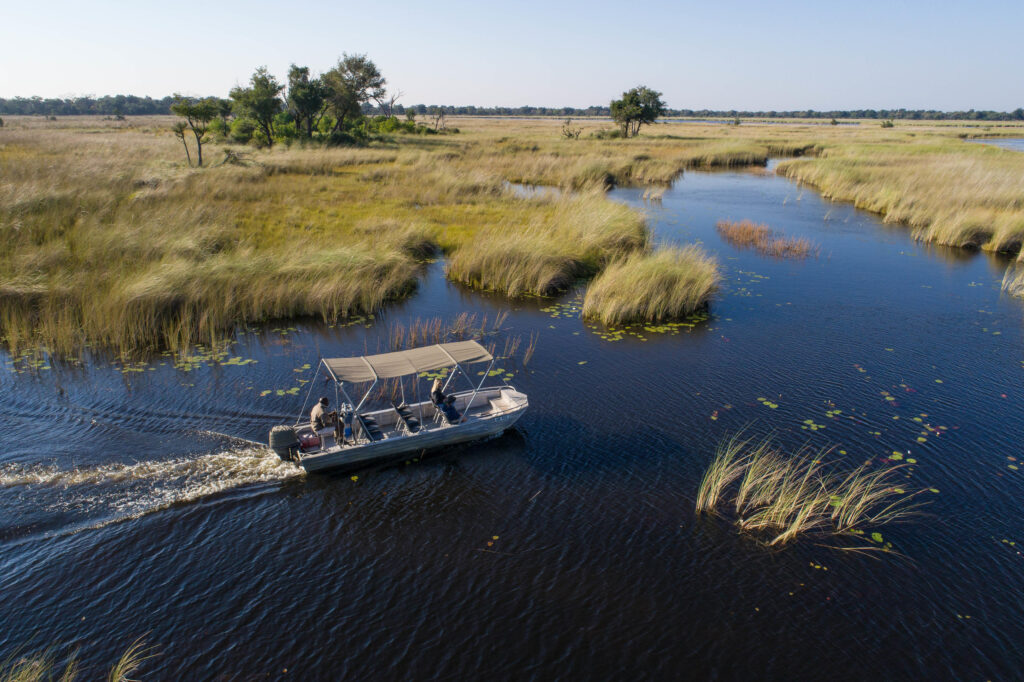
Where the channels are deep enough, motorboat cruises cover more ground than a mokoro and can reach the Delta’s large lagoons. Xakanaxa Lagoon is the classic departure point for boat trips inside Moremi, and boats also operate from Mboma Island depending on water levels.
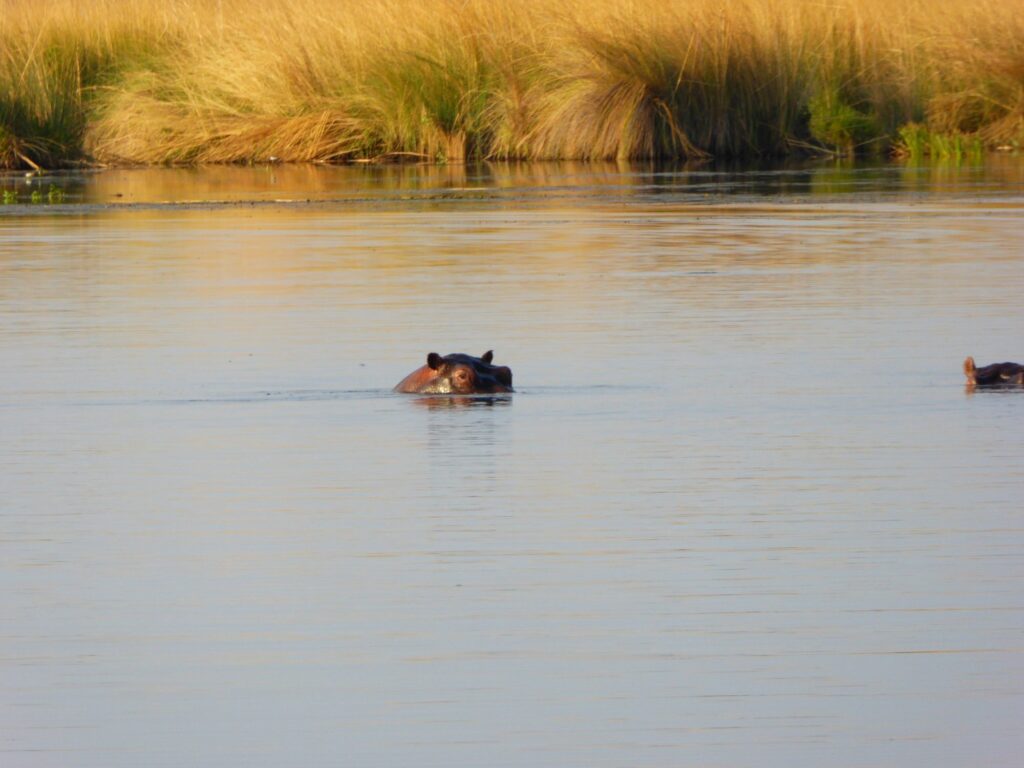
Cruises pass hippo pods, Nile crocodiles basking on the banks and elephants feeding in the shallows. Sunset cruises are particularly memorable, with the sky reflecting in still water and the calls of fish eagles echoing across the lagoon.
6. Visit the Heronries and Go Birdwatching
With more than 500 bird species recorded in the wider Okavango Delta, Moremi is a dream for birders. One highlight is the Gcodikwe Lagoon area near Xakanaxa, home to one of the Delta’s largest heronries, where storks, herons, egrets and ibises nest in noisy colonies. Breeding activity typically peaks from around August to November, depending on water levels.
Other sought-after species include the Pel’s fishing owl, wattled crane, slaty egret, African skimmer, saddle-billed stork, lilac-breasted roller and the African fish eagle, whose call is the signature sound of the Delta. The green season (November to April) brings migrant birds from Europe and northern Africa and is the peak period for birding.
What you may see: Pel’s fishing owl, wattled crane, slaty egret, marabou and saddle-billed storks, carmine bee-eaters (seasonal), African fish eagle.
7. Fly In to Chief’s Island
Chief’s Island is the largest island in the Okavango Delta and sits within Moremi Game Reserve. Accessible only by light aircraft, it has a reputation as one of the richest predator areas in Africa, with dense populations of lion, leopard, wild dog and hyena. It is also where both black and white rhinos were reintroduced to the Delta from the early 2000s onward.
Staying at one of the exclusive camps here offers low-density, private game viewing and some of the most celebrated wildlife encounters in southern Africa. Rhino sightings, while never guaranteed, are a real possibility.
8. Enjoy Night Drives and Walking Safaris in the Khwai Concession
Because night drives and guided walks are not allowed inside the reserve proper, many travellers pair Moremi with a stay in the neighbouring Khwai Community Concession just outside North Gate. Here, licensed guides can conduct after-dark drives with spotlights, revealing nocturnal species such as leopard, hyena, porcupine, African wildcat, civet, genet, bushbaby and the elusive aardvark.
Walking safaris in the concession bring you close to the small details of the bush, from animal tracks and dung to medicinal plants, and give a completely different perspective from a vehicle. Tourism in Khwai also directly benefits the local community.
9. Spot Hippos at Hippo Pools and the Khwai River
The Khwai River, forming the northern boundary of the reserve, is one of the most rewarding stretches of Moremi. The Hippo Pools area near North Gate hosts resident pods, and the river frontage attracts large herds of elephant, particularly in the dry season, along with buffalo, sable and roan antelope.
Pack a picnic and spend time at the designated viewpoints, always remaining in or near your vehicle where required.
10. Explore Third Bridge, Dead Tree Island and Paradise Pools
Some of Moremi’s most scenic and productive areas lie in its western reaches. Third Bridge, a rustic log bridge over the Sekiri River, is famous for its campsite and resident wildlife. Nearby, Dead Tree Island, with its stark skeletal trees, and Paradise Pools, with their lily-covered water and reflections, make superb photographic stops.
Mboma Island, a long, sandy island loop, offers excellent game viewing and open vistas across the floodplains.
11. Camp Under the Stars at Moremi’s Campsites
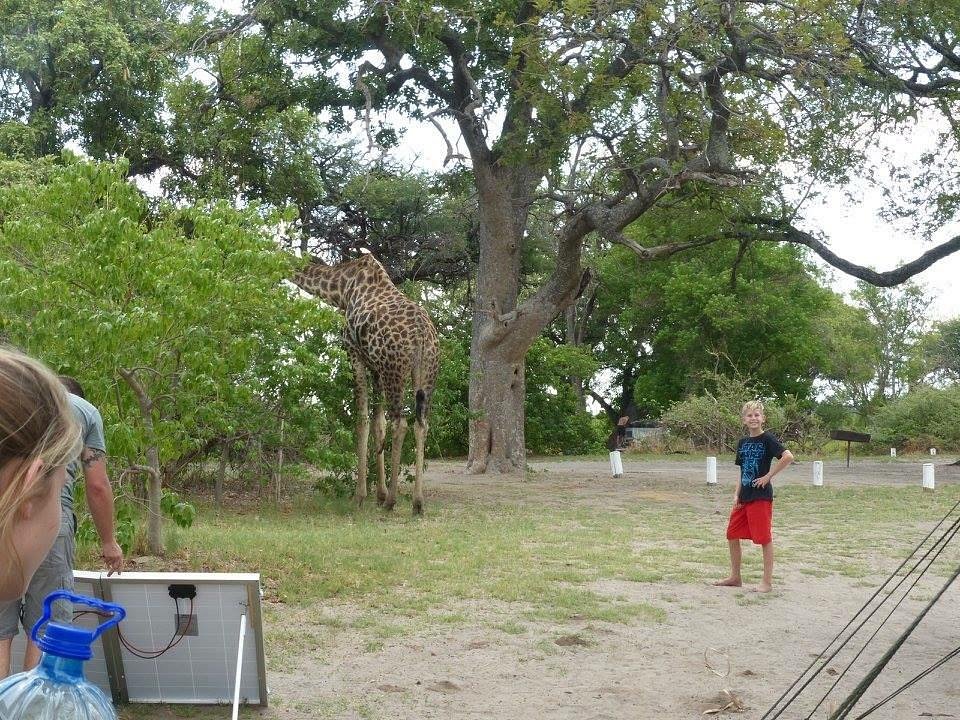
Camping in Moremi is a bucket-list experience for self-drive travellers. The reserve’s designated campsites at South Gate, Xakanaxa, Third Bridge and North Gate (Khwai) are unfenced, so animals wander freely through camp. Lions roaring at night, hyenas whooping and elephants browsing a few metres from your tent are all part of the experience.
Campsites are managed by private operators on behalf of the Department of Wildlife and National Parks (DWNP), and must be booked well in advance, especially from June to October. Facilities are basic, typically including ablution blocks, braai (barbecue) stands and water taps.
12. Take a Scenic Flight or Helicopter Ride over the Delta
Seeing the Okavango Delta from the air is one of the most spectacular experiences in Africa. Scenic flights and helicopter trips from Maun reveal the intricate patterns of channels, islands and lagoons, with elephants, buffalo and hippos clearly visible below. Doors-off helicopter flights are especially popular with photographers.
Light-aircraft transfers into Moremi’s fly-in camps double as scenic flights, so many visitors enjoy the view on arrival and departure.
13. Go on a Self-Drive Safari
Moremi is one of the classic self-drive destinations in southern Africa. With a well-equipped 4×4, ideally with a rooftop tent, you can explore at your own pace between campsites. Routes commonly link Maun, South Gate, Xakanaxa, Third Bridge and North Gate, and can continue north to Savuti and Chobe National Park.
Self-driving here demands genuine 4×4 experience: deep sand, water crossings and occasionally confusing tracks are all part of the adventure. See the self-drive tips later in this guide.
14. Wildlife Photography
Moremi’s combination of open floodplains, golden light and reflective water makes it a photographer’s paradise. Popular subjects include red lechwe splashing through floodwater, elephants crossing channels, predators on the hunt and birds in flight.
A telephoto lens (at least 300mm, ideally 100–400mm or longer), a bean bag for support in the vehicle and spare batteries are essential. The dry season offers the best conditions for mammals, while the green season provides dramatic skies and lush backdrops.
15. Stargazing and Bush Dinners
Far from any city lights, Moremi’s night skies are breathtaking, with the Milky Way stretching overhead on clear nights, especially during the dry winter months. Many lodges offer bush dinners under the stars, fireside storytelling and sundowners on the floodplains, rounding off each day of the safari in true Okavango style.
16. Learn About Local Culture and Conservation
Moremi’s story is rooted in community conservation. Visits to Khwai village or cultural experiences arranged through lodges introduce the traditions of the Batawana and other Delta communities, from mokoro-making and basket weaving to traditional knowledge of plants and wildlife. Learning about Botswana’s low-volume, high-value tourism model adds depth to any safari.
| Good to Know: Activity Rules Inside the Reserve
Night drives, off-road driving and walking safaris are not permitted inside Moremi Game Reserve itself. These activities are offered in private and community concessions bordering the reserve, such as Khwai. Mokoro trips and boat cruises depend on seasonal water levels, so availability changes through the year. Visitors must stay on designated roads and inside their vehicles except at designated sites and campsites. |
Wildlife You Can See in Moremi Game Reserve
Moremi supports an extraordinary variety of wildlife because it combines wetland and dryland habitats. The table below summarises key species and where you are most likely to find them.
| Species | Where to Look | Notes |
| Lion | Third Bridge, Mogogelo, Chief’s Island | Strong prides; often seen on morning drives |
| Leopard | Xakanaxa, Khwai riverine forest | Check large trees along channels |
| African wild dog | Khwai, Moremi woodland | Best chances in denning season (Jun–Aug) |
| Elephant | Khwai River, Xakanaxa | Large herds in the dry season |
| Buffalo | Floodplains, Mboma | Big herds, often with lions nearby |
| Rhino | Chief’s Island | Reintroduced; sightings rare and protected |
| Red lechwe | Floodplains throughout | Iconic Delta antelope |
| Sitatunga | Deep papyrus swamps | Shy and rarely seen |
| Hippo & crocodile | Hippo Pools, Xakanaxa Lagoon | Best viewed from boat or viewpoints |
| Sable & roan antelope | Khwai and mopane woodland | Uncommon but regularly reported |
Best Time to Visit Moremi Game Reserve
The Okavango Delta works on a unique rhythm. Floodwaters from the Angolan highlands arrive in the Delta months after the local rains, so the floods peak in the dry winter season, just when wildlife concentrates around permanent water.
| Period | Season | What to Expect |
| July – October | Dry season (peak) | Best game viewing; animals gather at water; floods high early in the period; cool mornings, hot by October; busiest and most expensive |
| May – June | Early dry season | Floods arriving; good game viewing; pleasant temperatures; excellent value |
| November – December | Early green season | First rains; baby animals; migrant birds arrive; heat and humidity build |
| January – April | Green season | Lush scenery, superb birding, lower rates; some roads become muddy or impassable; mosquitoes more active |
| Our Tip
For a first visit focused on big game, aim for June to September. For birding, photography with dramatic skies and better rates, consider November to April, but check road conditions carefully if self-driving. |
How to Get to Moremi Game Reserve
By Air
Most visitors fly into Maun International Airport (MUB), the gateway to the Okavango Delta, usually via Johannesburg or Gaborone. From Maun, light aircraft transfers reach Moremi’s airstrips in roughly 20 to 40 minutes, depending on the camp. Kasane, near Chobe National Park, is another entry point for travellers combining Moremi with Chobe and Victoria Falls.
| Luggage Allowance on Light Aircraft
Light aircraft transfers typically limit luggage to around 20 kg per person, including hand luggage and camera gear, packed in soft-sided bags without wheels or frames. Confirm the exact allowance with your operator before you travel. |
By Road
From Maun, a tarred road heads north-east to Shorobe, after which the route continues on gravel and sand to South Gate, a distance of about 100 km that usually takes 2 to 3 hours. A high-clearance 4×4 is essential. North Gate (Khwai) can be reached from South Gate through the reserve, or from the Mababe area on the route between Moremi and Savuti/Chobe.
| Route | Approx. Distance | Approx. Time |
| Maun – South Gate | 100 km | 2–3 hours |
| South Gate – Xakanaxa | 45 km | 1.5–2.5 hours |
| South Gate – Third Bridge | 50 km | 2–3 hours |
| Xakanaxa – North Gate (Khwai) | 45 km | 2–3 hours |
| North Gate – Savuti (Chobe) | 140 km | 4–6 hours |
Driving times vary greatly with sand depth, water levels and wildlife stops; always allow extra time to reach camp before gates close.
Moremi Game Reserve Entry Fees
Park fees are set by Botswana’s Department of Wildlife and National Parks (DWNP) and are charged per person per day, with additional fees for vehicles and camping. Botswana revised its park fee structure in recent years, so rates should always be confirmed with DWNP or your safari operator before travel. Lodge and fly-in packages usually include park fees in the quoted price.
| Fee Category | Basis | Guidance |
| Non-resident adult entry | Per person, per day | Highest tier; check current DWNP rate |
| SADC resident / Botswana resident | Per person, per day | Reduced rates apply |
| Children | Per child, per day | Discounted; young children often free |
| Foreign-registered vehicle | Per vehicle, per day | Payable in addition to personal fees |
| Camping | Per person, per night | Paid to the private campsite operator |
| Paying and Booking
Park entry permits should be arranged in advance through DWNP offices (for example in Maun) or online where available. Gate payment is not always possible, so do not arrive without confirmed permits. Campsites must be pre-booked with their operator; you may be turned away at the gate without proof of a campsite booking. |
Where to Stay in and around Moremi
Accommodation ranges from basic public campsites to some of the most exclusive safari camps in Africa. Lodges inside and on the edge of the reserve generally offer all-inclusive packages with meals, activities and park fees.
Luxury
- Mombo Camp and Little Mombo (Chief’s Island): Among the most famous safari camps in Africa, set in one of the richest predator areas of the Delta.
- Chief’s Camp: Elegant lodge in the Mombo concession on Chief’s Island, known for exceptional game viewing.
- Khwai River Lodge: Upscale tented camp overlooking the Khwai floodplains on the northern edge of the reserve.
Mid-Range
- Camp Xakanaxa: Classic tented camp on the Xakanaxa Lagoon offering game drives and boat trips.
- Camp Moremi: Comfortable tented camp in the Xakanaxa area beneath large shady trees.
- Camp Okuti: Intimate camp on the Maunachira River with land and water activities.
Budget and Self-Drive
- Public campsites: South Gate, Xakanaxa, Third Bridge and North Gate (Khwai) campsites inside the reserve.
- Khwai Community Concession campsites: Rustic campsites outside North Gate, where community-run activities are available.
- Maun lodges: Budget-friendly base for day trips or for the nights before and after a safari.
Lodge names, ownership and concession arrangements change from time to time; confirm current details when booking.
Sample 3-Day Moremi Safari Itinerary
| Day | Morning | Afternoon / Evening | Overnight |
| Day 1 | Depart Maun; drive to South Gate or fly to Xakanaxa | Afternoon game drive around Xakanaxa; sunset boat cruise on the lagoon | Xakanaxa camp or lodge |
| Day 2 | Early game drive along the Khwai River and Dead Tree Island | Mokoro excursion (water levels permitting) and visit to Gcodikwe heronry area | Xakanaxa camp or lodge |
| Day 3 | Sunrise drive towards Third Bridge and Mboma Island for lions | Return to Maun or continue to Khwai for a night drive | Maun or Khwai |
Want more time? Extend to five to seven days by adding the Khwai Concession for night drives and walks, a fly-in stay on Chief’s Island, or a continuation north to Savuti and Chobe National Park.
Self-Drive Tips for Moremi Game Reserve
- Use a proper 4×4: A high-clearance 4×4 with low-range gearing (such as a Toyota Land Cruiser or Hilux) is essential. Deep sand and water crossings are common.
- Travel in convoy if possible: Two vehicles are safer in remote areas, especially in the green season.
- Deflate your tyres: Lowering tyre pressure helps in deep sand. Carry a compressor to reinflate on firmer roads.
- Check water crossings: Ask rangers about water depth before attempting crossings, and never wade in to test depth because of crocodiles and hippos.
- Carry recovery equipment: Shovel, tow strap, high-lift jack or air jack, two spare tyres and a puncture repair kit.
- Be self-sufficient: Carry enough fuel, water and food. There are no shops or fuel stations inside the reserve; refuel in Maun.
- Navigate offline: Use Tracks4Africa maps or offline GPS, as mobile signal is limited or absent.
- Respect gate times: Gates open around sunrise and close around sunset. Driving after dark inside the reserve is prohibited.
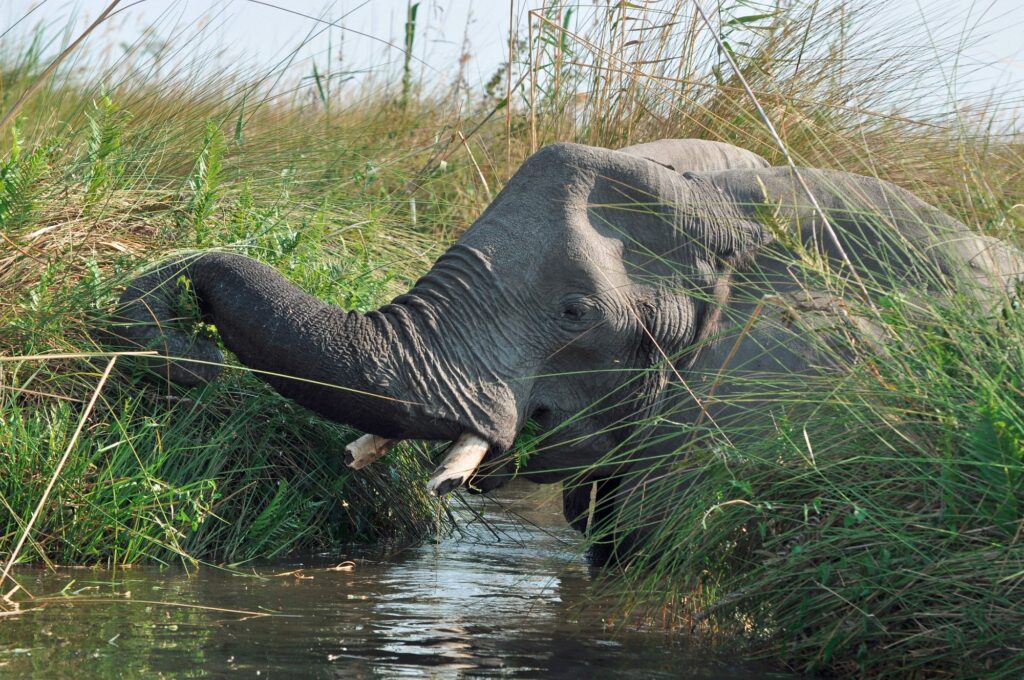
- Keep a safe distance: Give elephants and other large animals plenty of space and never get between a hippo and water.
Health and Safety
- Malaria: Moremi lies in a malaria area. Consult a travel health professional about prophylaxis and use repellent, long sleeves and mosquito nets.
- Wildlife in camp: Campsites are unfenced. Never walk around at night without a torch, keep tents zipped and store food securely in your vehicle.
- Sun and heat: Wear a hat and sunscreen and drink plenty of water, particularly in October and November.
- Travel insurance: Ensure your policy covers medical evacuation from remote areas.
- Entry requirements: Check Botswana visa rules for your nationality, and carry a yellow fever certificate if arriving from a country with yellow fever risk.
What to Pack for Moremi
| Category | Essentials |
| Clothing | Neutral-coloured layers (khaki, olive, beige); warm fleece and jacket for winter mornings; wide-brimmed hat; comfortable closed shoes |
| Optics & camera | Binoculars (8×42 or 10×42); camera with telephoto lens; spare batteries and memory cards; bean bag |
| Health | Malaria tablets (as prescribed); insect repellent; sunscreen; personal medication; basic first-aid kit |
| Practical | Headlamp or torch; reusable water bottle; power bank; soft-sided duffel bag for light aircraft |
| Self-drive extras | Recovery gear; tyre compressor; offline maps; jerry cans; cooler box; camping kitchen equipment |
Frequently Asked Questions
What is Moremi Game Reserve famous for?
Moremi is famous for its combination of land and water habitats in the Okavango Delta, excellent predator sightings including lion, leopard and African wild dog, mokoro excursions and outstanding birdlife.
Can you see the Big Five in Moremi?
Yes. Lion, leopard, elephant and buffalo are seen regularly. Rhinos have been reintroduced, mainly around Chief’s Island, but sightings are rare and strictly protected.
How many days do you need in Moremi?
Two to three nights is a good minimum. Four to seven nights allows you to combine different areas, such as Xakanaxa, Third Bridge, Khwai and Chief’s Island, and both land and water activities.
Can I visit Moremi on a self-drive safari?
Yes. Moremi is one of Botswana’s classic self-drive destinations, but you need an equipped 4×4, sound off-road experience, pre-booked campsites and park permits.
Are mokoro trips available all year?
No. They depend on water levels. The best time is usually from around May to September, when the Delta floods are high.
Are night drives allowed in Moremi?
Night drives are not allowed inside the reserve itself, but they are offered in neighbouring concessions such as the Khwai Community Concession.
Is Moremi part of the Okavango Delta?
Yes. Moremi Game Reserve covers roughly one-third of the Okavango Delta, a UNESCO World Heritage Site since 2014.
What is the difference between Moremi and Chobe?
Moremi offers a mix of wetland and dryland in the Okavango Delta, with mokoro trips and strong predator viewing. Chobe is known for enormous elephant herds and river cruises on the Chobe River. Many safaris combine both.
Is Moremi safe for tourists?
Yes, Moremi is considered safe for visitors who follow park rules and guide instructions. The main risks relate to wildlife, malaria and remote travel, all of which can be managed with sensible precautions.
Plan Your Moremi Safari with Marriott Safaris Africa
Whether you dream of a luxury fly-in safari to Chief’s Island, a classic lodge-based Okavango adventure or an independent self-drive camping trip through Xakanaxa and Third Bridge, Moremi Game Reserve delivers some of the most unforgettable wildlife experiences in Africa.
Our team can help you choose the right season, secure campsites and park permits, arrange fully equipped 4×4 vehicles with rooftop tents, and combine Moremi with the Okavango Delta, Chobe National Park, the Makgadikgadi Pans and Victoria Falls.
| Ready to Explore Moremi?
Contact Marriott Safaris Africa today to start planning your tailor-made Botswana safari. Perfection Anytime. |