Mokoro Safari in the Okavango Delta
Mokoro Safari in the Okavango Delta, there is a moment on every mokoro safari when the engine noise of modern life simply disappears. The only sounds left are the soft push of a wooden pole into the sandy riverbed, the rustle of papyrus brushing the sides of the canoe, and the distant grunt of a hippo somewhere beyond the reeds. You sit just a few centimeters above the waterline, eye-level with water lilies and tiny painted reed frogs, while your poler steers you silently along a channel that may not have existed a month earlier.

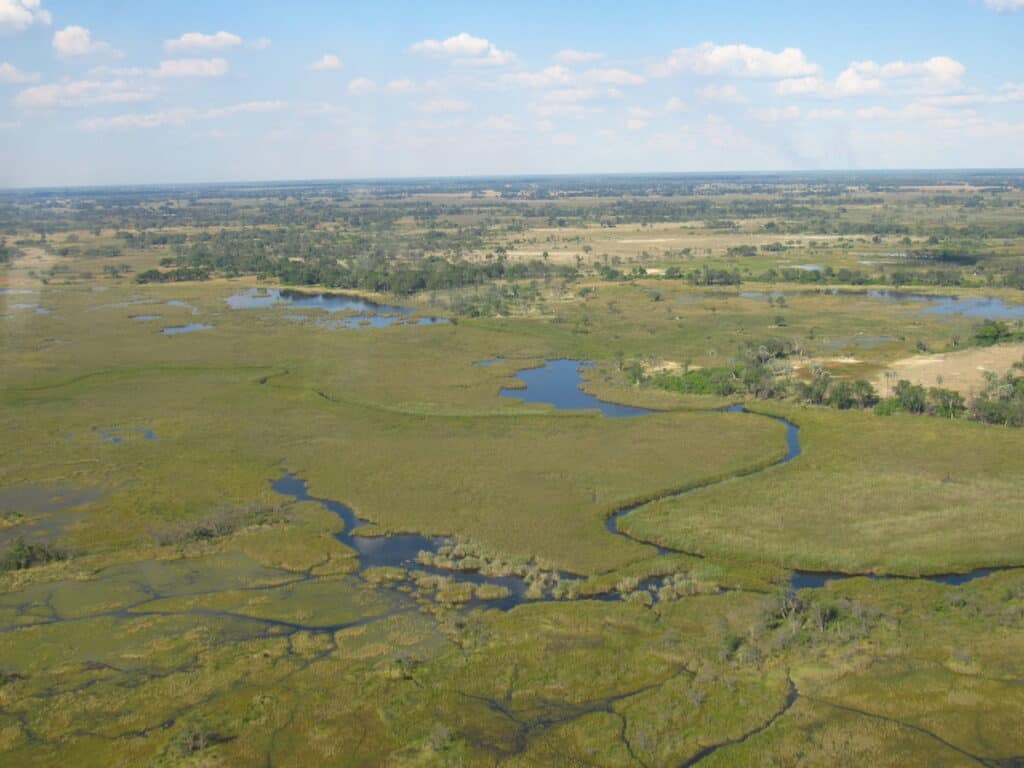
This is the mokoro safari: the most iconic, intimate and authentically Botswanan way to experience the Okavango Delta, the world’s largest inland delta and a UNESCO World Heritage Site since 2014. Every year, floodwaters that fell as rain in the Angolan highlands months earlier spread across more than 15,000 square kilometres of the Kalahari, transforming dry savannah into a maze of lagoons, channels, floodplains and palm-fringed islands. The mokoro is the vessel that unlocks that maze.
This guide covers everything you need to plan a mokoro safari in the Okavango Delta: what a mokoro is and how the experience works, the different types of trips, the best areas and seasons, what wildlife you can realistically expect, typical costs, sample itineraries, safety rules, packing advice and answers to the questions travellers ask most.
| Quick Facts: Mokoro Safari at a Glance
What it is: A guided excursion in a traditional dugout-style canoe, propelled by a standing poler Where: Okavango Delta, northern Botswana – accessed mainly from Maun, the Panhandle, or fly-in camps Best season: Roughly May to September, when the annual floodwaters peak in the central and southern Delta Duration: From a 1–2 hour lodge outing to a full-day trip or a multi-day mokoro camping trail Capacity: Usually two passengers plus one poler per mokoro Indicative cost: Budget day trips from around US$60–200 per person; included free in most lodge stays Best for: Birders, photographers, slow travellers, couples and anyone wanting a quiet, low-impact safari |
What Is a Mokoro?
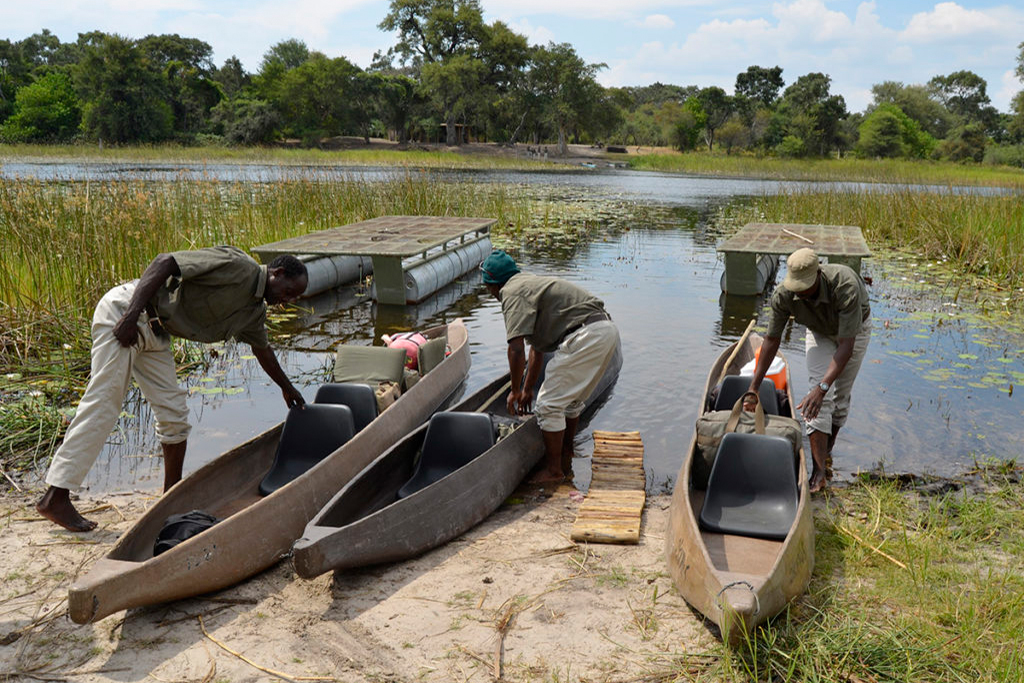
A mokoro (plural: mekoro) is a shallow-draught canoe traditionally carved from a single tree trunk. For generations, the BaYei (Wayeyi) and Hambukushu peoples of the Okavango have used mekoro to fish, harvest reeds, travel between islands and move goods through the Delta’s waterways. The design is perfectly suited to the environment: the canoe is narrow enough to slip through dense reed beds and light enough to glide over water that is sometimes only knee-deep.
Traditional Wood vs. Modern Fibreglass
Traditionally, mekoro were hollowed out of large hardwood trees such as African ebony (jackalberry), sausage tree (Kigelia) or marula. Carving a single canoe could take weeks and required a mature tree that had taken decades to grow. As tourism expanded from the 1980s and 1990s, conservationists became concerned about the pressure on these slow-growing trees.
Today, the vast majority of tourist mekoro are made from fibreglass, moulded to replicate the traditional shape. They last far longer, require no tree felling and are more stable for visitors. The experience is essentially the same – silent, low and close to the water – and choosing an operator using fibreglass mekoro is a small but meaningful conservation choice.
The Poler: Your Guide, Navigator and Storyteller
Your mokoro is propelled by a poler, who stands at the stern and pushes off the riverbed with a long pole called a ngashi, traditionally cut from the mogonono (silver terminalia) tree. Many polers grew up in Delta villages and learned the craft from parents and grandparents. They read the water, track the movements of hippos, identify birds by call alone and know which channels are passable as flood levels change.
Polers working in tourism must be licensed and trained, and the best combine traditional knowledge with formal guiding qualifications. On walking components of a trip, your poler often doubles as your walking guide.
How a Mokoro Safari Works
While each operator and camp runs things slightly differently, most mokoro excursions follow a similar pattern:
- Briefing at the mokoro station: Your guide explains safety rules, how to sit, how to get in and out, and what to do if you encounter a hippo or elephant.
- Boarding: You step carefully into the centre of the canoe and sit low on a padded seat or cushion, usually with a backrest. Two guests typically share one mokoro.
- Poling through the channels: The poler guides you through papyrus-lined channels, across open lagoons and over flooded grassland. The pace is slow and unhurried.
- Island stop and bush walk: On longer trips you land on an island for a guided walk, a picnic or a tea stop. Walking is how you track larger game on foot.
- Return or overnight: Shorter excursions loop back to camp or the station. Multi-day trips set up a simple bush camp on an island for the night.
| Why It Feels So Different from a Game Drive
A mokoro safari is not about ticking off the Big Five. It is about the small details: a malachite kingfisher on a reed stem, a pygmy goose drifting past, the reflection of a lechwe bounding across the floodplain, or an elephant feeding on palm fruit across the water. Because there is no engine, animals and birds often allow a closer, calmer approach. |
Types of Mokoro Safari in the Okavango Delta
Lodge-Based Mokoro Activity (Fly-In Camps)
Most luxury and mid-range camps in the permanent or seasonal water areas of the Delta offer mokoro outings as part of their daily activity programme, usually at no extra cost. These trips last one to three hours, typically in the early morning or late afternoon, and often end with sundowners on a quiet lagoon. This is the most comfortable way to enjoy the experience and is ideal for first-time visitors who want to combine mokoro, motorboat, walking and game drive activities.
Mokoro Day Trip from Maun
Budget travellers and self-drivers often book a day trip from Maun. You are transferred by 4×4 or speedboat to a mokoro station on the edge of the Delta, typically in the Boro or Buffalo Fence area of the southern Delta, and spend several hours poling through channels with a bush walk and packed lunch on an island. It is an affordable taste of the Delta, although wildlife density near the edges is lower than deeper inside.
Multi-Day Mokoro Trail with Bush Camping
For adventurous travellers, a two- to four-night mokoro trail is the most immersive option. You travel by mokoro into the Delta, set up a simple camp on an island, and spend your days poling and walking. Evenings are spent around a campfire listening to hyenas, lions and hippos. Depending on the operator, the trip can be fully catered, semi-participation, or self-catering where you bring your own food and the polers provide the canoes and guiding.
Panhandle and Community Mokoro Trips
In the northwestern Panhandle, where the Okavango River enters Botswana, community-run initiatives around Seronga and lodges near Guma Lagoon offer mokoro trips with a strong cultural focus. These areas are excellent for birding, fishing and meeting the communities who have lived alongside the river for centuries. Revenue from community trusts supports local polers and their families.
| Trip type | Typical duration | Comfort level | Wildlife density | Best for |
| Lodge-based outing | 1–3 hours | High | High (deep Delta) | First-timers, couples, luxury travellers |
| Day trip from Maun | 6–9 hours | Basic | Moderate (Delta edge) | Budget travellers, self-drivers |
| Multi-day mokoro trail | 2–4 nights | Rustic camping | Moderate to high | Adventurers, photographers |
| Panhandle / community trip | Half day to multi-day | Basic to mid-range | Moderate; excellent birding | Birders, culture seekers |
Best Areas for a Mokoro Safari
Not every part of the Delta is suitable for mekoro. The canoe needs shallow, calm water – deep, fast channels are better explored by motorboat, while dry areas are better for game drives. These are the main zones where mokoro activities are offered:
| Area | Water type | Access | Highlights |
| Boro & Buffalo Fence (southern Delta) | Seasonal | Road from Maun, then mokoro | Most common budget day trips and mokoro trails |
| Moremi Game Reserve (Mboma, Xakanaxa) | Permanent & seasonal | Road or fly-in | Big game nearby; combine with drives and boat trips |
| Chief’s Island & surrounds | Seasonal floodplains | Fly-in camps or mokoro trails | Iconic islands, excellent walking safaris |
| Private concessions (central Delta) | Permanent & seasonal | Fly-in only | Exclusive, uncrowded mokoro outings from luxury camps |
| Panhandle (Guma, Seronga) | Permanent river & lagoons | Road from Maun/Shakawe | Birding, fishing, community-run trips |
| Planning Tip
If wildlife is a priority, look for camps or trails in permanent-water concessions or inside Moremi, rather than the outer edges of the Delta. Ask your operator which channels are currently flooded – flood extent varies year to year and shapes where mokoro trips can run. |
What You Can See on a Mokoro Safari
The mokoro is one of the finest platforms in Africa for observing the Delta’s smaller and aquatic life, while larger animals are often seen on islands, along floodplains or during walking stops.
| Category | Species commonly seen |
| Mammals | Red lechwe, sitatunga (shy, rare), hippo, elephant, buffalo, giraffe, zebra, impala, tsessebe, baboon, kudu |
| Predators (usually from land) | Lion, leopard, wild dog, spotted hyena – mostly encountered on walks or in neighbouring game drive areas |
| Reptiles & amphibians | Nile crocodile, monitor lizard, painted reed frog, long reed frog |
| Birds | African fish eagle, malachite and pied kingfishers, African jacana, pygmy goose, slaty egret, wattled crane, Pel’s fishing owl (Panhandle), saddle-billed stork |
| Plants | Day and night water lilies, papyrus, phoenix and real fan palms, sycamore fig, jackalberry trees |
The Okavango is home to well over 400 recorded bird species, making the mokoro a favourite with birders. Early morning trips offer the best light and the most activity, while late-afternoon outings bring golden reflections perfect for photography.
Best Time for a Mokoro Safari
The Okavango’s flood follows a unique and somewhat counter-intuitive cycle. The floodwaters originate from summer rains in Angola (roughly November to March), then travel slowly southeast, reaching the Panhandle around March to April and the southern Delta near Maun by June to August. The result is that the Delta is at its fullest during Botswana’s dry winter.
| Months | Season | Water levels | Mokoro conditions |
| Jan – Mar | Green / rainy season | Low to rising | Limited in seasonal areas; possible in permanent water. Lush scenery, migrant birds, lower prices |
| Apr – May | Flood arriving | Rising | Good and improving; channels opening up across the Delta |
| Jun – Aug | Peak flood, dry winter | Highest | Excellent – prime mokoro season; cool mornings, clear skies |
| Sep – Oct | Late dry season | Receding | Very good early on; strong game viewing, hot days by October |
| Nov – Dec | Early rains | Lowest | Mokoro mostly in permanent-water areas only; some trips suspended |
| Our Recommendation
For the classic mokoro experience, travel between June and September. Water is high, the weather is dry and comfortable, and wildlife concentrates near the floodwaters. For value, consider May or late September, and for lush landscapes with fewer visitors, the green season in permanent-water areas. |
How Much Does a Mokoro Safari Cost?
Costs vary enormously depending on whether you take a budget trip from Maun or stay in a fly-in camp where mokoro outings are included. The figures below are indicative and per person in US dollars; always confirm current rates, as Botswana regularly revises park and concession fees.
| Option | Indicative cost (per person) | What is usually included |
| Basic mokoro day trip from Maun | US$60 – 200 | Transfers, poler, mokoro, sometimes lunch and park/community fees |
| 2–3 night mokoro camping trail | US$300 – 900+ | Mokoro, poler, camping gear, meals (varies), transfers |
| Mid-range lodge (mokoro included) | US$400 – 900 per night | Accommodation, meals, all activities including mokoro |
| Luxury fly-in camp (mokoro included) | US$1,200 – 3,000+ per night | All-inclusive stay, private-concession activities, laundry, drinks |
| Light aircraft transfer Maun – camp | US$200 – 400 each way | Seat on a shared light aircraft (soft-bag luggage limits apply) |
Extra Costs to Budget For
- Park and conservation fees: Payable for Moremi Game Reserve and some community areas if not included in your package.
- Poler and guide tips: Tipping is customary; ask your operator for current guidelines.
- Camping equipment: On self-catering trails you may need to supply your own tent, food and water.
- Travel insurance: Strongly recommended, ideally with medical evacuation cover for remote areas.
Sample Mokoro Safari Itineraries
Option A: Full-Day Mokoro Excursion from Maun
| Time | Activity |
| 06:30 | Pick-up from your Maun lodge; 4×4 or boat transfer to the mokoro station |
| 08:30 | Safety briefing, meet your poler and set off into the channels |
| 10:30 | Land on an island for a guided bush walk to track wildlife |
| 12:30 | Picnic lunch in the shade; rest during the heat of the day |
| 14:30 | Mokoro return through different channels, with birding stops |
| 16:30 | Arrive at the station; transfer back to Maun by early evening |
Option B: 3-Day / 2-Night Mokoro Trail
Day 1: Maun to the Delta
Transfer from Maun to the mokoro station. Load gear into the mekoro and pole two to three hours into the Delta. Set up camp on an island, then enjoy a sunset mokoro outing and a campfire dinner under the stars.
Day 2: Walking and Exploring
Early morning bush walk to look for elephant, buffalo, zebra and antelope. Return to camp for brunch and a midday rest. Late afternoon mokoro excursion to a hippo pool or lagoon, keeping a safe distance, followed by another night in the wild.
Day 3: Return to Maun
Sunrise birding by mokoro as mist lifts off the water. Break camp, pole back to the station and transfer to Maun in time for an afternoon scenic flight over the Delta, highly recommended to see the scale of the waterways from above.
Option C: 7-Day Okavango & Moremi Safari with Mokoro
| Day | Location | Highlights |
| 1 | Maun | Arrival, overnight at a riverside lodge on the Thamalakane River |
| 2–3 | Southern Delta mokoro camp | Mokoro excursions, island walks, campfire nights |
| 4–5 | Moremi Game Reserve (Xakanaxa) | Game drives, motorboat cruise, lagoon mokoro outing |
| 6 | Private concession fly-in camp | Morning mokoro, afternoon game drive, sundowners |
| 7 | Maun | Scenic flight back to Maun; depart or continue to Chobe |
Mokoro Safety and Etiquette
Mokoro safaris have an excellent safety record when guests follow their poler’s instructions. The main risks come from hippos, crocodiles and elephants, all of which experienced polers know how to read and avoid.
- Stay seated and still: Sudden movements can unbalance the canoe. Keep your weight central.
- Keep hands and feet inside: Never trail your hands in the water, however tempting.
- Follow your poler’s lead: If they signal silence or a change of direction, comply immediately.
- Respect hippos: Polers stay in shallow water and away from deep pools where hippos rest.
- Walking safety: Walk in single file behind your guide, never run, and stay quiet.
- Protect electronics: Use a dry bag for cameras and phones in case of splashes.
- Leave no trace: Pack out all rubbish and never pick plants or feed wildlife.
| Health Notes
Northern Botswana is a malaria area, particularly in the wet season. Consult a travel health clinic about antimalarial medication before you travel, use insect repellent, and wear long sleeves in the evenings. Carry and drink plenty of water, as sun reflected off the water can be intense even in winter. |
What to Pack for a Mokoro Safari
| Category | Essentials |
| Clothing | Neutral-coloured (khaki, olive, beige) lightweight layers; warm fleece for cold winter mornings; long sleeves for evenings |
| Sun protection | Wide-brimmed hat with chin strap, polarised sunglasses, high-SPF sunscreen, lip balm |
| Footwear | Sturdy closed walking shoes for island walks; sandals for camp |
| Gear | Binoculars, camera with zoom lens, spare batteries, dry bag, headlamp, reusable water bottle |
| Health | Insect repellent, antimalarials (as prescribed), personal medication, small first-aid kit, hand sanitiser |
| Luggage | Soft-sided bag – essential for light-aircraft transfers, which have strict weight limits |
Avoid bright white and dark blue or black clothing: White can be glaring and startle wildlife, while dark colours attract tsetse flies in some parts of the Delta.
Photography Tips from the Mokoro
- Shoot early and late: soft golden light and still water give mirror-like reflections.
- Use a fast shutter speed to counter the gentle movement of the canoe.
- A 70–300mm or 100–400mm lens covers most birds and wildlife; a wide-angle captures lily-carpeted channels.
- Get low: the mokoro’s waterline perspective is unique, so use it for eye-level shots of frogs, lilies and reflections.
- Combine with a scenic flight or helicopter flip for aerial images of the Delta’s channels and islands.
Responsible Mokoro Tourism
Botswana is widely regarded for its low-volume, high-value tourism model, which limits visitor numbers in sensitive areas and channels revenue into conservation. The mokoro is a natural fit for this approach: it is silent, emission-free and has minimal impact on the environment.
You can strengthen that impact by choosing operators who use fibreglass mekoro, employ licensed local polers at fair wages, and work with community trusts. Booking community-run trips, such as those in the Panhandle, ensures that tourism income flows directly to the families who have lived alongside the Delta for generations.
How to Book Your Mokoro Safari with Marriott Safaris Africa
- Tell us your travel dates and style: Budget mokoro trail, mid-range lodge, or luxury fly-in camp.
- Receive a tailor-made proposal: We match you with the right Delta area for the season and current flood levels.
- Confirm with a deposit: Peak-season camps (June to October) fill early, so book 6–12 months ahead where possible.
- Pre-departure support: We provide packing lists, light-aircraft luggage guidance, visa and health advice.
- Enjoy the Delta: Our team remains available throughout your trip, and we can extend your journey to Chobe, Victoria Falls or the Kalahari.
| Combine Your Mokoro Safari
A mokoro safari pairs beautifully with a Chobe River boat cruise, the Makgadikgadi Pans, the Central Kalahari or Victoria Falls. Ask us about multi-destination Botswana itineraries that blend water, desert and big-game experiences. |
Frequently Asked Questions
Is a mokoro safari safe?
Yes, when run by licensed operators and polers who know the water. Polers avoid deep hippo pools and maintain safe distances from wildlife. Following your guide’s instructions is the most important safety rule.
Can I do a mokoro safari if I can’t swim?
Yes. Mekoro operate in shallow water and capsizing is rare. Mention it to your operator, who may provide a life jacket where available.
How many people fit in a mokoro?
Typically two passengers plus the poler. Some operators allow one passenger for photographers or solo travellers, sometimes at a supplement.
Are children allowed?
Policies vary. Many operators set a minimum age of around 6 to 12 years for mokoro and walking activities. Always check with the camp or operator.
Will I see the Big Five from a mokoro?
You may see elephants and buffalo from the water, and lions or leopards during walks or in nearby game drive areas, but the mokoro is primarily about birds, smaller wildlife, scenery and tranquillity. Rhino sightings in the Delta are rare.
What is the best time of day for a mokoro trip?
Early morning and late afternoon offer the best light, cooler temperatures and the most animal activity.
Can I do a mokoro safari on a self-drive trip?
Yes. Self-drivers often base themselves in Maun and book a mokoro day trip or overnight trail, or drive into Moremi Game Reserve, where some campsites and lodges offer mokoro activities.
Do I need to be fit?
No special fitness is needed for the canoe itself. Island walks are at a gentle pace but involve uneven terrain and heat, so moderate mobility helps.
Final Thoughts
A mokoro safari is less about speed and spectacle and more about stillness and connection: with the water, with the wildlife and with the people whose ancestors first poled these channels. Whether you spend two hours drifting past lilies from a luxury camp or three nights sleeping under the stars on a remote island, it is likely to be the experience you remember most from Botswana.
Ready to glide into the Okavango? Contact Marriott Safaris Africa to plan a mokoro safari tailored to your dates, budget and travel style.