
How to Get to the Okavango Delta, Botswana
The Complete 2026 Guide to Flights, Light-Aircraft Transfers, Self-Drive Routes, Border Crossings and Entry Requirements
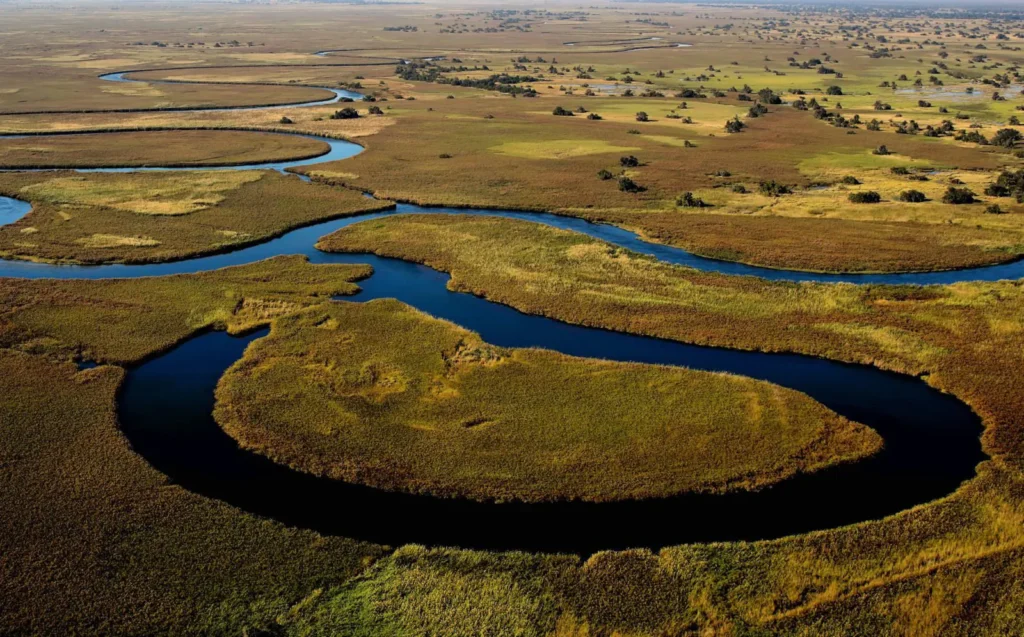
The Okavango Delta is one of the most spectacular wilderness areas on earth: a vast inland river delta where the Okavango River spills out across the Kalahari sands of north-western Botswana, creating a labyrinth of channels, lagoons, papyrus swamps and palm-fringed islands teeming with elephants, lions, leopards, wild dogs, hippos and more than 400 bird species. Yet for many first-time visitors, the biggest question is not what to see, but simply how to get there.
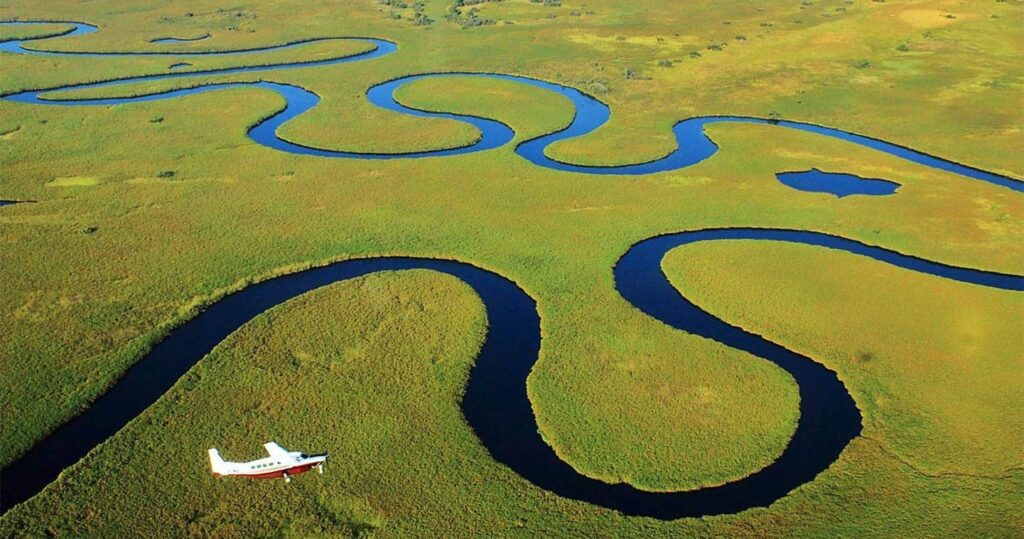
Because the Delta is remote, roadless in many places and seasonally flooded, getting there takes a little more planning than a typical safari destination. The good news is that there are well-established routes for every travel style, from luxury fly-in safaris to rugged 4×4 self-drive adventures. This guide walks you through every option step by step, so you can choose the route that best fits your budget, timeframe and sense of adventure.
| Quick Facts: Getting to the Okavango Delta
Main gateway: Maun (Maun International Airport, code MUB), on the south-eastern edge of the Delta Secondary gateway: Kasane (Kasane International Airport, code BBK), near Chobe National Park Main international hub: O.R. Tambo International Airport, Johannesburg (JNB), South Africa Into the Delta itself: Light-aircraft transfer (most camps), 4×4 vehicle (Moremi and Khwai), or boat/mokoro (Panhandle and day trips) Self-drive from Johannesburg: roughly 1,100–1,200 km to Maun, usually over two days Currency: Botswana Pula (BWP); US dollars widely accepted at lodges |
Where Is the Okavango Delta?
The Okavango Delta lies in north-western Botswana, roughly 1,000 km north-west of the capital, Gaborone. The Okavango River rises in the highlands of Angola, flows south-east through Namibia’s Zambezi (Caprivi) Strip, and enters Botswana near the town of Shakawe. Instead of reaching the sea, it fans out across the flat Kalahari Basin, forming a delta that covers somewhere between 6,000 and 15,000 square kilometres depending on the season.
In 2014 the Okavango Delta became the 1,000th site inscribed on the UNESCO World Heritage List. Much of the Delta is divided into private wildlife concessions, while Moremi Game Reserve, on its eastern side, is the only formally protected national reserve within the Delta and the main area accessible by road.
The Delta’s Key Zones (and Why They Matter for Access)
- The Panhandle (north-west): A narrow corridor where the river is confined between fault lines. Accessible by road from Namibia or Maun via Shakawe, Sepopa and Seronga. Famous for fishing and birding.
- The Inner (Permanent) Delta: The heart of the wetland, with year-round water. Almost entirely fly-in only; camps here are reached by light aircraft and sometimes by boat.
- The Seasonal Delta and Private Concessions: Areas that flood seasonally. Most luxury camps here are fly-in only, although a few can be reached by road in the dry season.
- Moremi Game Reserve and Khwai (east): The self-drive heart of the Delta. Reachable by 4×4 from Maun in roughly two to three hours to South Gate.
- Maun (south-east): The bustling safari town and gateway, with an international airport, fuel, supermarkets, banks, rental agencies and dozens of air-charter companies.
Your Main Options at a Glance
There are four principal ways to reach the Okavango Delta. Most travellers combine two of them, for example a commercial flight into Maun followed by a light-aircraft transfer to a camp.
| Option | Best For | Typical Journey | Comfort / Effort |
| Fly to Maun + light-aircraft transfer | Luxury and mid-range fly-in safaris; limited time | Johannesburg → Maun (approx. 1 hr 45 min) + 15–45 min bush flight | Highest comfort, minimal effort |
| Fly to Maun + 4×4 self-drive | Independent travellers; camping in Moremi and Khwai | Maun → Moremi South Gate approx. 100 km (2–3 hrs) | Moderate; deep sand driving |
| Overland self-drive from South Africa, Namibia, Zambia or Zimbabwe | Adventurous road-trippers; multi-country itineraries | Johannesburg → Maun approx. 1,100–1,200 km (2 days) | High effort; very rewarding |
| Guided mobile safari or overland tour | Budget to mid-range travellers who want a guide | Usually starts in Maun, Kasane or Victoria Falls | Low effort; shared logistics |
Step One: Flying into Botswana
Botswana has no long-haul intercontinental flights to Maun, so almost every international visitor connects through a regional hub. The most common and reliable route is via Johannesburg, South Africa.

International Gateway Airports
- R. Tambo International, Johannesburg (JNB): Southern Africa’s busiest hub, with direct flights from Europe, the Middle East, Asia, the Americas and across Africa. Daily connections to Maun and Kasane.
- Cape Town International (CPT): A useful option if you are combining the Cape with Botswana. Flights to Maun operate on some days of the week; schedules vary by season.
- Sir Seretse Khama International, Gaborone (GBE): Botswana’s capital airport, with domestic connections to Maun and Kasane on Air Botswana.
- Victoria Falls (VFA, Zimbabwe) and Livingstone (LVI, Zambia): Ideal if you are combining the Falls with Botswana. Kasane is about 80 km from Victoria Falls by road, and charter flights link the Falls region directly to Maun and Delta airstrips.
- Hosea Kutako International, Windhoek (WDH, Namibia): Some regional airlines connect Windhoek with Maun; schedules change frequently, so check current availability before planning around this route.
Flights into Maun
| Route | Typical Airlines | Approx. Flight Time | Notes |
| Johannesburg → Maun | Airlink, Air Botswana | 1 hr 40 min – 1 hr 50 min | The most popular route; daily flights |
| Cape Town → Maun | Airlink | Approx. 2 hrs | Fewer weekly frequencies |
| Gaborone → Maun | Air Botswana | Approx. 1 hr 15 min | Good for domestic connections |
| Kasane → Maun | Air Botswana / charter | Approx. 1 hr | Useful for Chobe + Delta combinations |
| Victoria Falls / Kasane → Delta airstrip | Light-aircraft charter | 1 – 1.5 hrs | Skips Maun entirely on some itineraries |
| Travelling from East Africa?
If you are starting your trip in Uganda, Kenya, Rwanda or Tanzania, the simplest routing is usually to fly to Johannesburg and connect to Maun the same day. Direct flights to Johannesburg operate from Entebbe, Nairobi, Kigali and Dar es Salaam on carriers such as Uganda Airlines, Kenya Airways, RwandAir, Airlink and Air Tanzania (routes vary over time). Allow at least three hours for your connection in Johannesburg, as you will need to clear immigration, collect checked luggage and re-check it for the regional flight. Many travellers prefer to overnight in Johannesburg to avoid the risk of missing the Maun flight. |
Arriving at Maun International Airport
Maun’s airport is compact and easy to navigate. After immigration and customs, you will typically be met by your safari operator or lodge representative. If you are flying on to a camp, your light-aircraft transfer may depart from the same airport within an hour or two, as the general aviation apron sits right beside the commercial terminal. If you are self-driving, most car-rental companies will meet you at the airport or deliver your vehicle to your hotel in Maun.
Step Two: Light-Aircraft Transfers into the Delta
For most visitors, the final leg into the Okavango Delta is a scenic flight in a small aircraft, usually a Cessna 206 (five passengers) or Cessna 208 Caravan (up to about 12 passengers). These flights land on gravel or grass airstrips close to the camps, and many people find the aerial view of the Delta’s winding channels, herds of elephants and lechwe splashing through the floodplains to be a highlight of the entire trip.
How Delta Air Transfers Work
- Your safari operator or lodge books your seats with one of the Maun-based air-charter companies.
- On arrival in Maun, you check in at the charter company’s desk or are escorted to the general aviation area.
- Luggage and passengers are weighed; pilots must calculate loads carefully for safety.
- Flights to most camps take between 15 and 45 minutes. On a scheduled “seat-in-plane” transfer, you may stop at one or two other airstrips to drop off or collect guests.
- A camp guide meets you at the airstrip and drives you (or poles you by mokoro, or takes you by boat) to camp, often game-viewing along the way.
Scheduled Seat-in-Plane vs Private Charter
| Feature | Seat-in-Plane (Shared) | Private Charter |
| Cost | Lower; priced per seat | Higher; priced per aircraft |
| Timing | Fixed departure times set by the operator | Flexible to your schedule |
| Stops | May include several airstrip stops | Direct to your camp |
| Luggage | Strict weight limit (usually about 20 kg) | Allowance depends on aircraft and passenger numbers |
| Best for | Couples and small groups on standard itineraries | Families, photographers and anyone with extra luggage |
| Luggage Rules: The Most Important Thing to Know
Soft-sided bags only. Hard suitcases and bags with wheels or rigid frames usually cannot fit into the small cargo pods of bush aircraft. Weight limit around 20 kg per person, including hand luggage and camera equipment, on most shared transfers. Some operators allow 15 kg; always confirm with your operator. Bag dimensions matter. A typical maximum is about 25 cm high, 30 cm wide and 62 cm long. Excess luggage can usually be stored in Maun or Johannesburg. Need more allowance? You can often purchase an extra seat to carry additional weight, which photographers frequently do. |
Helicopter Transfers and Scenic Flights
Helicopter transfers are available for some camps and give unmatched views, as doors-off flights allow clear photography. Even if you are not staying in the Delta, a 45–60 minute scenic flight from Maun by light aircraft or helicopter is an excellent way to appreciate its scale; it is especially popular with self-drivers and travellers on a tight budget.
Getting to the Okavango Delta by Road
Self-driving to the Okavango Delta is one of Africa’s great road trips. The main highways in Botswana are paved and generally in good condition, but once you leave the tar for Moremi, Khwai or the Panhandle backroads, you will be driving on deep sand, rutted tracks and, in the wet season, water crossings. A properly equipped 4×4 is essential beyond Maun.
From Johannesburg, South Africa
This is the most popular overland route. Expect roughly 1,100–1,200 km to Maun, which most drivers split over two days with an overnight stop in Palapye, Francistown or Nata.
Route A: Via Martin’s Drift (Grobler’s Bridge) – the most direct
- Johannesburg → Polokwane area → Lephalale/Groblersbrug on the N1/N11 corridor.
- Cross at Grobler’s Bridge (South Africa) / Martin’s Drift (Botswana) border post.
- Continue to Palapye, then north on the A1 to Francistown.
- From Francistown take the A3 north-west to Nata, then west to Maun (about 300 km from Nata).
Route B: Via Gaborone (Tlokweng border)
Drive Johannesburg → Zeerust → Tlokweng border → Gaborone, then north on the A1 through Mahalapye and Palapye to Francistown, and continue on the A3 to Nata and Maun. This route is slightly longer but convenient if you want to stock up in Gaborone or visit the Khama Rhino Sanctuary near Serowe.
From Kasane and Chobe National Park
- The tar route (approx. 600 km): Kasane → Nata on the A33 (around 300 km, watch for elephants on the road), then Nata → Maun on the A3. A comfortable full-day drive in any 2WD or 4×4 vehicle.
- The wilderness route (approx. 350–400 km, 2–4 days): Kasane → Chobe Riverfront → Savuti → Khwai → Moremi North Gate → South Gate → Maun. This is a classic 4×4-only safari route through deep sand, ideally driven over several nights of camping. It is not suitable for inexperienced sand drivers, especially in the rainy season.
From Windhoek, Namibia
Take the B6 east from Windhoek to the Buitepos (Namibia) / Mamuno (Botswana) border, then follow the Trans-Kalahari Highway (A2) to Charles Hill and Ghanzi, before turning north on the A3 to Maun. The total distance is roughly 800 km on good tar, and it can be driven in one long day, though many travellers overnight in Ghanzi.
From the Zambezi (Caprivi) Strip into the Panhandle
Travellers coming from Namibia’s Zambezi Region can cross at the Mohembo border post near Shakawe, entering the Okavango Panhandle directly. From Shakawe, a tar road runs south-east through Sepopa and Gumare to Maun (around 380 km). The Mohembo bridge over the Okavango River, opened in recent years, has replaced the old ferry and made access to Seronga and the eastern Panhandle much easier.
From Victoria Falls (Zimbabwe) or Livingstone (Zambia)
From Victoria Falls, drive about 70–80 km to the Kazungula border post into Botswana and on to Kasane. From Livingstone, the Kazungula Bridge over the Zambezi links Zambia directly with Botswana. From Kasane, follow either the tar or wilderness routes described above.
Driving Distances to Maun
| Starting Point | Approx. Distance to Maun | Approx. Driving Time | Main Border Post |
| Johannesburg (via Martin’s Drift) | 1,100 – 1,200 km | 13 – 15 hrs (2 days recommended) | Grobler’s Bridge / Martin’s Drift |
| Gaborone | Approx. 950 km | 11 – 12 hrs | N/A (within Botswana) |
| Francistown | Approx. 490 km | 5 – 6 hrs | N/A |
| Nata | Approx. 300 km | 3 – 4 hrs | N/A |
| Kasane (via Nata, tar) | Approx. 600 km | 7 – 8 hrs | N/A |
| Windhoek | Approx. 800 km | 9 – 10 hrs | Buitepos / Mamuno |
| Shakawe (Panhandle) | Approx. 380 km | 4 – 5 hrs | Mohembo (from Namibia) |
| Victoria Falls (via Kasane, Nata) | Approx. 680 km | 8 – 9 hrs | Kazungula |
Driving into the Delta: Moremi Game Reserve and Khwai
Moremi Game Reserve covers much of the eastern Okavango Delta and is the main self-drive destination within the Delta itself. It combines dry land and floodplain habitats, giving self-drivers a genuine Delta experience without a flight.
Maun to Moremi South Gate (Maqwee)
Leave Maun heading north-east through Shorobe. The first section is tarred, after which the road becomes gravel and then sand as you approach South Gate, roughly 100 km from Maun. Allow two to three hours. From South Gate, popular campsites such as Third Bridge and Xakanaxa lie a further 2–3 hours of slow sand driving inside the reserve.
Khwai and North Gate
North Gate sits on the Khwai River on the north-eastern edge of Moremi. It can be reached from South Gate through the reserve (around 2–3 hours) or from Maun via Shorobe and Sankuyu outside the reserve. The adjoining Khwai Community Concession offers excellent wildlife viewing and more flexible rules, including night drives and walking with registered operators.
Booking Campsites and Park Entry
- Moremi campsites are operated by private concessionaires on behalf of the Department of Wildlife and National Parks (DWNP), and they must be booked in advance. In peak season (July–October) the best sites sell out many months ahead.
- Park entry and vehicle fees are paid to DWNP, normally in advance through their offices in Maun or online where available. You may be turned away at the gate without proof of a campsite booking.
- Fees are revised periodically and differ for international visitors, SADC residents and citizens, so always check current DWNP rates before you travel.
| Self-Drive Vehicle Checklist for Moremi and Khwai
Vehicle: High-clearance 4×4 with low-range gearbox (Toyota Land Cruiser, Hilux double-cab or similar). 2WD and soft-roaders are not suitable. Tyres: Deflate to around 1.4–1.6 bar for deep sand and reinflate when back on tar. Carry a compressor, tyre gauge and two spare wheels. Fuel: There is no fuel inside Moremi or Khwai. Fill up fully in Maun and carry jerry cans for longer loops. Navigation: Download offline maps such as Tracks4Africa. Mobile coverage is patchy to non-existent inside the reserve. Water and recovery: Carry at least 5 litres of drinking water per person per day, plus a shovel, recovery straps and a satellite communicator if possible. |
Reaching the Okavango Panhandle and Western Delta
The Panhandle offers a different, more affordable way to experience the Delta. Small lodges and campsites along the river near Shakawe, Sepopa, Etsha and Guma Lagoon can be reached by 2WD on the tarred A35, although the final stretch to some camps requires a 4×4 through sand. On the eastern bank, Seronga is the base for community-run mokoro trips into the Delta, reached via the Mohembo bridge.
- Best for: Tiger fishing, birding (including Pel’s fishing owl), community mokoro trips and travellers arriving from Namibia.
- Getting there: Drive from Maun (around 4–5 hours to Shakawe) or enter from Namibia at Mohembo. Some Panhandle lodges also have airstrips for charter flights.
Day Trips and Short Visits from Maun
Short on time or budget? You can still experience the Delta from Maun without staying in a remote camp.
| Activity | How You Get There | Duration | Ideal For |
| Mokoro day trip | Vehicle or motorboat from Maun to a launch point on the Boro or Santantadibe channels | Full day | Experiencing the Delta at water level |
| Scenic flight | Light aircraft or helicopter from Maun airport | 45 – 60 minutes | Seeing the full scale of the Delta |
| Overnight mokoro camping | Vehicle/boat transfer from Maun, then mokoro to a wilderness island | 2 – 3 days | Budget adventurers |
| Moremi day game drive | Guided 4×4 from Maun | Full day (long) | Travellers without their own 4×4 |
Guided Mobile Safaris and Overland Tours
If you would like someone else to handle the driving, campsite bookings and logistics, a guided mobile safari is an excellent option. These trips typically start in Maun, Kasane or Victoria Falls and travel by safari vehicle through Moremi, Khwai, Savuti and Chobe, camping in dome or walk-in tents set up by the crew. Options range from participation camping tours on a budget to fully serviced luxury mobile safaris with en-suite tents and a private guide.
Marriott Safaris Africa can arrange guided mobile safaris, fly-in packages and fully equipped 4×4 self-drive rentals, so you can choose the level of independence that suits you.
Entry Requirements for Botswana
Passport and Visa
- Your passport should be valid for at least six months beyond your planned departure date and have at least two blank pages (more if you are crossing several borders).
- Citizens of many countries, including most Commonwealth, EU and SADC nations and the United States, can enter Botswana visa-free for tourism stays of up to 90 days. Other nationalities must obtain a visa in advance, which can be applied for through Botswana’s online e-visa system.
- Visa rules change, so always confirm current requirements for your nationality with the Botswana Department of Immigration or your nearest Botswana embassy before you travel.
Tourism Development Levy
Botswana charges a Tourism Development Levy on most non-SADC international visitors, payable on arrival or online in advance. The levy has been set at US$30 per person in the past; confirm the current amount and payment method before you travel.
Health Requirements
- Yellow fever: A yellow fever vaccination certificate is required if you are arriving from, or have transited through, a country with a risk of yellow fever transmission. This includes Uganda, Kenya, Rwanda, Tanzania and other East African countries, so travellers starting in East Africa should carry their certificate.
- Malaria: The Okavango Delta is a malaria area, with the highest risk during the rainy season (November to April). Consult a travel health clinic about prophylaxis and use repellent, long sleeves and mosquito nets.
- Travel insurance: Comprehensive cover that includes medical evacuation is strongly recommended, as Delta camps are far from hospitals. Many camps require proof of evacuation cover.
Bringing a Vehicle Across the Border
If you are driving a rental or private vehicle into Botswana from South Africa, Namibia, Zambia or Zimbabwe, carry:
- Vehicle registration papers (or a certified copy) and a letter of authority from the owner or rental company permitting cross-border travel.
- A valid driving licence in English (or an International Driving Permit) and the vehicle’s third-party insurance documents.
- Cash to pay Botswana’s road permit, road safety and insurance fees at the border.
- Correct ZA/NAM nationality stickers, reflective triangles and any equipment required in the countries you pass through.
| Note on Foot-and-Mouth Checkpoints
Botswana operates veterinary control fences and checkpoints to prevent the spread of foot-and-mouth disease. On the roads around Maun and Nata you may be asked to drive through disinfectant, walk your shoes through a footbath and declare raw meat or dairy products, which may be confiscated. Buy fresh meat in Maun rather than carrying it from elsewhere. |
How the Seasons Affect Getting There
The Okavango’s flood is unusual: rain falls in Angola during the southern summer, but the floodwaters take months to travel downstream, so the Delta is at its fullest during Botswana’s dry winter, typically June to August.
| Season | Months | Flood Level | Access Considerations |
| Green / rainy season | Nov – Mar | Low to rising | Some sand roads become muddy and slippery; certain campsites and tracks may close; air transfers can be affected by storms |
| Flood arrives | Apr – May | Rising | Water crossings begin to deepen in Moremi; check routes locally |
| Peak flood / dry season | Jun – Aug | Highest | Best water activities; some Moremi tracks flooded, requiring detours; very high demand for flights and campsites |
| Late dry season | Sep – Oct | Receding | Excellent game viewing; hot and dusty; roads generally passable but sand is very soft |
Approximate Costs of Getting There
Prices fluctuate with fuel costs, exchange rates and season, but the table below gives a realistic planning range for 2026.
| Item | Approx. Cost (USD) | Notes |
| Return flight Johannesburg – Maun | $350 – $800 per person | Book early for July–October |
| Light-aircraft transfer Maun – camp (shared) | $200 – $450 per person, per sector | Often bundled into lodge packages |
| Private charter (Cessna 206) | From $1,200+ per flight | Price depends on distance and flying time |
| Scenic flight from Maun (45–60 min) | $130 – $250 per person | Helicopter options cost more |
| 4×4 rental with camping equipment | $120 – $250 per day | Includes rooftop tent(s) and kitchen kit on many packages |
| Fuel (Maun round trip to Moremi and Khwai) | $150 – $300 | Depends on route and vehicle |
| Mokoro day trip from Maun | $120 – $200 per person | Includes transfers and poler |
All prices are indicative estimates only and exclude park fees and accommodation. Contact Marriott Safaris Africa for a current, itemised quote.
Sample Routes to the Okavango Delta
Option A: 4-Day Fly-In Delta Escape
| Day | Route | Details |
| Day 1 | Johannesburg → Maun → Delta camp | Morning flight to Maun; afternoon light-aircraft transfer to a water-based camp; sunset boat cruise |
| Day 2 | Delta camp | Mokoro excursion, walking safari on a palm island, birding |
| Day 3 | Delta camp → Moremi/concession camp | Short bush flight to a land-based camp for game drives |
| Day 4 | Camp → Maun → Johannesburg | Morning game drive, transfer flight to Maun, connect home |
Option B: 8-Day Self-Drive Loop from Maun
| Day | Route | Approx. Distance |
| Day 1 | Arrive Maun; collect 4×4; stock up on fuel, food and water | — |
| Day 2 | Maun → Moremi South Gate → Third Bridge or Xakanaxa | Approx. 150 km |
| Day 3 | Explore Moremi (Mboma Island, Xakanaxa lagoons, boat trip) | Local drives |
| Day 4 | Xakanaxa → North Gate → Khwai | Approx. 50 km |
| Day 5 | Khwai game drives; optional mokoro on the Khwai River | Local drives |
| Day 6 | Khwai → Maun via Sankuyu and Shorobe | Approx. 140 km |
| Day 7 | Maun: scenic flight over the Delta or mokoro day trip | — |
| Day 8 | Return vehicle; fly out of Maun | — |
14. Practical Tips for a Smooth Journey
- Book early. Delta camps, Moremi campsites and Maun flights fill up fast for the July–October peak; book 9–12 months ahead where possible.
- Pack light and soft. Use a duffel bag and keep to the light-aircraft weight limit. Neutral-coloured clothing in khaki, olive and beige is best.
- Carry cash. ATMs are available in Maun, Kasane, Nata and larger towns, but not in the bush. Carry Pula for park fees, border charges and tips, plus some US dollars.
- Avoid night driving. Elephants, donkeys and cattle wander onto Botswana’s roads, particularly the Nata–Kasane and Nata–Maun stretches.
- Build in buffer time. Allow a spare night in Maun or Johannesburg before or after a fly-in safari in case of delays.
- Respect wildlife. Camps in Moremi and Khwai are unfenced. Never leave food in tents, stay in your vehicle near predators and keep a safe distance from elephants and hippos.
- Stay connected wisely. Buy a local SIM card in Maun for coverage in towns, but expect no signal in most of the Delta.
15. How to Book Your Okavango Delta Trip with Marriott Safaris Africa
- Tell us your travel dates, group size, budget and preferred style: fly-in, self-drive or guided mobile safari.
- Receive a tailored itinerary with flight routings, transfers, accommodation or campsite options and a transparent quote.
- Confirm with a deposit; we secure your flights, light-aircraft seats, camps, park bookings or 4×4 rental.
- Get your pre-departure pack covering luggage limits, entry requirements, route notes and packing lists.
- Arrive in Maun to be met by our team, with 24/7 support throughout your journey.
| Ready to Explore the Okavango Delta?
Whether you want to glide into the Delta by light aircraft or drive the sandy tracks of Moremi in a fully equipped 4×4, Marriott Safaris Africa will plan every connection for you, from your flight into Maun to your final sunset on the floodplains. Marriott Safaris Africa – Perfection Anytime. |
16. Frequently Asked Questions
What is the nearest airport to the Okavango Delta?
Maun International Airport (MUB) is the main gateway, located on the south-eastern edge of the Delta. From Maun, light aircraft fly to dozens of airstrips inside the Delta, while self-drivers can reach Moremi Game Reserve’s South Gate in around two to three hours.
Can I fly directly to Maun from Europe, the USA or East Africa?
No, there are currently no direct long-haul flights to Maun. Most travelers connect through Johannesburg, which has daily flights to Maun. Some itineraries also route through Cape Town, Gaborone, Victoria Falls or Kasane.
Can I drive into the Okavango Delta?
Yes, but only to certain parts. You can self-drive to Moremi Game Reserve, the Khwai Community Concession and the Panhandle. Most of the inner Delta and private concessions have no road access, so their camps are reached by light aircraft.
Do I need a 4×4 to visit the Okavango Delta?
You can reach Maun and the Panhandle towns in a normal car on paved roads, but a high-clearance 4×4 with low-range is essential for Moremi, Khwai and any sandy routes beyond the tar.
How long does it take to get from Johannesburg to the Okavango Delta?
By air, Johannesburg to Maun takes about 1 hour 45 minutes, plus 15–45 minutes by light aircraft to a camp, so you can be on safari by the afternoon. By road, Johannesburg to Maun is roughly 1,100–1,200 km and is best split over two days.
What is the luggage limit for flights into the Okavango Delta?
On most shared light-aircraft transfers the limit is about 20 kg per person, including hand luggage and camera gear, packed in a soft-sided bag without wheels or a rigid frame. Confirm the exact limit with your operator.
Can I visit the Okavango Delta on a day trip?
Yes. From Maun you can take a mokoro day trip, a scenic flight or a long guided game drive into Moremi. However, staying at least two or three nights is recommended to really experience the Delta.
When is the best time to travel to the Okavango Delta?
June to October is the most popular period, with high flood levels from about June to August and excellent game viewing as the dry season progresses. The green season (November to March) offers lower prices, lush scenery and superb birding, although some roads become harder to drive.
Can I combine the Okavango Delta with Chobe and Victoria Falls?
Absolutely. A classic circuit links Victoria Falls, Kasane and Chobe National Park, then the Okavango Delta via Maun, either by light aircraft or along the 4×4 route through Savuti and Khwai.
Is it safe to travel to the Okavango Delta?
Botswana is one of Africa’s most stable and safe countries for travellers. The main risks relate to wildlife, remote driving and malaria, all of which can be managed with good planning, an experienced operator and sensible precautions.