Lake Ndutu, Tanzania
Every year, somewhere between late January and March, the short-grass plains around Lake Ndutu become the stage for one of nature’s most dramatic events. Hundreds of thousands of wildebeest gather here to give birth, and within a few short weeks the plains fill with wobbly newborn calves, watchful mothers and the predators that follow them. For wildlife lovers and photographers, few places in Africa offer this much action in such a compact area.
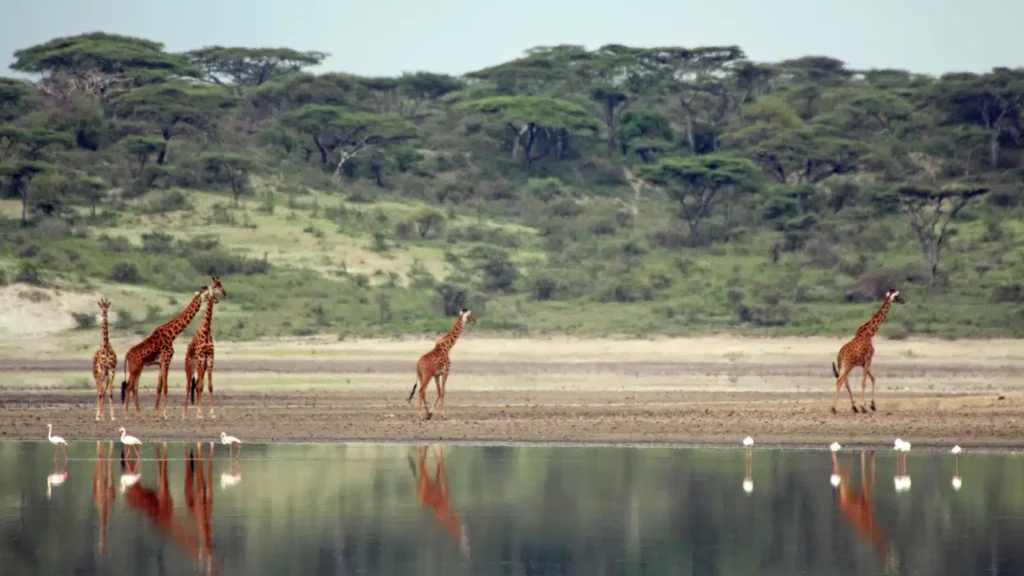
Lake Ndutu sits in the far western corner of the Ngorongoro Conservation Area (NCA), right on the border with the southern Serengeti. Because it falls under the Ngorongoro Conservation Area Authority rather than Tanzania National Parks, the area has its own fees, rules and character — quieter acacia woodlands, alkaline lake shores, marshes and endless open grassland.
This guide covers everything you need to plan a visit: where Lake Ndutu is, what wildlife you will see, when to go, how to get there by road or air, what self-drive travelers should know, current fees, where to stay, a sample itinerary and answers to the questions travelers ask most often.
Lake Ndutu brief info
|
Where Is Lake Ndutu?
Lake Ndutu lies in northern Tanzania, in the Arusha Region, inside the Ngorongoro Conservation Area. It sits at the meeting point of two great protected areas: the NCA to the east and Serengeti National Park to the west and north. The park boundary runs close by, so on a single game drive you can easily cross between the two — something to keep in mind because each area charges its own entry fee.
The lake is roughly 180 km west of Arusha as the crow flies, but the drive is longer because the road climbs over the Ngorongoro Crater highlands before descending onto the plains. Olduvai Gorge, the famous archaeological site, is around an hour’s drive east, and the Ngorongoro Crater rim is about two to three hours away depending on road conditions.
The Landscape
The Ndutu area is made up of several distinct habitats, which is a big reason for its rich wildlife:
- Lake Ndutu and Lake Masek: two shallow soda lakes whose water levels rise and fall with the rains. Their shores attract flamingos, wading birds and animals coming to drink.
- Acacia woodland: the umbrella-thorn woodland around the lakes provides shade, cover for leopards and genets, and nesting sites for birds.
- Short-grass plains: the volcanic-ash soils grow nutrient-rich grasses, especially high in minerals the wildebeest need while pregnant and nursing. This is the main reason the herds come here to calve.
- The Big Marsh and Small Marsh: permanent wetlands that hold water into the dry season and are favorite hunting areas for lions.
The Great Migration Calving Season at Ndutu
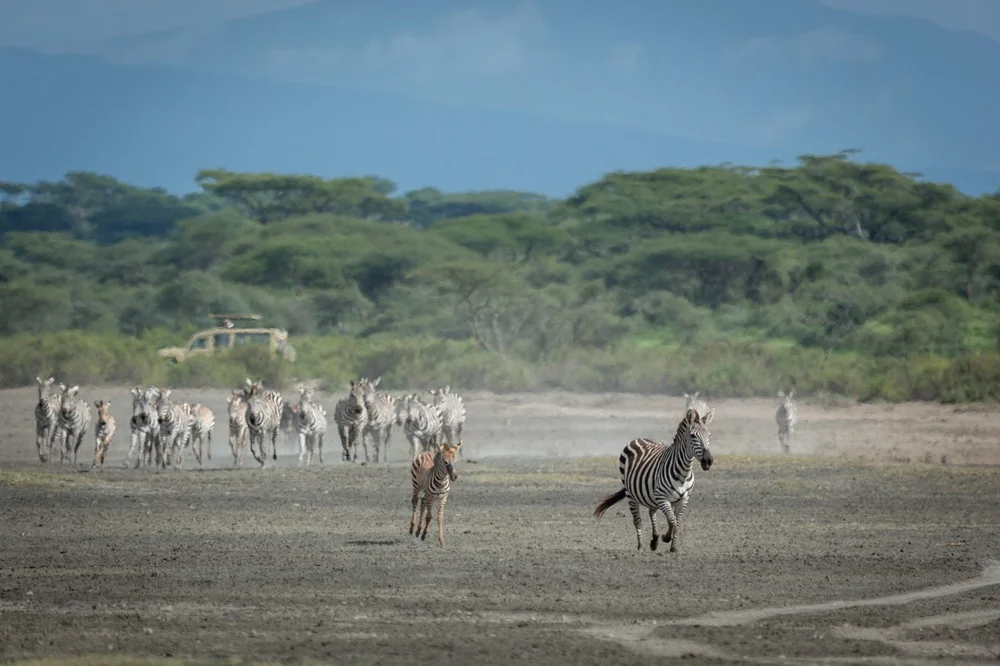
The Great Migration is a year-round circular movement of around 1.5 million wildebeest, along with hundreds of thousands of zebra and gazelle, across the Serengeti–Mara ecosystem. After the short rains of November and December, the herds move south onto the Ndutu and southern Serengeti plains, where the fresh grass is at its most nutritious.
What Happens During Calving
Most wildebeest calves are born within a concentrated window of about three weeks, usually in February. At the peak, thousands of calves can be born each day. This synchronized birthing is a survival strategy: predators simply cannot catch them all. A newborn wildebeest is typically on its feet within minutes and able to run with the herd soon after.
This abundance of vulnerable young draws predators in large numbers. Lions, spotted hyenas, cheetahs, leopards, jackals and vultures are all highly active, and predator–prey interactions are seen far more often here than at most other times and places on a Tanzania safari.
| Calving Season Tip
Calving dates shift slightly every year depending on when the rains fall. If witnessing births is your top priority, aim for the first three weeks of February and allow at least three nights in the Ndutu area to maximize your chances. |
Migration Movements by Month (Southern Plains)
| Period | Where the herds usually are | What to expect |
| Late Nov – Dec | Arriving on the southern plains and Ndutu area | Herds spread out after the short rains; good game viewing begins |
| January | Ndutu and southern Serengeti plains | Large herds settled; early births begin |
| February | Ndutu and surrounding short-grass plains | Calving peak; very high predator activity |
| March | Ndutu, southern Serengeti | Calves growing; herds start drifting west/north late in the month |
| April – May | Moving toward central and western Serengeti | Long rains; most herds leave the Ndutu plains |
| June – Oct | Western corridor, northern Serengeti and Maasai Mara | Ndutu quiet; resident wildlife only |
Wildlife at Lake Ndutu
While the migration is the headline act, Lake Ndutu is a rewarding wildlife destination in its own right. Many species live here year-round, and the area is particularly known for big cats.
| Animal | Sighting likelihood | Notes |
| Wildebeest | Very high (Dec–Mar) | Hundreds of thousands during calving season |
| Zebra & gazelle | Very high (Dec–Mar) | Plains zebra, Thomson’s and Grant’s gazelle travel with the herds |
| Lion | High | Several prides use the marshes and woodland; frequent kills in season |
| Cheetah | High | Ndutu is one of the best places in Tanzania to see cheetah hunting on open plains |
| Spotted hyena | High | Large clans follow the herds; active day and night |
| Leopard | Moderate | Look in the acacia trees along the lake shores and marshes |
| Giraffe | High | Common in the acacia woodland year-round |
| Elephant | Moderate | Often seen moving through the woodland |
| Serval, caracal, wildcat | Low–moderate | Smaller cats seen with patience and a good guide |
| Bat-eared fox, jackal, honey badger | Moderate | Commonly seen on the plains and near dens |
| Eland, hartebeest, buffalo | Moderate | Present in varying numbers |
Birdlife
Ndutu is a rewarding birding destination, especially from November to April when migrant species from Europe and Asia arrive. When water levels are right, both lesser and greater flamingos gather on the soda lakes. Other highlights include:
- Raptors such as tawny eagle, martial eagle, bateleur, secretary bird and several vulture species
- Grassland birds including kori bustard, ostrich, larks and pipits
- Woodland species such as fischer’s lovebird, superb starling, hornbills and barbets
- Waterbirds including storks, herons, plovers and avocets along the lake edges
Top Things to Do at Lake Ndutu
1. Game Drives on the Calving Plains
Early morning and late afternoon drives are the core Ndutu experience. Head out at first light, when predators are most active and the light is best for photography. Full-day drives with a picnic lunch let you follow the herds wherever they have moved.
2. Big Cat Tracking
With open plains and good visibility, Ndutu offers some of the best cheetah viewing in East Africa. Lions frequent the Big Marsh and Small Marsh, and leopards are often found resting in the acacias near the lakes.
3. Wildlife Photography
The combination of dramatic skies during the green season, golden light and constant action makes Ndutu a favourite with photographers. A long lens (at least 300–400 mm) and a beanbag for vehicle support are strongly recommended.
4. Birdwatching Around the Lakes
Spend time along the shores of Lake Ndutu and Lake Masek looking for flamingos, waders and raptors. The lakes are also lovely at sunset.
5. Visit Olduvai Gorge
About an hour east of Ndutu, Olduvai Gorge is one of the most important paleoanthropological sites in the world. Its museum explains the fossil discoveries that shaped our understanding of human origins. It makes an easy stop on the drive between Ndutu and the Ngorongoro highlands.
6. Maasai Cultural Encounters
The Ngorongoro Conservation Area is a multiple-use area where Maasai communities live alongside wildlife. Visits to a Maasai boma can be arranged along the main road, offering insight into pastoral life, traditional dress and song.
7. Combine With the Serengeti and Ngorongoro Crater
Ndutu pairs naturally with the southern and central Serengeti and the Ngorongoro Crater, forming a classic northern circuit itinerary.
Best Time to Visit Lake Ndutu
The best time to visit Lake Ndutu is from December to March, when the migration herds are on the southern plains. February is the single best month for the calving spectacle and predator action. Outside this window the area is much quieter, but resident wildlife remains and lodge rates drop considerably.
| Months | Season | Wildlife | Considerations |
| Dec – Mar | Green season / calving | Excellent – migration herds and peak predators | Highest rates; book lodges 6–12 months ahead |
| Apr – May | Long rains | Fair – herds move away | Some camps close; tracks can be very muddy |
| Jun – Oct | Dry season | Moderate – resident game only | Dusty plains, low rates, very few vehicles |
| Nov | Short rains begin | Improving – herds start returning | Good value; afternoon showers likely |
| Weather Snapshot
Days are generally warm (around 25–30°C), while early mornings can be cool, especially from June to August. Rain in the green season usually arrives as short afternoon storms rather than all-day downpours, so game drives are rarely cancelled. |
How to Get to Lake Ndutu
By Road
Most visitors travel by road from Arusha, Tanzania’s safari hub. The route follows a tarmac road west through Mto wa Mbu and Karatu to the Lodoare Gate of the Ngorongoro Conservation Area. From there, the road climbs to the crater rim and descends to the plains. Shortly past Olduvai Gorge, a track branches off toward Ndutu, leaving the main Serengeti road.
| Route segment | Approx. distance | Approx. time | Road type |
| Arusha – Mto wa Mbu | 120 km | 1.5–2 hrs | Tarmac |
| Mto wa Mbu – Karatu | 25 km | 30 min | Tarmac |
| Karatu – Lodoare Gate | 15 km | 20 min | Tarmac |
| Lodoare Gate – Ndutu area | 90–100 km | 3–4 hrs | Gravel and dirt tracks |
| Total: Arusha – Ndutu | approx. 250–270 km | 6–7 hrs | Mixed |
Note: times exclude game-viewing stops and can be much longer after heavy rain.
By Air
Scheduled light-aircraft flights operate to Ndutu Airstrip, especially during the calving season. Flights typically depart from Arusha Airport or Kilimanjaro International Airport and can connect with other Serengeti airstrips. Flying saves a full day of driving and is ideal for travellers short on time. Your lodge or operator will arrange a vehicle to meet you at the airstrip.
Self-Drive to Lake Ndutu
Lake Ndutu is accessible to experienced self-drivers with a properly equipped 4×4. Tracks across the plains are unmarked in places, change with the seasons and can turn into deep black-cotton mud after rain. Here is what to know before you go:
- Vehicle: a high-clearance 4×4 such as a Toyota Land Cruiser or Hilux is essential. Saloon cars and small SUVs are not suitable.
- Fuel: fill up completely in Karatu, the last reliable fuel stop. There are no public fuel stations in the Ndutu area. Carry a jerrycan of reserve fuel.
- Navigation: download offline maps (such as Tracks4Africa or Maps.me) and mark your lodge or campsite GPS coordinates before leaving Karatu. Mobile signal is patchy.
- Permits: NCA fees are paid electronically in advance or through your rental company or lodge. Keep your permit receipts with you at all times.
- Boundaries: the Serengeti boundary is close. Driving into the park requires a separate Serengeti permit, so ask the rangers or your lodge where the boundary runs.
- Recovery gear: carry a spade, tow strap, tyre repair kit, compressor and two spare tyres if possible.
| Self-Drive Safety Note
Rules on off-road driving in the Ndutu area are set by the NCAA and can change. Always follow ranger instructions, keep a respectful distance from animals (especially cheetahs on a hunt or mothers with calves), and never leave your vehicle except at designated areas. If you are new to East African bush driving, consider hiring a 4×4 with a driver-guide for the Ndutu section of your trip. |
Lake Ndutu Entry Fees and Permits (2027)
Because Lake Ndutu is inside the Ngorongoro Conservation Area, visitors pay NCA conservation fees rather than Serengeti National Park fees. These fees apply for every 24-hour period you spend in the area, including nights at a Ndutu lodge or camp. Note that the Ngorongoro Crater service fee is only charged if you descend into the crater itself — it does not apply to Ndutu.
| Fee type | Non-resident adult (16+) | Non-resident child (5–15) | Notes |
| NCA conservation fee (per 24 hrs) | approx. US$70.80–82.60 | approx. US$23.60 | Includes 18% VAT; published 2026 figures vary, confirm before travel |
| Children under 5 | Free | Free | — |
| Concession / accommodation fee | Varies | Varies | Charged per night by lodges and camps inside the NCA |
| Camping fee (public/special campsites) | Varies | Varies | Paid per person per night |
| Vehicle entry fee | Varies by vehicle weight | — | Foreign-registered vehicles pay more |
| Ngorongoro Crater service fee | US$295 per vehicle | — | Only if you descend into the crater |
| Serengeti NP entry (if crossing boundary) | approx. US$82.60 | approx. US$23.60 | Separate permit required |
Fees are set by the Ngorongoro Conservation Area Authority and Tanzania National Parks and may change at short notice. Always confirm current rates with your operator or the official authorities before you travel.
Where to Stay at Lake Ndutu
Accommodation in the Ndutu area ranges from permanent lodges to seasonal mobile tented camps that set up only for the calving season. Prices rise sharply from mid-December to March, so book early.
| Property | Style | Tier | Highlights |
| Ndutu Safari Lodge | Stone & thatch cottages | Mid-range | Long-established lodge overlooking Lake Ndutu; open year-round |
| Lake Masek Tented Camp | Luxury tents | Upmarket | Views over Lake Masek; spacious tents with private decks |
| Lemala Ndutu Tented Camp | Seasonal mobile camp | Upmarket | Small, intimate camp on the edge of a marsh; calving-season focus |
| Masek Tented Camp | Tented camp | Mid-range | Good value outside peak season |
| Seasonal mobile camps | Mobile tented | Mid-range to luxury | Move to follow the herds; very close to the action |
| Public and special campsites | Self-catering camping | Budget | Ideal for self-drive and rooftop-tent travellers; facilities are basic |
| Booking Tip
For February travel, popular camps can be fully booked 9–12 months in advance. If your dates are fixed, secure accommodation first and build the rest of your itinerary around it. |
Sample 5-Day Lake Ndutu Calving Safari
This itinerary is designed for February travel and works for both guided safaris and confident self-drivers.
| Day | Route / Activity | Overnight |
| Day 1 | Arrive Arusha; briefing, vehicle check and rest | Arusha |
| Day 2 | Drive Arusha – Karatu (refuel) – Ngorongoro highlands – Olduvai Gorge – Ndutu; afternoon game drive | Ndutu |
| Day 3 | Full-day game drive on the calving plains with picnic lunch; focus on births and predators | Ndutu |
| Day 4 | Morning drive at the Big and Small Marshes; afternoon around Lake Ndutu and Lake Masek | Ndutu |
| Day 5 | Early game drive, then drive to the Ngorongoro Crater rim (optional crater descent) or onward to Arusha | Karatu / Arusha |
Extend your trip: add two to three nights in the central Serengeti (Seronera) or a day in the Ngorongoro Crater, and finish with Tarangire or Lake Manyara on the way back to Arusha.
What to Pack for Lake Ndutu
- Neutral-coloured, lightweight clothing (khaki, olive, beige) plus a warm fleece for early mornings
- A light rain jacket for green-season showers
- Wide-brimmed hat, sunglasses and high-SPF sunscreen
- Binoculars for every traveller in the vehicle
- Camera with a long zoom lens, spare batteries, memory cards and a beanbag
- Insect repellent and any prescribed antimalarial medication
- Power bank and car charger — many camps run on solar power
- Passport, visa, yellow fever certificate (if required) and printed permit receipts
- For self-drivers: offline maps, recovery kit, first-aid kit, extra water and snacks
Health, Safety and Responsible Travel
Ndutu is in a malaria area, so speak to a travel health professional about prevention before you go. Drink bottled or treated water, use repellent in the evenings and keep your hands clean on long game-drive days. Lodges are remote, so travel insurance with medical evacuation cover is strongly recommended.
Ndutu’s predators face real threats. In September 2026 the NCAA reported that ten lions had been found dead in the Ndutu area, with poisoning suspected, a reminder of the pressures that human–wildlife conflict places on these populations. Responsible tourism helps fund conservation and gives local communities a stake in protecting wildlife.
- Keep a respectful distance from animals and never crowd a sighting, especially cheetahs on a hunt
- Stay on established tracks wherever required and follow ranger instructions
- Never feed wildlife or leave litter
- Choose operators and lodges that support local communities and conservation
- Ask permission before photographing people
Frequently Asked Questions
Is Lake Ndutu in the Serengeti or Ngorongoro?
Lake Ndutu lies inside the Ngorongoro Conservation Area, right on the border with the southern Serengeti. It is part of the wider Serengeti ecosystem, which is why the migration herds visit, but it is managed by the Ngorongoro Conservation Area Authority.
When is the best time to see the wildebeest calving at Ndutu?
The calving peak is usually in February, though births start in late January and continue into March. December to March is the best overall window.
How long should I spend at Lake Ndutu?
Plan for at least three nights in the calving season. This gives you enough time to follow the herds and increases your chance of seeing births and predator action.
Can I self-drive to Lake Ndutu?
Yes, with a well-equipped 4×4, offline navigation and full fuel from Karatu. Tracks can be challenging after rain, so less experienced drivers may prefer a driver-guide for this section.
Do I pay the Ngorongoro Crater fee to visit Ndutu?
No. The crater service fee only applies if you drive down into the Ngorongoro Crater. Visiting Ndutu requires the NCA conservation fee for each 24-hour period.
Is Lake Ndutu worth visiting outside the migration season?
Yes, for travellers who value solitude and lower prices. Resident lions, cheetahs, giraffes and birdlife remain, though game numbers are much lower than in the calving season.
Is Lake Ndutu good for families?
Yes. The action is easy to see from the vehicle, and children aged 5–15 pay reduced fees. Check minimum age policies at individual camps before booking.
Plan Your Lake Ndutu Safari
Lake Ndutu offers something rare: the raw spectacle of new life on the African plains, surrounded by some of the densest predator populations anywhere on the continent. Whether you choose a guided safari, fly in to a mobile camp or take on the adventure of a self-drive in a rooftop-tent 4×4, timing and preparation are everything.
| Ready to Witness the Calving Season?
Marriott Safaris Africa can arrange 4×4 self-drive rentals with full camping gear, driver-guided safaris, permits and accommodation for Lake Ndutu, the Serengeti and the Ngorongoro Crater. Contact our team to start planning your trip. |