Boat Cruise on Kazinga Channel
If there is one wildlife experience in Uganda that virtually every safari expert and seasoned traveller insists you must not miss, it is the boat cruise along the Kazinga Channel in Queen Elizabeth National Park. This two-hour journey on the water is widely regarded as one of the finest game-viewing excursions in all of East Africa — a slow, unhurried voyage through a living panorama of elephants, hippos, crocodiles, buffaloes, and an astonishing diversity of birds, all gathered along the banks of a narrow natural channel that connects two of Uganda’s great lakes.
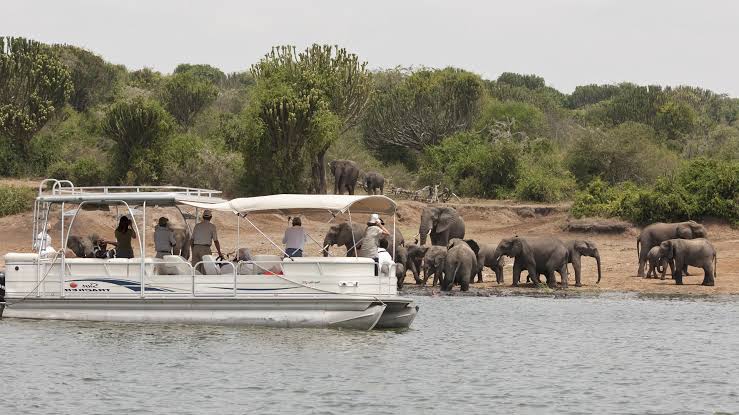
Unlike a game drive, where animals can be spotted at a distance and vehicles must remain on designated tracks, the Kazinga Channel boat cruise places you at the same level as the wildlife. You glide silently past hippo pods so large they form islands of pink-grey bulk barely a few metres from the railing. Nile crocodiles bask on sandy shores with mouths agape, oblivious to your presence. Elephants wade in the shallows, drawing water with their trunks, while hundreds of buffalo stand knee-deep at the river’s edge. The boat cruise is, in every sense, an intimate encounter with African wildlife — and it remains one of the most accessible and rewarding activities in Uganda for all types of travellers.
What Is the Kazinga Channel?
The Kazinga Channel is a natural, 40-kilometre-long waterway that links Lake George in the north to Lake Edward in the south, cutting through the heart of Queen Elizabeth National Park. While it functions technically as a channel rather than a river — it has no current of its own — it is fed by a constant supply of fresh water and nutrient-rich sediments from both lakes, making it one of the most productive wildlife habitats in the entire region.
The channel is exceptionally wide in certain stretches — sometimes over 100 metres across — with sandy beaches, reed beds, mudflats, and grassy banks providing a full spectrum of microhabitats that support an extraordinary concentration of life. The water itself teems with Nile tilapia and other fish species, which in turn attract the birds, crocodiles, otters, and fishing communities that depend on the channel for their livelihoods.
Unlike many waterways in Africa that run through remote or inaccessible terrain, the Kazinga Channel is both easily reached and expertly managed. Uganda Wildlife Authority (UWA) operates a small fleet of motorised boats from a jetty near the Mweya Peninsula, departing on scheduled cruises each day. The infrastructure is well-maintained, and the cruise is suitable for families, solo travellers, birders, photographers, and anyone seeking a wildlife experience that is both comfortable and deeply memorable.
Why the Kazinga Channel Boat Cruise Is a Must-Do
Several factors combine to make the Kazinga Channel boat cruise one of the most compelling wildlife activities in Uganda:
Unrivalled Wildlife Density — The channel supports what many rangers describe as one of the highest concentrations of hippos and water buffalo in the world. Because water is a constant in an otherwise seasonally dry landscape, animals congregate here throughout the year, ensuring that wildlife sightings are almost guaranteed on every cruise.
Close-Range Encounters — The boat glides to within a few metres of animals on the shore. This is not a distant binoculars-required experience; it is a face-to-face encounter with some of Africa’s most iconic animals. Photographers regularly capture images here that would be difficult or impossible to achieve on a game drive.
Outstanding Birdwatching — Queen Elizabeth National Park is home to over 600 bird species, and many of its most sought-after species are found specifically along the channel. The boat cruise is widely considered the single best birdwatching activity in the park.
Comfortable and Accessible — Unlike the bumpy, dusty experience of a game drive, the boat cruise is smooth, cool, and relaxed. There are seats for all passengers, shade from the sun, and a steady breeze off the water. The cruise is suitable for young children, elderly travellers, and those with limited mobility.
A Complement to the Game Drive — Queen Elizabeth National Park offers two distinct habitats — the savannah and the waterway. The boat cruise provides a completely different perspective on the park’s wildlife compared to a game drive, and the two activities together give a comprehensive picture of the ecosystem.
Wildlife You Can Expect to See
The Kazinga Channel is one of the most reliable wildlife-watching locations in Uganda, and the boat cruise delivers consistent, up-close sightings of a wide range of animals. Here is what to expect:
Hippopotamus
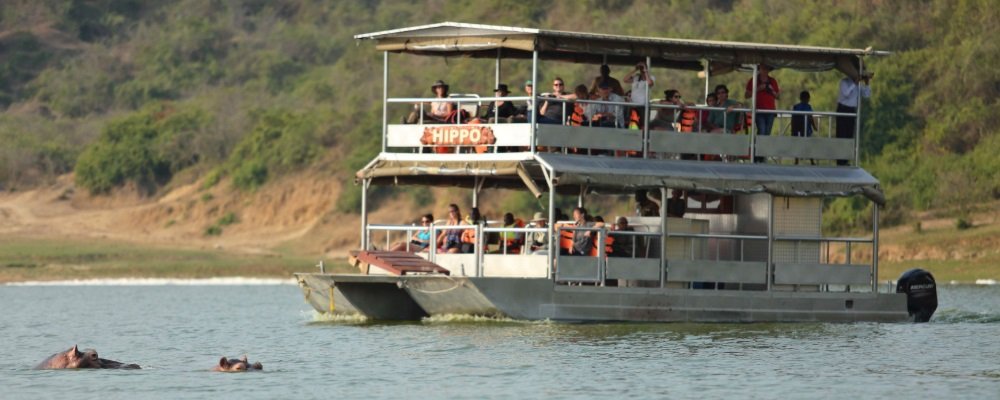
The channel is home to one of the largest hippo populations in Uganda — estimates suggest several thousand individuals inhabit this waterway and its surrounds. During the day, hippos spend most of their time submerged or resting at the water’s edge. The boat passes enormous pods — sometimes numbering in the dozens — with animals jostling, yawning, and occasionally mock-charging one another. Calves shelter close to their mothers, and the chorus of grunts, honks, and splashes is one of the defining sounds of the cruise.
Nile Crocodile
Nile crocodiles are found in impressive numbers along the channel, basking on sandy beaches and mudflats in the sun. Some individuals are truly enormous — ancient animals that can exceed five metres in length. The boat passes close enough to see the texture of their scales, the detail of their powerful jaws, and the occasional yellow-billed oxpecker picking parasites from their hides. Watching a crocodile slip silently into the water from a sandbank is an encounter that rarely fails to produce a sharp intake of breath.
African Elephant
Elephants are frequently seen along the channel banks, particularly in the late afternoon when they come to drink and bathe. Family herds wade into the shallows, and the sight of elephants in the water — splashing, spraying, and crossing — is one of the most spectacular photographic opportunities the cruise offers. The channel’s banks are also shaped by elephant activity: flattened vegetation, worn mud trails, and the distinctive pockmarks of elephant footprints are visible throughout the journey.
African Buffalo
Cape buffalo — or African buffalo — gather along the channel in impressive numbers. Herds of several hundred animals are regularly seen along the water’s edge, their heavy, curved horns and mud-caked hides making them one of the most striking sights from the boat. Buffalo in this area are accustomed to the boats and rarely move away, allowing for prolonged observation.
Water Monitor Lizard
Nile monitor lizards are a common sight, moving between the water and the bank with their characteristic rolling gait. They are excellent swimmers and are often seen crossing the channel or hunting along its edges. With their forked tongues, armoured scales, and prehistoric appearance, monitors are a favourite with children and photographers alike.
Warthog and Waterbuck
Warthog families trot along the channel’s grassy banks, often pausing to drink at the water’s edge. Waterbuck — large antelope with their distinctive white rump ring — are also frequently spotted grazing near the shore. Both species add to the already abundant mammal diversity along the channel.
Birdlife
For birdwatchers, the Kazinga Channel boat cruise is an experience of almost overwhelming abundance. The channel and its shoreline host a remarkable concentration and diversity of waterbirds, waders, kingfishers, and raptors. Some of the most notable species include:
- African Fish Eagle — the iconic call of this bird echoes across the channel constantly; it is frequently seen diving for fish or perching on waterside trees.
- Goliath Heron — the world’s largest heron stands motionless in the shallows waiting to strike.
- Pink-backed Pelican — large flocks roost in waterside trees and plunge-dive for fish.
- Great White Pelican — often seen in flotillas, herding fish cooperatively.
- African Skimmer — a rare and sought-after species that glides low over the water with its lower mandible slicing the surface.
- Pied Kingfisher — hovering above the water in dozens, then plunging in swift vertical dives.
- Malachite Kingfisher — a brilliantly coloured jewel that perches on reeds and low branches.
- Yellow-billed Stork — wading in the shallows with its bright orange-red face.
- Saddle-billed Stork — one of Africa’s most spectacular birds; tall, with a vivid saddle of colour on its bill.
- African Jacana — walking on lily pads on its extraordinarily long toes.
- Long-tailed Cormorant and Reed Cormorant — drying their wings on exposed rocks and tree stumps.
- Open-billed Stork — often seen in large aggregations along the shore.
- African Spoonbill, various herons, egrets, ibises, and many species of wader.
The channel is recognised as an Important Bird Area (IBA) and forms part of a broader ecosystem that supports over 600 bird species in Queen Elizabeth National Park — making it one of the most species-rich national parks for birds anywhere in Africa.
The Boat Cruise Experience: What to Expect
Departure Point
The standard departure point for the Kazinga Channel boat cruise is the Mweya Peninsula jetty, located within the northern sector of Queen Elizabeth National Park. The Mweya Peninsula juts out into the channel, offering stunning panoramic views of both the channel and the savannah. It is the location of the Mweya Safari Lodge, the Uganda Wildlife Authority headquarters for the park, and several budget and mid-range accommodation options. The jetty is well signposted, and vehicles can park nearby.
Duration
The standard boat cruise lasts approximately two hours. The boat travels eastward from Mweya, following the channel’s northern bank, before turning and returning along the southern bank to the jetty. The pace is unhurried; the captain and guide will slow or stop the boat whenever there is something worth observing, and there is no pressure to rush. For those who want a longer experience on the water, some lodges offer extended private cruises of three to four hours.
Scheduled Departure Times
Uganda Wildlife Authority typically operates three scheduled public cruises per day: a morning cruise departing around 09:00, an afternoon cruise departing around 15:00, and an occasional midday cruise during peak season. The morning and afternoon slots are considered the best for wildlife and birdwatching, as animals are most active and light is most favourable for photography. The afternoon cruise in particular catches the golden light of the late afternoon, when elephants and buffalo often come down to drink.
It is advisable to arrive at the jetty at least 30 minutes before the scheduled departure to purchase tickets and secure a good position on the boat. Cruises can fill up quickly during the peak seasons of June to August and December to February.
The Boats
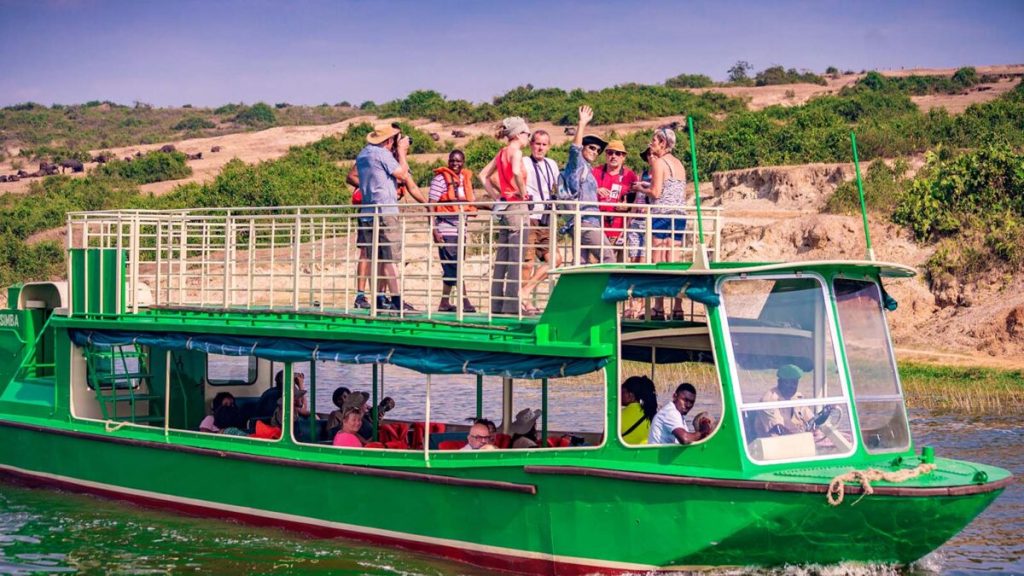
Uganda Wildlife Authority operates a small fleet of motorised aluminium launches that accommodate between 20 and 50 passengers depending on the vessel. The boats have open sides with low railings for unobstructed views and photography, partial shade from a roof cover, and seating around the perimeter and centre. Life jackets are available on board. Some lodges, including Mweya Safari Lodge, operate their own private launches with additional comfort features, refreshments, and smaller group sizes.
The Guide
All UWA boats are accompanied by a knowledgeable park ranger or wildlife guide. These guides are well-versed in the ecology of the channel, the behaviour of the animals, and the identification of bird species. They are adept at spotting wildlife and will alert passengers to sightings, provide context, and answer questions. If you have specific interests — particularly in birdwatching — it is worth mentioning this to your guide before departure, as they will pay particular attention to specialist species.
Best Time for the Boat Cruise
The Kazinga Channel boat cruise operates throughout the year and delivers excellent wildlife sightings in every season. However, there are some distinctions worth considering when planning your visit.
Dry Season: June to August and December to February
These are the peak months for wildlife viewing across Queen Elizabeth National Park, and the boat cruise is at its most spectacular during this period. With reduced vegetation and scarcer water sources away from the channel, animals concentrate along the waterway in even greater numbers. Game drives are also excellent, and the drier weather makes roads easier to navigate. This is the busiest season, and accommodation and boat spaces should be booked in advance.
Wet Season: March to May and September to November
The wet season brings lush, verdant landscapes and is an excellent time for birdwatching, as migratory species from Europe and Central Africa are present in large numbers. The channel itself remains full and productive year-round, so hippos, crocodiles, and water-associated birds are always abundant. Some sections of the park’s roads can become difficult in heavy rain, but the boat cruise itself is unaffected by seasonal conditions. Accommodation rates are lower, and the park is quieter.
Best Time of Day
The afternoon cruise (departing around 15:00) is generally preferred by photographers and wildlife enthusiasts. The light in the late afternoon is warm and directional, ideal for photography. Elephants and buffalo frequently come to the water in the late afternoon, and the golden hour just before sunset creates a magical atmosphere on the channel. The morning cruise offers cooler temperatures and excellent birdwatching as birds are most active after dawn. Both are rewarding; the choice often depends on how the rest of your safari day is structured.
Boat Cruise Fees and Booking
The Kazinga Channel boat cruise is managed by Uganda Wildlife Authority, and fees are paid at the Mweya jetty ticket office. As fees are periodically revised, it is advisable to confirm current rates with UWA or your safari operator before travelling. Historically, fees for the standard two-hour cruise have been structured as follows:
- Foreign non-residents: approximately USD 30 per person
- Foreign residents: approximately USD 20 per person
- East African citizens: approximately UGX 50,000 per person
- Uganda nationals: approximately UGX 30,000 per person
- Children (under 12): reduced rates apply
For private cruises arranged through lodges such as Mweya Safari Lodge, Jacana Safari Lodge, or other operators, prices will be higher but include exclusive use of the vessel, personalised guiding, and sometimes refreshments or sundowners on the water.
Booking can be done on arrival at the jetty, though during peak season it is strongly recommended to arrange the cruise through your lodge or safari operator in advance to guarantee a space on your preferred departure. Many itineraries include the boat cruise as a standard component of a Queen Elizabeth National Park package.
What to Bring on the Boat Cruise
Packing wisely for the cruise will make the experience more comfortable and productive. Recommended items include:
- Binoculars — essential for birdwatching and observing animals at a distance on the far bank; a magnification of 8×42 or 10×42 is ideal.
- Camera and telephoto lens — the channel provides extraordinary photo opportunities; a zoom lens of 100–400mm is well-suited to the conditions.
- Sunscreen and a hat — the channel is exposed to full sun, especially in the middle of the day; protection is important.
- Light jacket or fleece — the water creates a cool breeze that can be refreshing in the afternoon but cold during early morning cruises.
- Insect repellent — the channel’s edges can harbour mosquitoes, particularly around dawn and dusk.
- Water and snacks — the cruise lasts two hours; staying hydrated is important in Uganda’s climate.
- A field guide to East African birds — particularly useful for birders who want to identify species independently.
- A dry bag or plastic bag — to protect cameras and electronics from spray if conditions are choppy.
Getting to Mweya and Queen Elizabeth National Park
Queen Elizabeth National Park is located in western Uganda, approximately 400 kilometres from Kampala. The most common routes to the park are as follows:
By Road from Kampala
The drive from Kampala to Mweya takes between 5 and 7 hours depending on traffic and road conditions. The main route travels via Masaka and Mbarara, then south through Bushenyi to Kasese, before turning south towards the Mweya Peninsula through the park’s northern gate. The road is paved for most of the route, though sections inside the park may require a 4×4 vehicle in wet conditions. For self-drive visitors, a reliable 4×4 safari vehicle is strongly recommended.
By Scheduled Charter Flight
Aerolink Uganda and other charter operators offer scheduled and private flights between Entebbe International Airport and the Mweya airstrip inside the park. The flight takes approximately one hour and delivers passengers directly to the park, eliminating the long road journey. This option is popular with visitors combining Queen Elizabeth with Bwindi Impenetrable Forest for gorilla trekking, as flights between the two parks are also available.
Park Entry Fees
All visitors to Queen Elizabeth National Park are required to pay the Uganda Wildlife Authority park entry fee in addition to the boat cruise fee. Entry fees are charged per person per 24 hours and are structured by visitor category. Current fees should be confirmed with UWA or your safari operator as they are subject to revision.
Where to Stay Near the Kazinga Channel
A range of accommodation options is available near the Mweya jetty and throughout Queen Elizabeth National Park, from luxury lodges to budget bandas and campsites:
Luxury
- Mweya Safari Lodge — situated directly on the Mweya Peninsula with views over the channel and Lake Edward. The lodge offers beautifully appointed rooms, a swimming pool, fine dining, and operates its own private boat cruises. It is the most iconic accommodation in the park.
- Kyambura Gorge Lodge — located near the Kyambura Gorge on the park’s eastern boundary, offering views of the savannah and access to chimpanzee trekking in the gorge.
- Kyaninga Lodge — perched on the crater lake rim north of the park, offering exceptional views and an exclusive atmosphere.
Mid-Range
- Jacana Safari Lodge — a well-appointed lodge close to the channel with comfortable accommodation and a good restaurant.
- Enganzi Game Lodge — set in a crater lake area with views and comfortable rooms at a moderate price point.
- Pumba Safari Cottages — a popular choice for independent travellers and self-drivers.
Budget
- UWA Mweya Bandas — basic but clean bandas operated by Uganda Wildlife Authority, ideally located near the jetty.
- UWA Campsite — a campsite at Mweya for those with their own tents and camping equipment.
Combining the Boat Cruise with Other Activities
The Kazinga Channel boat cruise is typically the centrepiece of a visit to Queen Elizabeth National Park, but the park offers a range of complementary activities that can be combined into a rich multi-day itinerary:
- Game Drives on the Kasenyi Plains — the northern sector of the park is famous for lion sightings, with prides regularly seen hunting and resting on the open savannah. This is one of the best areas in Uganda for lion, alongside healthy populations of elephant, buffalo, Uganda kob, waterbuck, and topi.
- Chimpanzee Trekking in Kyambura Gorge — the Kyambura Gorge, known locally as the ‘Valley of Apes’, is home to a habituated chimpanzee community. Guided treks into the gorge offer close encounters with chimps in a dramatic forest setting within the park’s boundaries.
- Crater Lakes Drive — the northern Albertine Rift is dotted with explosion crater lakes, some of which lie within or adjacent to the park. A drive through this area offers dramatic scenery, birdwatching at the lakes, and in some cases the opportunity to see flamingoes.
- Cultural Visits to Katwe Salt Lake — the village of Katwe, situated on the shores of a soda lake near the park, has a centuries-old salt mining tradition. A guided visit provides cultural context and insight into the lives of communities that have coexisted with the park’s wildlife for generations.
- Night Game Drives — Uganda Wildlife Authority permits night game drives in certain areas of the park. These offer the chance to see nocturnal species including civets, genets, and bushbabies, as well as lions on the move.
Tips for Getting the Most from Your Cruise
- Book ahead during peak season — June to August and December to February are the busiest months. Confirm your boat cruise booking through your lodge or operator before arriving.
- Choose the afternoon cruise for photography — the light is warmer and more flattering in the afternoon. Elephants and buffalo often come to the water late in the day.
- Sit at the front or on the outer railing — these positions give the most unobstructed views and the best angles for photography. Arrive early to secure your preferred spot.
- Keep your voice low and movements calm — although the animals are accustomed to boats, sudden loud noises or movements can cause them to retreat. The calmer the boat, the closer the wildlife.
- Bring more memory cards than you think you need — the volume and quality of wildlife sightings on the channel means most photographers take far more photographs than anticipated.
- Tell your guide your interests — if you are a passionate birder, let your guide know before departure. Specialist guides are available through some operators for dedicated birdwatching cruises.
- Look beyond the obvious — while hippos, crocodiles, and elephants dominate the narrative, the channel rewards patient observation. Spend time watching the reed beds for small warblers, the mudflats for waders, and the open water for fishing birds.
Final Thoughts
The Kazinga Channel boat cruise is not simply a pleasant addition to a Queen Elizabeth National Park itinerary — it is, for many travellers, the defining memory of their entire Uganda safari. The combination of wildlife density, accessibility, and the unique perspective that comes from being on the water together creates something that is genuinely difficult to replicate anywhere else in Africa.
Whether you watch an elephant family wade into the channel at golden hour, find yourself at eye level with a yawning hippo barely metres from the railing, or hear the piercing cry of an African fish eagle echo across the still water as the sun sets over Lake Edward — the Kazinga Channel will leave an impression that remains long after the journey home.
It is, without reservation, one of the finest wildlife experiences in East Africa — and reason enough to visit Uganda.