Kazinga Channel
Ask anyone who has been on safari in Uganda to name the single activity they would never skip, and a surprising number will not say a game drive at all. They will say the Kazinga Channel boat cruise. In just two hours on a slow-moving launch, you can drift within metres of grunting hippo pods, watch Nile crocodiles slide off the banks, see elephants and buffalo wade in to drink, and tick off more water birds than most people see in a lifetime.
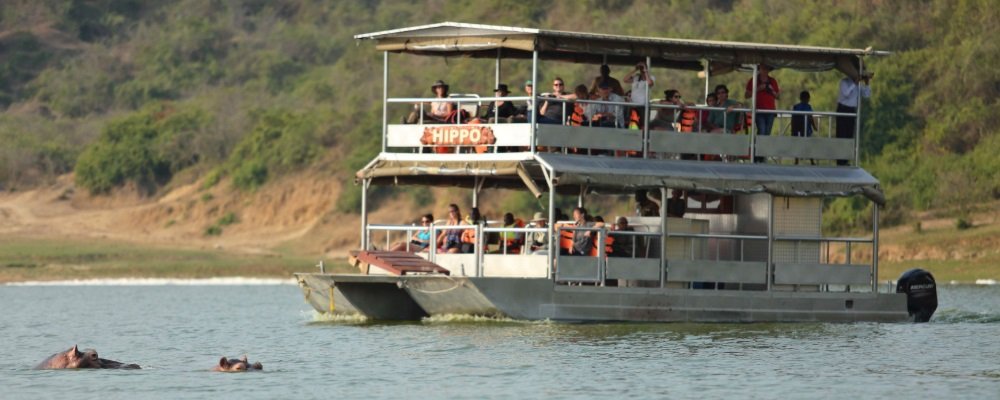
The Kazinga Channel is the liquid heart of Queen Elizabeth National Park, Uganda’s most visited savannah park. It is a wide, natural waterway around 32 kilometres long that links Lake George in the east to the much larger Lake Edward in the west. Because it holds water all year round, it acts as a magnet for wildlife — especially in the dry months, when the surrounding plains are parched and animals have few other places to drink.
This guide covers everything you need to plan your visit: how the channel was formed, the wildlife and birds you can expect, the different boat cruise options, current costs and park fees, the best time of day and year to go, how to get there by road or air, where to stay, and practical tips for photography and safety.
Kazinga Channel Brief Info
| Feature | Details |
| Location | Queen Elizabeth National Park, Kasese/Rubirizi area, south-western Uganda |
| Length | Approximately 32 km (20 miles) |
| Connects | Lake George (east) and Lake Edward (west) |
| Main launch point | Mweya Peninsula jetty (UWA launch and Mweya Safari Lodge boats) |
| Alternative launch point | Katunguru (community-run boats near the Kasese–Mbarara road bridge) |
| Cruise duration | Around 2 hours (standard shared launch) |
| Signature wildlife | Hippos, Nile crocodiles, elephants, buffalo, Uganda kob, waterbuck |
| Birdlife | Queen Elizabeth NP records more than 600 bird species; the channel is a top waterbird spot |
| Best time of year | Dry seasons: December–February and June–September |
| Best time of day | Late afternoon for animals at the water and golden light; morning for calmer birding |
What Is the Kazinga Channel and How Was It Formed?
The Kazinga Channel lies on the floor of the Albertine Rift, the western arm of the Great Rift Valley. Millions of years of tectonic stretching created a long depression between the Rwenzori Mountains to the north and the highlands of south-western Uganda. Lakes George and Edward formed in this basin, and the Kazinga Channel is the natural link between them.
Lake George is the smaller and shallower of the two lakes, fed by streams running off the Rwenzori Mountains. Its water flows westward through the Kazinga Channel into Lake Edward, which straddles the border with the Democratic Republic of Congo. From Lake Edward, water continues north via the Semliki River into Lake Albert, making the channel part of the wider Nile basin.
The channel is not a man-made canal. It is a living, slow-moving watercourse whose width varies along its length, with papyrus, reed beds and short grass banks that create ideal habitat for hippos, crocodiles and feeding birds. Its northern bank is dominated by the Mweya Peninsula, a raised promontory with views over the channel, Lake Edward and — on clear days — the snow-capped Rwenzoris.
Why the Channel Matters to Queen Elizabeth National Park
Queen Elizabeth National Park covers a mosaic of savannah, acacia woodland, crater lakes, swamp and forest. Within that mosaic, the Kazinga Channel is the one permanent, reliable water source running right through the centre of the park. It sustains large mammal populations, supports thousands of resident and migrant birds, and feeds the fishing communities that live in enclaves inside the park.
Wildlife You Can See on a Kazinga Channel Boat Cruise
The cruise is famous for one simple reason: concentration. Animals come to the water, and the boat lets you sit quietly beside them without the dust or engine noise of a game drive vehicle. Here is what to look for.
Hippos
The Kazinga Channel is widely described as holding one of the largest concentrations of hippos in Africa. You will often see dozens of hippos in a single pod, packed shoulder to shoulder in the shallows, yawning to show their tusks or grunting at the boat as it passes. During the day hippos stay in the water to protect their sensitive skin; at night they leave to graze on the grassland, which is why fishermen work the channel after dark.
Nile Crocodiles
Large Nile crocodiles bask on sandbanks and muddy shores, often with their jaws open to regulate body temperature. Look closely at the banks where hippos are resting — crocodiles frequently lie just a few metres away. Your guide will point out the size differences between younger and older individuals.
Elephants and Buffalo
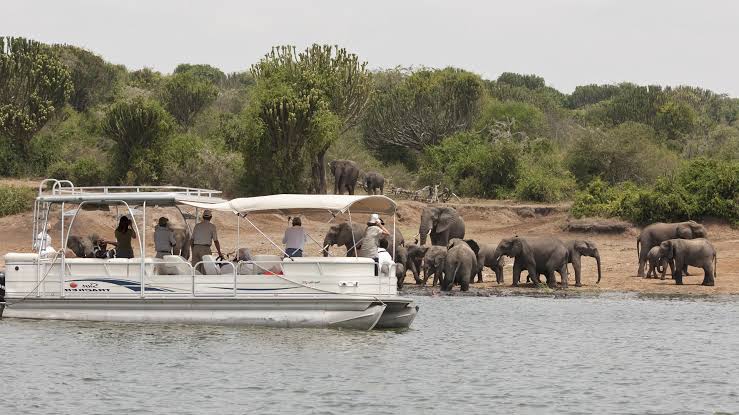
Afternoon cruises are particularly good for elephants. Family herds walk down to the channel to drink, mud-bathe and sometimes swim across. Cape buffalo are equally common, wallowing in the shallows with cattle egrets and oxpeckers riding on their backs.
Antelopes and Other Mammals
Uganda kob, waterbuck and bushbuck graze along the banks, and warthogs are a frequent sight near the Mweya shoreline. Lions and leopards do visit the channel, but sightings from the boat are a matter of luck rather than expectation.
| Species | Likelihood | Where / When to Look |
| Hippo | Almost certain | Shallows and banks throughout the cruise |
| Nile crocodile | Very likely | Sunny sandbanks, especially late morning |
| Cape buffalo | Very likely | Wallowing along the banks, all day |
| African elephant | Likely | Drinking and bathing, best in the afternoon |
| Uganda kob / waterbuck | Likely | Grassy banks near the water’s edge |
| Warthog / bushbuck | Possible | Near Mweya and wooded banks |
| Lion / leopard | Rare | Occasionally seen drinking; not a reliable sighting |
Birdwatching on the Kazinga Channel
Queen Elizabeth National Park has recorded more than 600 bird species, and the Kazinga Channel is one of the best places in the park to see a large number of them in a short time. Birders often rate the channel cruise as an easy way to see big numbers of waterbirds at close range, with the boat acting as a stable, moving hide.
Birds Commonly Seen
- Pied kingfisher — nesting in colonies in the sandy banks and hovering over the water
- Malachite kingfisher — tiny and jewel-coloured, perched on reeds at the water’s edge
- African fish eagle — Uganda’s iconic raptor, often heard before it is seen
- Great white pelican and pink-backed pelican — fishing in groups, especially near the lake mouths
- African skimmer — a seasonal highlight, slicing the water with its lower bill
- Storks — yellow-billed, African open-billed, marabou and the striking saddle-billed stork
- Herons and egrets — goliath heron, grey heron, cattle egret and great egret
- Cormorants, African darter, sacred ibis, African spoonbill, water thick-knee and grey-headed gull
The shoebill is very occasionally reported in the wider park’s swamps, but it should not be expected on a standard channel cruise. If shoebill is a priority, plan a dedicated trip to Mabamba Swamp near Entebbe.
| Birding Tip
Migratory birds from Europe and northern Africa are present roughly from November to April, boosting species counts. A morning cruise usually offers calmer water and more active birds, while the afternoon cruise is better for mammals. |
Kazinga Channel Boat Cruise Options
There are three main ways to get onto the water. All of them cover similar stretches of the channel, but they differ in boat size, comfort, privacy and price.
1. Uganda Wildlife Authority (UWA) Launch from Mweya
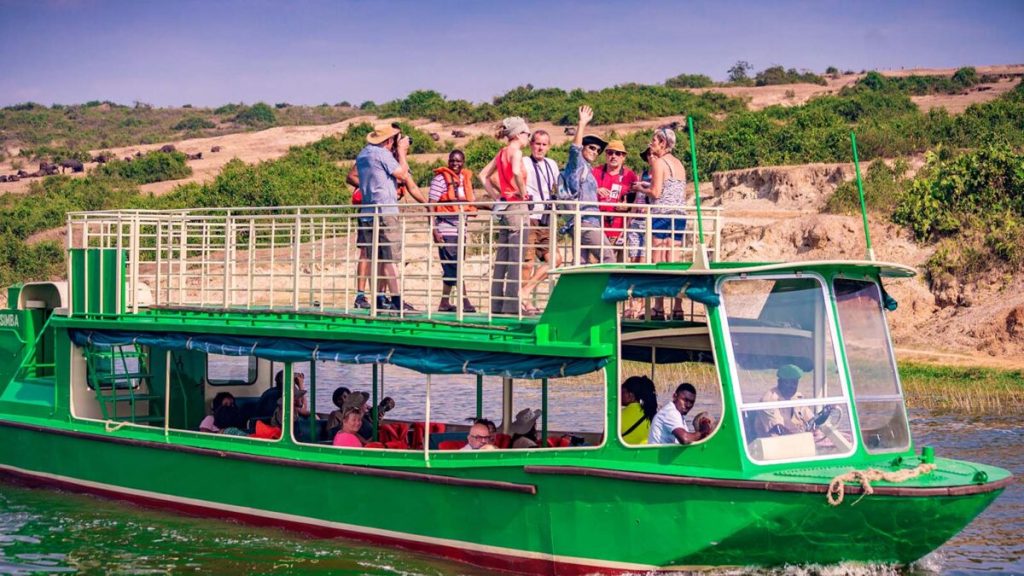
The UWA launch is the standard, most-booked option. It departs from the Mweya jetty on fixed schedules and runs for about two hours. The large boats carry dozens of passengers, and some have an upper deck that gives better elevated views. A UWA ranger-guide provides commentary on wildlife and birds. This is the best choice for travellers who want a reliable, good-value cruise at a published rate.
2. Mweya Safari Lodge Private Boats
Mweya Safari Lodge operates its own smaller boats — the ten-seater Sunbird and the twelve-seater Kingfisher — which can be booked for smaller groups or private trips. The smaller craft can get closer to the banks, offer more space for camera gear, and feel more exclusive. Expect to pay more than the shared launch, particularly for private charters.
3. Community Boats from Katunguru
Near the Katunguru bridge on the Kasese–Mbarara highway, local community operators run boat trips on the eastern part of the channel. These trips are usually smaller and more informal, and a portion of the income supports local households. They are a convenient option for self-drivers passing through on the main road.
| Option | Boat Size | Best For | Indicative Price* |
| UWA launch (Mweya) | Large shared boat, some with upper deck | Value, reliability, first-time visitors | US$30 per person (foreign non-resident) |
| Mweya Safari Lodge boats | 10–12 seats; private hire available | Photographers, couples, small groups | Higher; quoted by the lodge |
| Katunguru community boats | Small boats | Self-drivers, community tourism | Varies; negotiate in advance |
| Private charter | Exclusive boat | Families, honeymooners, pro photographers | On request |
*Price excludes Queen Elizabeth National Park entrance fees. Always confirm current rates before travel.
Departure Times and What to Expect
UWA launches typically run several times a day, with sessions in the morning and the afternoon. Departure slots commonly quoted by operators include mid-morning (around 9:00–11:00) and afternoon (around 14:00–17:00), but schedules change with season and demand, so confirm the exact times at the Mweya visitor centre or with your tour operator the day before.
A Typical Two-Hour Cruise
- Check-in at Mweya: Arrive 20–30 minutes early to show your park entry receipt, pay or confirm your cruise, and choose a seat.
- Safety briefing: The crew explains the rules and life jackets are provided.
- Along the banks: The boat moves slowly along the shoreline, pausing at hippo pods, crocodile sandbanks and bird colonies.
- Toward Lake Edward’s mouth: Depending on the route, you may reach the area where the channel meets the lake, where pelicans and fishing birds gather.
- Fishing villages: You will often see wooden fishing canoes and lakeside communities such as Kazinga village on the southern shore.
- Return to the jetty: The boat turns back, often hugging the opposite bank so you see fresh wildlife on the return leg.
Morning vs Afternoon Cruise
| Morning Cruise | Afternoon Cruise | |
| Wildlife | Good; hippos and crocodiles active | Excellent; elephants and buffalo come to drink |
| Birds | Very active, calm water | Good, with more raptor activity |
| Light for photos | Soft, cool light | Warm golden light toward the end |
| Crowds | Often quieter | Usually busier — the most popular slot |
| Fits well with | Afternoon game drive or travel day | Morning game drive in Kasenyi plains |
Kazinga Channel Boat Cruise Cost and Park Fees (2026)
Costs for the UWA launch are set by the Uganda Wildlife Authority conservation tariff. The figures below come from the published UWA tariff for July 2024 to June 2026. Because that tariff period has now ended, always confirm the current rates with UWA or your operator before you travel.
UWA Launch Cruise Fee
| Visitor Category | Launch Cruise (per person) |
| Foreign non-resident (FNR) | US$30 |
| Foreign resident (FR) | US$25 |
| Rest of Africa (ROA) | US$20 |
| East African Community citizen (EAC) | UGX 30,000 |
Queen Elizabeth National Park Entrance Fees
| Visitor Category | Adult | Child |
| Foreign non-resident | US$40 | US$20 |
| Foreign resident | US$30 | US$10 |
| East African citizen | UGX 20,000 | Reduced rate |
Park entry is valid for 24 hours from the time you enter. The boat cruise fee is paid in addition to park entry, and vehicle entry is charged separately depending on whether your car is Uganda-registered or foreign-registered. UWA generally requires cashless payment, so arrange card or mobile payment in advance rather than relying on cash at the gate.
| Budget Example: Two Foreign Visitors, One Day
Park entry: 2 × US$40 = US$80 UWA launch cruise: 2 × US$30 = US$60 Total activity spend: about US$140, plus vehicle entry, accommodation, meals and guide or driver costs. Pair the cruise with a game drive on the same park permit to get the most value out of your 24-hour entry. |
Best Time to Visit the Kazinga Channel
The Kazinga Channel cruise runs all year, but conditions change with Uganda’s two wet and two dry seasons.
| Period | Season | What to Expect |
| December – February | Dry season | Excellent wildlife concentrations at the water; hot, dusty plains; migrant birds present |
| March – May | Long rains | Green scenery, fewer visitors, lower lodge rates; some afternoon showers; roads can be muddy |
| June – September | Dry season (peak) | Best overall wildlife viewing; busiest period; book lodges early |
| October – November | Short rains | Lush landscapes, arriving migrant birds; short, heavy showers |
For pure wildlife numbers, the dry seasons are hard to beat. For birdwatchers, November to April adds Palearctic migrants. Rain rarely cancels a cruise, but a light rain jacket is worth packing whatever the month.
How to Get to the Kazinga Channel
By Road from Kampala
Queen Elizabeth National Park is roughly a full day’s drive from Kampala — usually around 6 to 8 hours depending on route, traffic and stops. There are two popular routes:
- Southern route via Masaka and Mbarara: The most common option, entering the park near Katunguru on the Mbarara–Kasese road. It pairs well with a night at Lake Mburo National Park.
- Northern route via Mubende and Fort Portal: Ideal if you are combining the trip with chimpanzee tracking in Kibale Forest, then driving south past the crater lakes.
The main road crosses the channel at the Katunguru bridge. From there, a park road leads west to the Mweya Peninsula, where the UWA launch and Mweya Safari Lodge are located.
Self-Drive Tips
- A 4×4 vehicle such as a Toyota RAV4, Land Cruiser Prado or Land Cruiser is recommended for park tracks, especially in the wet season.
- Fill up with fuel in Kasese, Bushenyi or Mbarara before entering the park.
- Keep to the park speed limit and watch for animals crossing — particularly elephants and buffalo near the channel.
- Carry your park entry receipt; you will need to show it at Mweya before boarding.
- Download offline maps; mobile coverage inside the park can be patchy.
By Air
Scheduled and charter domestic flights operate from Entebbe and Kajjansi to airstrips serving the park, including Mweya and Kasese. Flying saves a long road day and suits travellers on tight schedules or combining Queen Elizabeth with Bwindi.
Things to Combine with Your Kazinga Channel Cruise
The cruise takes only two hours, so build it into a wider Queen Elizabeth itinerary. Popular pairings include:
- Kasenyi Plains game drive: The park’s classic savannah sector for lions, Uganda kob, buffalo and elephants — best at dawn.
- Kyambura Gorge chimpanzee tracking: A sunken forest gorge on the park’s eastern edge, home to a habituated chimp community.
- Ishasha sector: The southern sector famous for tree-climbing lions resting in fig trees.
- Katwe Explosion Craters and Lake Katwe: Scenic crater drives and a traditional salt-mining lake.
- Mweya Peninsula: Sundowners with views over the channel and Lake Edward.
- Community and cultural visits: Fishing villages and community projects around the park.
- Bwindi gorilla trekking: Many itineraries continue south from Ishasha to Bwindi Impenetrable National Park.
Sample 3-Day Queen Elizabeth Itinerary Featuring the Kazinga Channel
| Day | Plan | Overnight |
| Day 1 | Drive from Kampala via Mbarara (or from Kibale via Fort Portal). Enter at Katunguru, check in, sundowner on the Mweya Peninsula. | Mweya / Kasenyi area lodge |
| Day 2 | Dawn game drive in Kasenyi Plains. Brunch and rest. Afternoon Kazinga Channel boat cruise from Mweya (approx. 2 hours). Evening at the lodge. | Same lodge |
| Day 3 | Morning chimpanzee tracking in Kyambura Gorge, or crater drive at Katwe. Continue south to Ishasha for tree-climbing lions, or onward to Bwindi. | Ishasha or Bwindi |
Where to Stay Near the Kazinga Channel
Accommodation is spread around the Mweya Peninsula, the Kasenyi and Katunguru areas, and the Kyambura escarpment. Staying close to Mweya saves driving time to the launch jetty.
| Tier | Examples | Why Choose It |
| Luxury / upmarket | Mweya Safari Lodge; Kyambura Gorge Lodge | Mweya sits right on the peninsula with channel views and its own boats; Kyambura offers design-led comfort near the gorge |
| Mid-range | The Bush Lodge; Kazinga Wilderness Safari Camp; Elephant Plains Lodge | Comfortable tents or cottages, good food and easy access to Mweya and Kasenyi |
| Budget | UWA bandas and campsites at Mweya; Simba Safari Camp; Pumba Safari Cottages | Affordable rooms or camping for self-drivers and backpackers |
Lodge availability and rates change by season; book early for June–September and the December holidays.
Photography Tips for the Kazinga Channel
- Bring a telephoto or zoom lens (100–400 mm or similar) for birds and distant elephants; a wider lens is useful for hippo pods close to the boat.
- Sit on the side of the boat facing the bank you are approaching, and ask the guide which side gets the best light.
- Use a fast shutter speed — the boat moves gently and kingfishers move fast.
- An afternoon cruise gives warm, low-angle light in the final half hour.
- Protect gear from spray and sudden showers with a dry bag or rain cover.
What to Pack
- Binoculars (one pair per person if possible)
- Sun hat, sunglasses and high-SPF sunscreen — there is strong glare off the water
- Light rain jacket or windbreaker
- Insect repellent, especially for afternoon cruises
- Neutral-coloured, breathable clothing
- Drinking water and a small snack
- Park entry receipt, passport copy and payment card
- Camera, spare batteries and memory cards
Safety and Responsible Travel on the Channel
The cruise is a safe, relaxed activity when you follow the crew’s instructions. Hippos, however, are among the most dangerous animals in Africa, so respect for the wildlife is essential.
- Wear the life jacket provided and stay seated while the boat is moving.
- Keep hands and arms inside the boat — never trail them in the water.
- Speak quietly near animals and avoid sudden movements or shouting.
- Do not throw food or litter into the channel.
- Do not walk along the shoreline on foot outside designated areas.
- Respect fishing communities; ask before photographing people.
Conservation Note
The channel’s wildlife is not immune to pressure. In 2005, a large number of hippos in the channel died during an anthrax outbreak linked to bacterial spores in dry soil. Ongoing threats include habitat pressure, illegal fishing and human–wildlife conflict around the park’s enclaves. Park entrance and activity fees support UWA’s conservation work and community revenue-sharing programmes, so every cruise you take contributes to protecting the channel.
Frequently Asked Questions
How long is the Kazinga Channel?
The Kazinga Channel is about 32 kilometres (20 miles) long and connects Lake George with Lake Edward inside Queen Elizabeth National Park.
How long does the Kazinga Channel boat cruise take?
The standard UWA launch cruise from Mweya lasts about two hours. Private boat trips can be arranged for longer.
How much does the Kazinga Channel boat cruise cost?
Under the UWA tariff for July 2024 to June 2026, the launch cruise costs US$30 for foreign non-residents, US$25 for foreign residents, US$20 for Rest of Africa visitors and UGX 30,000 for East African citizens, plus park entry. Confirm current rates before you travel.
Is the morning or afternoon cruise better?
The afternoon cruise is generally better for mammals such as elephants and buffalo, which come to drink later in the day. The morning cruise is quieter and excellent for birds.
Do I need to book in advance?
Booking ahead is wise in the June–September and December peak periods, especially for private lodge boats. Tour operators usually arrange the cruise as part of a safari package.
Can I see the Big Five on the cruise?
You will very likely see elephants and buffalo. Lions and leopards occasionally appear at the water, but rhinos are not found in Queen Elizabeth National Park.
Is the Kazinga Channel boat cruise safe for children?
Yes. The launch is stable, life jackets are provided, and the cruise is a popular family activity. Keep young children seated and supervised at all times.
Can I do the cruise on a self-drive safari?
Absolutely. Drive to the Mweya jetty, show your park entry receipt and join a scheduled UWA launch. A 4×4 is recommended for park roads, and the Katunguru community boats are also easily reached from the main road.
Are there toilets and refreshments at Mweya?
The Mweya area has visitor facilities, and Mweya Safari Lodge offers meals and drinks. Bring water on the boat.
Final Thoughts
Few safari experiences in East Africa deliver as much wildlife, as close, in as little time as the Kazinga Channel boat cruise. Whether you are a first-time visitor, a keen birder, a photographer chasing golden-hour elephants or a family looking for an easy, memorable outing, the channel rewards everyone who takes to the water.
Plan your cruise for the afternoon, pair it with a dawn game drive in the Kasenyi Plains, and add Kyambura Gorge or Ishasha to make the most of Queen Elizabeth National Park. Then sit back, keep your binoculars ready, and let the hippos do the talking.
| Ready to Plan Your Queen Elizabeth Safari?
Whether you prefer a guided safari or a self-drive adventure in a 4×4, build the Kazinga Channel boat cruise into your Uganda itinerary. Contact our team for vehicle rentals, park bookings and tailor-made routes through Queen Elizabeth National Park and beyond. |