Afternoon Game Drive in Serengeti National Park
Afternoon Game Drive in Serengeti National Park, the Serengeti National Park is one of Africa’s most iconic safari destinations, and no experience captures its magic more completely than an afternoon game drive. As the midday heat begins to fade and shadows stretch long across the golden savannah, the park comes alive in ways that no photograph can fully prepare you for. Lions emerge from the shade, leopards begin to stir in the acacia canopy, and vast herds of wildebeest and zebra resume their endless migration across the plains.
An afternoon game drive in the Serengeti typically begins around 3:30 PM and extends until the park’s closing time at dusk — roughly 6:30–7:00 PM depending on the season. This guide covers everything you need to know to make the most of those precious golden hours: when to go, what to expect, which areas to explore, which animals to look out for, and practical tips that will elevate your experience from ordinary to extraordinary.
1. Why the Afternoon Game Drive Is Special
Many first-time visitors to the Serengeti assume that the early morning drive is the only worthwhile game drive. While mornings are certainly excellent — particularly for predator activity after a night of hunting — the afternoon drive holds its own remarkable qualities that experienced safari-goers often prefer.
The Golden Hour Light
From approximately 4:00 PM onwards, the Serengeti is bathed in warm, amber light that photographers and naturalists alike describe as simply extraordinary. The low angle of the sun creates dramatic shadows and silhouettes, turning every elephant, giraffe, and acacia tree into a work of art. If you have a camera, the afternoon is when you’ll capture your most stunning shots.
Renewed Animal Activity
Many of the Serengeti’s large mammals rest during the heat of the day, tucked into shade or lying under bush. By mid-afternoon, as temperatures drop from their midday peak of 30–35°C to a more comfortable 24–28°C, animals become active again. Lions sitting motionless since morning will begin grooming, playing, or moving to new positions. Elephants will head toward water sources. Cheetahs will climb termite mounds to survey the plains for prey.
Dramatic Skies and Atmospheric Conditions
The Serengeti’s afternoon skies are theatrical. Towering cumulus clouds build during the day, particularly in the green season (November–May), creating spectacular backdrops for wildlife viewing and photography. During the dry season, dust haze gives the landscape a golden, timeless quality that feels almost cinematic.
2. Best Time of Year for an Afternoon Game Drive
The Serengeti is a year-round destination, but the experience varies significantly by season. Understanding the seasonal dynamics will help you choose the right time for your visit.
2.1 The Dry Season: June to October
This is widely considered the best time for game viewing in the Serengeti. The long dry season concentrates wildlife around permanent water sources — rivers, waterholes, and marshes — making animals predictable and easy to find. Vegetation is sparser, improving visibility across the plains.
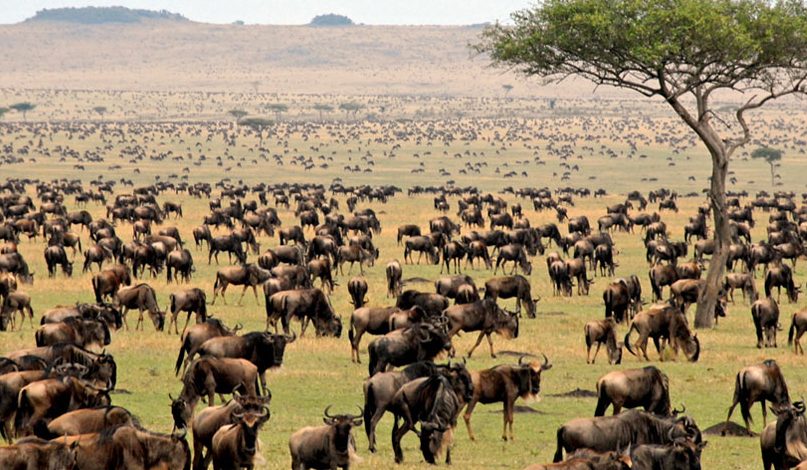
During this period, the Great Wildebeest Migration is at its most dramatic. The massive herds gather along the Grumeti and Mara rivers, and the famous river crossings — where hundreds of thousands of wildebeest plunge into crocodile-infested waters — take place between July and September. An afternoon game drive during this period could position you perfectly to witness one of nature’s greatest spectacles as it unfolds in the slanting afternoon light.
🦁 Pro Tip: Position yourself at a Mara River crossing point by 3:00 PM and wait. Crossings often happen in the late afternoon when the herds build up courage after hours of hesitation.
2.2 The Short Green Season: November to December
The short rains transform the Serengeti into a lush, green paradise. Wildebeest calving season begins around January, but the late dry season and early rains bring their own reward: the plains fill with migratory birds, the grass is vivid emerald, and the skies are dramatic. This is an excellent time for birdwatching enthusiasts and photographers.
2.3 The Long Rains: March to May
The long rains make some roads challenging, particularly in the western and northern parts of the park. However, this is low season, meaning fewer vehicles and a more intimate experience. The wildebeest herds calve in the southern Serengeti during January–February, and the mothers and their young calves create extraordinary predator-prey interactions. By March, the herds begin their northward movement.
3. Key Zones to Explore on an Afternoon Drive
The Serengeti covers approximately 14,763 square kilometres, making it one of the largest national parks in Africa. Knowing which zones to visit during your afternoon drive is crucial to maximizing wildlife encounters.
3.1 Seronera Valley — The Heart of the Serengeti
The Seronera Valley is the most accessible and wildlife-rich area of the Serengeti, located in the central part of the park. It is bisected by the Seronera River, which provides year-round water and attracts a remarkable concentration of animals throughout the day.
An afternoon drive along the Seronera River circuit is almost guaranteed to deliver memorable sightings. This area is known for:
- Leopards resting in the sausage trees (Kigelia africana) overhanging the river
- Lions from the well-known Seronera prides, particularly active in the late afternoon
- Large hippo pools where dozens of hippos jostle for space
- Crocodiles basking on the riverbanks
- Vervet monkeys and olive baboons foraging in the riverine forest
- Marsh mongooses, serval cats, and African wild cats occasionally spotted at dusk
3.2 The Southern Plains — Ndutu and the Short Grass Plains
During the calving season (January–March), the short grass plains of the southern Serengeti — extending into the Ndutu area of the adjacent Ngorongoro Conservation Area — become one of the greatest wildlife spectacles on Earth. Hundreds of thousands of wildebeest give birth within a compressed period of just a few weeks, flooding the plains with vulnerable calves that attract every predator in the ecosystem.
An afternoon drive across these open plains during calving season offers:
- Cheetah hunts in broad daylight — the open terrain makes them visible from great distances
- Lion prides pursuing wildebeest calves with minimal cover to hide the action
- Wild dog packs making coordinated runs across the plains
- Hyena clans working the edges of the herds
- Vast panoramic views with wildlife stretching to every horizon
3.3 The Northern Serengeti — Kogatende and Lamai
The northern Serengeti, accessible via the Mara River corridor near Kogatende, is the arena for the most dramatic scenes of the Great Migration. From July to October, the migration pushes northward into this area, and the river crossings occur with breathtaking regularity.
The afternoon is an ideal time to position yourself at the river. Herds often spend the morning building up at the banks, and the momentum for a crossing frequently breaks in the mid-to-late afternoon. The crossing itself — when it happens — is a primal, overwhelming event: thousands of wildebeest and zebra thundering into the water while massive Nile crocodiles launch from the shallows is something that stays with you for life.
⏰ Timing Note: Allow at least two hours at the river to maximise your chances of witnessing a crossing. Crossings are unpredictable — patience is the most important tool you have.
3.4 The Western Corridor — Grumeti River
The western corridor, home to the Grumeti River, sees the migration pass through between May and July. The Grumeti is famous for its enormous Nile crocodiles — among the largest in Africa — which await the crossing herds. An afternoon drive along the Grumeti River in June or July can produce extraordinary sightings of predator-prey interactions on a massive scale.
Beyond the migration, the western corridor’s mix of savannah, woodland, and riverine forest supports:
- Black-and-white colobus monkeys in the gallery forest
- Topi, kongoni, and roan antelope on the open slopes
- African buffalo herds of several hundred animals
- Patas monkeys — often seen racing across open ground
4. Wildlife You Can Expect to See
The Serengeti supports one of the most diverse concentrations of large mammals anywhere on Earth. Here is what to look out for on your afternoon game drive:
4.1 The Big Five
Lion (Panthera leo)
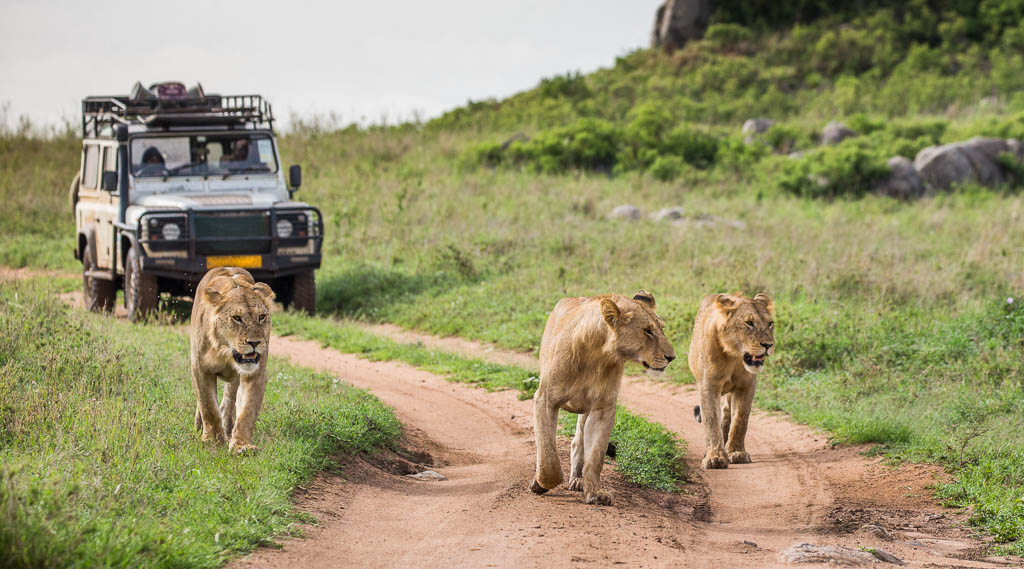
The Serengeti is home to approximately 3,000 lions — one of the largest lion populations on the continent. The late afternoon is prime viewing time as prides rouse themselves from their midday rest. Watch for movement in the tall grass, or look for a cluster of vehicles that might indicate a sighting. The most famous prides in the Seronera area have been studied for decades and can be reliably located by experienced guides.
Leopard (Panthera pardus)
Leopards are secretive and largely nocturnal, but the afternoon is your best chance to spot one while light remains. The trees along the Seronera and Grumeti rivers are prime habitat. Look up into the branches for the distinctive spotted coat or a dangling tail. A carcass wedged in a fork — a leopard’s pantry — is a telltale sign of recent activity.
Elephant (Loxodonta africana)
Elephant herds are most active in the late afternoon as they move from resting sites toward water. The northern Serengeti and western corridor support particularly large elephant populations. Family herds of 10–30 individuals, sometimes led by ancient matriarchs, are a common afternoon sighting.
Cape Buffalo (Syncerus caffer)
Massive buffalo herds — sometimes numbering in the thousands — are a defining sight of the Serengeti. The afternoon sees them moving purposefully toward water and grazing areas. Old solitary bulls, known as “dagga boys,” are often encountered in thickets and can be surprisingly dangerous if disturbed.
Leopard on Rock: Black Rhinoceros (Diceros bicornis)
The black rhinoceros is critically endangered, and sightings within the main Serengeti are rare. However, the adjacent Ngorongoro Crater has a small resident population. If rhino sightings are a priority, the Crater is a better destination. Occasionally, individuals are spotted in the southern Serengeti.
4.2 Other Iconic Species
Cheetah (Acinonyx jubatus)
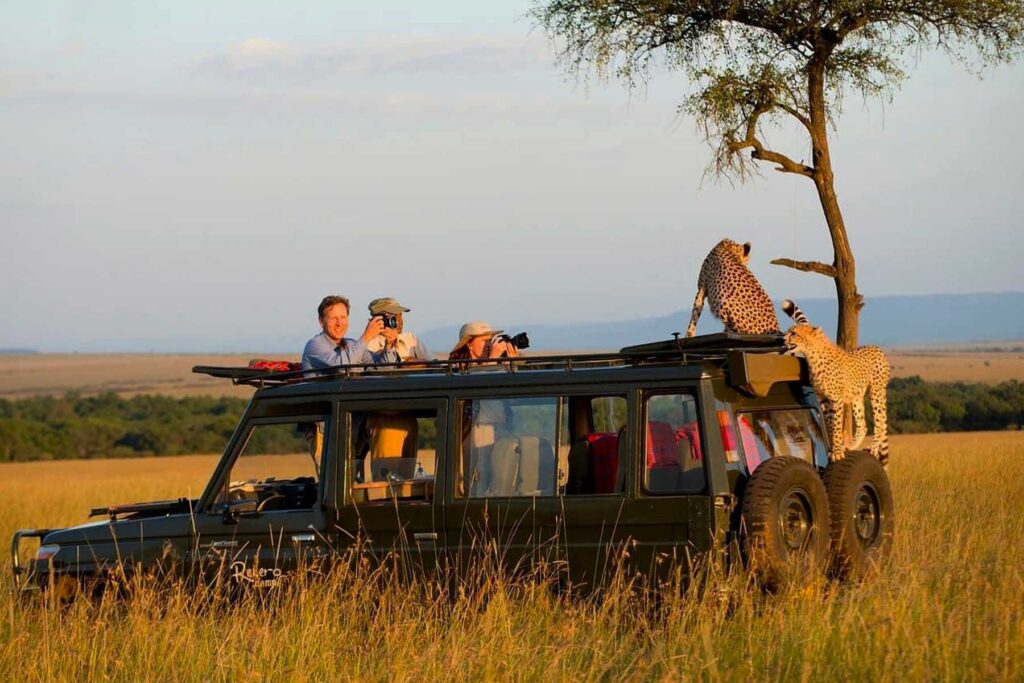
The open plains of the Serengeti are cheetah country. Unlike leopards, cheetahs hunt by day, making afternoon drives excellent for witnessing hunts. The open terrain and low vegetation of the southern plains give cheetahs — and safari vehicles — exceptional visibility. Mothers with cubs are particularly fascinating as they teach young cheetahs to stalk and chase prey.
African Wild Dog (Lycaon pictus)
Wild dogs are among the most endangered large carnivores in Africa, but the Serengeti supports a viable population. Pack hunts are breathtaking in their coordination and speed — they unfold across open ground with a ferocity that belies the dogs’ playful social behaviour at the den. Afternoon drives in the southern and central plains offer the best chance of an encounter.
Spotted Hyena (Crocuta crocuta)
Often dismissed as scavengers, hyenas are in fact highly effective predators responsible for the majority of kills in many Serengeti ecosystems. Clan gatherings near den sites are common in the late afternoon as the animals prepare for a night of activity. The eerie whooping calls and laughter of a hyena clan at dusk are among the most atmospheric sounds in Africa.
Giraffe (Giraffa camelopardalis)
Reticulated giraffes are a constant presence across the Serengeti’s woodland-savannah mosaic. The afternoon light turns their coats to burnished gold, and the sight of a tower of giraffes striding across the plains at sunset is genuinely magnificent. Watch for the distinctive neck-swinging combat between males, known as “necking.”
Great Migration Herds
Between 1.5 and 2 million wildebeest, accompanied by approximately 500,000 zebra and 200,000 Thomson’s gazelle, make up the greatest wildlife migration on Earth. Depending on the season, afternoon drives may put you in the midst of vast herds stretching to the horizon — a sight that is simply overwhelming in its scale and energy.
4.3 Birdlife
The Serengeti is a world-class birding destination with over 500 recorded species. During an afternoon drive, look for:
- Lilac-breasted roller — arguably Africa’s most beautiful bird, perched on acacia branches
- Secretarybird striding across the grassland in search of snakes
- Kori bustard — the world’s heaviest flying bird — walking the open plains
- Martial eagle soaring on thermals
- Fischer’s lovebird, found only in northern Tanzania
- Grey-crowned crane, Saddle-billed stork, and Yellow-billed stork at water sources
- Carmine bee-eater and Southern carmine bee-eater, dazzlingly colourful in flight
- Vultures circling high above a kill — a navigational pointer for finding predators
5. Practical Guide to Your Afternoon Game Drive
5.1 Departure Time and Duration
Most lodges and camps in the Serengeti offer afternoon game drives departing between 3:00 PM and 4:00 PM. The drive typically lasts three to four hours, ending at or shortly after sunset. Tanzania National Parks (TANAPA) regulations require all vehicles to be out of the park by 7:00 PM, though this is extended during special permits for sundowners and bush dinners.
📋 Park Rule: All safari vehicles must have a valid park entry permit and be accompanied by a licensed guide or driver. Self-drive is permitted in the Serengeti but is strongly discouraged for first-time visitors given the size and complexity of the park.
5.2 Vehicle Choice and Pop-Top Roof
The standard safari vehicle in the Serengeti is a 4WD Land Cruiser or Land Rover with a pop-up roof hatch that allows passengers to stand for unobstructed 360-degree views. This is essential for photography and for following animal movements across open terrain. Ensure your vehicle has this feature when booking.
For self-drive visitors, the following vehicles are well-suited to the Serengeti’s conditions:
- Toyota Land Cruiser (76 or 78 series) — the gold standard for Serengeti self-drive
- Toyota Land Cruiser Prado — good for the main circuits but less capable in the northern sector
- Mitsubishi Pajero — adequate for central Serengeti but avoid the western corridor in wet season
- Toyota Hilux 4×4 — a solid choice for experienced off-road drivers
5.3 What to Bring
Packing the right items will significantly enhance your afternoon game drive experience:
- Binoculars — essential; minimum 8×42 magnification recommended for open-plain scanning
- Camera with telephoto lens — 400mm or 500mm for wildlife photography; bring spare batteries
- Lightweight jacket or fleece — the temperature drops sharply after sunset
- Sun protection — SPF 50 sunscreen, sunglasses, and a hat for the open roof
- Water — minimum 1.5 litres per person; dehydration is a risk in the dry savannah air
- Snacks and a light picnic box — most lodges prepare afternoon game drive picnic boxes
- Field guide — a good East African mammal or bird guide deepens the experience enormously
- Notebook and pen — for recording sightings, distances, and behaviours
5.4 Clothing and Colours
Wear neutral, earth-toned clothing in khaki, olive, brown, or beige. Avoid bright colours and white, which can disturb animals and reduce your camouflage in the bush. Layers are important — the Serengeti afternoon can be warm, but dusk at altitude (the central Serengeti sits at approximately 1,500 metres above sea level) can be surprisingly cool.
5.5 Etiquette and Wildlife Safety
The Serengeti is a wild, unfenced ecosystem, and responsible behaviour is essential for your safety and the welfare of the animals. Follow these guidelines:
- Always remain in the vehicle unless your guide explicitly indicates it is safe to exit
- Do not make loud noises, sudden movements, or use flash photography near animals
- Keep a respectful distance from predators, particularly lions with cubs and cheetahs hunting
- Do not drive off designated tracks without permission — it destroys vegetation and disturbs ground-nesting birds
- Never feed animals under any circumstances
- Limit vehicle clustering at sightings — if more than five vehicles are present, consider moving on and returning later
- Do not rev your engine near animals or use the vehicle aggressively to position closer
⚠️ Safety Note: Keep all windows and roof hatches closed if a predator approaches the vehicle. Lions and leopards are habituated to vehicles but may still investigate an open window or dangling arm. Treat the vehicle as an invisible hide — it only works if you behave consistently within it.
5.6 Sundowner Stops
Many operators and lodges include a sundowner stop within the afternoon game drive — a brief pause at a scenic viewpoint or beside a waterhole where you are served cold drinks and snacks as the sun descends toward the horizon. This is one of the great pleasures of the African safari experience, and the Serengeti plains provide an incomparable backdrop.
Common sundowner locations include:
- The kopjes (rocky outcrops) of the central Serengeti — particularly Simba Kopjes and Moru Kopjes
- Elevated ridgelines in the northern Serengeti with views over the Mara River valley
- The vast open plains of the southern Serengeti with 360-degree horizon panoramas
- The banks of the Seronera River with hippos and crocodiles visible below
6. Guided vs. Self-Drive Afternoon Game Drives
6.1 Guided Safari Drives
The vast majority of visitors to the Serengeti experience the park through a guided safari, either as part of a lodge package or on an organised group tour. A knowledgeable, experienced guide transforms the game drive experience in several important ways:
- Animal tracking — expert guides read tracks, droppings, and behavioural cues invisible to the untrained eye
- Radio network — professional guides communicate with each other via radio, pooling information about sightings across a wide area
- Ecosystem knowledge — a good guide explains not just what you are seeing, but why it is happening — the ecological relationships between predator and prey, the role of fire, the dynamics of the migration
- Safety — guides know when to push closer and when to stay back
- Photography assistance — positioning the vehicle for optimal light and angles
6.2 Self-Drive Game Drives
Self-drive game drives in the Serengeti are permitted and can be deeply rewarding for experienced safari travellers. The absence of a guide encourages heightened personal observation and creates a more intimate, independent experience. However, there are important considerations:
- Navigation is challenging — the Serengeti’s track network is extensive and poorly signposted in places; download offline maps (tracks4africa or similar) before entering
- Animal identification requires preparation — carry a comprehensive field guide
- Mechanical breakdowns in a remote area of the park are serious — ensure your vehicle is in excellent condition, carry a spare wheel, tools, and emergency supplies
- Park rangers can provide current information on road conditions and notable sightings at the gate
🗺️ Self-Drive Tip: Download the Tanzania Parks app and an offline map layer before your drive. The Serengeti’s central circuit around Seronera is well-suited to self-drive; the northern and western sectors are best reserved for those with significant off-road experience.
7. Combining the Afternoon Drive with a Full-Day Safari
For the most complete Serengeti experience, combine the afternoon game drive with a morning drive and, where possible, a full-day drive that spans both. Full-day drives allow you to cover greater distances, reach remote areas, and witness the full arc of the day’s animal activity.
A typical full-day structure might look like this:
- 5:30 AM — Pre-dawn departure from lodge with coffee and rusk
- 6:00–6:30 AM — Enter the park at first light; best hour for predator activity after a night of hunting
- 9:00 AM — Picnic breakfast at a designated site (Seronera picnic site is excellent)
- 9:30 AM–12:30 PM — Continue morning drive, covering more distant areas
- 12:30–2:30 PM — Return to lodge or picnic lunch in the bush (many operators include this)
- 3:30 PM — Depart for the afternoon game drive
- 3:30–6:30 PM — Peak afternoon wildlife activity, sundowner, and return to lodge
- 7:00 PM — Dinner at the lodge with fellow travellers; share the day’s highlights
8. Photography Tips for the Afternoon Drive
The afternoon light in the Serengeti is a photographer’s gift. Here is how to make the most of it:
Use the Light, Don’t Fight It
The sun moves from roughly southwest to west during the afternoon drive. Position yourself — when possible — with the sun behind you and the animals in front. This keeps the light on the subject’s face. As the sun drops lower, side-lighting creates dramatic textures in animal fur and feathers.
Expose for the Subject
The bright African sky can fool your camera’s metering system. If you’re photographing a lion in front of an open sky, your camera may underexpose the lion to compensate for the brightness. Use spot or centre-weighted metering and add +1 to +1.5 stops of exposure compensation to maintain detail in darker-toned animals.
Shoot Wide for Context, Tight for Emotion
The scale of the Serengeti demands wide-angle landscape shots — a cheetah atop a termite mound with the endless plains stretching behind it tells a story no tight crop can. But move in close (via zoom) for portraits: a lion’s amber eyes, a baby elephant’s curious expression, the intensity of a crossing wildebeest mid-leap. Both approaches are needed to tell the full story.
Anticipate Action
The difference between a good wildlife photographer and a great one is anticipation. Watch body language constantly — a crouching cheetah, a lion pride all looking in one direction, wildebeest bunching nervously at a riverbank. These are signals of imminent action. Set your camera to continuous burst mode and be ready.
9. Where to Stay for the Best Afternoon Game Drive Access
Your lodge or camp location has a significant impact on the quality and convenience of your afternoon game drive. Camps and lodges within or immediately adjacent to the park offer the best access.
Central Serengeti — Seronera Area
Staying in the central Serengeti means you can be in the heart of the game-viewing area within minutes of departure. Camps and lodges in this zone are ideal for year-round visits, with the Seronera River circuit delivering reliable wildlife encounters on every afternoon drive.
Northern Serengeti — Kogatende
The handful of camps in the northern Serengeti near Kogatende offer exclusive access to the river crossing areas during migration season. This remote sector sees far fewer vehicles, and an afternoon drive to the Mara River feels genuinely wild. These camps are typically higher-end permanent tented camps and mobile seasonal camps.
Southern Serengeti — Ndutu Area
Mobile tented camps and permanent lodges in the Ndutu area (technically within the Ngorongoro Conservation Area but on the edge of the Serengeti ecosystem) are perfectly positioned for the calving season from January to March. The open short-grass plains here provide extraordinary visibility for predator activity.
Western Corridor — Grumeti
Lodges in the western corridor provide access to the Grumeti River and its extraordinary crocodiles and hippos. This sector is less visited than the central Serengeti, giving afternoon drives a genuine sense of solitude. The migration passes through between May and July.
10. Conservation and Responsible Tourism
The Serengeti is not just a safari destination — it is one of the world’s most important conservation areas, and the fees paid by every visitor directly fund the protection of this irreplaceable ecosystem. The Serengeti-Mara ecosystem supports not just the iconic megafauna, but thousands of plant and animal species, many of which are found nowhere else on Earth.
As a visitor, you can contribute to conservation in several ways:
- Choose operators who are TATO (Tanzania Association of Tour Operators) accredited and prioritise sustainable practices
- Stay in lodges and camps with demonstrable environmental credentials — solar power, water recycling, low-impact construction
- Engage with community initiatives — many operators support Maasai and other local communities adjacent to the park
- Report any illegal activity (poaching, off-road driving, animal harassment) to your guide or park rangers immediately
- Avoid purchasing wildlife products — ivory, hides, feathers, or shells
The survival of the Serengeti as a wild place depends on the choices made by every visitor. An afternoon game drive conducted with respect and responsibility is not just a memorable experience — it is an act of participation in one of humanity’s greatest conservation achievements.
11. Frequently Asked Questions
How long does an afternoon game drive in the Serengeti last?
Typically three to four hours, departing between 3:00 and 4:00 PM and returning at dusk around 6:30–7:00 PM.
Is the afternoon drive better than the morning drive?
Neither is universally “better” — they offer different experiences. Morning drives often produce more predator activity after overnight hunting. Afternoon drives offer better light for photography, more comfortable temperatures, and the drama of the golden hour. If possible, do both.
What is the best month for an afternoon game drive in the Serengeti?
July to September is the peak season for wildlife viewing — the migration is in the north, the Mara River crossings are occurring, and the dry conditions concentrate game. However, the Serengeti offers extraordinary wildlife every month of the year.
Can I do a self-drive afternoon game drive in the Serengeti?
Yes, self-drive is permitted. However, the park is vast and navigation can be challenging. A reliable 4WD vehicle, offline maps, a comprehensive field guide, and proper emergency supplies are essential.
Are night game drives allowed in the Serengeti?
Night drives are not permitted within Serengeti National Park under TANAPA regulations. However, a handful of private conservancies adjacent to the park — such as those in the Loliondo or Ikona areas — do permit night drives, offering a glimpse of the nocturnal world of civets, genets, porcupines, and spring hares.
What should I wear on an afternoon game drive?
Neutral earth tones (khaki, olive, beige, brown). Layered clothing — it can be warm at 3 PM and cold by 7 PM. A lightweight jacket is essential. Sun protection (hat, sunglasses, sunscreen) is critical.
Conclusion: The Afternoon Light Never Lies
There is a moment on every afternoon game drive in the Serengeti when the sun drops to exactly the right angle and the savannah turns to pure gold. The acacia silhouettes sharpen against the sky, a pride of lions walks past in single file, and you realise that you are witnessing something ancient, something that has been playing out on these plains for millions of years — a world that exists on a scale and with an intensity that nothing in ordinary life can prepare you for.
That is what the afternoon game drive in the Serengeti offers. Not just wildlife — though the wildlife is extraordinary — but a confrontation with the wild world on its own terms, in its own light, at its own pace. No two drives are ever the same, and that is precisely what makes each one, in its own way, perfect.
— Plan your Serengeti afternoon game drive today —