
How to Get to Moremi Game Reserve
Reaching the Jewel of the Okavango
Moremi Game Reserve protects close to a third of the Okavango Delta and is widely regarded as one of the finest wildlife areas in Africa. Its mix of permanent lagoons, seasonal floodplains, mopane woodland and papyrus-fringed channels supports large populations of elephant, buffalo, lion, leopard, African wild dog and red lechwe, along with more than 500 bird species. It is also the part of the Delta most accessible to self-drive visitors, which makes it unusually reachable for such a wild place.
Reachable does not mean easy, though. Moremi has no tarred roads, no fuel stations and no shops inside its boundaries, and water levels shift every year with the Okavango flood. How you get there shapes your whole safari: your budget, how much time you spend travelling, which parts of the reserve you can reach and even which animals you are likely to see.
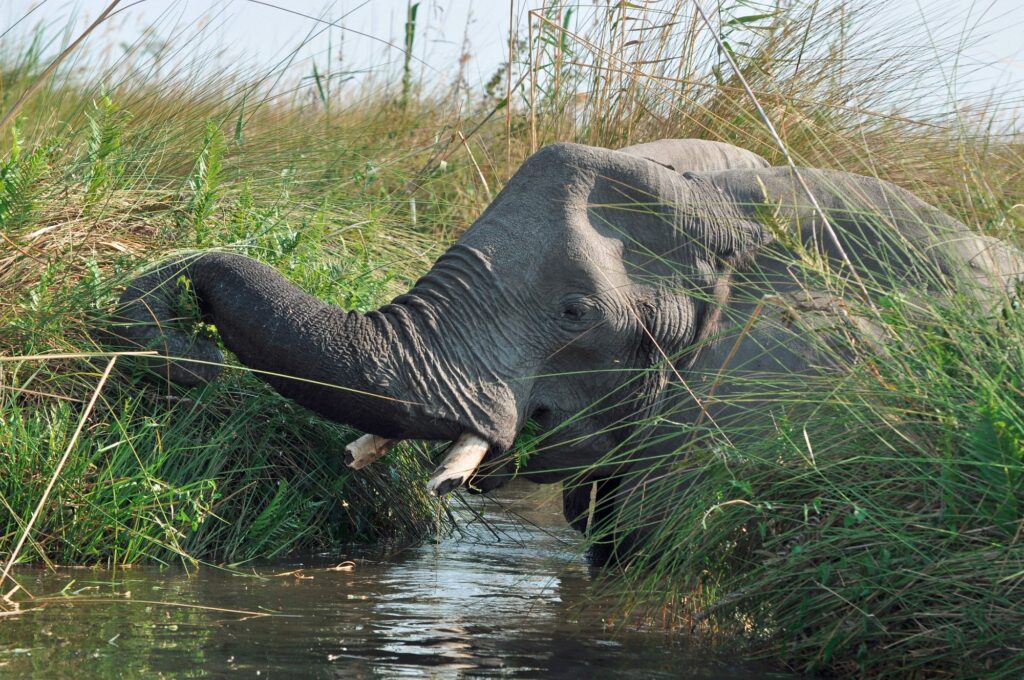
This guide explains every practical way to get to Moremi Game Reserve in 2026: flying into Maun, hopping across the Delta by light aircraft, driving yourself from Maun or Kasane, or joining a guided mobile safari. You will also find distances and drive times, gate information, the current park fee structure, campsite booking details, a self-drive checklist and answers to the questions travellers ask most often.
Moremi Game Reserve at a Glance
| Detail | Information |
| Location | Eastern and central Okavango Delta, Ngamiland District, northern Botswana |
| Gateway town | Maun – the safari capital of Botswana |
| Nearest international airport | Maun International Airport (MUB) |
| Main road entry points | South Gate (Maqwee) from Maun; North Gate (Khwai) from Khwai and Chobe/Savuti |
| Maun to South Gate | Roughly 100 km; allow about 2.5 to 3.5 hours depending on conditions |
| Fastest access | Light-aircraft flight from Maun: about 20 to 40 minutes to most camp airstrips |
| Vehicle for self-drive | High-clearance 4×4 with low range – essential, not optional |
| Fuel inside the reserve | None. Fill up in Maun (or Kasane if coming from the north) |
| Managed by | Department of Wildlife and National Parks (DWNP), Botswana |
| Important 2026 Access Update
Exceptional rains and high flood levels disrupted access to Moremi in early 2026. The Ministry of Environment and Tourism closed the reserve in March and reinstated road access on 13 April 2026, with restrictions. At reopening, the South Gate–Xakanaxa route was rated fair and passable for smaller vehicles, the Khwai–South Gate route was described as challenging, and the Third Bridge area remained closed. A Botswana government update at the end of May 2026 reported that Third Bridge was still closed, while roads around Xakanaxa and South Gate–Khwai were usable in dry weather. Before you travel: confirm current route and campsite status with DWNP, your campsite operator or Marriott Safaris Africa. Conditions in the Delta can change within weeks. |
Where Is Moremi Game Reserve?
Moremi lies on the eastern side of the Okavango Delta in northern Botswana, north of the town of Maun. The reserve covers roughly 5,000 square kilometers and includes Chief’s Island, the largest island in the Delta, as well as the Moremi Tongue – a finger of dry land that pushes into the wetlands and carries most of the reserve’s game-drive roads.
Think of the reserve as having two road entry points for vehicles and many air entry points for fly-in guests. South Gate sits on the southern edge, closest to Maun. North Gate sits on the Khwai River in the north-east, closest to the Khwai community area and the road from Chobe National Park. In between, the famous camping and game-viewing zones of Xakanaxa and Third Bridge lie deeper inside, close to permanent water.
| Area | Position | Character |
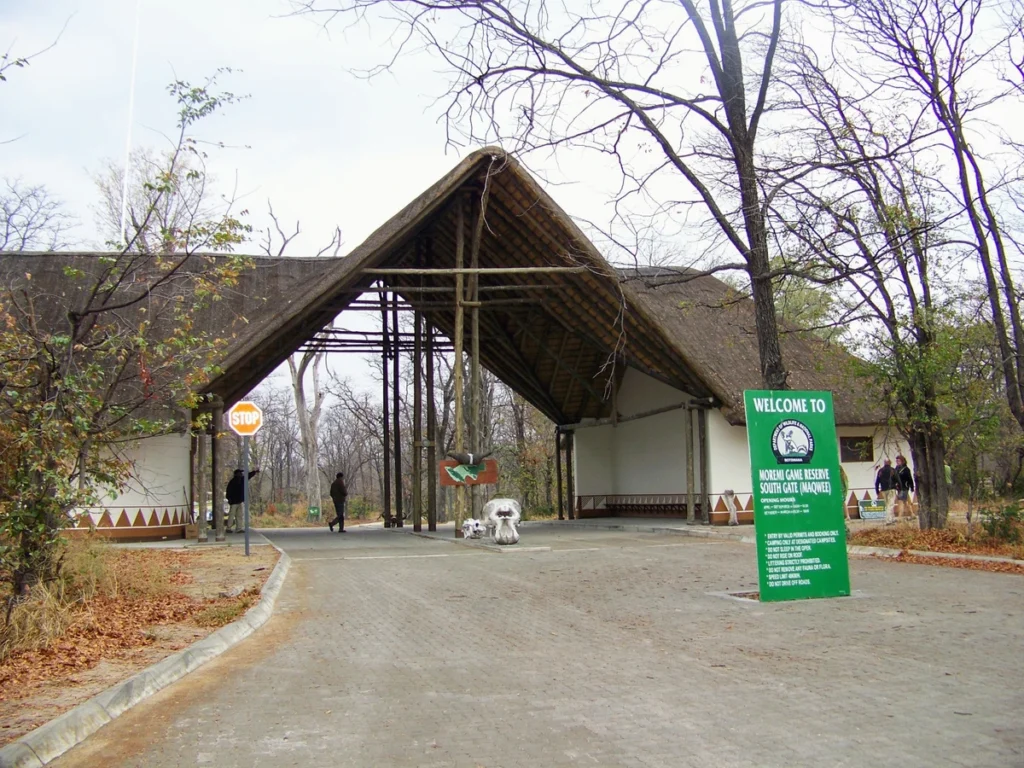
| South Gate (Maqwee) | Southern boundary | Mopane woodland and the Black Pools area; main entry from Maun |
| Third Bridge | West of South Gate, on the Sekiri River | Iconic pole bridges, floodplains, strong predator sightings |
| Xakanaxa | North-west, on Xakanaxa Lagoon | Permanent lagoons, boat trips, birdlife, lodges and a public campsite |
| North Gate (Khwai) | North-east, on the Khwai River | Riverine woodland, elephants, link road to Khwai and Chobe |
| Chief’s Island / Mombo | Deep inside the Delta | Fly-in only; exclusive luxury camps |
Step 1: Getting to Maun, the Gateway to Moremi
Almost every Moremi journey starts in or passes through Maun. It is a busy safari hub with an international airport, banks and ATMs, supermarkets, fuel stations, 4×4 rental companies, light-aircraft charter operators and a wide choice of lodges along the Thamalakane River.
Flying to Maun
There are no long-haul flights direct to Maun from Europe, North America or East Africa, so international travelers connect through a regional hub. The most common routings are:
- Via Johannesburg (OR Tambo): the busiest connection, with daily regional flights to Maun. Most international visitors use this route.
- Via Cape Town: regional services link Cape Town with Maun, useful if you are combining the Cape with a Botswana safari.
- Via Gaborone: domestic flights connect Botswana’s capital with Maun.
- Via Kasane: domestic and charter links connect Kasane (for Chobe and Victoria Falls) with Maun.
Travelers flying from Uganda, Kenya, Tanzania or Rwanda usually connect through Johannesburg. Airline schedules change by season, so check current routes when you book and leave a comfortable connection window – missing a small regional flight can cost you a full day of your safari.
| Travel Tip
If you are flying on to a camp by light aircraft, try to land in Maun before early afternoon. Charter transfers into Moremi operate in daylight only, and a late arrival can mean an unplanned night in Maun. |
Driving to Maun
Maun is linked by tarred roads to the rest of Botswana and to neighboring countries. Many self-drive travellers collect a rental 4×4 in Maun itself; others drive in from South Africa, Namibia, Zambia or Zimbabwe as part of a longer overland route.
| Starting point | Main route | Approx. distance | Approx. drive time |
| Kasane (Botswana) | A33 south to Nata, then A3 west to Maun | 600 km | 7–8 hours |
| Victoria Falls (Zimbabwe) | Kazungula border to Kasane, then via Nata | 680 km | 8–9 hours plus border |
| Livingstone (Zambia) | Kazungula Bridge to Kasane, then via Nata | 670 km | 8–9 hours plus border |
| Gaborone (Botswana) | A1 north to Francistown, then Nata and Maun | 950 km | 11–12 hours |
| Johannesburg (South Africa) | Via Martin’s Drift or Groblersbrug, Palapye and Nata | 1,150 km | 13–14 hours (split over 2 days) |
| Windhoek (Namibia) | Via Gobabis, Mamuno border and Ghanzi | 800 km | 9–10 hours plus border |
Distances are approximate. Watch for livestock and wildlife on open roads, avoid driving after dark, and allow time at veterinary control points, where you may be asked to declare or surrender certain fresh meat and dairy products.
Step 2: Choosing How to Travel from Maun to Moremi
From Maun you have three realistic choices: fly in by light aircraft, drive yourself, or join a guided safari that handles the driving for you. Each has clear trade-offs.
| Factor | Fly-in safari | Self-drive | Guided road safari |
| Travel time from Maun | 20–40 minutes | 2.5–5 hours to campsites | 2.5–5 hours (your guide drives) |
| Cost level | Highest | Lowest to moderate | Moderate |
| Accommodation | Luxury lodges and tented camps | Public campsites or lodges | Mobile tented camps at reserved sites |
| Experience needed | None | Solid 4×4, sand and water-crossing skills | None |
| Luggage | Soft bags, about 20 kg limit | Flexible | Usually flexible |
| Biggest advantage | Aerial views of the Delta, no road fatigue | Freedom and independence | Expert guiding without the logistics |
| Biggest drawback | Price | Demanding driving; all logistics on you | Fixed itinerary |
Option A: Fly-In Safari by Light Aircraft
Flying is the fastest and most scenic way to reach Moremi. Small aircraft – usually Cessna 206s, Cessna 208 Caravans or similar – leave Maun throughout the day and land on gravel airstrips close to the camps. From the air you see the Delta at its most spectacular: channels winding through papyrus, elephants crossing floodplains and islands ringed with palms.
How Fly-In Transfers Work
- Book through your lodge or safari operator. Most Moremi camps include or arrange seat-rate flights from Maun as part of the package. Private charters can also be booked directly with Maun-based air charter companies.
- Check in at Maun’s charter terminal. Arrive about an hour before departure. You will be weighed with your luggage, as aircraft have strict weight limits.
- Fly 20 to 40 minutes. Flight time depends on which airstrip your camp uses and whether the plane stops at other strips on the way.
- Meet your guide at the airstrip. Your camp vehicle collects you, and the drive to camp often doubles as your first game drive.
Main Airstrips Serving Moremi
| Airstrip | Area served | Typical flight time from Maun |
| Xakanaxa | Xakanaxa Lagoon camps, such as Camp Moremi and Camp Okuti | About 25–30 minutes |
| Khwai | Khwai River and North Gate area lodges | About 25–30 minutes |
| Mombo / Chief’s Island | Exclusive camps on Chief’s Island | About 30–40 minutes |
| Xigera | Paradise Island area in western Moremi | About 30–40 minutes |
Exact airstrip assignments vary by camp and season, and your operator will confirm yours. In very high water years some airstrips flood or close temporarily, and camps route guests through an alternative strip with a boat or vehicle transfer – as happened during the 2026 floods.
| Luggage Rules for Light Aircraft
Most Delta flights allow about 20 kg per person including hand luggage, packed in a soft-sided bag without wheels or a rigid frame. Hard suitcases often will not fit in the aircraft’s pod. If you are carrying heavy camera gear, ask about buying an extra seat. Most Maun hotels and charter companies can store excess luggage until you return. |
Option B: Self-Drive from Maun to South Gate
For travellers with 4×4 experience, driving yourself into Moremi is one of the great African road adventures. The South Gate route from Maun is the most popular approach and the shortest by road.
Route Overview
| Section | Distance (approx.) | Road surface | What to expect |
| Maun to Shorobe | 45–50 km | Tar | Easy driving; last reliable fuel and shopping is in Maun |
| Shorobe to the buffalo fence and Moremi turn-off | 15–20 km | Tar, then gravel | Veterinary fence; road quality changes |
| Turn-off to South Gate | 30–35 km | Gravel, sand and corrugations | Engage 4×4 in deep sand; watch for wildlife |
| Total: Maun to South Gate | About 100 km | Mixed | Allow 2.5–3.5 hours |
Step-by-Step Directions
- Prepare in Maun. Fill every fuel tank and jerry can, buy all food and drinking water, withdraw cash in pula, and download offline maps (Tracks4Africa is widely used in Botswana).
- Leave Maun heading north-east on the Shorobe road. The first stretch is tarred and straightforward.
- Pass through Shorobe village and continue towards the veterinary (buffalo) fence.
- Take the signposted turn-off for Moremi South Gate. Beyond this point the road becomes gravel and then sand. Engage four-wheel drive and lower tyre pressures if the sand is deep.
- Arrive at South Gate (Maqwee). Present your campsite booking confirmation, passports and vehicle papers, and pay or show proof of your park and vehicle fees.
- Continue to your campsite. From South Gate, sand tracks lead west towards Third Bridge and north-west towards Xakanaxa. Drive slowly – this is wildlife country from the moment you pass the boom.
| Do Not Arrive Without a Campsite Booking
Moremi’s public campsites are small and heavily booked in the dry season. Self-drive visitors planning to stay overnight should expect to show a confirmed campsite booking at the gate. Book months ahead for June to October. |
Option C: Self-Drive from Kasane via Chobe to North Gate
Many overland itineraries combine Chobe National Park and Moremi in a single journey. From Kasane, the classic route runs south through Chobe and Savuti, then on through the Mababe area and the Khwai community concession to Moremi’s North Gate. It is longer and tougher than the Maun approach but crosses some of the best wildlife country in Botswana.
| Section | Approx. distance | Approx. time | Notes |
| Kasane to Savuti (Chobe NP) | 170–200 km | 5–7 hours | Deep sand sections; most travellers overnight at Savuti |
| Savuti to Mababe gate | 50–60 km | 1.5–2.5 hours | Sand roads; route choice depends on season |
| Mababe to Khwai and North Gate | 60–70 km | 2–3 hours | Khwai River area; water crossings possible after floods |
This route requires a well-equipped 4×4, recovery gear and enough fuel for the whole journey, because there is no fuel between Kasane and Maun on this route. Many travellers break the trip with nights at Savuti and in Khwai before entering Moremi. Treat drive times as rough guides – heavy sand, flood detours and wildlife sightings regularly add hours.
| Coming from East Africa?
Marriott Safaris Africa regularly helps travellers from Uganda, Kenya, Tanzania and Rwanda plan Southern Africa extensions. A popular approach is to fly to Johannesburg and on to Maun or Kasane, then combine Moremi, the wider Okavango Delta and Chobe with Victoria Falls in a single trip. |
Option D: Guided Mobile Safari or Road Transfer
If you want the road experience without the driving, a guided mobile safari is an excellent middle ground. An experienced guide collects you in Maun in an open safari vehicle, a support team sets up your tented camp at a reserved public campsite, and you spend your days on game drives rather than worrying about sand, fuel and logistics.
- Participation or semi-participation safaris keep costs lower, with guests helping to set up tents.
- Fully serviced mobile safaris include a camp crew, a cook, walk-in tents and bucket showers.
- Day trips from Maun are possible but involve long drives; staying at least two nights inside or near the reserve is far more rewarding.
- Road transfers to lodges are offered by some camps near South Gate and Khwai as a cheaper alternative to flying.
Getting Around Inside Moremi
Once inside the reserve, every road is a sand or dirt track. Distances look short on a map but driving is slow: deep sand, flooded sections, pole bridges and frequent wildlife stops mean an average speed of 15 to 25 km per hour is normal. Never leave the marked tracks.
| Route | Approx. distance | Typical drive time | Comments |
| South Gate to Third Bridge | 45–50 km | 2–3 hours | Pole bridges; check whether Third Bridge is open |
| South Gate to Xakanaxa | 45–50 km | 2–3 hours | Reported in fair condition after the 2026 reopening |
| Third Bridge to Xakanaxa | 25–35 km | 1.5–2.5 hours | Via Fourth Bridge; flood detours are common |
| Xakanaxa to North Gate (Khwai) | 40–45 km | 2–3 hours | Can be cut by high water; confirm locally |
| North Gate to South Gate (direct) | 35–40 km | 1.5–2.5 hours | Rated challenging in 2026; use caution |
Ask rangers at the gate about current conditions before setting off. Flood water reaches the Delta months after the rains, usually peaking around June to August, so a track that was dry in May can be under water in July.
Entry Gates, Opening Hours and Park Fees
Gate Opening Hours
Moremi’s gates, like those of Botswana’s other main parks, open around dawn and close around dusk. As a general guide, expect gates to open at about 06:00 and close at about 18:30 in the cooler months, with slightly longer hours in summer. Confirm exact times when you book. You must be at your campsite or out of the reserve before closing time; driving after dark is not permitted.
Park Entry Fees (from 1 April 2026)
Botswana revised its national park fees with effect from 1 April 2026. Published figures place Moremi and Chobe in the same fee band, with the following daily rates:
| Category | Botswana citizens | SADC residents | International visitors |
| Adult, per day | BWP 30 | BWP 205 | BWP 270 |
| Child 8–17 years, per day | BWP 15 | BWP 102.20 | BWP 135 |
| Child under 8 | Free | Free | Free |
Vehicle Fees (per day)
| Vehicle type | Botswana-registered | Foreign-registered |
| Under 3,500 kg (most 4x4s and SUVs) | BWP 30 | BWP 115 |
| 3,500–7,000 kg | BWP 500 | BWP 1,000 |
| Over 7,000 kg | BWP 800 | BWP 1,500 |
| Trailer or caravan | BWP 15 | BWP 60 |
| How Fees Are Charged
Fees are reported to be charged per calendar day, so both your arrival and departure days count. Three nights in Moremi means paying for four days. Payment is generally made in cash at the gate or in advance at a DWNP office. Card machines exist at some points but are unreliable, so carry enough Botswana pula. Keep your receipts – you may be asked for them inside the reserve. Fee figures circulating online vary, so treat these as a planning guide and confirm current rates with DWNP (dwnp@gov.bw) or your operator before you travel. Lodge and fly-in packages often include park fees. |
Where to Stay: Campsites and Lodges
Moremi’s four public campsites are run by private concession holders, and each is booked directly with its operator rather than with DWNP. Park and vehicle fees are paid separately.
| Campsite | Location | Operator | Best for |
| South Gate (Maqwee) | At the southern entrance | Kwalate Safaris | Late arrivals from Maun; first or last night |
| Third Bridge | Sekiri River, west of South Gate | Xomae Group | Classic Moremi atmosphere and predators (check status) |
| Xakanaxa | Xakanaxa Lagoon, north-west | Kwalate Safaris | Lagoon setting, boat trips, birdlife |
| North Gate (Khwai) | Khwai River, north-east | SKL Camps | Travellers arriving from Chobe and Savuti |
Campsites are basic: expect a cleared pitch, a fire area, a water tap and shared ablutions. There are no fences, so lions, hyenas, elephants and baboons regularly pass through. If the public campsites are full, consider camping just outside the reserve near South Gate or in the Khwai community area, both of which allow day trips into Moremi.
For travellers who prefer comfort, Moremi and its neighbouring concessions offer lodges and tented camps across every budget tier, from mid-range camps near the Khwai River to ultra-luxury properties on Chief’s Island reached only by air.
Best Time to Travel to Moremi for Easy Access
| Season | Months | Access conditions | Wildlife and comments |
| Early dry season | May–June | Roads drying out; some tracks still wet | Good game; cooler days; flood water arriving |
| Peak dry season | July–October | Best overall access; high flood can cut some routes | Excellent game viewing; campsites heavily booked |
| Early rains | November–December | Sand firms up; first storms | Very hot October–November; newborn animals |
| Green season | January–April | Most difficult; mud, flooding and possible closures | Lush scenery, superb birding, lower lodge rates |
For self-drivers the best window is generally May to October, ideally avoiding the hottest weeks of October and November if you are camping. Fly-in safaris operate year-round, although some camps close for maintenance during part of the green season. The 2026 flood closures are a good reminder to keep itineraries flexible between January and April.
Entering Botswana by Road: Border Crossings
If your Moremi trip is part of a regional self-drive, you will probably cross into Botswana at one of these commonly used border posts:
| From | Border post | Best for |
| Zambia | Kazungula Bridge | Livingstone to Kasane and Chobe |
| Zimbabwe | Kazungula (road) | Victoria Falls to Kasane |
| Namibia | Ngoma Bridge | Zambezi Region (Caprivi) to Chobe |
| Namibia | Mamuno | Windhoek and Gobabis to Ghanzi and Maun |
| South Africa | Martin’s Drift or Groblersbrug | Johannesburg and Limpopo to Palapye and the north |
Driving a rental vehicle across borders requires written authorisation from the rental company and the correct cross-border documents, including the vehicle registration papers, insurance valid in Botswana and any road permits or levies charged at the border. Check visa requirements for your nationality well before travel.
Self-Drive Checklist for Moremi
Vehicle and Recovery Gear
- High-clearance 4×4 with low-range gearing and good all-terrain tyres
- Two spare wheels, a tyre-repair kit, a compressor and a tyre-pressure gauge
- Recovery kit: spade, snatch strap, shackles, traction boards and a high-lift or bottle jack with a base plate
- Long-range fuel tank or jerry cans – plan for all game drives plus a safety reserve
- Fridge or cool box and a second battery
Navigation and Communication
- Offline GPS maps (Tracks4Africa or similar) and a paper map as backup
- Satellite communicator or satellite phone – mobile signal is patchy to absent
- Emergency contacts: your rental company, campsite operators and a medical evacuation provider
Documents and Money
- Passport, visa (if required) and driving licence, plus an International Driving Permit if your licence is not in English
- Vehicle papers, rental agreement and cross-border authorisation
- Printed campsite booking confirmations
- Enough cash in Botswana pula for park and vehicle fees
Supplies
- At least 5 litres of drinking water per person per day, plus extra for emergencies
- All food for your stay – there are no shops inside Moremi
- First-aid kit, malaria prevention, insect repellent, sunscreen and a torch or headlamp
Safety Tips for Travelling to and Within Moremi
- Never drive at night. Wildlife on the roads and the risk of getting lost or stuck make night driving dangerous, and inside the reserve it is prohibited.
- Assess water crossings before driving through. The Delta has crocodiles and hippos, so never wade in to test depth. If in doubt, take a detour or turn back.
- Stay with your vehicle if you break down or get stuck. A vehicle is far easier to find than a person on foot.
- Respect unfenced campsites. Keep food locked away, never leave rubbish out and use a torch when moving around after dark.
- Give elephants space. Never block their path, and back away calmly if one shows signs of agitation.
- Tell someone your plans. Share your route and expected arrival times with your campsite operator or rental company.
- Take out travel insurance with medical evacuation cover. Moremi is remote and the nearest hospital is in Maun.
Sample 4-Day Self-Drive Route: Maun to Moremi and Back
| Day | Route | Overnight | Highlights |
| Day 1 | Maun to South Gate, then game drive to camp | Xakanaxa campsite | First game drive through mopane woodland; lagoon sunset |
| Day 2 | Full day around Xakanaxa | Xakanaxa campsite | Morning and afternoon game drives; optional boat trip |
| Day 3 | Xakanaxa to North Gate along the Khwai River (if open) | North Gate (Khwai) campsite | Elephants, hippos and predators along the river |
| Day 4 | North Gate to South Gate and on to Maun | — | Final game drive; refuel and restock in Maun |
Swap a Xakanaxa night for Third Bridge if that area has reopened and your booking allows. Always check internal routes with gate staff, as high water may force you back the way you came.
Plan Your Moremi Safari with Marriott Safaris Africa
Getting to Moremi involves many moving parts: international and regional flights, light-aircraft seats, campsite bookings, park fees, vehicle preparation and, in 2026, changing flood conditions. Marriott Safaris Africa takes care of the planning so you can focus on the wildlife.
- Fly-in safari packages combining Moremi with the wider Okavango Delta and Chobe
- Guided road safaris from Maun or Kasane with experienced local guides
- Self-drive support, including route planning, campsite booking advice and pre-trip briefings
- Multi-country itineraries linking Botswana with Victoria Falls, Zambia, Zimbabwe and East Africa
| Ready to Go?
Contact Marriott Safaris Africa for a tailor-made Moremi itinerary that matches your dates, budget and travel style. Perfection Anytime. |
Frequently Asked Questions
What is the nearest airport to Moremi Game Reserve?
Maun International Airport is the nearest airport with regional connections. From Maun, light aircraft fly directly to airstrips inside and around the reserve, and the road to South Gate is about 100 km long.
How long does it take to drive from Maun to Moremi?
Allow about 2.5 to 3.5 hours from Maun to South Gate, then another 2 to 3 hours to reach Xakanaxa or Third Bridge. Conditions vary widely with sand depth and flooding.
Do I need a 4×4 to visit Moremi?
Yes. A high-clearance 4×4 with low range is essential. Roads inside the reserve involve deep sand, mud and water crossings that ordinary cars and two-wheel-drive SUVs cannot handle.
Can I visit Moremi as a day trip from Maun?
It is possible but not ideal. The return drive takes up a large part of the day and leaves limited game-viewing time. Staying at least two nights inside or near the reserve is far better.
Is there fuel inside Moremi Game Reserve?
No. Fill all tanks and jerry cans in Maun, or in Kasane if you are coming from Chobe.
How much are Moremi park fees in 2026?
Published figures from 1 April 2026 put international adult visitors at BWP 270 per day, with lower rates for SADC residents and Botswana citizens and separate daily vehicle fees. Fees are reportedly charged per calendar day. Confirm current rates with DWNP before travel.
Is Moremi open after the 2026 floods?
Road access was reinstated on 13 April 2026 with restrictions, and Third Bridge remained closed as of late May 2026. Check the latest status with DWNP, your campsite operator or your safari company before you go.
What is the best way to get to Moremi?
For comfort and time efficiency, a fly-in safari from Maun is best. For adventure and lower cost, a self-drive from Maun via South Gate is the classic option. A guided mobile safari balances the two.