
Tuli Block & Mashatu Safari 2026 | Botswana’s Secret Wildlife Haven
Tuli Block & Mashatu, tucked into the far eastern wedge of Botswana, where the Limpopo and Shashe Rivers meet the borders of South Africa and Zimbabwe, the Tuli Block is one of Southern Africa’s most compelling and least crowded safari destinations. This is a land of red sandstone ridges, ancient riverbeds, mopane woodland, and baobab trees so vast they seem to belong to another era altogether.
At the heart of the Tuli Block lies Mashatu Game Reserve, the largest privately owned game reserve in Southern Africa, covering roughly 42,000 hectares (around 100,000 acres) of unfenced wilderness within the broader Northern Tuli Game Reserve. Mashatu is often called the ‘Land of Giants,’ a nickname earned by its huge free-roaming elephant herds, towering baobabs, giraffe, eland, and a rich population of big cats.
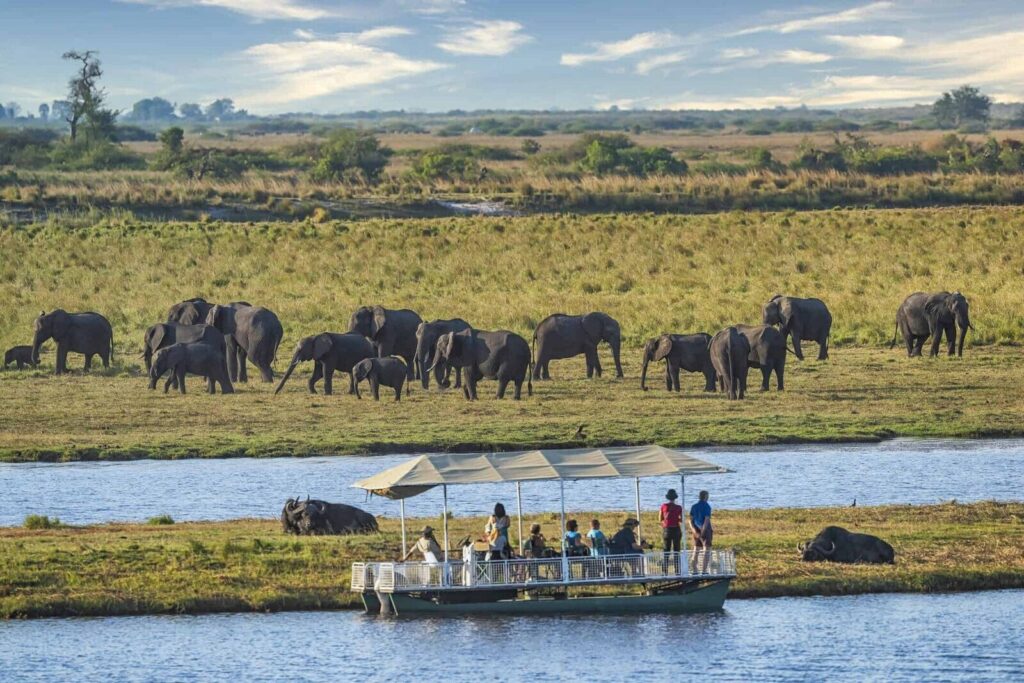
Because Tuli sits outside Botswana’s national park system, it offers freedoms that Chobe, Moremi, and the Okavango cannot: night drives, off-road tracking, guided walking safaris, mountain biking, and even horseback safaris through big-game country. Combined with consistently excellent leopard and elephant sightings, this makes Tuli a favorite of photographers, honeymooners, and seasoned safari-goers looking for something different from the classic Botswana circuit.
| Quick Facts: Tuli Block & Mashatu
Location: Far eastern Botswana, at the confluence of the Limpopo and Shashe Rivers Size: Mashatu Game Reserve covers approximately 42,000 hectares within the wider Northern Tuli Game Reserve Known for: Free-roaming elephant herds, leopard sightings, giant baobab trees, night drives, walking and horseback safaris Access: Most commonly reached via South Africa (Johannesburg/Polokwane) rather than from within Botswana Best for: Photographers, honeymooners, walking and riding enthusiasts, repeat safari travellers seeking something different |
How to Get to Tuli Block & Mashatu
Unusually for a Botswana reserve, Tuli Block is most easily reached through South Africa rather than from within Botswana itself. The road network inside Botswana to this remote eastern corner is long and undeveloped, so almost all lodges route their guests via Johannesburg or Polokwane.
By Road
The classic overland route runs from Johannesburg north on the N1 to Polokwane, then via the R521 through Alldays towards the Limpopo River border posts. Allow around five hours of driving from Johannesburg, or a little over two hours from Polokwane. Many travellers break the journey overnight in the Waterberg or Welgevonden area.
- Pont Drift border post: the classic and most direct crossing into the Northern Tuli Game Reserve; when the Limpopo River is flowing, vehicles cannot cross and passengers are ferried over by an open cable cage, with luggage following separately.
- Platjan border post: usable by vehicles via a low-level causeway when the river is not in flood; this becomes the fallback route when Pont Drift is impassable for cars.
- Martin’s Drift border post: a further alternative to the south when both Pont Drift and Platjan are closed to vehicles.
- From Gaborone (for those already in Botswana): roughly 500 km via Palapye, Mogapi, and Bobonong, on a mix of tarred and dirt roads.
| Border Crossing Tip
Pont Drift’s border post has no facilities beyond a small tuck shop and operates 08:00–16:00. Self-drivers should carry their vehicle registration papers and, for rental cars, a cross-border letter of authorisation from the rental company, as border officials routinely ask for this. If you are self-driving and leaving your vehicle at the border, most Tuli lodges arrange complimentary or low-cost 4×4 transfers to camp — confirm this when booking. |
By Air
There is a private airstrip within the Tuli conservation area, though no scheduled commercial flights land there directly. Charter flights from Johannesburg, Gaborone, Maun, and Victoria Falls can be arranged, with a customs and immigration post at the airstrip processing arrivals from neighbouring countries. For guests combining Tuli with a wider Botswana or Southern Africa safari, a light aircraft transfer is usually the most time-efficient option.
Booking Your Transfer with Marriott Safaris Africa
Marriott Safaris Africa arranges the full journey door-to-door, whether that means a chauffeur-driven road transfer from Johannesburg, a self-drive rental with cross-border documentation prepared in advance, or a scheduled charter flight timed to connect with your lodge’s own border or airstrip pick-up. We handle the Pont Drift cable-car logistics, vehicle paperwork, and luggage transfers so the crossing itself becomes part of the adventure rather than a source of stress.
Things to Do in Tuli Block & Mashatu
Tuli’s appeal lies in its variety of ways to experience the bush. Because the reserves are privately managed and unfenced, activities here go well beyond the standard game-drive format found in Botswana’s national parks.
Game Drives & Night Drives
Morning and afternoon game drives in open 4×4 vehicles are the backbone of any Tuli safari, but the real advantage here is the night drive — spotlight drives are permitted in private reserves like Mashatu, unlike in Botswana’s national parks. After dark, trackers regularly find leopard on the hunt, aardvark, porcupine, bat-eared fox, spotted genet, African wild cat, and the springhare that give the region’s nightlife its distinctive character.
Guided Walking Safaris
Mashatu’s professional guides lead walks along dry riverbeds and sandstone ridges that vehicles cannot reach, tracking spoor, reading the bush at eye level, and explaining the smaller details of the ecosystem — from dung beetles to raptors overhead. Walking safaris are typically arranged in small groups and calibrated to guests’ fitness and interest.
Horseback Safaris
Tuli is one of the very few places in Africa where guests can ride on horseback among free-roaming plains game and, at a respectful distance, larger species. Riders of varying experience levels can move quietly through the bush in a way no vehicle allows, often getting remarkably close to giraffe, zebra, and antelope herds.
Mountain Biking Safaris
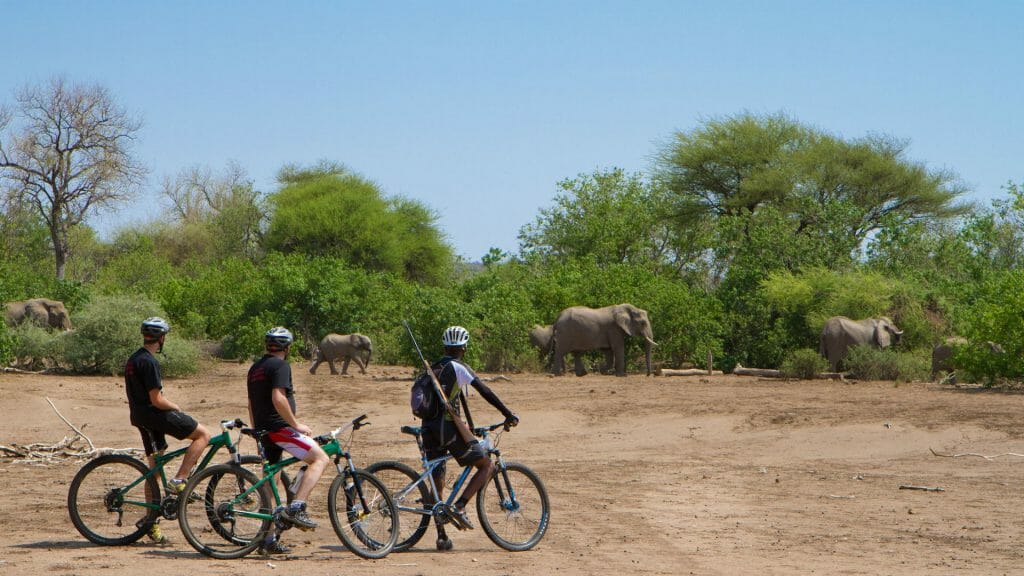
Guided mountain biking is a Mashatu speciality, following set trails through mopane woodland and along the Limpopo’s riverine fringe under the escort of an armed guide. It’s an active, adrenaline-tinged way to cover ground and is popular with fitter, more adventurous guests.
Photographic Hides
Mashatu operates purpose-built underground and ground-level photographic hides positioned at waterholes, putting photographers eye-to-eye with elephant, lion, leopard, and general plains game with no vehicle or barrier in the frame. These hides are a major draw for dedicated wildlife photographers and are often booked as standalone add-ons or multi-night specialist stays.
Cultural & Historical Sites
The Tuli region carries deep human history, having been inhabited by early Mapungubwe-era communities from around 800 AD and later made famous in colonial-era hunting accounts. Guides can incorporate visits to rock art sites, old ruins, and geological curiosities into game drives on request.
Game Drives in Tuli Block & Mashatu
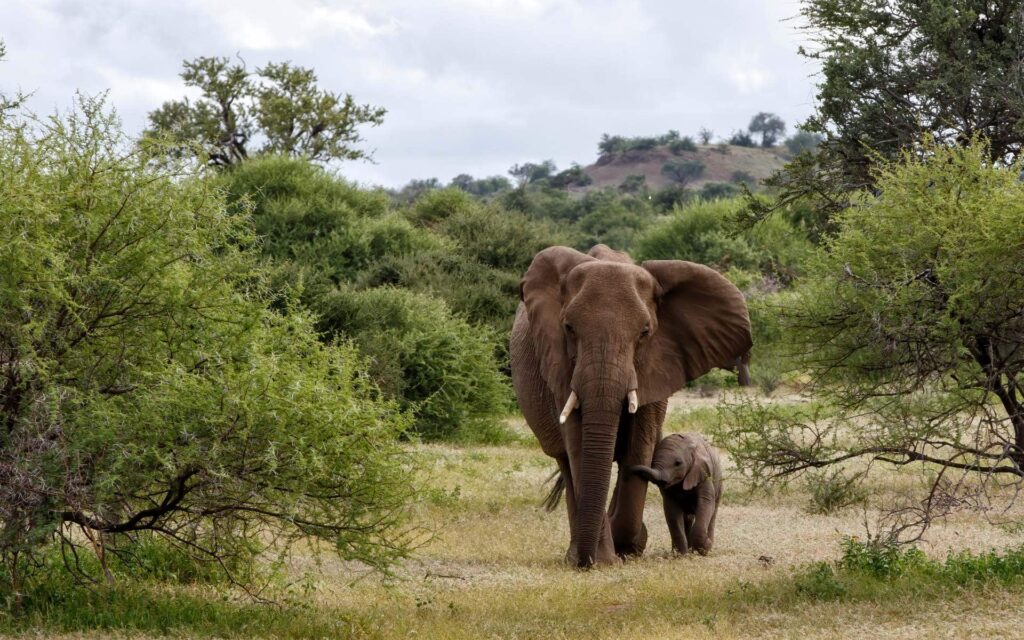
Game drives in Mashatu and the wider Tuli Block are run from open-sided 4×4 vehicles, typically departing at first light and again in the late afternoon, continuing into the evening as a night drive. Because the reserves are unfenced private land rather than government-run national parks, guides have the freedom to leave established tracks and follow fresh signs of predator activity, which is a major reason Tuli has built its reputation for outstanding leopard sightings.
What Makes Tuli Game Drives Different
- Off-road driving is permitted, allowing vehicles to move in close for predator sightings that would otherwise be missed from a fixed track.
- Night drives with spotlights are allowed, revealing nocturnal species rarely seen in Botswana’s national parks.
- Low vehicle density: with a limited number of private lodges and no day-visitor traffic, sightings are rarely shared with more than one or two other vehicles.
- Experienced Tswana trackers work alongside guides, often riding a tracker seat mounted on the vehicle’s bonnet to read spoor at close range.
A Typical Game Drive Day
- 05:30 – Wake-up call and light breakfast before departure
- 06:00 – Morning game drive, tracking predators and following elephant herds to water
- 09:30 – Return to camp for brunch and rest during the heat of the day
- 15:30 – Afternoon tea before departing for the evening drive
- 16:00 – Afternoon and night drive, continuing after sunset with a spotlight
- 19:30 – Return to camp for dinner under the stars
| Photographer’s Tip
Ask your guide about scheduling a session at one of Mashatu’s ground-level photographic hides in addition to standard game drives — the low, eye-level perspective at a floodlit waterhole produces images that are simply not possible from a vehicle. |
Animals in Tuli Block & Mashatu
Mashatu is home to an estimated 600–700 elephants on private land — among the largest such populations anywhere in Southern Africa — moving through the reserve in herds of up to 200 individuals. Alongside the elephants, Tuli supports healthy populations of lion, leopard, and cheetah, with sightings of all three considered a regular rather than rare occurrence. Notably, neither buffalo nor rhino occur naturally in the reserve, and African wild dog have been reintroduced in recent years after a long absence.
Signature Species
- Elephant – large, free-roaming herds; a defining sight of the reserve
- Leopard – Tuli’s rocky sandstone terrain makes it one of the most reliable leopard destinations in Southern Africa
- Lion – present in healthy numbers across the unfenced reserve system
- Cheetah – regularly seen on the open plains
- African wild dog – reintroduced and increasingly seen on drives
- Giraffe, eland, zebra, wildebeest, kudu, impala, and bushbuck – abundant plains game supporting the predator populations
Nocturnal & Smaller Species
Night drives regularly turn up species that are far harder to see elsewhere: aardvark, porcupine, springhare, bat-eared fox, spotted genet, African wild cat, and small-spotted or large-spotted genets among the rocky outcrops.
Birdlife
Over 350 bird species have been recorded in the Tuli Block, from martial and black eagles to giant eagle owls, kori bustards striding across the open plains, and flashes of colour from bee-eaters and kingfishers along the Limpopo’s riverine fringe. Birders visiting in the summer months (November to March) benefit from the arrival of migrant species.
Attractions in Tuli Block & Mashatu
Mashatu Game Reserve
The centerpiece of the region and the largest privately owned game reserve in Southern Africa, offering the widest choice of activities and the most consistent predator sightings in the Tuli Block.
The Limpopo and Shashe River Confluence
The meeting point of the Limpopo and Shashe Rivers marks the tri-border of Botswana, South Africa, and Zimbabwe — a place of significant geological and historical weight, and a beautiful spot for a sundowner stop on a game drive.
Solomon’s Wall
A striking natural rock formation created by an ancient dolerite dyke forced up through the earth’s crust millions of years ago, forming a wall-like ridge that cuts dramatically across the landscape near the Motloutse River.
Mashatu’s Giant Baobabs
Some of the oldest and largest baobab trees in Southern Africa are found scattered across Mashatu’s plains, several believed to be well over a thousand years old and large enough to be seen from a considerable distance across the bush.
Mmamagwa Hill & Ancient Ruins
The wider Tuli region was inhabited by early Mapungubwe-era communities from around 800 AD, and stone-walled ruins and rock art sites scattered across the sandstone hills offer a glimpse into this pre-colonial history, best explored with a guide on a walking safari.
Sandstone Cliffs and Riverine Forest
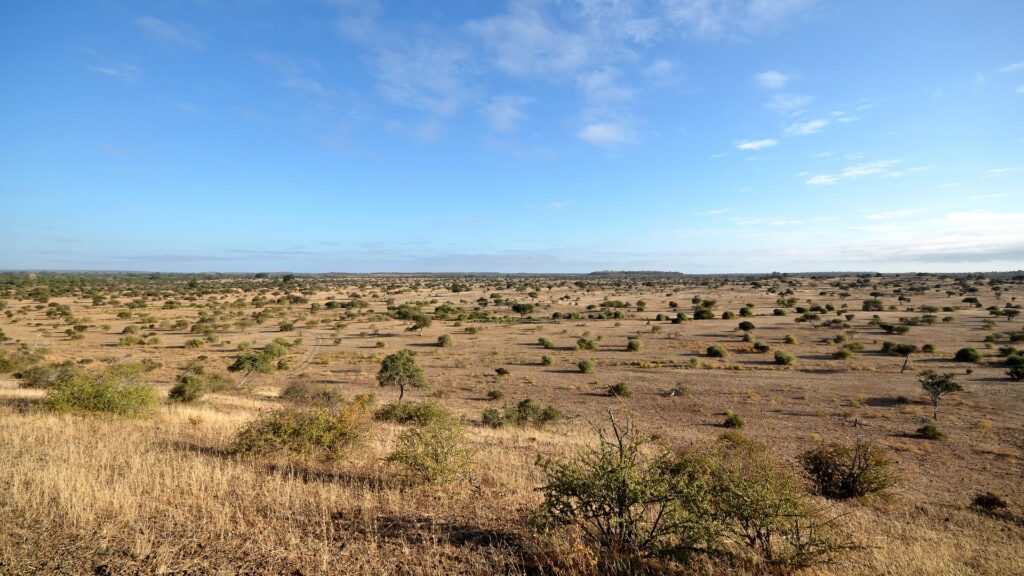
The dramatic sandstone ridges lining the region’s dry riverbeds are a defining feature of Tuli’s scenery, offering some of the most photogenic backdrops in Southern Africa, particularly at sunrise and sunset.
Accommodation in Tuli Block & Mashatu
Tuli’s lodges are deliberately few in number, which keeps sightings uncrowded and preserves the sense of remoteness that defines the region. Accommodation spans rustic tented camps to high-end luxury lodges, with most properties built along the Limpopo River or tucked beneath riverine trees.
Luxury Tier
- Mashatu Lodge – the flagship property of the reserve, offering spacious luxury suites, a spa, swimming pool, and direct access to Mashatu’s photographic hides.
- Tuli Safari Lodge – set on the banks of the Limpopo River amid sandstone outcrops, with eight elevated luxury tented suites and wraparound decks overlooking the bushveld.
Mid-Range Tier
- Mashatu Tent Camp – eight elevated tents set along a shaded riverbed, each with private ensuite facilities, a communal boma and lounge area, a hide overlooking a floodlit waterhole, and a plunge pool.
- Other private tented camps within the Northern Tuli Game Reserve, typically offering en-suite tented rooms, a central dining and lounge area, and guided activities included in the rate.
Specialist & Activity-Based Camps
- Camps geared towards horseback safaris, offering multi-day riding-focused stays for varying experience levels.
- Photographic-focused stays built around access to Mashatu’s underground and ground-level hides, often booked by dedicated wildlife photographers for extended, low-distraction sessions.
| Booking Note
Because Tuli has a genuinely limited number of beds, lodges here sell out well in advance for the July–October peak season. Marriott Safaris Africa recommends booking six to nine months ahead for peak-season travel, particularly for the smaller luxury camps. |
Best Time to Visit Tuli Block & Mashatu
Unlike destinations built around a single migration event, Mashatu has no traditional ‘green season’ lull in wildlife viewing — the resident animals do not migrate, so the reserve delivers strong sightings throughout the year. That said, seasonal shifts do change the character of a visit.
| Season | Months | What to Expect |
| Dry Winter (Peak) | May – September | Cooler days, cold nights; sparse vegetation concentrates animals at rivers and waterholes for the best overall game viewing. |
| Late Dry Season | August – October | Hot and very dry; the most reliable period for elephant congregations along the Limpopo and around waterholes. |
| Early Summer / Green Season | November – March | Hot, with afternoon thunderstorms; lush scenery, newborn animals, and excellent birdlife with migrant species present. |
| Shoulder Season | April & October–November | Transitional weather with fewer crowds and often better lodge rates than peak winter months. |
For first-time visitors prioritising elephant sightings and classic dry-bush safari photography, May to October is the strongest window. For birders, photographers drawn to dramatic storm-light skies, and travellers hoping to combine value with good game viewing, the shoulder and green season months are well worth considering.
Itinerary: 5 Days in Tuli Block & Mashatu
A five-day stay is enough time to properly settle into Tuli’s rhythm — combining classic game drives with at least one or two of the region’s specialist activities.
Day 1: Arrival & Sundowner Drive
Cross the border at Pont Drift or arrive via charter flight to the Tuli airstrip. Transfer to your lodge, settle in over lunch, and head out on a late-afternoon orientation drive ending with sundowners on a sandstone outcrop overlooking the Limpopo.
Day 2: Classic Game Drives
A full day built around Tuli’s core activity: an early-morning game drive tracking elephant herds and predators, a midday rest at camp, and an evening drive continuing into a night drive after dark.
Day 3: Walking Safari & Cultural Sites
Swap the vehicle for a guided walking safari along a dry riverbed, learning to read tracks and signs at ground level, with an option to visit nearby rock art or ruin sites. Afternoon game drive as usual.
Day 4: Horseback or Mountain Biking Safari
For guests who have arranged it in advance, a half-day horseback or mountain biking safari through mopane woodland, followed by an afternoon session at one of Mashatu’s photographic hides.
Day 5: Final Drive & Departure
An early final game drive before breakfast, followed by transfer back to the Pont Drift border post or the Tuli airstrip for onward travel.
| Extend Your Trip
Tuli combines naturally with a wider South African itinerary — particularly northern Kruger, Madikwe, or the Waterberg — or with a broader Botswana safari taking in the Okavango Delta, Chobe, or the Central Kalahari. Ask Marriott Safaris Africa about multi-destination packages of 8–14 days. |
Book with Marriott Safaris Africa
Marriott Safaris Africa specialises in tailor-made safari planning across East and Southern Africa, and Tuli Block & Mashatu is one of our most requested off-the-beaten-path additions for guests seeking something beyond the classic Okavango-and-Chobe circuit.
What We Handle for You
- Lodge selection matched to your budget and interests, from rustic tented camps to Mashatu’s flagship luxury lodge
- All border logistics at Pont Drift, Platjan, or Martin’s Drift, including vehicle documentation and cable-car or causeway crossing arrangements
- Road transfers from Johannesburg or Polokwane, or charter flight bookings to the Tuli airstrip
- Activity pre-booking for walking safaris, horseback safaris, mountain biking, and photographic hide sessions, which have limited daily availability
- Combination itineraries linking Tuli with Kruger, Madikwe, the Okavango Delta, Chobe, or Victoria Falls
How to Book
- Step 1: Share your travel dates, group size, and interests (photography, walking, riding, family safari, honeymoon) with our safari consultants.
- Step 2: Receive a tailored itinerary and lodge shortlist with transparent, all-inclusive pricing.
- Step 3: Confirm your booking with a deposit; we handle all border paperwork, transfers, and activity reservations.
- Step 4: Travel with a detailed pre-departure pack covering packing lists, border crossing steps, and what to expect on arrival.
| Marriott Safaris Africa — Perfection Anytime
With transparent pricing, a vetted fleet and lodge network, and 24/7 support throughout your journey, Marriott Safaris Africa takes care of the logistics so your only decision each morning is which direction to point the vehicle. |
Frequently Asked Questions
Is Tuli Block part of a typical Botswana safari?
Not usually. Because access from within Botswana is difficult, Tuli is more commonly booked as an extension to a South African itinerary (via Johannesburg) or as a standalone specialist trip, rather than bolted onto an Okavango or Chobe circuit.
Can I self-drive to Mashatu?
Yes, as far as the Pont Drift, Platjan, or Martin’s Drift border posts, where most lodges collect guests. The Tuli Game Reserve itself is generally not open to unguided self-drive exploration — game viewing inside the reserve is done in lodge vehicles with a guide.
Will I see the Big Five in Tuli?
Not the full Big Five in the classic sense: neither buffalo nor rhino occur naturally in Mashatu. However, elephant, lion, and leopard are all reliably seen, alongside cheetah and reintroduced wild dog.
Is Tuli suitable for children?
Some camps welcome children and offer family-friendly activities, while others (particularly those focused on walking and horseback safaris) set minimum age requirements. Confirm policies for your chosen lodge when booking.
What should I pack?
Neutral-coloured clothing, a warm layer for early morning and night drives (even in summer), sun protection, binoculars, and a camera with a versatile zoom lens for both wide landscapes and close wildlife encounters at the photographic hides.