
Seronera Airstrip
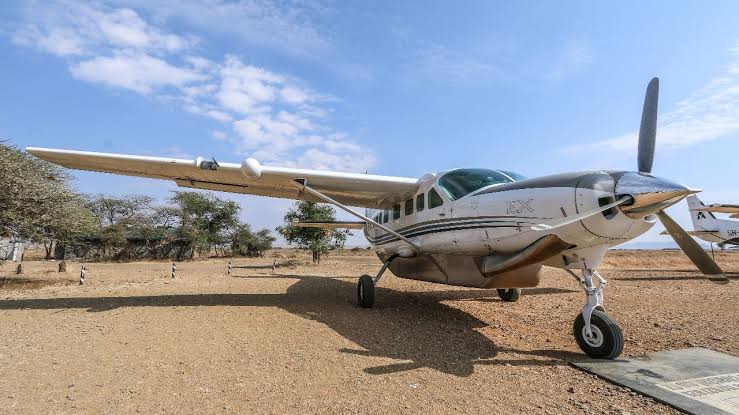
Seronera Airstrip is the busiest and most important bush airstrip in Serengeti National Park, Tanzania. Sitting in the Seronera Valley in the centre of the park, it puts travellers within minutes of some of the most reliable year-round wildlife viewing in Africa: big cat territory, river-fed woodland and endless short-grass plains.
For most fly-in safari travellers, Seronera is the first glimpse of the Serengeti. Instead of spending a full day on the road from Arusha through the Ngorongoro highlands, you board a light aircraft, fly over the Great Rift Valley and can be on a game drive the same morning. This guide covers everything you need to know about Seronera Airstrip: where it is, which airlines fly there, what the facilities are like, baggage rules, park fees, nearby lodges, the best time to fly in and practical tips for a smooth arrival.
Seronera Airstrip at a Glance
| Detail | Information |
| Official name | Seronera Airstrip (Swahili: Uwanja mdogo wa Ndege wa Seronera) |
| IATA / ICAO codes | SEU / HTSN |
| Location | Seronera Valley, central Serengeti National Park, Mara Region, northern Tanzania |
| Coordinates | 2°27′25″S, 34°49′17″E |
| Elevation | Approx. 5,080 ft (1,548 m) above sea level |
| Owner / operator | Government of Tanzania / Tanzania National Parks Authority (TANAPA) |
| Runway | Single unpaved gravel runway (13/31) |
| Airport type | Bush airstrip: scheduled safari shuttles and private charters |
| Terminal | One small terminal building with a waiting area and check-in counter |
| Main hubs served | Arusha (ARK), Kilimanjaro (JRO), Lake Manyara (LKY), other Serengeti airstrips, with connections to Zanzibar and Dar es Salaam |
| Quick Tip
Your flight ticket will usually say “Serengeti National Park (SEU)” rather than “Seronera”. They are the same airstrip. Always confirm with your lodge which Serengeti airstrip you need, because the park has several (Seronera, Kogatende, Lobo, Ndutu, Grumeti and others) and they can be hours apart by road. |
Why Fly into Seronera Airstrip?
Road access to the central Serengeti from Arusha covers roughly 320–330 km and typically takes 7–9 hours, much of it on rough gravel after the Ngorongoro Conservation Area. Flying shortens that journey to about an hour. The main advantages are:
- Time saved: Fly from Arusha in roughly one hour and gain a full day of game viewing.
- Central position: Seronera is in the middle of the park, so you can reach the southern, western and northern sectors on drives or onward hops.
- Year-round wildlife: Permanent water along the Seronera River supports resident lion, leopard, cheetah, hyena, buffalo, giraffe, hippo and antelope even outside migration season.
- Scenic flight: Clear-day flights pass over the Rift Valley escarpment, Lake Manyara and the Ngorongoro highlands.
- Less fatigue: Ideal for honeymooners, older travellers, families with young children and anyone short on time.
- Flexible combinations: Easily link the Serengeti with Zanzibar beach stays, Tarangire, Lake Manyara or the Ngorongoro Crater.
Location and Surroundings
The airstrip lies in the Seronera Valley, the central hub of Serengeti National Park. This area is home to the park headquarters zone, the Serengeti Visitor Centre, a cluster of lodges and tented camps, and some of the park’s best-known game-viewing loops along the Seronera River and around granite kopjes.
Distances from Seronera Airstrip
| Destination | Approx. Distance | Approx. Drive Time |
| Serengeti Visitor Centre | 5–10 km | 15–25 minutes |
| Naabi Hill Gate (southern entrance) | 45–50 km | 1.5–2 hours |
| Ndutu area (southern plains) | 80–100 km | 2.5–3.5 hours |
| Grumeti / Western Corridor | 90–120 km | 3–4 hours |
| Lobo (north-east) | 75–80 km | 2.5–3 hours |
| Kogatende / Mara River (north) | 150+ km | 5–6 hours |
| Ngorongoro Crater rim | 140–150 km | 4–5 hours |
| Arusha city (by road) | 320–330 km | 7–9 hours |
Distances and times are approximate and vary with road conditions, season and wildlife stops.
Airlines Flying to Seronera Airstrip
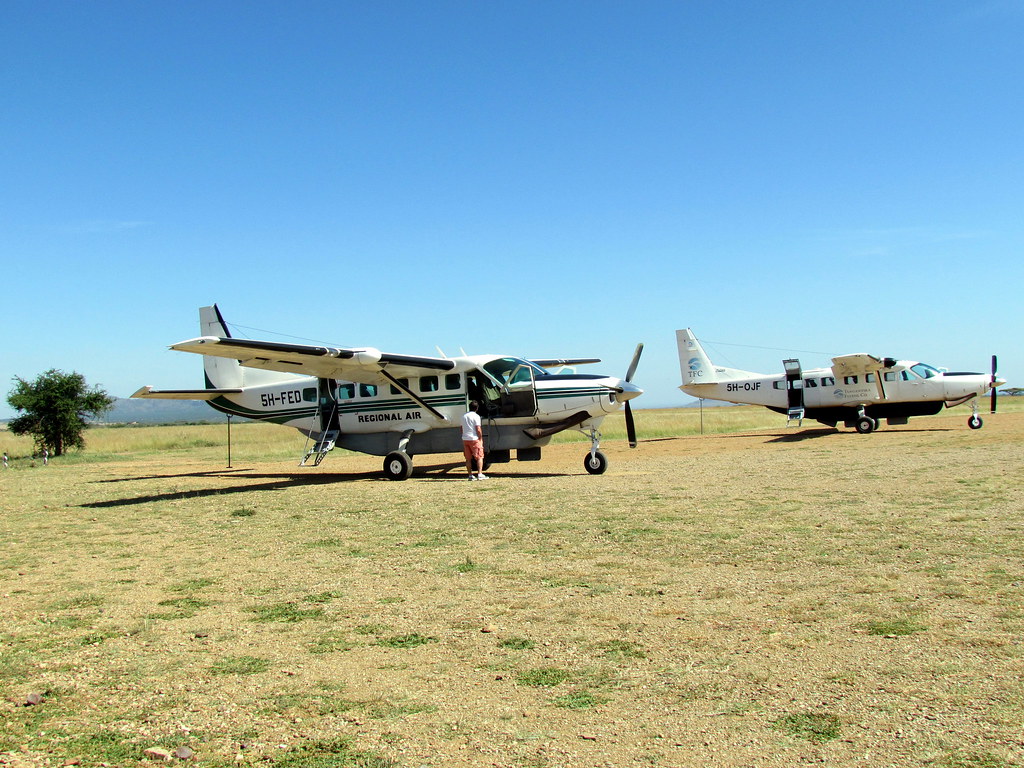
Seronera is served by Tanzania’s domestic safari airlines, which run daily scheduled “milk run” circuits through the northern safari airstrips, plus private charter operators. Scheduled flights often stop at more than one airstrip, so your flight may land at Lake Manyara or another Serengeti strip before or after Seronera.
| Airline | Service Type | Typical Connections |
| Coastal Aviation | Scheduled safari shuttles & charters | Arusha, Kilimanjaro, Lake Manyara, Serengeti strips, Zanzibar, Dar es Salaam |
| Auric Air | Scheduled safari shuttles & charters | Arusha, Lake Manyara, Serengeti strips, Mwanza |
| Regional Air | Scheduled safari shuttles & charters | Arusha, Kilimanjaro, Lake Manyara, Serengeti strips |
| Air Excel | Scheduled safari shuttles & charters | Arusha, Lake Manyara, Serengeti strips |
| Flightlink | Scheduled & charter flights | Arusha, Serengeti, Zanzibar, Dar es Salaam |
| Private charter operators | Exclusive aircraft on your schedule | Any licensed airstrip in Tanzania or across East Africa |
| Airline Schedules Change Seasonally
Safari airlines adjust timetables and routes between high season and the long rains (roughly April–May). Always check your operator’s current schedule, and let your safari company book flights so connections with road transfers and lodges are coordinated. |
Popular Routes, Flight Times and Indicative Fares
| Route | Approx. Flight Time | Indicative One-Way Fare (USD) |
| Arusha (ARK) → Seronera | 1 hr – 1 hr 15 min | $240 – $380 |
| Kilimanjaro (JRO) → Seronera | 1 hr 30 min – 2 hrs | $300 – $420 |
| Lake Manyara (LKY) → Seronera | 40 – 50 min | $200 – $320 |
| Seronera → Kogatende (north) | 30 – 45 min | $150 – $260 |
| Seronera → Ndutu / Grumeti / Lobo | 20 – 40 min | $120 – $250 |
| Zanzibar (ZNZ) → Seronera | 3 – 4 hrs (with stops) | $400 – $600 |
| Dar es Salaam (DAR) → Seronera | 3 – 4 hrs (with stops) | $400 – $650 |
Fares are indicative 2026 ranges for planning only. Prices vary by airline, season, routing and booking date, and may exclude airport and safety levies.
Facilities at Seronera Airstrip
Seronera is a working bush airstrip, not a commercial airport. Expect simple, functional facilities and plan accordingly.
| Facility | What to Expect |
| Terminal building | Small shaded building with seating; a single check-in counter used by the airlines |
| Restrooms | Basic toilets available |
| Refreshments | Very limited; sometimes a small kiosk with water, soft drinks or souvenirs. Lodges usually pack drinks for transfers |
| Wi-Fi / power | Not reliable; download tickets and documents before you travel |
| ATMs / currency exchange | None. Bring cash for tips; park fees are paid electronically by card |
| Security screening | Simple bag and ID checks before boarding; no X-ray hall like an international airport |
| Parking | Open gravel area for safari vehicles; can turn muddy in the rains |
| Runway surface | Unpaved gravel: landings may feel bumpy, especially after rain |
Arriving and Departing: What Happens on the Day
On Arrival
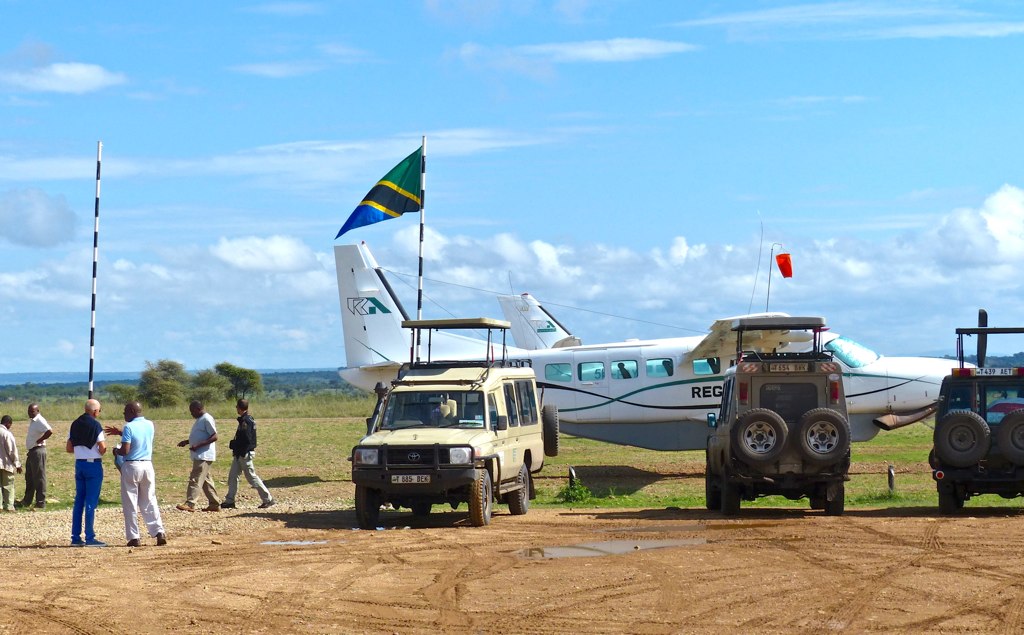
- Your pilot lands and taxis to the parking apron beside the small terminal. Rangers or ground staff often check the runway for animals before landings.
- Bags are unloaded straight from the aircraft hold, so identify your luggage to your guide.
- Your safari guide or lodge driver meets you on the apron with a name board and loads your bags into the vehicle.
- Park entry formalities are handled by your safari operator or lodge; keep your passport accessible in case it is needed.
- Many guides start an “en route” game drive straight away, so keep your camera and binoculars in your hand luggage.
On Departure
- Arrive at the airstrip 30–60 minutes before departure, or as advised by your guide.
- Bags are weighed at check-in; overweight luggage may be refused or charged extra.
- Flights operate in daylight under visual flight rules, so departure times can shift slightly with weather.
- Scheduled flights may make intermediate stops. Stay on board unless the pilot advises otherwise.
Baggage Allowance and Packing Rules
Light aircraft have strict weight and space limits. The single most common surprise for first-time safari travellers is the luggage restriction.
| Rule | Typical Requirement |
| Total allowance | Usually 15 kg per person including hand luggage (some airlines allow up to 20 kg; check your ticket) |
| Bag type | Soft-sided duffel bags only; hard-shell and wheeled suitcases are generally not accepted |
| Bag size | Roughly 25 cm × 30 cm × 62 cm; must fit in a small cargo pod |
| Excess baggage | Sometimes possible for a fee if space allows; buying an extra seat guarantees more allowance |
| Storing extra luggage | Most Arusha hotels and safari operators store excess bags until you return |
| Packing Smart for a Fly-In Safari
Pack neutral-coloured layers (mornings at 1,500 m are chilly), a fleece, a wide-brimmed hat, sunscreen, insect repellent, binoculars and a camera with spare batteries. Most lodges offer laundry, so you can pack less than you think. Keep medication, documents and valuables in your hand luggage. |
Serengeti Park Fees for Fly-In Visitors
Landing at Seronera puts you inside Serengeti National Park, so park entry fees apply from the moment you arrive. Fees are set by TANAPA, charged per person per 24 hours, and paid electronically (card) rather than in cash. Most safari packages include park fees in the quoted price.
| Fee Category | Non-Resident Adult (16+) | Non-Resident Child (5–15) |
| Park entry (per 24 hours) | Approx. USD 70.80 – 83 | Approx. USD 24 |
| Concession fee (per night at lodges/camps inside the park) | Approx. USD 71 | Approx. USD 12 |
| Children under 5 | Free | Free |
Indicative 2025/2026 rates, inclusive of 18% VAT where applicable. Published figures vary between sources and TANAPA revises fees periodically; confirm current rates with your safari operator before travel.
Where to Stay Near Seronera Airstrip
The Seronera area has one of the widest choices of accommodation in the Serengeti, from public campsites to luxury lodges. Transfer times from the airstrip range from a few minutes to over an hour, and almost always double as a game drive.
| Tier | Example Properties | What to Expect |
| Luxury | Four Seasons Safari Lodge Serengeti; Meliá Serengeti Lodge; luxury seasonal and permanent tented camps in central Serengeti | Infinity pools, fine dining, private decks, spa services, expert guiding |
| Mid-range | Serengeti Serena Safari Lodge; Seronera Wildlife Lodge; mid-range tented camps around the Seronera Valley | Comfortable en-suite rooms or tents, full board, great views, good value |
| Budget / camping | TANAPA public campsites in the Seronera area (e.g. Pimbi, Tumbili, Nyani) | Basic shared ablutions; ideal for self-drive and camping safaris |
| Booking Tip
During peak season (June–October and December–February), central Serengeti lodges fill up months in advance. Book flights and accommodation together so arrival times match your lodge’s transfer schedule. |
Wildlife and Game Drives Around Seronera
Seronera is famous as one of the best places in Africa to see big cats. The Seronera River, lined with sausage trees and acacias, provides permanent water that keeps resident animals in the area all year.
- Lions: Several resident prides are frequently seen on kopjes such as Simba Kopjes and Maasai Kopjes.
- Leopards: Regularly spotted lounging in sausage trees and acacias along the Seronera River.
- Cheetahs: Hunt across the open short-grass plains around the valley.
- Other wildlife: Elephant, buffalo, giraffe, hippo (Retima Hippo Pool), topi, Thomson’s and Grant’s gazelles, hyena, jackal and over 500 bird species in the wider park.
- The Great Migration: Herds typically pass through the central Serengeti around April–June as they move north-west, and again on the return south around November–December. Timing varies each year with the rains.
- Hot-air balloon safaris: Dawn balloon flights launch from the Seronera area and finish with a bush breakfast. Book ahead.
Best Time to Fly into Seronera Airstrip
| Period | Conditions | Highlights |
| Jan – Mar | Short dry spell; warm, green | Calving season on southern plains (short flight or drive from Seronera); good predator action |
| Apr – May | Long rains; some flight schedule changes | Lowest rates, lush scenery, fewer vehicles; muddy roads and bumpier runway |
| Jun – Oct | Dry season; clear skies | Peak game viewing; migration moves through the centre and west to the north; busiest period |
| Nov – Dec | Short rains | Herds return south via central Serengeti; good value before the festive peak |
Because resident wildlife stays in the Seronera Valley all year, there is no bad time to fly into Seronera. If seeing the migration is your priority, ask your operator to combine Seronera with a second airstrip that matches the herds’ location for your travel month.
Fly-In vs Drive-In Safari: Which Is Right for You?
| Factor | Fly-In via Seronera | Drive-In / Self-Drive |
| Travel time from Arusha | About 1 hour | 7–9 hours |
| Cost | Higher (flights add roughly USD 250–400 per leg) | Lower; fuel, vehicle and driver costs instead |
| Scenery en route | Aerial views of Rift Valley and Ngorongoro highlands | Ground-level views, villages, Ngorongoro rim stop |
| Luggage | Strict 15–20 kg soft bags | Flexible; ideal for camping gear and rooftop tents |
| Flexibility | Fixed flight times | Stop anywhere, set your own pace |
| Best for | Short trips, luxury travel, honeymoons, families | Adventurous travellers, longer itineraries, budget trips |
Many travellers choose a hybrid: drive out through Tarangire, Lake Manyara and the Ngorongoro Crater, then fly back to Arusha or onwards to Zanzibar from Seronera. This saves a long return drive while still enjoying the road journey once.
Sample 4-Day Fly-In Serengeti Safari via Seronera
Day 1: Arusha to Seronera
Morning flight from Arusha Airport to Seronera Airstrip (about one hour). Your guide meets you on the apron and begins a game drive en route to your lodge. Lunch, rest, then an afternoon drive along the Seronera River in search of leopards in the sausage trees.
Day 2: Central Serengeti Big Cat Day
Optional sunrise hot-air balloon safari with bush breakfast. Full day exploring the Seronera Valley, Simba Kopjes and Maasai Kopjes, with a picnic lunch. Visit the Serengeti Visitor Centre to learn about the ecosystem.
Day 3: Migration Focus
Full-day drive towards wherever the migration herds are (southern plains, Western Corridor or the north, depending on season), or a short connecting flight to a second Serengeti airstrip for a night closer to the herds.
Day 4: Seronera to Arusha or Zanzibar
Final morning game drive, then transfer to Seronera Airstrip for a flight back to Arusha or onward to Zanzibar for beach time.
Safety, Weather and Practical Tips
- Wildlife on the runway: Animals sometimes wander onto the strip; staff and pilots clear the runway before landing. Never walk onto the airstrip.
- Weather: Light aircraft fly by sight. Heavy rain or low cloud can cause short delays, so keep connections loose, especially for international flights.
- Altitude: At about 1,550 m, mornings and evenings can be cool; carry a warm layer.
- Motion: Small planes can be bumpy in the afternoon heat. Take motion-sickness tablets if you are prone to it.
- Documents: Carry your passport, visa (or e-Visa approval), printed tickets and yellow fever certificate if required for your route.
- Tipping: Bring small USD notes for guides, drivers and lodge staff, as there is no ATM at the airstrip.
- Photography: Ask before photographing staff or officials. Drone use in national parks requires special permits.
Recent Developments and Future Plans
Seronera’s traffic has grown steadily with Serengeti tourism, and the strip often handles many light aircraft at once in peak season. Tanzanian authorities have discussed several improvements to aviation in the Serengeti, including a proposal to pilot a remote “digital tower” air traffic system at Seronera, led by the Tanzania Civil Aviation Authority in partnership with TANAPA, to improve safety at busy remote airstrips. Separately, a larger Serengeti International Airport outside the park near Mugumu has been proposed for many years. Road works in the park, such as rehabilitation of the Ndabaka Gate–Seronera road, are also ongoing.
For travellers, Seronera remains a simple gravel bush airstrip for now. Check with your operator for any operational updates before you fly.
Frequently Asked Questions
What is the airport code for Seronera Airstrip?
Seronera Airstrip uses the IATA code SEU and the ICAO code HTSN. Booking websites often list it as “Serengeti National Park (SEU)”.
Where exactly is Seronera Airstrip?
It is in the Seronera Valley in the central Serengeti, within Serengeti National Park in northern Tanzania (Mara Region), close to the Serengeti Visitor Centre and many central Serengeti lodges.
How long is the flight from Arusha to Seronera?
A direct scheduled flight takes about one hour. Flights with stops at Lake Manyara or other airstrips take longer.
Can I fly directly from Zanzibar to the Serengeti?
Yes. Coastal Aviation and Flightlink connect Zanzibar to the Serengeti, usually via Arusha or other stops, making it easy to combine a safari with a beach holiday.
Is Seronera Airstrip paved?
No. It has a single unpaved gravel runway, so landings may feel bumpy, especially during and after the rains.
What is the luggage limit on flights to Seronera?
Most safari airlines allow about 15 kg per person including hand luggage, in soft-sided bags. Some allow 20 kg. Check your ticket and ask your operator to store excess bags in Arusha.
Do I pay park fees when I land at Seronera?
Yes, park entry fees apply because the airstrip is inside the national park. Most safari packages include them, and fees are paid electronically, not in cash.
Are there shops or ATMs at Seronera Airstrip?
No ATMs, and refreshments are very limited. Bring cash for tips and rely on your lodge for food and drinks.
Can self-drive travellers use Seronera Airstrip?
Self-drive travellers don’t need the airstrip, but some combine a self-drive or guided road trip with a one-way flight out of Seronera to save the long drive back to Arusha. Arrange vehicle drop-off logistics with your rental company in advance.
Is Seronera a good base for seeing the Great Migration?
It is excellent for resident wildlife all year and for the migration as it passes through the central Serengeti (usually around April–June and November–December). At other times, pair Seronera with a second airstrip nearer the herds.
| Plan Your Serengeti Fly-In Safari with Marriott Safaris Africa
From flight bookings into Seronera Airstrip to guide meet-and-greets, lodge reservations and self-drive or hybrid itineraries, our team handles every detail so you can focus on the wildlife. Contact us today to start planning your Serengeti adventure. Perfection Anytime. |