
How to Get to Serengeti National Park by Flight
A Detailed Fly-In Itinerary: International Gateways, Bush Flights, Airstrips, Costs and Day-by-Day Plans (2027/2028)
Flying into the Serengeti turns what would be an eight-to-ten-hour drive from Arusha into a scenic one-to-two-hour hop over the Great Rift Valley, the Ngorongoro Highlands and the endless golden plains. You land on a gravel airstrip, step off a light aircraft, and can be watching lions from your safari vehicle before lunch.
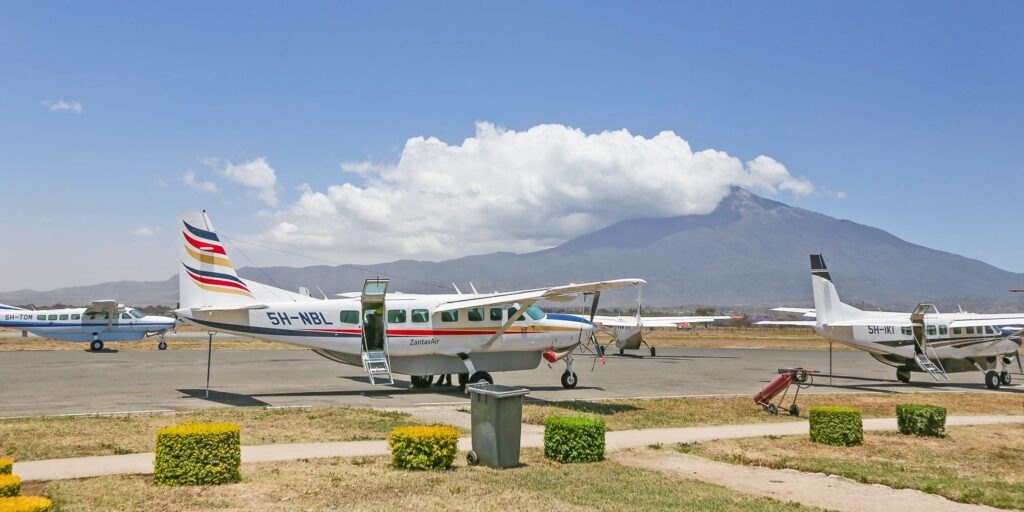
This guide walks you through the complete journey, from booking your international ticket to stepping off the bush plane at the right Serengeti airstrip. It covers the main international gateways, the domestic airlines that fly into the park, which airstrip to choose for each season of the Great Migration, typical schedules, baggage rules, costs, and ready-to-use sample itineraries.
| Quick Answer
Fly internationally into Kilimanjaro International Airport (JRO), the gateway to northern Tanzania, then transfer to Arusha. From Arusha Airport (ARK) or JRO, take a scheduled light-aircraft flight to the Serengeti airstrip closest to your lodge. Flights run at least twice daily, take roughly 1 to 2.5 hours depending on stops, and land at airstrips such as Seronera (central), Kogatende (north), Ndutu/Kusini (south) and Grumeti/Sasakwa (west). |
Serengeti Fly-In: Key Facts at a Glance
| Item | Details |
| Main international gateway | Kilimanjaro International Airport (JRO), about 45–60 minutes by road from Arusha |
| Domestic hub for bush flights | Arusha Airport (ARK), a small airfield on the western edge of Arusha; some flights also start at JRO |
| Alternative gateways | Dar es Salaam (DAR), Zanzibar (ZNZ), and Nairobi (NBO) with a regional connection |
| Flight time Arusha to Serengeti | About 1 hour direct; 1.5–2.5 hours when the plane stops at Lake Manyara and other airstrips |
| Main Serengeti airstrips | Seronera, Kogatende, Lamai, Lobo, Ndutu, Serengeti Kusini, Grumeti, Sasakwa, Kirawira, Fort Ikoma |
| Flight frequency | Morning and afternoon departures daily, with several operators flying the circuit |
| Typical one-way fare (Arusha–Serengeti) | Roughly US$300–500 per person depending on airline, airstrip and season |
| Baggage allowance | Usually 15 kg (some operators 20 kg) in a soft-sided bag, including hand luggage |
| Park entry fee (non-resident adult) | About US$82.60 high season / US$70.80 low season per 24 hours (VAT included) |
The Fly-In Route at a Glance
Almost every fly-in Serengeti trip follows the same four-stage pattern. Understanding it makes planning and booking much easier.
| Stage | From → To | How | Typical time |
| 1. International arrival | Home → Kilimanjaro (JRO), Dar es Salaam or Zanzibar | Scheduled international airline | Varies |
| 2. Transfer & overnight | JRO → Arusha hotel | Pre-booked road transfer | 45–60 min drive |
| 3. Bush flight | Arusha (ARK) or JRO → Serengeti airstrip | Scheduled light aircraft (Cessna Caravan or similar) | 1–2.5 hours |
| 4. Final transfer | Airstrip → lodge or camp | Your guide meets you in a safari vehicle | 5 min–1.5 hours, often a game drive en route |
Stage 1: Flying Internationally into Tanzania
Kilimanjaro International Airport (JRO) – the Best Choice
Kilimanjaro International Airport, located between Moshi and Arusha,is t he natural gateway for a Serengeti fly-in safari. It puts you within an hour of Arusha, where nearly all bush flights to the park depart, and some domestic operators also collect passengers at JRO itself, so a same-day connection is sometimes possible.
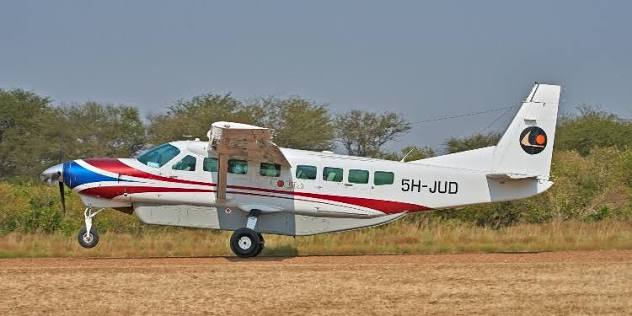
International connections into JRO have grown steadily. Established carriers include KLM (Amsterdam), Turkish Airlines (Istanbul), Ethiopian Airlines (Addis Ababa), Qatar Airways (Doha, seasonal), flydubai (Dubai), Air France (Paris) and Kenya Airways via Nairobi. Brussels Airlines launched twice-weekly direct flights from Brussels on 3 June 2026, and Italian carrier Neos began weekly scheduled flights in July 2026.
| Schedules Change – Always Verify
Airline routes and frequencies into Kilimanjaro change from season to season, and some services are seasonal. Confirm the current schedule with the airline or your safari operator before building the rest of your itinerary around a particular flight. |
Alternative Gateways
Dar es Salaam (DAR)
Tanzania’s largest international airport offers more long-haul options and sometimes cheaper fares. From Dar you can take a domestic flight to Kilimanjaro or Arusha, or board a scheduled light-aircraft service that runs from Dar via Zanzibar, Arusha and Lake Manyara to the Serengeti in a single morning. Expect a full travel day either way.
Zanzibar (ZNZ)
Ideal for “beach and bush” holidays. Daily scheduled flights connect Zanzibar to Arusha and onward to the Serengeti airstrips, so you can fly from the Indian Ocean to the plains without returning to a mainland international airport.
Nairobi (NBO) and Other East African Cities
Travellers combining Kenya and Tanzania often route through Nairobi and take a short regional flight to Kilimanjaro. Within the region, Entebbe (Uganda) has a service to Kilimanjaro on Air Tanzania, and travellers from Kigali can connect via regional carriers – making it easy to add a Serengeti fly-in to a gorilla trekking trip in Uganda or Rwanda.
| Travelling from Uganda, Kenya or Rwanda?
Tanzania asks for a valid yellow fever vaccination certificate from travellers arriving from or transiting through countries with yellow fever risk, which include Uganda and Kenya. Keep the certificate in your hand luggage. Also note that the East Africa Tourist Visa covers Uganda, Kenya and Rwanda only – Tanzania requires its own visa. |
Stage 2: Arriving and Overnighting in Arusha
Most long-haul flights land at Kilimanjaro in the evening or at night, after the last bush flights to the Serengeti have left. The standard approach is therefore to spend your first night in or around Arusha and fly to the park the next morning.
- Airport transfer: JRO to Arusha takes about 45–60 minutes by road. Your safari operator or hotel will normally meet you in the arrivals hall.
- Where to stay: A lodge or coffee-farm hotel on the western side of Arusha shortens the morning drive to Arusha Airport (ARK).
- Rest and repack: A night in Arusha gives you time to recover from the long-haul flight, repack into a soft bag for the bush flight and leave excess luggage in storage.
- Same-day connection: If your international flight lands at JRO before about midday, ask whether you can connect to an afternoon Serengeti flight. Always build in a generous buffer for delays.
Stage 3: The Bush Flight from Arusha to the Serengeti
Airlines Flying to the Serengeti
Several Tanzanian operators run scheduled “safari circuit” flights. The aircraft typically leaves Arusha, may stop at Lake Manyara, then hops between Serengeti airstrips dropping off and collecting guests before returning to Arusha.
| Airline | What to know |
| Coastal Aviation | One of the largest safari networks; daily scheduled services from Arusha to Seronera, Kogatende, Lamai and other strips, plus routes from Dar es Salaam and Zanzibar |
| Auric Air | Daily circuit from Arusha connecting the main Serengeti airstrips and Lake Manyara |
| Regional Air | Long-established northern-circuit operator flying Arusha–Serengeti with morning and afternoon departures |
| Air Excel | Serves Seronera plus seasonal strips including Grumeti, Sasakwa, Fort Ikoma, Lobo, Kogatende and Lamai |
| Flightlink | Direct services from Arusha to Seronera and other Serengeti airstrips |
| Precision Air | Tanzania’s regional airline also operates on the Arusha–Seronera route |
| Private charter | Fly on your own schedule; ideal for families, photographers or tight connections – priced per aircraft, not per seat |
Typical Flight Schedules
Exact times vary by airline and season, but the daily rhythm is broadly consistent. The table shows a representative pattern based on published operator timetables.
| Flight | Departs | Arrives | Notes |
| Morning: Arusha → Serengeti | 07:45–10:45 | 09:00–12:55 | Usually via Lake Manyara; northern strips (Kogatende, Lamai) take longest |
| Afternoon: Arusha → Serengeti | 13:00–15:00 | 14:20–17:45 | Useful if you land at JRO in the morning |
| Morning return: Serengeti → Arusha | 10:45–13:15 | 12:30–15:10 | Leaves time for a short morning game drive |
| Afternoon return: Serengeti → Arusha | 15:00–16:45 | 17:00–18:20 | Some services continue to Kilimanjaro (JRO) for evening international departures |
Choosing the Right Serengeti Airstrip
This is the most important decision in a fly-in itinerary. The Serengeti covers nearly 15,000 square kilometres, and landing at the wrong airstrip can mean a two-to-three-hour transfer to your camp. Always book the airstrip your lodge recommends, and match it to where the wildebeest migration will be during your travel dates.
| Airstrip | Region | Best for | Peak months |
| Seronera | Central Serengeti | Year-round big cats and leopards in the Seronera Valley; the best-connected strip with the most flights | All year |
| Ndutu / Serengeti Kusini | Southern plains | Wildebeest calving season and predator action | December – March |
| Grumeti / Sasakwa / Kirawira | Western Corridor | Grumeti River crossings and giant crocodiles | May – July |
| Fort Ikoma | Western / central edge | Access to Ikoma-area camps and the Western Corridor | May – July |
| Lobo | Northeast | Quiet kopje country with the migration passing through | July – November |
| Kogatende | Northern Serengeti | Dramatic Mara River crossings | July – October |
| Lamai | Far north (Lamai Wedge) | Mara River crossings with fewer vehicles | July – October |
| Seasonal Airstrips
Several northern and western airstrips are served mainly during their peak migration season, and services can be reduced during the long rains (around April–May). If you travel in the green season, Seronera is the most reliable choice. |
Baggage Rules for Light Aircraft
Bush planes have strict weight and space limits, and these are enforced at check-in.
- Weight limit: Typically 15 kg per person including hand luggage and camera gear; some operators allow 20 kg. Confirm with your airline.
- Soft bags only: Hard-shell suitcases and rigid wheeled bags usually cannot fit into the cargo pod. Use a duffel bag.
- Extra allowance: If you carry heavy camera equipment, you can usually buy an extra seat to secure more baggage weight.
- Storage: Most Arusha hotels and safari operators will store excess luggage until you return.
Stage 4: Landing in the Serengeti and Transferring to Your Lodge
Serengeti airstrips are simple: a gravel runway, a windsock and sometimes a small shelter. Your driver-guide or a camp vehicle will be waiting as the plane lands. Because transfers happen inside the park, the drive to your lodge often becomes your first game drive.
- Park fees: Entry is charged per person per 24 hours by the Tanzania National Parks Authority (TANAPA). Fees are paid electronically (card or bank), not in cash, and are usually included in safari packages.
- Concession fee: Staying overnight at a lodge or camp inside the park adds a concession fee of about US$70.80 per adult per night, normally collected by your operator.
- Documents: Keep your passport handy for park registration and to confirm your fee category.
Detailed Fly-In Itineraries
Itinerary 1: Arrival-Day Timeline (Kilimanjaro to Serengeti)
This is how a typical next-morning connection works after an evening arrival at Kilimanjaro.
| Time | Activity |
| Day 1, evening | Land at Kilimanjaro International Airport (JRO). Clear immigration, collect luggage and meet your transfer driver. |
| Day 1, +1 hour | Drive to your Arusha hotel (45–60 minutes). Repack into a soft duffel within the bush-flight weight limit. |
| Day 2, 06:30 | Breakfast; leave excess luggage with the hotel or operator. |
| Day 2, 07:00 | Transfer to Arusha Airport (ARK). Check in 45–60 minutes before departure; bags and passengers may be weighed. |
| Day 2, 08:00 | Take off, with views of the Rift Valley escarpment, Lake Manyara and the Ngorongoro Highlands. |
| Day 2, 08:30 | Possible short stop at Lake Manyara airstrip to drop off or collect passengers. |
| Day 2, 09:15–10:00 | Land at Seronera (central Serengeti) and meet your guide. |
| Day 2, 10:00–13:00 | Game drive en route to your camp; lunch at the lodge. |
| Day 2, 16:00 | Afternoon game drive until park closing time; dinner under the stars. |
Itinerary 2: 4-Day Classic Fly-In Serengeti Safari
A short, high-impact safari that maximises wildlife time with no long road transfers. Ideal for travellers with limited time or those adding a safari to a Zanzibar beach holiday.
Day 1: Arrive at Kilimanjaro – Overnight in Arusha
Arrive at JRO and transfer to Arusha (45–60 minutes). Your operator gives a short safari briefing and checks that your luggage is within the bush-flight allowance.
Day 2: Fly Arusha to Seronera – Afternoon Game Drive
Take the morning scheduled flight from Arusha Airport to Seronera Airstrip. Your guide meets you on landing and you game-drive to your central Serengeti lodge or tented camp, searching the Seronera River valley for leopards, lions and cheetahs. After lunch and a rest, head out on an afternoon game drive.
Day 3: Full Day in the Serengeti
Spend a full day exploring with a picnic lunch, following the migration herds or resident predators depending on the season. An optional sunrise hot-air balloon safari can be added in the central or southern Serengeti.
Day 4: Morning Game Drive – Fly to Arusha or Zanzibar
Enjoy a final early game drive, then transfer to Seronera Airstrip for the late-morning flight back to Arusha or onward to Zanzibar. Same-day international departures from JRO are possible on later evening flights; allow a comfortable buffer.
Itinerary 3: 6-Day Great Migration Fly-In Safari
This itinerary uses two airstrips to follow the Great Migration, combining the central Serengeti with the region where the herds are in your travel month.
| Day | Plan | Airstrip |
| Day 1 | Arrive at JRO, transfer and overnight in Arusha | — |
| Day 2 | Morning flight to central Serengeti; game drive to camp | Seronera |
| Day 3 | Full day in central Serengeti: big cats, kopjes and the Seronera River | — |
| Day 4 | Inter-camp flight or game-drive transfer to the migration zone: the north (Jul–Oct), the south/Ndutu (Dec–Mar) or the Western Corridor (May–Jul) | Kogatende / Ndutu / Grumeti |
| Day 5 | Full day with the herds: river crossings in the north or west, calving and predators in the south | — |
| Day 6 | Morning game drive, then fly to Arusha or Zanzibar | Kogatende / Ndutu / Grumeti |
Itinerary 4: “Drive In, Fly Out” Northern Circuit Combination
Many travellers drive the scenic road through Tarangire and the Ngorongoro Crater on the way in, then fly out of the Serengeti to avoid the long return drive. You get the best of both worlds and pay for only one bush flight.
- Day 1: Arrive at Kilimanjaro; overnight in Arusha.
- Day 2: Drive to Tarangire National Park for elephants and baobabs; overnight near Karatu or in Tarangire.
- Day 3: Game drive on the Ngorongoro Crater floor; overnight on the crater rim or in Karatu.
- Day 4: Drive through the Ngorongoro Conservation Area into the Serengeti via Naabi Hill Gate, game-driving to central Serengeti.
- Day 5: Full day in the Serengeti.
- Day 6: Morning game drive; fly from Seronera to Arusha or Kilimanjaro for your onward journey.
How Much Does It Cost to Fly to the Serengeti?
The figures below are indicative 2026 prices per person to help with budgeting. Fares change with demand, fuel surcharges and season, so always request a current quote.
| Cost item | Indicative price (USD) | Notes |
| International return flight to JRO | Varies widely | Depends on origin city, season and how early you book |
| JRO ↔ Arusha road transfer | Often included | Usually part of safari packages; otherwise charged per vehicle |
| Arusha → Serengeti scheduled flight (one way) | ≈ US$300–500 | Northern and seasonal airstrips cost more than Seronera |
| Dar es Salaam / Zanzibar → Serengeti (one way) | ≈ US$550–800 | Longer routing with several stops |
| Private charter (whole aircraft) | Several thousand US$ | Shared across your group; flexible timing |
| Serengeti park entry (adult, per 24 hrs) | US$82.60 high / US$70.80 low season | Non-resident, VAT included; children 5–15 pay reduced rates |
| Concession fee (per night inside the park) | ≈ US$70.80 per adult | Applies to lodges and camps inside the park |
| Tanzania tourist visa | US$50 (most nationalities); US$100 (US citizens) | Apply online for an e-visa before travel |
| Save on Your Fly-In Safari
Travel in the shoulder months (November, early December or June) for lower lodge rates with good wildlife. Book flights early for July–October and the Christmas period, when seats on the northern circuit sell out. Consider “drive in, fly out” so you pay for only one bush flight. |
Flying vs. Driving to the Serengeti
| Factor | Flying | Driving |
| Travel time from Arusha | 1–2.5 hours | 7–10 hours to central Serengeti |
| Cost | Higher per person | Lower, especially for groups sharing a vehicle |
| Scenery | Aerial views of the Rift Valley and plains | Ngorongoro Highlands, Maasai villages, rural Tanzania |
| Comfort | Minimal fatigue; more time on safari | Long, bumpy stretches of gravel road |
| Flexibility | Fixed schedules and luggage limits | Stop anywhere; no weight limits |
| Best for | Short trips, honeymooners, luxury travellers, beach combinations | Budget travellers, self-drivers, multi-park circuits |
Best Time to Fly to the Serengeti
The Serengeti is rewarding all year, but where you fly to should change with the seasons.
- June to October (dry season): Peak season. Fly into Kogatende or Lamai for Mara River crossings (July–October), or Grumeti for the Western Corridor (May–July). Book flights and camps well ahead.
- December to March (calving season): Fly into Ndutu or Serengeti Kusini to see thousands of newborn wildebeest calves and the predators that follow them.
- April and May (long rains): Green, quiet and good value, though some seasonal airstrips and camps close. Seronera remains the most dependable option.
- November (short rains): The herds move south through the eastern and central Serengeti; Seronera and Lobo make good bases.
Practical Tips for a Smooth Fly-In Safari
- Book international and domestic flights through your safari operator so that a delay on one leg is managed on the other.
- Leave a buffer between flights. Avoid a same-day bush flight that relies on a tight international connection.
- Expect stops. Safari flights work like a bus route in the sky; a “1-hour flight” may take 2 hours with stops at other airstrips.
- Pack light and soft. Stick to 15 kg in a duffel bag, and wear your heaviest shoes and jacket on the plane.
- Bring motion-sickness tablets if you need them. Small aircraft can be bumpy in the afternoon heat.
- Grab a window seat. On a clear morning you may glimpse Mount Meru or Kilimanjaro shortly after take-off.
- Carry essentials in hand luggage: passport, yellow fever certificate if applicable, medication, camera, sunscreen and a light layer.
- Confirm your airstrip and pick-up with your lodge 48 hours before you fly.
Frequently Asked Questions
Which airport do I fly into for the Serengeti?
Fly internationally into Kilimanjaro International Airport (JRO). From there, transfer to Arusha and take a light-aircraft flight from Arusha Airport (ARK) – or occasionally directly from JRO – to a Serengeti airstrip.
Is there an airport inside the Serengeti?
There is no international airport, but the park has several gravel airstrips. Seronera in the central Serengeti is the busiest and best connected; others include Kogatende, Lamai, Lobo, Ndutu, Kusini, Grumeti, Sasakwa and Fort Ikoma.
How long is the flight from Arusha to the Serengeti?
A direct flight to Seronera takes about one hour. Because most scheduled flights stop at Lake Manyara or other airstrips, allow 1.5–2.5 hours, especially when flying to the far north.
Can I fly to the Serengeti on the same day I arrive in Tanzania?
Yes, if your international flight lands at Kilimanjaro in the morning and you can make an afternoon departure. Most long-haul flights arrive in the evening, so an overnight in Arusha is the safest plan.
Can I fly from Zanzibar or Dar es Salaam directly to the Serengeti?
Yes. Scheduled light-aircraft services link Zanzibar and Dar es Salaam to the Serengeti, usually stopping in Arusha and Lake Manyara along the way.
Can I fly from the Maasai Mara in Kenya to the Serengeti?
There is no regular scheduled service across the border, because flights between the two countries must clear immigration and customs at an official port of entry. Travellers usually connect via Nairobi and Kilimanjaro, or arrange a private charter that clears formalities en route.
What is the luggage limit on flights to the Serengeti?
Generally 15 kg per person in a soft-sided bag, including hand luggage. Some operators allow 20 kg, and extra weight can usually be covered by buying an additional seat.
Are flights to the Serengeti safe?
Tanzania’s established safari airlines fly well-maintained aircraft with experienced bush pilots and have long track records on these routes. Book with a recognised operator or through your safari company.
| Plan Your Serengeti Fly-In Safari with Marriott Safaris Africa
From your arrival at Kilimanjaro to choosing the right airstrip for the migration, our team handles every connection – flights, transfers, park fees and handpicked lodges – so all you have to do is enjoy the view. Contact us for a tailor-made Serengeti fly-in itinerary. Prices, park fees and flight schedules in this guide are indicative for 2026 and should be confirmed at the time of booking. |
A Detailed Fly-In Itinerary: International Gateways, Bush Flights, Airstrips, Costs and Day-by-Day Plans (2027/2028)
Flying into the Serengeti turns what would be an eight-to-ten-hour drive from Arusha into a scenic one-to-two-hour hop over the Great Rift Valley, the Ngorongoro Highlands and the endless golden plains. You land on a gravel airstrip, step off a light aircraft, and can be watching lions from your safari vehicle before lunch.
This guide walks you through the complete journey, from booking your international ticket to stepping off the bush plane at the right Serengeti airstrip. It covers the main international gateways, the domestic airlines that fly into the park, which airstrip to choose for each season of the Great Migration, typical schedules, baggage rules, costs, and ready-to-use sample itineraries.
| Quick Answer
Fly internationally into Kilimanjaro International Airport (JRO), the gateway to northern Tanzania, then transfer to Arusha. From Arusha Airport (ARK) or JRO, take a scheduled light-aircraft flight to the Serengeti airstrip closest to your lodge. Flights run at least twice daily, take roughly 1 to 2.5 hours depending on stops, and land at airstrips such as Seronera (central), Kogatende (north), Ndutu/Kusini (south) and Grumeti/Sasakwa (west). |
Serengeti Fly-In: Key Facts at a Glance
| Item | Details |
| Main international gateway | Kilimanjaro International Airport (JRO), about 45–60 minutes by road from Arusha |
| Domestic hub for bush flights | Arusha Airport (ARK), a small airfield on the western edge of Arusha; some flights also start at JRO |
| Alternative gateways | Dar es Salaam (DAR), Zanzibar (ZNZ), and Nairobi (NBO) with a regional connection |
| Flight time Arusha to Serengeti | About 1 hour direct; 1.5–2.5 hours when the plane stops at Lake Manyara and other airstrips |
| Main Serengeti airstrips | Seronera, Kogatende, Lamai, Lobo, Ndutu, Serengeti Kusini, Grumeti, Sasakwa, Kirawira, Fort Ikoma |
| Flight frequency | Morning and afternoon departures daily, with several operators flying the circuit |
| Typical one-way fare (Arusha–Serengeti) | Roughly US$300–500 per person depending on airline, airstrip and season |
| Baggage allowance | Usually 15 kg (some operators 20 kg) in a soft-sided bag, including hand luggage |
| Park entry fee (non-resident adult) | About US$82.60 high season / US$70.80 low season per 24 hours (VAT included) |
The Fly-In Route at a Glance
Almost every fly-in Serengeti trip follows the same four-stage pattern. Understanding it makes planning and booking much easier.
| Stage | From → To | How | Typical time |
| 1. International arrival | Home → Kilimanjaro (JRO), Dar es Salaam or Zanzibar | Scheduled international airline | Varies |
| 2. Transfer & overnight | JRO → Arusha hotel | Pre-booked road transfer | 45–60 min drive |
| 3. Bush flight | Arusha (ARK) or JRO → Serengeti airstrip | Scheduled light aircraft (Cessna Caravan or similar) | 1–2.5 hours |
| 4. Final transfer | Airstrip → lodge or camp | Your guide meets you in a safari vehicle | 5 min–1.5 hours, often a game drive en route |
Stage 1: Flying Internationally into Tanzania
Kilimanjaro International Airport (JRO) – the Best Choice
Kilimanjaro International Airport, located between Moshi and Arusha, is the natural gateway for a Serengeti fly-in safari. It puts you within an hour of Arusha, where nearly all bush flights to the park depart, and some domestic operators also collect passengers at JRO itself, so a same-day connection is sometimes possible.
International connections into JRO have grown steadily. Established carriers include KLM (Amsterdam), Turkish Airlines (Istanbul), Ethiopian Airlines (Addis Ababa), Qatar Airways (Doha, seasonal), flydubai (Dubai), Air France (Paris) and Kenya Airways via Nairobi. Brussels Airlines launched twice-weekly direct flights from Brussels on 3 June 2026, and Italian carrier Neos began weekly scheduled flights in July 2026.
| Schedules Change – Always Verify
Airline routes and frequencies into Kilimanjaro change from season to season, and some services are seasonal. Confirm the current schedule with the airline or your safari operator before building the rest of your itinerary around a particular flight. |
Alternative Gateways
Dar es Salaam (DAR)
Tanzania’s largest international airport offers more long-haul options and sometimes cheaper fares. From Dar you can take a domestic flight to Kilimanjaro or Arusha, or board a scheduled light-aircraft service that runs from Dar via Zanzibar, Arusha and Lake Manyara to the Serengeti in a single morning. Expect a full travel day either way.
Zanzibar (ZNZ)
Ideal for “beach and bush” holidays. Daily scheduled flights connect Zanzibar to Arusha and onward to the Serengeti airstrips, so you can fly from the Indian Ocean to the plains without returning to a mainland international airport.
Nairobi (NBO) and Other East African Cities
Travellers combining Kenya and Tanzania often route through Nairobi and take a short regional flight to Kilimanjaro. Within the region, Entebbe (Uganda) has a service to Kilimanjaro on Air Tanzania, and travellers from Kigali can connect via regional carriers – making it easy to add a Serengeti fly-in to a gorilla trekking trip in Uganda or Rwanda.
| Travelling from Uganda, Kenya or Rwanda?
Tanzania asks for a valid yellow fever vaccination certificate from travellers arriving from or transiting through countries with yellow fever risk, which include Uganda and Kenya. Keep the certificate in your hand luggage. Also note that the East Africa Tourist Visa covers Uganda, Kenya and Rwanda only – Tanzania requires its own visa. |
Stage 2: Arriving and Overnighting in Arusha
Most long-haul flights land at Kilimanjaro in the evening or at night, after the last bush flights to the Serengeti have left. The standard approach is therefore to spend your first night in or around Arusha and fly to the park the next morning.
- Airport transfer: JRO to Arusha takes about 45–60 minutes by road. Your safari operator or hotel will normally meet you in the arrivals hall.
- Where to stay: A lodge or coffee-farm hotel on the western side of Arusha shortens the morning drive to Arusha Airport (ARK).
- Rest and repack: A night in Arusha gives you time to recover from the long-haul flight, repack into a soft bag for the bush flight and leave excess luggage in storage.
- Same-day connection: If your international flight lands at JRO before about midday, ask whether you can connect to an afternoon Serengeti flight. Always build in a generous buffer for delays.
Stage 3: The Bush Flight from Arusha to the Serengeti
Airlines Flying to the Serengeti
Several Tanzanian operators run scheduled “safari circuit” flights. The aircraft typically leaves Arusha, may stop at Lake Manyara, then hops between Serengeti airstrips dropping off and collecting guests before returning to Arusha.
| Airline | What to know |
| Coastal Aviation | One of the largest safari networks; daily scheduled services from Arusha to Seronera, Kogatende, Lamai and other strips, plus routes from Dar es Salaam and Zanzibar |
| Auric Air | Daily circuit from Arusha connecting the main Serengeti airstrips and Lake Manyara |
| Regional Air | Long-established northern-circuit operator flying Arusha–Serengeti with morning and afternoon departures |
| Air Excel | Serves Seronera plus seasonal strips including Grumeti, Sasakwa, Fort Ikoma, Lobo, Kogatende and Lamai |
| Flightlink | Direct services from Arusha to Seronera and other Serengeti airstrips |
| Precision Air | Tanzania’s regional airline also operates on the Arusha–Seronera route |
| Private charter | Fly on your own schedule; ideal for families, photographers or tight connections – priced per aircraft, not per seat |
Typical Flight Schedules
Exact times vary by airline and season, but the daily rhythm is broadly consistent. The table shows a representative pattern based on published operator timetables.
| Flight | Departs | Arrives | Notes |
| Morning: Arusha → Serengeti | 07:45–10:45 | 09:00–12:55 | Usually via Lake Manyara; northern strips (Kogatende, Lamai) take longest |
| Afternoon: Arusha → Serengeti | 13:00–15:00 | 14:20–17:45 | Useful if you land at JRO in the morning |
| Morning return: Serengeti → Arusha | 10:45–13:15 | 12:30–15:10 | Leaves time for a short morning game drive |
| Afternoon return: Serengeti → Arusha | 15:00–16:45 | 17:00–18:20 | Some services continue to Kilimanjaro (JRO) for evening international departures |
Choosing the Right Serengeti Airstrip
This is the most important decision in a fly-in itinerary. The Serengeti covers nearly 15,000 square kilometres, and landing at the wrong airstrip can mean a two-to-three-hour transfer to your camp. Always book the airstrip your lodge recommends, and match it to where the wildebeest migration will be during your travel dates.
| Airstrip | Region | Best for | Peak months |
| Seronera | Central Serengeti | Year-round big cats and leopards in the Seronera Valley; the best-connected strip with the most flights | All year |
| Ndutu / Serengeti Kusini | Southern plains | Wildebeest calving season and predator action | December – March |
| Grumeti / Sasakwa / Kirawira | Western Corridor | Grumeti River crossings and giant crocodiles | May – July |
| Fort Ikoma | Western / central edge | Access to Ikoma-area camps and the Western Corridor | May – July |
| Lobo | Northeast | Quiet kopje country with the migration passing through | July – November |
| Kogatende | Northern Serengeti | Dramatic Mara River crossings | July – October |
| Lamai | Far north (Lamai Wedge) | Mara River crossings with fewer vehicles | July – October |
| Seasonal Airstrips
Several northern and western airstrips are served mainly during their peak migration season, and services can be reduced during the long rains (around April–May). If you travel in the green season, Seronera is the most reliable choice. |
Baggage Rules for Light Aircraft
Bush planes have strict weight and space limits, and these are enforced at check-in.
- Weight limit: Typically 15 kg per person including hand luggage and camera gear; some operators allow 20 kg. Confirm with your airline.
- Soft bags only: Hard-shell suitcases and rigid wheeled bags usually cannot fit into the cargo pod. Use a duffel bag.
- Extra allowance: If you carry heavy camera equipment, you can usually buy an extra seat to secure more baggage weight.
- Storage: Most Arusha hotels and safari operators will store excess luggage until you return.
Landing in the Serengeti and Transferring to Your Lodge
Serengeti airstrips are simple: a gravel runway, a windsock and sometimes a small shelter. Your driver-guide or a camp vehicle will be waiting as the plane lands. Because transfers happen inside the park, the drive to your lodge often becomes your first game drive.
- Park fees: Entry is charged per person per 24 hours by the Tanzania National Parks Authority (TANAPA). Fees are paid electronically (card or bank), not in cash, and are usually included in safari packages.
- Concession fee: Staying overnight at a lodge or camp inside the park adds a concession fee of about US$70.80 per adult per night, normally collected by your operator.
- Documents: Keep your passport handy for park registration and to confirm your fee category.
Detailed Fly-In Itineraries
Itinerary 1: Arrival-Day Timeline (Kilimanjaro to Serengeti)
This is how a typical next-morning connection works after an evening arrival at Kilimanjaro.
| Time | Activity |
| Day 1, evening | Land at Kilimanjaro International Airport (JRO). Clear immigration, collect luggage and meet your transfer driver. |
| Day 1, +1 hour | Drive to your Arusha hotel (45–60 minutes). Repack into a soft duffel within the bush-flight weight limit. |
| Day 2, 06:30 | Breakfast; leave excess luggage with the hotel or operator. |
| Day 2, 07:00 | Transfer to Arusha Airport (ARK). Check in 45–60 minutes before departure; bags and passengers may be weighed. |
| Day 2, 08:00 | Take off, with views of the Rift Valley escarpment, Lake Manyara and the Ngorongoro Highlands. |
| Day 2, 08:30 | Possible short stop at Lake Manyara airstrip to drop off or collect passengers. |
| Day 2, 09:15–10:00 | Land at Seronera (central Serengeti) and meet your guide. |
| Day 2, 10:00–13:00 | Game drive en route to your camp; lunch at the lodge. |
| Day 2, 16:00 | Afternoon game drive until park closing time; dinner under the stars. |
Itinerary 2: 4-Day Classic Fly-In Serengeti Safari
A short, high-impact safari that maximises wildlife time with no long road transfers. Ideal for travellers with limited time or those adding a safari to a Zanzibar beach holiday.
Day 1: Arrive at Kilimanjaro – Overnight in Arusha
Arrive at JRO and transfer to Arusha (45–60 minutes). Your operator gives a short safari briefing and checks that your luggage is within the bush-flight allowance.
Day 2: Fly Arusha to Seronera – Afternoon Game Drive
Take the morning scheduled flight from Arusha Airport to Seronera Airstrip. Your guide meets you on landing and you game-drive to your central Serengeti lodge or tented camp, searching the Seronera River valley for leopards, lions and cheetahs. After lunch and a rest, head out on an afternoon game drive.
Day 3: Full Day in the Serengeti
Spend a full day exploring with a picnic lunch, following the migration herds or resident predators depending on the season. An optional sunrise hot-air balloon safari can be added in the central or southern Serengeti.
Day 4: Morning Game Drive – Fly to Arusha or Zanzibar
Enjoy a final early game drive, then transfer to Seronera Airstrip for the late-morning flight back to Arusha or onward to Zanzibar. Same-day international departures from JRO are possible on later evening flights; allow a comfortable buffer.
Itinerary 3: 6-Day Great Migration Fly-In Safari
This itinerary uses two airstrips to follow the Great Migration, combining the central Serengeti with the region where the herds are in your travel month.
| Day | Plan | Airstrip |
| Day 1 | Arrive at JRO, transfer and overnight in Arusha | — |
| Day 2 | Morning flight to central Serengeti; game drive to camp | Seronera |
| Day 3 | Full day in central Serengeti: big cats, kopjes and the Seronera River | — |
| Day 4 | Inter-camp flight or game-drive transfer to the migration zone: the north (Jul–Oct), the south/Ndutu (Dec–Mar) or the Western Corridor (May–Jul) | Kogatende / Ndutu / Grumeti |
| Day 5 | Full day with the herds: river crossings in the north or west, calving and predators in the south | — |
| Day 6 | Morning game drive, then fly to Arusha or Zanzibar | Kogatende / Ndutu / Grumeti |
Itinerary 4: “Drive In, Fly Out” Northern Circuit Combination
Many travellers drive the scenic road through Tarangire and the Ngorongoro Crater on the way in, then fly out of the Serengeti to avoid the long return drive. You get the best of both worlds and pay for only one bush flight.
- Day 1: Arrive at Kilimanjaro; overnight in Arusha.
- Day 2: Drive to Tarangire National Park for elephants and baobabs; overnight near Karatu or in Tarangire.
- Day 3: Game drive on the Ngorongoro Crater floor; overnight on the crater rim or in Karatu.
- Day 4: Drive through the Ngorongoro Conservation Area into the Serengeti via Naabi Hill Gate, game-driving to central Serengeti.
- Day 5: Full day in the Serengeti.
- Day 6: Morning game drive; fly from Seronera to Arusha or Kilimanjaro for your onward journey.
How Much Does It Cost to Fly to the Serengeti?
The figures below are indicative 2026 prices per person to help with budgeting. Fares change with demand, fuel surcharges and season, so always request a current quote.
| Cost item | Indicative price (USD) | Notes |
| International return flight to JRO | Varies widely | Depends on origin city, season and how early you book |
| JRO ↔ Arusha road transfer | Often included | Usually part of safari packages; otherwise charged per vehicle |
| Arusha → Serengeti scheduled flight (one way) | ≈ US$300–500 | Northern and seasonal airstrips cost more than Seronera |
| Dar es Salaam / Zanzibar → Serengeti (one way) | ≈ US$550–800 | Longer routing with several stops |
| Private charter (whole aircraft) | Several thousand US$ | Shared across your group; flexible timing |
| Serengeti park entry (adult, per 24 hrs) | US$82.60 high / US$70.80 low season | Non-resident, VAT included; children 5–15 pay reduced rates |
| Concession fee (per night inside the park) | ≈ US$70.80 per adult | Applies to lodges and camps inside the park |
| Tanzania tourist visa | US$50 (most nationalities); US$100 (US citizens) | Apply online for an e-visa before travel |
| Save on Your Fly-In Safari
Travel in the shoulder months (November, early December or June) for lower lodge rates with good wildlife. Book flights early for July–October and the Christmas period, when seats on the northern circuit sell out. Consider “drive in, fly out” so you pay for only one bush flight. |
Flying vs. Driving to the Serengeti
| Factor | Flying | Driving |
| Travel time from Arusha | 1–2.5 hours | 7–10 hours to central Serengeti |
| Cost | Higher per person | Lower, especially for groups sharing a vehicle |
| Scenery | Aerial views of the Rift Valley and plains | Ngorongoro Highlands, Maasai villages, rural Tanzania |
| Comfort | Minimal fatigue; more time on safari | Long, bumpy stretches of gravel road |
| Flexibility | Fixed schedules and luggage limits | Stop anywhere; no weight limits |
| Best for | Short trips, honeymooners, luxury travellers, beach combinations | Budget travellers, self-drivers, multi-park circuits |
Best Time to Fly to the Serengeti
The Serengeti is rewarding all year, but where you fly to should change with the seasons.
- June to October (dry season): Peak season. Fly into Kogatende or Lamai for Mara River crossings (July–October), or Grumeti for the Western Corridor (May–July). Book flights and camps well ahead.
- December to March (calving season): Fly into Ndutu or Serengeti Kusini to see thousands of newborn wildebeest calves and the predators that follow them.
- April and May (long rains): Green, quiet and good value, though some seasonal airstrips and camps close. Seronera remains the most dependable option.
- November (short rains): The herds move south through the eastern and central Serengeti; Seronera and Lobo make good bases.
Practical Tips for a Smooth Fly-In Safari
- Book international and domestic flights through your safari operator so that a delay on one leg is managed on the other.
- Leave a buffer between flights. Avoid a same-day bush flight that relies on a tight international connection.
- Expect stops. Safari flights work like a bus route in the sky; a “1-hour flight” may take 2 hours with stops at other airstrips.
- Pack light and soft. Stick to 15 kg in a duffel bag, and wear your heaviest shoes and jacket on the plane.
- Bring motion-sickness tablets if you need them. Small aircraft can be bumpy in the afternoon heat.
- Grab a window seat. On a clear morning you may glimpse Mount Meru or Kilimanjaro shortly after take-off.
- Carry essentials in hand luggage: passport, yellow fever certificate if applicable, medication, camera, sunscreen and a light layer.
- Confirm your airstrip and pick-up with your lodge 48 hours before you fly.
Frequently Asked Questions
Which airport do I fly into for the Serengeti?
Fly internationally into Kilimanjaro International Airport (JRO). From there, transfer to Arusha and take a light-aircraft flight from Arusha Airport (ARK) – or occasionally directly from JRO – to a Serengeti airstrip.
Is there an airport inside the Serengeti?
There is no international airport, but the park has several gravel airstrips. Seronera in the central Serengeti is the busiest and best connected; others include Kogatende, Lamai, Lobo, Ndutu, Kusini, Grumeti, Sasakwa and Fort Ikoma.
How long is the flight from Arusha to the Serengeti?
A direct flight to Seronera takes about one hour. Because most scheduled flights stop at Lake Manyara or other airstrips, allow 1.5–2.5 hours, especially when flying to the far north.
Can I fly to the Serengeti on the same day I arrive in Tanzania?
Yes, if your international flight lands at Kilimanjaro in the morning and you can make an afternoon departure. Most long-haul flights arrive in the evening, so an overnight in Arusha is the safest plan.
Can I fly from Zanzibar or Dar es Salaam directly to the Serengeti?
Yes. Scheduled light-aircraft services link Zanzibar and Dar es Salaam to the Serengeti, usually stopping in Arusha and Lake Manyara along the way.
Can I fly from the Maasai Mara in Kenya to the Serengeti?
There is no regular scheduled service across the border, because flights between the two countries must clear immigration and customs at an official port of entry. Travellers usually connect via Nairobi and Kilimanjaro, or arrange a private charter that clears formalities en route.
What is the luggage limit on flights to the Serengeti?
Generally 15 kg per person in a soft-sided bag, including hand luggage. Some operators allow 20 kg, and extra weight can usually be covered by buying an additional seat.
Are flights to the Serengeti safe?
Tanzania’s established safari airlines fly well-maintained aircraft with experienced bush pilots and have long track records on these routes. Book with a recognised operator or through your safari company.
| Plan Your Serengeti Fly-In Safari with Marriott Safaris Africa
From your arrival at Kilimanjaro to choosing the right airstrip for the migration, our team handles every connection – flights, transfers, park fees and handpicked lodges – so all you have to do is enjoy the view. Contact us for a tailor-made Serengeti fly-in itinerary. Prices, park fees and flight schedules in this guide are indicative for 2026 and should be confirmed at the time of booking. |