Game Drive in Chobe National Park
Game Drive in Chobe National Park, The Complete 2027 Guide to Riverfront, Savuti, Linyanti & Nogatsaa Safaris
Game drive regions · Types of drives · Wildlife · Best time · Park fees · Self-drive tips · Sample itineraries · Where to stay · FAQs
Introduction: Why a Game Drive in Chobe Is Unforgettable
Few safari experiences in Africa match the drama of a game drive in Chobe National Park. Picture an open 4×4 rolling along the sandy tracks of the Chobe Riverfront at sunrise, a breeding herd of 200 elephants crossing to drink in front of you, a pride of lions resting under a sausage tree, and a fish eagle calling from the floodplain. This is everyday life in northern Botswana’s most famous wilderness.
Established in 1967 as Botswana’s first national park, Chobe covers roughly 11,700 square kilometres and is home to one of the largest concentrations of elephants on Earth. While the Chobe River boat cruise gets plenty of attention, it is on land, during a game drive, that you track predators, explore the wild Savuti marsh, and feel the scale of this remarkable ecosystem.
This guide covers everything you need to plan the perfect Chobe game drive: the four game drive regions, the different types of drives, the wildlife you can expect, the best months to go, 2026 park fees, self-drive advice, sample itineraries, where to stay, and answers to the most common questions.
| Quick Facts: Chobe Game Drives at a Glance
Location: Northern Botswana, bordering Namibia’s Caprivi (Zambezi) Strip; gateway town is Kasane. Size: Approximately 11,700 km² – Botswana’s third-largest protected area. Famous for: Elephants (tens of thousands in the dry season), buffalo, lions, leopards, wild dogs and 450+ bird species. Game drive regions: Chobe Riverfront (Serondela), Savuti, Linyanti and Nogatsaa/Ngwezumba. Best time: May to October (dry season); peak game viewing August to October. Main gates: Sedudu (Kasane), Ngoma, Ghoha (north Savuti) and Mababe (south, towards Moremi). Access: Fly into Kasane International Airport, or drive 80 km from Victoria Falls via the Kazungula border. |
What Is a Game Drive in Chobe National Park?
A game drive is a guided or self-driven wildlife-viewing excursion in a 4×4 vehicle along the park’s network of sand tracks. In Chobe, most guided drives use open-sided Toyota Land Cruisers with tiered seating, giving every guest a clear view and room for cameras. Your guide reads animal tracks, listens for alarm calls from impala and baboons, and communicates with other guides to locate predators.
Drives are timed around animal behavior. Mornings are cool and predators are often still active after the night’s hunt; afternoons build towards the golden hour, when elephants and buffalo stream down to the river to drink. Because the national park is closed at night, all drives inside Chobe take place between gate opening and closing times.
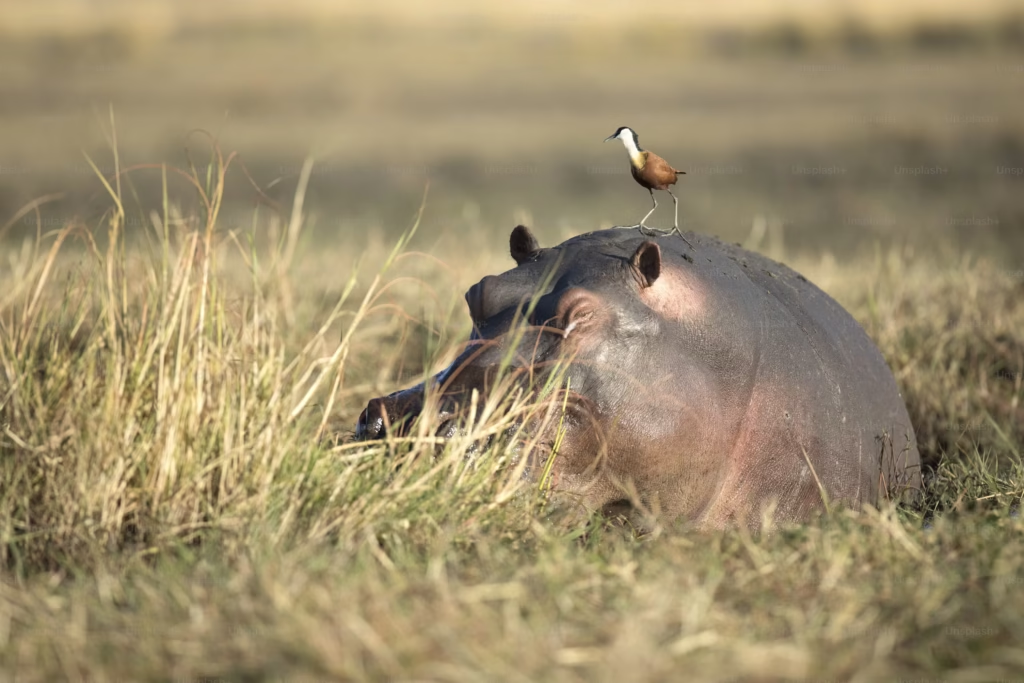
The Four Game Drive Regions of Chobe
Chobe is not a single landscape. It is four distinct ecosystems, each delivering a very different game drive experience. Choosing the right area (or combining two) is the most important planning decision you will make.
1. Chobe Riverfront (Serondela)
The Riverfront in the park’s far north-east is the most visited and most accessible part of Chobe, starting just a few minutes from Kasane at Sedudu Gate. A network of tracks follows the floodplains and woodland of the Chobe River for around 50 km westwards to Ngoma.
- Why go: Arguably the highest density of elephants in Africa during the dry season, plus huge buffalo herds, lion prides, leopard and an exceptional variety of antelope.
- Special species: Puku (rare in Botswana), Chobe bushbuck, sable and roan antelope, red lechwe and waterbuck.
- Highlights: Sunset over the floodplains with Namibia across the river, elephants swimming between Sedudu Island and the mainland, and the old Serondela picnic area.
- Best for: Short trips, day visitors from Victoria Falls, first-time safari-goers and photographers.
2. Savuti
About 170 km south-west of Kasane, Savuti is wild, remote and legendary for predator action. The region centres on the Savuti Channel and Marsh, a waterway that famously flows and dries up unpredictably over decades, along with the rocky Gubatsa Hills and their ancient San rock paintings.
- Why go: Some of Africa’s most celebrated lion prides (made famous for hunting elephants), spotted hyena clans, leopard, cheetah and wild dog.
- Migration: A zebra migration passes through Savuti between roughly November and April, following the rains between the Linyanti and the Mababe Depression.
- Terrain: Deep Kalahari sand tracks – a serious 4×4 challenge for self-drivers.
- Best for: Predator enthusiasts, return visitors and adventurous self-drive campers.
3. Linyanti
In the far north-west, the Linyanti Marshes and river create a lush wetland bordering Namibia. Much of the best Linyanti game viewing takes place in private concessions adjoining the national park, where exclusive camps limit vehicle numbers.
- Why go: Large dry-season elephant concentrations, buffalo, lion, leopard and one of Botswana’s strongest populations of African wild dog.
- Bonus: Private concessions can offer activities not permitted inside the national park, such as night drives and guided walks.
- Best for: Exclusive, low-density safaris and travellers seeking rare species.
4. Nogatsaa and Ngwezumba
Between the Riverfront and Savuti lies the dry, wooded interior around Nogatsaa and the Ngwezumba River. Clay pans hold water after the rains, drawing elephant, buffalo, eland, roan and sable. Few visitors make it here, so you may have sightings entirely to yourself.
- Why go: Solitude, untouched mopane woodland and excellent wet-season (green season) game viewing around the pans.
- Best for: Experienced self-drivers on the Kasane–Savuti transit route.
| Region | Distance from Kasane | Best Season | Signature Sightings | Access |
| Riverfront | 5–50 km | May – Oct | Elephant herds, buffalo, puku, lion | Easy; any 4×4 |
| Savuti | ~170 km | Year-round; zebra Nov – Apr | Lion prides, hyena, cheetah | Deep sand; high-clearance 4×4 |
| Linyanti | ~250 km | Jun – Oct | Wild dog, elephant, leopard | Remote; fly-in or tough 4×4 |
| Nogatsaa | ~70 km | Dec – Apr (pans full) | Roan, sable, eland, elephant | Remote; 4×4 only |
Types of Game Drives in Chobe
Morning Game Drive
Departing at or just before gate opening (around 06:00), the morning drive usually lasts three to four hours. The air is cool, light is soft, and predators are most active. Many lodges serve coffee and rusks before departure and stop for a bush breakfast or tea break mid-morning.
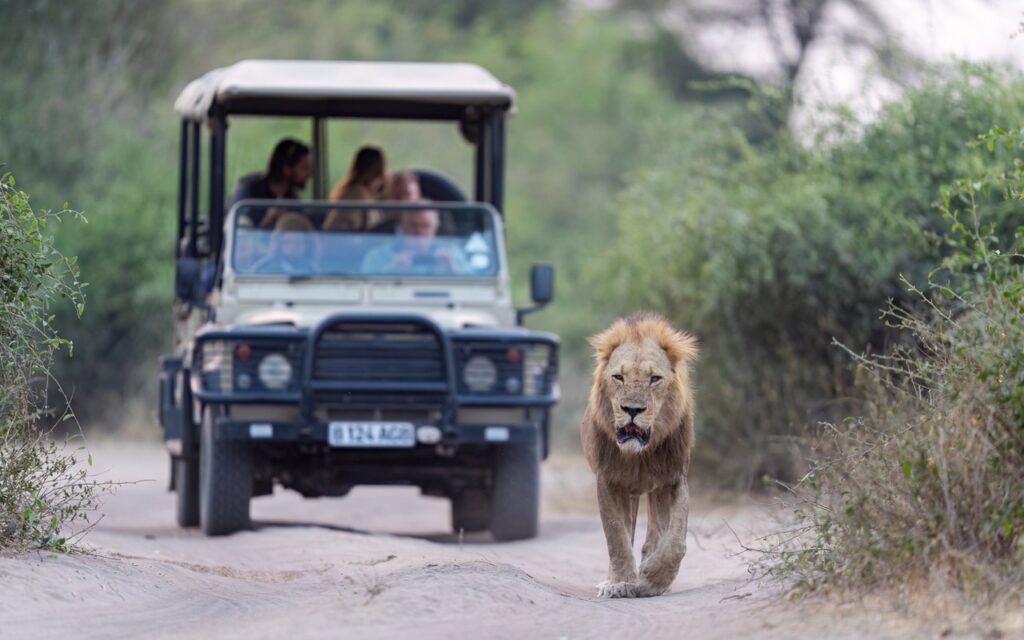
Afternoon and Sunset Game Drive
Afternoon drives typically start between 15:00 and 15:30 and return before the gates close. This is prime time on the Riverfront, when elephants, buffalo and antelope come down to drink. A sundowner stop with the river glowing orange is a highlight of any Chobe safari.
Full-Day Game Drive
A full-day drive with a packed lunch lets you travel further west along the river towards Ngoma, or explore Savuti’s marsh and hills without returning to camp. It is ideal for serious photographers and those on a limited schedule.
Combination Game Drive and Boat Cruise
The classic Chobe day pairs a morning game drive with an afternoon boat cruise on the Chobe River. Seeing elephants from land in the morning and from water level in the afternoon offers two completely different perspectives on the same wildlife.
Night Drives
Night drives are not permitted inside Chobe National Park, which closes at sunset. However, private concessions bordering the park, especially in the Linyanti region and the Chobe Enclave, may offer night drives where you can search for leopard, genet, civet, aardwolf and bushbabies with a spotlight.
Self-Drive Game Drive
Botswana is one of Africa’s top self-drive safari destinations. With a properly equipped 4×4 (often fitted with a rooftop tent), you can explore at your own pace, stop as long as you like at a sighting, and camp inside the park at Ihaha, Savuti or Linyanti.
| Option | Duration | Indicative Price (2026) | Best For |
| Shared guided drive (from Kasane) | 3 – 4 hours | US$50 – 90 per person + park fees | Budget travellers, short stays |
| Private guided drive | 3 – 4 hours | US$250 – 450 per vehicle | Photographers, families, couples |
| Day trip from Victoria Falls | Full day | US$180 – 280 per person | Travellers based in Vic Falls |
| Lodge-inclusive drives | 2 drives daily | Included in full-board rates | Comfort and convenience |
| Self-drive 4×4 hire | Per day | US$110 – 220 per day (vehicle) | Independent adventurers |
Prices are indicative and vary by season, operator and group size. Park and vehicle fees are usually charged separately for shared and self-drive options.
Wildlife You Can See on a Chobe Game Drive
Chobe offers outstanding wildlife diversity. Four of the Big Five are present – elephant, buffalo, lion and leopard. Rhino are not normally seen in Chobe, though they can be tracked elsewhere in Botswana.
| Animal Group | Species | Where & When |
| Elephants | African savanna elephant | Everywhere; peak Riverfront and Linyanti, Jul – Oct |
| Big cats | Lion, leopard, cheetah | Lions on Riverfront and Savuti; cheetah mostly Savuti |
| Wild dogs | African wild (painted) dog | Linyanti and Savuti; denning season Jun – Aug |
| Large herbivores | Buffalo, giraffe, Burchell’s zebra, hippo | Buffalo herds on floodplains; zebra migration in Savuti Nov – Apr |
| Antelope | Puku, sable, roan, red lechwe, kudu, eland, waterbuck, impala | Puku and lechwe on Riverfront; roan and sable in Nogatsaa |
| Other predators | Spotted hyena, side-striped jackal, honey badger | Hyena clans especially in Savuti |
| Reptiles | Nile crocodile, monitor lizard | Riverbanks and channels |
| Birds | 450+ species: African fish eagle, carmine bee-eater, saddle-billed stork, kori bustard | Best Nov – Mar when migrants arrive |
| Guide’s Tip: Chobe’s Elephant Spectacle
As inland pans dry up after May, elephants migrate north to the permanent water of the Chobe and Linyanti rivers. By September and October, the Riverfront can host thousands of elephants daily. Ask your guide to park at a quiet crossing point in the late afternoon and simply wait – the herds will come to you. |
A Typical Day of Game Drives in Chobe
| Time | Activity |
| 05:30 | Wake-up call; coffee, tea and light breakfast |
| 06:00 | Morning game drive departs as the gates open |
| 08:30 | Bush coffee stop at a scenic viewpoint |
| 10:00 – 10:30 | Return to camp for brunch |
| 11:00 – 15:00 | Rest, swim, or watch wildlife from the lodge deck |
| 15:00 – 15:30 | High tea, then afternoon game drive or boat cruise |
| 17:30 | Sundowner drinks overlooking the floodplain |
| 18:30 | Return before gate closing; dinner around the fire |
Best Time for a Game Drive in Chobe National Park
Chobe can be visited year-round, but game viewing changes dramatically with the seasons.
| Season | Months | Game Viewing | Conditions |
| Early dry | May – Jul | Very good; animals start concentrating at the river | Cool, dry; chilly mornings (5–10°C) |
| Peak dry | Aug – Oct | Excellent; huge elephant and buffalo herds | Hot (up to 40°C in Oct), dusty, busiest months |
| Early rains | Nov – Dec | Good; zebra migration in Savuti, newborn antelope | Hot, humid, afternoon storms |
| Green season | Jan – Apr | Fair on Riverfront; superb birding | Lush scenery, lower prices; some Savuti tracks difficult |
Our recommendation: For classic big-game drives, travel between June and October. For birding, photography of green landscapes, lower rates and the Savuti zebra migration, consider November to April.
Park Gates, Opening Hours and 2026 Fees
Main Entry Gates
- Sedudu Gate: Main entrance to the Riverfront, about 5 km from central Kasane. Park fees and Ihaha campsite bookings are handled here.
- Ngoma Gate: Western end of the Riverfront near the Namibian border; useful when arriving from the Caprivi Strip.
- Ghoha Gate: Northern entrance to the Savuti region on the route from Kasane via Kachikau.
- Mababe Gate: Southern entrance to Savuti, used when driving north from Moremi Game Reserve and Maun.
Opening Hours
Gate times follow daylight hours and are typically around 06:00 to 18:30 from April to September and 05:30 to 19:00 from October to March. Rangers enforce closing times strictly, so plan to be back at the gate or your campsite well before sunset.
2026 Park Fees
Botswana’s Department of Wildlife and National Parks (DWNP) revised its fees in 2026. Reported rates for international visitors rose to BWP 270 per adult per day at Chobe and Moremi from April 2026, up from the long-standing BWP 120. Fees are charged per calendar day, so both your entry and exit days count.
| Category | Daily Fee (approx.) | Notes |
| International adult visitor | BWP 270 (≈ US$20) | Effective April 2026; previously BWP 120 |
| SADC resident | Lower reduced rate | Proof of residency required |
| Botswana citizen | Lowest rate | National ID required |
| Foreign-registered vehicle | Approx. BWP 50 – 115+ | Varies by vehicle class and registration |
| Botswana-registered vehicle | Lower rate | Most rental 4x4s are Botswana-registered |
| Public campsites | Separate nightly fee | Paid to the private campsite operator |
| Important: Confirm Fees Before You Travel
Park fees in Botswana change periodically and are sometimes reported inconsistently online. Always confirm current rates with the DWNP or your safari operator before travelling. Guided tours and lodge packages normally include park fees – check your quote. |
Self-Drive Game Drives in Chobe: Essential Tips
Self-driving Chobe is one of Africa’s great road-trip adventures, but it requires preparation.
- Hire a proper 4×4. A high-clearance vehicle with low-range gearing (Toyota Land Cruiser, Hilux or similar) is essential. Two-wheel-drive cars and soft SUVs are not suitable.
- Book campsites in advance. Ihaha (Riverfront), Savuti and Linyanti campsites are privately managed and fill up months ahead in peak season. You may be refused entry for an overnight stay without a confirmed booking.
- Deflate your tyres in deep sand. Dropping tyre pressure to around 1.2–1.6 bar makes the Savuti sand tracks far easier. Reinflate before returning to tar.
- Carry enough fuel, water and food. There is no fuel or shop inside the park. Fill up in Kasane or Maun and carry extra jerrycans for the Savuti–Linyanti route.
- Download offline maps. Tracks4Africa or similar GPS maps are invaluable; mobile signal is patchy away from Kasane.
- Respect speed limits. The limit is 40 km/h on park roads. Slow driving improves sightings and safety.
- Check Riverfront rules on arrival. Access arrangements and loop rules on the busy Riverfront are occasionally adjusted. Ask the rangers at Sedudu Gate for the latest guidance.
- Never drive at night. Night driving is prohibited in the park, and elephants are extremely hard to see on dark roads outside it.
Game Drive Etiquette and Safety Rules
- Stay inside the vehicle at all times unless at a designated picnic or camping area.
- Keep a respectful distance from wildlife – especially elephant breeding herds with calves. If an elephant flaps its ears, shakes its head or mock charges, back away slowly.
- Do not drive off designated roads. Off-road driving is illegal in the national park and damages fragile habitat.
- Speak quietly and avoid sudden movements at sightings. Turn off the engine when it is safe to do so.
- Never feed animals or leave litter. Baboons and monkeys can become aggressive around food.
- Give way to other vehicles at busy sightings and limit your time so others can enjoy the view.
- Take malaria precautions – Chobe is a malaria area. Consult a travel health clinic before departure.
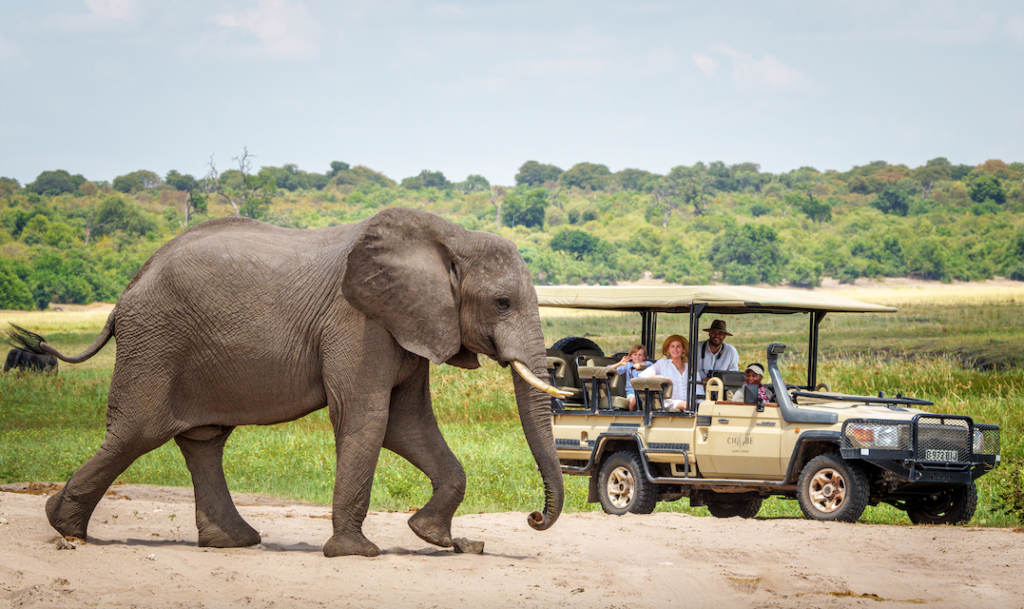
What to Pack for a Chobe Game Drive
| Item | Why You Need It |
| Neutral-coloured clothing (khaki, olive, beige) | Blends with the bush; avoid bright white and dark blue (attracts tsetse-type flies) |
| Warm fleece and windbreaker | Open vehicles are cold on winter mornings (May – Aug) |
| Wide-brim hat and sunglasses | Strong sun, especially Sep – Nov |
| Binoculars (8×42 or 10×42) | Essential for birding and distant predators |
| Camera with 100–400 mm zoom | Ideal focal range for Chobe wildlife |
| Spare batteries and memory cards | No charging inside a vehicle on most drives |
| Sunscreen and insect repellent | Sun protection and malaria prevention |
| Dust cover or buff | Dusty tracks in the dry season |
| Reusable water bottle | Stay hydrated on long, hot drives |
| Photography Tip
Shoot in the first and last two hours of daylight. On the Riverfront, position yourself so the sun is behind you in the afternoon for warm, front-lit elephant portraits with the river as a backdrop. A beanbag on the vehicle rail is steadier than a tripod. |
Chobe Game Drive Itineraries
Option 1: 1-Day Chobe Game Drive from Victoria Falls
| Time | Activity |
| 07:00 | Pick-up from your Victoria Falls hotel (Zimbabwe or Zambia) |
| 08:30 | Kazungula border formalities and transfer to Kasane |
| 09:00 – 12:00 | Morning Chobe River boat cruise |
| 12:00 – 13:00 | Lunch at a Kasane lodge |
| 13:30 – 16:30 | Afternoon game drive along the Riverfront |
| 17:00 | Return to the border and transfer back to Victoria Falls |
Option 2: 3-Day Chobe Riverfront Safari
- Day 1: Arrive at Kasane Airport; transfer to your lodge. Afternoon boat cruise and sundowners on the river.
- Day 2: Morning and afternoon game drives along the Riverfront, focusing on lion, leopard and elephant herds. Optional full-day drive to Serondela and beyond.
- Day 3: Final early-morning game drive, then transfer to Kasane Airport or onward to Victoria Falls.
Option 3: 5-Day Self-Drive Chobe Riverfront and Savuti
| Day | Route & Activities | Overnight |
| Day 1 | Collect 4×4 in Kasane; stock up; afternoon Riverfront game drive | Ihaha campsite or Kasane lodge |
| Day 2 | Full-day Riverfront game drive west towards Ngoma | Ihaha campsite |
| Day 3 | Drive via Ngoma and Kachikau to Ghoha Gate; afternoon drive in Savuti | Savuti campsite |
| Day 4 | Full day of game drives: Savuti Marsh, Gubatsa Hills rock art, Leopard Rock | Savuti campsite |
| Day 5 | Morning drive, then exit via Mababe Gate towards Moremi/Maun or return to Kasane | Onward |
Where to Stay for the Best Chobe Game Drives
Luxury
- Chobe Game Lodge: The only permanent lodge inside the park on the Riverfront, known for its silent electric game drive vehicles and boats and an all-female guiding team.
- Savute Elephant Lodge (Belmond): Elegant tented suites overlooking the Savuti Channel with excellent predator viewing.
- Linyanti private concession camps: Exclusive camps offering night drives, walking safaris and very low vehicle density.
Mid-Range
- Chobe Bakwena Lodge and Chobe Safari Lodge (Kasane): Comfortable riverside lodges a short drive from Sedudu Gate, with shared game drives and cruises.
- Savute Safari Lodge: Thatched chalets in the heart of Savuti on a full-board, activities-included basis.
Budget and Camping
- Ihaha Campsite: Riverside public campsite inside the park on the Riverfront.
- Savuti and Linyanti Campsites: Remote public campsites ideal for self-drive explorers.
- Kasane guesthouses and backpacker lodges: Affordable bases for booking shared game drives.
How to Book Your Chobe Game Drive with Marriott Safaris Africa
- Tell us your travel dates and style – guided lodge safari, private guided drives, or self-drive with a fully equipped 4×4.
- Receive a tailored itinerary with transparent pricing, including park fees, accommodation and activities.
- Confirm with a deposit to secure lodges and campsites, which book out early for June to October.
- Get your pre-departure pack with packing lists, border and visa information and maps.
- Enjoy your safari with our 24/7 support throughout your journey.
| Plan Your Chobe Safari Today
Combine your Chobe game drives with the Okavango Delta, Moremi, Victoria Falls or a cross-border self-drive adventure. Contact Marriott Safaris Africa for a free, no-obligation quote. Perfection Anytime. |
Frequently Asked Questions
How long is a game drive in Chobe National Park?
Most guided game drives last three to four hours. Full-day drives with a packed lunch run about eight to ten hours, within gate opening times.
What is the best time of day for a Chobe game drive?
Early morning is best for active predators, while late afternoon is best on the Riverfront when elephants and buffalo come to drink. Ideally, do both.
Can I do a self-drive game drive in Chobe?
Yes. Chobe is excellent for self-drive with a high-clearance 4×4. The Riverfront is manageable for most experienced drivers, while Savuti’s deep sand requires more 4×4 experience.
Are night game drives allowed in Chobe?
No, night drives are not permitted inside the national park. Some private concessions bordering the park, particularly in the Linyanti area, offer them.
Can I see the Big Five on a Chobe game drive?
You can see four of the Big Five – elephant, buffalo, lion and leopard. Rhinos are not normally seen in Chobe.
Is a game drive or a boat cruise better in Chobe?
They complement each other. Game drives are best for predators and exploring inland, while boat cruises offer close views of elephants swimming, hippos, crocodiles and birds. Most visitors do both.
How much does a Chobe game drive cost?
Shared game drives from Kasane typically cost around US$50–90 per person plus park fees. Private drives and lodge packages cost more; lodge rates usually include two drives a day.
Can I visit Chobe on a day trip from Victoria Falls?
Yes. Kasane is around 80 km from Victoria Falls, and day trips combining a game drive and a boat cruise are very popular.
Is Chobe safe for children?
Yes, though many lodges set minimum ages for game drives (often six years and above) and some offer private vehicles for families. Check the lodge’s child policy when booking.
Final Thoughts
A game drive in Chobe National Park is one of Africa’s definitive safari experiences. Whether you are watching elephants cross the river at sunset on the Riverfront, following a lion pride through the sands of Savuti, or searching for wild dogs in the Linyanti, Chobe rewards every traveler with unforgettable encounters. Plan around the dry season for the greatest concentrations of wildlife, combine land and water safaris, and let Marriott Safaris Africa take care of every detail so you can focus on the adventure.