Chobe National Park Entry Fees
Chobe National Park is one of the easiest big-game parks in Africa to reach and, compared with many of its neighbors, one of the more affordable to enter. Yet park fees are the line item that confuses travelers most. Rates differ depending on whether you are a Botswana citizen, a SADC resident or an international visitor; whether you self-drive or travel with a registered tour operator; what vehicle you bring; and even whether you count days or nights. On top of that, a widely reported fee increase planned for April 2026 was postponed at the last minute, so a lot of what is circulating online is now out of date or simply wrong.
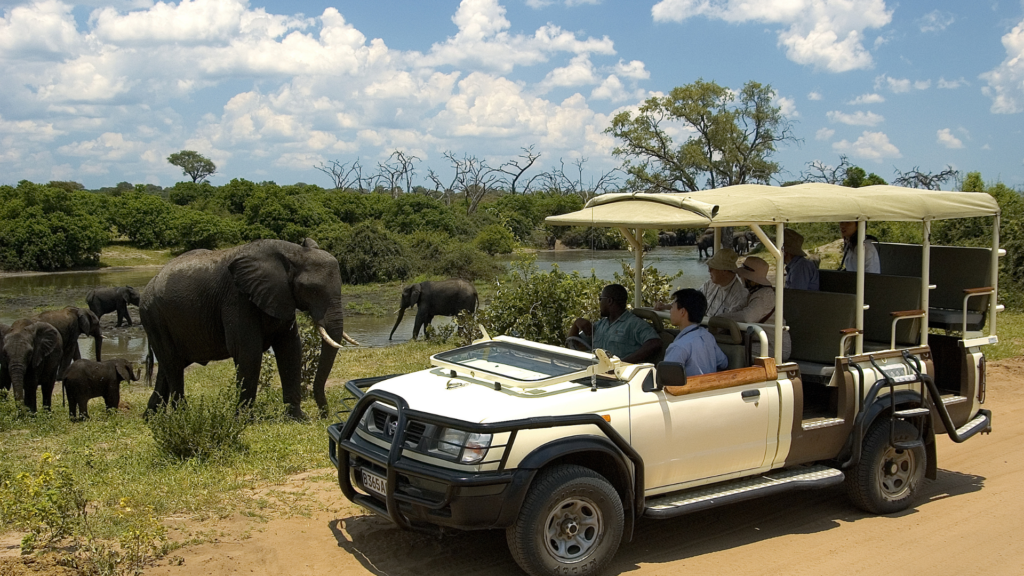
This guide sets out exactly what you will pay to enter Chobe National Park in 2026, how the fees are calculated, where and how to pay, and how much a typical day, weekend or week in the park actually costs once vehicle, camping and Botswana’s Tourism Development Levy are added.
| Quick Answer: Chobe National Park Entry Fees 2026
International (non-resident) adult: BWP 270 per person per day (about US$20). International child aged 8–17: BWP 135 per day. Children under 8 enter free. SADC and Botswana residents: BWP 205 per adult per day. Botswana citizens: BWP 30. Clients of a Botswana-registered tour operator pay reduced rates (BWP 190 for international adults). Self-drive vehicle fee: around BWP 115 per vehicle per day for a standard 4×4. Fees are charged per calendar day, including both arrival and departure days. Non-SADC visitors also pay a one-off US$30 Tourism Development Levy on entering Botswana. |
Why Chobe’s Fees Are Different
Botswana’s Department of Wildlife and National Parks (DWNP) sets all park fees. It divides protected areas into two tiers. Chobe National Park and Moremi Game Reserve form the premium Category A tier, reflecting their exceptional wildlife densities and heavy visitor demand. Botswana’s other parks and reserves, such as Nxai Pan, Makgadikgadi Pans and the Central Kalahari Game Reserve, fall into a lower-priced tier.
Mixing up these two tiers is one of the main reasons you will see different figures quoted for Chobe online. If a website lists BWP 190 as the international rate for a self-drive visitor, it is usually quoting either the lower-tier park rate or the tour-operator client rate, not the standard Chobe self-drive rate.
Chobe covers roughly 11,700 square kilometres and is made up of four distinct areas: the Chobe Riverfront near Kasane, the Savuti region, the Linyanti Marshes and the dry Nogatsaa woodlands. The same entry fee applies across the whole park, whether you spend the day on the riverfront or venture deep into Savuti.
Chobe National Park Entry Fees 2027 (Per Person, Per Day)
The rates below are the structure that has applied since April 2022 and remains in force at the time of writing. All figures are in Botswana Pula (BWP); US dollar equivalents are approximate and move with the exchange rate.
Independent and Self-Drive Visitors
| Visitor Category | Adult (18+) | Child (8–17) | Under 8 | Approx. USD (Adult) |
| International / Non-resident | BWP 270 | BWP 135 | Free | ≈ US$20 |
| SADC national / Botswana resident | BWP 205 | ≈ BWP 102.50 | Free | ≈ US$15 |
| Botswana citizen | BWP 30 | BWP 15 | Free | ≈ US$2 |
Clients of a Botswana-Registered Tour Operator
If you enter the park as a client of a licensed Botswana operator, for example on a lodge game drive, a scheduled boat cruise from Kasane, or a guided mobile safari, a reduced rate applies. In most cases the operator pays this on your behalf and includes it in the activity or package price.
| Visitor Category | Adult Rate (Per Day) | Approx. USD |
| International / Non-resident | BWP 190 | ≈ US$14 |
| SADC national / Botswana resident | BWP 145 | ≈ US$11 |
| Botswana citizen | BWP 20 | ≈ US$1.50 |
| Who Counts as What?
International visitor: anyone who is neither a Botswana citizen nor a resident of a SADC member state. This includes visitors from Uganda, Kenya, Rwanda, Europe, North America and Asia. SADC rate: citizens and residents of SADC member states such as South Africa, Namibia, Zambia, Zimbabwe, Tanzania and Mozambique. Carry your passport or residence permit as proof. Citizen rate: Botswana nationals with a valid Omang (national ID). |
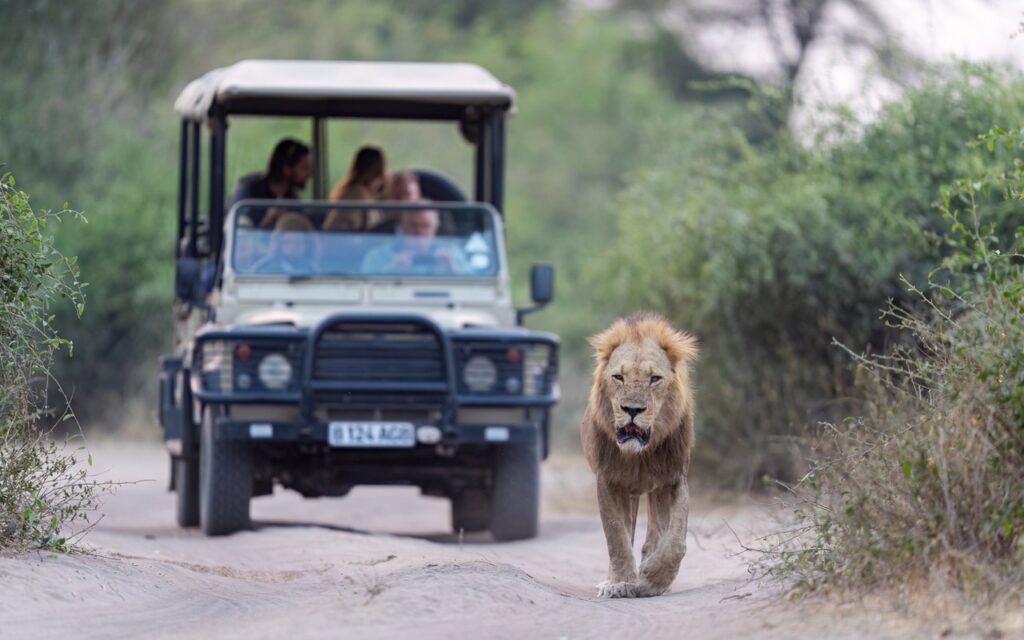
A note for East African travellers: Although Tanzania is a SADC member, Uganda, Kenya and Rwanda are not. Visitors holding those passports pay the international rate of BWP 270 per adult per day unless they hold residence in a SADC country.
Vehicle Fees for Self-Drive Visitors
Self-drive visitors pay a daily vehicle fee on top of the per-person entry fee. For a standard 4×4 or rental vehicle under 3,500 kg, the rate most commonly charged at Chobe is around BWP 115 per vehicle per day. Heavier vehicles, overland trucks and commercial safari vehicles are charged at substantially higher rates, and trailers attract their own fee.
| Vehicle Type | Typical Daily Fee at Chobe | Notes |
| Standard 4×4 / SUV under 3,500 kg | ≈ BWP 115 | Most self-drive rental vehicles fall here |
| Trailer | Additional daily fee | Charged separately from the towing vehicle |
| Overland trucks / heavy vehicles | Significantly higher | Rate depends on weight class; confirm with DWNP |
| Botswana-registered vs. foreign-registered | Rates differ | Foreign plates generally pay more; check at the gate |
Watch the departure day. Because fees are calculated per calendar day, travellers regularly report being charged vehicle fees for the day they exit the park as well. A two-night stay in Chobe can therefore mean three days of vehicle fees. Budget for this rather than being surprised at the gate.
Check your vehicle’s classification. If you are renting, confirm the registered weight of the vehicle with your rental company. A vehicle wrongly classified in a heavier category can cost you noticeably more over a multi-day trip.
How Chobe Park Fees Are Calculated
Per Calendar Day, Not Per Night
DWNP charges by calendar day. Any part of a day counts as a full day. If you enter at 3 p.m. on Monday and leave at 10 a.m. on Wednesday, you pay for Monday, Tuesday and Wednesday. This shift away from per-night billing catches out many travellers who budget using hotel-style logic.
No Free Re-Entry on Different Days
Each day you are in the park requires a valid permit for that day. If you stay outside the park in Kasane and drive in each morning, you buy a new day permit each day.
Free Transit on the Main Road
The tarred A33 road between Kasane and Ngoma passes through the park. Driving straight through on this public road to reach Namibia or Kachikau does not require a park permit. Leaving the tar road to game-drive on park tracks does.
Educational Discounts
Botswana-based educational institutions visiting for educational purposes pay 50% of the citizen rate, while non-Botswana educational institutions pay 50% of the resident rate. Arrange this in advance with DWNP, with official documentation from the institution.
The Postponed 2026 Fee Increase: What Happened
In late 2025 and early 2026, reports circulated that Botswana would sharply raise park and tourism fees from 1 April 2026 as part of a government revenue directive. Several operators notified clients of higher rates, and unofficial figures well above the current BWP 270 were shared on travel forums.
However, on 31 March 2026, the day before it was due to take effect, the increase was officially postponed following consultation with the tourism industry. No new implementation date has been announced. Travellers and operators reporting on payments made during 2026 confirm that the existing rates of BWP 270 per international adult and around BWP 115 per vehicle at Chobe are still being charged.
| What This Means for Your Booking
Budget using the current rates in this guide, but keep a contingency of 20–30% on park fees for trips in late 2026 and 2027. Some websites still list the proposed April 2026 rates as if they were in force. Treat any Chobe international rate far above BWP 270 with caution unless it comes directly from DWNP. If you pre-pay park fees through an operator, ask whether your quote is fixed or subject to adjustment if new rates are introduced before you travel. |
Camping Fees Inside Chobe National Park
Camping fees are entirely separate from park entry and vehicle fees. Most public campsites inside Chobe are DWNP-owned but run by private concessionaires, and they must be booked in advance directly with the operator. You will not be allowed to camp inside the park without a confirmed reservation.
| Campsite | Area | Indicative International Rate | Booking |
| Ihaha | Chobe Riverfront | ≈ US$50 per person per night | Private concessionaire |
| Savuti | Savuti | ≈ US$50–70 per person per night | SKL Group of Camps |
| Linyanti | Linyanti Marshes | ≈ US$50–70 per person per night | SKL Group of Camps |
Rates for Botswana citizens, residents and SADC nationals are lower and usually quoted in Pula. Campsite rates generally include 12% government tax but never include park entry or vehicle fees. Book Savuti and Linyanti months ahead for the dry season (June to October), when sites fill fast.
Chobe River Boat Cruise Fees
The Chobe Riverfront section of the park includes the river itself, so a boat cruise on the Chobe River is technically a visit to the national park and attracts a park fee. Most travellers never deal with this directly: scheduled sunset and morning cruises from Kasane lodges and operators normally include the park fee at the tour-operator client rate (BWP 190 for international adults) within the cruise price.
- Shared lodge cruises: park fee usually included; confirm when booking.
- Private boat charters: park fee may be quoted separately per person.
- Houseboats on the Chobe/Zambezi: fees vary by itinerary and whether you cruise in Botswanan or Namibian waters.
- Bringing your own boat: requires separate registration, permits and boat fees from DWNP and Botswana’s boat registration authorities.
Other Costs That Come With Entering Chobe
Botswana Tourism Development Levy (TDL)
Since June 2017, all visitors to Botswana except citizens and residents of SADC member states pay a Tourism Development Levy of US$30 per person on arrival. It is paid at the airport or land border (Kazungula, Ngoma, Kasane Airport, etc.) by card or US dollars cash. The receipt is linked to your passport, is valid for 30 days and covers multiple entries within that period, which is useful if you are combining Chobe with Victoria Falls.
Visa Fees
Many nationalities can enter Botswana visa-free for tourism, while others need a visa in advance. Requirements change, so check Botswana’s official immigration guidance for your passport well before travel.
Kazungula Bridge and Border Charges
If you are self-driving in from Zambia or Zimbabwe, expect road permits, third-party insurance and cross-border charges at the border, plus bridge tolls on the Kazungula Bridge. These are not park fees, but they affect the true cost of a Chobe self-drive.
Where and How to Pay Chobe Park Fees
| Entry Point | Location | Best For |
| Sedudu Gate | Just west of Kasane | Chobe Riverfront, day visits from Kasane |
| Ngoma Gate | Western end, near the Namibia border | Arrivals from Namibia / Caprivi Strip |
| Ghoha Hills Gate | Northern approach to Savuti | Self-drives heading to Savuti |
| Mababe Gate | Southern boundary | Travel between Moremi and Savuti |
| DWNP offices | Kasane and Maun | Pre-paying fees before your trip |
- Payment methods: card is accepted at major gates such as Sedudu, and cash in Pula is widely accepted. Card machines can fail in remote areas, so always carry enough cash as a backup, especially for Savuti and Linyanti.
- Pre-paying: for multi-day trips, paying in advance at a DWNP office in Kasane or Maun saves time and avoids problems at remote gates.
- Keep your receipt: rangers may ask to see your permit inside the park, and you need it at exit.
- Gate times: gates open around sunrise and close around sunset (roughly 6:00 a.m. to 6:30 p.m. in summer, slightly shorter in winter). You must be out of the park or at your booked campsite before closing.
Sample Costs: What a Chobe Visit Actually Costs
The examples below use current rates and approximate exchange values. They show park-related costs only; accommodation, fuel, food and vehicle hire are extra.
Example 1: Two International Adults, One-Day Self-Drive from Kasane
| Item | Calculation | Total |
| Park entry | 2 adults × BWP 270 × 1 day | BWP 540 |
| Vehicle fee | 1 vehicle × BWP 115 × 1 day | BWP 115 |
| Total park cost | BWP 655 (≈ US$48) |
Example 2: Two International Adults, Two Nights at Ihaha Campsite
| Item | Calculation | Total |
| Park entry | 2 adults × BWP 270 × 3 calendar days | BWP 1,620 |
| Vehicle fee | 1 vehicle × BWP 115 × 3 days | BWP 345 |
| Camping | 2 people × ≈ US$50 × 2 nights | ≈ US$200 |
| Total | ≈ BWP 1,965 + US$200 (≈ US$345) |
Example 3: Family of Four (Two Adults, Children Aged 12 and 6), One Day
| Item | Calculation | Total |
| Adults | 2 × BWP 270 | BWP 540 |
| Child aged 12 | 1 × BWP 135 | BWP 135 |
| Child aged 6 | Under 8 | Free |
| Vehicle fee | 1 × BWP 115 | BWP 115 |
| Total | BWP 790 (≈ US$58) |
Example 4: Day Trip from Victoria Falls
Guided day trips from Victoria Falls (Zimbabwe) or Livingstone (Zambia) typically bundle the morning boat cruise, lunch, afternoon game drive, transfers and park fees into one price, commonly in the region of US$150–250 per person. Remember the separate US$30 TDL if you are not a SADC resident, plus any visa fees for re-entering Zimbabwe or Zambia unless you hold a KAZA Univisa.
Self-Drive vs. Guided Safari: Which Is Cheaper on Fees?
| Factor | Self-Drive | Guided / Tour Operator |
| International adult entry | BWP 270 per day | BWP 190 per day (usually included) |
| Vehicle fee | ≈ BWP 115 per day, paid by you | Covered by operator |
| Payment admin | You pay at gate or DWNP office | Handled by operator |
| Flexibility | Full control of route and timing | Set schedule, expert guiding |
| Off-road and night drives | Not permitted | Night drives only in private concessions |
On park fees alone, joining an operator’s activity is cheaper per person, and for couples or solo travellers the saving on vehicle fees adds up. Self-drive becomes better value for groups of three or four sharing one vehicle over several days, especially if you camp.
Money-Saving Tips for Chobe Park Fees
- Time your entry and exit. Because fees are charged per calendar day, enter early and leave late on the same day rather than spreading a short visit across two dates.
- Use the free transit road. If you are just passing between Kasane and Namibia, stay on the tar and pay nothing.
- Share a vehicle. The vehicle fee is per vehicle, so four people in one car pay a quarter of the vehicle cost each.
- Book cruises and drives through Kasane operators. You benefit from the lower tour-operator client rate, which is normally built into the price.
- Stay outside the park. Kasane has accommodation for every budget, and you only pay park fees on days you actually go in.
- Plan Victoria Falls and Chobe within 30 days. One TDL payment covers multiple entries to Botswana within its validity period.
Chobe National Park Rules Linked to Your Permit
- Stay on designated roads and tracks; off-road driving is prohibited.
- Do not leave your vehicle except at designated points or your campsite.
- Observe gate times; driving in the park after closing is not allowed for self-drivers.
- Keep to speed limits (generally 40 km/h on park roads).
- Do not feed animals or leave food and rubbish accessible in camps.
- Carry your permit at all times. Breaking park rules can result in significant fines or removal from the park.
Frequently Asked Questions
How much is the Chobe National Park entry fee in 2026?
International adults pay BWP 270 (about US$20) per person per day when visiting independently, and BWP 190 when entering as clients of a Botswana-registered tour operator. Children aged 8–17 pay half, and children under 8 enter free.
Did Botswana increase park fees in April 2026?
No. A major increase was scheduled for 1 April 2026 but was officially postponed on 31 March 2026. The 2022 rate structure is still being charged, and no new date has been announced.
Are park fees per night or per day?
Per calendar day. You pay for every date you are in the park, including your arrival and departure days.
Can I pay Chobe park fees by card?
Yes, at major gates such as Sedudu near Kasane and at DWNP offices. Carry Pula cash as a backup, especially for remote gates in Savuti and Linyanti.
Is the park fee included in a Chobe River boat cruise?
Usually yes for shared cruises booked through Kasane lodges and operators, at the tour-operator client rate. Always confirm when booking, particularly for private charters.
Do I need to pay to drive through Chobe on the main road?
No. The tarred road between Kasane and Ngoma is a public transit route and is free. You only need a permit if you leave the main road to explore the park.
Do East African visitors pay SADC rates?
Only Tanzanian citizens and residents of other SADC countries qualify. Visitors from Uganda, Kenya and Rwanda pay the international rate unless they hold residence in a SADC country.
What is the US$30 Botswana levy?
It is the Tourism Development Levy, payable once on arrival by non-SADC visitors. It is valid for 30 days and covers multiple entries. It is separate from Chobe park fees.
Are campsite fees included in the park fee?
No. Camping is booked and paid separately with the campsite operator, while park entry and vehicle fees are paid to DWNP.
Plan Your Chobe Safari With Confidence
Chobe’s entry fees remain among the most reasonable for a park of its quality in southern Africa, especially for travellers who join operator-run boat cruises and game drives. The key is to understand the per-day billing, budget for vehicle and camping fees if you self-drive, and keep an eye on the postponed fee revision that could still take effect later.
Marriott Safaris Africa can build a Chobe itinerary with all park fees, cruises, game drives and transfers included in one transparent quote, whether you are flying into Kasane, combining Chobe with Victoria Falls, or self-driving onward to Moremi and the Okavango Delta.
| Important Disclaimer
Park fees are set by Botswana’s Department of Wildlife and National Parks and can change with little notice. Figures in this guide reflect rates being charged as of October 2026. US dollar values are approximate. Always confirm current rates with DWNP or your safari operator before travelling. |