Serengeti National Park Entry Fees 2027/28
The complete guide to conservation fees, concession and camping fees, vehicle charges, Ngorongoro transit costs and how to pay — for safari travellers and self-drivers
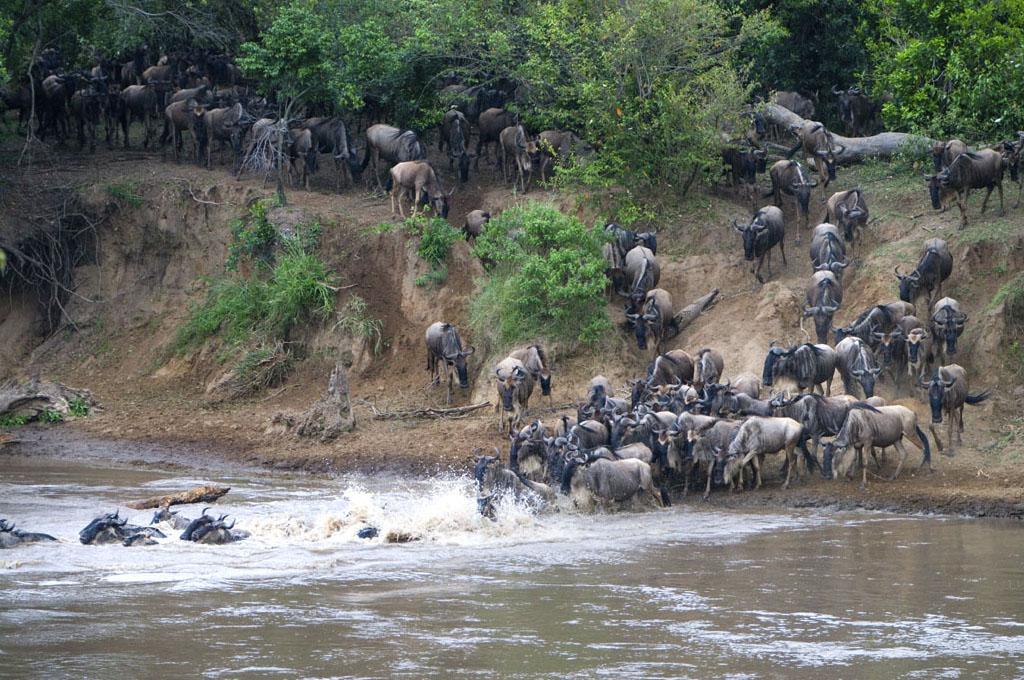
The Serengeti is Tanzania’s most famous national park, home of the Great Wildebeest Migration and some of the highest predator densities on the continent. It is also one of the most expensive parks in East Africa to enter. Before you budget for lodges, flights or a 4×4 rental, you need a clear picture of what the Tanzania National Parks Authority (TANAPA) will charge you at the gate.
This guide breaks down every Serengeti National Park entry fee for the 2027/28 fee year (1 July 2027 – 30 June 2028): who pays what, how the 24-hour rule works, what you pay to sleep inside the park, what your vehicle costs, the hidden Ngorongoro transit charge, and worked examples so you can estimate your total before you book.
| Quick Answer: How Much Is the Serengeti Entry Fee?
Non-resident adult (16+): US$82.60 per person per 24 hours (high season), including 18% VAT Child (5–15 years): US$23.60 per person per 24 hours Children under 5: Free Overnight concession fee (lodges & camps): about US$70.80 per adult per night, on top of the entry fee Rule of thumb: budget roughly US$150–155 per adult per day in park fees if you sleep inside the park |
Who Sets and Collects Serengeti Park Fees?
Serengeti National Park is managed by TANAPA (Tanzania National Parks Authority), the government body responsible for Tanzania’s national parks. TANAPA publishes a tariff schedule that usually runs on the government fiscal year, from 1 July to 30 June, and reviews it around July each year.
Do not confuse TANAPA with the Ngorongoro Conservation Area Authority (NCAA). The Ngorongoro Crater and its surrounding highlands are not part of the national park system, so the NCAA charges its own separate fees. Because the main road from Arusha to the Serengeti runs through the Ngorongoro Conservation Area, most visitors end up paying both — more on this below.
All TANAPA fees in this guide are quoted in US dollars including 18% VAT, which is how they are charged at the gate. Some websites list the older pre-VAT figures (for example US$70 instead of US$82.60), which is why you will see different numbers online.
Serengeti Conservation (Entry) Fees by Visitor Category
The conservation fee is the core entry fee. It is charged per person, per 24-hour period, starting from the time you pass through the gate. It is not a “per calendar day” charge — understanding this distinction can save you money (see the tips section)..
Non-Resident Foreign Visitors
| Visitor | High Season (16 May – 14 Mar) | Low Season (15 Mar – 15 May) |
| Adult (16 years and above) | US$82.60 | US$70.80 |
| Child (5–15 years) | US$23.60 | US$23.60 |
| Child (under 5 years) | Free | Free |
The Serengeti is one of the few Tanzanian parks with a lower low-season rate. The low-season window coincides with the long rains, when roads can be muddy but the southern plains are green and crowds are thin.
Tanzania Residents and Expatriates
Foreigners holding a valid Tanzanian residence permit pay discounted resident rates. These are significantly lower than non-resident fees, but you must show your residence permit at the gate.
| Visitor | High Season (approx.) | Low Season (approx.) |
| Resident adult (16+) | US$41.30 | US$35.40 |
| Resident child (5–15) | US$11.80 | US$11.80 |
| Child under 5 | Free | Free |
East African Community Citizens
Citizens of Tanzania and other East African Community countries — including Uganda, Kenya, Rwanda and Burundi — pay in Tanzanian shillings at heavily subsidised rates. A valid national ID or passport is required.
| Visitor | Fee per 24 Hours (approx.) |
| EAC citizen adult (16+) | TSH 11,800 |
| EAC citizen child (5–15) | TSH 2,360 |
| Child under 5 | Free |
| Good News for Ugandan, Kenyan and Rwandan Travellers
If you are an EAC citizen driving from Kampala, Nairobi or Kigali, the Serengeti costs a fraction of what international visitors pay. Carry your national ID or passport — without it you will be charged the non-resident rate. |
Concession Fees and Camping Fees (Overnight Charges)
If you spend the night inside Serengeti National Park, you pay an overnight fee in addition to the daily conservation fee. Which fee applies depends on where you sleep.
Lodges and Tented Camps — Concession Fee
Every guest staying at a lodge or permanent/seasonal tented camp inside the park boundary pays a concession fee per night. Most lodges add it to your bill or your tour operator includes it in your safari quote. Always check whether a lodge rate is quoted “inclusive” or “exclusive” of concession fees.
Public and Special Campsites — Camping Fee
Self-drive and budget travellers camping at TANAPA campsites pay a camping fee instead of a concession fee. Public campsites (such as those around Seronera and Lobo) have basic shared facilities; special campsites are private, unfenced sites booked for exclusive use.
| Accommodation Type | Adult per Night | Child (5–15) per Night |
| Lodge / tented camp (concession fee) | US$70.80 | approx. US$11.80 |
| Special campsite | approx. US$59.00 | approx. US$11.80 |
| Public campsite | approx. US$35.40 | approx. US$5.90 |
Private conservancies and concessions bordering the park (for example the Grumeti, Ikorongo and Maswa areas, or northern concessions around Lamai) may charge their own conservancy fees on top of these figures. Ask your lodge directly.
Vehicle Entry Fees
Every vehicle entering the Serengeti pays a vehicle fee, calculated by registration country and vehicle weight. This matters a great deal for self-drive travellers, especially those bringing a vehicle across the border from Uganda or Kenya.
| Vehicle Category | Approximate Fee |
| Tanzania-registered, up to 2,000 kg (e.g. RAV4, Suzuki) | TSH 23,600 per day |
| Tanzania-registered, 2,001–3,000 kg (e.g. Land Cruiser) | TSH 41,300 per day |
| Foreign-registered, up to 2,000 kg | around US$40 (plus VAT) per entry |
| Foreign-registered, 2,001–3,000 kg (most safari 4x4s) | around US$150 (plus VAT) per entry |
| Self-Drive Tip: Foreign Plates Cost More
A Ugandan- or Kenyan-registered Land Cruiser pays a far higher vehicle fee than a Tanzanian-registered one. If you are doing a one-way rental from Uganda into Tanzania, factor this charge into your budget — and confirm at the gate whether it is applied per entry or per day, especially if you plan to exit and re-enter the park. |
The Ngorongoro Transit Fee: The Cost Many People Miss
If you drive to the Serengeti from Arusha, Karatu or Lake Manyara, you will pass through the Ngorongoro Conservation Area before reaching Naabi Hill Gate. The NCAA charges its own conservation fee even if you are only transiting, and you will usually pay it again on the way back.
| NCAA Charge | Approximate Fee (incl. VAT) |
| Conservation fee — non-resident adult (16+), per 24 hours | US$70.80 |
| Conservation fee — child (5–15), per 24 hours | US$23.60 |
| Crater service fee (only if you descend into the crater) | US$295 per vehicle per descent |
| NCAA vehicle fee | Charged separately; varies by vehicle registration |
You can avoid the Ngorongoro transit cost entirely by entering the Serengeti from the west via Ndabaka Gate (from Mwanza and Lake Victoria) or by flying into one of the park’s airstrips. This is particularly relevant for self-drivers arriving from Uganda via the Mutukula border.
Optional Activity Fees Inside the Serengeti
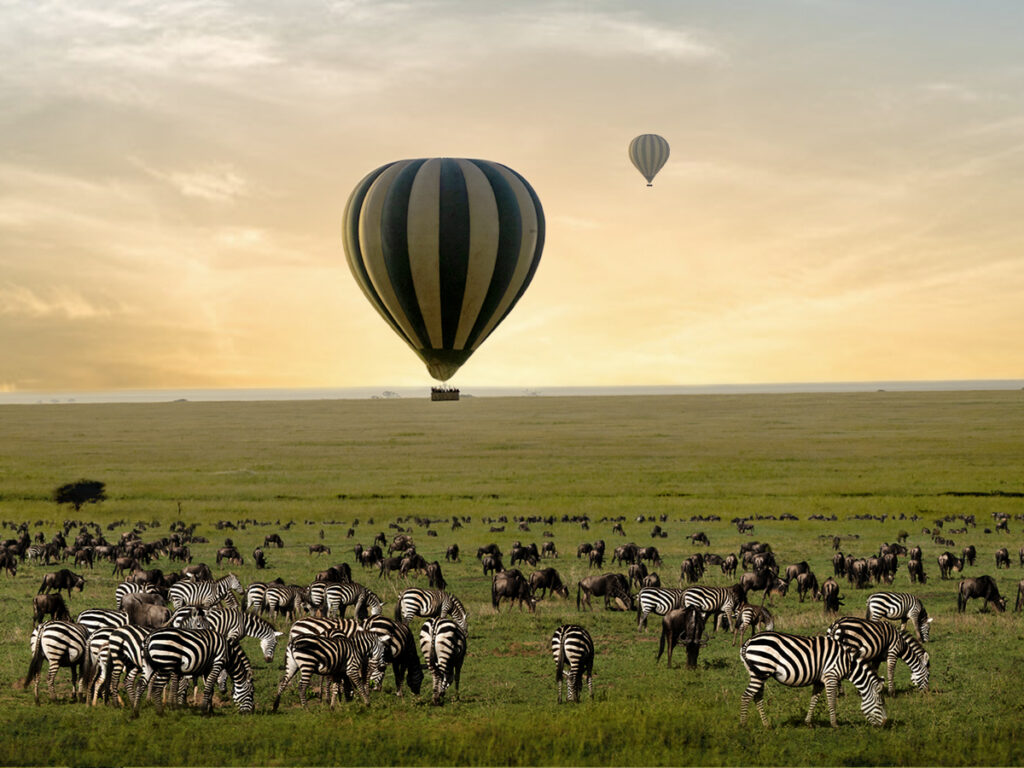
- Hot air balloon safari: from around US$599 per person, usually including a champagne bush breakfast. Booked through licensed balloon operators, mainly in central (Seronera), southern and western Serengeti.
- Walking safaris: an additional TANAPA walking fee applies per person, and walks must be led by an armed park ranger or licensed guide.
- Guide fees: a licensed Tanzanian driver-guide is normally included in operator safaris. Independent self-drivers do not need a guide, but you can hire a ranger at the gate for game drives at an extra fee.
What Do Serengeti Park Fees Pay For?
Park fees are the main funding source for conservation across Tanzania’s national parks. Your entry fee supports anti-poaching patrols, ranger salaries, road and campsite maintenance, wildlife monitoring and veterinary work, and revenue-sharing programmes with communities living on the park boundary. What the fee does not include is accommodation, food, transport, game drive vehicles, balloon flights or tips.
How to Pay Serengeti Entry Fees
TANAPA no longer runs on cash at the gate. Fees are collected through the government’s electronic payment system (GePG), and the practical options are:
- Through your tour operator. If you book a guided safari, your operator pays all park fees in advance and includes them in your quote. This is the simplest route for most visitors.
- Card payment at the gate. Visa and Mastercard credit or debit cards are accepted at main gates such as Naabi Hill. Carry two cards from different banks in case one is declined, and notify your bank before travelling.
- Control number / bank payment. Self-drivers can arrange a payment control number in advance and pay via bank or mobile money channels, then present the receipt at the gate.
| Important
Cash US dollars are generally not accepted for conservation fees at TANAPA gates. Do not arrive relying on cash alone. Network problems can occasionally slow card payments, so arrive at the gate with time to spare. |
Serengeti Park Gates
| Gate | Location | Best For |
| Naabi Hill Gate | South-east | Main entry from Arusha via Ngorongoro; busiest gate |
| Ndabaka Gate | West | Arrivals from Mwanza, Lake Victoria and Uganda (via Mutukula) |
| Ikoma (Fort Ikoma) Gate | North-west | Western corridor and Grumeti area lodges |
| Klein’s Gate | North-east | Access from Loliondo and Lake Natron |
| Handajega Gate | West | Western corridor (less frequently used) |
Note that the Bologonja Gate on the Kenyan border is not an open tourist crossing between the Serengeti and the Maasai Mara. Travellers coming from Kenya must use official border posts such as Namanga or Isebania.
Worked Examples: How Much Will You Really Pay?
The examples below use high-season non-resident rates. Vehicle fees in Tanzanian shillings are converted at an approximate rate and will vary with the exchange rate.
Example 1: Guided Lodge Safari — 2 Adults, 3 Days / 2 Nights
| Fee | Calculation | Total (US$) |
| Conservation fee | 2 adults × 3 periods × $82.60 | $495.60 |
| Concession fee | 2 adults × 2 nights × $70.80 | $283.20 |
| Vehicle fee (TZ-registered Land Cruiser) | 3 days × TSH 41,300 | approx. $50 |
| Estimated Serengeti total | approx. $829 |
Example 2: Self-Drive Camping — 2 Adults, Ugandan-Registered 4×4
| Fee | Calculation | Total (US$) |
| Conservation fee | 2 adults × 3 periods × $82.60 | $495.60 |
| Public campsite fee | 2 adults × 2 nights × $35.40 | $141.60 |
| Vehicle fee (foreign-registered, 2–3 t) | single entry, approx. | $150+ |
| Estimated Serengeti total | approx. $787+ |
Example 3: Family Day Visit — 2 Adults + 2 Children (8 and 12)
| Fee | Calculation | Total (US$) |
| Conservation fee — adults | 2 × $82.60 | $165.20 |
| Conservation fee — children | 2 × $23.60 | $47.20 |
| Vehicle fee (TZ-registered Land Cruiser) | 1 day × TSH 41,300 | approx. $17 |
| Estimated Serengeti total | approx. $229 |
Remember to add Ngorongoro transit fees for Examples 1 and 3 if you enter via Naabi Hill Gate from Arusha.
Smart Ways to Reduce Your Serengeti Park Fees
- Time your gate entry. Fees run in 24-hour blocks from the time you enter. Entering at 10:00 and leaving before 10:00 two days later costs two periods, not three.
- Travel in the low season. Between 15 March and 15 May the adult conservation fee drops to about US$70.80, and lodge rates are often discounted too.
- Enter from the west. Using Ndabaka Gate skips the Ngorongoro transit fee entirely — a real saving for overland travellers from Uganda or Mwanza.
- Rent a Tanzanian-registered vehicle. Local plates pay a much lower vehicle fee than foreign-registered 4x4s.
- Camp instead of staying in lodges. Public campsite fees are roughly half the lodge concession fee.
- Bring proof of residency or EAC citizenship. The discounts are substantial, but only with valid documents.
- Don’t backtrack through Ngorongoro. Plan a route that avoids paying NCAA fees twice where possible, or combine your crater visit with your transit day.
Will Serengeti Fees Increase?
The rates in this guide reflect the most widely reported TANAPA schedule for 1 July 2026 to 30 June 2027, which kept the Serengeti adult conservation fee at US$82.60. However, TANAPA has proposed a series of annual increases to conservation and concession fees over the coming years, and changes can be announced at short notice. If you are booking for mid-2027 or later, build a buffer of around 10–15% into your park fee budget and confirm the latest tariff with TANAPA or your operator before paying.
Frequently Asked Questions
How much is the Serengeti entry fee for foreigners in 2027?
Non-resident adults pay US$82.60 per person per 24 hours in high season and about US$70.80 in the low season (15 March – 15 May), including 18% VAT. Children aged 5–15 pay US$23.60, and children under 5 enter free.
Is the Serengeti fee charged per day or per night?
The conservation fee is charged per 24 hours from your gate entry time. If you stay overnight, you also pay a separate per-night concession fee (lodges and camps) or camping fee (campsites).
Are park fees included in my safari price?
For most guided safaris, yes — your operator pays the fees in advance and includes them in your quote. Always check the inclusions list, especially for concession fees and Ngorongoro crater fees.
Can I pay Serengeti park fees in cash?
Generally no. TANAPA collects fees electronically. Use a Visa or Mastercard at the gate, pay in advance via a control number, or let your tour operator handle payment.
Do I pay Ngorongoro fees to reach the Serengeti?
Yes, if you drive from Arusha via Naabi Hill Gate, because the road passes through the Ngorongoro Conservation Area. You avoid this by entering through Ndabaka Gate in the west or by flying in.
Can I self-drive in the Serengeti?
Yes. Self-drive is permitted with a suitable 4×4. You pay the same conservation fees as other visitors plus the vehicle fee for your car, and you must stick to designated roads and campsites.
Do children pay Serengeti park fees?
Children under 5 are free. Children aged 5–15 pay a reduced rate of US$23.60 per 24 hours (non-resident). Visitors aged 16 and above pay the adult rate.
How much should I budget per day for Serengeti park fees?
For a non-resident adult sleeping in a lodge inside the park, budget about US$150–155 per day in park fees alone, plus your share of the vehicle fee and any Ngorongoro transit costs.
Plan Your Serengeti Safari With Confidence
Serengeti park fees are a significant part of any Tanzania safari budget, but they also fund the protection of one of the world’s greatest wildlife ecosystems. Once you understand the 24-hour rule, the difference between conservation and concession fees, and the extra costs of foreign-registered vehicles and Ngorongoro transit, you can plan a route and timing that gives you the best value.
Whether you are planning a guided lodge safari, a self-drive camping adventure, or a cross-border overland trip from Uganda into Tanzania, Marriott Safaris Africa can help you build an itinerary with every fee calculated upfront — no surprises at the gate.
| Disclaimer
Fees in this guide are based on the most widely reported TANAPA and NCAA rates for the 2026/27 fee year and are provided for planning purposes. Park fees can change at short notice. Always confirm current rates with TANAPA, the NCAA or your safari operator before travelling. |