
5-Day Botswana Safari Itinerary 2026 | Okavango Delta & Chobe Tour
Botswana rewards travelers with time, not distance. In just five days, this itinerary threads together three of the country’s signature ecosystems — the flooded channels of the Okavango Delta, the game-rich floodplains of Moremi Game Reserve, and the elephant-dense riverfront of Chobe National Park — for a safari that feels expansive without demanding weeks on the road. This guide lays out a day-by-day plan, transport logistics, accommodation options by budget, a full cost breakdown, and the practical details needed to book and pack with confidence.
Itinerary at a Glance
| Day | Location | Focus |
| Day 1 | Maun → Okavango Delta | Arrival, mokoro excursion, sunset on the water |
| Day 2 | Okavango Delta | Full-day game viewing by mokoro and on foot |
| Day 3 | Okavango Delta → Moremi Game Reserve | Transfer and afternoon game drive |
| Day 4 | Moremi Game Reserve → Chobe National Park | Morning game drive, fly/drive to Chobe |
| Day 5 | Chobe National Park → Departure | Sunrise game drive, Chobe River cruise, departure |
Day 1: Arrival in Maun and Transfer into the Okavango Delta
The journey begins in Maun, Botswana’s safari gateway town and the departure point for most Okavango Delta camps. After arrival at Maun Airport, guests connect via light aircraft charter for a short scenic flight over the Delta’s mosaic of channels, lagoons, and palm islands — often the first wildlife sighting of the trip, with elephants, buffalo, and hippos visible from the air.
On landing at the camp’s private airstrip, guests are welcomed and transferred by vehicle or boat to their lodge, depending on water levels. The afternoon is reserved for settling in, followed by a late-afternoon mokoro (traditional dugout canoe) excursion through the reed-lined waterways — a quiet, low-impact way to spot kingfishers, red lechwe, and painted reed frogs at eye level with the water. The day closes with sundowners overlooking the floodplain.

| Day 1 Highlights
• Scenic light-aircraft transfer over the Okavango Delta • First mokoro excursion at golden hour • Welcome dinner under the stars |
Day 2: Full-Day Okavango Delta Game Viewing
The second day is dedicated entirely to the Delta’s permanent water channels. Mornings begin early with a game drive or guided bush walk on one of the Delta’s larger islands, tracking species that favor the drier ground — lion, leopard, giraffe, and large herds of buffalo. Guides trained in Delta ecology point out tracks and signs invisible to the untrained eye.
After a midday break at camp, the afternoon shifts back to the water with a mokoro safari deeper into the channels, or for guests at camps with motorboat access, a wider-ranging boat cruise to islands further from camp. Sightings vary by season but frequently include sitatunga (a shy, water-adapted antelope), African fish eagles, and — in the deeper channels — hippo pods.
This full-immersion day is the heart of the Okavango experience: a rare chance to safari on foot, by vehicle, and by water within a single 24-hour period.
Day 3: Transfer to Moremi Game Reserve
After a final Delta morning activity, guests transfer by light aircraft or vehicle to Moremi Game Reserve, the Delta’s officially protected core and one of the most game-dense reserves in Southern Africa. Moremi combines permanent water with mopane woodland and open floodplain, supporting an exceptional density and diversity of wildlife within a relatively compact area.
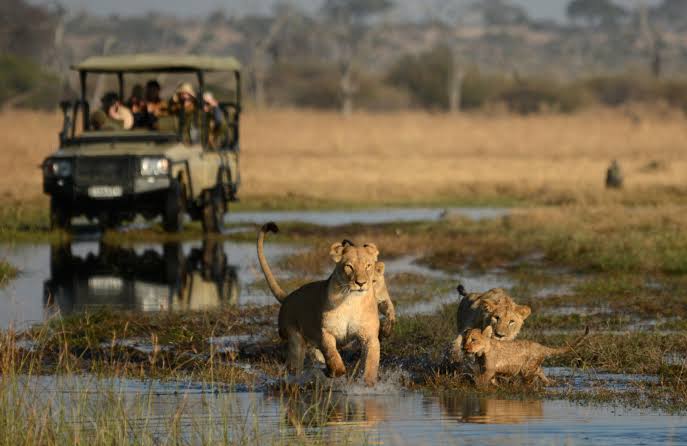
On arrival, guests check into camp before heading out on an afternoon game drive through the Mopane Tongue or Xakanaxa area, both known for reliable predator sightings. Moremi is one of the few reserves in Botswana where lion, leopard, cheetah, and African wild dog are all regularly recorded, making this leg of the trip the most predator-focused of the five days.
| Why Moremi Stands Out
• Botswana’s first officially proclaimed game reserve • High predator density: lion, leopard, cheetah, and wild dog • Mix of floodplain, lagoon, and mopane woodland habitats in one reserve |
Day 4: Moremi Morning Game Drive and Transfer to Chobe National Park
An early wake-up call sets up the best game-viewing light of the stay. The morning game drive in Moremi covers ground missed the previous afternoon, with a strong chance of catching predators still active from their nighttime hunts. After brunch at camp, guests depart for Chobe National Park, typically via a light aircraft transfer to Kasane, Chobe’s main gateway town on the Chobe River.
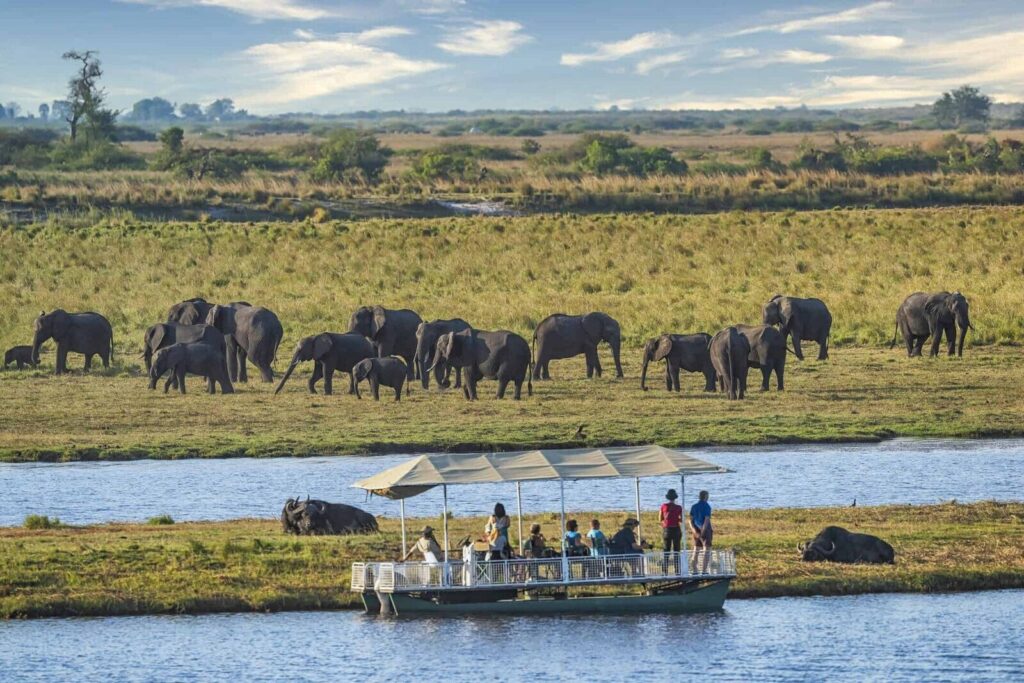
Chobe is famous above all for elephants — the park holds one of the largest concentrations in Africa, with herds converging on the riverfront especially in the dry season. On arrival, guests settle into a riverside lodge before an evening at leisure, taking in views over the Chobe River, with Namibia’s Caprivi Strip visible on the far bank.

Day 5: Chobe Sunrise Game Drive, River Cruise, and Departure
The final morning begins with a sunrise game drive along the Chobe riverfront, where elephant herds, buffalo, and puku antelope gather to drink, alongside a good chance of lion sightings near the floodplain. Midday is reserved for a relaxed brunch and repacking before the signature Chobe experience: an afternoon boat cruise along the Chobe River.
The river cruise offers a completely different vantage point on the park’s wildlife — hippo pods, basking crocodiles, and elephants swimming or drinking at the water’s edge, often at extremely close range from the boat. From Kasane, guests connect via road or a short flight to Kasane Airport (BBK) for onward travel, closing out the five-day circuit.
| Day 5 Highlights
• Sunrise game drive along the Chobe riverfront • Afternoon Chobe River cruise — elephants, hippos, and crocodiles at water level • Departure via Kasane Airport (BBK) |
Best Time to Visit
Botswana’s safari calendar is shaped by two overlapping cycles: the Okavango Delta’s annual flood, which arrives from Angola’s highlands and peaks in the dry winter months, and the region’s rainy season, which brings its own rewards for birding and scenery.
| Period | Conditions | Best For |
| May – August (Dry, Peak Flood) | Cool, dry days; Delta channels at their fullest | Mokoro access, concentrated game viewing, comfortable temperatures |
| September – October (Late Dry) | Hot and dry; water sources shrink | Peak wildlife concentration at remaining water, dramatic Chobe elephant gatherings |
| November – March (Green Season) | Warm, afternoon rains, lush scenery | Birdlife, newborn animals, fewer visitors, lower rates |
| April (Shoulder) | Transitional; flood levels rising | Good value with improving game viewing |
For this specific five-day routing, May through October is the most reliable window: Delta water levels support mokoro excursions on Days 1–2, and Chobe’s dry-season elephant congregations are at their most dramatic for the Day 5 finale.
Accommodation by Tier
Luxury
Owner-run tented camps with private plunge pools, elevated decks over the floodplain, and guide-to-guest ratios that allow for tailored activities. Expect premium wine lists, spa treatments at select Delta camps, and light-aircraft transfers included in the package rate.
Mid-Range
Comfortable en-suite safari tents or thatched chalets with reliable hot water, full-board dining, and shared game-drive vehicles in small groups. This tier delivers the same core activities — mokoro, game drives, boat cruises — at a lower nightly rate.
Budget
Simple safari tents or dormitory-style camps, often with communal dining and shared ablutions. Budget travelers can still reach all three destinations by combining scheduled light-aircraft transfers with smaller, locally run camps, though activity schedules are typically fixed rather than private.
Cost Breakdown (Per Person, Sharing)
| Item | Budget | Mid-Range | Luxury |
| Accommodation (4 nights) | US$800 – 1,200 | US$1,800 – 3,200 | US$4,000 – 7,500+ |
| Light aircraft transfers | US$450 – 600 | US$450 – 600 | US$450 – 700 |
| Park & concession fees | US$150 – 220 | US$150 – 220 | US$150 – 220 |
| Chobe River cruise | US$50 – 70 | US$70 – 100 | Included in most rates |
| Estimated Total | US$1,450 – 2,090 | US$2,470 – 4,120 | US$4,600 – 8,400+ |
Most Delta and Moremi camp rates are quoted on a full-board, all-inclusive basis covering meals, activities, and local drinks; Chobe riverside lodges vary more, with some quoting bed-and-breakfast rates and charging separately for game drives and cruises. Confirm inclusions when booking, as they materially affect the comparison between camps.
Packing List
Clothing
- Neutral-colored (khaki, olive, tan) lightweight clothing for game drives
- Warm layers for early-morning drives, even in the dry season
- Wide-brimmed hat and polarized sunglasses
- Comfortable closed-toe shoes for bush walks; sandals for camp
- Swimwear for camp pools
Gear
- Binoculars (a shared pair per person is worth the space)
- Camera with a zoom lens; spare batteries and memory cards
- Soft-sided duffel bag — hard-shell suitcases are not permitted on light aircraft
- Dry bag or waterproof pouch for mokoro excursions
Health & Documents
- Valid passport with at least six months’ validity
- Malaria prophylaxis, prescribed after consultation with a travel clinic
- Insect repellent (DEET-based) and a personal first-aid kit
- Travel insurance covering medical evacuation
Health & Safety Notes
Botswana’s Delta and northern safari regions fall within a malaria zone, and prophylaxis is recommended for all itineraries covering the Okavango, Moremi, and Chobe. Consult a travel health provider at least four to six weeks before departure.
Light aircraft transfers between camps typically enforce a 15–20 kg luggage limit in soft-sided bags only; pack accordingly and expect to leave excess luggage in secure storage in Maun if needed.
All game drives, mokoro excursions, and walking activities are led by licensed professional guides. Guests should follow guide instructions at all times, particularly around water crossings and when on foot near wildlife.
| Before You Travel
• Confirm yellow fever vaccination requirements if arriving via a transit country • Reconfirm light aircraft baggage limits with your operator before packing • Carry a printed and digital copy of all camp confirmations and flight vouchers |
Frequently Asked Questions
Is five days enough time for a Botswana safari?
Yes. Because internal transfers are by light aircraft rather than long road drives, five days is enough to experience three distinct ecosystems — the Okavango Delta, Moremi Game Reserve, and Chobe National Park — without feeling rushed.
Do I need a visa to enter Botswana?
Many nationalities, including the United States, United Kingdom, and most EU countries, can enter Botswana visa-free for tourism stays of up to 90 days. Requirements vary by nationality, so confirm current rules with the nearest Botswana embassy or consulate before travel.
How do I get between camps on this itinerary?
Transfers between the Okavango Delta, Moremi, and Chobe are handled by light aircraft charter, arranged by the camps or a ground operator. Road transfers are possible for the Moremi–Chobe leg but add significant travel time.
Is this itinerary suitable for families with children?
Many Delta and Moremi camps set a minimum age (commonly 6–12 years) for game drives and mokoro excursions due to safety considerations around wildlife and water. Confirm age policies directly with each camp when booking, or ask about family-friendly camps that make exceptions with a private guide.
What currency should I bring?
The Botswana pula (BWP) is the local currency, but most camps and lodges quote and settle bills in US dollars. Small amounts of local currency are useful for tips and incidentals in Maun or Kasane.

Marriott Safaris Africa — Perfection Anytime