
Central Kalahari Game Reserve Safari 2026 | Botswana Kalahari Tours
The Central Kalahari Game Reserve (CKGR) is Africa’s second-largest game reserve and one of the most remote wilderness areas left on the continent. Covering roughly 52,800 square kilometers of central Botswana — an area larger than Denmark — it protects a vast, semi-arid landscape of fossil riverbeds, salt pans, ancient sand ridges, and silvery grass plains that stretch to the horizon in every direction.
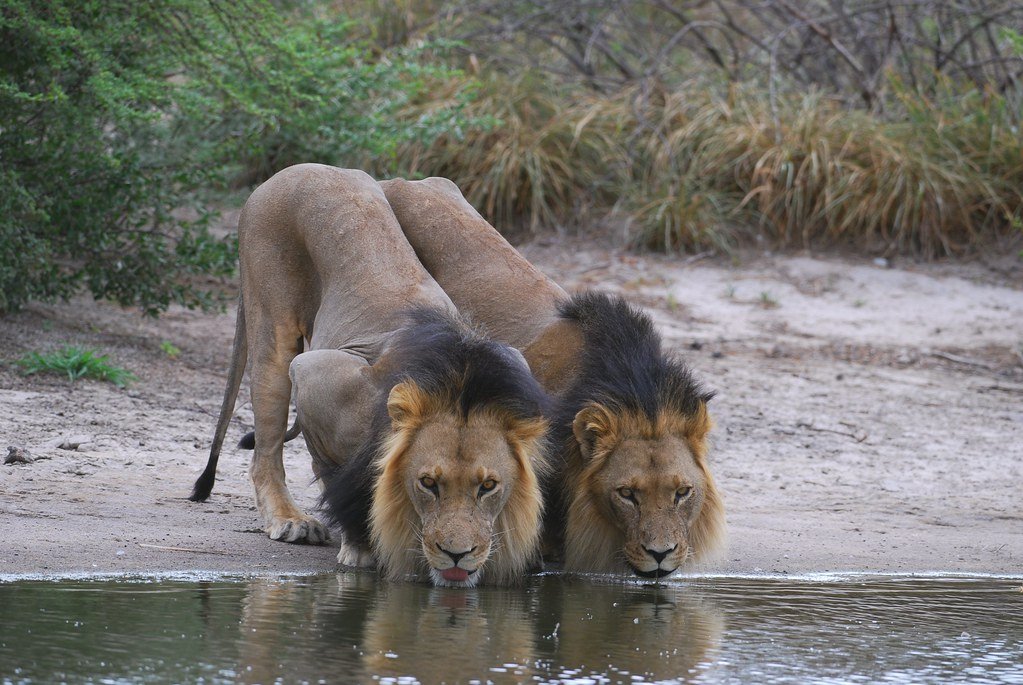
Established in 1961, the reserve was created primarily to safeguard the traditional hunting grounds of the San (Basarwa) people alongside the desert-adapted wildlife that has called the Kalahari home for millennia. Unlike Botswana’s famous wetland circuits — the Okavango Delta and Chobe River — the Central Kalahari is dry-country safari at its purest: no rivers, no permanent waterholes, and no crowds. What it offers instead is space, silence, and some of the best predator sightings in Southern Africa, headlined by the region’s famous black-maned Kalahari lions.
| Quick Facts
• Size: approximately 52,800 km² — the second-largest protected reserve in the world • Location: central Botswana, roughly 250–300 km south/southwest of Maun • Established: 1961, to protect San communities and desert wildlife • Landscape: fossil river valleys (notably Deception Valley), salt pans, grasslands, and acacia scrub • Access: 4×4 vehicle only; charter flights available to select camps |
How to Get to the Central Kalahari Game Reserve
The Central Kalahari sits in genuinely remote country, and reaching it takes a bit more planning than a typical Okavango or Chobe safari. Most visitors approach via Maun, Botswana’s main safari gateway, though routes from Ghanzi and the Kalahari’s southern reserves are also used.
By Road (Self-Drive or Guided 4×4)
From Maun, it is roughly a 250–300 km drive to the reserve’s northern gates, taking around 4–6 hours depending on road conditions and the entry point used. A high-clearance 4×4 is compulsory — the sand tracks inside the reserve are soft and technical, and speed limits are capped at 40 km/h. Travellers coming from Namibia typically cross via Ghanzi, using the Tsau or Xade gates, while those linking up with Khutse Game Reserve to the south enter through the Khutse South Gate.
The reserve has four main entrance gates:
- Matswere Gate (north-east) — reached via Rakops; the most commonly used gate for visitors from Maun
- Tsau Gate (north-west) — on the road between Ghanzi and Maun; popular with travellers crossing from Namibia
- Xade Gate (west) — the remote route toward Ghanzi, used less frequently
- Khutse South Gate (south) — links the CKGR with adjoining Khutse Game Reserve
By Air (Charter Flight)
The easiest and most time-efficient way to reach the Central Kalahari is by light aircraft charter from Maun, with flights to camp airstrips taking roughly 45–75 minutes depending on the destination. Charters can also be arranged from Kasane for travelers combining CKGR with Chobe or Victoria Falls. Flying in is the preferred option for guests staying at the lodges and camps inside the reserve, and it turns the transfer itself into a scenic bush flight over the Kalahari’s dune fields and pans.
| Travel Tip
• Fuel, water, and supplies should be stocked up before entering — there are no shops or fuel stations inside the reserve • A minimum stay of 2–3 nights is recommended given the distances involved in reaching the reserve • Self-drive travellers should book campsites well in advance; popular sites fill up months ahead • GPS coordinates are essential — signage inside the reserve is minimal |
Things to Do in the Central Kalahari Game Reserve
Activities in the CKGR are built around the reserve’s wide-open plains and its exceptional predator population, with an emphasis on immersive, low-density game viewing rather than high-volume sightseeing.
Game Drives
Day and night game drives are the core activity, run from lodges and mobile camps in open 4×4 vehicles. Night drives are a particular highlight of the Kalahari, as much of the reserve’s smaller and more unusual wildlife — aardwolf, bat-eared fox, porcupine, springhare, and the occasional aardvark — is nocturnal and rarely seen elsewhere in Botswana.
Guided Bushman (San) Walks
Guided walks led by San trackers, offered at several camps along the reserve’s boundary, are among the most memorable Kalahari experiences. Guests learn traditional tracking, foraging, water-finding, and survival techniques passed down through generations of desert life.
Deception Valley Exploration
Deception Valley, a fossil riverbed in the reserve’s north, is the CKGR’s most iconic landmark and the setting for Mark and Delia Owens’ classic book Cry of the Kalahari. During and after the rains it becomes a magnet for grazing herds and the predators that follow them.
Stargazing
With virtually no light pollution across tens of thousands of square kilometres, the Central Kalahari offers some of the clearest night skies in Africa — a quiet, dramatic complement to the daytime game viewing.
Predator and Bird Photography
The reserve’s open terrain and sparse vegetation make it a favourite for photographers, particularly for predator sightings — black-maned lions, cheetah, and leopard are all photographed here at close range against classic Kalahari backdrops.
Key Attractions
- Deception Valley — fossil riverbed and prime wildlife-viewing corridor
- Passarge Valley — a scenic valley known for predator activity and dramatic scenery
- Sunday Pan and Piper’s Pan — remote pans favoured for dry-season game concentrations
- Letiahau Valley — another key wildlife corridor in the reserve’s central section
- Kalahari salt pans and fossil dunes — striking desert landforms found throughout the reserve
Boat Cruises in the Central Kalahari Game Reserve
It’s worth being upfront about this one: the Central Kalahari Game Reserve is a true desert environment with no permanent rivers, lakes, or wetlands, so there are no boat cruises within the reserve itself. Its landscape of fossil riverbeds, pans, and grassland is what makes the CKGR’s dry-country game viewing so distinctive — but it isn’t a water-based safari destination.
Travellers who want to pair a Kalahari safari with a boat safari can do so easily, since Botswana’s premier water-based experiences are only a short flight away:
- Okavango Delta — mokoro (traditional canoe) excursions and motorboat game-viewing cruises through the Delta’s channels, roughly a 45–75 minute charter flight from CKGR camps
- Chobe River, Kasane — sunset and morning boat cruises along the Chobe River, famous for elephant and hippo sightings, reachable via a short flight from CKGR
- Boteti River, Makgadikgadi — seasonal river cruising near the Makgadikgadi Pans, often combined with Kalahari itineraries
| Marriott Safaris Africa Tip
• Ask about our combined Kalahari + Okavango Delta or Kalahari + Chobe itineraries • These pairings let you experience both desert game drives and classic water-based safari activities in one trip • Charter flight connections between CKGR and the Delta or Chobe are typically under 90 minutes |
Animals and Wildlife in the Central Kalahari Game Reserve
Despite its harsh, semi-arid conditions, the CKGR supports a remarkable range of desert-adapted wildlife, much of it drawn to the reserve precisely because of the low visitor numbers and undisturbed habitat.
Predators
- Black-maned Kalahari lion — the reserve’s signature species, larger and darker-maned than lions elsewhere in Africa
- Cheetah — the CKGR’s open plains make it one of the best cheetah-viewing areas in Southern Africa
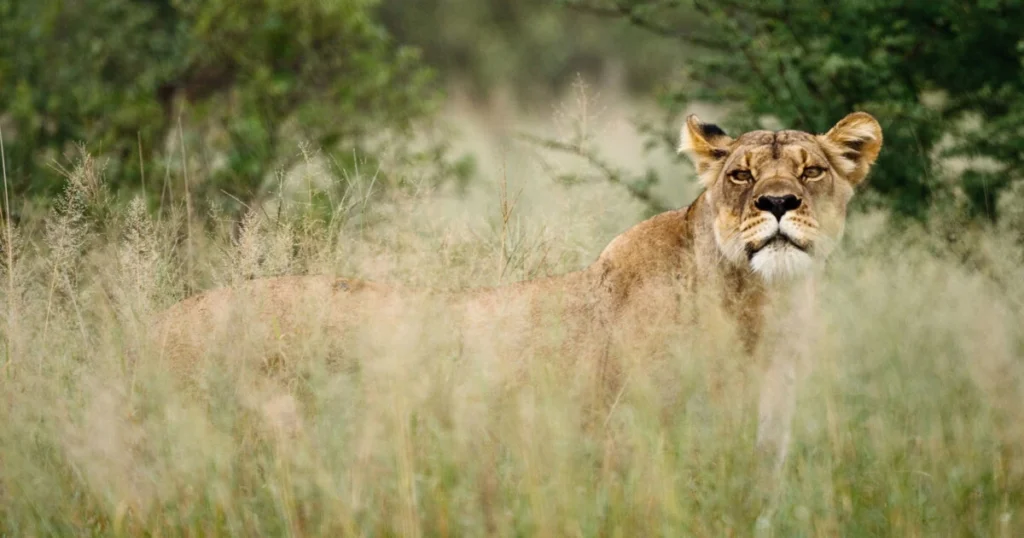
- Leopard — present throughout, though more elusive than the reserve’s other big cats
- Brown hyena and spotted hyena — both species occur here, with brown hyena a special draw for keen wildlife-watchers
- African wild dog — occasional visitors, particularly in the wetter months
- Black-backed jackal and bat-eared fox — commonly seen on game drives, especially at night
Herbivores
- Gemsbok (oryx) — the Kalahari’s most iconic antelope, superbly adapted to desert conditions
- Springbok, red hartebeest, and eland — form the bulk of the reserve’s grazing herds
- Blue wildebeest — gathers in large numbers in Deception Valley during the wet season
- Giraffe and kudu — found in the reserve’s more wooded southern areas
- Steenbok and duiker — smaller antelope species seen throughout
Birdlife
Over 200 bird species have been recorded in the CKGR. Resident raptors and ground birds include the secretary bird, kori bustard (the world’s heaviest flying bird), and pale chanting goshawk, while the wet season (November–April) brings a wave of migratory species, making this a strong stretch for birdwatchers.
Accommodation in the Central Kalahari Game Reserve
Accommodation options in and around the CKGR range from a small number of upmarket tented camps inside the reserve boundary to lodges and guesthouses in Ghanzi and Maun for those travelling overland, plus a network of remote public campsites for self-drive visitors.
Inside the Reserve
- Luxury tented camps in the north-central area, close to Deception Valley and the reserve’s main pans — the best option for guided game drives without a long daily drive
- Access is generally by charter flight, with a small number of camps also reachable by 4×4
On the Reserve Boundary
- Tented camps and lodges positioned just outside the northern and western boundaries, offering easier road access while still being within reach of the reserve’s key game-viewing areas
- Several of these properties specialise in San guided walks and cultural experiences
Ghanzi and Maun
- Lodges and guesthouses in Ghanzi serve as a practical overnight stop for those driving between Namibia, the CKGR, and Maun
- Maun offers the widest range of hotels and guesthouses and is the standard base for organising charter flights and self-drive rentals
Self-Drive Campsites
For self-drive visitors, the Department of Wildlife and National Parks (DWNP) and private operators manage a network of demarcated bush campsites scattered between the Tsau and Matswere gates, including Deception, Sunday Pan, Passarge, Piper’s Pan, Motopi, Lekhubu, and Xaka. These are unfenced wilderness sites with no facilities beyond a long-drop toilet at most — visitors must be fully self-sufficient with fuel, water, and supplies. Campsites can fill up months in advance and should be booked well ahead of travel.
Best Time to Visit the Central Kalahari Game Reserve
The CKGR is open year-round, and the right time to visit depends on whether the priority is peak wildlife concentrations or the most comfortable travelling conditions — the two don’t always line up in the Kalahari.
| Season | Months | What to Expect |
| Green season (wet) | December – March | Peak game viewing as herds gather in Deception Valley; dramatic skies and lush scenery, but roads can become muddy and difficult |
| Shoulder season | April – May | A strong compromise: lingering herds from the wet season, drying roads, and more manageable temperatures |
| Dry season (cool) | June – August | Most comfortable weather for travel — dry, sunny days and cool mornings/evenings; wildlife concentrates around remaining waterholes |
| Dry season (hot) | September – November | Heat builds steadily toward the year’s hottest stretch; excellent late-season game viewing at waterholes before the first rains |
For the best all-round game viewing, aim for December to March, when large herds of springbok, gemsbok, and wildebeest concentrate in Deception Valley, drawing in the reserve’s black-maned lions and cheetah. For the most comfortable travel conditions and reliable road access, June to August is the safer choice, particularly for self-drive travellers.
Sample Central Kalahari Itinerary
A sample 5-day/4-night guided itinerary, ideal for a focused Kalahari experience or as an add-on to a wider Botswana safari.
Day 1: Maun to Central Kalahari
Charter flight from Maun to your camp’s airstrip inside or bordering the CKGR. Afternoon game drive introducing you to the reserve’s open plains and pan systems.
Day 2: Deception Valley
Full day exploring Deception Valley, the reserve’s most storied landscape, with a focus on predator tracking and the resident black-maned lion prides.
Day 3: San Bushman Walk & Night Drive
Morning guided walk with San trackers, learning traditional bush skills. Evening night drive in search of the Kalahari’s nocturnal specialists — aardwolf, bat-eared fox, and springhare.
Day 4: Passarge Valley & Southern Pans
Game drive through Passarge Valley and the surrounding pan systems, one of the reserve’s most productive areas for cheetah sightings, followed by an afternoon at leisure and sundowners on the plains.
Day 5: Departure
Final morning game drive before a charter flight back to Maun, or an onward connection to the Okavango Delta or Chobe National Park for those extending their Botswana safari.
| Extend Your Trip
• Add 2–3 nights in the Okavango Delta for mokoro and boat-based game viewing • Combine with Chobe National Park and a Chobe River sunset cruise • Pair with the Makgadikgadi Pans for zebra migration season (December–April) or the Boteti River |
Book Your Central Kalahari Safari with Marriott Safaris Africa
Marriott Safaris Africa specialises in tailor-made safaris across East and Southern Africa, and the Central Kalahari Game Reserve is one of our signature Botswana destinations for travellers seeking genuine wilderness away from the crowds.
Why Book With Us
- Local expertise across Botswana’s parks, gates, and charter routes, including the logistics of reaching remote reserves like the CKGR
- Tailor-made itineraries combining the Central Kalahari with the Okavango Delta, Chobe, Makgadikgadi, or Victoria Falls
- Transparent, all-inclusive pricing with no hidden costs on park fees, charter flights, or transfers
- 24/7 support throughout your trip, from initial planning to your return flight home
How to Book
- Step 1: Share your travel dates, group size, and preferred pace (fly-in camps or self-drive) with our safari consultants
- Step 2: Receive a tailor-made itinerary and quote covering accommodation, charter flights or vehicle rental, park fees, and activities
- Step 3: Confirm your booking with a deposit; our team handles park permits, campsite or camp reservations, and flight arrangements
- Step 4: Travel with confidence, backed by our on-the-ground support for the full duration of your safari
Frequently Asked Questions
Do I need a 4×4 to visit the Central Kalahari Game Reserve?
Yes. A high-clearance 4×4 is compulsory for self-drive visitors due to the thick sand tracks throughout the reserve. Guests flying in to lodges or camps are transferred by the property in appropriate vehicles.
Is there a boat cruise available in the CKGR?
No — the CKGR has no permanent rivers or wetlands, so boat cruises are not offered inside the reserve. Boat-based activities are available a short flight away in the Okavango Delta or on the Chobe River, and are easy to combine with a Kalahari itinerary.
How many days should I spend in the Central Kalahari?
A minimum of 2–3 nights is recommended given the distances involved in reaching the reserve; 4–5 nights allows for a fuller exploration of Deception Valley, Passarge Valley, and the surrounding pan systems.
What is the best time to see the black-maned lions?
Lions are resident year-round, but sightings are most frequent from December to March, when prey herds concentrate in Deception Valley, and again from September to November around remaining waterholes.
Can the Central Kalahari be combined with other Botswana destinations?
Yes — it pairs naturally with the Okavango Delta, Chobe National Park, and the Makgadikgadi Pans, typically connected by short charter flights of under 90 minutes.

Marriott Safaris Africa — Perfection Anytime