
Serengeti National Park Game Drive Itinerary
Serengeti National Park Game Drive Itinerary, Few places on Earth match the Serengeti for sheer scale and drama. Covering roughly 14,750 square kilometres of open grassland, acacia woodland, riverine forest and granite kopjes, Serengeti National Park is Tanzania’s flagship wildlife reserve, a UNESCO World Heritage Site, and the stage for the Great Wildebeest Migration — the annual movement of well over a million wildebeest, accompanied by hundreds of thousands of zebras and gazelles.
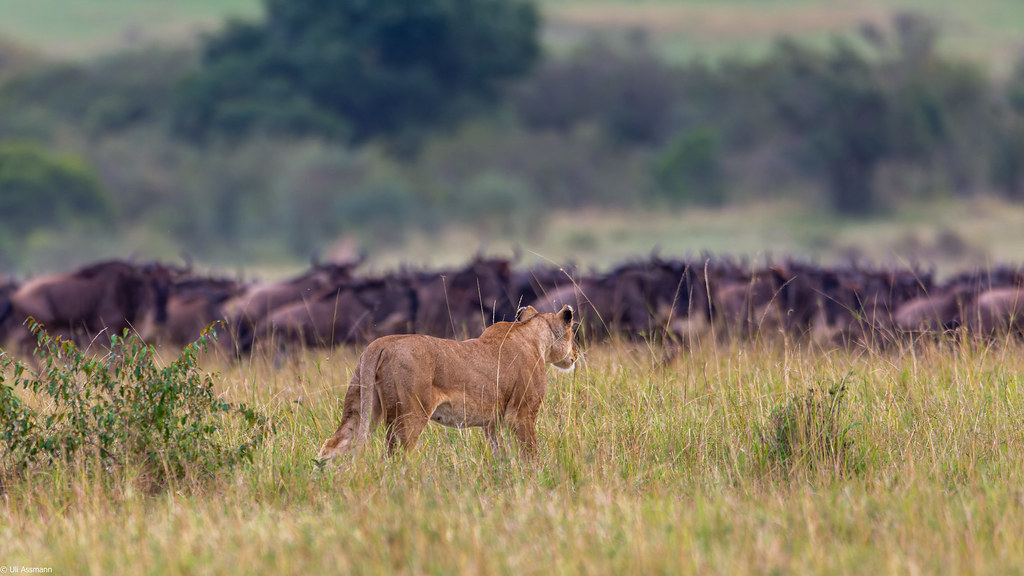
A game drive is the heart of every Serengeti safari. Riding in a pop-up-roof 4×4 with an experienced guide, you will track lions resting on kopjes, leopards draped in sausage trees, cheetahs scanning the plains, and vast herds moving across the horizon. This guide gives you a complete, hour-by-hour 4-day Serengeti game drive itinerary, shows you how to adjust the route to the season, and covers fees, wildlife, accommodation, packing and park rules so you can plan with confidence.
| Quick Answer: How Many Days Do You Need?
1 day: Possible but rushed — most of the day is spent driving in and out. 3 days: The sweet spot for Seronera’s big cats plus one seasonal migration area. 4 days (this itinerary): Ideal — full-day drives in central and seasonal zones, time for a balloon safari, and no rushing. 5–7 days: Best for photographers or anyone wanting to follow the migration across two regions (e.g. Seronera + Northern Serengeti). |
Serengeti at a Glance
| Detail | Information |
| Location | Northern Tanzania, bordering Kenya’s Maasai Mara to the north |
| Size | Approximately 14,750 km² (about 5,700 sq miles) |
| Main gateway town | Arusha (approx. 325 km to Seronera by road) |
| Main entry gates | Naabi Hill Gate (south-east), Ndabaka Gate (west), Ikoma Gate (north-west), Klein’s Gate (north-east) |
| Airstrips | Seronera, Kogatende, Lobo, Ndutu, Grumeti, Kusini and others |
| Signature wildlife | Lion, leopard, cheetah, elephant, buffalo, wildebeest, zebra, giraffe, hippo, crocodile, hyena |
| Managed by | Tanzania National Parks Authority (TANAPA) |
| Game viewing hours | Roughly 6:00 am to 6:30 pm; driving after dark is not permitted inside the park |
Understanding the Serengeti’s Game Drive Regions
The Serengeti is far too large to cover in a single trip, so good itineraries focus on one or two regions. Knowing what each area offers helps you understand why your guide drives where they do.
| Region | Key Areas | What You’ll See | Best Months |
| Central (Seronera) | Seronera River Valley, Simba & Masai Kopjes, Retima Hippo Pool, Moru Kopjes | The park’s highest density of resident lions, leopards and cheetahs; year-round game | All year |
| Southern Plains | Ndutu, Kusini, Naabi Hill, Gol Kopjes | Calving season — up to 8,000 wildebeest calves born daily at peak; intense predator action | Dec – Mar |
| Western Corridor | Grumeti River, Kirawira, Ndabaka | Giant Nile crocodiles, early-season river crossings, colobus monkeys in riverine forest | May – Jul |
| Northern Serengeti | Kogatende, Lamai Triangle, Mara River, Bologonja | Dramatic Mara River crossings; fewer vehicles; rhino possible near Lamai | Jul – Oct |
| North-East (Lobo) | Lobo Kopjes, Bologonja Springs | Quiet wilderness, elephants, migration passing south | Oct – Dec |
| Eastern Plains | Namiri Plains, Gol Kopjes | One of the best cheetah areas in Africa; big lion prides | Dec – Apr (good year-round) |
The Great Migration Month by Month
The migration follows the rains, so its exact position shifts every year. Use this calendar as a guide and let your Marriott Safaris Africa team fine-tune routes with up-to-date ranger and guide reports.
| Month | Approximate Herd Location | Game Drive Highlight |
| January – February | Southern plains (Ndutu, Kusini) | Calving season; lions, cheetahs and hyenas hunting newborns |
| March | Southern plains, starting to disperse | Lush green landscapes, young calves, mating of predators |
| April – May | Moving north-west through Seronera and Moru | Long-rains season; quieter roads and lower lodge rates |
| June | Western Corridor and Grumeti River | Rutting season; first river crossings at Grumeti |
| July – August | Northern Serengeti, Mara River | Peak Mara River crossings — the classic migration spectacle |
| September – October | Northern Serengeti and Maasai Mara | Continued crossings in both directions |
| November | Moving south through Lobo and eastern Serengeti | Short rains; herds stream back towards the south |
| December | Arriving on the southern plains | Herds settle before calving begins |
What a Typical Serengeti Game Drive Day Looks Like
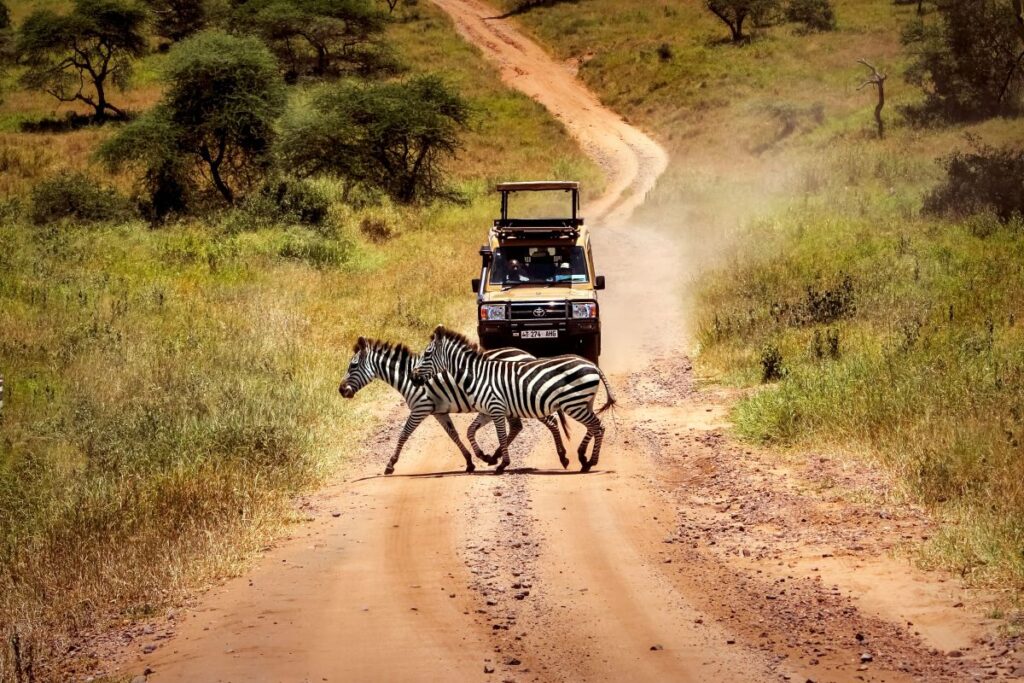
Animals are most active in the cool of early morning and late afternoon, so a well-designed Serengeti day follows a natural rhythm. Here is the standard daily structure used throughout this itinerary.
| Time | Activity | Why It Matters |
| 5:30 am | Wake-up call with coffee or tea | Get moving while it is still cool |
| 6:00 am | Depart on morning game drive | Best light for photos; predators often still on the move after night hunts |
| 9:00 – 10:00 am | Bush breakfast or return to camp | Packed breakfast lets you stay out with active sightings |
| 10:00 am – 12:30 pm | Continue game drive or rest | Herds gather at water; big cats settle into shade |
| 12:30 – 3:30 pm | Lunch and siesta (or full-day picnic) | Midday heat reduces animal activity |
| 3:30 – 6:30 pm | Afternoon game drive | Cats wake up; golden-hour light; possible evening hunts |
| 6:30 pm | Return to lodge or camp | Park regulations require vehicles off the roads after dark |
| 7:30 pm | Dinner and campfire | Review the day’s sightings with your guide |
| Full-Day vs. Half-Day Game Drives
On a full-day game drive, you leave after an early breakfast with a packed lunch and stay out until late afternoon. This is the best choice in the migration areas, where distances are long and sightings can unfold over hours. On half-day drives (morning and afternoon, with lunch at camp), you rest during the heat. This suits families, travellers who tire easily, and those staying at lodges with good views and pools. |
Detailed 4-Day Serengeti Game Drive Itinerary
This itinerary starts and ends in Arusha, the safari capital of northern Tanzania. It travels by road through the Ngorongoro Conservation Area into the Serengeti, with fly-in alternatives noted. Day 3 adapts to the season so you are always where the migration is.
Itinerary at a Glance
| Day | Route | Game Drive Focus | Overnight |
| Day 1 | Arusha → Ngorongoro highlands → Naabi Hill Gate → Seronera | Afternoon en-route game drive across the southern plains | Central Serengeti (Seronera) |
| Day 2 | Full day in Central Serengeti | Seronera River Valley, kopjes, big cats, Retima Hippo Pool | Central Serengeti (Seronera) |
| Day 3 | Seasonal migration zone | Ndutu / Western Corridor / Mara River / Lobo depending on month | Central or seasonal camp |
| Day 4 | Morning drive → exit to Arusha (or fly out) | Optional hot-air balloon; final morning drive | Arusha (end of safari) |
| DAY 1
Arusha to the Serengeti Scenic drive through the Ngorongoro highlands and your first game drive on the endless plains |
Distance: approx. 325 km | Drive time: 7–9 hours including stops and game viewing | Meals: Lunch, Dinner
| 7:00 am | Pick-up in Arusha
Your Marriott Safaris Africa driver-guide collects you from your Arusha hotel in a 4×4 safari Land Cruiser with a pop-up roof. After a short briefing on the route, park rules and what to expect, you head west on tarmac past Maasai villages, maize fields and the Great Rift Valley escarpment. |
| 9:30 am | Rift Valley & Karatu
Stop at the Rift Valley viewpoint above Lake Manyara for photos, then continue through the coffee farms of Karatu, where you can pick up last-minute supplies. |
| 10:30 am | Ngorongoro Conservation Area
Enter at Lodoare Gate and climb through misty montane forest to the Crater rim viewpoint. Look down into the 600-metre-deep caldera before descending the western slopes, where Maasai herders graze cattle alongside zebras and giraffes. (Transit fees for the Conservation Area apply.) |
| 1:00 pm | Picnic lunch at Naabi Hill Gate
Complete park entry formalities at Naabi Hill Gate — the main south-eastern entrance — while enjoying a picnic lunch. Climb the short trail on Naabi Hill for a sweeping view across the short-grass plains. |
| 2:00 pm | Afternoon game drive to Seronera
Your first Serengeti game drive begins immediately. Cross the open southern plains, watching for Thomson’s gazelles, ostriches, hyenas, golden jackals and, from December to March, the migration herds. Stop at the Simba Kopjes, a favourite resting place for lion prides, then follow the road north into the Seronera Valley. |
| 6:30 pm | Check-in, dinner & overnight
Arrive at your camp or lodge in Central Serengeti. Enjoy dinner under the stars while listening to the sounds of the bush — the whoop of hyenas and distant lion roars. |
| Fly-In Alternative
Short on time? Take a scheduled light-aircraft flight from Arusha to Seronera airstrip (around 1–1.5 hours). Your guide meets you on the airstrip and your game drive starts within minutes of landing, giving you a bonus afternoon in the park. |
| DAY 2
Full-Day Game Drive in Central Serengeti Seronera River Valley — the big cat capital of East Africa |
Area: Seronera | Drive type: Full-day with picnic lunch | Meals: Breakfast, Lunch, Dinner
| 6:00 am | Early-morning predator drive
Leave camp at first light with hot drinks in hand. The Seronera River is lined with yellow-barked acacias and sausage trees — prime habitat for leopards, which are often spotted resting on branches after a night hunt. Lions patrol the riverbanks, and you may catch a hunt in progress. |
| 9:00 am | Bush breakfast
Pause at a designated picnic site for breakfast with a view. Your guide uses this time to check the radio network for fresh sightings across the valley. |
| 10:00 am | Kopjes circuit
Explore the granite outcrops of the Masai Kopjes and Maasai rock area. These islands of rock shelter lions, klipspringers, rock hyraxes and agama lizards, and offer some of the most iconic Serengeti photo compositions. |
| 1:00 pm | Picnic lunch
Lunch at the Serengeti Visitor Centre near Seronera, where a short walking trail and exhibits explain the ecosystem and the migration. Rock hyraxes and colourful birds are common here. |
| 2:30 pm | Retima Hippo Pool
Drive to Retima Hippo Pool, where dozens of hippos crowd the water, grunting and jostling for space. Nile crocodiles bask on the banks, and the surrounding woodland attracts elephants and buffalo. |
| 4:00 pm | Golden-hour cat search
As the heat fades, the cats wake up. Return through the Seronera Valley to search for cheetahs on the open grasslands and lions stirring for their evening hunt. Golden-hour light makes this the best photography window of the day. |
| 6:30 pm | Return to camp
Head back before the park’s driving curfew for a hot shower, dinner and a review of the day’s photos. |
| DAY 3
Seasonal Migration Game Drive Follow the herds to wherever they are this month |
Area: Depends on season (see table) | Drive type: Full-day with picnic lunch | Meals: Breakfast, Lunch, Dinner
Day 3 is the most exciting day of the safari because it takes you to the Great Migration. Your guide chooses the route based on the latest herd movements. The table below shows the four standard options.
| Travel Months | Destination | Drive From Seronera | Day 3 Highlights |
| December – March | Southern plains: Ndutu & Kusini | 1.5–2.5 hours | Calving season, newborn wildebeest, cheetahs and lions hunting on open plains, Lake Ndutu and Lake Masek |
| May – July | Western Corridor: Grumeti River | 2–3 hours | Herds massing and crossing the Grumeti River, giant crocodiles, black-and-white colobus monkeys in riverine forest |
| July – October | Northern Serengeti: Mara River (Kogatende) | 4–5 hours (or overnight in the north) | Thunderous Mara River crossings, crocodile ambushes, quieter landscapes, possible black rhino in the Lamai Triangle |
| November & April | Lobo / Eastern plains / Moru Kopjes | 1.5–3 hours | Migration passing through, cheetahs on the Gol Kopjes, Moru’s rock paintings and Maasai gong rock |
Sample Day 3: Mara River Crossing Drive (July – October)
| 6:00 am | Depart for the river
Leave early with a packed breakfast. Herds often gather along the banks of the Mara River for hours — sometimes days — before plunging across, so arriving early increases your chances. |
| 8:00 am | Riverbank waiting game
Your guide positions the vehicle at a respectful distance from the crossing points around Kogatende. Patience is key: watch the build-up as thousands of wildebeest and zebras gather, nervously testing the water. |
| 11:00 am | The crossing
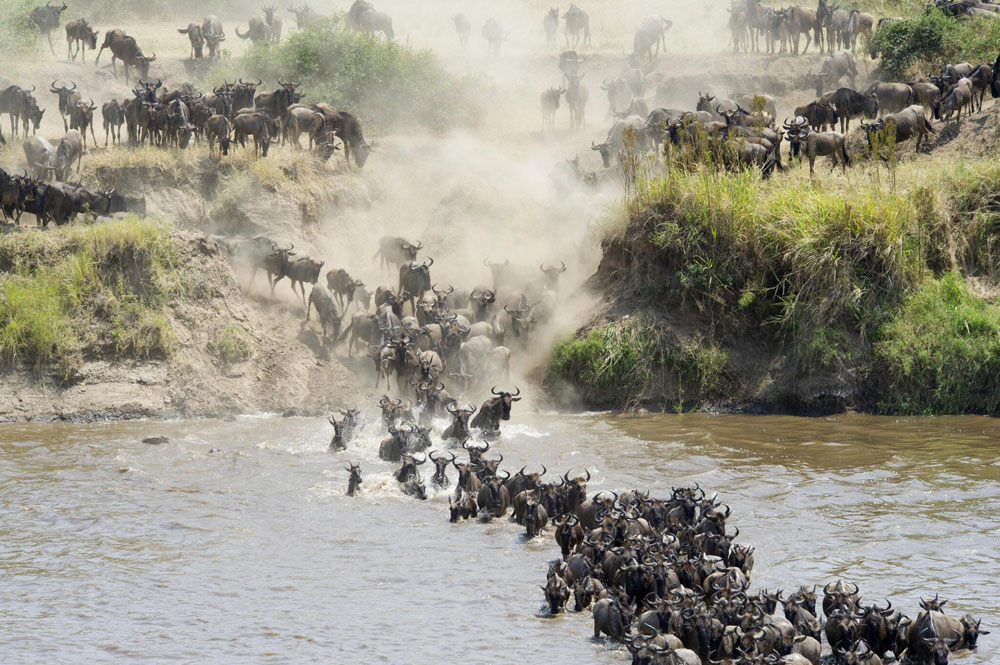
When the first animal jumps, the rest follow in a rush of dust, spray and noise. Crocodiles lurk in the current, and lions often wait on the far bank. A single crossing can last from a few minutes to over an hour. |
| 1:00 pm | Riverside picnic lunch
Lunch at a designated picnic spot while the guide keeps watch for a second crossing. |
| 2:30 pm | Northern plains exploration
Explore the Lamai Triangle and Bologonja area, home to elephants, giraffes, topi and large lion prides. Keep an eye out for black rhinos in this region. |
| 6:30 pm | Overnight in the north
Overnight at a tented camp in the Northern Serengeti (recommended for this season), saving the long drive back to Seronera. |
| Crossing Etiquette
Never block the animals’ path to the river. Vehicles that crowd the banks can cause herds to abort a crossing or panic. Good guides hang back, switch off engines and let nature take its course — the reward is a more natural and dramatic crossing. |
| DAY 4
Hot-Air Balloon (Optional), Final Game Drive & Departure A last sunrise over the Serengeti before heading back to Arusha |
Drive time to Arusha: 8–10 hours by road (or 1–1.5 hours by air) | Meals: Breakfast, Lunch
| 5:00 am | Optional hot-air balloon safari
Float silently over the plains at sunrise for about an hour, watching herds and predators from above. The flight ends with a champagne bush breakfast. Balloon launches operate from Seronera, the southern plains, the Western Corridor and the north depending on season. Book in advance — flights sell out in peak months. |
| 6:30 am | Final morning game drive
If you are not ballooning, enjoy a final early-morning drive to catch any species you have missed — perhaps a leopard in the Seronera Valley or a cheetah family on the plains. |
| 10:00 am | Check-out & exit game drive
Pack up and begin your journey back towards Naabi Hill Gate, game viewing along the way. Your park entry permit runs for 24 hours, so your guide will time the exit accordingly. |
| 1:00 pm | Lunch in the Ngorongoro highlands
Picnic lunch or lunch at a lodge in Karatu before descending the Rift Valley escarpment. |
| 6:00 pm | Arrive in Arusha
Drop-off at your Arusha hotel or Kilimanjaro International Airport for your onward journey. End of safari. |
| Extend Your Safari
+1 day Ngorongoro Crater: Add a half-day crater floor game drive on the way back — one of the best places in Tanzania to see black rhino. +1–2 days Tarangire or Lake Manyara: Elephant herds, baobabs and tree-climbing lions complete a classic northern circuit. +3–4 days Zanzibar: Fly directly from a Serengeti airstrip to the island for beach time after your safari. |
Shorter and Longer Serengeti Game Drive Options
| Option | Suggested Plan | Who It Suits |
| 1-Day Serengeti | Fly Arusha → Seronera in the morning, full-day game drive, fly back late afternoon | Travellers short on time with a flexible budget |
| 2-Day Serengeti | Day 1: drive or fly in, afternoon Seronera drive. Day 2: morning drive, exit | Those combining with Ngorongoro on a tight schedule |
| 3-Day Serengeti | Days 1–2 as above, Day 3 seasonal migration drive, then exit | Best value for most first-time visitors |
| 6–7-Day Serengeti | 2 nights Seronera + 2 nights seasonal area + 2 nights second region (e.g. north or Namiri) | Photographers, honeymooners, return visitors |
Wildlife You Can Expect on a Serengeti Game Drive
| Species | Where to Look | Chance of Sighting |
| Lion | Seronera, Simba & Gol Kopjes, Namiri Plains, Lamai | Very high |
| Leopard | Sausage and acacia trees along the Seronera River | Good (best in Seronera) |
| Cheetah | Southern and eastern plains, Gol Kopjes, Ndutu | Good, especially Dec – Apr |
| Elephant | Lobo, Northern Serengeti, Western Corridor woodland | High |
| Buffalo | Seronera, Western Corridor, riverine areas | High |
| Black rhino | Moru Kopjes and Lamai Triangle (rare) | Low — combine with Ngorongoro for better odds |
| Hippo & crocodile | Retima Hippo Pool, Grumeti and Mara rivers | Very high |
| Wildebeest & zebra | Follows the migration calendar | Very high in the right area |
| Giraffe, topi, eland, gazelles | Throughout the park | Very high |
| Birds (500+ species) | Everywhere — secretary birds, kori bustards, vultures, lilac-breasted rollers | Excellent year-round |
Best Time for Game Drives in the Serengeti
| Season | Months | Pros | Cons |
| Long dry season | June – October | Easy game viewing as animals gather near water; Mara River crossings | Peak prices; more vehicles at crossings |
| Short rains | November – December | Fewer crowds, green scenery, migration moving south | Afternoon showers |
| Calving season | January – March | Newborn calves, top predator action, beautiful landscapes | Popular — book southern camps early |
| Long rains | April – May | Lowest rates, lush scenery, quiet roads | Some camps close; some tracks become muddy |
Serengeti National Park Fees for Game Drives
All Serengeti fees are set by TANAPA, quoted in US dollars and include 18% VAT. Payment at gates is digital only (Visa or Mastercard) — cash is not accepted. When you book a guided safari with Marriott Safaris Africa, park fees are normally included in your package price.
| Fee Category | Non-Resident | Tanzanian / Expat Resident | EAC Citizen |
| Adult entry (16 yrs+) per 24 hrs | US$83 | US$41.30 | TSh 18,000 |
| Child entry (5–15 yrs) per 24 hrs | US$24 | US$11.80 | TSh 2,360 |
| Children under 5 | Free | Free | Free |
| Concession fee (staying inside the park) | Charged per person per night on top of entry; varies by lodge/campsite type | Reduced rates | Reduced rates |
| Vehicle entry | Charged per vehicle, based on weight and registration (foreign-registered vehicles pay more) | — | — |
| Important Fee Notes
24-hour rule: Entry permits are valid for 24 hours from the time you enter. Plan exit times carefully to avoid paying an extra day. Ngorongoro transit: Driving from Arusha means crossing the Ngorongoro Conservation Area, which charges its own entry/transit fees in each direction. Annual updates: TANAPA usually revises fees from 1 July each year. Confirm current rates with our reservations team before you travel. |
Where to Stay During Your Serengeti Game Drives
Staying inside the park saves hours of driving each day and puts you close to the action at dawn. Choose a base in Central Serengeti for Days 1–2 and, if the season calls for it, move to a camp in the seasonal migration zone for Day 3.
| Tier | Example Options | What to Expect |
| Luxury | Four Seasons Safari Lodge Serengeti, Singita camps (Grumeti), &Beyond Serengeti Under Canvas, Lemala Kuria Hills | Private decks, plunge pools, gourmet dining, private guiding options |
| Mid-range | Serengeti Serena Safari Lodge, Seronera Wildlife Lodge, Kati Kati Tented Camp, mobile tented camps | Comfortable en-suite rooms or tents, full board, excellent locations |
| Budget | TANAPA public campsites around Seronera (e.g. Pimbi, Nyani), basic special campsites | Shared facilities, camping gear supplied by your operator, lowest overall cost |
| Mobile Camps Follow the Herds
Seasonal mobile tented camps relocate between the southern plains (Dec–Mar) and the north (Jun–Oct). Staying in one can put you within minutes of the migration instead of hours away. |
What to Pack for Serengeti Game Drives
Clothing
- Neutral-coloured clothing in khaki, beige, olive or brown (avoid bright white, dark blue and black, which attract tsetse flies)
- Warm fleece or jacket for chilly early mornings and evenings, especially June – August
- Wide-brimmed hat, sunglasses and a light scarf or buff for dust
- Comfortable closed shoes and light rain jacket in the wet seasons
Gear and Essentials
- Binoculars — ideally one pair per person (8×42 or 10×42 is ideal)
- Camera with a zoom lens (100–400 mm or similar), spare batteries and memory cards
- Beanbag or window mount to steady your camera on the vehicle
- Sunscreen (SPF 50), insect repellent, lip balm and a reusable water bottle
- Power bank and universal adapter (Tanzania uses Type D and G sockets)
- Personal medication, antimalarials and a copy of your Yellow Fever certificate if required
- Soft-sided duffel bag — essential for light-aircraft transfers (usually 15 kg limit)
Game Drive Rules and Etiquette in the Serengeti
- Stay inside the vehicle at all times except at designated picnic sites, visitor centres and campsites.
- Stick to roads and tracks. Off-road driving is prohibited in most of the park and only allowed in specific zones with permits.
- Respect the curfew. Vehicles must be off the roads after dark — night game drives are not permitted inside the national park.
- Keep a respectful distance and never encircle animals or block their path, particularly at river crossings and hunts.
- Keep noise low — switch off music, speak quietly and avoid sudden movements.
- Never feed animals or leave litter. Carry all rubbish out of the park.
- Respect the speed limit, generally 50 km/h, to protect wildlife and reduce dust.
Photography Tips for Your Serengeti Game Drive
- Shoot in the first and last two hours of daylight for warm, soft light.
- Use a fast shutter speed (1/1000 s or faster) for running cheetahs and river crossings.
- Ask your guide to position the vehicle with the sun behind you.
- Switch off the engine before shooting to eliminate vibration.
- Capture behaviour and landscapes, not just portraits — a lion on a kopje with the plains behind tells a bigger story.
- Bring a dust cover or plastic bag to protect gear on dry-season drives.
How to Book Your Serengeti Game Drive Safari with Marriott Safaris Africa
| Step | What Happens |
| 1. Enquire | Tell us your travel dates, group size, budget and interests (big cats, migration, photography, family). |
| 2. Tailored proposal | We design a Serengeti itinerary matched to the season, with accommodation options in your preferred tier. |
| 3. Confirm & deposit | Secure your vehicle, guide, lodges and balloon safari with a deposit — essential in peak migration months. |
| 4. Pre-departure pack | Receive your final itinerary, packing list, visa and health guidance, and emergency contacts. |
| 5. Safari time | Meet your driver-guide in Arusha and enjoy the Serengeti, with 24/7 support throughout your trip. |
| Perfection Anytime
Our Land Cruisers feature pop-up roofs, window seats for every guest, charging points, cool boxes and onboard binoculars. Every guide is professionally trained, multilingual and connected to the Serengeti’s guide radio network, so you are always close to the latest sightings. |
Frequently Asked Questions
How long is a game drive in the Serengeti?
Half-day drives last about 3–4 hours (morning or afternoon). Full-day drives run from around 6:00 am to 6:30 pm with a picnic lunch, which is the best choice in the migration areas.
Can I do a self-drive game drive in the Serengeti?
Yes. Self-drive is permitted with a suitable 4×4, though foreign-registered vehicles pay higher vehicle fees and roads in remote areas are rough. Many travelers choose a professional guide for local knowledge and access to the guide radio network.
Are night game drives allowed in the Serengeti?
No. Night drives are not permitted inside Serengeti National Park. Some private concessions bordering the park, such as in the Grumeti area, offer night drives.
What is the best month for a Serengeti game drive?
It depends on your priority. July – October is best for Mara River crossings, January – February for calving season and predator action, and June – October for general dry-season game viewing.
How much does a 4-day Serengeti safari cost?
Costs vary by season, accommodation tier and group size. Budget camping safaris start at a few hundred dollars per person per day, while luxury lodge safaris cost considerably more. Contact Marriott Safaris Africa for a tailored quote.
Will I see the Big Five in the Serengeti?
Lion, leopard, elephant and buffalo are seen regularly. Black rhino are rare in the Serengeti, so combining your trip with the Ngorongoro Crater offers the best chance of completing the Big Five.
Is the Serengeti safe for game drives?
Yes, provided you follow park rules and your guide’s instructions. Stay in the vehicle, keep a respectful distance from animals and only get out at designated areas.
Can children join game drives?
Yes. Children are welcome, and kids aged 5–15 pay reduced park fees. Families often prefer half-day drives with rest breaks, and some lodges have minimum age policies.
Final Thoughts
A Serengeti game drive is one of the great travel experiences on Earth — the endless plains, the drama of the predators, and the thunder of the migration stay with you long after you leave. With four days, a well-timed route and an expert guide, you will see the park at its very best.
Ready to plan your Serengeti adventure? Contact Marriott Safaris Africa today and let our team design a game drive safari built around your dates, interests and budget.