
Things to Do in Central Kalahari Game Reserve
15 Unforgettable Experiences in Botswana’s Great Thirstland — A Complete 2026 Guide
Few places on earth feel as vast, as silent, or as quietly wild as the Central Kalahari Game Reserve (CKGR). Spread across the heart of Botswana, this immense semi-desert wilderness is one of the largest protected areas in Africa and one of the last places where you can drive for hours without seeing another vehicle. It is a land of ancient fossil riverbeds, shimmering salt pans, golden grasslands and enormous skies — home to black-maned Kalahari lions, desert-adapted antelope, brown hyenas, cheetahs and the cultural heritage of the San people who have lived here for thousands of years.
Unlike the water-rich Okavango Delta or the elephant-packed Chobe riverfront, the Central Kalahari rewards travellers who come for solitude, space and raw wilderness. Whether you arrive on a fly-in lodge safari or on an expedition-style self-drive with a rooftop tent, this guide covers the very best things to do in Central Kalahari Game Reserve, when to do them, and how to plan your trip.
Central Kalahari Game Reserve at a Glance
| Quick Fact | Details |
| Location | Central Botswana, roughly between Maun (north), Ghanzi (west) and Gaborone (south-east) |
| Size | About 52,800 km² — larger than many entire countries, and one of the biggest game reserves in the world |
| Established | 1961 |
| Main entry gates | Matswere Gate (north-east, via Rakops), Khutse Gate (south, via Khutse Game Reserve), Tsau Gate (west, Ghanzi side) and Xade (south-west) |
| Signature wildlife | Black-maned Kalahari lions, gemsbok (oryx), springbok, red hartebeest, wildebeest, cheetah, leopard, brown hyena, African wild dog, meerkats |
| Best time for wildlife | December to April (green season), when antelope gather on the pans |
| Best time for driving | May to October (dry season, cooler days and firmer tracks) |
| Ideal length of stay | 3 to 5 nights |
| Vehicle requirement | High-clearance 4×4 is essential — no tarred roads, deep sand tracks |
Top 15 Things to Do in Central Kalahari Game Reserve
1. Go on Game Drives Through Deception Valley
Deception Valley is the most famous and most visited part of the Central Kalahari — and for good reason. This ancient, dry riverbed winds through the north-east of the reserve, its short grasses attracting large herds of springbok, gemsbok and wildebeest, especially after the summer rains. Where the grazers gather, predators follow, so Deception Valley is consistently the best area in the reserve for lion and cheetah sightings.
The valley is also part of conservation history. In the 1970s, American researchers Mark and Delia Owens studied brown hyenas and lions here, and their bestselling book Cry of the Kalahari brought the reserve to international attention. Early morning and late afternoon drives along the valley floor, with its waterholes and grassy pans, are the classic Central Kalahari experience.
| Insider Tip
Deception Valley is only about an hour’s drive from Matswere Gate, making it the natural first stop for self-drivers entering from Maun. The waterholes here tend to be the most productive spots in the dry season, so plan to linger at them in the early morning. |
2. Track the Legendary Black-Maned Kalahari Lions
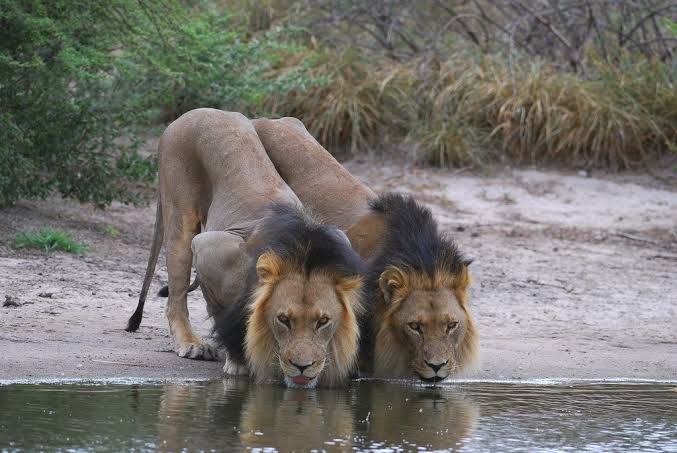
The Kalahari lion is the reserve’s most iconic resident. Males here are often larger than their savannah cousins and many sport magnificent, dark black manes. These lions are remarkably adapted to desert life — they can survive for long periods without drinking, getting much of their moisture from prey and from wild melons, and their prides roam enormous territories in search of food.
Watching a pride resting in the shade of a camelthorn tree, or hearing their roars carry across the pans at dawn, is unforgettable. Deception Valley, Sunday Pan, Leopard Pan and Passarge Valley are among the most reliable areas for sightings, though lions can turn up anywhere — including right beside your campsite.
3. Witness the Green-Season Antelope Gatherings
Between roughly December and April, the summer rains transform the Kalahari. Grey, dusty plains turn into a carpet of fresh green grass and wildflowers, and huge numbers of antelope move onto the open pans and valleys to graze and give birth. Springbok, gemsbok, red hartebeest, blue wildebeest, eland and steenbok congregate in Deception Valley, Passarge Valley and the surrounding pans, sometimes in their thousands.
This seasonal concentration is one of Southern Africa’s lesser-known wildlife spectacles. With newborn antelope on the plains, predator activity peaks, and the dramatic thunderstorm skies make the green season a favourite with photographers.
| Good to Know
Rainfall in the Kalahari is unpredictable, so the size and timing of the gatherings vary from year to year. Late January to March is often the peak. Summer storms can make some tracks muddy and slippery, so allow extra time between campsites. |
4. Explore the Ancient Fossil River Valleys
Thousands of years ago, when the Kalahari was far wetter, rivers flowed across this landscape. Today their courses survive as long, shallow, grassy valleys that act as wildlife corridors. Beyond Deception Valley, the main valleys worth exploring are:
- Passarge Valley: A long, scenic valley in the north with excellent grazing and good predator sightings; it feels much quieter than Deception.
- Letiahau Valley: Running through the central part of the reserve, known for its waterhole and lion activity.
- Okwa Valley: A remote valley in the south, rarely visited and ideal for travellers seeking true solitude.
Driving these valleys gives you a real sense of the reserve’s scale — and of how wildlife has adapted to a landscape shaped by long-vanished water.
5. Go Pan-Hopping Across the Reserve
Pans — flat, open, clay-floored depressions — are the social centres of the Kalahari. They hold nutrient-rich grasses and, after rain, temporary pools that draw wildlife from far and wide. A classic CKGR day involves driving a loop between several pans. The most rewarding include:
| Pan | Area | Why Visit |
| Sunday Pan | North, near Deception Valley | Waterhole, lions, gemsbok and springbok; popular campsites nearby |
| Leopard Pan | North | Good predator activity, scenic open grassland |
| Tau Pan | North-central | Excellent lion sightings; ‘tau’ means lion in Setswana |
| Piper Pan | Central | Remote, beautiful pan with a waterhole and rewarding game viewing |
| Letiahau Pan | Central | Waterhole that attracts lions and antelope in dry months |
| Passarge Pan | North | Quiet, wide-open landscapes and good grazing herds |
6. Search for Cheetah, Leopard, Brown Hyena and Wild Dog
The open terrain of the Central Kalahari makes it one of the best places in Botswana to see cheetah hunting at full speed across the pans. Leopards are more secretive but are present in the wooded areas and along valley edges. The reserve is also one of the best places in Africa to look for the elusive brown hyena — a shaggy, mostly nocturnal scavenger rarely seen elsewhere. African wild dogs pass through the reserve too, though sightings are irregular because packs range over huge distances.
Patience is key. The best approach is to leave camp at first light, stop frequently to scan the horizon with binoculars, and watch for tell-tale signs such as alarm-calling springbok, circling vultures or fresh tracks in the sand.
7. Discover the Kalahari’s Small and Unusual Creatures
Some of the most memorable Kalahari sightings are of its smaller, quirky residents. Keep your eyes open for:
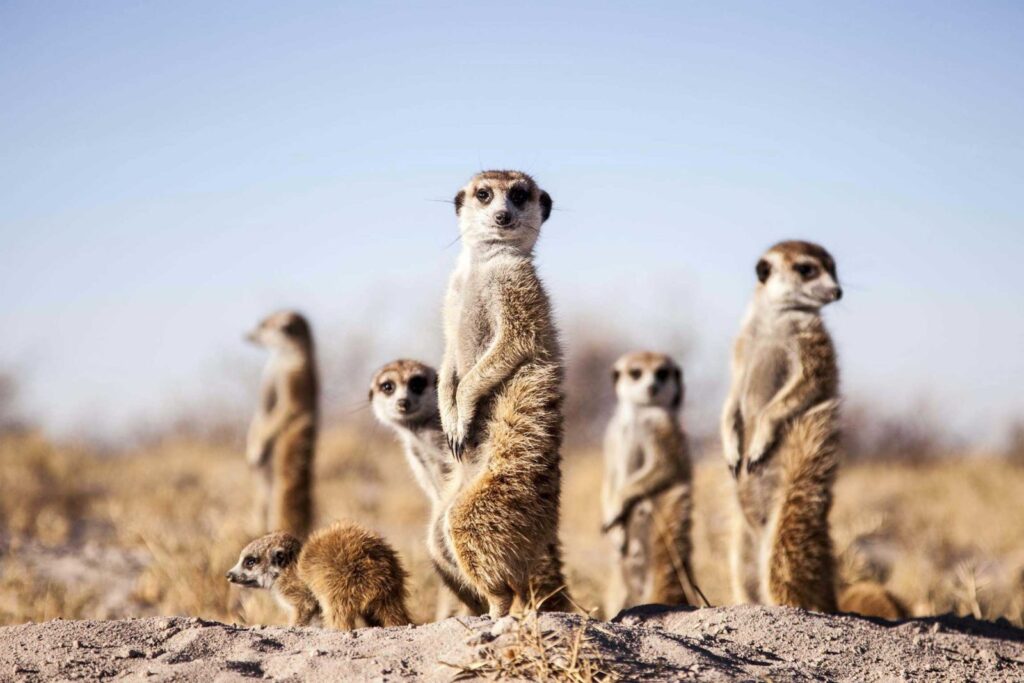
- Meerkats: Standing sentry at their burrows, especially in the early morning sun.
- Bat-eared foxes: With oversized ears for hearing insects underground — often seen in pairs.
- Honey badgers: Famously fearless, frequently spotted digging for food.
- Cape foxes, aardwolves and black-backed jackals: Most active around dawn and dusk.
- Ground squirrels and yellow mongooses: Common around pans and campsites, using their tails as sunshades.
- Ground pangolin and aardvark: Very rare sightings, but the Kalahari is one of the places they live.
8. Take a Bushwalk with San Guides
The San (often called Bushmen) are among the oldest peoples on earth, and the Central Kalahari is part of their ancestral homeland. The G/wi and G//ana San communities lived here long before the reserve was created. Their story is also a complex one: many residents were relocated outside the reserve in the late 1990s and early 2000s, a move that was challenged in Botswana’s High Court, which ruled in 2006 that the removals had been unconstitutional. Access and rights issues for these communities remain sensitive today.
Several lodges in and around the CKGR offer guided walks with San trackers and guides. These walks reveal how traditional knowledge allowed people to thrive in the desert — finding water-storing roots and tubers, identifying medicinal plants, reading animal tracks and making traditional tools, traps and fire. It is a deeply humbling experience that changes the way you see the Kalahari.
| Travel Responsibly
Choose cultural experiences run with genuine community involvement, where guides are fairly employed and benefit directly. Always ask before photographing people, and treat the experience as a conversation rather than a performance. |
9. Go Birdwatching in the Desert
The Kalahari surprises many visitors with its birdlife, particularly in the green season when migrants arrive and many species breed. Raptors are a highlight — the open skies are ideal for spotting them. Look out for:
- Kori bustard — one of the world’s heaviest flying birds, striding across the grasslands
- Secretarybird, ostrich and northern black korhaan
- Pale chanting goshawk, lanner falcon, bateleur and tawny eagle
- Crimson-breasted shrike, Kalahari scrub robin and swallow-tailed bee-eater
- Sociable weavers, whose huge communal nests hang from camelthorn trees
10. Gaze at the Kalahari Night Sky
With no towns, no light pollution and very dry air for much of the year, the Central Kalahari offers some of the finest stargazing in Africa. On a clear, moonless night, the Milky Way stretches from horizon to horizon, and the Southern Cross and Magellanic Clouds are easy to pick out. Some lodges offer sleep-out decks where you can spend a night under the stars, and campers simply need to switch off their lights and look up. The dry winter months (May to September) usually bring the clearest skies.
11. Camp Wild at Remote Campsites
For many travellers, camping is the heart of a Central Kalahari adventure. The reserve’s designated campsites — at places such as Deception Valley, Sunday Pan, Piper Pan, Passarge, Letiahau and Lekhubu — are unfenced, isolated and genuinely wild. Facilities are basic at best, often limited to a long-drop toilet and sometimes a bucket shower, and some sites have none at all. You must bring all your own water, fuel, food and firewood.
The reward is extraordinary: falling asleep to the distant roar of lions, waking to jackals calling, and watching the sunrise over an empty pan with no one else in sight. A rooftop tent on a 4×4 is the most comfortable and practical way to camp here.
| Campsite Booking Essentials
Campsites must be booked and paid for in advance — you cannot simply turn up. Some are managed by the Department of Wildlife and National Parks (DWNP) and others by private operators, and popular sites fill up months ahead, particularly in peak season and school holidays. Carry printed copies of every booking confirmation, as you may need to show them at the gate. |
12. Photograph Dramatic Desert Landscapes
Photographers love the Central Kalahari for its uncluttered horizons, golden light and dramatic weather. Lions on an open pan with nothing in the background, gemsbok silhouetted against a red sunrise, towering summer thunderheads over green grassland, and lightning storms at night all make for powerful images. Pack a long lens (200–600mm) for wildlife, a wide-angle lens for landscapes and skies, a beanbag for shooting from the vehicle, and protection against fine Kalahari dust.
13. Take a Fly-In Safari or Scenic Flight
If you prefer not to tackle the deep sand tracks yourself, light-aircraft charters connect Maun with airstrips that serve lodges inside and near the reserve. The flight itself is a highlight, revealing the sheer scale of the Kalahari’s fossil valleys and pans from above. Fly-in safaris are also a great way to combine the CKGR with the Okavango Delta or Makgadikgadi Pans on a single trip, saving long days of driving.
14. Learn About Kalahari Plants and Survival Foods
The Kalahari’s plant life is perfectly adapted to drought. On a guided walk or drive, ask your guide to point out the tsamma melon, a wild melon that provides vital water for animals and people; Kalahari truffles that appear after good rains; devil’s claw, a medicinal plant traded internationally; and the hardy camelthorn acacia, the lifeline tree of the desert that shelters lions by day and weavers’ nests in its branches.
15. Combine Your Visit with Khutse Game Reserve
Khutse Game Reserve borders the CKGR to the south and is the closest Kalahari reserve to Gaborone. With its own network of pans, it makes a natural extension or entry point for travellers coming from the south. A popular expedition route runs from Khutse through the southern CKGR and up to Deception Valley — a true Kalahari crossing best suited to experienced, well-equipped self-drivers travelling in at least two vehicles.
Best Time to Visit for Each Activity
| Season | Months | Best For | What to Expect |
| Green season | Dec – Apr | Antelope gatherings, predator action, birding, photography | Hot days, afternoon thunderstorms, lush grass; some muddy tracks |
| Early dry season | May – Jun | Comfortable self-driving, stargazing, walks | Mild days, cold nights, grass drying out |
| Mid dry season | Jul – Aug | Stargazing, camping, waterhole viewing | Cool, clear and very dry; nights can drop near freezing |
| Late dry season | Sep – Nov | Wildlife at waterholes, solitude | Very hot (often above 35°C); sparse grazing, dusty |
How to Get to Central Kalahari Game Reserve
| Route | Entry Gate | Approx. Driving Time | Notes |
| Maun via Rakops | Matswere Gate | 4–5 hours | Most popular route; closest access to Deception Valley |
| Ghanzi side | Tsau Gate / Xade | Varies with sand conditions | Good for western areas and Piper Pan |
| Gaborone via Letlhakeng | Khutse Gate | 5–7 hours | Southern entry through Khutse Game Reserve |
| Fly-in from Maun | Lodge airstrips | About 1 hour flying | Light-aircraft charter, arranged with your lodge or operator |
Distances between sites inside the reserve are long and driving is slow in soft sand, often around 20–30 km/h. Always plan conservatively and aim to reach your campsite well before dark.
Where to Stay in the Central Kalahari
Inside the Reserve
- Kalahari Plains Camp: A stylish tented camp near Deception Valley with rooftop sleep-out decks, solar power and San-guided walks.
- Tau Pan Camp: Set on a dune overlooking Tau Pan, with sweeping views and an excellent waterhole in front of camp.
Just Outside the Reserve
- Deception Valley Lodge: A lodge on a private reserve bordering the CKGR, combining comfort with access to the reserve.
- Dinaka Safari Lodge: Close to the northern boundary, with its own waterhole and game drives into the reserve.
- Haina Kalahari Lodge: On the western side near the Hainaveld, offering bushwalks and cultural activities.
Camping
Self-drivers can stay at the reserve’s designated public campsites (see activity 11). These offer the most authentic experience at the lowest cost — but demand full self-sufficiency.
| Check Before You Book
Lodge operators, names and facilities in remote areas like the Kalahari can change from season to season. Confirm current availability and activities directly with the lodge or through Marriott Safaris Africa before finalising your plans. |
Self-Drive Tips for the Central Kalahari
- Drive a proper 4×4: A high-clearance vehicle such as a Toyota Land Cruiser or Hilux with low-range gearing is essential. Soft-roaders are not suitable.
- Fuel up before entering: There is no fuel inside the reserve. Fill up at Rakops, Ghanzi or Letlhakeng and carry extra jerry cans — sand driving burns far more fuel than usual.
- Carry all your water: Plan for at least 5–7 litres per person per day for drinking, cooking and washing.
- Deflate your tyres: Lower tyre pressure for deep sand and carry a compressor to re-inflate before tarred roads.
- Bring recovery gear: A spade, tyre repair kit, two spare tyres, tow strap, jack and base plate are must-haves.
- Travel in convoy if possible: Two vehicles are strongly recommended, especially for remote southern routes.
- Stay connected: There is no mobile signal across most of the reserve. Carry a satellite phone or satellite messenger and offline GPS maps.
- Follow park rules: Stay on marked tracks, remain in your vehicle except at campsites, observe gate times and never drive after dark.
- Pack out everything: Take all rubbish with you and leave campsites exactly as you found them.
Fees and Permits
Visitors pay daily park entry fees per person, a vehicle fee, and separate camping fees where applicable. Rates differ for international visitors, SADC residents and Botswana citizens, and they are revised from time to time. Entry permits are issued by the Department of Wildlife and National Parks (DWNP), while campsite bookings may be handled by DWNP or by private campsite operators depending on the site. Lodge rates are usually fully inclusive of park fees, meals and activities.
| Before You Travel
Confirm the latest fees and booking requirements with DWNP or your safari operator before departure, and keep your entry permit and campsite confirmations with you throughout your stay. |
What to Pack
- Neutral-coloured, lightweight clothing for hot days, plus warm layers, a beanie and gloves for cold winter nights
- Wide-brimmed hat, sunglasses and high-SPF sunscreen
- Good binoculars (8×42 or 10×42) and a camera with a telephoto lens
- Headlamp with red-light mode and spare batteries
- First-aid kit, personal medications and rehydration salts
- Insect repellent — malaria risk is low in the Kalahari but rises in the rainy season; seek medical advice
- Dust covers or dry bags for electronics
- For campers: full camping kit, cooler or fridge, firewood, water containers and rubbish bags
Sample 4-Day Central Kalahari Itinerary
| Day | Route & Highlights | Overnight |
| Day 1 | Drive from Maun via Rakops to Matswere Gate. Afternoon game drive in Deception Valley, sunset at the waterhole. | Deception Valley campsite or nearby lodge |
| Day 2 | Dawn drive to Sunday Pan and Leopard Pan for lions and cheetah. Afternoon in Passarge Valley. | Sunday Pan or Passarge campsite |
| Day 3 | Explore Tau Pan and continue south to Letiahau and Piper Pan. Evening stargazing. | Piper Pan or Letiahau campsite |
| Day 4 | Sunrise game drive, then exit via Matswere Gate or continue west towards Ghanzi. | Maun or Ghanzi |
Frequently Asked Questions
Is the Central Kalahari Game Reserve worth visiting?
Yes — if you value solitude, wide-open landscapes and predators in a truly wild setting. It complements wetter destinations like the Okavango Delta and Chobe perfectly, offering a completely different side of Botswana.
What animals can I see in the Central Kalahari?
Highlights include black-maned Kalahari lions, cheetah, leopard, brown hyena, African wild dog, gemsbok, springbok, red hartebeest, wildebeest, eland, giraffe, meerkats, bat-eared foxes and honey badgers.
Are there elephants in the Central Kalahari?
Elephants are not typically found in the CKGR because of the lack of permanent water. Head to Chobe, Savuti or the Okavango Delta for elephants.
Can I self-drive in the Central Kalahari Game Reserve?
Yes, but only in a properly equipped high-clearance 4×4 with recovery gear, extra fuel and water, and pre-booked campsites. Travelling with two vehicles is strongly advised.
How many days do I need in the Central Kalahari?
Three to five nights is ideal. That allows enough time to explore Deception Valley and the northern pans, with more time needed for the remote southern and western areas.
When is the best time to visit?
December to April is best for wildlife, when antelope gather on the green pans and predators follow. May to October is easier for driving, with cooler, clearer conditions.
Can I do night drives in the reserve?
Driving after dark is not allowed for visitors in the public areas of the reserve. Some lodges on private land bordering the CKGR may offer night drives on their own concessions — check with your lodge.
Is the Central Kalahari safe?
Yes, provided you follow park rules, respect wildlife and are well prepared. The biggest risks are mechanical breakdowns, getting stuck in sand and running low on water or fuel — so plan carefully.
Plan Your Central Kalahari Safari with Marriott Safaris Africa
From fully equipped 4×4 self-drive vehicles with rooftop tents to tailor-made fly-in lodge safaris, Marriott Safaris Africa can help you experience the very best things to do in Central Kalahari Game Reserve. Our team can handle permits, campsite reservations, route planning and combinations with the Okavango Delta, Makgadikgadi Pans and Chobe National Park — so you can focus on the adventure.
| Ready to Explore the Kalahari?
Contact Marriott Safaris Africa today to start planning your Central Kalahari adventure. Perfection Anytime. |