
Moremi Game Reserve Camping
Moremi Game Reserve Camping, Few experiences in Africa match the thrill of falling asleep in Moremi Game Reserve. There are no fences, no electric wires and no walls between your tent and the wild. Lions call across the floodplains after dark, hyenas patrol the edges of camp, and at first light you may find elephant tracks pressed into the sand beside your vehicle. For many travelers, camping in Moremi is the single most memorable part of a Botswana safari.
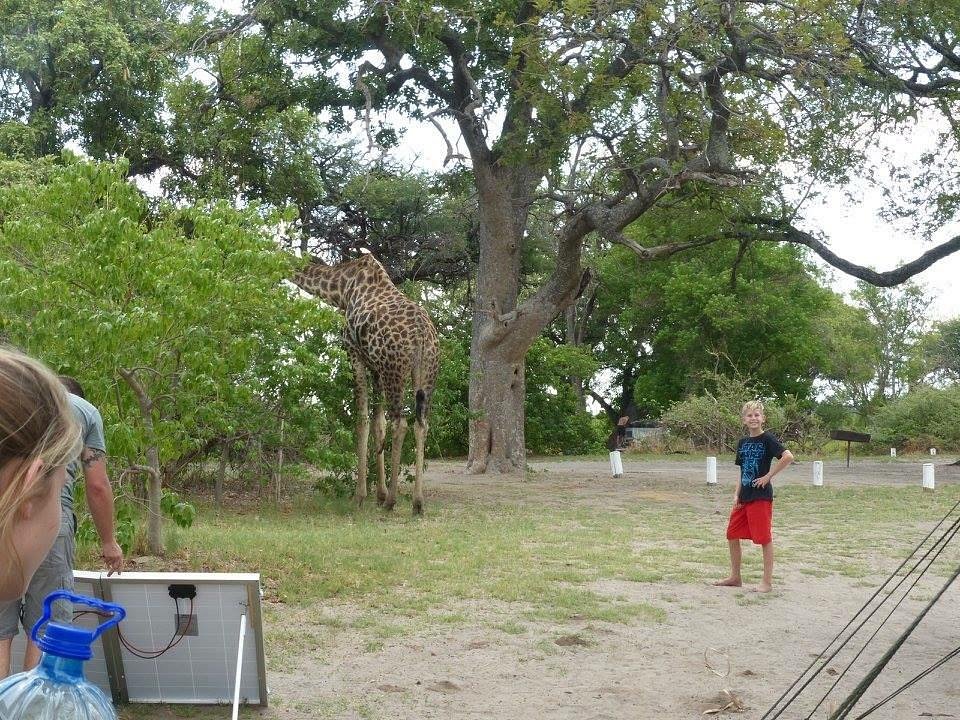
Moremi covers roughly 4,800 square kilometers on the eastern side of the Okavango Delta and was the first reserve in Africa created by a local community, the BaTawana people, in 1963. It combines permanent water, seasonal floodplains, mopane woodland and lagoons, which is why it delivers some of the most consistent game viewing on the continent, including large predator populations and one of Africa’s strongholds for the African wild dog.
This guide covers everything you need to plan a successful Moremi camping trip: the four public campsites and how they compare, how the booking system works, updated 2026 park fees, the best time to visit, vehicle requirements, a sample itinerary, a complete packing list and the safety rules that keep campers and wildlife out of trouble.
| 2026 Travel Advisory: Check Road Status Before You Go
Heavy rain and seasonal flooding closed Moremi in early 2026. The reserve reopened on 13 April 2026 with restricted access: Third Bridge was closed until further notice, the Khwai to Xakanaxa route was impassable, and the Khwai to South Gate route was rated difficult. Conditions improve through the dry season, but tracks, bridges and water crossings change from year to year. Before departure, confirm current access with your campsite operator, the Department of Wildlife and National Parks (DWNP) office in Maun, and the gate staff on arrival. Build buffer time into every driving day. |
Moremi Camping at a Glance
| Detail | Information |
| Location | North-eastern Okavango Delta, Ngamiland, northern Botswana |
| Nearest town | Maun (approx. 100 km to South Gate) |
| Public campsites | South Gate (Maqwee), Third Bridge, Xakanaxa, North Gate (Khwai) |
| Campsite operators | Kwalate Safaris (South Gate, Xakanaxa), Xomae Group (Third Bridge), SKL Camps (North Gate) |
| Park entry (international adult) | BWP 270 per person per calendar day (from April 2026) |
| Fencing | None. All campsites are open to wildlife |
| Vehicle needed | High-clearance 4×4 with low-range gearing |
| Fuel inside the reserve | None. Fill up in Maun or Kasane |
| Best time to camp | May to October (peak game viewing July to October) |
| Recommended stay | 3 to 5 nights, ideally split between two campsites |
Why Camp in Moremi Game Reserve?
Moremi has a wide choice of luxury lodges, so why sleep in a tent? Because camping offers something no lodge can fully replicate: total immersion in the reserve at a fraction of the price.
- Unfenced wilderness. You share your campsite with whatever wanders through. Night sounds, early-morning visitors and fresh tracks are part of the experience.
- Prime locations. The public campsites sit inside the reserve in some of its richest game areas, so your first and last game drives of the day begin the moment you leave camp.
- Value for money. Fully inclusive lodges in Moremi commonly cost US$700 to over US$1,500 per person per night in peak season. A self-drive camping trip costs a fraction of that, even after vehicle hire and fees.
- Freedom and flexibility. You set your own pace, stay at a sighting as long as you like and follow fresh tracks on your own schedule.
- Diverse habitats. In a single day you can drive through mopane forest, open floodplains, papyrus-fringed lagoons and riverine woodland along the Khwai River.
Moremi’s Public Campsites Explained
Moremi has four public campsites, each run by a private concession company on behalf of the government. Each campsite contains a number of numbered individual sites (stands), typically with a fire or braai area and access to a shared ablution block. There is no electricity at the stands and no fencing anywhere.
1. Third Bridge Campsite
Operator: Xomae Group
Third Bridge is the most famous and most requested campsite in Moremi, named after the third of a series of rustic log-pole bridges over the Sekiri River. The campsite sits close to permanent water and the surrounding floodplains and is well known for lion activity, regular wild dog sightings and excellent birdlife. It is also close to the Mboma boat station, from which motorboat trips into the delta waterways can be arranged.
Third Bridge offers around 10 individual stands with shared ablutions and water standpipes. Because demand is so high, sites for July to October are often fully booked many months in advance. The campsite was closed after the early-2026 floods, so always check its current status.
| Wildlife Warning at Third Bridge
Third Bridge has a long history of bold animals, including lions and hyenas walking through camp at night and baboons raiding unattended food in the day. Never swim in the river: crocodiles and hippos are present, and the water near the bridge has been the site of fatal incidents in the past. |
2. Xakanaxa Campsite
Operator: Kwalate
Xakanaxa (pronounced roughly “ka-ka-NA-ka”) lies on the edge of the Xakanaxa Lagoon in one of the most scenic parts of Moremi, surrounded by large trees, channels and lagoons. It is a superb base for both land and water safaris, as several lodges and boat operators work in the area. Expect elephants in camp, hippos grunting at night, and good chances of leopard, lion and a wide range of water birds, including the heronries for which the lagoon area is known.
Xakanaxa is often recommended as the best all-round option for shorter stays because of its central position. It can be busier than the other campsites and, being close to water, mosquitoes can be heavy after the rains.
3. North Gate (Khwai) Campsite
Operator: SKL Camps (Savuti, Khwai, Linyanti)
North Gate sits just inside the reserve beside the Khwai River entrance, across from Khwai village. Its large, well-shaded stands lie under tall riverine trees, and the ablution blocks have generally been well maintained. The Khwai River floodplain is one of the best game areas in northern Botswana, with big herds of elephant, regular leopard sightings, lion, hippo and abundant antelope such as red lechwe and sable on the woodland fringes.
North Gate is the natural entry or exit point if you are driving between Moremi and Savuti or Chobe. It is also convenient for mokoro excursions run by the Khwai community, which can usually be arranged nearby.
4. South Gate (Maqwee) Campsite
Operator: Kwalate Safaris
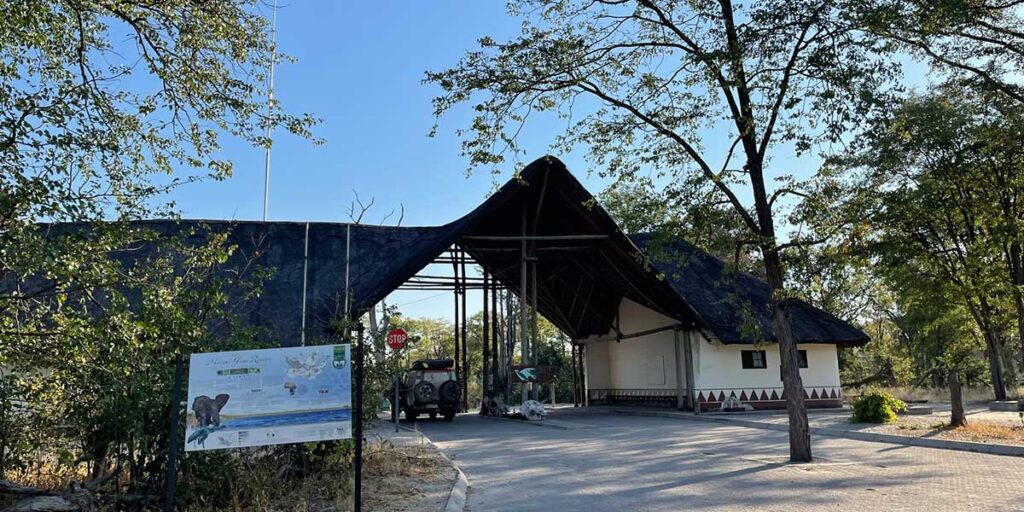
South Gate campsite lies right next to Moremi’s main southern entrance, the closest point to Maun. Its biggest advantage is convenience: if you leave Maun late or are delayed on the road, you can still reach camp before the gate closes. Game viewing immediately around South Gate is generally quieter than further north, so most travellers use it as a first or last night rather than a main base. When the more popular campsites are fully booked, South Gate often still has space.
Campsite Comparison
| Campsite | Operator | Best for | Wildlife highlights | Things to know |
| Third Bridge | Xomae Group | Predator viewing, classic Moremi atmosphere | Lion, wild dog, hyena, birdlife | Books out earliest; bold animals in camp; flood-sensitive |
| Xakanaxa | Kwalate Safaris | Lagoon scenery, boat trips, central base | Elephant, hippo, leopard, water birds | Can be busy; mosquitoes after rains |
| North Gate (Khwai) | SKL Camps | Khwai River drives, links to Savuti/Chobe | Elephant, leopard, lion, sable, lechwe | Large shaded stands; good ablutions |
| South Gate (Maqwee) | Kwalate Safaris | Late arrivals from Maun, overflow | Quieter general game | Most likely to have availability |
Camping Just Outside Moremi
If you cannot secure a site inside the reserve, several campsites lie close to its boundaries. They are often cheaper, sometimes wilder, and help channel tourism income to local communities.
- Khwai Community Campsites (Magotho and others). Run by the Khwai Development Trust in the concession east of North Gate. The Khwai concession allows activities not permitted inside the reserve, such as night drives and walking with licensed guides. Facilities are minimal, and some sites have no water or ablutions, so you must be fully self-sufficient.
- Kaziikini Campsite. Operated by the Sankuyo community on the Maun to South Gate road, roughly 30 km before South Gate. A practical overnight stop with a cultural village on site.
- Private camps near Shorobe and the buffer zone. A handful of privately run campsites lie along the approach road from Maun, useful for staging before an early entry.
Keep in mind that staying outside means a longer drive into the reserve each day, and park entry fees are charged per calendar day every time you re-enter.
How to Book Camping in Moremi
Moremi’s booking system confuses many first-time visitors because it involves two separate payments to two different organizations: one for the campsite and one for park entry. You cannot enter the reserve to camp without both.
- Choose your dates and route. Decide which campsites you want and in what order. Moremi works best as a linear route, for example South Gate to Third Bridge to Xakanaxa to North Gate, or the reverse.
- Book each campsite with its operator. Contact Xomae Group for Third Bridge, Kwalate Safaris for Xakanaxa and South Gate, and SKL Camps for North Gate. Request specific stand numbers if you have preferences. Expect to pay in full to confirm.
- Book early. For July to October, try to book 9 to 12 months ahead, especially for Third Bridge. Shoulder and green season dates are much easier to secure.
- Keep your confirmation vouchers. Print them and save digital copies. Gate staff and DWNP officers will ask for proof of your campsite booking.
- Pay park entry fees to DWNP. Fees can be paid in advance at the DWNP reservations office in Maun (card payment has generally been accepted there) or at the gate. Payment methods at gates have varied over the years, so carry enough Botswana pula in cash as a backup.
- Check in at the gate and the campsite office. Sign the register at the gate, then report to the campsite reception on arrival to be shown your stand.
| Pro Tip: Fully Booked? Don’t Give Up
Cancellations happen regularly. Ask operators to place you on a waiting list, check back periodically, and consider a combination such as one night at South Gate plus nights at Xakanaxa or North Gate. A tour operator such as Marriott Safaris Africa can also secure campsites as part of a packaged self-drive or guided camping safari. |
Moremi Camping Fees 2026
Botswana revised its national park and reserve fees with effect from 1 April 2026, the first major review in roughly two decades. Moremi and Chobe sit in the top fee category. Entry fees are charged per person per calendar day, which means both your arrival and departure days count.
Park Entry Fees (Moremi and Chobe)
| Visitor category | Adult (per day) | Child 8 to 17 (per day) |
| International visitor (non-resident) | BWP 270 (approx. US$20) | BWP 135 |
| SADC resident | BWP 205 | Approx. BWP 102 |
| Botswana citizen | BWP 30 | BWP 15 |
Other Charges
| Charge | Who you pay | Notes |
| Vehicle entry fee | DWNP | Charged per vehicle per day; foreign-registered vehicles pay more than Botswana-registered ones. Confirm the current rate when paying. |
| Campsite fee | Campsite operator | Charged per person per night; rates differ between operators and between international, SADC and citizen visitors. Typically quoted in US$ or pula and includes government tax. |
| Boat or mokoro trips | Activity operator | Optional; priced per boat or per person. |
Sample Budget: 2 Adults, 3 Nights Self-Drive Camping
The table below gives an indicative budget for two international visitors spending three nights (four calendar days) in Moremi in a rented 4×4 with rooftop tent. Figures are estimates for planning purposes only.
| Cost item | Calculation | Estimated cost |
| Park entry fees | BWP 270 x 2 people x 4 days | BWP 2,160 (approx. US$160) |
| Vehicle entry fees | Per day x 4 days | Varies by vehicle registration |
| Campsite fees | 2 people x 3 nights, depending on operator | Approx. US$250 to US$450 |
| 4×4 rental with rooftop tent and camping kit | Approx. US$150 to US$250 per day | Varies by vehicle and season |
| Fuel | Maun round trip plus game drives | Depends on vehicle consumption |
| Food, water and firewood | Self-catering from Maun | Approx. US$30 to US$60 per day |
| Optional boat trip | Mboma or Xakanaxa | Priced per boat or per person |
Best Time to Go Camping in Moremi
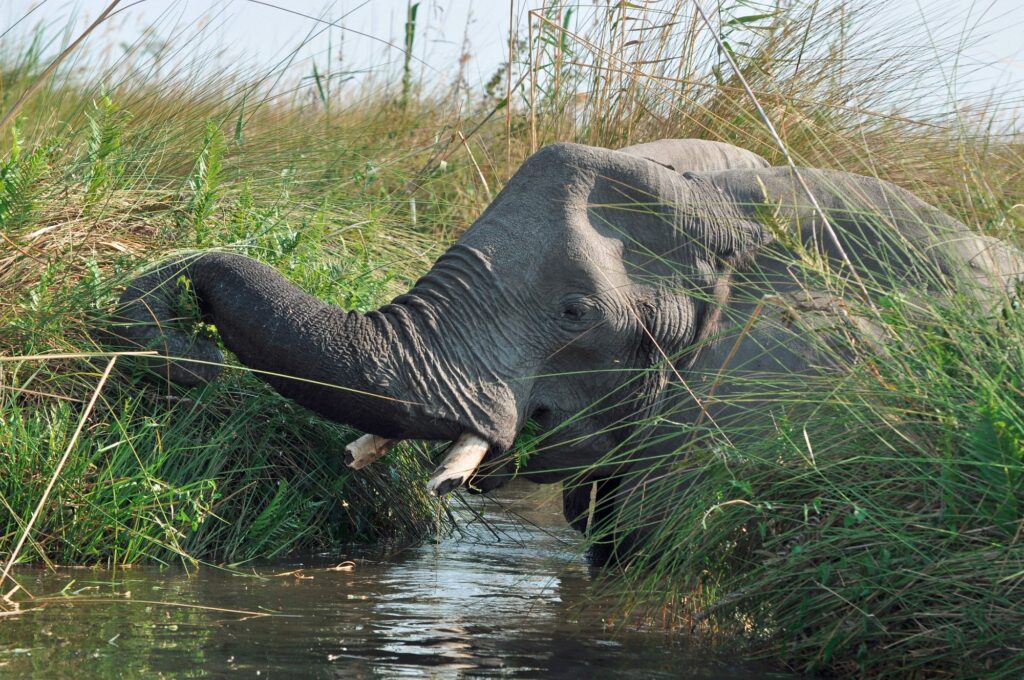
Moremi is a year-round destination, but the camping experience changes dramatically with the seasons. Interestingly, the delta’s annual flood arrives from the Angolan highlands and peaks in the middle of the dry season, so water levels inside Moremi are often highest between about June and August, even though rain has long stopped.
| Season | Months | Conditions | Camping verdict |
| Early dry season | May to June | Cool, clear days; cold nights; vegetation thinning; flood waters rising | Excellent. Quieter campsites and good game viewing |
| Peak dry season | July to October | Dry, sunny; animals concentrate near water; October very hot | Best wildlife viewing. Book far ahead |
| Early rains | November to December | Heat, first storms, newborn antelope, migrant birds arrive | Good for birders; some tracks deteriorate |
| Green season | January to April | Heavy rain, flooded tracks, lush vegetation, fewer visitors | Challenging. Some areas and routes may close |
| Season Tips for Campers
June and July nights can drop close to freezing, so pack a warm sleeping bag and layers. October daytime temperatures can exceed 40°C, so plan midday rest in shade. During and after the rains, deep water crossings and black-cotton mud make some routes dangerous or impassable. |
Getting to Moremi Game Reserve
From Maun (Most Common)
Maun is the main gateway to Moremi and the place to stock up on fuel, food, water, firewood and cash. From Maun, drive north-east on the tarred road through Shorobe. The tar ends after Shorobe and gives way to gravel and then sand through the buffer zone and the Sankuyo area to South Gate, roughly 100 km in total. Allow around 2.5 to 3 hours, plus time for the gate formalities.
From Kasane and Chobe
Many self-drivers combine Moremi with Chobe National Park. The classic overland route runs from Kasane through Chobe to Savuti, then south to Khwai and North Gate. This is a demanding full-day drive on deep sand, and the Savuti to Khwai section is best tackled in convoy or with solid off-road experience.
By Air
Light aircraft fly from Maun and Kasane to airstrips inside and near Moremi, including Xakanaxa. Flying in suits lodge guests and fully supported mobile camping safaris, where the operator brings vehicles and equipment.
| Route | Approx. distance | Driving time | Road type |
| Maun to South Gate | About 100 km | 2.5 to 3 hours | Tar, then gravel and sand |
| South Gate to Third Bridge | About 50 km | 1.5 to 2.5 hours | Sand; some water crossings |
| Third Bridge to Xakanaxa | About 25 km | 1 to 1.5 hours | Sand, log bridges, seasonal water |
| Xakanaxa to North Gate | About 45 km | 2 to 3 hours | Sand, mopane, possible flooded sections |
| North Gate to Savuti | About 70 km | 3 to 4 hours | Deep sand |
Vehicle and Self-Drive Requirements
Moremi is strictly 4×4 territory. Deep sand, mud, water crossings and the famous log-pole bridges demand a capable, well-equipped vehicle and a driver who knows how to use it.
- High-clearance 4×4 with low range. Toyota Land Cruiser and Toyota Hilux are the most common choices for good reason.
- Camping setup. A rooftop tent keeps you off the ground and is quick to pitch. Ground tents work but demand more vigilance with wildlife.
- Fuel range. There is no fuel inside Moremi. Fill up in Maun or Kasane and carry jerrycans or a long-range tank. Sand driving can double normal fuel consumption.
- Carry at least 5 litres of drinking water per person per day, plus extra for cooking and emergencies. Campsite water is not guaranteed to be drinkable.
- Recovery equipment. Tyre deflator and compressor, tow strap, shovel, high-lift jack or air jack, sand tracks, and two spare tyres if possible.
- Signage is limited. Use GPS with Tracks4Africa or equivalent offline maps, and carry a paper map as backup.
- Mobile coverage is very limited or absent inside the reserve. A satellite communicator or satellite phone is strongly recommended.
| Driving Tips for Moremi
Deflate your tyres to around 1.6 to 1.8 bar for deep sand, and reinflate before returning to tar. Walk water crossings only if it is safe to do so; otherwise observe other vehicles or wait. Never attempt a crossing you cannot see the bottom of when crocodiles may be present. Cross log bridges slowly in low range, with a spotter guiding your wheels. Keep to designated tracks. Off-road driving is prohibited and damages fragile habitat. Be at camp before the gates close. Driving after dark inside the reserve is not permitted. |
What to Expect at a Moremi Campsite
Campsites in Moremi are basic but functional. Facilities and maintenance standards vary between operators and from year to year, so treat the list below as a guide.
- Individual stands spread out for privacy, usually with a fire pit or braai area and sometimes a tap or standpipe nearby.
- Shared ablution blocks with flush toilets and showers. Hot water depends on solar or wood-fired boilers and is not guaranteed.
- No electricity. Bring a dual-battery system, solar panel or power bank for lights, fridges and devices.
- No restaurants. Very limited essentials may be available at some campsite offices, but never rely on buying supplies inside the reserve.
- Collecting wood inside the reserve is not allowed. Buy firewood in Maun or along the approach roads.
- Carry all waste out with you. Animals tear into bins and bags left at camp.
Wildlife and Activities While Camping
Moremi supports an outstanding variety of wildlife: lion, leopard, cheetah, spotted hyena and African wild dog, along with elephant, buffalo, giraffe, zebra, hippo, crocodile and many antelope, including red lechwe, tsessebe, kudu, sable and the shy sitatunga. Birdlife is exceptional, with over 400 species recorded across the delta region.
Top Game Drive Areas
- Third Bridge and Mboma Island loops: floodplains, palm islands and open grassland favoured by lions and wild dog.
- Xakanaxa Lagoon area: waterbirds, hippo pools and dense woodland where leopards are often seen.
- Khwai River floodplain: elephant herds, leopard in the riverine trees and frequent predator activity.
- Mopane Tongue and Paradise Pools: quieter woodland and seasonal pans that reward patient exploration.
- Dead Tree Island and Bodumatau area: open plains with good general game and photogenic scenery.
Activities Beyond Game Drives
- Motorboat trips from Mboma boat station near Third Bridge or the Xakanaxa area, depending on water levels.
- Mokoro excursions in traditional dugout-style canoes, commonly arranged through the Khwai community near North Gate.
- Birdwatching from camp, especially in the early morning and around lagoons.
- Night drives and guided walks are not permitted inside the reserve but are offered with licensed guides in the neighbouring Khwai concession.
Camping Safety Rules in Moremi
Moremi’s campsites are wild places. Incidents are rare when campers follow the rules, but complacency can be dangerous. These guidelines are essential.
- Stay in your tent at night. Once you are inside for the night, keep it zipped completely and never sleep in the open.
- Use a strong torch after dark. Scan the area with a torch before leaving your tent or vehicle, and look for eye shine. Never walk to the ablution block at night without checking first; drive there if necessary.
- Lock away all food. Store food, rubbish and toiletries in your vehicle. Hyenas, honey badgers and baboons are skilled raiders, and elephants are drawn to fruit, especially citrus.
- Never feed animals. Fed animals become aggressive and are often destroyed as a result.
- Keep a safe distance. Give elephants and buffalo plenty of space, and never get between a hippo and water.
- Stay out of the water. Crocodiles and hippos inhabit the rivers and lagoons. Do not swim, wade or wash at the water’s edge.
- Supervise children closely at all times. Many experienced campers prefer to visit Moremi with older children only.
- Respect gate times. Gates generally open around sunrise and close around sunset, roughly 06:00 to 18:30 in winter and 05:30 to 19:00 in summer. Confirm exact times when you enter.
- Travel prepared for emergencies. Carry a well-stocked first aid kit, malaria prophylaxis on medical advice, and comprehensive travel insurance that covers medical evacuation.
| Health Note: Malaria
Moremi lies in a malaria area. Speak to a travel health professional before your trip about prophylaxis, and use insect repellent, long sleeves and closed tents in the evening, particularly during and after the rainy season. |
Moremi Camping Packing Checklist
Camping Gear
- Rooftop or ground tent, plus sleeping bags rated for cold winter nights
- Camp chairs, table, cooking stove with spare gas, pots, pans and utensils
- Fridge or freezer with dual-battery system, plus a cooler box as backup
- Headlamps, a powerful spotlight and spare batteries
- Firewood, firelighters and a braai grid bought in Maun
Vehicle and Recovery
- Jerrycans or long-range tank, tyre gauge, compressor and deflator
- Sand tracks, shovel, tow strap, shackles and a jack suited to sand
- Tyre repair kit and at least one full-size spare
- GPS with offline maps, paper map and satellite communicator
Food and Water
- Drinking water: at least 5 litres per person per day, plus a reserve
- Easy, low-waste meals; pre-marinated meat frozen in Maun works well
- Sealable containers and heavy-duty rubbish bags
Clothing and Personal Items
- Neutral-coloured clothing in layers: fleece and warm jacket for winter mornings
- Wide-brimmed hat, sunglasses, high-SPF sunscreen and lip balm
- Insect repellent, antihistamines and a comprehensive first aid kit
- Passport, driving licence, vehicle papers, campsite vouchers and DWNP receipts
- Binoculars, camera with telephoto lens, spare memory cards and power banks
- Pula in cash for fees, tips and emergencies
Sample 5-Day Moremi Camping Itinerary
This itinerary moves from south to north through the reserve, allowing you to experience Moremi’s main habitats while keeping daily driving distances manageable. Adjust it to campsite availability and current road conditions.
| Day | Route | Overnight | Highlights |
| Day 1 | Maun to South Gate to Third Bridge | Third Bridge | Stock up in Maun, enter at South Gate, game drive to camp |
| Day 2 | Full day around Third Bridge | Third Bridge | Dawn predator search, optional Mboma boat trip, sunset drive |
| Day 3 | Third Bridge to Xakanaxa | Xakanaxa | Log bridges, lagoon scenery, waterbirds, leopard country |
| Day 4 | Xakanaxa to North Gate | North Gate (Khwai) | Mopane woodland, Khwai River floodplain, elephant herds |
| Day 5 | North Gate to Maun or onward to Savuti | Exit | Morning river drive; optional Khwai mokoro trip before departing |
| Make It Longer
If time allows, spend two nights at each campsite. Extra days dramatically improve your chances of rare sightings like wild dog and leopard, and reduce the time spent packing and unpacking camp. Moremi pairs perfectly with Savuti and Chobe for a 10 to 14-day northern Botswana self-drive. |
Self-Drive, Guided Camping or Lodge? Choosing Your Style
| Style | How it works | Best for | Considerations |
| Self-drive camping | You hire a fully equipped 4×4 and book campsites and fees yourself | Experienced, independent travellers on a moderate budget | Demands 4×4 skills, careful planning and self-sufficiency |
| Guided mobile camping safari | An operator supplies guide, vehicle, tents, meals and crew | Travellers wanting the camping experience without the logistics | Costs more than self-drive; group departures can reduce cost |
| Luxury tented camp or lodge | Fully inclusive stays with guided drives, often fly-in | Comfort seekers and shorter trips | Highest cost; limited independence |
Responsible Camping in Moremi
Moremi’s wilderness exists today because the BaTawana community chose to protect it. Every visitor shares that responsibility.
- Carry out everything you bring in, including food scraps, cigarette ends and tissue.
- Use only biodegradable soap, and never wash in rivers or lagoons.
- Stay on designated roads and respect closed tracks.
- Keep noise low, especially at night and at sightings.
- Support community-run campsites and activities, such as Khwai mokoro trips, which give local people a direct stake in conservation.
Frequently Asked Questions
Is it safe to camp in Moremi Game Reserve?
Yes, provided you follow the rules. Thousands of people camp in Moremi every year without incident. The key is respecting wildlife: stay in your tent at night, store all food in your vehicle, use a torch after dark and never approach animals.
Are Moremi campsites fenced?
No. None of the public campsites in Moremi are fenced. Wildlife, including elephants, lions and hyenas, regularly moves through camp, which is part of what makes the experience so special.
Which is the best campsite in Moremi?
It depends on your priorities. Third Bridge is the most iconic and famous for predators, Xakanaxa offers lagoon scenery and boat trips, North Gate gives access to the outstanding Khwai River area, and South Gate is the most convenient from Maun. Many travelers split their stay between two campsites.
How far in advance should I book?
For July to October, aim for 9 to 12 months in advance, especially for Third Bridge. For the shoulder and green seasons, a few weeks to a few months is often enough.
Can I pay park fees at the gate?
Park fees can be paid at the DWNP office in Maun or at the gate, but payment methods at gates have varied over the years. Paying in advance in Maun and carrying pula in cash as a backup is the safest approach. You will also need proof of your campsite booking.
Do I need a 4×4 to camp in Moremi?
Yes. A high-clearance 4×4 with low-range gearing is essential. The reserve has deep sand, mud, water crossings and log bridges that ordinary vehicles cannot handle.
Is there fuel or food available inside Moremi?
No fuel is available inside the reserve, and you should not rely on buying food there. Stock up fully in Maun or Kasane before entering.
Can I camp in Moremi during the rainy season?
It is possible, but conditions can be difficult. Heavy rain floods tracks, some areas close, and travel times increase. In early 2026, for example, flooding temporarily closed the reserve and parts of it remained inaccessible after reopening. Always check conditions before travelling.
Are children allowed to camp in Moremi?
There is no blanket ban, but because campsites are unfenced, children must be supervised at all times. Many families prefer to wait until children are older and understand wildlife safety rules.
Can I do night drives or walking safaris in Moremi?
Not inside the reserve itself. Night drives and guided walks are, however, offered in the neighbouring Khwai concession with licensed guides.
| Plan Your Moremi Camping Safari with Marriott Safaris Africa
Whether you want a fully equipped 4×4 with rooftop tent for an independent adventure or a guided camping safari with everything taken care of, Marriott Safaris Africa can help with vehicle hire, campsite bookings, park fee guidance and a tailor-made route through Moremi, Khwai, Savuti and Chobe. Contact our team today to start planning your night under the Okavango sky. Marriott Safaris Africa — Perfection Anytime |