What Is the Closest City to the Okavango Delta?
What Is the Closest City to the Okavango Delta, A complete guide to Maun, the gateway town of the Okavango, plus every other town and city that puts you within reach of Botswana’s legendary inland delta
| Quick Answer
The closest town to the Okavango Delta is Maun, in north-western Botswana. It sits on the banks of the Thamalakane River at the south-eastern tip of the Delta and is universally known as the “Gateway to the Okavango.” Maun is home to Maun International Airport (MUB), from which light aircraft fly guests into Delta camps in roughly 20–60 minutes. By road, Moremi Game Reserve’s South Gate is around 100 km away. Strictly speaking, Maun is a large town rather than a city. The nearest places officially classed as cities are Francistown (about 490 km by road) and the capital Gaborone (roughly 900 km by road). |
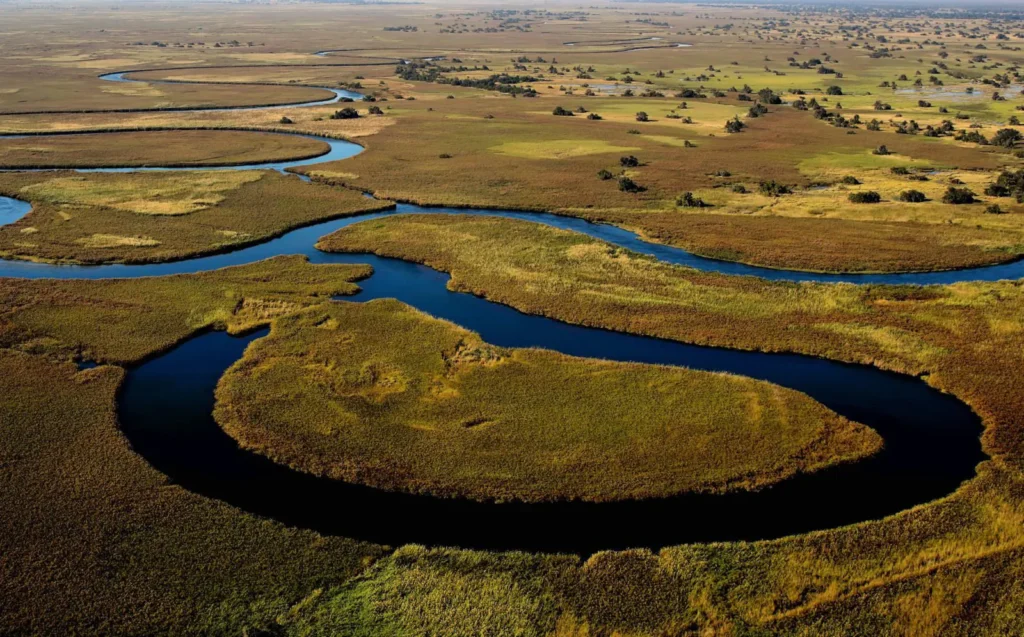
If you are planning a Botswana safari, one of the first practical questions you will face is where to base yourself before heading into the Okavango Delta. The Delta is one of the largest inland deltas on earth and a UNESCO World Heritage Site, but it is also remote, roadless across much of its core, and served by a small network of gateway settlements rather than a big metropolis. Understanding which town is closest—and how each one connects to the Delta—makes it much easier to plan flights, choose between a fly-in or self-drive safari, and avoid unnecessary travel days.
This guide explains why Maun is the answer to the question, how far it is from the Delta’s key areas, which other towns and cities act as gateways, how to reach Maun from around the region, and what to expect once you arrive.
Understanding the Okavango Delta’s Geography
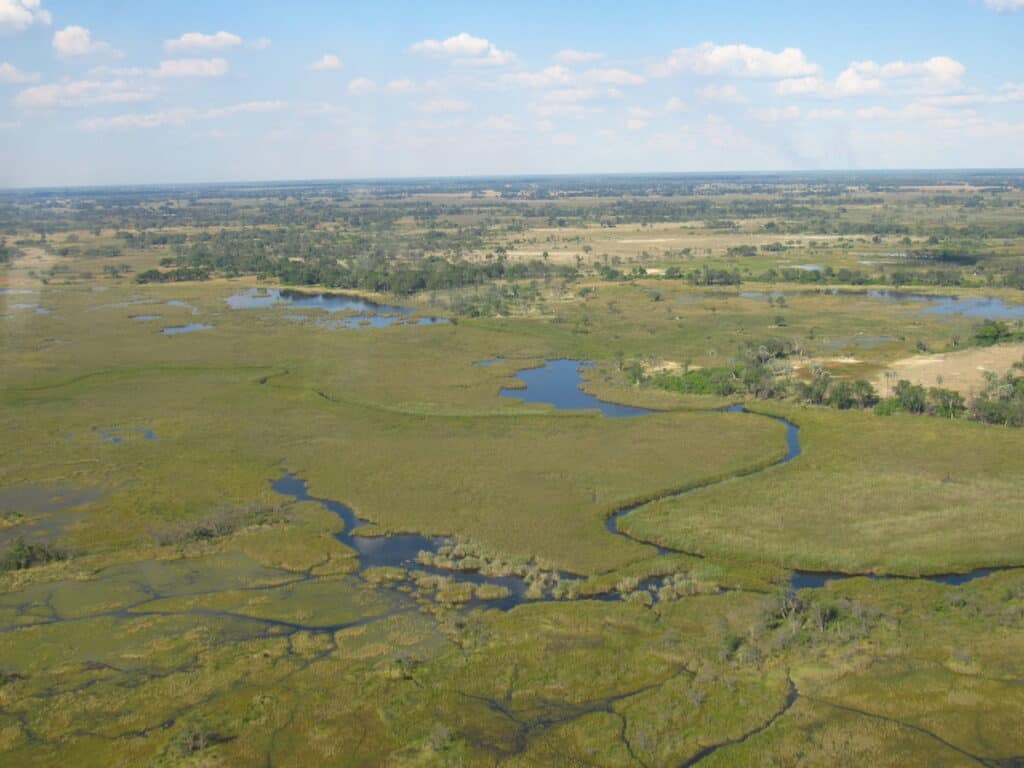
The Okavango River rises in the highlands of Angola, flows through the Caprivi (Zambezi) Strip of Namibia and enters north-western Botswana at Mohembo. Instead of reaching the sea, it spreads out across the flat sands of the Kalahari Basin, forming a vast fan of channels, lagoons, floodplains and islands before evaporating or soaking into the ground.
Geographers usually divide the Delta into three zones, and each has a different “closest town”:
- The Panhandle (north-west): a narrow, permanently flooded corridor where the river enters Botswana. The nearest settlements are Shakawe, Sepupa and Seronga.
- The Delta fan and permanent swamps (central): the heart of the Delta, reached almost exclusively by light aircraft, boat or mokoro. Maun is the main air hub serving this zone.
- The seasonal swamps and drylands (south and east): including Moremi Game Reserve and the Khwai area, where Maun is the closest town by road.
Because the Delta covers such a large area, “closest” depends on which part you mean. For the vast majority of travellers—those heading to Moremi, Khwai, the private concessions or the central swamps—the answer is clearly Maun.
Maun: The Gateway to the Okavango Delta
Maun began as the tribal capital of the Batawana people in the early twentieth century and grew into a frontier town serving cattle ranchers, hunters and traders. Today it is Botswana’s tourism capital and one of the country’s largest towns, with a population in the region of 85,000 people. Almost every Okavango safari passes through it at some point.
Why Maun Is the Closest and Most Practical Base
- Location: Maun lies right on the south-eastern edge of the Delta, where the Thamalakane River carries floodwaters out of the swamps. On a high flood year, water can reach the town itself.
- Air access: Maun International Airport is the busiest airport in the region for light aircraft and the departure point for scheduled and charter flights to dozens of Delta airstrips.
- Road access: Tarred roads link Maun with Nata, Kasane, Francistown, Ghanzi and the Namibian border, while sand tracks lead north into Moremi Game Reserve and the Khwai area.
- Services: Maun has banks and ATMs, supermarkets, fuel stations, 4×4 rental and repair workshops, camping-gear shops, pharmacies, a hospital and private clinics—essentials you will not find inside the Delta.
- Operators: Most safari companies, mokoro polers’ trusts, scenic flight operators and air charter firms are based in or near Maun.
Distances From Maun to Key Okavango Delta Points
The table below gives approximate distances and travel times. Road times in Botswana vary considerably with sand depth, flood levels and season, so always build in extra time.
| Destination | Approx. Distance | Typical Travel Time | How You Get There |
| Moremi South Gate (Maqwee) | c. 100 km | 2–3 hours | 4×4 on tar then deep sand |
| Third Bridge (Moremi) | c. 150 km | 4–5 hours | 4×4 via South Gate |
| Khwai / Moremi North Gate | c. 140–180 km | 3–5 hours | 4×4 via Shorobe and Mababe tracks |
| Central Delta camps (e.g. Chief’s Island area) | 80–120 km by air | 25–45 minutes | Light aircraft from Maun |
| Mokoro stations (Boro / Mboma area) | 30–60 km | 1–2 hours | 4×4 transfer or motorboat |
| Shakawe (Panhandle) | c. 380 km | 5–6 hours | Tarred road via Sehithwa and Gumare |
| Good to Know
Within the Okavango Delta there are no towns, shops or fuel stations. Once you leave Maun, you depend on your camp, lodge or what you carry in your vehicle. Stock up on fuel, water, cash and supplies in Maun before you go. |
Other Towns and Villages Near the Okavango Delta
While Maun dominates, several smaller settlements sit closer to specific parts of the Delta. They are useful if you are exploring the Panhandle, travelling overland from Namibia, or looking for a quieter, more local experience.
Shakawe
Shakawe is the main village of the Okavango Panhandle, close to the Mohembo border post with Namibia. Riverside fishing and birding lodges line the banks nearby, and it is the jumping-off point for the Tsodilo Hills World Heritage Site, famous for its thousands of San rock paintings. It has a small airstrip, fuel and basic shops.
Sepupa and Seronga
Sepupa, on the western bank of the Panhandle, has a boat station linking it across the river to Seronga on the eastern side. Seronga is home to a community-run mokoro trust offering affordable, authentic mokoro trips into the north-eastern part of the Delta.
Gumare and Etsha
These villages along the western edge of the Delta are best known for the fine basketry woven by Hambukushu and Bayei women. They make worthwhile stops on the road between Maun and Shakawe.
Kasane
Kasane is not on the Delta, but it is Botswana’s second safari hub and the gateway to Chobe National Park. Many itineraries combine Chobe and the Okavango, flying between Kasane and Maun or a Delta airstrip in around an hour. By road, Kasane is roughly 600 km from Maun via Nata on tar, or a more adventurous route through Chobe’s Savuti and into Moremi on sand tracks.
Ghanzi
Ghanzi lies about 280 km south-west of Maun on the Trans-Kalahari corridor. It is a common overnight stop for travellers driving in from Namibia and a base for San cultural experiences and the Central Kalahari Game Reserve.
Gateway Settlements at a Glance
| Town | Location Relative to the Delta | Approx. Distance to Maun | Best For |
| Maun | South-eastern edge | — | Fly-in safaris, Moremi, Khwai, mokoro trips |
| Shakawe | Panhandle (north-west) | c. 380 km | Fishing, birding, Tsodilo Hills |
| Seronga | Panhandle (north-east bank) | c. 400 km (via Sepupa ferry) | Community mokoro trips |
| Gumare / Etsha | Western edge | c. 250–300 km | Basketry, overland stops |
| Kasane | North-east (Chobe) | c. 600 km by road | Chobe combos, Victoria Falls link |
| Ghanzi | South-west (Kalahari) | c. 280 km | Overland from Namibia, CKGR |
The Nearest Actual Cities
If you are asking specifically about an officially designated city, the picture changes. Botswana has only a handful of places with city status, and none are close to the Delta:
| City / Hub | Country | Approx. Road Distance to Maun | Flight Option to Maun |
| Francistown | Botswana | c. 490 km | Limited; most travellers drive or fly via Gaborone |
| Gaborone (capital) | Botswana | c. 900 km | Domestic flights, about 1.5 hours |
| Victoria Falls | Zimbabwe | c. 670 km (via Kasane) | Regional flights / charters |
| Livingstone | Zambia | c. 680 km (via Kazungula) | Charters and connecting flights |
| Windhoek | Namibia | c. 800 km (via Mamuno and Ghanzi) | Regional connections available seasonally |
| Johannesburg | South Africa | c. 1,100 km | Direct flights, roughly 1 hr 45 min |
| Cape Town | South Africa | c. 1,900 km | Direct flights, roughly 2 hrs |
In practice, Johannesburg is the most important international city for Okavango travellers, because O.R. Tambo International Airport offers the most convenient onward connections to Maun. Airline schedules change, so always confirm current routes when booking.
How to Get to Maun
By Air
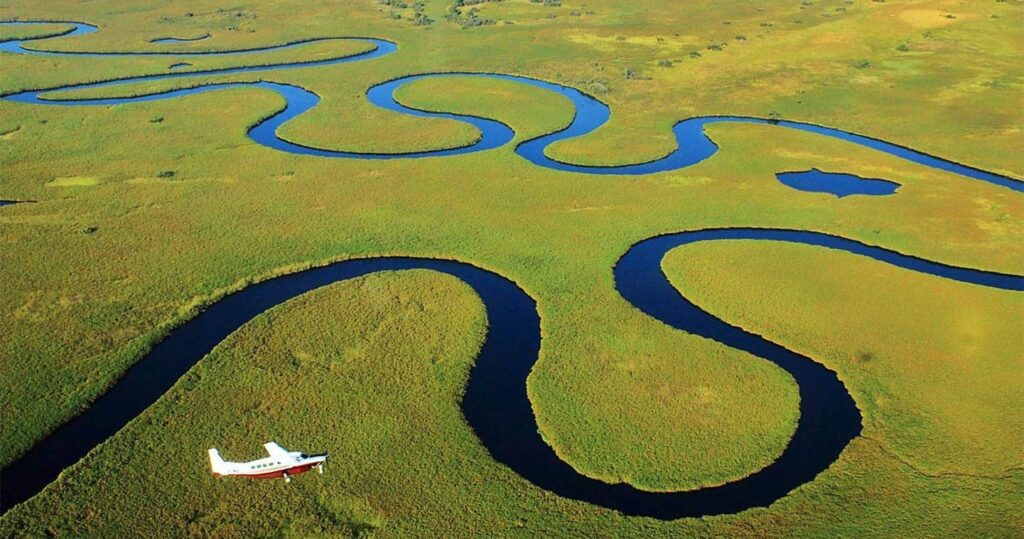
Most international visitors fly into Maun via Johannesburg, with direct services also operating from Cape Town and domestic flights from Gaborone and Kasane. Air Botswana and Airlink are the main carriers on these routes. From Maun, you transfer to a light aircraft operated by one of the local charter companies to reach your camp’s airstrip.
| Light Aircraft Luggage Rules
Bush flights into the Delta have strict luggage limits—typically around 20 kg per person including hand luggage, packed in soft-sided bags with no wheels or rigid frames. Some operators apply lower limits, so check with your safari company. Excess luggage can usually be stored in Maun. |
By Road
- From Kasane / Chobe: tarred A33 to Nata, then the A3 west to Maun (around 600 km, a full day).
- From Francistown and Gaborone: A1 north to Francistown, A3 to Nata and on to Maun.
- From Namibia (Windhoek): Trans-Kalahari Highway to the Buitepos–Mamuno border, then to Ghanzi and north to Maun.
- From Namibia (Caprivi / Zambezi Region): via the Mohembo border post to Shakawe, then south along the western edge of the Delta to Maun.
A high-clearance 4×4 is not essential for the tarred roads to Maun, but it is mandatory for driving into Moremi, Khwai and most of the Delta’s fringes. Watch out for livestock, donkeys and elephants on the roads, and avoid driving after dark.
Getting From Maun Into the Okavango Delta
Once in Maun, you have four main ways to experience the Delta, depending on your budget and travel style.
| Option | How It Works | Time From Maun | Suited To |
| Fly-in safari | Light aircraft to a private concession or lodge airstrip | 20–60 minutes | Luxury and mid-range travellers |
| Self-drive safari | 4×4 into Moremi or Khwai, camping at designated sites | 2–5 hours | Experienced 4×4 travellers |
| Mokoro day or overnight trip | Road or boat transfer to a mokoro station, then poled canoe | 1–2 hours to station | Budget and adventurous travellers |
| Scenic helicopter or plane flight | Aerial loop over the Delta, returning to Maun | 45–60 minute flights | Short stays, photographers |
Things to Do in Maun
Most visitors stay in Maun only a night or two, but the town has enough to fill a day pleasantly:
- Scenic flights: arguably the best way to grasp the scale of the Delta; helicopter flights with the doors off are especially popular with photographers.
- Mokoro excursions: day trips from Maun into the southern Delta with local polers.
- Thamalakane River: relaxed sundowners at riverside lodges, where hippos and birdlife are often visible.
- Nhabe Museum: a small museum and craft outlet focusing on the history and culture of Ngamiland.
- Maun Game Reserve: a small reserve along the river with walking trails and plains game.
- Crafts and baskets: look for Okavango basketry from Gumare and Etsha, sold in Maun’s curio shops.
Where to Stay in Maun
Accommodation clusters along the Thamalakane River and in the Matlapaneng area north of the town centre, as well as near the airport for convenient early flights.
| Tier | What to Expect | Ideal For |
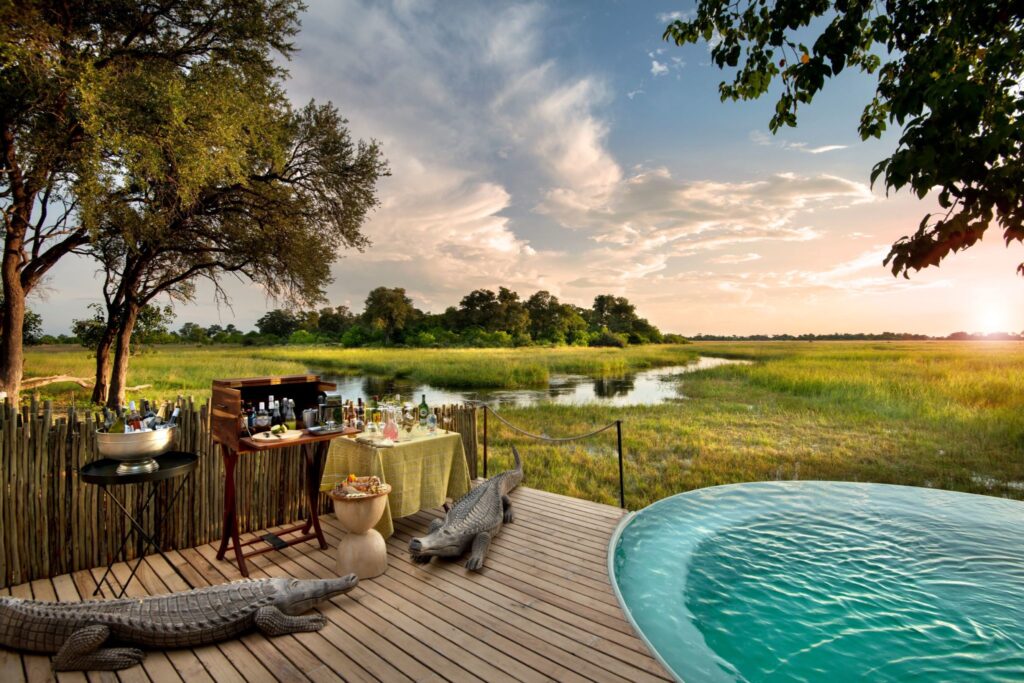
| Luxury | Boutique riverside lodges with pools, fine dining and private decks | Overnight before or after a high-end fly-in safari |
| Mid-range | Comfortable riverside lodges and chalets with restaurants and bars | Most fly-in and guided safari travellers |
| Budget | Guesthouses, backpacker lodges and riverside campsites | Self-drivers and overlanders |
Best Time to Visit the Okavango Delta
A quirk of the Okavango is that its flood peaks during the dry season. Rains falling in Angola from around November to March take months to travel downstream, so the floodwaters reach Maun from roughly June to August.
| Season | Months | What to Expect |
| Peak flood / dry season | June – October | Highest water levels, excellent mokoro conditions, prime game viewing as animals concentrate |
| Hot, dry build-up | October – November | Very hot, receding water, strong predator activity |
| Green / rainy season | December – March | Lush scenery, birding, newborn animals, lower rates; some roads difficult |
| Shoulder | April – May | Floods arriving, pleasant temperatures, good value |
Practical Tips for Travellers Using Maun as a Gateway
- Arrive a day early if you are connecting from a long-haul international flight, to protect your light-aircraft connection.
- Withdraw cash in Maun — Botswana pula and US dollars are useful for tips, park fees and community activities.
- Fuel up and carry spares if self-driving; the next reliable fuel may be hundreds of kilometres away.
- Book Moremi campsites well in advance, especially from July to October, as sites are limited and sell out.
- Take malaria precautions — northern Botswana, including the Delta, is a malaria-risk area. Consult a travel clinic before departure.
- Pack in soft bags and keep luggage within light-aircraft limits.
- Check entry requirements for Botswana before you travel, as visa rules vary by nationality.
Frequently Asked Questions
What is the closest city to the Okavango Delta?
The closest urban centre is Maun, a large town on the south-eastern edge of the Delta. The nearest officially designated cities are Francistown (about 490 km away) and Gaborone (about 900 km away).
How far is Maun from the Okavango Delta?
Maun sits on the Delta’s edge. Moremi Game Reserve’s South Gate is about 100 km by road, and most Delta camps are 20–60 minutes away by light aircraft.
Can I drive from Maun into the Okavango Delta?
You can drive a 4×4 into Moremi Game Reserve and the Khwai area, which are part of the Delta system. The central permanent swamps and private concessions are only reachable by air, boat or mokoro.
Is there an international airport near the Okavango Delta?
Yes. Maun International Airport (MUB) receives direct flights from Johannesburg and Cape Town, plus domestic flights from Gaborone and Kasane.
Which is better as a base, Maun or Kasane?
Maun is the base for the Okavango Delta; Kasane is the base for Chobe National Park. Many itineraries use both, flying between them.
Can I visit the Okavango Delta on a day trip from Maun?
Yes. Scenic flights and mokoro day trips depart from Maun, though staying at least two or three nights inside the Delta gives a far richer experience.
What is the closest town to the Okavango Panhandle?
Shakawe is the main village in the Panhandle, with Sepupa and Seronga also nearby.
| Plan Your Okavango Delta Safari With Marriott Safaris Africa
Whether you want a seamless fly-in safari from Maun, a self-drive adventure through Moremi and Khwai, or a combined Okavango, Chobe and Victoria Falls itinerary, our team can arrange flights, transfers, vehicles and accommodation for you. Marriott Safaris Africa — Perfection Anytime. |