Top Attractions in the Okavango Delta
Where It Is Located, What to See, and How to Experience Botswana’s Water Wilderness
Why the Okavango Delta Is Unlike Anywhere Else
Top Attractions in the Okavango Delta, Picture a river that never reaches the sea. Instead of flowing into an ocean, the Okavango River spills out across the sands of the Kalahari Basin and fans into a vast maze of channels, lagoons, papyrus beds, floodplains and palm-fringed islands. The result is the Okavango Delta, one of the largest inland deltas on Earth and one of Africa’s most celebrated safari destinations.
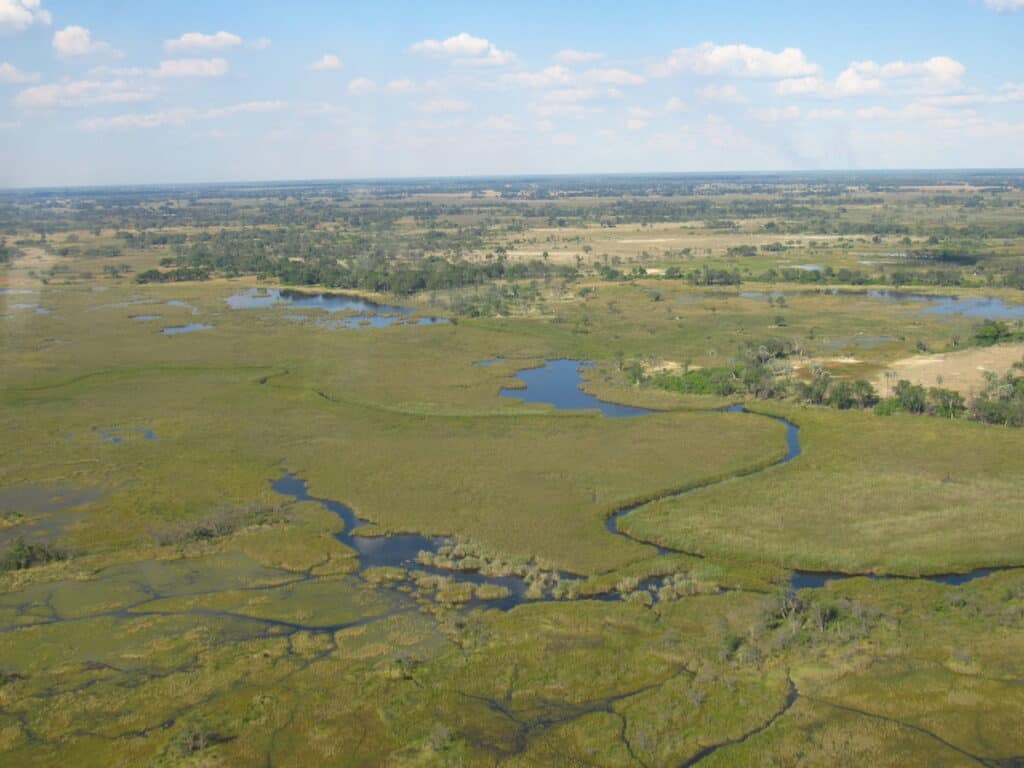
What makes the Delta extraordinary is its timing. Its floodwaters fall as rain in the highlands of Angola months earlier, then travel slowly southward, arriving in Botswana during the region’s dry winter. Just as the surrounding Kalahari turns parched, the Delta swells with fresh water, drawing elephants, buffalo, antelope, predators and hundreds of bird species into an oasis of remarkable density.
This guide covers the attractions in the Okavango Delta in detail: where the Delta is located, how it is laid out, the reserves, islands, waterways and cultural sites worth visiting, the wildlife you can expect to see, and practical advice on timing, access and accommodation so you can plan a trip that matches your interests and budget.
Where Is the Okavango Delta Located?
The Okavango Delta is located in north-western Botswana, within the Ngamiland District, in Southern Africa. It sits at the northern edge of the Kalahari Desert, roughly 1,000 km north of Botswana’s capital, Gaborone, and immediately north and north-west of the safari town of Maun, which serves as the main gateway.
The Okavango River rises in the Angolan highlands, where it is known as the Cubango. It flows south-east, crosses a narrow strip of north-eastern Namibia, and enters Botswana near the border town of Mohembo. From there it runs through a confined valley known as the Panhandle before spreading out into the delta proper, held in place by geological fault lines that act like a natural dam.
| Neighbouring Areas and Distances
Maun: on the south-eastern edge of the Delta; the starting point for most trips Chobe National Park and Kasane: to the north-east, roughly 300 km from Maun by road Makgadikgadi and Nxai Pans: to the south-east, about 2 to 3 hours’ drive from Maun Central Kalahari Game Reserve: to the south, accessible by road or light aircraft from Maun Namibia border (Mohembo): at the north-western tip, at the top of the Panhandle |
Understanding the Delta’s Layout
Knowing how the Delta is structured helps you choose which attractions to prioritise. Broadly, it is divided into four zones, each offering a different kind of safari.
| Zone | Character | Best Known For |
| The Panhandle | Deep, permanent river channel in the north-west, lined with papyrus | Fishing, boat trips, birding, cultural villages, access to Tsodilo Hills |
| Permanent Swamps | Year-round deep water, lagoons and reed beds in the upper Delta | Mokoro and boat safaris, sitatunga, Pel’s fishing owl, water-based camps |
| Seasonal Swamps | Floodplains that fill and drain each year, dotted with islands | Mixed water and land activities, lechwe, predators, walking safaris |
| Dryland Fringe | Mopane woodland and grassland along the eastern edge (Moremi, Khwai) | Classic game drives, large predators, elephants, self-drive camping |
Top Attractions in the Okavango Delta
The Delta’s attractions range from protected reserves and wildlife-rich islands to river channels, rock-art sites and traditional villages. Below are the highlights, with notes on what each offers and who it suits best.
Moremi Game Reserve
Best for: First-time visitors, Big Five game viewing, self-drive safaris
Moremi Game Reserve covers much of the eastern Delta and is its most important protected area. It was established in 1963 at the initiative of the BaTawana people, who set aside their ancestral land to protect its wildlife, making it one of the first reserves in Africa created by a local community. It is named after Chief Moremi III.
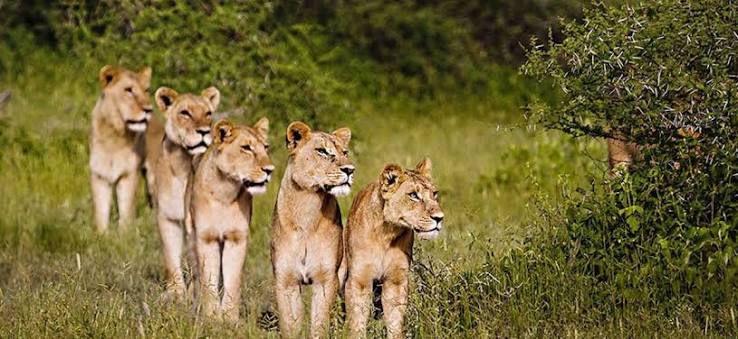
Moremi combines permanent water, seasonal floodplains and dry mopane woodland, so it supports an unusually wide variety of habitats in a compact area. Lion, leopard, cheetah, African wild dog, elephant, buffalo and huge herds of red lechwe and impala are all regularly seen. Rhino have also been reintroduced in protected parts of the reserve.
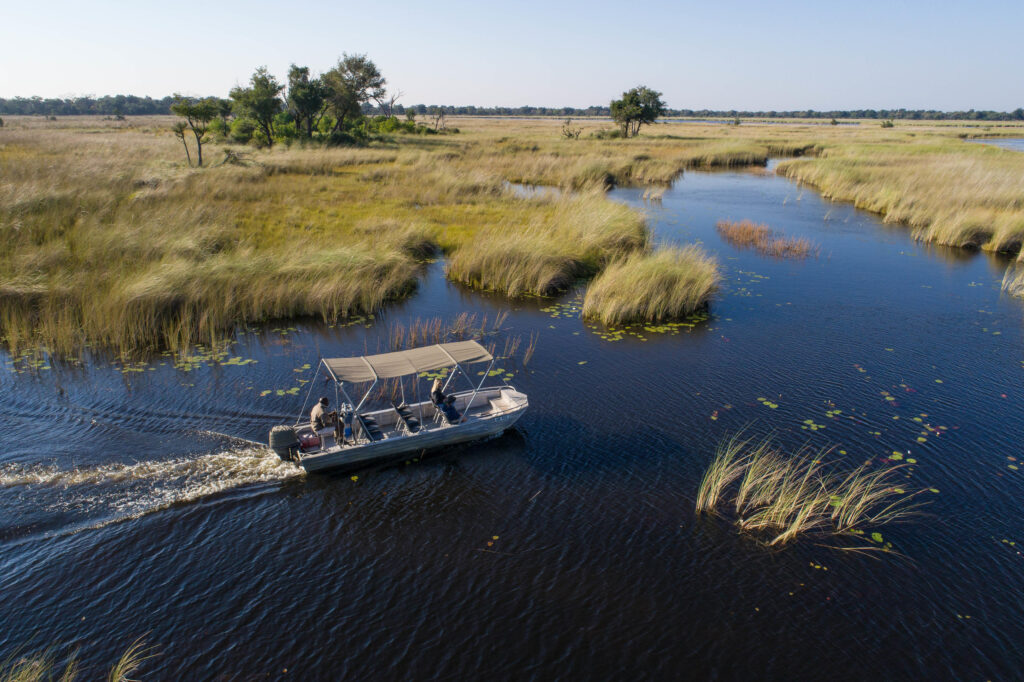
Moremi is the most accessible part of the Delta for self-drive travelers, with public campsites and a well-known network of loops. Key areas within the reserve include:
- South Gate and Mboma: mopane woodland and open plains with good general game; the usual entry point from Maun
- Third Bridge: a famous campsite beside a log bridge over clear Delta water, surrounded by floodplains rich in predators
- Xakanaxa: lagoons and channels ideal for motorboat cruises, with excellent birding and elephant sightings
- Paradise Pools and Dead Tree Island: scenic waterholes and floodplains near Xakanaxa, popular with photographers
- North Gate (Khwai side): the reserve’s north-eastern entrance along the Khwai River, known for elephants and big cats
Chief’s Island
Best for: Serious wildlife enthusiasts, photographers, luxury travellers
Chief’s Island is the largest island in the Okavango Delta, stretching roughly 70 km in length. Once the private hunting ground of the BaTawana chiefs, it now lies within Moremi Game Reserve and is often described as the Delta’s wildlife heartland.
Because it is high, dry ground surrounded by water, Chief’s Island acts as a refuge where animals concentrate, particularly when the floods are high. It is home to large populations of lion, leopard, elephant, buffalo, giraffe, zebra and wildebeest, as well as protected rhino populations. The island and its surroundings host some of Botswana’s most exclusive camps, including those in the celebrated Mombo area, whose name is often translated as “place of plenty.”
Access is mainly by light aircraft to camp airstrips, and many lodges combine game drives on the island with mokoro trips in the surrounding channels.
Mokoro Excursions in the Channels
Best for: Couples, nature lovers, travellers seeking a quiet and authentic experience
A trip by mokoro, the traditional dugout canoe of the Delta, is the attraction most travellers associate with the Okavango. Today most mokoros are made from fibreglass to protect the trees once used to carve them, but the method is unchanged: a skilled local poler stands at the back and pushes the canoe through shallow channels with a long wooden pole called a ngashi.
Gliding silently at water level, you notice details that are missed from a vehicle: painted reed frogs clinging to papyrus stems, water lilies opening in the sun, malachite kingfishers darting overhead and the occasional elephant wading across a channel ahead. Polers are trained to keep a safe distance from hippos and to read the water carefully.
- Day trips: easily arranged from Maun, usually by vehicle or boat transfer to a mokoro station
- Overnight mokoro trips: polers take you deeper into the Delta to camp on an island under the stars
- Camp-based outings: most water camps offer mokoro trips as part of the daily programme
- Season: best from roughly May to October, when the water is high enough in the seasonal channels
Khwai Community Concession
Best for: Night drives, walking safaris, flexible off-road game viewing, budget-conscious travellers
Bordering Moremi’s northern edge along the Khwai River, the Khwai area is managed by the local Khwai community. It shares the same wildlife as the reserve, but because it lies outside national park rules, operators can offer activities not allowed inside Moremi, such as night drives, guided bush walks and off-road driving to follow predators.
Khwai is particularly known for its elephant herds, which gather along the river in the dry months, and for regular sightings of leopard, lion and African wild dog, which often den in the area. It also offers a mix of mobile camping, mid-range camps and luxury lodges, making it one of the more flexible places to experience the Delta.
Xakanaxa Lagoon and the Delta Heronries
Best for: Birdwatchers, boat safaris, photographers
The deep, permanent lagoons around Xakanaxa and the nearby Gcodikwe Lagoon are among the best places in the Delta for motorboat excursions. These cruises cover more ground than a mokoro and reach open lagoons fringed by papyrus and fig trees.
The highlight here is the seasonal breeding colonies, or heronries, where storks, herons, egrets, ibises and other waterbirds nest in noisy, crowded colonies. Breeding activity typically peaks in the later dry season, when birds take advantage of the abundant fish trapped in receding waters. Look out for marabou and yellow-billed storks, African darters and the strikingly marked saddle-billed stork.
The Okavango Panhandle
Best for: Fishing, birding, budget travel, travellers combining Botswana and Namibia
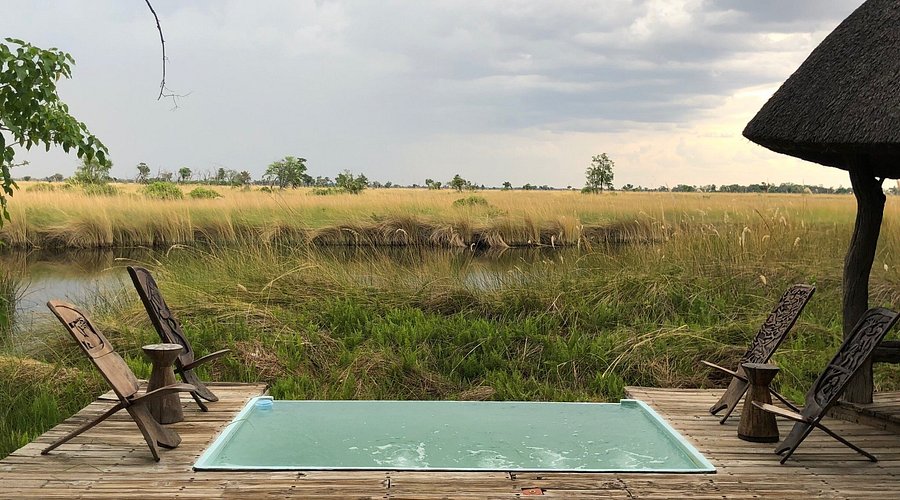
The Panhandle is the long, narrow corridor in the north-west where the Okavango River flows between two parallel fault lines before fanning out. Unlike the open floodplains further south, it is a deep, permanent river lined with papyrus and riverine forest.
The Panhandle is Botswana’s premier freshwater fishing destination, renowned for tigerfish, which are famous for their fighting strength, as well as several species of bream. Fishing is generally best in the warmer months, and many lodges operate catch-and-release policies.
Birding is outstanding too. The Panhandle is one of the most reliable areas in the region for Pel’s fishing owl, African skimmer, white-backed night heron and colourful carmine bee-eaters, which nest in sandbanks in the warmer months. Small towns and villages such as Shakawe, Sepopa and Seronga, along with lodges and lagoons in the area, provide bases for exploring.

Tsodilo Hills
Best for: History, culture and rock-art enthusiasts
Located west of the Panhandle, roughly 40 km from Shakawe, the Tsodilo Hills rise abruptly from the flat Kalahari sands. They were declared a UNESCO World Heritage Site in 2001 and are often called the “Louvre of the Desert” because they contain more than 4,500 rock paintings in a small area.
The paintings, made over thousands of years by the San and later Bantu-speaking peoples, depict animals such as eland, rhino and giraffe, as well as human figures and geometric designs. The hills have long been considered sacred: local tradition refers to the four main hills as the Male, Female, Child and an unnamed fourth. Guided trails lead visitors to the most significant panels, and a small museum explains the site’s history.
Tsodilo combines easily with a stay in the Panhandle and offers a deeply rewarding contrast to wildlife viewing.
Private Concessions of the Inner Delta
Best for: Exclusive, low-density safaris and combined water and land activities
Much of the Delta outside Moremi is divided into private concessions leased to safari operators. These areas are designed for low-volume, high-value tourism, which means few vehicles at sightings and a strong sense of remoteness. Many concessions offer both water and land activities, depending on the season.
Several areas are known for particular strengths:
- Duba Plains (northern Delta): famous for dramatic interactions between lion prides and large buffalo herds
- Vumbura and Kwedi: a mix of floodplains and woodland offering game drives, mokoro trips and boat excursions
- Jao and the western Delta: classic water-dominated scenery, ideal for mokoro and boating
- Mombo area (Chief’s Island): often ranked among Africa’s finest wildlife-viewing areas
- Selinda Spillway (north-east): a waterway linking the Delta with the Linyanti system, known for wild dog and elephant
Scenic Flights and Helicopter Trips
Best for: Photographers, honeymooners and anyone wanting the “big picture”
Seeing the Okavango Delta from the air is one of Botswana’s most memorable experiences. From above, the Delta reveals its true scale: a lattice of blue channels, emerald floodplains, palm-studded islands and the tracks of elephant herds pressed into the reeds.
Scenic fixed-wing flights depart regularly from Maun, typically lasting 45 minutes to an hour. Helicopter flights offer even better views and, on many operators’ flights, the doors can be removed for unobstructed photography. Even guests flying to camps by light aircraft enjoy a mini scenic flight on each transfer.
Walking Safaris on the Islands
Best for: Experienced safari-goers, nature lovers and those who enjoy detail
Exploring an island on foot with a trained, armed guide is one of the most immersive ways to experience the Delta. Walks focus on tracks, plants, insects and birds, and sometimes involve carefully approached sightings of larger animals such as giraffe, zebra or elephant.
Walking is not permitted everywhere, so it is usually offered in private concessions, community areas such as Khwai and on island stops during mokoro trips. Morning walks are cooler and the best time for spotting fresh tracks.
Maun: The Gateway Town
Best for: Arrival and departure days, supplies, short excursions
Maun sits on the Thamalakane River at the Delta’s south-eastern edge and is the hub for nearly every Okavango trip. While many travellers pass through quickly, it is worth a day if your schedule allows.
Highlights include sunset drinks along the Thamalakane River, the Nhabe Museum with its exhibits on the region’s history and art, and the small Maun Educational Park on the riverbank. Maun is also the best place to stock up on supplies, arrange vehicle rentals and book mokoro day trips and scenic flights.
Cultural Experiences and Delta Communities
Best for: Culturally curious travellers and families
The Okavango Delta is home to several communities whose lives are closely tied to the water, including the BaYei, Hambukushu, BaTawana and San peoples. The BaYei are traditionally linked with mokoro travel and fishing, and many of today’s polers come from these communities.
In the western and Panhandle areas, villages such as Etsha are known for exceptional basket weaving, made with palm leaves and natural dyes. Buying directly from weavers supports local livelihoods. Village visits, community campsites and mokoro trips run through community trusts are good ways to experience Delta culture responsibly.
The Annual Flood Itself
Best for: Everyone: this is the phenomenon that makes the Delta
It may seem unusual to call a natural process an attraction, but the annual flood is the Delta’s defining spectacle. Watching water spread across floodplains that were dry only weeks before, creating new channels and islands, is a reminder of how dynamic this ecosystem is.
The flood pulse moves slowly south from the Panhandle, reaching the lower Delta and Maun several months after the rains in Angola. Its extent varies widely from year to year, depending on rainfall upstream, which means no two visits are identical.
Wildlife and Birds You Can See
The Delta’s mosaic of water and dry land supports both classic savannah species and specialists adapted to wetlands. Here is what to look out for.
| Group | Key Species | Where to Look |
| Big cats | Lion, leopard, cheetah | Moremi, Chief’s Island, Khwai, Duba Plains |
| Large mammals | Elephant, buffalo, giraffe, hippo, rhino (protected areas) | Throughout, especially Khwai, Moremi and the dryland fringe |
| Predators | African wild dog, spotted hyena, side-striped jackal | Khwai, Moremi, Selinda and northern concessions |
| Wetland antelope | Red lechwe, sitatunga, waterbuck, reedbuck | Floodplains and papyrus swamps; sitatunga in permanent swamps |
| Plains game | Zebra, wildebeest, impala, tsessebe, kudu | Seasonal floodplains, Chief’s Island, Moremi |
| Signature birds | Pel’s fishing owl, wattled crane, African skimmer, slaty egret, African fish eagle | Panhandle, permanent channels, heronries, open floodplains |
| Reptiles and others | Nile crocodile, monitor lizard, painted reed frogs | Channels, lagoons and riverbanks |
| Sitatunga: The Delta’s Secret Antelope
The shy sitatunga has splayed, elongated hooves that let it move through soft swamp and papyrus. It is rarely seen elsewhere in Southern Africa, so a sighting from a mokoro or boat in the permanent swamps is a real highlight. |
Best Time to Visit the Okavango Delta Attractions
The Delta is a year-round destination, but conditions and activities change markedly between seasons.
| Period | Conditions | What It Means for Attractions |
| June – August | Dry, cool, clear days; cold nights; flood at or near its peak | Prime time: best mokoro trips, high game concentrations, peak demand and prices |
| September – October | Hot and dry; floodwaters gradually receding | Excellent game viewing as animals gather at water; heronries active; very hot by October |
| November – March | Green season; afternoon thunderstorms; lush vegetation | Superb birding, migrant species, newborn animals, lower rates; some water activities limited |
| April – May | Rains end; temperatures mild; flood starting to arrive | Shoulder season with good value, green scenery and building water levels |
| Planning Tip
Rain and flood are not the same thing in the Okavango. The rainy season runs roughly November to March, but the floodwaters peak during the dry winter months. For the classic “water safari” experience, aim for June to October. |
How to Get to the Okavango Delta
By Air
Most visitors fly into Maun International Airport (MUB), which has regular connections with Johannesburg and other regional hubs, including Cape Town, Gaborone and Kasane. Kasane, near Chobe National Park, is another common entry point for combined itineraries. From Maun or Kasane, small light aircraft fly guests to airstrips at individual camps. Baggage allowances on these flights are strict, usually around 20 kg per person in soft-sided bags, so pack accordingly.
By Road and Self-Drive
Maun is reachable by tarred road from Gaborone, Kasane and Namibia. Beyond Maun, access to Moremi Game Reserve and the Khwai area is by sand and gravel tracks that require a high-clearance 4×4 vehicle. Self-drive travellers must book Moremi campsites in advance, carry sufficient fuel, water and recovery equipment, and be prepared for deep sand and water crossings, which can become impassable at peak flood.
The Panhandle and Tsodilo Hills are reached by tarred road from Maun along the western side of the Delta, or from Namibia via the Mohembo border post.
Travel Distances from Maun (Approximate)
| Destination | Distance | Typical Access |
| Moremi South Gate | About 100 km | 4×4 road, roughly 2 hours |
| Khwai / Moremi North Gate | About 140 km | 4×4 road, roughly 3 hours |
| Third Bridge / Xakanaxa | About 150 to 180 km | 4×4 via South Gate, slow sand tracks |
| Shakawe (Panhandle) | About 380 km | Tarred road, roughly 4 to 5 hours |
| Tsodilo Hills | About 420 km | Tarred road plus short access road |
| Inner Delta camps | Varies | Light aircraft, usually 20 to 45 minutes |
Distances are approximate and travel times depend heavily on road and flood conditions.
Where to Stay Near the Main Attractions
Accommodation in the Okavango Delta ranges from public campsites to some of the most exclusive safari lodges in Africa. Choosing the right base determines which attractions you can access easily.
| Travel Style | Typical Options | Best Base For |
| Budget | Public campsites in Moremi (South Gate, Third Bridge, Xakanaxa, Khwai), community campsites, Maun lodges with mokoro day trips | Self-drive game viewing, mokoro day excursions |
| Mid-range | Khwai tented camps, Panhandle river lodges, mobile camping safaris, Maun riverside lodges | Khwai game drives, fishing, birding, Tsodilo Hills |
| Luxury | Fly-in camps in private concessions and on or near Chief’s Island (e.g. Mombo, Duba Plains, Vumbura areas) | Exclusive game viewing, combined water and land activities |
| Water Camp or Land Camp?
Water camps focus on mokoro, boat and walking activities and are ideal for scenery and birding. Land camps focus on game drives and are best for big cats and large mammals. Mixed camps offer both, depending on water levels. Many travellers combine two or three camps to experience the full range. |
5-Day Okavango Delta Attractions Itinerary
| Day | Plan | Key Attractions |
| Day 1 | Arrive in Maun; afternoon scenic flight; sunset on the Thamalakane River | Maun, aerial views of the Delta |
| Day 2 | Fly or drive into Moremi; afternoon game drive | Moremi Game Reserve, Xakanaxa area |
| Day 3 | Morning game drive; afternoon boat cruise to the lagoons and heronries | Xakanaxa and Gcodikwe lagoons, Paradise Pools |
| Day 4 | Transfer to a water camp or the Khwai area; mokoro excursion and guided walk | Mokoro channels, island walking safari or Khwai night drive |
| Day 5 | Final morning activity; fly back to Maun for onward travel | Sunrise game viewing or mokoro, departure |
Travellers with more time can add two nights in the Panhandle for fishing, birding and a day trip to the Tsodilo Hills, or continue to Chobe National Park, the Makgadikgadi Pans or Victoria Falls.
Practical Tips for Visiting the Okavango Delta
- Book early: camps and Moremi campsites for June to October often sell out many months ahead.
- Pack light and soft: light aircraft transfers require soft-sided bags with strict weight limits.
- Dress in neutral colours: khaki, olive and beige are best for game viewing; avoid bright white and dark blue.
- Prepare for cold mornings: winter mornings on open vehicles and in mokoros can be close to freezing.
- Protect against malaria: the Delta is a malaria area; consult a travel health professional before travelling.
- Respect the water: never swim in Delta channels; crocodiles and hippos are present throughout.
- Follow your guide: stay seated in vehicles, keep quiet near animals and never walk unescorted outside camp.
- Check entry requirements: visa rules and park fees change, so confirm current regulations before you travel.
- Support local communities: choose community-run activities and buy crafts directly from makers.
Frequently Asked Questions
Where exactly is the Okavango Delta located?
The Okavango Delta is in north-western Botswana, in the Ngamiland District, at the northern edge of the Kalahari Desert. The town of Maun lies on its south-eastern edge and is the main gateway.
What is the most famous attraction in the Okavango Delta?
Moremi Game Reserve and the mokoro canoe experience are the best-known attractions. Chief’s Island, within Moremi, is often regarded as the Delta’s richest wildlife area.
Can you see the Big Five in the Okavango Delta?
Yes. Lion, leopard, elephant and buffalo are widespread, and rhino have been reintroduced into protected areas, including parts of Moremi and Chief’s Island, though sightings are less common.
When is the best time to visit the Okavango Delta?
June to October is the peak season, with high floodwaters, dry weather and excellent game viewing. November to March is best for birding and lower prices.
Can I visit the Okavango Delta on a budget?
Yes. Self-drive camping in Moremi and Khwai, mokoro day trips from Maun and mid-range lodges in the Panhandle are more affordable alternatives to fly-in luxury camps.
How many days do I need in the Okavango Delta?
Three to five nights is ideal for experiencing both water and land activities. Combining two different camps gives a fuller picture of the Delta.
Is the Okavango Delta safe for tourists?
Yes, when visiting with reputable operators and following guides’ instructions. Botswana is one of Africa’s most stable and well-managed safari destinations.
What is a mokoro?
A mokoro is a traditional dugout canoe, now usually made of fibreglass, that a local poler propels through the Delta’s shallow channels using a long pole.
Plan Your Okavango Delta Safari with Marriott Safaris Africa
From the predator-rich floodplains of Moremi and the wildlife haven of Chief’s Island to silent mokoro journeys, the heronries of Xakanaxa, the fishing waters of the Panhandle and the ancient rock art of the Tsodilo Hills, the attractions of the Okavango Delta offer a safari experience found nowhere else on Earth.
Whether you are planning a fly-in luxury safari, a self-drive camping adventure or a combined Botswana itinerary with Chobe and Victoria Falls, Marriott Safaris Africa can help you design a trip that matches your interests, travel dates and budget.
| Ready to Explore the Okavango Delta?
Contact Marriott Safaris Africa to start planning your tailor-made Botswana safari. Perfection Anytime. |