Things to Do in the Okavango Delta, Botswana
20 Unforgettable Experiences in Africa’s Greatest Wetland Wilderness – Mokoro Trips, Game Drives, Scenic Flights, Walking Safaris & More
A complete activity guide covering what to do, when to go, how much it costs, where to stay and how to plan the perfect Okavango Delta safari in 2027.
Why the Okavango Delta Belongs on Every Safari Bucket List
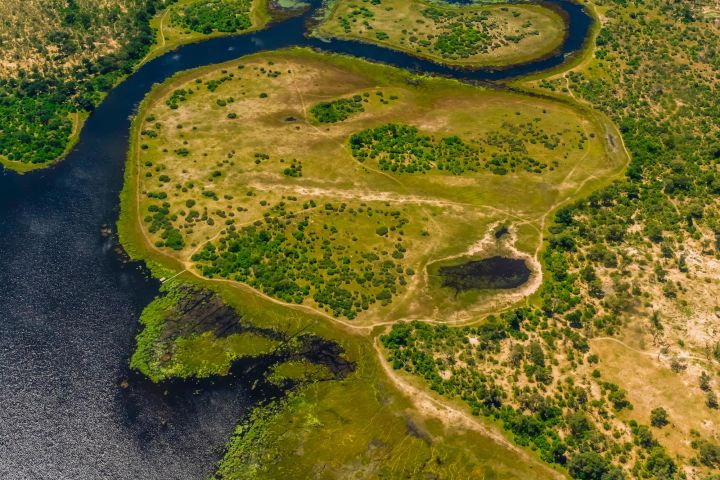
Picture yourself gliding silently through crystal-clear channels in a traditional dugout canoe, papyrus brushing the sides of the boat, while a herd of elephants wades across a floodplain ahead of you. A fish eagle calls overhead, red lechwe antelope splash through the shallows, and somewhere beyond the palm-fringed islands a pride of lions is resting in the shade. This is the Okavango Delta – one of the few places on Earth where water and wilderness combine on such a grand and untouched scale.
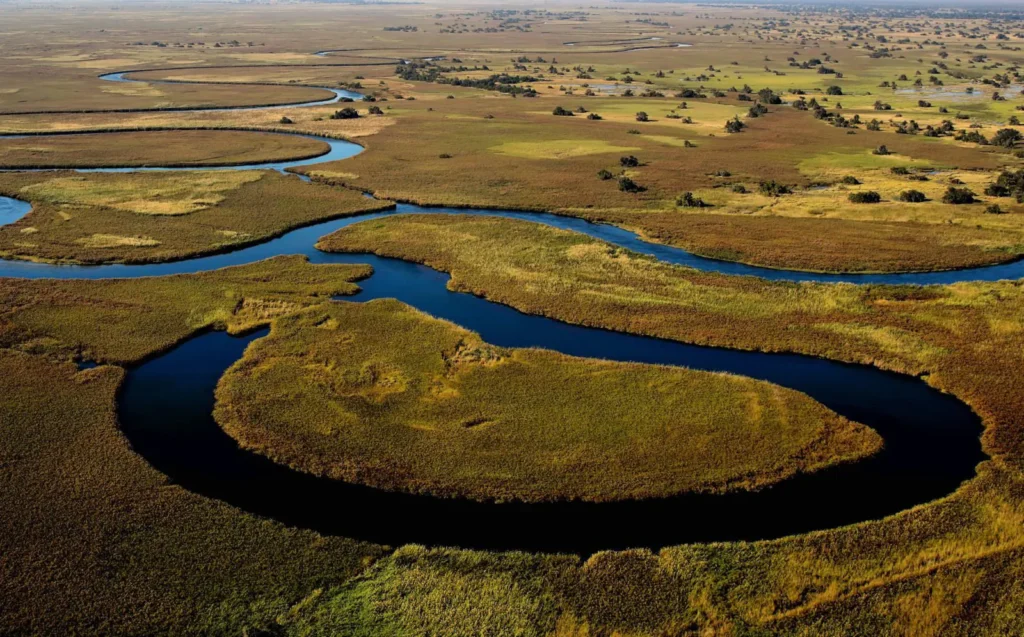
Located in northwestern Botswana, the Okavango Delta is the world’s largest inland delta. Every year, rain that falls on the highlands of Angola travels hundreds of kilometres down the Okavango River and spreads out across the Kalahari sands, transforming dry savannah into a maze of lagoons, channels, islands and floodplains. Remarkably, the flood peaks during Botswana’s dry winter months, drawing enormous concentrations of wildlife at exactly the time when the rest of the region is parched.
In 2014 the delta was inscribed as UNESCO’s 1,000th World Heritage Site, recognising its outstanding ecological importance. Botswana’s low-volume, high-value tourism model means that much of the delta is protected within private concessions and the Moremi Game Reserve, so visitors enjoy exclusive wildlife encounters without the crowds found in many other African destinations.
Whether you want to explore by water, by land, on foot, on horseback or from the air, this guide covers the very best things to do in the Okavango Delta, along with practical advice on timing, costs, accommodation and booking.
| Okavango Delta at a Glance
Location: Northwestern Botswana, Ngamiland District Size: Roughly 15,000–22,000 km² of permanent and seasonal wetland, depending on the flood Status: UNESCO World Heritage Site (inscribed 2014) Main gateway: Maun (Maun International Airport, MUB); Kasane for Chobe combinations Peak flood: June to August – the best time for water activities Signature activity: Mokoro (dugout canoe) excursions Key wildlife: Elephant, lion, leopard, African wild dog, buffalo, hippo, red lechwe, sitatunga and 400+ bird species Currency: Botswana Pula (BWP); US Dollars widely accepted at lodges |
Understanding the Okavango Flood: How It Shapes Your Activities
Before choosing your activities, it helps to understand the delta’s unique annual cycle. The amount of water in a given area changes dramatically throughout the year, and this determines which experiences are available at each camp.
| Period | What Happens | Best Activities |
| Jan – Mar (Rainy season) | Local summer rains fall; the delta is lush and green. Flood waters from Angola are still on their way. | Birding, baby animals, photography, motorboating in permanent channels, value-for-money stays |
| Apr – May (Flood arrives) | Flood waters begin entering the delta panhandle and spread south. Rains taper off. | Mokoro trips start in many areas, game drives, scenic flights over filling channels |
| Jun – Aug (Peak flood) | Floodplains are fully inundated during the cool, dry winter. Wildlife concentrates on islands. | Mokoro, boating, walking safaris, horseback riding, game drives – the prime season |
| Sep – Oct (Receding flood) | Water slowly retreats; temperatures climb. Animals congregate around remaining water. | Excellent game drives, predator sightings, walking safaris, some mokoro in deeper areas |
| Nov – Dec (Early rains) | First summer rains arrive; the delta is at its lowest water level. | Migratory birds, calving season, green-season discounts |
Camps are generally classified as water camps (activities focus on mokoro and boats), land camps (game drives and walks), or mixed camps (offering both). Combining two or three camp types in one trip gives you the fullest Okavango experience.
Top 20 Things to Do in the Okavango Delta
1. Take a Traditional Mokoro Excursion
No visit to the Okavango Delta is complete without a mokoro ride. These shallow dugout canoes, historically carved from the trunks of ebony or sausage trees and now largely made from fibreglass to protect the forests, are propelled by a skilled local poler standing at the back with a long wooden pole called a ngashi.
The experience is wonderfully peaceful. Sitting just centimetres above the water, you drift through narrow channels lined with papyrus and water lilies, getting eye-level views of painted reed frogs, malachite kingfishers, jacanas tiptoeing across lily pads and red lechwe bounding through the shallows. Your poler will also point out medicinal plants, animal tracks and safe island stops.
Mokoro trips range from a two-hour outing at a water camp to full-day excursions and multi-day mokoro camping trips from Maun, where you spend nights on remote islands sleeping in simple tents under the stars.
| Quick Facts
Best time: May to September (peak flood) Duration: 2 hours to 3 days Ideal for: Photographers, couples, nature lovers, first-time visitors |
2. Go on Game Drives in Moremi Game Reserve
Covering around a third of the delta, the Moremi Game Reserve was established in 1963 by the local BaTawana community and is one of Africa’s finest wildlife areas. It combines permanent water with dry land, including the large wildlife-rich Chief’s Island, making it superb for classic open-vehicle game drives.
Key areas include Xakanaxa (lagoons and heronries), Third Bridge (famous for lion sightings), South Gate/Mboma and Khwai along the reserve’s northern edge. Expect elephants, buffalo, giraffe, zebra, lion, leopard, cheetah, spotted hyena and some of Africa’s healthiest populations of the endangered African wild dog.
| Quick Facts
Best time: July to October for the most concentrated wildlife Tip: Morning drives are best for predators; afternoon drives finish with a sundowner |
3. Fly Over the Delta on a Scenic Flight
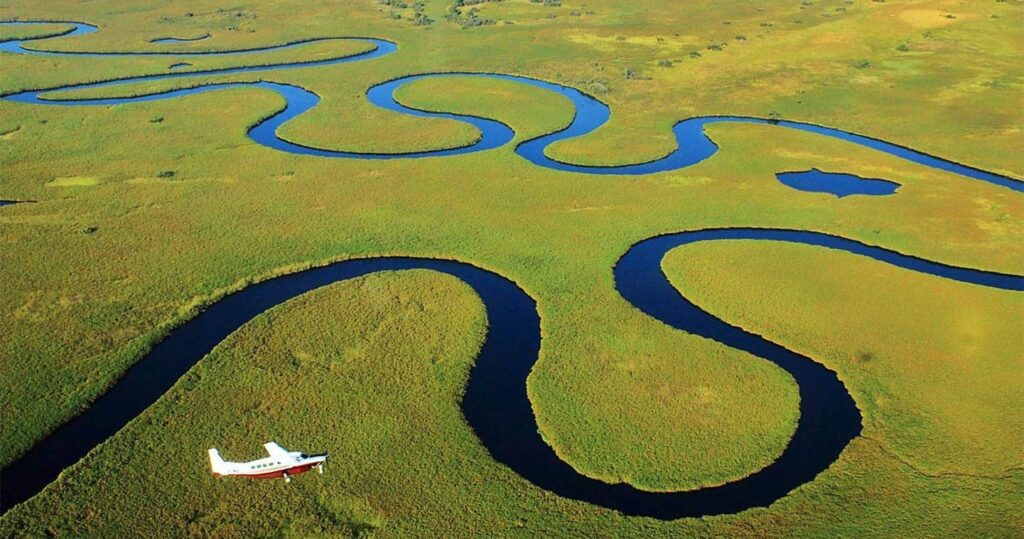
The true scale and beauty of the Okavango only reveal themselves from above. A scenic light-aircraft flight from Maun shows the delta as a mosaic of shimmering channels, emerald floodplains and countless islands, many formed around termite mounds. You will spot elephant herds crossing the water, hippos in lagoons and buffalo stretched across the plains.
For the ultimate photographic experience, book a doors-off helicopter flight. Without doors, you can capture unobstructed images while the pilot positions the aircraft for the best angles. Flights usually run from 30 minutes to an hour.
| Quick Facts
Best time: June to September when the flood is at its peak Tip: Book a morning flight for softer light and calmer air |
4. Explore on Foot with a Walking Safari
Walking safaris on the delta’s islands, led by armed professional guides and trackers, offer an intimate way to experience the wilderness. You will learn to read tracks, identify dung, understand animal behaviour and appreciate the smaller details – dung beetles, termite architecture and medicinal plants – that are easily missed from a vehicle.
Walks are often combined with a mokoro trip: you pole out to an island, step ashore and explore on foot before returning by water. Approaching big game on foot is a thrilling, humbling experience you will never forget.
| Quick Facts
Best time: May to October (dry, cooler conditions) Note: Walking is not permitted in some public areas; it is offered mainly in private concessions |
5. Enjoy a Motorboat Safari
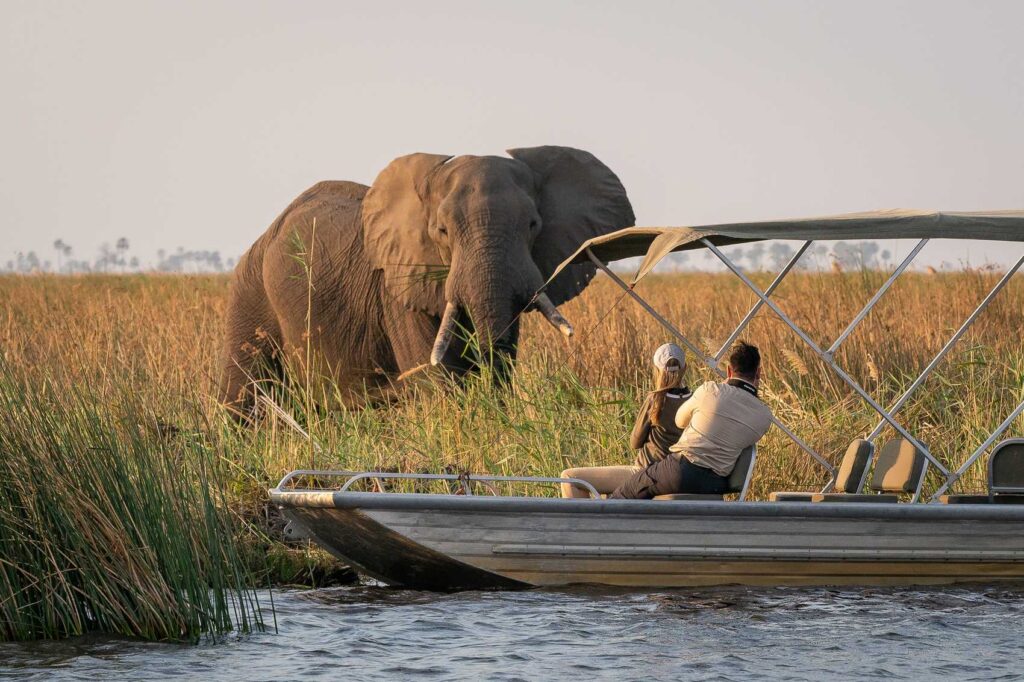
Where waters are deep and permanent – particularly in the northern Okavango Panhandle, Xakanaxa and the Jao and Vumbura areas – motorboat safaris let you cover far more ground than a mokoro. Cruise through wide lagoons and papyrus-lined channels watching hippos, Nile crocodiles, elephants swimming between islands and spectacular birdlife.
Boat trips often visit heronries, where hundreds of storks, herons, egrets and ibises nest in season, creating one of the delta’s most dramatic natural spectacles.
| Quick Facts
Best time: Year-round in permanent channels; heronries peak roughly August to November |
6. Go Birdwatching in a Birding Paradise
With more than 400 recorded bird species, the Okavango Delta is one of Africa’s top birding destinations. Wetland specialists include the elusive Pel’s fishing owl, the endangered wattled crane, the slaty egret, African skimmer, African pygmy goose, lesser jacana and the iconic African fish eagle.
The green season (November to March) brings migratory species from Europe and northern Africa, along with birds in full breeding plumage. Birders should spend time in the Panhandle and around Xakanaxa for the widest variety.
| Quick Facts
Best time: November to March for migrants; year-round for resident species |
7. Experience a Night Drive
After dark, the delta comes alive with a completely different cast of characters. Night drives with a spotlight can reveal leopards on the hunt, lions moving across the floodplains, hyenas, servals, civets, genets, porcupines, aardvarks, bushbabies and owls.
Night drives are not permitted inside Moremi Game Reserve but are a highlight in the private concessions and community areas such as Khwai, where camps operate under different regulations.
| Quick Facts
Best time: Year-round, with cooler and clearer nights from May to September |
8. Track African Wild Dogs and Big Cats
Northern Botswana is one of the last strongholds of the endangered African wild dog, and the delta offers some of the best chances anywhere to see these social, highly efficient hunters. Denning season, typically from around June to August, can bring remarkable sightings of pups near the den.
The delta is also renowned for its lions – some prides have adapted to swim between islands – as well as leopards, which are regularly spotted in riverine woodland, and cheetahs on open floodplains.
| Quick Facts
Where: Moremi, Khwai, Chief’s Island and private concessions such as Vumbura, Mombo and Linyanti-adjacent areas |
9. Ride Through the Floodplains on a Horseback Safari
Horseback safaris offer a unique perspective: wildlife often accepts horses as just another grazing animal, allowing you to ride surprisingly close to zebra, giraffe, wildebeest and antelope. Galloping through shallow floodwater alongside running lechwe is one of the most exhilarating experiences in Africa.
Riding safaris in the delta are designed for experienced riders who are comfortable at all paces and able to gallop out of trouble if necessary. Weight limits and riding assessments usually apply.
| Quick Facts
Best time: March to November Requirement: Intermediate to advanced riding ability |
10. Sleep Under the Stars on a Star Bed
Several camps offer a night on a raised star bed or open platform, often accessed by mokoro. With no light pollution, the Milky Way blazes across the sky while lions roar and hippos grunt in the distance. It is a magical, romantic experience that is especially popular with honeymooners.
| Quick Facts
Best time: May to September for dry, clear skies (bring warm layers in winter) |
11. Go on a Mokoro Camping Expedition from Maun
For adventurous and budget-conscious travellers, a multi-day mokoro camping trip is one of the most authentic ways to experience the delta. You transfer by 4×4 or motorboat from Maun to a community-run mokoro station, then pole deep into the wetlands, camping wild on islands and doing guided bush walks in the mornings and evenings.
Facilities are basic – dome tents, a bucket shower if you are lucky and a bush toilet – but the sense of remoteness and the connection with local polers make it unforgettable.
| Quick Facts
Duration: 2 to 4 days Ideal for: Backpackers, adventurers, travellers on a tighter budget |

12. Self-Drive and Camp in Moremi and Khwai
Botswana is one of Africa’s great self-drive countries, and a fully equipped 4×4 with a rooftop tent lets you explore Moremi Game Reserve and Khwai independently. Public campsites such as South Gate, Third Bridge, Xakanaxa and Khwai are unfenced, which means wildlife can wander through at any time – an exhilarating experience for confident campers.
Campsites must be booked in advance with the relevant operators, and tracks can be sandy, waterlogged or flooded depending on the season. Travel with recovery gear, enough fuel and water, and ideally in convoy if you are new to the area.
| Quick Facts
Best time: May to October (dry roads, though some flooded crossings occur) Requirement: Genuine 4×4 experience, sand-driving skills and confirmed campsite bookings |
13. Fish for Tiger Fish and Bream
The deep, papyrus-lined channels of the Okavango Panhandle offer world-class freshwater fishing. Anglers target the hard-fighting tiger fish, along with several species of bream (tilapia) and catfish. Most lodges operate on a catch-and-release basis to protect fish stocks.
A seasonal closed period for fishing applies in parts of the delta during the summer breeding months, so check current regulations with your lodge before planning a fishing-focused trip.
| Quick Facts
Best time: Roughly September to December for tiger fish; catfish run around September to October |
14. Meet Local Communities and Learn About Delta Culture
The delta is home to the BaYei, Hambukushu, BaTawana and other communities whose lives have long been tied to the water. Community visits, often around Maun, Khwai and the Panhandle villages, offer insight into traditional fishing methods, mokoro carving, reed-house construction and music.
Look out for the famous Okavango baskets, intricately woven by Hambukushu and BaYei women from mokola palm and dyed with natural pigments. Buying directly from weavers supports local livelihoods.
| Quick Facts
Tip: Choose community-run experiences and ask before photographing people |
15. Visit the Tsodilo Hills Rock Art
West of the Okavango Panhandle lies Tsodilo Hills, a UNESCO World Heritage Site known as the “Louvre of the Desert”. More than 4,500 rock paintings, created over thousands of years by San and later Bantu-speaking peoples, decorate the hills. The site remains spiritually significant to local communities.
Tsodilo can be visited on a day trip from lodges in the Panhandle, or as a road or charter-flight excursion from Maun.
| Quick Facts
Best time: April to October (cooler weather for walking the trails) |
16. Photograph the Delta from a Hide or Photographic Vehicle
Many camps now offer specialist photographic vehicles with camera mounts and fewer guests, as well as ground-level hides overlooking waterholes and lagoons. The combination of reflective water, golden light and abundant wildlife makes the Okavango a dream destination for photographers.
| Quick Facts
Tip: Bring a 100–400mm (or similar) zoom lens, a wide-angle for landscapes and plenty of memory cards |
17. Spot Rare Wetland Antelope
The delta is home to antelope uniquely adapted to life in the water. The red lechwe bounds through shallow floodplains with powerful hindquarters, while the shy, semi-aquatic sitatunga hides in dense papyrus with long splayed hooves that keep it from sinking. Keep an eye out too for reedbuck, tsessebe and the large, graceful sable and roan antelope in woodland areas.
| Quick Facts
Best area for sitatunga: The Panhandle and papyrus-filled channels of the northern delta |
18. Enjoy a Sundowner on the Water
Few things capture the spirit of the Okavango like a sundowner drink as the sun sinks over a lagoon. Whether from a mokoro, a motorboat or an island at the end of a game drive, watching the sky turn gold and pink while hippos surface nearby is a nightly ritual you will cherish.
| Quick Facts
Tip: Ask your guide to choose a spot facing west over open water for the best reflections |
19. Learn About Conservation Projects
Several camps and organizations in and around the delta are involved in wildlife research and conservation, including predator monitoring, rhino reintroduction and community-based natural resource management. Some lodges offer talks or behind-the-scenes insights into this work, helping visitors understand how tourism revenue protects the ecosystem.
| Quick Facts
Tip: Ask your safari consultant which camps contribute directly to conservation and community programmes |

20. Explore Maun – Gateway to the Delta
Most Okavango adventures begin in Maun, a laid-back safari town on the banks of the Thamalakane River. Spend a day here enjoying riverside lodges, the small Nhabe Museum, local craft shops and markets, or a short scenic flight. Maun is also where you collect self-drive vehicles, stock up on supplies and catch light-aircraft transfers into the delta.
| Quick Facts
Tip: Overnight in Maun before or after your delta stay to allow for flight schedules and luggage logistics |
| A Note on Ethical Wildlife Encounters
Elephant-back safaris, once offered in the delta, are no longer considered responsible tourism, and leading operators have discontinued them. Choose experiences that allow you to observe elephants and all wildlife in their natural behaviour, from a respectful distance, without riding, feeding or handling animals. |
Best Time to Visit for Each Activity
| Activity | Best Months | Why |
| Mokoro excursions | May – Sep | Peak flood fills the floodplains and shallow channels |
| Game drives | Jul – Oct | Dry bush, thinner vegetation and wildlife gathered near water |
| Walking safaris | May – Oct | Cooler temperatures and clear visibility |
| Scenic flights | Jun – Sep | The flood is at its fullest and most photogenic |
| Birdwatching | Nov – Mar | Migrant species arrive; breeding plumage |
| Horseback safaris | Mar – Nov | Comfortable riding conditions through the flood season |
| Tiger fishing | Sep – Dec | Warmer water and active fish in the Panhandle |
| Wild dog viewing | Jun – Aug | Denning season keeps packs in one area |
| Value travel | Nov – Apr | Green-season rates at many lodges |
Sample 5-Day Okavango Delta Activity Itinerary
This itinerary combines a water camp and a land camp to give you the widest range of activities in a short time.
Day 1: Maun to a Water Camp
Arrive in Maun and board a light-aircraft transfer over the delta – effectively your first scenic flight. Settle into your water camp, then head out on an afternoon mokoro excursion and enjoy a sundowner on a quiet lagoon.
Day 2: Mokoro, Walking and Star Bed
Pole to a remote island for a guided walking safari at dawn. Spend the afternoon on a motorboat trip to a heronry. Optional: overnight on a star bed under the Milky Way.
Day 3: Transfer to a Land Camp in Moremi or Khwai
Fly to a land-based camp. Afternoon game drive searching for lions, leopards and wild dogs, followed by a night drive (in concession areas) to find nocturnal species.
Day 4: Full Day of Game Viewing
Early morning game drive, a relaxed midday at camp, then an afternoon drive or bush walk. End with drinks around the campfire as hyenas call in the darkness.
Day 5: Helicopter Flight and Departure
Final morning game drive, then fly back to Maun. Add a doors-off helicopter flight before your onward connection to Kasane, Johannesburg or Victoria Falls.
| Extend Your Trip
Add 2–3 nights in Chobe National Park for boat cruises among huge elephant herds, continue to Victoria Falls, or head south to the Makgadikgadi Pans and Central Kalahari for a striking desert contrast. |
How Much Do Okavango Delta Activities Cost?
Costs in the Okavango vary widely depending on season, camp category and whether activities are included in an all-inclusive lodge rate. At most fly-in camps, mokoro trips, game drives and walks are included in the nightly price. The figures below are indicative only and should be confirmed at the time of booking.
| Activity / Item | Indicative Cost (USD) | Notes |
| Day mokoro trip from Maun | $100 – $200 per person | Includes road/boat transfer, poler and park or community fees |
| 2–3 day mokoro camping trip | $300 – $700 per person | Basic camping; equipment and food often included |
| Scenic light-aircraft flight (approx. 45–60 min) | $150 – $300 per seat | Price depends on aircraft size and seats filled |
| Doors-off helicopter flight | $250 – $550 per person | Price depends on flight duration |
| Light-aircraft transfer Maun – camp | $200 – $450 per person, one way | Strict soft-bag luggage limits apply |
| Budget lodge or Maun-based stay | $80 – $250 per person per night | Delta access via day trips |
| Mid-range delta camp | $500 – $1,000 per person per night | Often all-inclusive with activities |
| Luxury delta camp | $1,200 – $3,500+ per person per night | All-inclusive; prices peak June–October |
| Moremi self-drive park & campsite fees | Varies by nationality and campsite | Pay park fees to DWNP; campsites booked with private operators |
| Money-Saving Tips
Travel in the green or shoulder season (November–April) for significantly lower lodge rates. Combine a Maun-based stay with day mokoro trips and a scenic flight instead of staying at fly-in camps. Consider a self-drive camping safari in Moremi and Khwai for maximum flexibility at a lower cost. Book well in advance – popular camps sell out 12 months or more ahead for peak season. |
How to Get to the Okavango Delta
By Air
Most international visitors fly to Maun International Airport (MUB) via Johannesburg or Gaborone, though some arrive via Kasane or Victoria Falls. From Maun, light aircraft operate scheduled and charter transfers to dozens of bush airstrips inside the delta, typically taking 20 to 50 minutes.
| Important: Light-Aircraft Luggage Limits
Bush flights usually allow around 20 kg per person, including hand luggage and camera gear, packed in soft-sided bags without wheels or rigid frames. Check the exact limit with your operator; excess luggage can often be stored in Maun. |
By Road
Maun is linked by tarred roads to Nata, Kasane and Ghanzi. From Maun, the road to Moremi’s South Gate is roughly 100 km, with the final stretch on sand. Inside the reserve and Khwai, tracks are sandy and seasonally waterlogged, so a high-clearance 4×4 vehicle is essential. Road access to the deep inner delta is not possible – those areas are reached only by air or water.
Where to Stay in the Okavango Delta
Accommodation ranges from simple public campsites to some of the most exclusive safari lodges in Africa. Choosing the right location and camp type is the key to enjoying your preferred activities.
| Category | Example Properties | Best For |
| Luxury | Mombo Camp, Vumbura Plains, Chief’s Camp, Xigera Safari Lodge, Jao Camp | Exclusive game viewing, premium service, private concessions |
| Mid-range | Camp Moremi, Camp Xakanaxa, Delta Camp, Camp Okavango, Gunn’s Camp | A balance of comfort, activities and value |
| Budget | Oddballs’ Enclave, Maun riverside lodges (e.g. Thamalakane River Lodge, Crocodile Camp, Old Bridge Backpackers) | Mokoro day trips, travellers on a budget |
| Self-drive camping | Moremi campsites (South Gate, Third Bridge, Xakanaxa) and Khwai community campsites | Independent travellers with a 4×4 and rooftop tent |
Property names and offerings change over time, so confirm availability, activities and current rates with your safari consultant when planning.
What to Pack for an Okavango Delta Safari
Clothing
- Neutral-coloured clothing in khaki, green, beige or brown (avoid bright white and dark blue/black, which can attract tsetse flies)
- Lightweight long-sleeved shirts and long trousers for sun and mosquito protection
- A warm fleece, jacket, beanie and gloves for early-morning drives in winter (June–August can be near freezing at dawn)
- Wide-brimmed hat, swimwear and comfortable closed walking shoes
- Lightweight rain jacket for the green season
Gear and Essentials
- Binoculars (8×42 or 10×42 are ideal)
- Camera with zoom lens, spare batteries and memory cards
- Dry bag to protect electronics during mokoro and boat trips
- High-SPF sunscreen, lip balm and polarised sunglasses
- Insect repellent containing DEET or picaridin
- Headlamp or torch
- Personal medications and a small first-aid kit
- Copies of passport, insurance and booking documents
Health, Safety and Practical Tips
- Malaria: The Okavango Delta is a malaria area. Consult a travel health professional about prophylaxis and use repellent, long sleeves and mosquito nets, especially at dusk.
- Water safety: Never swim in the delta’s channels or lagoons – hippos and crocodiles are present. Always remain seated and still in a mokoro.
- Camp rules: Most camps are unfenced. After dark, always be escorted to your tent by a guide.
- Travel insurance: Ensure your policy covers emergency medical evacuation from remote areas.
- Visas: Many nationalities can enter Botswana visa-free for short stays, while others require a visa in advance. Check current requirements with the Botswana immigration authorities before you travel.
- Yellow fever: A yellow fever vaccination certificate is required if you are arriving from, or have transited through, a country with risk of yellow fever transmission.
- Tipping: Tipping guides, polers, trackers and camp staff is customary; ask your lodge or consultant for current guidelines.
- Connectivity: Wi-Fi is limited or unavailable at many remote camps – embrace the digital detox.
Responsible Travel in the Okavango Delta
The Okavango’s survival depends on the continued flow of water from upstream and on tourism that benefits both wildlife and people. You can help by choosing camps with strong conservation and community credentials, following your guide’s instructions around wildlife, keeping noise to a minimum, never leaving litter behind and buying crafts directly from local makers. Botswana’s high-value, low-impact tourism model has protected vast wilderness areas – every responsible visit helps keep it that way.
How to Book Your Okavango Delta Safari with Marriott Safaris Africa
- Share your travel dates and interests – tell us whether you prefer water activities, game drives, walking, flying or a combination.
- Choose your style – luxury fly-in camps, mid-range lodges, budget mokoro camping or a self-drive 4×4 adventure.
- Receive a tailored itinerary – we will match you with the right camps and seasons for the experiences you want.
- Confirm and secure your booking – a deposit locks in camps, light-aircraft seats and campsites, which sell out early in peak season.
- Travel with full support – enjoy pre-departure guidance and 24/7 support throughout your safari.
Frequently Asked Questions
What is the number one thing to do in the Okavango Delta?
A mokoro excursion is widely considered the signature Okavango experience. Gliding silently through the channels in a traditional dugout canoe offers a perspective you cannot get anywhere else in Africa.
When is the best time to visit the Okavango Delta?
June to October is the prime season, with peak flood waters and excellent wildlife viewing. November to April is the green season, offering lush scenery, migratory birds and lower prices.
How many days do I need in the Okavango Delta?
A minimum of three to four nights is recommended. Five to seven nights allows you to combine a water camp and a land camp and enjoy the full range of activities.
Can I visit the Okavango Delta on a budget?
Yes. Staying in Maun and joining day mokoro trips, multi-day mokoro camping expeditions or a self-drive camping safari in Moremi and Khwai are all more affordable options than fly-in lodges.
Are the Big Five found in the Okavango Delta?
Lion, leopard, elephant and buffalo are found in good numbers. Rhinos have been reintroduced to some protected areas, but sightings are rare and locations are kept confidential for their protection.
Is it safe to go on a mokoro trip?
Yes, when you travel with licensed, experienced polers. They know how to avoid hippos and read the water. Remain seated, keep your hands inside the mokoro and follow your poler’s instructions at all times.
Can I self-drive in the Okavango Delta?
You can self-drive in Moremi Game Reserve and the Khwai area with a well-equipped 4×4 and pre-booked campsites. The deep inner delta is accessible only by air or water.
Can children go on Okavango Delta activities?
Many camps welcome families, though minimum age limits often apply for mokoro trips, walking safaris and some game drives. Several lodges offer family units and children’s programms.
Final Thoughts
From silent mokoro journeys and thrilling predator encounters to sweeping flights over glittering channels, the Okavango Delta offers an extraordinary variety of experiences in one of Africa’s most pristine ecosystems. Each activity reveals a different side of this living wetland, and combining several of them creates a safari you will remember for a lifetime.
| Ready to Explore the Okavango Delta?
Let Marriott Safaris Africa design your perfect Okavango adventure – whether a luxury fly-in safari, a mokoro camping expedition or a self-drive 4×4 journey through Moremi and Khwai. Contact our safari specialists today to start planning. Perfection Anytime. |