
7-Day Classic Northern Botswana Safari 2026 | Chobe, Moremi & Okavango
Northern Botswana stands apart in Africa as a destination where wildlife numbers are extraordinary, tourism is deliberately low-volume, and the wilderness feels genuinely untouched. This seven-day itinerary takes you through the most iconic ecosystems in the region — from the elephant-rich floodplains of Chobe National Park and the dramatic predator country of Savuti, through the labyrinthine waterways of Moremi Game Reserve, to the legendary reed-fringed lagoons of the Okavango Delta.
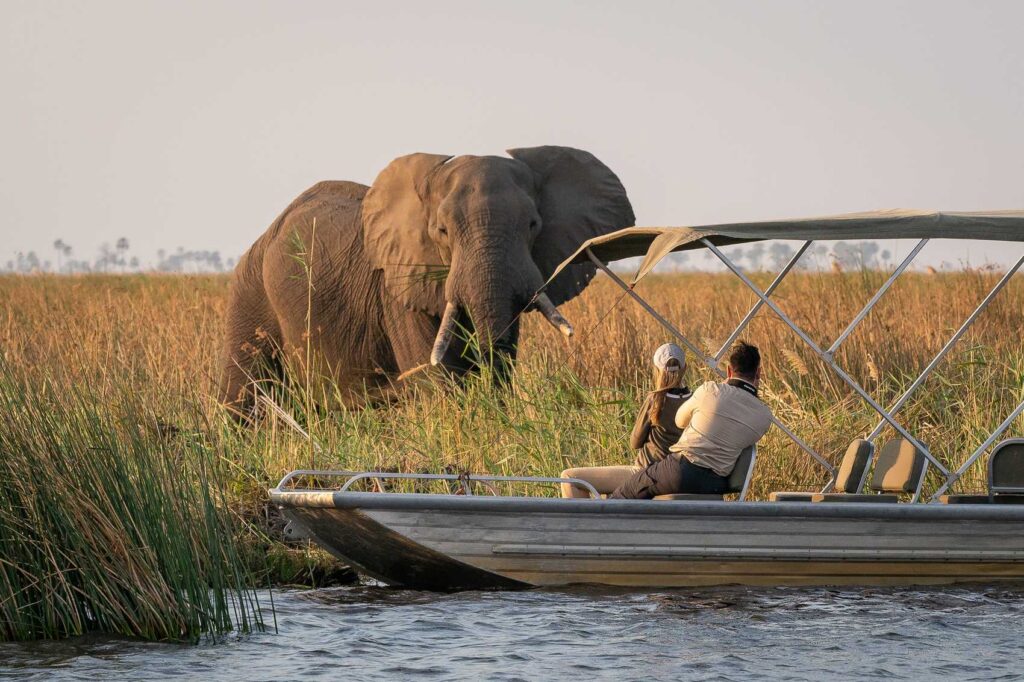
Botswana’s conservation-first philosophy means that visitor numbers are strictly controlled, accommodation is high-quality but low-footprint, and the wildlife encounters feel private and personal. Whether you are watching a pride of lions on a moonlit hunt in Savuti, drifting silently by mokoro through lily-covered channels in the Delta, or witnessing one of Africa’s great elephant concentrations on the Chobe River, this itinerary delivers the full northern Botswana experience in seven remarkable days.
Itinerary at a Glance
| Day | Route | Highlights | Accommodation Type |
| Day 1 | Arrive Kasane / Chobe NP | Elephant herds, Chobe River cruise | Lodge / Tented Camp |
| Day 2 | Chobe National Park | Full-day game drives, lion prides | Lodge / Tented Camp |
| Day 3 | Chobe → Savuti | Transfer to Savuti, afternoon game drive | Tented Camp |
| Day 4 | Savuti | Predator-rich plains, painted wolves | Tented Camp |
| Day 5 | Savuti → Moremi (Xakanaxa) | Moremi wetlands, wild dog, leopard | Tented Camp |
| Day 6 | Moremi → Okavango Delta | Mokoro, bush walk, Delta channels | Island Camp |
| Day 7 | Okavango Delta → Depart | Morning activity, fly to Maun / connect | Flight out |
Best Time to Visit Northern Botswana
Northern Botswana rewards visitors year-round, but each season has a distinct character that shapes your experience.
Dry Season: May – October (Peak Safari)
This is the premier game-viewing season. Vegetation thins, animals concentrate around permanent water sources, and dust-free air gives crisp, photogenic light. The Chobe River and Okavango Delta attract massive herds of elephant, buffalo, and plains game. Temperatures are warm by day (20–30°C) and cool at night in June–July. This is the best time for predator sightings in Savuti and wild dog denning season in Moremi (June–August).
Green Season: November – April (Lush & Rewarding)
The rains transform the landscape into an explosion of green. Migratory birds arrive in extraordinary numbers — Botswana hosts over 600 bird species. Newborn animals appear in December–January, attracting big predators. Some camps offer discounted rates, and afternoon thunderstorms are dramatic and brief. The Okavango floodwaters peak between March and June, creating the iconic inundated papyrus channels. Roads can be challenging, but 4WD access is superb across most reserves.
| Month | Temperature | Rainfall | Wildlife | Rating |
| Jan – Feb | 30–36°C | High | Newborns, predators active | ★★★★ |
| Mar – Apr | 26–32°C | Moderate | Delta flooding begins | ★★★★ |
| May – Jun | 18–28°C | Very Low | Game concentrates at water | ★★★★★ |
| Jul – Aug | 15–27°C | None | Peak elephant & predator season | ★★★★★ |
| Sep – Oct | 24–36°C | None | Massive herds, hot days | ★★★★★ |
| Nov – Dec | 28–34°C | Low–Mod | Birds arrive, landscapes green | ★★★★ |
Day 1: Arrival in Kasane & First Chobe Game Drive
Gateway: Kasane International Airport (BBK)
Your northern Botswana adventure begins at Kasane, situated at the confluence of four countries — Botswana, Zambia, Namibia, and Zimbabwe — in the northeastern corner of the country. International travellers typically connect through OR Tambo International Airport in Johannesburg (O.R. Tambo) or Kenneth Kaunda International in Lusaka, with short regional flights into Kasane.
Upon arrival, you will be met and transferred to your lodge or tented camp on the banks of the Chobe River. Take time to freshen up and settle in before your first taste of the bush.
Afternoon: Chobe River Boat Safari
Your safari begins not with a game drive, but on the water. The Chobe River is world-famous for hosting one of the largest concentrations of elephants on earth — estimates range from 50,000 to 120,000 individuals in the Chobe ecosystem. An afternoon boat cruise brings you level with the riverbank action: enormous family herds wade in to drink and bathe, hippo pods grunt and splash in the shallows, and crocodiles patrol the muddy edges with prehistoric patience.
Above the waterline, the birdlife is staggering. African fish eagle, saddle-billed stork, carmine bee-eater (in season), pygmy goose, and African skimmer are just a few of the species commonly seen on the river. As the sun drops toward the Namibian floodplains opposite, the light turns the water to molten copper — an unforgettable introduction to Botswana.
Evening
Return to camp for a welcome dinner under the stars. Your guide will brief you on the days ahead and you will begin to understand the rhythms of the bush — early mornings, long afternoons, and skies full of stars.
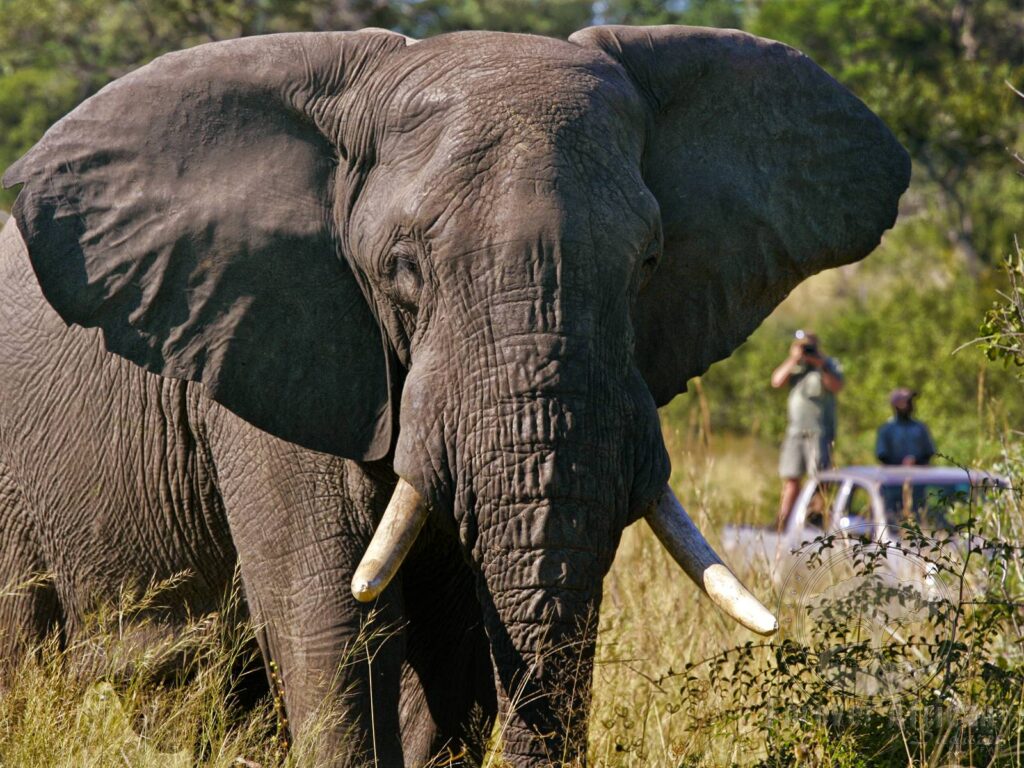
Wildlife Highlight: Chobe elephants are the largest-bodied elephants in Africa. Bulls can exceed 6 tonnes. Watch for big tuskers, increasingly rare elsewhere, still roaming these riverine forests.
Tip: Bring a light fleece or jacket for the river cruise — the breeze on the water can be cool, especially in the dry season.
Day 2: Full Day in Chobe National Park
Morning Game Drive: Chobe Floodplains
Rise before dawn for an early departure. The Chobe floodplains at first light offer some of the finest game viewing in Africa. Lions are often found resting on open ground after nocturnal hunts, leopards retreat to riverine trees, and the plains fill with zebra, impala, giraffe, warthog, and tsessebe. Elephant herds move from the river back into the forest — sometimes in columns of 50 or more animals — and the sight is breathtaking.
The Serondella area of Chobe is particularly productive, offering easy access to diverse habitats: open floodplains, mopane woodland, and the forested fringe along the river. Your guide will read the terrain and animal signs, pointing out tracks, identifying birds by call, and explaining the complex relationships between species.
Midday: Lunch and Rest
Return to camp for a hot breakfast, then a leisurely midday rest. The heat of midday is the time animals rest in shade, and humans in the bush follow the same wisdom. Use the time to review photographs, ask your guide questions, or simply sit by the river and watch the hippos.
Afternoon: Ngwezumba Pans or Savuli Channel Area
In the afternoon, head further into the park toward the Ngwezumba Pans or explore the woodland circuits away from the river. Buffalo herds of several hundred animals can be found here. Roan and sable antelope — rarer and more sought-after — occasionally appear in the mopane. Wild dog packs, though more associated with Moremi and Savuti, do range through Chobe. Spotted hyena dens are active in this area during the cooler months.
Sundowner time: your guide will find a scenic vantage point — perhaps an elevated pan edge or a clearing overlooking the floodplains — to serve cold drinks as the sun sinks. This ritual of the African bush, the sundowner, becomes one of the defining memories of a Botswana safari.
Wildlife Highlight: Watch for painted wolf (African wild dog) packs — Botswana supports some of Africa’s largest populations, and individuals from Moremi packs sometimes range into Chobe.
Photography: Morning golden hour (6:00–8:00 AM) and late afternoon (4:30–6:30 PM) deliver the best photographic light. Keep your camera accessible throughout the drive.
Day 3: Transfer from Chobe to Savuti
Morning Drive: En Route to Savuti
After an early breakfast, you depart Kasane and head south into the interior of Chobe National Park, making your way toward Savuti. The drive itself is a game drive — you will pass through varied terrain including mopane scrub, open plains, and seasonal pans. This transition zone is excellent for sightings of steenbok, greater kudu, and the occasional honey badger.
The route to Savuti takes approximately three to four hours by road (4WD required). Alternatively, some itineraries use a light aircraft transfer from Kasane Airstrip to Savuti Airstrip (approximately 45 minutes), preserving your time in the bush. Your operator will advise the most appropriate transfer method based on season and logistics.
Savuti: The Legend of the Predators
Savuti is one of Africa’s most storied wildlife destinations — and one of the most dramatic. The Savuti Channel, which flows intermittently and has changed course multiple times over decades, creates a seasonal ecosystem that swings between abundance and arid scarcity. The result is a natural pressure cooker for predator–prey dynamics.
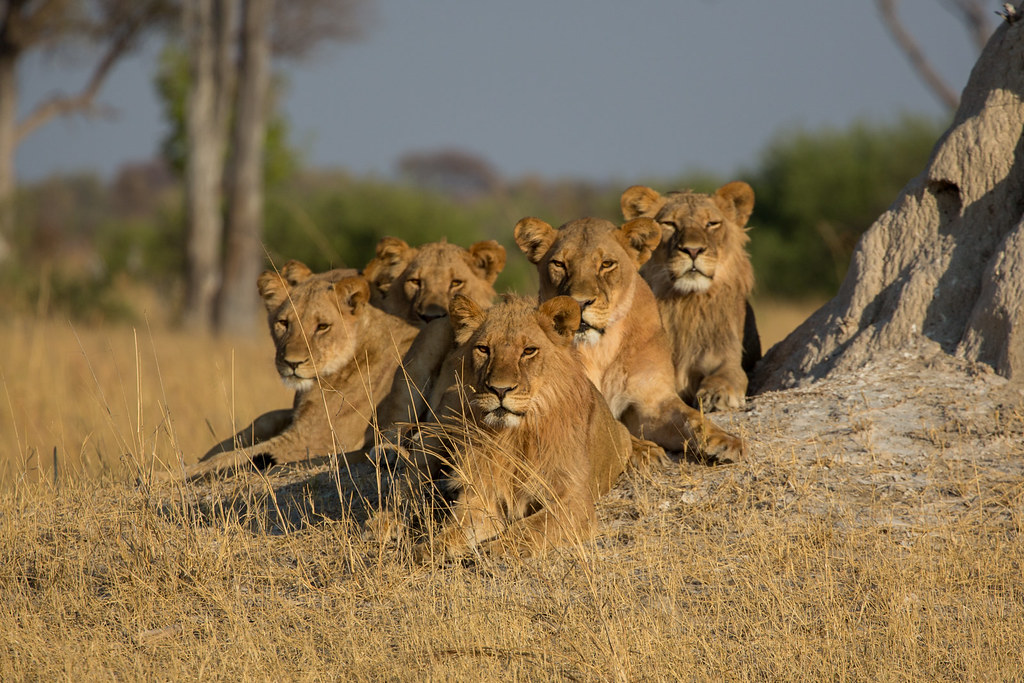
The Savuti marsh attracts large numbers of zebra and wildebeest during their annual migration (typically April–June and again October–November), and the predators follow. Savuti lion prides are famous for taking down adult buffalo and elephant, behaviour documented in multiple natural history films. The area also holds strong populations of leopard, cheetah, and spotted hyena.
Afternoon: First Savuti Game Drive
After arriving at camp and settling in, head out for your first Savuti game drive. The marsh fringes and channel edges are the focal points, but your guide will also work the woodland circuits where lions rest under leadwood trees and leopards drape themselves over termite mounds. Watch for the enormous herds of elephant that come to Savuti water points at dusk — the power of these animals in this landscape is profound.
Wildlife Highlight: The Savuti lion prides are among Africa’s most formidable predators. They are habituated to vehicles and can be observed at very close range.
Terrain Note: Savuti is a 4WD-only environment. Tracks can be sandy and corrugated — wear comfortable clothing and hold on during the drive.
Day 4: Full Day in Savuti — Africa’s Predator Capital
Pre-Dawn Start: Morning Drive
Wake in darkness for a pre-dawn departure. There is nothing quite like leaving camp in the cold dark, engine idling, spotlight sweeping the bush, to understand why Savuti has captured the imagination of wildlife filmmakers and naturalists for generations. Lion roaring in the distance, the flicker of hyena eyes in the beam, and then, as first light seeps over the marsh — the full panorama of Africa’s predator theatre.
Your guide will track overnight lion activity using knowledge of the prides’ home ranges, tracks in the sand, and the behaviour of nervous prey animals. In the dry season, all predators must come to water, and the Savuti waterhole at first light can produce multiple species simultaneously.
Morning Wildlife Encounters
Cheetah are actively hunting in the mornings, scanning from termite mounds before sprinting after impala or reedbuck across the open marsh edges. Wild dog packs, if present, are busy at dawn — returning to their den or setting off on a run that can cover 50 kilometres. The Savuti area is one of the best places in Africa to witness a wild dog hunt, one of the most efficient predatory events in nature (success rates exceed 70%).
Buffalo herds, sometimes 500 animals strong, move in tight defensive formations through the mopane. Cape vulture colonies nest on the Gubatsa Hills at the western edge of the marsh, and martial eagle — the continent’s most powerful eagle — can often be seen surveying from dead snags.
Afternoon Drive: Leopard Circuits & Woodland
After the midday break, focus shifts to the riverine woodland and rocky outcrops where leopards rest. Savuti’s leopards are territorial and return to the same trees and termite mounds repeatedly, so experienced guides often know exactly where to look. In the late afternoon, the elephants begin moving again, coating themselves in red dust at wallowing points as the light turns amber.
Night drives (where permitted by camp policy and park regulations) reveal a different world: lions hunting in darkness, civets investigating fallen fruit, and the eerie spotted hyena circling camp in the hope of a scrap. The Southern Cross overhead and the sound of the bush at night are among the most powerful experiences Botswana offers.
Wildlife Highlight: Savuti is one of only a few places where lions have been documented hunting adult elephant. Even if you don’t witness this, the size and confidence of the local prides is extraordinary.
Bird Note: Kori bustard — the world’s heaviest flying bird — is common in Savuti’s open areas. African hawk eagle, bateleur, and lappet-faced vulture are also frequently seen.
Day 5: Savuti to Moremi Game Reserve (Xakanaxa)
Morning: Departure Drive through Chobe Interior
The journey from Savuti to Moremi’s Xakanaxa sector passes through some of Botswana’s most beautiful and remote landscape. Leave camp after an early breakfast and drive southwest through the mopane woodland, crossing the dry Savuti Channel and entering the Mababe Depression — a vast ancient lake bed that becomes a vast floodplain after good rains. Giraffe, zebra, and ostrich are common in the open depression, and elephant paths crisscross the sand tracks.
Alternatively, a light aircraft hop from Savuti Airstrip to Xakanaxa (approximately 30–40 minutes) offers breathtaking aerial views of the Delta system from above — a perspective that reveals the true scale of the Okavango and helps you understand the geography of the wilderness you are travelling through.
Moremi Game Reserve: Africa’s Eden
Moremi Game Reserve, declared in 1963 — the first reserve in Africa to be established by indigenous Africans themselves (the Batawana people) — occupies the eastern portion of the Okavango Delta. It is widely considered one of Africa’s finest game reserves, combining permanent water, diverse habitats, and exceptional wildlife density.
The Xakanaxa area sits at the confluence of several major channels and lagoons, creating an extraordinary mosaic of riverine forest, papyrus beds, reed islands, mopane woodland, and open floodplain. This diversity of habitat supports a breathtaking range of wildlife: elephant, buffalo, lion, leopard, cheetah, wild dog, spotted hyena, side-striped jackal, reedbuck, red lechwe, sitatunga, and more.
Afternoon: Moremi Boat Cruise & Game Drive
The Xakanaxa Lagoon offers a spectacular afternoon boat cruise through papyrus channels and open water. African darter, reed cormorant, malachite kingfisher, and the enormous Goliath heron are all commonly seen from the water. The real spectacle in Moremi’s waterways, however, is the African jacana — the “lily trotter” — picking its way across floating vegetation on improbably long toes, while below, enormous catfish and tigerfish patrol the clear water.
Follow the boat cruise with a late afternoon game drive into the Moremi woodland circuits, where wild dog dens are active in the cooler months and leopard sightings are more common here than almost anywhere else in Botswana.
Wildlife Highlight: Moremi consistently produces wild dog sightings. The reserve has been a critical stronghold for African wild dog (Lycaon pictus) for decades, with several resident packs.
Practical: The transfer day is long. Pack snacks and water for the road transfer, or arrive refreshed via light aircraft and maximise your afternoon game time.
Day 6: Moremi to the Okavango Delta — Mokoro & Island Life
Morning: Final Moremi Game Drive
Rise early for one last Moremi game drive before transferring into the heart of the Okavango Delta. Lions calling at dawn, leopards descending from the trees, and the morning bird chorus in the riverine forest combine to make this one of the most sensory-rich experiences of the trip. Your guide will work hard to show you any species missed in previous days.
Transfer into the Delta: The Magic Carpet
The transfer into the permanent Okavango Delta is typically by light aircraft — a 20–40 minute flight, depending on your camp’s location. From the air, the Delta’s 15,000 square kilometres of waterways, islands, and floodplains unfold like a living map. Chief’s Island, the vast central landmass at the core of the reserve, is visible beneath you, while the silver threads of channels radiate outward to the horizon. This flight is transformative — it reveals the true scale of what is rightly called “the river that never reaches the sea.”
Afternoon: Mokoro Experience
After settling into your island camp, the afternoon is devoted to mokoro — the traditional dugout canoe that has been used by the Bayei people of the Delta for centuries. A skilled poler (the local word for a mokoro guide) stands at the stern, silently propelling the shallow craft through channels barely wider than the boat itself.
The mokoro experience is Africa at its most intimate. You sit at water level, face to face with malachite kingfishers on papyrus stems, watching red lechwe wade through shallows, listening to frogs and the dip of the pole. There is no engine noise, no dust, no vibration — only water, sky, and wildlife. In the late afternoon light, a mokoro journey through the Okavango channels is among the most peaceful and profound experiences in African travel.
Evening: Sundowner on the Delta
Your guide will bring the mokoro to rest on a suitable island for sundowners — cold gin and tonic, perhaps, as hippos surface in the lagoon beyond and elephants appear on a distant shore. The Delta sunset is spectacular: all reds and purples reflected in still water, the silhouette of date palms on the island’s edge, and the first stars appearing in a sky uncompromised by light pollution.
Wildlife Highlight: The Okavango Delta is a critical stronghold for hippopotamus. The Delta holds an estimated 10% of Africa’s hippo population — encounters on the mokoro are common and thrilling (and perfectly safe in the hands of an experienced poler).
Practical: Take insect repellent and long-sleeved clothing for the mokoro and evening hours. Mosquitoes are present, particularly in the wet season.
Day 7: Final Morning in the Delta & Departure
Morning: Bush Walk or Final Mokoro
Your last morning in the Okavango Delta is devoted to whichever activity calls to you most. An early bush walk with an armed guide reveals the Delta’s smaller wonders: the intricacy of termite mounds, the tracks of nocturnal animals in the soft earth, the symphony of morning birds, and the strange beauty of a fig tree whose roots have colonised an old termite mound. Walking in the Delta is a different rhythm from the game drive — slower, more alert, more intimate with the ground beneath your feet.
Alternatively, a final early-morning mokoro through sunrise channels, when the light is gold and the birds are at their most active, is the perfect way to say farewell to this extraordinary wilderness.
Departure: Light Aircraft to Maun
After a final breakfast and fond farewells to your guides and camp team, a light aircraft transfer returns you to Maun Airport (MUB) — the gateway to the Okavango and Botswana’s tourism hub. Most international connections route through Johannesburg (O.R. Tambo International), though connections via Gaborone (Sir Seretse Khama International) are also possible.
Most campers find the flight back to Maun emotional. Seven days in northern Botswana has a way of recalibrating one’s relationship to the natural world, to silence, to darkness, and to the extraordinary richness of a functioning African ecosystem. The wildlife, the people, the light, and the landscape stay with travellers for a lifetime.
Practical: Allow at least three hours between your light aircraft departure from your Delta camp and your international departure from Maun or Johannesburg. Weather can occasionally delay light aircraft.
Post-Trip: Maun offers a range of hotels for those who wish to spend a night in town before or after their safari. Ngami Tower Hotel and Cresta Riley’s Hotel are popular options near the airport.

Essential Practical Information
How to Get to Northern Botswana
The primary international entry point for a northern Botswana circuit is Kasane International Airport (BBK) or Maun Airport (MUB). Both receive daily regional flights from Johannesburg (OR Tambo, JNB). Kenya Airways, South African Airways, and Airlink all operate this route. Internal transfers between reserves are handled by Mack Air, Safari Air, Wilderness Air, and Delta Air, operating Cessna Grand Caravans from bush airstrips.
Visa Requirements
Most nationalities receive a free 90-day visa on arrival in Botswana. Citizens of the UK, US, EU, Canada, Australia, and most Commonwealth nations typically do not require a pre-arranged visa. Confirm requirements for your specific nationality at the Botswana Department of Immigration website or with your travel operator before departure.
Health & Vaccinations
Northern Botswana is a malaria zone. Prophylaxis is strongly recommended — consult your travel health clinic at least six weeks before departure for the most current recommendations (options include Atovaquone-Proguanil/Malarone, Doxycycline, or Mefloquine). Routine vaccinations (tetanus, hepatitis A and B, typhoid) should be up to date. Yellow fever vaccination is not required unless arriving from a yellow fever endemic country. Carry your vaccination certificate if transiting through endemic regions.
Currency & Payments
The Botswana Pula (BWP) is the local currency. US dollars, Euros, and South African Rand are widely accepted in camps and lodges. Most safari camps are fully inclusive and pre-paid, so you will need little cash in the bush. Credit cards (Visa/Mastercard) are accepted at most lodges. ATMs are available in Kasane and Maun.
Packing List
Luggage on light aircraft is strictly limited to 15 kg (33 lbs) per person in a soft bag (no hard-sided cases). Pack:
- Neutral-coloured clothing: khaki, olive, tan, beige (no white or bright colours)
- Lightweight, long-sleeved shirts and trousers for sun and insect protection
- Fleece or warm layer for cool mornings and boat cruises
- Wide-brimmed hat and quality polarised sunglasses
- Comfortable walking shoes or light hikers
- Waterproof sandals for mokoro activities and flooded camp paths
- High-SPF sunscreen and insect repellent (DEET-based)
- Binoculars (8×42 or 10×42 recommended for wildlife and birds)
- Camera with a telephoto zoom lens (150–600mm for wildlife)
- Spare batteries, memory cards, and a dust-proof camera bag
- Personal medications and a basic first-aid kit
- Small torch / headlamp with fresh batteries
Wildlife & Safety
All wildlife in northern Botswana is genuinely wild. Your guide is trained and experienced, and all activities are conducted with strict safety protocols. The golden rules: never stand up in a vehicle during game drives, always follow your guide’s instructions on foot, do not leave camp alone at night, and keep noise low during wildlife encounters. These simple rules protect both you and the animals.
Accommodation Overview
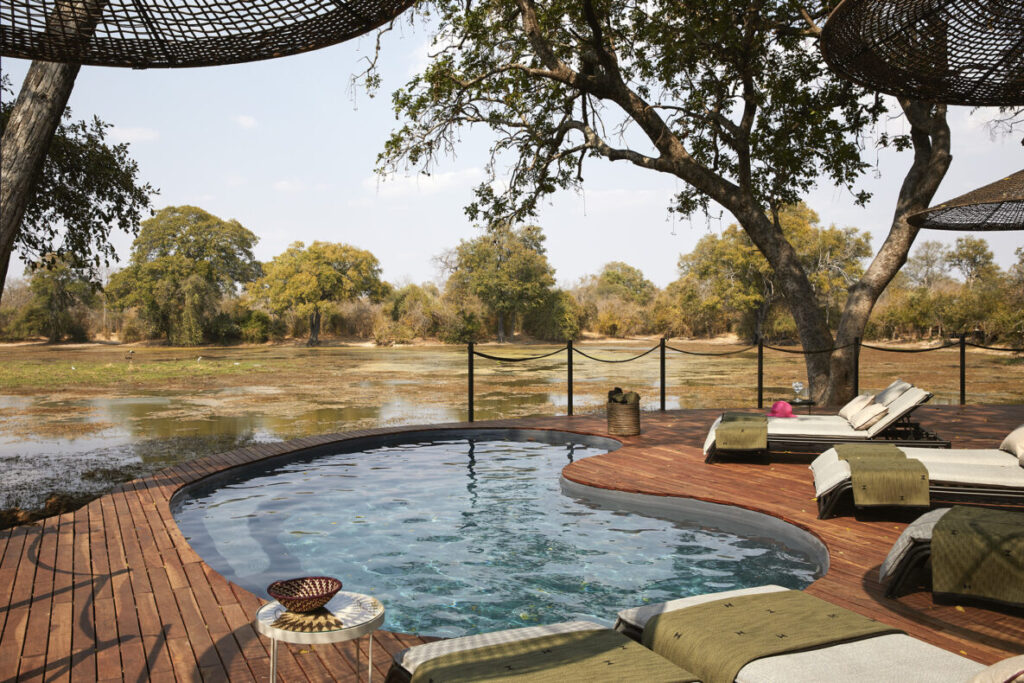
Northern Botswana’s accommodation model is built on the principle of high-value, low-volume tourism. Camps are deliberately small — typically 4 to 12 rooms or tents — to minimise ecological impact and maximise exclusivity. Most are owner-operated, deeply committed to conservation, and staffed by experienced local guides who have grown up knowing this landscape.
| Area | Recommended Camps | Style | Inclusions |
| Chobe (Kasane) | Chobe Game Lodge, Elephant Valley Lodge, Muchenje Safari Lodge | Riverside Lodge / Tented | Game drives, river cruises, meals |
| Savuti | Savuti Camp (Wilderness), Savute Safari Lodge (DU) | Classic Tented Camp | Game drives, night drives, meals |
| Moremi (Xakanaxa) | Xakanaxa Camp, Little Xakanaxa, Kanana Camp | Tented Camp | Game drives, boat cruises, meals |
| Okavango Delta | Jao Camp, Vumbura Plains, Sanctuary Chief’s Camp, Abu Camp | Island Tented Camp | Mokoro, game drives, walks, meals |
All recommended camps include full-board accommodation, scheduled game activities, and park fees. Tips for guides and camp staff are additional and are a meaningful part of local income — typically USD 10–15 per person per day for guides, USD 5–10 per person per day for camp staff.
Estimated Budget Guide
Northern Botswana operates at the premium end of African safari pricing, reflecting its conservation commitment and small-scale, high-quality tourism model.
| Category | Budget Tier | Mid-Range | Luxury / Premier |
| Camp Accommodation | USD 300–500 pp/night | USD 500–900 pp/night | USD 900–2,500 pp/night |
| Internal Flights (per sector) | USD 100–180 | USD 150–250 | USD 200–350 |
| International Flights | USD 600–900 | USD 900–1,800 | USD 1,800–5,000+ |
| Park & Conservation Fees | Typically included | Typically included | Typically included |
| Gratuities (7 nights) | USD 100–150 pp | USD 150–250 pp | USD 250–500 pp |
| Total Estimate (7 nights) | USD 4,500–7,000 pp | USD 7,000–14,000 pp | USD 14,000–30,000+ pp |
Prices vary significantly by season. Peak season (July–October) commands the highest rates. Green season (November–April) offers substantial discounts at many camps — sometimes 30–50% — with excellent birding and lush scenery.
Extend Your Safari: Combination Itineraries
Northern Botswana pairs beautifully with neighbouring destinations for a longer, more comprehensive southern African experience.
- Victoria Falls (Zimbabwe/Zambia): A 2-night extension to Vic Falls adds one of the Seven Natural Wonders of the World and can include white-water rafting, helicopter flights, and bungee jumping. The falls are accessible from Kasane in under an hour by road.
- Hwange National Park (Zimbabwe): Africa’s second-largest national park, famous for its vast elephant herds and exceptional predator viewing, lies east of Botswana. A 2–3 night extension at one of Hwange’s celebrated private concession camps combines beautifully with Chobe.
- Linyanti & Kwando Concessions: North of Savuti, the private Linyanti wildlife concessions (Linyanti, Kwando, Selinda) offer exclusive game viewing on private land, with no other vehicles. Adding 2–3 nights here elevates any Botswana itinerary.
- Nxai Pan National Park: East of the Okavango Delta lies this extraordinary pans ecosystem, famous for its ancient baobab groves (Baines’ Baobabs) and spectacular zebra migration from December to March. An excellent add-on for the green season.
- Cape Town, South Africa: Many travellers combine their Botswana safari with 3–4 nights in Cape Town — wine farms, mountain hikes, whale watching, and world-class cuisine — creating the perfect bush-and-beach combination.

Wildlife You May Encounter: Northern Botswana Species Guide
| Species | Best Location | Best Time | Notes |
| African Elephant | Chobe River, Savuti | Year-round (peak Jul–Oct) | World’s largest concentration in Chobe |
| Lion | Savuti, Moremi | Year-round | Savuti prides known for elephant hunting |
| Leopard | Moremi, Savuti | Year-round (dawn/dusk) | Moremi among best leopard destinations in Africa |
| African Wild Dog | Moremi, Savuti | May–Aug (denning) | Botswana holds 35% of Africa’s population |
| Cheetah | Savuti, Chobe floodplains | Dry season | Open areas in morning |
| African Buffalo | Chobe, Moremi | Year-round | Herds 500+ in dry season |
| Hippopotamus | Okavango Delta, Chobe River | Year-round | Delta holds major population |
| Nile Crocodile | Chobe River, Delta channels | Year-round | Common in all waterways |
| Spotted Hyena | Savuti, Moremi | Year-round (night) | Active at night around camps |
| Giraffe (Angolan) | Chobe, Moremi woodlands | Year-round | Distinctive pale colouration |
| Plains Zebra | Savuti, Nxai Pan | Dec–Mar (migration) | Mass migration spectacle |
| Red Lechwe | Okavango Delta, Moremi | Year-round | Semi-aquatic; bound through shallows |
| Sitatunga | Okavango Delta | Year-round | Elusive, swamp-adapted antelope |
| Saddle-billed Stork | Chobe River, Delta | Year-round | One of Africa’s most striking birds |
| African Fish Eagle | All waterways | Year-round | Iconic call of Africa |
A Final Word
Northern Botswana does not simply meet expectations — it consistently exceeds them. Travelers who arrive expecting an ordinary safari depart having witnessed something that shifts their understanding of what wild Africa can be. The sheer volume of wildlife, the quality of guiding, the philosophy of conservation embedded in every aspect of tourism, and the profound beauty of the landscape combine to create an experience that is, genuinely, once in a lifetime.
Whether this is your first safari or your tenth, northern Botswana will show you something new. Plan carefully, arrive open to surprise, and trust your guide. The bush will do the rest.
— Marriott Safaris Africa

www.marriottsafarisafrica.com | info@marriottsafarisafrica.com