10 Day Safari in Okavango Delta, Chobe Park & Victoria Falls
10 Day Safari in Okavango Delta, Chobe Park & Victoria Falls, Botswana is one of Africa’s most celebrated conservation success stories — a landlocked nation that has deliberately chosen low-volume, high-value tourism to protect its extraordinary natural heritage. This 10-day itinerary threads together three of the continent’s most iconic wilderness experiences: the labyrinthine waterways of the Okavango Delta, the elephant-packed floodplains of Chobe National Park, and the awe-inspiring spectacle of Victoria Falls on the Zambia-Zimbabwe border.
Unlike the crowded circuit of East Africa’s savannah parks, Botswana prioritises exclusivity. National parks are vast, camps are small, and the bush is genuinely wild. You may spend entire mornings seeing no other vehicle. In the Okavango Delta, entire days unfold without a road in sight — your transport is a mokoro (dugout canoe) poled silently through papyrus channels, or a light aircraft skimming over the floodplain below. In Chobe, the world’s largest elephant population converges on the Chobe River in the dry season in a spectacle of dust, sound, and movement that has few parallels anywhere in Africa.
This guide is written for the independent-minded traveller who wants rich detail on each destination, practical logistics, and a full picture of what to expect — from the wildlife to the weather to the fine print of inter-camp transfers. Whether you are booking through a specialist operator or putting the itinerary together yourself, every section below gives you the context to make informed choices and the most of every extraordinary day.
| Duration | 10 Days / 9 Nights |
| Destinations | Maun → Okavango Delta → Moremi → Chobe NP → Kasane → Victoria Falls |
| Best Season | May to October (Dry Season — Peak Wildlife Viewing) |
| Activity Level | Moderate — Game Drives, Mokoro, Bush Walks, Boat Cruises |
| Accommodation | Luxury Safari Lodges & Tented Camps |
| Wildlife Highlights | Big Five, African Wild Dog, Hippo, Sitatunga, Lechwe |
| Starting Point | Maun International Airport, Botswana |
| Ending Point | Victoria Falls Airport, Zimbabwe |
| 💡 PRO TIP | Botswana safari camps operate on a fully-inclusive model: accommodation, meals, laundry, game activities, and park fees are typically all included. Confirm your inclusions carefully when booking, as camps vary. |
Why Botswana?
- One of Africa’s highest-quality safari destinations with exceptional biodiversity
- Strict low-density tourism policy keeps wildlife experiences uncrowded and intimate
- Okavango Delta — the world’s largest inland delta, a UNESCO World Heritage Site
- Chobe National Park — highest elephant density on the planet
- Victoria Falls — one of the Seven Natural Wonders of the World
- Strong conservation ethic: 38% of land is protected national parks and game reserves
- Stable democracy with excellent infrastructure for international travel
- English widely spoken; easy navigation for international visitors
Best Time to Visit
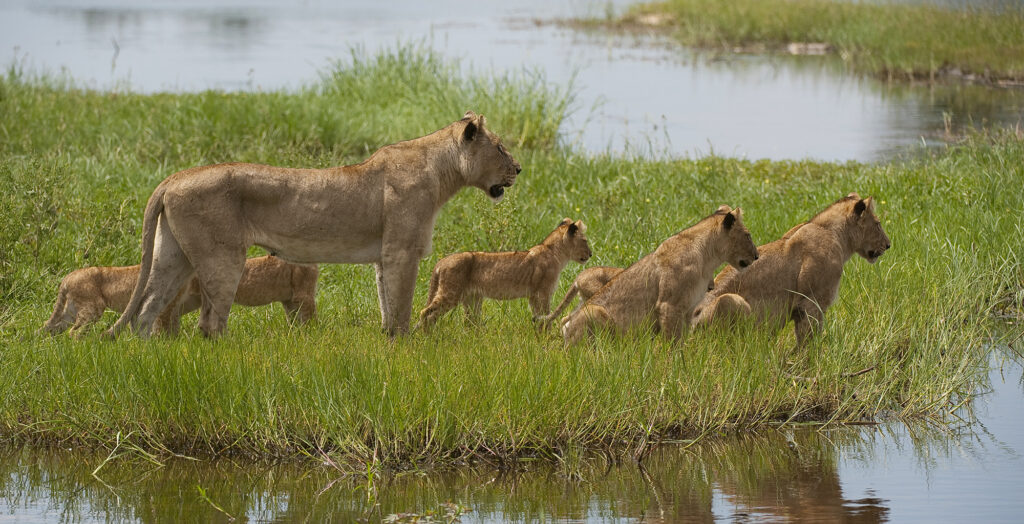
The dry season from May to October is the optimal window for this itinerary. As water recedes, wildlife concentrates at permanent water sources, making viewing more predictable and prolific. The Okavango Delta paradoxically floods during the dry season — water from Angola’s rainy season flows south, reaching the delta between June and August, filling the channels and creating the iconic water-based safari experience.
| May – June | Delta begins flooding. Cooler temperatures. Excellent game viewing begins. Fewer crowds. |
| July – August | Peak flood in the delta. Prime mokoro season. Dry, cool days. Peak season — book early. |
| September – October | Flood recedes. Exceptional Chobe elephant concentrations. Hot days. Bush thins out. |
| November – April | Green season. Migratory birds arrive. Lush landscapes. Lower rates. Some tracks impassable. |
10-Day Itinerary at a Glance
| Day | Location | Activities | Accommodation |
| 1 | Maun & Arrival | Airport transfers, Maun orientation, equipment briefing | Maun Lodge / Audi Camp |
| 2 | Okavango Delta – North | Light aircraft transfer to inner delta, mokoro excursion, walking | Luxury Delta Camp (e.g. Pelo Camp) |
| 3 | Okavango Delta | Morning mokoro, afternoon game walk, night game drive | Luxury Delta Camp |
| 4 | Okavango – Moremi GR | Transfer to Moremi, 4WD game drives, hippo pools | Moremi-Area Tented Camp |
| 5 | Moremi Game Reserve | Full-day game drives, lion & wild dog tracking, sundowners | Moremi-Area Tented Camp |
| 6 | Savuti / Linyanti | Transfer north, savannah game drives, predator sightings | Savuti or Linyanti Camp |
| 7 | Chobe National Park | Arrive Chobe riverfront, afternoon boat cruise, elephant herds | Chobe Riverfront Lodge |
| 8 | Chobe National Park | Dawn game drive, full boat cruise, hippos, crocs & thousands of buffalo | Chobe Riverfront Lodge |
| 9 | Victoria Falls | Road or fly to Vic Falls, guided tour, sunset cruise, Devil’s Pool | Victoria Falls Hotel / Boutique Lodge |
| 10 | Departure | Morning activities, transfer to Vic Falls Airport, depart | — |
| DAY
1 |
Arrival in Maun — Gateway to the Delta
📍 Maun, Botswana |
Welcome to Botswana
Maun is Botswana’s safari capital — a sprawling, dusty town straddling the Thamalakane River at the southern end of the Okavango Delta. Despite its modest appearance, Maun’s airport is one of southern Africa’s busiest light aircraft hubs, handling the constant stream of bush flights ferrying visitors into the inner delta and northern parks. It is your point of entry and your orientation base for the journey ahead.
Your international flight most likely arrives via Johannesburg (O.R. Tambo International) or Cape Town, with a connecting domestic flight on Air Botswana, Airlink, or Fastjet. Fly-in packages from Nairobi and Addis Ababa are also available. Upon arrival at Maun International Airport, a representative from your safari operator or lodge will meet you in the arrivals hall.
Afternoon Activities
- Check in to your overnight accommodation in Maun — typically a riverside lodge or well-appointed guesthouse
- Attend your safari briefing: your guide will walk you through what to expect, clothing recommendations, camera settings, and bush etiquette
- Explore the Maun town area: visit the small craft market, Nhabe Museum for a crash course in the delta’s ecology and San Bushman culture, or simply relax at a riverside restaurant
- Sunset cocktails at the lodge overlooking the Thamalakane — the first of many spectacular African sunsets on this trip
Accommodation Options — Maun
| Luxury Tier | Sedia Riverside Hotel — riverside setting, pool, excellent restaurant, safari prep service |
| Mid-Range | Maun Lodge — well-managed, spacious rooms, safari briefing facilities, reliable WiFi |
| Budget/Backpacker | Audi Camp — long-established, popular with overland travellers, secure parking, gear storage |
| 📦 PACKING NOTE | Soft-sided bags only for bush flights — no rigid suitcases. Most camps require bags under 15kg per person due to light aircraft weight limits. Your operator will provide a specific kit list. |
| DAY
2 |
Into the Okavango Delta — Arrival by Light Aircraft
📍 Inner Okavango Delta, Botswana |
The World’s Greatest Inland Delta
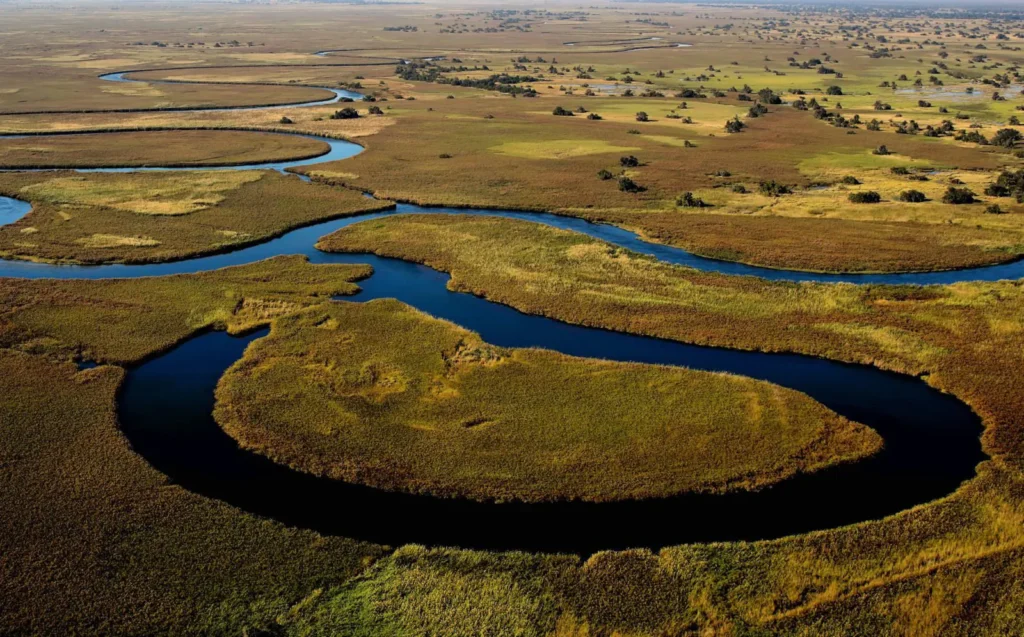
The Okavango Delta is one of Africa’s most remarkable and counterintuitive ecosystems. Fed by rainfall in the distant Angolan highlands, the Okavango River fans out across the Kalahari sand sheet, spreading into a vast network of channels, lagoons, papyrus islands, and palm-studded floodplains covering 15,000 square kilometres at peak flood. Critically, it does not flow to the sea — the water evaporates and transpires into the Kalahari air, sustaining a miraculous inland oasis in the midst of one of the world’s most arid zones.
UNESCO inscribed the Okavango Delta as a World Heritage Site in 2014, recognizing its outstanding universal value as one of the world’s largest and most intact freshwater systems. It supports extraordinary concentrations of wildlife, including species uniquely adapted to semi-aquatic life: the sitatunga, an antelope that wades through deep papyrus; the lechwe, whose splayed hooves carry it at speed across shallow floodplains; the hippo, which dominates every permanent channel; and the African fish eagle, whose haunting call is the defining sound of the delta.

Morning: Bush Flight to Inner Delta
After an early breakfast, transfer to Maun Airport’s charter terminal. Your light aircraft — typically a Cessna 206, Caravan, or similar — departs for the inner delta, a flight of 20–45 minutes depending on your camp’s location. The aerial view is breathtaking: from altitude, the delta’s channels and lagoons spread below like veins on a leaf, piercing a sea of deep green papyrus punctuated by golden islands of marula and jackalberry trees.
- On your descent, watch for elephant herds moving through shallow water, hippopotamus pods in permanent channels, and the flashes of white egrets rising from the reeds
- Your pilot will circle once on approach — an unspoken tradition to give passengers the best possible view before landing on the grass airstrip
Afternoon: First Mokoro Excursion
The mokoro is the soul of an Okavango Delta safari. These traditional dugout canoes — carved from the trunk of a sycamore fig or, increasingly, moulded in fibreglass to reduce deforestation — are poled silently through channels barely wider than the boat itself. Your poler, typically a local Bayei or Hambukushu man who has grown up on these waterways, reads the currents and guides you through a world of crystalline water, underwater grass meadows, and the sudden, startling intimacy of wildlife encountered at water level.
- Watch for African jacanas — ‘Jesus birds’ — walking on lily pads; reed cormorants drying their wings; malachite kingfishers flashing electric blue
- Hippos are encountered frequently in their channels — your poler will navigate respectfully around pods, staying downwind and at a safe distance
- In the late afternoon, alight onto a papyrus island for a walking exploration with your guide, learning to track animals, identify medicinal plants, and understand the delta’s extraordinary ecology
| 🛶 MOKORO TIP | Dress in neutral colours and keep movements slow and quiet in the mokoro. Noise travels far over water. Early morning (07:00–10:00) and late afternoon (15:30–18:30) offer the best light and most active wildlife. |
| DAY
3 |
Deeper into the Delta — Walking, Water & Wildlife
📍 Inner Okavango Delta |
Dawn on the Delta
Wake before sunrise. The Okavango Delta at first light is a symphony: the booming call of the ground hornbill, the liquid song of the African paradise flycatcher, the distant splash of a hippo returning to its daytime channel. Tea and rusks are served at 05:30; by 06:00 you are on the water, gliding through mist-draped channels as Africa wakes up around you.
Morning: Extended Mokoro & Island Walk
- Full morning on the mokoro, penetrating deeper channels where boat traffic is entirely absent
- Stop on a raised island for a guided bush walk — the Okavango’s islands are wildlife-rich, with mopane woodland sheltering elephant, buffalo, and the full range of smaller antelope
- Your guide will show you tracks in the sand: the plate-sized pad of a lion, the neat oval of an impala, the long claw-marks of a honey badger
- Learn the San Bushman’s approach to tracking — patience, close observation, reading the environment as a text
Afternoon: Swimming & Fishing (Optional)
At select delta camps, swimming in the crystal-clear channels is possible — your guide will assess conditions and confirm safety. The Okavango’s water quality is exceptional, naturally filtered through 1,500 kilometres of Kalahari sand. Alternatively, try your hand at tiger fish angling; these aggressive, tooth-filled predators are a prized catch for fly fishermen. Catch-and-release only.
Evening: Night Game Drive
After the afternoon mokoro session and dinner, head out on a night game drive by spotlight. The delta at night reveals a different cast: African wild cat, large-spotted genet, scrub hare, spring hare, bush thick-knee, and occasionally the extraordinary aardvark, rooting for termites with its long pig-like snout. Leopard sightings are possible. Return to camp for a nightcap around the fire under an astonishing canopy of stars — in the delta, light pollution is essentially zero.
| 🌟 NIGHT SKY | The Okavango Delta offers some of the darkest skies in southern Africa. Ask your camp for a star map and, if available, a session with the camp’s telescope. The Milky Way core is visible from April to September. |
| DAY
4 |
Moremi Game Reserve — Into the 4WD Wilderness
📍 Moremi Game Reserve, Botswana |
Africa’s Finest Game Reserve
Moremi Game Reserve occupies the northeastern sector of the Okavango Delta — roughly 4,871 square kilometres of the most ecologically diverse terrain in Africa. Declared in 1963 by the BaTawana people in a remarkable act of community conservation, Moremi is regarded by many wildlife biologists as the finest game reserve on the continent. Its mix of permanent and seasonal floodplain, mopane woodland, mixed bushveld, and open savannah creates an extraordinary diversity of habitats that supports — and this is not an overstatement — virtually every species of large mammal found in southern Africa.
Transfer to Moremi
From your inner-delta camp, a short bush flight deposits you at one of Moremi’s grass airstrips. Alternatively, if your camp is at the delta’s edge, a 4WD transfer through the famous Khwai community concession brings you in overland — the drive itself is a game experience, with the track threading through open floodplain teeming with elephant, zebra, giraffe, and red lechwe. Arrive at your Moremi-area camp in time for lunch.
Afternoon: First Moremi Game Drive
- Chief’s Island and the area around Xakanaxa Lagoon are legendary for lion prides — some of the largest in Africa roam here
- African wild dog packs denning in Moremi during the winter months (May–September) are a highlight; few African wildlife experiences match watching a wild dog pack prepare for an evening hunt
- Sundowner stop at Xakanaxa Lagoon as the hippos yawn and the fish eagles call the day to a close
Evening at Camp
Moremi’s camps occupy settings of extraordinary beauty — typically on the edge of a lagoon or floodplain, with no fences separating you from the wilderness. Buffalo wander through camp at night; elephant may be heard from your tent. Dinner is served under the stars, and the sounds of the African night — hyena whooping, lion coughing, hippos grunting in the channel — provide a soundtrack unlike anything in the world.
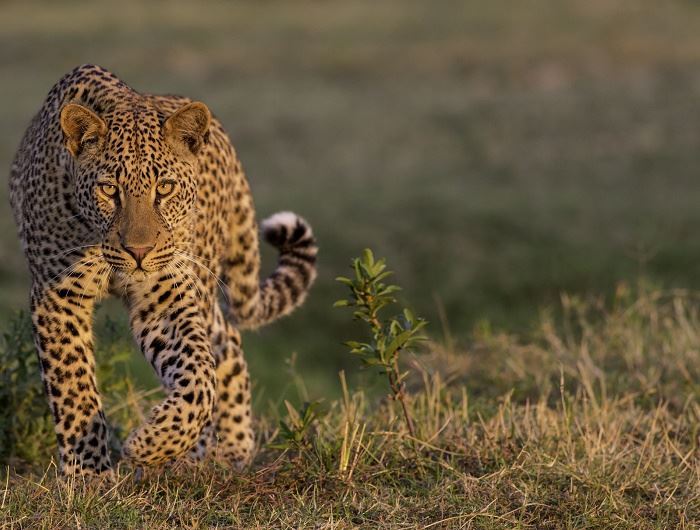
| 🦁 WILDLIFE BRIEFING | Moremi supports one of Africa’s densest populations of leopard. Ask your guide to focus on drainage lines and sausage tree groves in the late afternoon — these are leopard ambush zones. |
| DAY
5 |
Full Day in Moremi — Predators & Plains
📍 Moremi Game Reserve, Botswana |
Dawn Game Drive
The alarm sounds at 05:00. With coffee in hand, you are in the game drive vehicle as the first light turns the eastern sky a pale apricot. Moremi’s morning game drives are among the finest wildlife experiences Africa offers — predators are heading back to their daytime resting spots, nocturnal animals are making their last moves, and the savannah light is incomparably beautiful for photography.
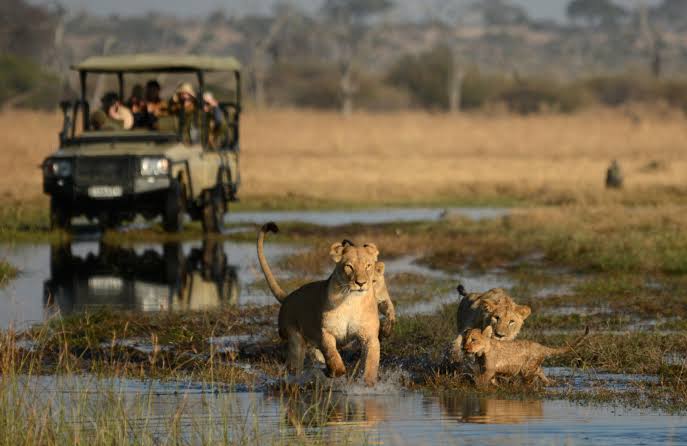
- Lion prides with cubs are a signature Moremi experience — the camp will have tracked overnight movements
- Cheetah, though rarer in the delta environment, are occasionally seen on the open floodplain east of Chief’s Island
- Watch for the African wild dog pack — if denning nearby, your guide may have GPS coordinates from the research teams that monitor them year-round
- Moremi is exceptional for birding: pel’s fishing owl, Böhm’s bee-eater, slaty egret, and the spectacular Schalow’s turaco are all possible
Midday: Siesta & Camp Activities
After a late breakfast back at camp following the morning drive, the heat of midday (11:00–15:00) encourages the traditional safari siesta. This is time well used: update your wildlife journal, review photographs, swim in the camp pool, or join the camp naturalist for a presentation on delta ecology, predator-prey dynamics, or the extraordinary adaptations of the Okavango’s semi-aquatic antelope species.
Afternoon: Floodplain Drive & Sundowners
The afternoon drive departs at 15:30 as the temperature drops and wildlife becomes active again. Head to the open floodplains south of Xakanaxa for lechwe and zebra in their thousands; skirt the Mopane tongue for elephant and buffalo herds that can number in the hundreds. Sundowner drinks on a raised termite mound as the sun drops behind an acacia horizon, throwing the landscape into gold and shadow, is one of the great safari moments — simple, timeless, and utterly Botswana.
| 📸 PHOTOGRAPHY TIP | The golden hour in Moremi lasts approximately 45 minutes before sunset. Ask your guide to position the vehicle with the sun behind you and wildlife in front for the best portraits. A 400mm lens or equivalent is ideal. |
| DAY
6 |
Savuti or Linyanti — The Wild North
📍 Savuti / Linyanti, Northern Botswana |
Africa’s Elephant Stronghold
A short bush flight north of Moremi brings you to one of Africa’s most dramatic wildlife areas: Savuti or the Linyanti Marshes. These areas form the wild buffer between Moremi and Chobe National Park, sharing in some of the highest large mammal concentrations in Africa while offering an experience that feels even more remote than the more-visited delta.
Savuti — Where Lions Hunt Elephants
Savuti is famous for one of nature’s most extraordinary and improbable behaviours: lions that have learned to hunt and kill adult elephants. The Savuti lion prides, studied extensively by National Geographic and BBC crews, have developed an unusual tradition passed down through generations — at night, when elephants are at a psychological disadvantage, the prides work cooperatively to bring down animals many times their individual size. No other lion population in Africa does this regularly. The game drive tracks around the Savuti Channel and Marsh are among the most thrilling in Africa.
Linyanti Concession — Unspoiled Wilderness
The Linyanti is a private wildlife concession of 125,000 hectares — roughly the size of a European city — accessed by a single operator. Camps here are genuinely remote: no roads pass through the concession, elephants move freely across the landscape in their thousands, and the Linyanti River forms a green corridor through the Kalahari that attracts wildlife in extraordinary numbers. Wild dog packs den here annually; leopard density is high; and the bird list is exceptional.
- Game drive along the Linyanti River as elephant herds converge at the water in late afternoon
- Walking safari with an armed professional guide — an intimate and humbling way to encounter the African bush at ground level
- Night drive: Savuti is one of the best places in Africa for nocturnal wildlife, including lion, leopard, brown hyena, and the bizarre-looking aardwolf
| 🐘 ELEPHANT NOTE | Northern Botswana holds the world’s largest savannah elephant population — an estimated 130,000 animals in the Chobe-Linyanti-Savuti ecosystem. Treat every elephant encounter with respect; these are wild, unhabituated animals of great intelligence. |
| DAY
7 |
Chobe National Park — Arrival at the River
📍 Chobe Riverfront, Kasane, Botswana |
The Elephant Capital of the World
Chobe National Park is Botswana’s first national park, gazetted in 1967, and covers 11,700 square kilometres of Kalahari escarpment, mopane woodland, floodplain, and riverine forest. The park is divided into four distinct ecosystems — the Serondela area along the Chobe River, the Savuti Marsh, the Linyanti Marshes, and the remote Nogatsaa/Tchinga interior — each offering a different wildlife experience. For this itinerary, you arrive at the Chobe Riverfront: the most accessible, most productive, and most dramatic section of the park.
The Chobe River forms the northern boundary of the park, separating Botswana from Namibia’s Caprivi Strip. In the dry season (May–October), the river is a magnet for wildlife — elephant, buffalo, hippo, crocodile, impala, warthog, waterbuck, and puku all congregate along its banks in numbers that seem almost unreal to first-time visitors. On a good morning, it is possible to see 2,000 elephants within a half-day game drive.
Transfer to Chobe & Afternoon Boat Cruise
From Savuti or Linyanti, a short bush flight brings you to Kasane Airport, just outside the park’s northeastern gate. Kasane is a small, orderly town with good facilities — the last reliable ATMs, pharmacies, and shopping before Zimbabwe. Transfer to your Chobe riverfront lodge for a light lunch, then embark on your first Chobe boat cruise at 15:00.
- Your vessel — typically a comfortable flat-bottomed pontoon boat accommodating 8–16 passengers — departs from the lodge’s private jetty
- The afternoon river safari unfolds at low, eye-level perspective with the water: no camera vehicle, no raised seats — just you, the river, and extraordinary wildlife proximity
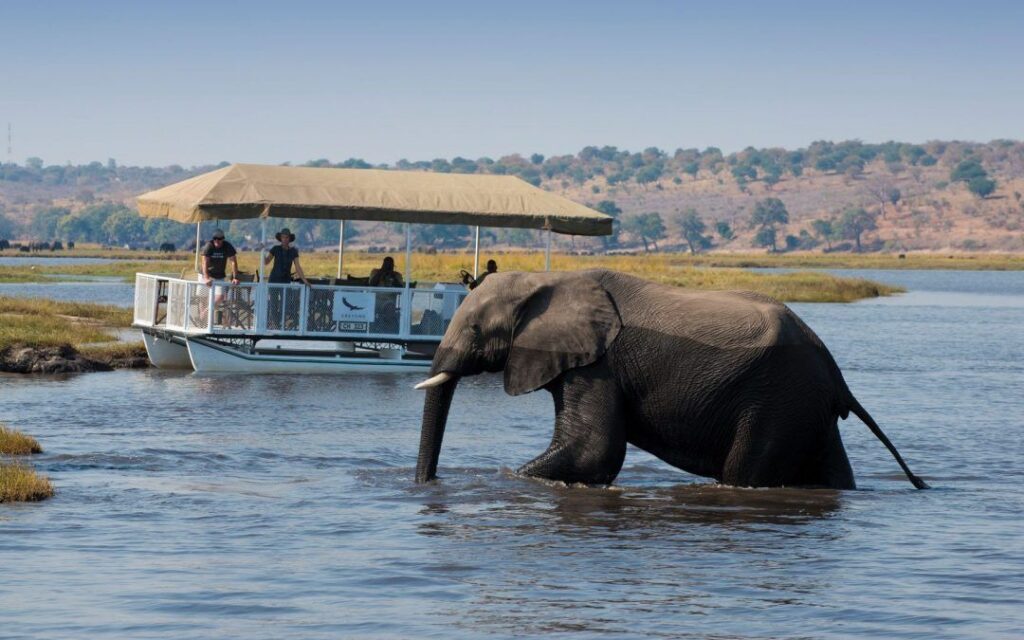
- Elephant swim across channels, hippos grunt and submerge, Nile crocodiles bask in the shallows, and the Chobe’s remarkable bird life — carmine bee-eaters, African fish eagles, goliath herons — performs against a backdrop of riverine forest
- Sundowners on the river as the light turns the Chobe into a sheet of molten copper — one of Africa’s great photographic opportunities
| DAY
8 |
Chobe at Full Intensity — Dawn Drive & River Safari
📍 Chobe National Park, Botswana |
Dawn on the Chobe River Road
The Chobe Riverfront’s game-drive track runs for approximately 30 kilometres along the bank, and in the dry season it is arguably the most productive game-drive road on the continent. Every kilometre brings new encounters: lionesses resting in the shade of jackalberry trees, wild dog packs trotting purposefully along the track, enormous Nile crocodile sliding from sandbanks as your vehicle approaches, and the constant background procession of elephant in groups of dozens, hundreds, and — in October — thousands.
Morning: Dawn Game Drive (05:30–09:30)
- Depart before sunrise to catch predators on the move and the extraordinary golden light on the river
- The area around Serondela is famous for its enormous buffalo herds — animals move in solid masses that raise dust clouds visible from kilometres away
- Chobe’s lions are well-habituated and large — adult males here are among the biggest in Africa, benefiting from the exceptional protein availability of the buffalo herds
- Return to lodge for a full cooked breakfast at 09:30 — the morning’s best light and most active wildlife period is behind you, and the leisurely meal is well-earned
Afternoon: Full Boat Safari (15:00–18:30)
Your afternoon is spent entirely on the river. A longer, more comprehensive boat safari takes you upstream and down, exploring the channels between Botswana and Namibia, venturing into backwaters where hippos cluster in pods of 50 and more, and lingering wherever wildlife is active.
- Watch elephants swim — Chobe’s elephants are strong, confident swimmers who regularly cross to Namibia’s Caprivi Strip and back
- The carmine bee-eater colony (August–October) at the Chobe riverbanks is one of Africa’s great ornithological spectacles: thousands of scarlet birds nest in mud cliffs above the waterline
- Crocodile at close range from the boat — Chobe supports one of Africa’s densest Nile crocodile populations
- As the sun sets, the sky above Chobe fills with thousands of open-billed storks, yellow-billed storks, and herons heading to roost — a spectacular avian finale
| 🐊 BOAT SAFARI ETIQUETTE | Stay seated on the boat at all times and avoid dangling hands over the sides in crocodile areas. Speak quietly, move slowly when adjusting position, and ensure camera bags are secured — the wake of passing boats can cause sudden movement. |
| DAY
9 |
Victoria Falls — The Smoke That Thunders
📍 Victoria Falls, Zimbabwe / Zambia |
One of the Seven Natural Wonders of the World
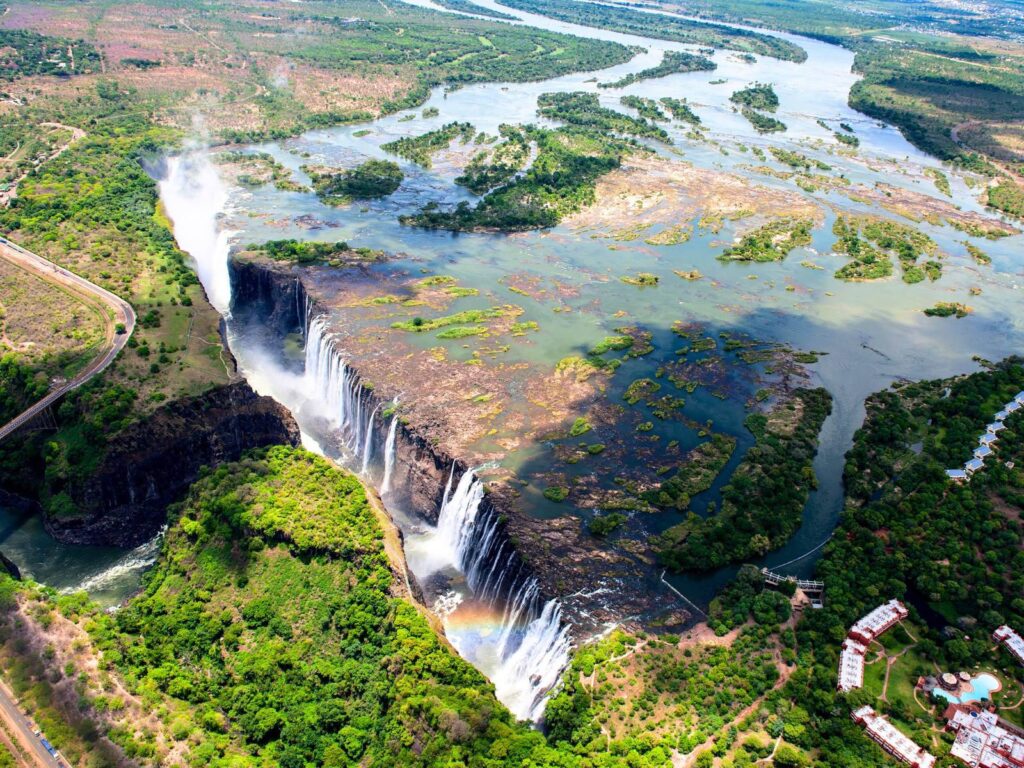
Victoria Falls — Mosi-oa-Tunya, ‘The Smoke That Thunders’ in the Kololo language — is not merely a waterfall. It is an event, a force of nature that transcends any reasonable expectation. At its peak (February–April), the Falls stretches 1,708 metres across and drops up to 108 metres into a narrow basalt gorge, generating a spray plume visible from 50 kilometres away. Even in the low-water dry season (September–November), when much of the Zambian side is dry rock, the Zimbabwean Main Falls remain a thundering, rainbow-laced spectacle.
Morning: Transfer to Victoria Falls
From Kasane, Victoria Falls is just 80 kilometres by road via the Kazungula Border Post — a straightforward crossing since the new Kazungula Bridge (opened 2021) replaced the old pontoon ferry. Alternatively, a 30-minute bush flight from Kasane to Victoria Falls Airport is available for those wishing to maximise time at the Falls. Arrive mid-morning.
Guided Tour of Victoria Falls National Park (Zimbabwe Side)
The Zimbabwe side offers the most comprehensive view of the main curtain of water. Enter at the main gate of Victoria Falls National Park (park fee applies; included in most itineraries) and follow the footpath through a perpetually wet rainforest — created entirely by the Falls’ spray, this microenvironment supports ferns, begonias, African violets, and fig trees normally found only in equatorial regions.
- Viewpoint 1 — Devil’s Cataract: the smallest but most dramatic section, dropping at close range into the boiling gorge below
- Viewpoints 2–6 — Main Falls: the full sweep of water, with the best rainbow formation at Viewpoint 3 on sunny mornings
- Viewpoint 7 — Danger Point: a narrow rock promontory jutting over the gorge with a vertiginous view straight down — not for the faint-hearted
- Livingstone Island & Devil’s Pool (October–January): a guided swim to a natural pool at the very lip of the Falls — one of the world’s great adventure experiences. Seasonal and subject to river level.
Afternoon: Zambezi Sunset Cruise
The Zambezi River above the Falls is a broad, island-studded waterway of remarkable beauty. A two-hour sunset cruise aboard a double-deck vessel explores the stretch between Victoria Falls town and the Falls’ spray cloud, with hippos, crocodiles, elephant at the water’s edge, and extraordinary birdlife including African skimmers and white-crowned lapwing. Drinks and canapés are served; the atmosphere is celebratory — the perfect penultimate evening for this safari.
Optional Activities at Victoria Falls
| White Water Rafting | Class IV–V rapids below the Falls (high water: Grade V; low water: accessible to beginners). Half or full day. |
| Bungee Jumping | 111m bungee from the Victoria Falls Bridge — one of the world’s top bungee sites |
| Helicopter Flight | 15-minute ‘Flight of Angels’ over the Falls — unmissable aerial perspective |
| Gorge Swing & Zipline | Adrenaline activities on the rim of the Batoka Gorge — operated by Shearwater |
| Victoria Falls Town | Browse curio markets, visit the Victoria Falls Hotel (1904) for high tea, Elephant Café lunch |
| Canoe Safari | Upper Zambezi canoe day trip through hippo and crocodile territory above the Falls |
| 🌈 RAINBOW TIP | The best rainbows form at the Main Falls viewpoints between 09:00 and 11:00 on sunny mornings when the sun is behind you. Bring a rain poncho — the spray from the Main Falls soaks you completely within 30 seconds. |
| DAY
10 |
Departure — Farewell to the Wilderness
📍 Victoria Falls Airport, Zimbabwe |
Final Morning
Your last African morning. Whether it is a final walk along the Zambezi bank watching hippos greet the day, one more cup of coffee on your lodge deck listening to the distant thunder of the Falls, or a sunrise helicopter flight for one last aerial view, make it count. This journey through Botswana’s finest wilderness areas — the Okavango, Moremi, Chobe, and Victoria Falls — is one that will stay with you for a lifetime.
Morning Options Before Departure
- Short guided walk along the Zambezi with the lodge naturalist — final bird and mammal list count
- Return visit to Victoria Falls for sunrise — the light is extraordinary and the crowds are minimal before 08:00
- Last-minute curio shopping in Victoria Falls town: stone sculptures, wooden carvings, and Zimbabwean soapstone are excellent value
- Morning coffee and farewell breakfast at your lodge
Transfer to Airport
Victoria Falls International Airport (VFA) is 22 kilometres from the town centre — approximately 20 minutes by vehicle. International departures connect to Johannesburg (O.R. Tambo), Nairobi, Addis Ababa, Dubai, Heathrow, and other major hubs. Allow at least 2.5 hours before departure for international check-in and immigration.
| ✈️ DEPARTURE NOTE | Victoria Falls Airport serves both Zimbabwe and (increasingly) Zambia, so confirm your departure airport carefully when booking. The Zambian gateway is Livingstone Airport (LVI), across the bridge — different town, different border. |
Essential Safari Planning Guide
Visas & Entry Requirements
Entry requirements vary by nationality. Most visitors need a visa, obtainable at the border or online in advance. Key points:
- Botswana: Visa-free for most EU, UK, US, and Commonwealth citizens for stays up to 90 days
- Zimbabwe (Victoria Falls): Most nationalities require a KAZA UNIVISA ($50 USD) — covers both Zimbabwe and Zambia
- Zambia (if crossing for activities): Covered by the KAZA UNIVISA
- Carry USD cash — widely accepted for visa fees, activities, and gratuities across all three countries
- Ensure passport validity of at least 6 months beyond your travel dates and minimum 4 blank pages
Health & Vaccinations
| Malaria | High-risk area May–October. Prophylaxis essential. Consult your travel clinic 6–8 weeks before departure. |
| Yellow Fever | Required if entering from a yellow fever endemic country. Carry your vaccination card. |
| Recommended Vaccines | Hepatitis A & B, Typhoid, Tetanus, COVID-19. Rabies if planning extended bush walks. |
| Water | Drink bottled water throughout. Do not drink tap water at any location. |
| Sun Protection | High UV index year-round. SPF 50+, hat, and UV-protective clothing essential. |
| Altitude | Not a factor — all destinations are at low altitude. No acclimatisation required. |
Currency & Money
- Botswana: Botswana Pula (BWP). ATMs in Maun and Kasane. Most lodges accept USD, EUR, and credit cards.
- Zimbabwe: US Dollar is the primary currency. Zimbabwean ZiG also in circulation.
- Carry USD cash in small denominations ($1, $5, $10, $20) for tips, market purchases, and small fees
- Credit cards accepted at larger lodges and restaurants but connectivity can be unreliable in remote areas
- Gratuities: Guide $15–25 USD/day; camp staff $10–15 USD/day; mokoro poler $10–15 USD/excursion
Photography & Equipment
- A telephoto lens of 400–600mm equivalent is highly recommended for wildlife photography
- Dust is pervasive — bring a good camera bag with dust sealing and lens cleaning cloths
- Binoculars: 8×42 or 10×42 are the gold standard for safari birding and mammal spotting
- Spare batteries and a portable solar charger for bush camps where power is limited
- Ask your guide before using flash photography near wildlife, especially at night
- Memory cards: bring more than you think you need — you will shoot more than you expect
What to Wear — Safari Clothing Guide
| Colours | Neutral tones: khaki, olive, sand, grey, brown. Avoid white, black, and bright colours. Blue attracts tsetse flies. |
| Layers | Mornings and evenings can be very cold (June–August). A fleece layer and light down jacket are essential. |
| Protection | Long sleeves and trousers for bush walks and dawn/dusk drives. Tuck socks into trousers in long grass. |
| Footwear | Closed-toe shoes or boots for walking. Sandals fine at camp. No high heels anywhere on this itinerary. |
| Wet Weather | Victoria Falls: a lightweight rain poncho is essential (sold locally but bring your own for quality) |
| Hat | Wide-brimmed sun hat essential for game drives and all outdoor activities |
Responsible Safari Travel
Botswana’s extraordinary wildlife and wild places exist because of a deliberate conservation philosophy. As a visitor, you have both the privilege and the responsibility of leaving this wilderness in the same extraordinary condition you found it.
- Never pressure guides to approach wildlife too closely or leave designated tracks
- Silence is a gift — minimise noise in game drive vehicles and around wildlife
- Do not feed wildlife, however habituated they may appear
- Purchase crafts directly from local artisans rather than large commercial operations
- Choose operators with genuine community benefits — look for RETOSA-certified and fair-trade safari companies
- Offset your carbon emissions; Botswana’s wildlife is disproportionately vulnerable to climate change