
10-Day Okavango Delta & Gorilla Trekking Safari
A detailed Uganda and Botswana itinerary combining mountain gorillas in Bwindi with the waterways and wildlife of the Okavango Delta
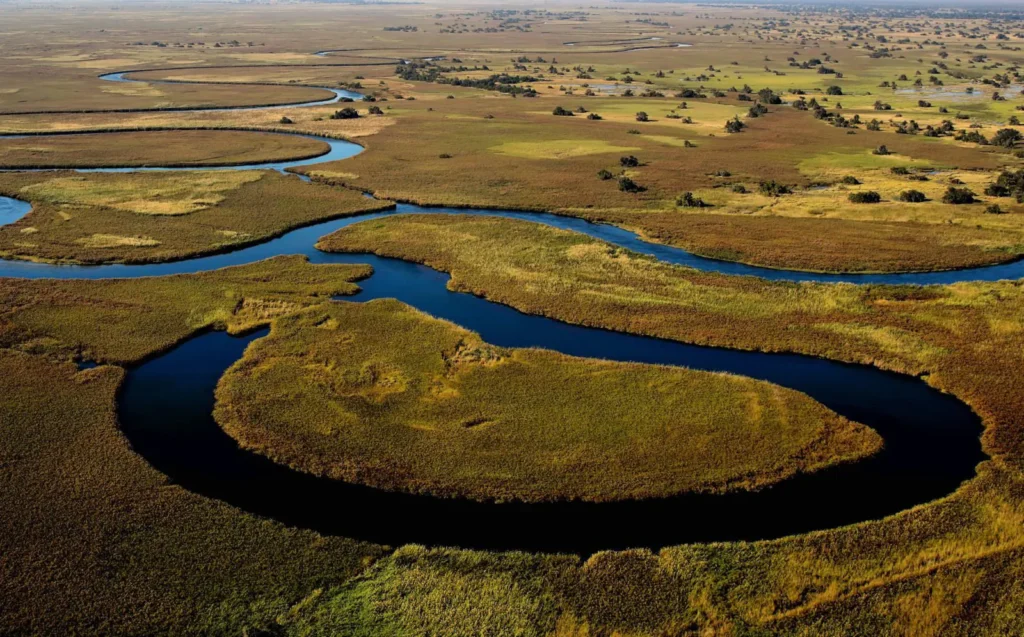
10-Day Okavango Delta & Gorilla Trekking Safari, Few safaris deliver two experiences as different, and as unforgettable, as this one. In the misty highlands of southwestern Uganda you will spend an hour face to face with a family of wild mountain gorillas in Bwindi Impenetrable Forest. A few days later you will be gliding through papyrus channels in a traditional mokoro, tracking lions and leopards across the islands of the Okavango Delta in Botswana, one of the largest inland deltas on earth and a UNESCO World Heritage Site.
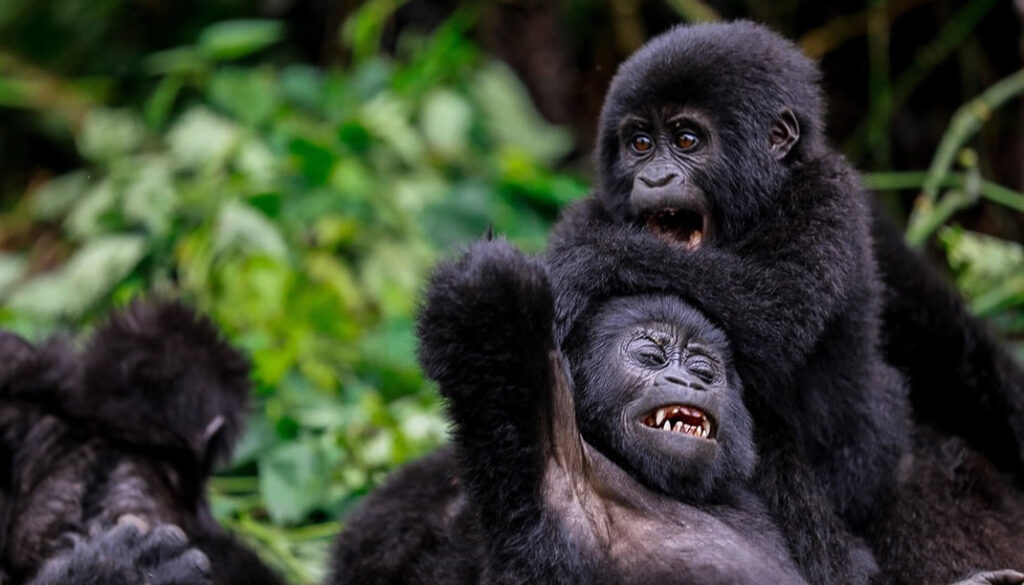
This 10-day itinerary links East and Southern Africa into a single, well-paced journey: four days for primates in Uganda, one connecting travel day, and five days in the Delta split between a water-based camp and a land-based game-drive camp. Below you will find the full day-by-day plan, flight logistics, permit and fee tables, accommodation options for every budget, a cost breakdown, visa and health requirements, packing lists and answers to the most common questions.
| Trip summary
Duration: 10 days / 9 nights Countries: Uganda and Botswana (connecting through Johannesburg, South Africa) Start / end: Entebbe International Airport (EBB) / Maun International Airport (MUB) Highlights: Mountain gorilla trekking in Bwindi, Batwa cultural experience, mokoro excursions, guided bush walks, Moremi game drives, optional scenic flight Best months: June to September, when both regions are dry and the Delta floods peak Style: Fly-in safari, available as budget, mid-range or luxury |
Itinerary at a Glance
| Day | Route / Location | Highlights | Overnight |
| 1 | Arrive Entebbe, Uganda | Airport pickup, Lake Victoria sunset, briefing | Entebbe |
| 2 | Entebbe → Bwindi (flight to Kihihi) | Scenic domestic flight, Buhoma community walk | Bwindi (Buhoma) |
| 3 | Bwindi Impenetrable Forest | Mountain gorilla trek, one hour with a family | Bwindi (Buhoma) |
| 4 | Bwindi → Entebbe | Batwa experience or waterfall trail, flight back | Entebbe |
| 5 | Entebbe → Johannesburg → Maun | International connection to Botswana | Maun |
| 6 | Maun → Okavango Delta (water camp) | Light-aircraft flight, first mokoro outing | Delta water camp |
| 7 | Okavango Delta | Bush walk on foot, motorboat channels, birding | Delta water camp |
| 8 | Delta → Moremi / private concession | Inter-camp flight, afternoon game drive | Land-based camp |
| 9 | Moremi / private concession | Full day of game drives, night drive (concession) | Land-based camp |
| 10 | Delta → Maun → Departure | Final morning drive, flight to Maun, onward | — |
Why Combine the Okavango Delta with Gorilla Trekking?
Gorilla trekking and a classic Big Five safari are the two experiences most travelers want from Africa, but they rarely happen in the same place. Uganda offers the world’s largest population of mountain gorillas, while Botswana’s Okavango Delta offers some of the most exclusive, low-density wildlife viewing on the continent. Pairing them gives you:
- Contrast: dense, steep rainforest and close-up primate encounters, followed by open floodplains, palm islands and big cats.
- Exclusivity: only eight visitors may spend an hour with each habituated gorilla family per day, and many Delta concessions limit guest numbers and vehicles.
- Seasonal alignment: Uganda’s long dry season (June to September) coincides with peak flooding in the Delta, so both halves of the trip are at their best at the same time.
- Efficiency: scheduled flights link Entebbe to Johannesburg and Johannesburg to Maun, so the full transfer takes a single day.
Route and Flight Logistics
The two halves of this safari are roughly 2,800 km apart, so the trip is designed around flights rather than long drives. The standard routing is:
- International arrival: fly into Entebbe International Airport (EBB), Uganda.
- Domestic Uganda: scheduled light-aircraft flight Entebbe → Kihihi airstrip (for Buhoma sector) or Entebbe → Kisoro (for Rushaga and Nkuringo sectors), roughly 1.5 to 2 hours. The road alternative takes 8 to 10 hours each way.
- Uganda to Botswana: Entebbe → Johannesburg (OR Tambo, about 4 hours non-stop), then Johannesburg → Maun (about 1 hour 45 minutes). Routings via Nairobi are also possible.
- Within the Delta: light-aircraft transfers from Maun to camp airstrips and between camps, typically 20 to 45 minutes per sector.
- Departure: fly out of Maun via Johannesburg, or continue to Kasane for Chobe and Victoria Falls.
| Planning note: flight schedules
Airline schedules on the Entebbe–Johannesburg and Johannesburg–Maun routes change seasonally. If your flights do not connect on the same day, plan an overnight near OR Tambo Airport on Day 5 and shift the Delta flight to the morning of Day 6. Always confirm schedules before booking camps, because Delta lodges and light-aircraft seats sell out months ahead in peak season. |
| Luggage restriction on light aircraft
Most light-aircraft flights in Botswana and many domestic flights in Uganda limit you to about 20 kg (sometimes 15 kg in Uganda) per person, including hand luggage and camera gear, packed in soft-sided bags with no wheels or frames. Hard suitcases are usually refused. Ask your operator about storing excess luggage in Entebbe or Johannesburg. |
Detailed Day-by-Day Itinerary
Part One: Uganda – Mountain Gorillas of Bwindi
Day 1: Arrival in Entebbe
Welcome to Uganda, the Pearl of Africa. Entebbe sits on a peninsula on the northern shore of Lake Victoria and is a relaxed, green introduction to the country, far calmer than nearby Kampala.
Arrival: Your driver-guide meets you in the arrivals hall at Entebbe International Airport with a name board and transfers you to your hotel, usually a 10 to 20 minute drive.
Afternoon: Depending on your arrival time, rest by the lake or visit the Entebbe Botanical Gardens, where black-and-white colobus monkeys and more than 100 bird species live among century-old trees. Wildlife enthusiasts can visit the Uganda Wildlife Conservation Education Centre (UWEC) to learn about Uganda’s species before heading into the field.
Evening: Enjoy a sunset drink overlooking Lake Victoria. Your guide will hold a pre-trek briefing covering gorilla permits, fitness, what to wear and the next morning’s flight time.
| Day 1 at a glance
Overnight: Entebbe hotel (see accommodation table) Meals: Dinner Travel: Airport transfer, 10–20 minutes |
Day 2: Fly to Bwindi Impenetrable Forest
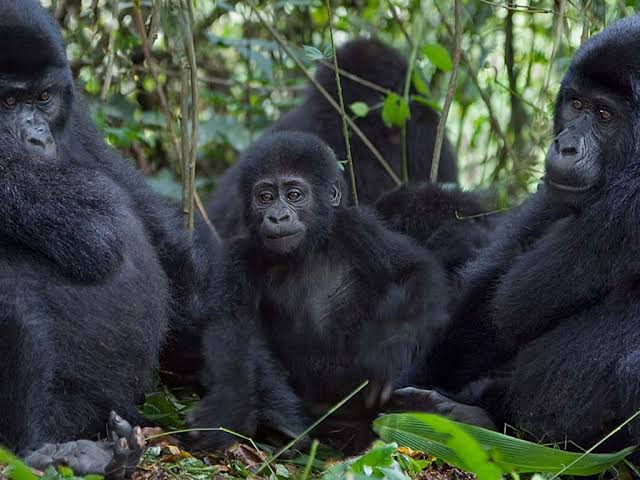
Today you trade the lakeshore for the dramatic, mist-covered hills of southwestern Uganda. Bwindi protects roughly half of the world’s remaining mountain gorillas and is one of the most biologically diverse forests in Africa.
Morning: Transfer to Entebbe Airport (or Kajjansi airfield) for your scheduled domestic flight to Kihihi airstrip. The flight passes over Lake Victoria’s shoreline, the patchwork farmland of central Uganda and, on clear days, the edges of Queen Elizabeth National Park.
Midday: Your guide meets you at Kihihi for the scenic drive of about 1 to 1.5 hours to the Buhoma sector, climbing through tea estates and banana plantations. Check in and have lunch with views over the forest canopy.
Afternoon: Take a guided Buhoma community walk. Local guides lead you through village homes, a traditional healer’s garden, a banana-beer brewing demonstration and community projects funded partly by gorilla tourism revenue. It is a meaningful way to see how conservation supports surrounding communities.
Evening: Early dinner and a final kit check. Lay out boots, gaiters, rain jacket, gloves and your passport (you will need it at the permit check).
| Day 2 at a glance
Overnight: Bwindi lodge, Buhoma sector Meals: Breakfast, lunch, dinner Travel: Domestic flight ~1.5–2 hours + road ~1–1.5 hours |
Day 3: Mountain Gorilla Trekking
This is the day many travelers wait years for. After the trek you will spend one magical hour observing a habituated gorilla family as they feed, groom, play and rest, often just a few metres away.
Early morning: Breakfast at around 6:30 am, then a short drive to the Uganda Wildlife Authority (UWA) park office at Buhoma for 7:30 am registration. Rangers deliver a briefing on trekking rules and assign visitors to gorilla families in groups of up to eight, taking fitness into account where possible.
The trek: Accompanied by armed rangers and trackers who left at dawn to locate the family, you head into the forest. Treks can last anywhere from 1 to 6 hours or more depending on where the gorillas spent the night, across steep and muddy terrain. Hiring a local porter (around US$15–20) is strongly recommended: they carry your daypack, help on slippery slopes and earn vital income.
The encounter: Once the family is found you leave walking sticks and bags behind and spend exactly one hour with the gorillas. Watch the silverback keep order, mothers nurse infants and juveniles tumble through the vines. Keep your voice low, stay at least 7 metres away, and never use flash photography.
Afternoon: Return to the park office to receive your gorilla trekking certificate, then head back to the lodge for a late lunch, a hot shower and perhaps a massage. Birders can walk the forest edge looking for Albertine Rift endemics such as the Rwenzori turaco, handsome francolin and regal sunbird.
| Day 3 at a glance
Overnight: Bwindi lodge, Buhoma sector Meals: Breakfast, packed lunch, dinner Travel: Short transfer to park office; trek 1–6+ hours on foot |
| Want more time with the gorillas?
Upgrade Day 4 to a second gorilla trek (another US$800 permit) or swap Day 3 for the Gorilla Habituation Experience in the Rushaga sector, which allows up to four hours with a semi-habituated family for US$1,500. If you choose a second trek, plan an evening flight on Day 4 or an extra night in Bwindi. |
Day 4: Batwa Experience & Return to Entebbe
A gentler morning in the forest before you fly back to Entebbe to prepare for the second half of your safari.
Morning (option 1): Join a Batwa cultural experience led by members of the Batwa community, the forest’s original inhabitants. Learn how they hunted, gathered medicinal plants, made fire and built shelters before Bwindi became a national park, and hear their songs and stories.
Morning (option 2): Hike the Waterfall Trail from Buhoma, a 3 to 4 hour guided forest walk through ferns, orchids and giant trees to a series of cascades, with good chances of monkeys and forest birds.
Afternoon: Lunch at the lodge, then transfer to Kihihi for your afternoon flight back to Entebbe. Your driver meets you and takes you to your hotel.
Evening: Repack for Botswana. Move everything you need for the Delta into a soft duffel bag within the 20 kg light-aircraft limit and arrange to store any extra luggage.
| Day 4 at a glance
Overnight: Entebbe hotel Meals: Breakfast, lunch, dinner Travel: Road ~1–1.5 hours + domestic flight ~1.5–2 hours |
Part Two: Botswana – The Okavango Delta
Day 5: Entebbe to Maun via Johannesburg
A travel day that carries you from East Africa to Southern Africa and the gateway town of Maun, on the southeastern edge of the Delta.
Morning: Transfer to Entebbe International Airport for your flight to Johannesburg (about 4 hours non-stop).
Afternoon: Connect at OR Tambo to your flight to Maun (about 1 hour 45 minutes). Allow at least 2 to 3 hours between flights for immigration, baggage and security if your tickets are not on a single booking.
Arrival: Clear Botswana immigration, where you will pay the Tourism Development Levy if you have not paid it online and may be asked for your yellow fever certificate (see Visa and Entry Requirements). Transfer to a riverside lodge on the Thamalakane River.
Evening: Relaxed dinner and an early night. If flights do not connect, overnight in Johannesburg instead and fly to Maun early on Day 6.
| Day 5 at a glance
Overnight: Maun riverside lodge (or Johannesburg airport hotel) Meals: Breakfast, dinner Travel: Flights ~6–7 hours total plus connection |
Day 6: Fly into the Okavango Delta – Water Camp
Your first view of the Delta from the air is unforgettable: winding blue channels, palm-fringed islands, and herds of elephant and buffalo moving across the floodplains below.
Morning: Transfer to Maun Airport for your light-aircraft flight (around 30 to 45 minutes) to a water-based camp in the permanent Delta or a private concession with year-round water.
Midday: Welcome briefing, brunch and time to settle into your tent or chalet. Water camps are built on islands, so hippos grunting nearby and elephants passing through camp are common.
Afternoon: Head out on your first mokoro excursion. Poled by a skilled local guide, these dugout-style canoes (today mostly made from fibreglass) glide silently past water lilies, painted reed frogs, malachite kingfishers and grazing red lechwe.
Evening: Sundowners on the water as the sky turns orange, followed by dinner around the fire under the stars.
| Day 6 at a glance
Overnight: Okavango Delta water-based camp Meals: All meals and drinks (typical fully inclusive camp) Travel: Light-aircraft flight ~30–45 minutes |
Day 7: Full Day in the Okavango Delta
A full day to experience the Delta on foot and on the water, the way most visitors never do.
Dawn: Coffee by the fire, then a mokoro or motorboat ride to a nearby island for a guided bush walk. Walking with a qualified guide lets you read tracks, examine termite mounds and approach elephants, giraffes and zebras on foot. It is an intimate, adrenaline-tinged way to experience the wilderness.
Late morning: Brunch and siesta during the heat of the day, or relax on the deck watching wildlife at the waterhole.
Afternoon: Motorboat cruise through the deeper channels and lagoons in search of hippos, crocodiles, sitatunga antelope and the rare Pel’s fishing owl. Seasonal heronries can host hundreds of nesting storks, egrets and herons.
Evening: Optional catch-and-release fishing for tigerfish or bream in season, then a lantern-lit dinner.

| Day 7 at a glance
Overnight: Okavango Delta water-based camp Meals: All meals and drinks Travel: Activities by mokoro, boat and on foot |
Day 8: Transfer to a Land-Based Camp in Moremi or a Private Concession
The second half of your Delta stay focuses on classic game drives in areas with higher concentrations of predators.
Morning: Final morning activity at the water camp, then a short inter-camp flight (about 20 to 30 minutes) to a camp in or bordering Moremi Game Reserve, such as Chief’s Island, Khwai or the Xakanaxa area.
Afternoon: After lunch, set out on an afternoon game drive in an open 4×4 vehicle. The mosaic of floodplains, mopane woodland and islands supports lion, leopard, cheetah and the endangered African wild dog, alongside large herds of elephant, buffalo, zebra and impala.
Evening: Sundowners in the bush. In private concessions, the return drive may become a night drive with a spotlight to search for leopard, hyena, genet, porcupine and owls.
| Day 8 at a glance
Overnight: Land-based camp, Moremi / private concession Meals: All meals and drinks Travel: Light-aircraft transfer ~20–30 minutes |
Day 9: Full Day of Game Drives
Your guide tailors the day to recent sightings and your interests, whether that means following a wild dog pack, waiting at a leopard’s favourite tree or photographing elephants crossing a channel.
Morning: Early wake-up call and light breakfast, then an extended morning game drive when predators are most active. Many camps offer a bush breakfast or picnic in a scenic spot.
Midday: Return to camp for lunch and a siesta, or sit quietly in a camp hide.
Afternoon: Afternoon game drive, or book an optional doors-off helicopter flight (bookable through most camps) for a breathtaking aerial view of the Delta’s channels and wildlife.
Evening: Farewell sundowners and a celebration dinner, often with traditional songs from the camp team.
| Day 9 at a glance
Overnight: Land-based camp, Moremi / private concession Meals: All meals and drinks Travel: Game drives in open 4×4 vehicles |
Day 10: Final Game Drive & Departure
A last chance to see the Delta waking up before you head home.
Morning: Early game drive or walk, followed by brunch.
Midday: Light-aircraft flight back to Maun to connect with your international flight via Johannesburg.
Extension: Instead of flying home, continue to Kasane for Chobe National Park’s elephant herds and river cruises, then cross to Victoria Falls in Zimbabwe or Zambia for two or three extra nights.
| Day 10 at a glance
Overnight: — Meals: Breakfast / brunch Travel: Light aircraft to Maun ~30–45 minutes, onward international flights |
Best Time to Visit Uganda and the Okavango Delta
The ideal window for this combination is June to September, when Uganda is in its long dry season and the Okavango floodwaters, which arrive months after the rains fall in the Angolan highlands, are at their highest. Wildlife concentrates around permanent water in Botswana, and forest trails in Bwindi are drier and less slippery.
| Months | Uganda (Bwindi) | Okavango Delta | Verdict |
| Jan – Feb | Short dry season; good trekking | Green season; hot, rainy, lower rates | Good value |
| Mar – May | Long rains; muddy trails, discounted lodges | Flood waters begin arriving (May) | Budget option |
| Jun – Aug | Long dry season; best trekking | Peak flood, cool, excellent game | Best overall |
| Sep – Oct | Dry into Sept; rains start Oct | Very hot; superb predator sightings | Excellent |
| Nov – Dec | Short rains; lush and quieter | Rains begin; babies born, birding peaks | Shoulder season |

| Booking lead time
For June to September travel, book gorilla permits and Delta camps 6 to 12 months in advance. Popular camps and permits for specific Bwindi sectors are often sold out a year ahead. |
Gorilla Permits and Park Fees
Gorilla permits in Uganda are issued by the Uganda Wildlife Authority and include park entry for the day of the trek. In Botswana, Moremi Game Reserve and concession fees are usually built into lodge rates, but confirm this when booking. All fees below are indicative and should be confirmed with your operator at the time of booking.
| Item | Foreign Non-Resident | Notes |
| Uganda gorilla trekking permit | US$800 per person | One hour with the gorillas; minimum age 15 |
| Gorilla Habituation Experience | US$1,500 per person | Up to 4 hours; Rushaga sector only |
| Batwa cultural experience | From ~US$80 per person | Varies by sector and provider |
| Porter (optional) | ~US$15–20 per trek | Plus tip; strongly recommended |
| Botswana Tourism Development Levy | US$30 per person | Paid on entry or online before travel |
| Moremi / concession fees | Usually included | Check if quoted separately by budget operators |
| Helicopter scenic flight (optional) | ~US$250–550 per person | Depends on duration and group size |
Where to Stay: Accommodation by Budget
The table below lists well-regarded properties at each stop. Delta camps are almost always sold on a fully inclusive basis covering meals, drinks, activities, park fees and laundry, which makes them better value than nightly rates first suggest.
| Location | Budget | Mid-Range | Luxury |
| Entebbe | 2 Friends Beach Hotel; Karibu Guesthouse | Protea Hotel by Marriott Entebbe; Lake Victoria Hotel | Lake Victoria Serena (Kigo) |
| Bwindi (Buhoma) | Buhoma Community Rest Camp; Bwindi Guest House | Buhoma Lodge; Mahogany Springs | Sanctuary Gorilla Forest Camp; Bwindi Lodge |
| Bwindi (south) | Rushaga Gorilla Camp | Ichumbi Gorilla Lodge; Nkuringo Bwindi Gorilla Lodge | Clouds Mountain Gorilla Lodge |
| Maun | Old Bridge Backpackers; Crocodile Camp | Thamalakane River Lodge; Cresta Riley’s | Thamalakane River Lodge (premium rooms) |
| Delta water camp | Oddballs’ Enclave; mobile camping safaris | Oddballs’ Palm Island; Delta Camp | Vumbura Plains; Xigera; Jao Camp |
| Moremi / concession | Mobile camping in Moremi public campsites | Camp Moremi; Machaba Camp (Khwai) | Mombo Camp; Chief’s Camp; Duba Plains |
Cost Breakdown
Estimated per-person costs in US dollars, sharing a double room, for travel in peak season (June to October). Green season rates in Botswana can be 30 to 50 percent lower. International flights to Entebbe and home from Maun are not included.
| Component | Budget | Mid-Range | Luxury |
| Uganda: 3 nights lodging + Entebbe night | $350 – $600 | $900 – $1,500 | $3,000 – $5,500 |
| Gorilla permit (1 trek) | $800 | $800 | $800 |
| Uganda domestic flights (return) | $600 – $800* | $600 – $800 | $600 – $800 |
| Ground transfers & guide | $200 – $350 | $300 – $450 | $400 – $600 |
| Entebbe → Johannesburg → Maun | $600 – $1,000 | $600 – $1,000 | $700 – $1,500 |
| Maun night | $60 – $120 | $150 – $250 | $250 – $400 |
| Delta camps (4 nights, inclusive) | $1,200 – $2,000 | $3,200 – $5,500 | $7,000 – $14,000+ |
| Light-aircraft transfers | $350 – $500 | $450 – $650 | $500 – $750 |
| Levies, visas, tips, extras | $250 – $400 | $350 – $500 | $500 – $800 |
| Estimated total | $4,400 – $6,600 | $7,350 – $11,450 | $13,750 – $25,150+ |
*Budget travellers can replace Uganda domestic flights with a road transfer (8 to 10 hours each way), which saves money but adds roughly one extra day to the itinerary.
Visa and Entry Requirements
Uganda
- Visa: most nationalities need a visa, applied for online through the official Uganda e-visa portal before travel. A single-entry tourist visa costs US$50. The US$100 East Africa Tourist Visa covers Uganda, Rwanda and Kenya if you plan to extend.
- Yellow fever: a valid yellow fever vaccination certificate is required for entry to Uganda.
- Passport: valid for at least six months beyond your travel dates, with at least two blank pages.
Botswana
- Visa: citizens of the USA, UK, EU countries, Canada, Australia and many others can enter visa-free for tourism. Check the current list for your nationality before travel.
- Tourism Development Levy: US$30 per person for most non-SADC visitors, payable online or on arrival.
- Yellow fever: because you are arriving from Uganda, a yellow fever risk country, Botswana requires proof of vaccination. Carry the original certificate in your hand luggage.
South Africa (transit)
- Most travellers connecting airside at OR Tambo do not need a South African visa. If you must collect bags, change terminals on separate tickets or stay overnight, check whether your nationality needs a visa to enter South Africa.
| Important
Entry rules change frequently. Verify visa, levy and health requirements with official government sources or your safari operator a few weeks before departure. |
Health and Safety
- Malaria: both Bwindi and the Okavango Delta are malaria areas. Consult a travel clinic about antimalarial medication, and use repellent and long sleeves at dusk.
- Fitness: gorilla treks can involve several hours of steep, muddy hiking at 1,160 to 2,600 metres. Regular walking or hiking in the months before travel makes a big difference.
- Illness and the gorillas: gorillas are vulnerable to human diseases. If you have a cold, flu or other contagious illness, rangers may not allow you to trek.
- Wildlife safety in camp: Delta camps are unfenced. Always follow staff instructions and be escorted to and from your tent after dark.
- Travel insurance: take a policy that covers adventure activities and emergency medical evacuation, as remote camps rely on air evacuation.
Gorilla Trekking Rules and Etiquette
- Keep a distance of at least 7 metres (about 21 feet) from the gorillas at all times.
- Wear a face mask if rangers request it, and never trek if you are unwell.
- Keep your voice low and avoid sudden movements; follow your ranger if a gorilla approaches.
- Never use flash photography, and do not eat, drink or smoke near the gorillas.
- Your time with the family is strictly limited to one hour.
- Carry out all litter and bury nothing in the forest.
Packing List
Pack light and smart: one soft duffel within the 20 kg light-aircraft limit should cover both countries.
| For Gorilla Trekking (Uganda) | For the Okavango Delta (Botswana) |
| Waterproof, broken-in hiking boots | Neutral-coloured clothing (khaki, olive, beige) |
| Gardening or tough gloves for vines and nettles | Warm fleece and beanie for cold winter mornings |
| Long-sleeved shirt and long trousers | Wide-brimmed hat and polarised sunglasses |
| Lightweight rain jacket | High-SPF sunscreen and lip balm |
| Gaiters or long socks to tuck trousers into | Binoculars (one pair per person ideally) |
| Small daypack with rain cover | Camera with zoom lens and spare batteries |
| Water (2 litres) and energy snacks | Swimsuit for camp plunge pools |
| Insect repellent and face mask | Soft duffel bag (no wheels or frames) |
Expert Tips for Planning This Safari
- Secure permits first: gorilla permits are the scarcest part of the trip. Lock them in, then build flights and camps around the trek date.
- Choose the right Bwindi sector: Buhoma pairs well with Kihihi airstrip; Rushaga and Nkuringo pair with Kisoro. Book lodges in the same sector as your permit.
- Mix water and land camps: splitting your Delta nights between a water camp and a game-drive camp gives you mokoro and walking as well as better predator viewing.
- Add a buffer: build in flexibility around the Day 5 connection, since a missed flight can cost you a non-refundable camp night.
- Tip appropriately: budget around US$10–20 per person per day for guides and US$10 per person per day for camp staff in Botswana, plus porter and ranger tips in Uganda.
Frequently Asked Questions
Can you combine gorilla trekking in Uganda with the Okavango Delta in 10 days?
Yes. With flights between Entebbe, Johannesburg and Maun, 10 days comfortably allows four days in Uganda for one gorilla trek, one connecting travel day and five days across two Okavango Delta camps.
How much does a 10-day Uganda and Okavango Delta safari cost?
Expect roughly US$4,400–6,600 per person on a budget, US$7,350–11,450 mid-range and US$13,750 or more for luxury, excluding international flights to Entebbe and home from Maun.
Should I do the gorillas or the Okavango Delta first?
Either works. Starting with gorillas means you finish relaxed in the Delta, and Entebbe is often an easier arrival point. Reversing the route suits travellers flying in via Johannesburg.
How fit do I need to be for gorilla trekking?
A reasonable level of fitness is enough for most people. Treks range from 1 to 6 hours or more on steep, muddy slopes at altitude. Porters and walking sticks make it manageable.
What is the minimum age for gorilla trekking?
Trekkers must be at least 15 years old. Many Delta camps also set minimum ages for children, often 6 to 12, especially for mokoro and walking activities.
Can I use Rwanda instead of Uganda for gorillas?
Yes. Rwanda’s Volcanoes National Park is closer to Kigali Airport, which shortens transfers, but permits cost US$1,500 compared with US$800 in Uganda.
Do I need a yellow fever certificate for Botswana?
Yes, if you arrive from a yellow fever risk country such as Uganda. Carry your original certificate with you.
Is the Okavango Delta worth visiting in the green season?
Yes, for value and birdlife. From December to March rates drop considerably, the landscape is lush and many animals give birth, although water activities may be limited in some areas.
| Plan Your Gorilla & Okavango Safari with Marriott Safaris Africa
From securing gorilla permits in Bwindi to booking water and land camps in the Okavango Delta, our team handles every flight, transfer and detail so you can focus on the experience. Contact Marriott Safaris Africa today to tailor this 10-day itinerary to your dates, budget and travel style. Perfection Anytime. |